

Introduction: The Cave You Could Easily Walk Past
The most famous monuments of Mahabalipuram are difficult to miss.
The Shore Temple stands dramatically beside the Bay of Bengal. The enormous rock relief of Arjuna's Penance stretches across a massive granite surface. The Pancha Rathas look almost like a collection of stone chariots frozen in time.
And then there is Varaha Cave.
It is smaller. Quieter. Less theatrical.
Yet after spending time here, I found myself thinking about it long after leaving.
That is perhaps the charm of exploring a Mamallapuram Heritage Site. The experience isn't always about finding the biggest or most photographed monument. Sometimes it is about walking into a relatively modest rock-cut space, allowing your eyes to adjust to the darkness, and gradually discovering an extraordinary world carved into granite.
The first thing you notice may be the pillars.
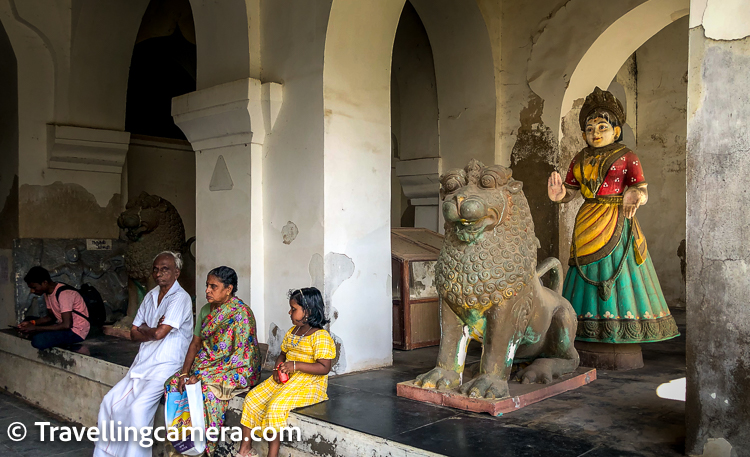
Then the lions supporting them.
Then the sculptural panels.
And finally, your eyes settle on Varaha—the boar incarnation of Vishnu—lifting Bhudevi, the Earth goddess.
Suddenly, the cave becomes much more than a historical structure.
It becomes a story.
For photographers, it offers something else too: an intimate study of how light, shadow, texture and sculpture interact inside a 7th-century rock-cut monument.
If you are exploring the heritage sites in Tamilnadu, Varaha Cave deserves considerably more attention than the amount of time many visitors give it.

Why Visit Varaha Cave?
Varaha Cave is not the kind of monument where you need to tick off twenty things from a checklist.
Its appeal lies in slowing down.
The cave is associated with the Pallava period and is part of the larger Group of Monuments at Mahabalipuram. Together, these monuments demonstrate the extraordinary experimentation undertaken by Pallava architects and sculptors in rock-cut and monolithic architecture.
There are several reasons to include Varaha Cave in your Mahabalipuram itinerary:
- It offers an excellent introduction to Pallava rock-cut architecture.
- The Varaha and Bhudevi relief is visually powerful.
- Other sculptural panels add considerable mythological depth.
- The lion pillars are characteristic of Pallava architectural design.
- The cave is intimate enough to examine sculpture closely.
- It provides a completely different experience from the large open-air monuments.
- It is particularly rewarding for photographers interested in details and textures.
Most importantly, Varaha Cave encourages you to look rather than simply visit.

Varaha Cave and the Mamallapuram Heritage Site
Mahabalipuram is one of those rare destinations where the landscape itself becomes an architectural textbook.
Within a relatively compact area, you encounter:
- Rock-cut caves
- Monolithic temples
- Open-air bas-reliefs
- Structural temples
- Sculptural panels
- Ancient water-related features
- Later additions and layers of habitation
The monuments were largely created during the Pallava period, particularly under rulers such as Narasimhavarman I and his successors.
Narasimhavarman I carried the title Mamalla, meaning a great wrestler, and the name Mamallapuram is traditionally associated with him.
What makes this period particularly fascinating is that the Pallavas were experimenting.
They weren't simply repeating an established architectural formula.
They were working with enormous granite formations and figuring out how to transform natural rock into temples, columns, chambers, sculptures and monumental compositions.
Varaha Cave is one expression of that experimentation.

The History Behind Varaha Cave
Varaha Cave is generally attributed to the Pallava period and is usually dated to around the 7th century.
The cave belongs to a phase when rock-cut architecture was becoming increasingly sophisticated in southern India.
Instead of bringing stone to a construction site and assembling blocks into a temple, the sculptors here worked directly into the existing rock.
That difference is important.
Imagine standing in front of a granite outcrop and deciding that a temple exists inside it.
The challenge isn't just carving a sculpture.
First, the correct amount of stone has to be removed.
Then spaces, pillars, ceilings and walls need to be defined.
Only after that can the sculptural programme emerge.
A mistake made too deeply into the rock could not simply be replaced.
This makes the cave particularly interesting when viewed as a work of engineering as much as art.

The Story of Varaha and Bhudevi
The central attraction of the cave is the depiction of Varaha.
In Hindu mythology, Varaha is the boar incarnation of Vishnu.
The story tells of Hiranyaksha, who dragged the Earth into the cosmic waters. Vishnu took the form of Varaha and descended into those waters to rescue her.
The sculpture depicts Varaha lifting Bhudevi.
At first glance, the scene seems straightforward.
Look longer, however, and the relationship between the two figures becomes more interesting.
Varaha is powerful, but the composition isn't simply about physical strength. There is an unmistakable sense of Bhudevi being restored to safety.
This is one of the reasons I prefer looking at the sculpture from relatively close range rather than photographing it immediately from the back of the cave.
The closer you get, the more details begin to appear.
The gestures.
The posture.
The jewellery.
The expressions.
The surrounding figures.
The surface of the granite.
Ancient sculpture can become surprisingly intimate when seen at eye level.

What to See Inside Varaha Cave
Don't make the mistake of entering the cave, photographing Varaha and walking out.
There is much more to observe.
Varaha and Bhudevi
Naturally, begin here.
Study the complete composition first.
Then look at individual details.
Notice how Varaha's body creates the dominant vertical element while Bhudevi introduces another visual direction.
For photography, try making both a contextual frame and a tighter crop.
The contextual photograph tells the story of the cave.
The close-up tells the story of the sculpture.
Trivikrama
Another significant panel represents Vishnu as Trivikrama.
The story is associated with Vishnu's Vamana incarnation and his cosmic stride.
The scale implied by the mythology is particularly interesting when placed inside the relatively compact cave.
The sculptors were working with a limited surface but communicating an enormous cosmic idea.
That contrast is worth noticing.
Gajalakshmi
The Gajalakshmi panel is one of the more visually balanced compositions in the cave.
Gajalakshmi represents Lakshmi accompanied by elephants.
The elephants and the central figure create a strong sense of symmetry.
This is a wonderful panel for photographers who enjoy studying composition.
Rather than looking at the sculpture purely as religious iconography, observe its visual structure.
There is balance.
Repetition.
Rhythm.
Negative space.
And hierarchy.
These are concepts photographers still use when composing images today.
Durga
The Durga panel introduces a different mood.
Where Gajalakshmi has a more composed and symmetrical quality, the Durga imagery carries greater dynamism.
This contrast is one of the strengths of the cave.
Different stories are presented within the same architectural environment, yet each carries its own visual personality.
The Lion Pillars of Varaha Cave
One of the easiest details to overlook is also one of the most characteristic.
Look carefully at the pillars.
The lion figures at the base are an important feature of Pallava architectural vocabulary.
The lions aren't simply decorative animals added to the temple.
They become part of the structural visual language.
Stand slightly to the side of a pillar and observe the relationship between the lion, shaft and capital.
Then compare it with pillars elsewhere in Mahabalipuram.
Once you begin doing this, the monuments stop appearing as unrelated attractions.
You start seeing a shared architectural vocabulary evolving across the landscape.
That is when exploring the Mamallapuram Heritage Site becomes particularly rewarding.

My Experience Inside Varaha Cave
What I remember most isn't one particular sculpture.
It is the change in atmosphere.
Outside, Mahabalipuram can be bright, hot and busy.
There are tourists moving between monuments, vehicles passing on the roads, vendors, guides and the constant energy of a popular heritage destination.
Inside the cave, everything changes.
The temperature feels different.
The sound becomes quieter.
The bright Tamil Nadu sunlight disappears behind the stone entrance.
Your eyes take a few seconds to adjust.
And then the sculptures begin appearing.
This is one of those situations where photographs don't immediately capture what your eyes experience.
A camera tends to flatten the darkness.
Your eyes don't.
Your eyes move from the shadows to a highlighted face, then towards a pillar, then across a sculptural panel.
That process of discovery is part of the experience.
So I would strongly recommend spending a few minutes without taking a photograph.
Just look.
Then take out the camera.
Photography at Varaha Cave
Varaha Cave is an excellent place to practise something many photographers struggle with:
photographing in difficult light without trying to eliminate the difficulty.
Don't attempt to make the cave look like it was photographed in bright daylight.
The shadows are part of the story.
The contrast between the illuminated entrance and darker interior can actually make the photographs more atmospheric.
Photograph the Architecture First
Begin outside.
Frame the entrance.
Include the surrounding granite.
If possible, allow a person to naturally enter the frame to establish scale.
Don't necessarily ask someone to pose.
A person simply walking into the cave can be much more effective.
Then Photograph the Sculptures
Once inside, move closer.
A 50mm or short telephoto lens can be more useful than an ultra-wide lens.
It allows you to isolate individual figures without exaggerating the proportions of the cave.
Look for:
- Faces
- Hands
- Jewellery
- Animal figures
- Drapery
- Pillar details
- Weathered surfaces
- Sculptural relationships
Best Photography Timing for Varaha Cave
Early Morning
This would be my preferred time.
The outside light is softer, temperatures are more comfortable and the surrounding monument complex tends to feel less hectic.
The transition between bright exterior and shadowed interior can also be beautifully controlled.
Late Afternoon
Late afternoon is another good option.
The warm light outside can create a pleasing contrast with the darker cave interior.
However, don't arrive just before closing time expecting to explore everything.
Give yourself enough time.
Practical Photography Tips
| Photography situation | Practical approach |
|---|---|
| Exterior façade | Use soft morning or late-afternoon light |
| Interior | Shoot RAW and watch highlights |
| Sculptural details | 50–85mm equivalent works well |
| Full cave composition | 24–35mm equivalent |
| Deep shadows | Expose carefully rather than over-brightening everything |
| Human scale | Capture natural movement |
| Texture | Look for directional light |
| Flash | Avoid unless explicitly permitted |
One of the most important tips is to protect the highlights around the entrance.
If you expose only for the dark interior, the bright exterior can become completely white.
Slightly conservative exposure often gives you more flexibility during post-processing.
A Lesser-Known Detail: Varaha Cave Isn't the Only Varaha Cave
This can create confusion when researching Mahabalipuram.
There is also an Adi Varaha Cave Temple in the town.
The two are distinct monuments.
Both belong to the wider Pallava rock-cut tradition and are associated with Varaha imagery, but they should not be treated as the same site.
If you are researching the monuments before your trip, make sure you know which cave you are planning to visit.
Varaha Cave and the Living Craft of Mahabalipuram
One of the things I love about Mahabalipuram is that its relationship with stone didn't end with the Pallavas.
Stone carving continues in the town.
Walk around the local workshops and you'll find sculptors working with granite and other stones, using techniques passed down through generations.
This creates an unusual connection between past and present.
Inside Varaha Cave, you see what Pallava sculptors achieved more than a thousand years ago.
Outside, contemporary craftsmen are still turning stone into gods, animals, architectural elements and decorative objects.
If you meet a sculptor, ask questions.
What kind of stone do they prefer?
How long does a particular sculpture take?
How do they decide where to start?
Do they use traditional iconographic rules?
These conversations can change how you look at the ancient monuments.
Local Food to Try in Mamallapuram
After walking through granite monuments under the Tamil Nadu sun, food becomes part of the experience.
Mamallapuram has a strong coastal food identity.
Seafood is naturally prominent, with restaurants serving preparations involving:
- Fish
- Prawns
- Crab
- Squid
- Fish curry
- Fried fish
- Rice-based meals
But don't overlook simple Tamil breakfast.
A plate of idli, vada, pongal or dosa with sambar and chutney followed by filter coffee can be a much better start to a monument walk than a heavy breakfast.
For lunch, try a traditional South Indian meal if you haven't experienced one recently.
And if seafood is your thing, ask what's fresh rather than automatically choosing the most familiar dish on the menu.
Talking to Local People
Mahabalipuram is not simply an archaeological park.
It is a functioning town.
People live here.
They work here.
They sell food.
They carve stone.
They fish.
They run hotels and restaurants.
They guide visitors around monuments.
A short conversation can often reveal more than another ten minutes of reading.
One thing I have noticed while travelling through heritage towns is that locals rarely describe their surroundings in the same way travel articles do.
For them, the monuments aren't necessarily mysterious ancient wonders.
They are part of the landscape they grew up with.
That everyday familiarity is itself fascinating.
Best Time to Visit Varaha Cave
The broader winter period is generally the most comfortable for exploring Mahabalipuram.
October to February
Usually the most pleasant period for long sightseeing walks.
Morning and evening temperatures are more comfortable.
March to May
Hot and humid.
Start early.
Carry water.
Avoid planning an uninterrupted monument walk during the hottest hours.
June to September
Weather can be variable.
Cloudy conditions can actually be wonderful for photography because the harsh tropical contrast is reduced.
Northeast Monsoon
Tamil Nadu receives significant rainfall during the northeast monsoon period.
Wet granite can look spectacular.
Stone becomes darker.
Textures become more prominent.
Cloudy skies can create dramatic backgrounds.
For photographers, weather that tourists sometimes consider inconvenient can produce some of the most interesting images.
How to Reach Mamallapuram
Mamallapuram is easiest to reach by road.
From Chennai
The East Coast Road is the obvious approach for many travellers coming from Chennai.
The journey time varies considerably with traffic and your starting point.
If you're driving yourself, starting early can make the journey much more pleasant.
From Chennai Airport
Chennai International Airport is the nearest major airport.
A taxi or pre-arranged transfer is the most convenient option.
By Train
Chengalpattu is an important nearby railway connection.
From there, continue by road towards Mamallapuram.
Getting Around
Once you're within the main heritage area, walking is often the best option.
This is one destination where moving slowly has advantages.
The distances between several monuments are manageable, and walking lets you notice things you would otherwise miss from a vehicle.
Where to Stay in Mamallapuram
Your choice of accommodation depends on the kind of trip you want.
Stay in Town
Best for:
- Budget travellers
- Photographers
- Food exploration
- Walking access
- Short visits
Stay Near the Beach
Better if you want a combination of sightseeing and relaxation.
Stay at a Resort
Useful for a longer weekend when the destination is as much about slowing down as exploring monuments.
For a photography-focused trip, I would prioritise location and easy morning access over luxury.
Being able to start photographing at 7 or 8 AM is far more valuable than having an elaborate room if your primary purpose is exploring the monuments.
Budget Tips for Visiting Mamallapuram
Mahabalipuram can be explored at different budget levels.
A relatively economical day can involve:
- Local breakfast
- Walking between monuments
- Auto-rickshaw for longer distances
- Local lunch
- Tea or filter coffee
- Evening beach walk
- Budget accommodation
Where I would consider spending a little extra is on a knowledgeable local guide if you're genuinely interested in history and iconography.
A good guide can help you understand why a particular figure is positioned where it is, what a particular gesture means and how different monuments relate to one another.
That context can transform the experience.
Suggested One-Day Mamallapuram Heritage Itinerary
If Varaha Cave is one of your priorities, structure the day around the heat and light.
6:30–8:00 AM
Begin with an early heritage walk.
The softer morning light is ideal for photography.
8:00–9:00 AM
Breakfast and filter coffee.
9:00–10:00 AM
Spend unhurried time at Varaha Cave.
Photograph the architecture first.
Then work through each sculptural panel.
10:00–11:30 AM
Explore nearby monuments such as Krishna Mandapam and Arjuna's Penance.
This gives you an opportunity to compare enclosed and open-air sculpture.
11:30 AM–1:00 PM
Continue with selected nearby monuments before the heat becomes intense.
Afternoon
Lunch.
Rest.
Download or back up your photographs if possible.
3:30–5:30 PM
Return to the heritage zone for warmer afternoon light.
Revisit any monument you found particularly interesting.
Evening
Walk towards the beach.
Let the day shift from archaeology to everyday coastal life.

Nearby Places Worth Exploring
Once you are in Mahabalipuram, don't restrict yourself to Varaha Cave.
Some of the most worthwhile nearby places include:
- Shore Temple
- Pancha Rathas
- Arjuna's Penance
- Krishna Mandapam
- Mahishasuramardini Cave
- Trimurti Cave
- Krishna's Butter Ball
- Tiger Cave
- Mamallapuram Beach
Tiger Cave
If you have additional time, Tiger Cave is worth considering.
It provides a slightly different experience from the more concentrated monument area.
The location also gives you an opportunity to see how Pallava rock-cut architecture extends beyond the most famous monuments.
Responsible Travel at Varaha Cave
Ancient stone can look indestructible.
It isn't.
Thousands of visitors walking through these monuments over decades and centuries can have an impact.
A few simple habits make a difference:
- Don't touch sculptures unnecessarily.
- Never climb on carved surfaces.
- Don't lean against ancient reliefs.
- Avoid scratching or writing on stone.
- Follow photography restrictions.
- Don't use flash unless permitted.
- Keep voices low inside the cave.
- Don't leave plastic or food waste.
- Respect religious practices and other visitors.
- Buy from genuine local artisans when possible.
Most importantly, don't treat ancient sculpture as a backdrop for a dramatic social-media pose.
Photograph the monument.
Don't become part of its damage.
Common Mistakes to Avoid
Rushing Through the Cave
The cave is small.
That doesn't mean it should take only ten minutes.
Photographing Only Varaha
The supporting panels, pillars and architectural details deserve attention too.
Using Only a Wide-Angle Lens
Wide lenses can make the cave appear larger than it really is and distort the architectural proportions.
Visiting Only at Noon
The harsh heat and light make photography more difficult.
Ignoring the Details
Look at hands, faces, ornaments and animals.
Sometimes the smallest carving makes the strongest photograph.
Treating Mahabalipuram as a Shore Temple Trip
The Shore Temple is only one part of the larger heritage landscape.
Forgetting the Living Town
The stone workshops, food, fishing community and streets are part of the experience too.
Frequently Asked Questions About Varaha Cave
What is Varaha Cave in Mahabalipuram?
Varaha Cave, also known as Varaha Mandapa, is a Pallava-period rock-cut cave monument in Mahabalipuram, Tamil Nadu. It is particularly known for its Varaha and Bhudevi sculpture and other mythological panels.
Why is Varaha Cave famous?
It is famous for its Pallava rock-cut architecture and sculptures depicting Varaha, Trivikrama, Gajalakshmi and Durga, along with its distinctive lion-supported pillars.
Is Varaha Cave part of the Mamallapuram UNESCO heritage site?
Yes. Varaha Cave forms part of the larger group of monuments at Mahabalipuram recognised as a UNESCO World Heritage Site.
What is the story behind Varaha Cave?
The principal Varaha sculpture depicts Vishnu in his boar incarnation rescuing Bhudevi, the Earth goddess, from the cosmic waters.
What is the best time to visit Varaha Cave?
Early morning is particularly good for comfortable sightseeing and photography. Late afternoon can also offer attractive exterior light.
How much time should I spend at Varaha Cave?
Allow at least 30–45 minutes for a relaxed visit. Photographers and history enthusiasts may want an hour or longer.
Can I photograph inside Varaha Cave?
Photography rules can vary, so follow the instructions displayed at the monument. Avoid flash unless explicitly permitted.
Is Varaha Cave the same as Adi Varaha Cave?
No. Varaha Cave and Adi Varaha Cave are separate monuments in Mahabalipuram, although both belong to the Pallava rock-cut architectural tradition.
What other heritage sites can I visit near Varaha Cave?
You can combine Varaha Cave with Arjuna's Penance, Krishna Mandapam, Mahishasuramardini Cave, Pancha Rathas, Shore Temple and other monuments around Mahabalipuram.
Is Varaha Cave suitable for children?
Yes. Children may particularly enjoy the mythology behind Varaha and the opportunity to identify animals, gods and human figures carved into the stone.
Final Thoughts: Look Beyond the Famous Mahabalipuram Monuments
There is a temptation, when visiting a place like Mahabalipuram, to chase the iconic photographs.
I understand it.
The Shore Temple beside the sea is spectacular.
The Pancha Rathas are fascinating.
Arjuna's Penance is almost impossible to ignore.
But some monuments reward a different kind of travel.
Varaha Cave is one of them.
It asks you to slow down.
To stand in the shade.
To let your eyes adjust.
To look at a pillar instead of immediately looking for the next attraction.
To notice the lion.
To follow the contours of the sculpture.
To understand why Varaha is holding Bhudevi in that particular way.
And then, perhaps, to step outside and notice that contemporary Mahabalipuram continues around you.
A sculptor is working on a piece of granite.
A fisherman is returning from the coast.
Someone is making dosa in a small restaurant.
A tourist is buying a stone sculpture.
A child is running through the street.
More than a thousand years separate these people from the Pallava sculptors who carved Varaha Cave.
Yet stone still connects them.
That, for me, is what makes exploring the Mamallapuram Heritage Site so rewarding.
It isn't simply about looking at old monuments.
It is about understanding how a place can carry its history into the present.
And Varaha Cave, despite its relatively modest size, is one of the quietest and most beautiful places in Mahabalipuram to experience that connection.
Related Blogposts from Tamilnadu:

Draupadi’s Bath in Mahabalipuram, Tamilnadu : A Small Rock-Cut Cistern With a Curious Story

Trimurti Rock-Cut Cave Temple in Mahabalipuram, Tamilnadu : A Quiet Pallava Masterpiece

Mamallapur Lighthouse, Tamil Nadu: A Historic Beacon Above the Bay of Bengal

Ramanuja Mandapam in Mahabalipuram, Tamilnadu: A Quiet Chapter of Pallava Heritage

Krishna’s Butter Ball in Mamallapuram Heritage Park, Tamilnadu: The Giant Boulder That Refuses to Roll

Mahishasuramardini Rock Cut Mandapa, Mahabalipuram, Tamilnadu: A Photographer’s Journey Through Pallava Art

Iswara Temple Hillock, Mahabalipuram, Tamilnadu: A Quiet View into the Temples of Tamil Nadu

Shore Temple in Mahabalipuram, Tamilnadu: Where Pallava Stone Meets the Bay of Bengal

An Eventful Hike around Virupaksha Caves and Skand Ashram in Tiruvannamalai, Tamilnadu, India

The magnificent Arunachalesvara Temple, Tiruvannamalai, Tamilnadu || A Shiva Temple with a rich and interesting history

Chennai Travel Guide: The Cultural Capital of South India - Capital Cities of Indian States [Tamilnadu]

The Majestic Brihadeeshwara Temple: A Glimpse into the Architectural Brilliance of Thanjavur in Tamilnadu, India


Unlocking the Treasures of Saraswati Mahal Library in Thanjavur, Tamilnadu || Exploring India's oldest and most fascinating collection of manuscripts

The Magnificence of Cholapuram Temple: A Glimpse into the Ancient Heritage of Tamil Nadu, India

Discovering the Charms of Rameshwaram: Must-Visit Places for Travelers

Embracing the Serenity of Sunrise: Exploring Dhanushkodi in the Early Hours of the Morning | Tamilnadu Diaries

Vellore Fort in Tamilnadu, India : A Living Museum of South Indian Architecture

Exploring the Architectural Marvels and Historical Significance of Arulmigu Ramanathaswamy Temple in Rameshwaram, Tamilnadu : A Spiritual Journey Through Time

Pilgrimage to the Miraculous Churches of Velankanni: Exploring the History, Culture, and Beauty of this Sacred Town

Capturing the Serene Beauty of Sunset around Pamban Bridge in Rameshwaram, Tamilnadu : A Photographer's Delight

Exploring the Rich Fishing Heritage of Rameshwaram: A Journey Through the Bustling Fishermen Town Thangachimadam in Tamilnadu, India

Preserving the Grandeur of Chola Palace in Gangaikondacholapuram: The Role of the Archaeological Survey of India in Ariyalur District of Tamilnadu
Thanjavur Palace in Tamilnadu: Where History and Art Come Together in a Spectacular Display

Auroville in India : The City of Dawn and a Model for Spirituality & Sustainable Living

Ramarpatham Shrine at Rameshwaram, Tamil Nadu || The site that has Lord Ram's footprints sculpted on a rock

The Sacred and Architectural Marvels of Ranganathaswamy Temple in Tamilnadu, India
%20to%20see%20the%20Danish%20fort%20in%20Tamilnadu%20state%20of%20India-3.jpg "Do you know about the 'Danish' Fort in India which is located at a beautiful location round the coast of Bay of Bengal?")
Do you know about the 'Danish' Fort in India which is located at a beautiful location round the coast of Bay of Bengal?

Uncovering the Rich History and Beauty of the Basilica of the Sacred Heart of Jesus in Pondicherry, India
 |
| Anaikarai Dam |
Anaikarai North and South Dams on Kollidam Rivers, Tamil Nadu || Two of the many dams on Cauvery, some of which are nearly 2000 years old

Starting the Day Right: A Personal Reflection on Sunrise at Serenity Beach in Pondicherry, India

Puducherry Travel Guide: French Charm Meets Indian Spirit - Capital Cities of Indian States or Union Teritorries [Pondicherry]

Madanapalle to Thanjavur via Vellore and Tiruvannamalai - 4th day of our 14 days long trip through east coast of India || Noida to Rameshwaram

Thanjavur to Rameshwaram via Tiruchirapalli - 5th day of our 14 days long trip through east coast of India || Noida to Rameshwaram

Rameshwaram's Marine Museum, Harbour and More: A Guide to the Best Sights and Sounds from Tamilnadu State of India
Rameshwaram in Tamilnadu, India - The Land of Sacred Shrines and Mesmerizing Beaches

Villoondi Teertham - Discovering the Spiritual and Natural Wonders of Rameshwaram, India
%20to%20see%20the%20Danish%20fort%20in%20Tamilnadu%20state,%20India-1.jpg "Drive from Rameshwaram to Pondicherry along the coast - 7th day of our 14 days long trip through east coast of India || Noida to Rameshwaram")
Drive from Rameshwaram to Pondicherry along the coast - 7th day of our 14 days long trip through east coast of India || Noida to Rameshwaram

Drive from Pondicherry to Tada - 8th day of our 14 days long trip through east coast of India || Noida to Rameshwaram

Exploring the Mahatma Gandhi Statue and Other Attractions around Promenade Beach in Pondicherry, India

Kolams and Culture: The Significance of Daily Floor Art in Tamilnadu Homes of South India

Healing Waters and Holy Legends: A Visit to Vibhishan Teertham in Rameshwaram, Tamilnadu

Discovering the Mysteries of Sri Panchmukhi Hanuman Mandir and the Floating Stones of Rameshwaram in Tamilnadu
 Climb to the Top of Chennai Lighthouse : Exploring Aerial views of Marine Drive, Sea and other interesting landmarks of Chennai, Tamilnadu


.jpg)
Comments