

Introduction: The Monument You Could Easily Walk Past
Mahabalipuram has a habit of making you look in the obvious direction.
The Shore Temple pulls your eyes toward the sea. Arjuna's Penance demands attention with its enormous rock surface filled with stories. Krishna's Butter Ball looks almost impossible, as though a giant stone has somehow been balanced on a slope for centuries.
And then there is Ganesh Ratha.
It is smaller, quieter and considerably easier to overlook.
Yet, spend a little time with it and the monument starts revealing a fascinating story about Pallava architecture, religion and the evolution of temple design in South India.
If you are exploring what is often searched online as the Mamallapuram Heritage Park, Ganesh Ratha deserves a place on your walking route.
There is an especially interesting twist to its history.
Although the monument is now popularly known as Ganesh Ratha and houses an image of Ganesha, it was originally associated with Shiva. An inscription on the monument identifies it as Atyantakama Pallavesvara-griham, connecting it with the Pallava ruler Atyantakama, generally identified with Paramesvaravarman I.
That small detail changes the way you see the entire temple.
Suddenly, Ganesh Ratha is no longer simply a charming little Ganesha temple.
It becomes a window into a much older story.
Why Visit Ganesh Ratha?
Ganesh Ratha is worth visiting for several reasons, but three stand out.
The first is its architecture.
The monument was carved out of a single mass of granite rather than being constructed by assembling individual stone blocks. This makes it part of the extraordinary experiment in monolithic architecture that defines much of Mahabalipuram.
The second reason is its historical complexity.
The temple's present identity is different from its original religious association. That transition is a reminder that historic monuments don't always remain frozen in the form in which they were created.
And the third reason is photography.
For a photographer, Ganesh Ratha is an unusually friendly monument.
It is compact enough to study closely. You can walk around it. You can photograph it from different heights. You can isolate architectural details. You can use shadows beneath the roof. You can photograph the stone as an architectural object or as a textured surface.
Unlike some of Mahabalipuram's monumental structures, Ganesh Ratha doesn't require an extremely wide lens to appreciate its character.
Sometimes a normal lens is all you need.

Ganesh Ratha in the Mamallapuram Heritage Park
Ganesh Ratha forms part of the larger group of monuments at Mahabalipuram, one of the most important concentrations of Pallava-era rock-cut and monolithic architecture in India.
The monuments around Mamallapuram were created mainly during the 7th and 8th centuries when the Pallavas were experimenting with new architectural forms.
What makes the place remarkable is the variety.
Within a relatively compact landscape you encounter:
Rock-cut cave temples
Monolithic rathas
Open-air bas-reliefs
Structural temples
Unfinished architectural experiments
Sculptures carved directly into granite
Ganesh Ratha belongs to the monolithic tradition.
And that is important.
The word "ratha" literally means chariot, and many of the monuments at Mahabalipuram were given names associated with the Pandavas and characters from the Mahabharata. However, these names are largely later traditional names rather than evidence that the monuments were actually connected with those epic characters.
Ganesh Ratha is therefore best understood as a Pallava monolithic temple rather than a literal stone chariot.
The History Behind Ganesh Ratha
The most fascinating thing about Ganesh Ratha may not be visible at first glance.
It is the monument's original religious identity.
Was Ganesh Ratha originally a Ganesha temple?
Apparently not.
The inscription associated with the temple refers to a shrine dedicated to Shiva and gives it the name Atyantakama Pallavesvara-griham.
Atyantakama was a title associated with a Pallava ruler, commonly identified as Paramesvaravarman I.
The inscription therefore provides an important clue about the temple's original purpose.
At some later point, the shrine became associated with Ganesha.
This isn't unusual in the long history of Indian sacred architecture.
Temples survive while communities change. Religious practices evolve. Images are replaced, relocated or added. Local traditions become stronger than the original architectural record.
Over many centuries, the way people experience a monument can become just as important as the circumstances in which it was built.
That is essentially what happened here.
Today, most visitors know it simply as Ganesh Ratha.
But the granite remembers an older identity.

The Architecture of Ganesh Ratha
Walk toward the temple and resist the temptation to immediately photograph the entrance.
First look at the entire silhouette.
The elongated roof is what gives Ganesh Ratha its distinctive appearance.
It has a long, barrel-vaulted or wagon-shaped profile that immediately sets it apart from the more familiar pyramidal temple towers of later South Indian architecture.
The form is particularly interesting because Mahabalipuram represents a period when Pallava craftsmen were experimenting with architectural vocabulary that would influence later temple traditions.
The Lion Pillars
The pillars at the front deserve close attention.
Their bases incorporate seated lions, an architectural motif strongly associated with Pallava design.
These are not giant sculptures in the way you might encounter at some other monuments.
But look closely.
The lions have presence.
Try photographing them from a slightly lower viewpoint.
The change in perspective makes them appear stronger and gives the entrance more depth.
For photographers, this is one of those moments where moving just two or three metres can transform an ordinary documentary photograph into a much more interesting architectural composition.
The Distinctive Roof
The roof is arguably the defining feature of Ganesh Ratha.
Its long, curved profile gives the temple a sense of movement even though the entire structure is carved from solid rock.
Look along the roofline.
You will notice repeated architectural details and decorative elements that create rhythm across the stone surface.
There are also vase-like finials along the top.
These aren't details that immediately announce themselves from a distance.
They reveal themselves gradually.
This is why Ganesh Ratha rewards slow looking.
Stand in front of the temple for a minute.
Then move to the side.
Look up.
Move back.
Look again.
The monument changes depending on where you stand.
A Monument That Shows Architectural Experimentation
One of the most interesting ways to understand Ganesh Ratha is to see it as part of an architectural laboratory.
The Pallava period was an important phase in the development of South Indian temple architecture.
Earlier traditions included structures made from perishable materials such as wood and thatch. Rock-cut architecture offered an opportunity to reproduce architectural forms directly in stone.
Mahabalipuram became an extraordinary testing ground.
Instead of simply carving sculptures, craftsmen were carving entire temples.
They were translating architectural ideas into granite.
The results were not always perfectly finished.
Some monuments remain incomplete.
And those unfinished portions are fascinating because they provide clues about how the craftsmen actually worked.
Ganesh Ratha, in contrast, gives us a remarkably coherent finished form.
My Experience of Exploring Ganesh Ratha
One of the things I like about photographing Mahabalipuram is that the most interesting moments often happen between the obvious monuments.
Ganesh Ratha is a good example.
The first photograph is usually easy.
You arrive.
You see the temple.
You take the front-facing shot.
Done.
But that's when the interesting part should begin.
Walk around it.
Look at the relationship between the pillars and roof.
Notice how the granite changes from bright grey in direct sunlight to almost charcoal in shadow.
Look beneath the roof.
The darker spaces create natural frames.
Then look back toward the entrance.
Suddenly the monument feels three-dimensional.
The surrounding landscape also matters.
Mahabalipuram's granite landscape has a particular character. Large exposed rocks, low vegetation, sandy soil and ancient carved surfaces create a visual connection between architecture and geology.
The temples don't feel like they were simply placed on the landscape.
They feel as though they emerged from it.
That is perhaps the most powerful part of the Mahabalipuram experience.
Details Most Visitors Miss
Ganesh Ratha is not one of the Pancha Rathas
This is probably the most common point of confusion.
Ganesh Ratha is a monolithic ratha, but it is not one of the five monuments popularly called the Pancha Rathas.
The Pancha Rathas form a separate group within the larger Mahabalipuram heritage landscape.
So don't confuse "ratha" as a reference to one specific group.
It describes a broader architectural category in this context.
The Name Hides the Earlier History
The modern name Ganesh Ratha naturally makes visitors assume that Ganesha was always the principal deity.
The inscription suggests otherwise.
That contrast between the present identity and the original identity is one of the most fascinating things to discuss when visiting the monument.
Look Beyond the Idol
If you have only a few minutes, don't spend all of them inside the shrine.
The exterior architecture is where much of the historical information is preserved.
Study:
The lion-based pillars
The roof profile
The miniature architectural elements
The finials
The entrance
The stone texture
The inscription
The idol tells one part of the story.
The building tells the rest.
Best Photography Spots at Ganesh Ratha
Ganesh Ratha is an excellent monument for architectural photography because it offers several compositions within a relatively small area.
1. Front Three-Quarter View
This would be my first choice.
Instead of standing directly in front, move slightly toward one side.
This allows you to include the entrance, lion pillars and roof while retaining the monument's three-dimensional character.
A moderate wide-angle or standard zoom works well.
Avoid going excessively wide unless you have a specific creative reason.
Ultra-wide lenses can exaggerate the foreground and make the temple's proportions look unnatural.
2. Low-Angle Composition
Try lowering your camera slightly.
The roof begins to dominate the frame and the monument feels more imposing.
This works particularly well when the sky has interesting clouds.
However, keep the camera reasonably level if you want an architectural record.
Otherwise, vertical distortion can become distracting.
3. Lion Detail
The lion bases are excellent subjects for close-up photographs.
Use a longer focal length and isolate one lion from the rest of the architecture.
Look for the transition between light and shadow.
That contrast can reveal the carving much better than a uniformly lit photograph.
4. Roof Details
Zoom in.
The roof has enough decorative detail to create a completely different series of photographs.
Instead of always showing the whole temple, make a collection of smaller images:
Finials
Roof ornamentation
Pillars
Carved surfaces
Doorway details
Weathered stone
These photographs work particularly well when combined into a travel photo essay.
Photography Tips for Ganesh Ratha
Early Morning
Early morning is ideal if you want softer light, fewer people and more comfortable temperatures.
The stone tends to have gentle tonal variations rather than the harsh contrast produced by the midday sun.
For a photographer, this is a very good time to make clean architectural photographs.
Late Afternoon
Late afternoon is better if you enjoy stronger shadows.
As the sun drops, the granite begins to reveal texture.
Side lighting can make shallow carvings stand out.
It is also a good time for atmospheric photographs where the monument is partially illuminated.
Midday
Don't avoid the monument entirely if you happen to be there at noon.
Instead, change your approach.
Use the harsh light to create contrast.
Photograph details rather than forcing a wide architectural composition.
Deep shadows beneath the roof can become part of the image.
A Simple Photographer's Approach
I would suggest making three rounds.
First round: walk without photographing.
Understand the monument.
Second round: photograph the architecture.
Concentrate on structure, symmetry and perspective.
Third round: look for details.
This is when you photograph lions, textures, inscriptions, weathering and small architectural elements.
The third round is often where the best photographs come from.
Local Food Experiences Around Mahabalipuram
You cannot really experience Mahabalipuram without acknowledging its coastal identity.
After walking through granite monuments under the Tamil Nadu sun, a simple South Indian breakfast can feel almost luxurious.
Try:
Idli
Vada
Dosa
Pongal
Sambar
Coconut chutney
Filter coffee
For lunch or dinner, seafood is an obvious part of the local food landscape.
Depending on the restaurant and season, you may find fish, prawns, crab and other coastal preparations.
But there is another approach I enjoy more.
Don't make every meal an elaborate destination.
Find a simple local place.
Order something familiar.
Watch how people around you eat.
Listen to the rhythm of conversation.
Have a filter coffee.
Travel isn't always about discovering an exotic dish.
Sometimes it is about slowing down enough to notice an ordinary meal in an unfamiliar place.
Conversations With Local People
Mahabalipuram has something that many heritage destinations lack: a living connection with stone carving.
The town has a long tradition of sculpture and stone craftsmanship.
Walk around the local workshops and you will see contemporary artisans working with the same basic material that defines the ancient monuments.
This creates an unusual bridge between past and present.
If you speak with a sculptor, ask about the stone.
Ask how a particular figure is created.
Ask which tools are used.
Ask how much time goes into a piece.
These conversations can change the way you look at the ancient monuments.
Suddenly, the seemingly impossible precision of a Pallava sculpture becomes easier to appreciate.
And if you want to photograph artisans, always ask permission first.
A good photograph should begin with a good interaction.
Best Time to Visit Ganesh Ratha
The cooler months are generally the most comfortable for exploring Mahabalipuram.
October to February
This is an excellent period for:
Heritage walks
Photography
Exploring multiple monuments
Combining sightseeing with the beach
Spending longer outdoors
March to May
The heat can become intense.
If travelling during these months, start early.
Carry water, wear comfortable clothing and avoid planning your entire heritage walk during the hottest part of the afternoon.
June to September
Humidity and occasional rain can make conditions unpredictable.
However, photographers may find interesting skies and softer atmospheric conditions after rainfall.
How to Reach Ganesh Ratha
Mahabalipuram is around 55 km from Chennai and is easily accessible by road.
From Chennai
Driving or hiring a taxi is convenient.
There are also bus connections between Chennai and Mamallapuram.
The journey becomes particularly scenic if you approach via the East Coast Road.
From Chennai Airport
A taxi or pre-arranged car is the easiest option, particularly if you are carrying camera equipment.
By Train
Chengalpattu is the nearest major railway connection, after which you can continue by road.
Getting Around Mahabalipuram
Once you arrive, walking is often the best way to explore the heritage area.
This is important.
If you move from monument to monument in a vehicle, you will see the major attractions.
If you walk, you begin noticing the things in between.
Small carvings.
Stone fragments.
Local workshops.
Street scenes.
People.
Shadows.
That is where much of the character of Mahabalipuram lives.
Where to Stay in Mahabalipuram
If photography is important to you, staying in or close to central Mamallapuram has a significant advantage.
You can start early.
You don't need to drive from Chennai after breakfast.
You can photograph the monuments before the crowds and heat build up.
When selecting accommodation, consider:
Distance from the heritage zone
Parking
Air conditioning
Breakfast timing
Access to restaurants
Ease of early-morning transport
You don't necessarily need the most expensive resort.
For a heritage-focused trip, location can be more valuable than luxury.
Budget Tips
A Mahabalipuram trip doesn't have to be expensive.
You can keep costs under control by:
Walking between nearby monuments
Eating local South Indian meals
Using public transport where convenient
Staying slightly away from premium beachfront properties
Hiring a local guide only for the monuments where deeper interpretation matters
Avoiding unnecessary tourist purchases
If you are buying stone sculptures or handicrafts, compare prices and ask about the material and craftsmanship.
Suggested One-Day Mahabalipuram Itinerary
If you have just one day, don't try to cover every possible attraction.
Instead, create a logical route.
6:30–8:00 AM
Start with Ganesh Ratha and the surrounding monuments.
Use the early light for photography.
8:00–9:00 AM
Breakfast.
Try idli, vada, dosa or pongal with filter coffee.
9:00 AM–12:00 PM
Explore:
Arjuna's Penance
Krishna Mandapa
Krishna's Butter Ball
Nearby cave temples
Other smaller heritage structures
12:00–2:00 PM
Lunch and a break.
The midday heat is better spent indoors.
2:00–4:30 PM
Visit the Pancha Rathas and explore the architectural differences between the monolithic temples.
4:30–6:30 PM
Head toward the Shore Temple.
The late afternoon light can be excellent for photography.
Evening
Spend some time near the beach.
Mahabalipuram becomes a different place after the monuments begin emptying.
The ancient stones remain still while the contemporary town becomes more visible.
Responsible Travel at Ganesh Ratha
These monuments have survived for centuries.
They don't need us to leave our mark on them.
A few simple rules go a long way:
Don't climb on protected monuments.
Don't touch carvings unnecessarily.
Don't scratch names into the granite.
Respect barriers and ASI instructions.
Avoid placing camera bags or tripods against fragile surfaces.
Ask before photographing people.
Dress respectfully around active religious spaces.
Keep noise low around worshippers.
Carry your waste with you.
Most importantly, remember that these aren't simply photographic backdrops.
They are cultural heritage.
Common Mistakes to Avoid
Assuming Ganesh Ratha is one of the Pancha Rathas
It isn't.
The Pancha Rathas are a separate group.
Spending all your time photographing Ganesha
The architecture deserves equal attention.
Visiting only during midday
The stone can look flat or overly contrasty under harsh overhead sunlight.
Ignoring the inscription
The inscription provides an important clue about the monument's original Shaiva association.
Rushing through Mahabalipuram
The major monuments can technically be seen quickly.
But that isn't the same as experiencing Mahabalipuram.
Give yourself time to walk.
Frequently Asked Questions About Ganesh Ratha
What is Ganesh Ratha in Mahabalipuram?
Ganesh Ratha is a monolithic rock-cut temple from the Pallava period in Mamallapuram, Tamil Nadu. It forms part of the larger group of historic monuments for which Mahabalipuram is internationally recognised.
Was Ganesh Ratha originally built as a Ganesha temple?
The surviving inscription indicates that the shrine was originally dedicated to Shiva. Its present association with Ganesha developed later.
Who built Ganesh Ratha?
The inscription associates the temple with the Pallava ruler known as Atyantakama, generally identified with Paramesvaravarman I.
What is special about Ganesh Ratha?
Its distinctive wagon-shaped roof, lion pillars, monolithic construction and historical inscription make it an important example of Pallava architecture.
Is Ganesh Ratha part of the Pancha Rathas?
No. Ganesh Ratha is a separate monolithic monument within the broader Mahabalipuram heritage landscape.
What is the best time to photograph Ganesh Ratha?
Early morning and late afternoon generally provide the most interesting natural light. Early morning is particularly useful for softer light and fewer visitors.
How long should I spend at Ganesh Ratha?
Around 20–30 minutes is enough for a quick visit. If you enjoy architecture and photography, allow considerably more time.
Can Ganesh Ratha be visited along with other Mahabalipuram monuments?
Yes. It can easily be included in a broader itinerary covering Arjuna's Penance, Krishna Mandapa, Krishna's Butter Ball, the Pancha Rathas and Shore Temple.
Is Mahabalipuram good for photographers?
Very much so.
The combination of granite architecture, sculpture, coastal landscapes, local artisans, fishing communities, street life and changing tropical light makes Mahabalipuram particularly rewarding for photographers.
Final Thoughts: A Small Monument With a Much Larger Story
Ganesh Ratha isn't the monument that usually dominates photographs of Mahabalipuram.
And perhaps that is part of its charm.
It is compact.
It is approachable.
It doesn't overwhelm you with scale.
Instead, it invites you to look closer.
The more you examine it, the more layers begin to emerge.
There is the Ganesha worshipped today.
There is the Shiva temple described by the ancient inscription.
There is the Pallava experimentation with monolithic architecture.
There are the lions supporting the pillars.
There is the unusual elongated roof.
There are traces of an architectural tradition that would continue evolving across South India.
And then there is the modern town of Mahabalipuram surrounding it all.
This is what makes exploring Tamil Nadu heritage sites so rewarding.
The monuments aren't merely old structures.
They are conversations between different periods of history.
When you visit Ganesh Ratha, don't simply take the obligatory photograph and move on.
Walk around it.
Look at the stone.
Look at the roof.
Study the shadows.
Find the details.
Think about how many generations have stood in almost the same place.
Then take your photograph.
And perhaps stay for a few more minutes after you've finished photographing.
That is often when a monument stops being an attraction and starts becoming a place.
Related Blogposts from Tamilnadu -

Krishna’s Butter Ball in Mamallapuram Heritage Park, Tamilnadu: The Giant Boulder That Refuses to Roll

Mahishasuramardini Rock Cut Mandapa, Mahabalipuram, Tamilnadu: A Photographer’s Journey Through Pallava Art

Iswara Temple Hillock, Mahabalipuram, Tamilnadu: A Quiet View into the Temples of Tamil Nadu

Shore Temple in Mahabalipuram, Tamilnadu: Where Pallava Stone Meets the Bay of Bengal

An Eventful Hike around Virupaksha Caves and Skand Ashram in Tiruvannamalai, Tamilnadu, India

The magnificent Arunachalesvara Temple, Tiruvannamalai, Tamilnadu || A Shiva Temple with a rich and interesting history

Chennai Travel Guide: The Cultural Capital of South India - Capital Cities of Indian States [Tamilnadu]

The Majestic Brihadeeshwara Temple: A Glimpse into the Architectural Brilliance of Thanjavur in Tamilnadu, India


Unlocking the Treasures of Saraswati Mahal Library in Thanjavur, Tamilnadu || Exploring India's oldest and most fascinating collection of manuscripts

The Magnificence of Cholapuram Temple: A Glimpse into the Ancient Heritage of Tamil Nadu, India

Discovering the Charms of Rameshwaram: Must-Visit Places for Travelers

Embracing the Serenity of Sunrise: Exploring Dhanushkodi in the Early Hours of the Morning | Tamilnadu Diaries

Vellore Fort in Tamilnadu, India : A Living Museum of South Indian Architecture

Exploring the Architectural Marvels and Historical Significance of Arulmigu Ramanathaswamy Temple in Rameshwaram, Tamilnadu : A Spiritual Journey Through Time

Pilgrimage to the Miraculous Churches of Velankanni: Exploring the History, Culture, and Beauty of this Sacred Town

Capturing the Serene Beauty of Sunset around Pamban Bridge in Rameshwaram, Tamilnadu : A Photographer's Delight

Exploring the Rich Fishing Heritage of Rameshwaram: A Journey Through the Bustling Fishermen Town Thangachimadam in Tamilnadu, India

Preserving the Grandeur of Chola Palace in Gangaikondacholapuram: The Role of the Archaeological Survey of India in Ariyalur District of Tamilnadu
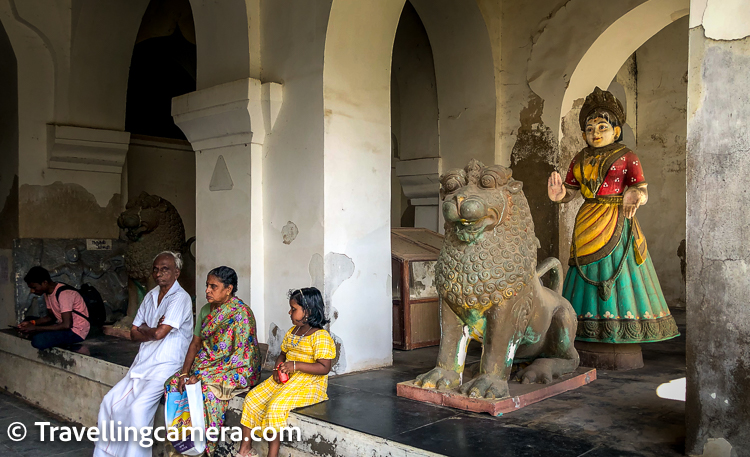
Thanjavur Palace in Tamilnadu: Where History and Art Come Together in a Spectacular Display

Auroville in India : The City of Dawn and a Model for Spirituality & Sustainable Living

Ramarpatham Shrine at Rameshwaram, Tamil Nadu || The site that has Lord Ram's footprints sculpted on a rock

The Sacred and Architectural Marvels of Ranganathaswamy Temple in Tamilnadu, India
%20to%20see%20the%20Danish%20fort%20in%20Tamilnadu%20state%20of%20India-3.jpg "Do you know about the 'Danish' Fort in India which is located at a beautiful location round the coast of Bay of Bengal?")
Do you know about the 'Danish' Fort in India which is located at a beautiful location round the coast of Bay of Bengal?

Uncovering the Rich History and Beauty of the Basilica of the Sacred Heart of Jesus in Pondicherry, India
 |
| Anaikarai Dam |
Anaikarai North and South Dams on Kollidam Rivers, Tamil Nadu || Two of the many dams on Cauvery, some of which are nearly 2000 years old

Starting the Day Right: A Personal Reflection on Sunrise at Serenity Beach in Pondicherry, India

Puducherry Travel Guide: French Charm Meets Indian Spirit - Capital Cities of Indian States or Union Teritorries [Pondicherry]

Madanapalle to Thanjavur via Vellore and Tiruvannamalai - 4th day of our 14 days long trip through east coast of India || Noida to Rameshwaram

Thanjavur to Rameshwaram via Tiruchirapalli - 5th day of our 14 days long trip through east coast of India || Noida to Rameshwaram

Rameshwaram's Marine Museum, Harbour and More: A Guide to the Best Sights and Sounds from Tamilnadu State of India
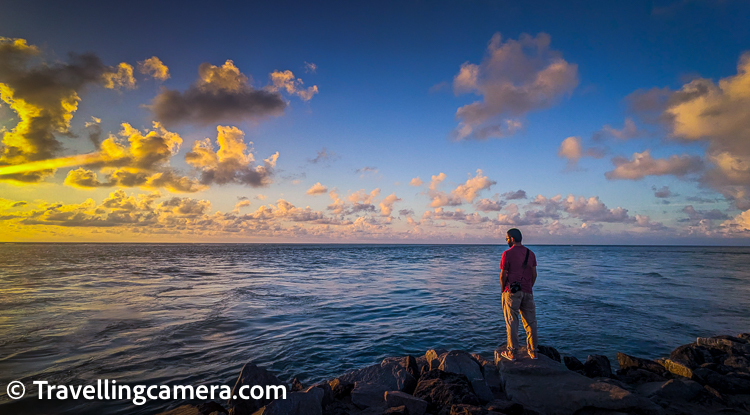
Rameshwaram in Tamilnadu, India - The Land of Sacred Shrines and Mesmerizing Beaches

Villoondi Teertham - Discovering the Spiritual and Natural Wonders of Rameshwaram, India
%20to%20see%20the%20Danish%20fort%20in%20Tamilnadu%20state,%20India-1.jpg "Drive from Rameshwaram to Pondicherry along the coast - 7th day of our 14 days long trip through east coast of India || Noida to Rameshwaram")
Drive from Rameshwaram to Pondicherry along the coast - 7th day of our 14 days long trip through east coast of India || Noida to Rameshwaram

Drive from Pondicherry to Tada - 8th day of our 14 days long trip through east coast of India || Noida to Rameshwaram

Exploring the Mahatma Gandhi Statue and Other Attractions around Promenade Beach in Pondicherry, India

Kolams and Culture: The Significance of Daily Floor Art in Tamilnadu Homes of South India

Healing Waters and Holy Legends: A Visit to Vibhishan Teertham in Rameshwaram, Tamilnadu

Discovering the Mysteries of Sri Panchmukhi Hanuman Mandir and the Floating Stones of Rameshwaram in Tamilnadu
 Climb to the Top of Chennai Lighthouse : Exploring Aerial views of Marine Drive, Sea and other interesting landmarks of Chennai, Tamilnadu


.jpg)
Comments