Odisha State of India: A Complete Travel Guide for First-Time Visitors

Nestled on the picturesque eastern coast of India, the town of Konark boasts a cultural jewel - the Sun Temple, a UNESCO World Heritage site that attracts visitors from across the globe. However, a perplexing question echoes through the town's narrow lanes and serene beaches: why hasn't Konark witnessed the same level of development that its revered temple suggests? In this exploration, we delve into the factors that contribute to Konark's developmental conundrum.


Introduction: Why Odisha Feels Different

There are places in India that announce themselves immediately. Odisha does something else.

It reveals itself slowly.

A Sanctuary of Legends    Legend has it that the Jagannath Temple was built in the 12th century and is steeped in a myriad of captivating myths and folklore. It is believed to house the deities Lord Jagannath, his brother Balabhadra, and their sister Subhadra.

A temple emerges through a narrow lane in Bhubaneswar. A sculptor quietly works on a stone figure in the shade. A fisherman returns from the sea before breakfast. Somewhere near Puri, the smell of wood smoke mixes with incense and the salty air of the Bay of Bengal. Further inland, the landscape changes completely: forests, rivers, tribal villages and old shrines replace the familiar coastal imagery.

Above photograph shows the bottom part of hat made up of leaves. It's the same hat, I am wearing in very first photograph of this blogpost. Very well made. I wanted to buy this one but was not confident that I will be able to carry it safely to Delhi after 5 days trip in Odisha, so that to pass the opportunity.

That layered character is what makes the Odisha State of India so fascinating for travellers and photographers.

Tucked away in the lush landscapes of Bhubaneshwar, the capital city of Odisha, lies a temple that whispers secrets of ancient mysticism and feminine power. The Chausath Yogini Temple stands as a mesmerizing testament to a bygone era, where the divine feminine was revered, and the esoteric arts held sway. Join us as we step into the enigmatic world of the Chausath Yogini Temple, a realm where spirituality, history, and artistry intertwine.

Odisha is often reduced to three names — Bhubaneswar, Puri and Konark. They deserve their fame, but stopping there means missing much of the story. The state stretches from ancient temple cities and Buddhist sites to mangrove forests, wetlands, craft villages, wildlife reserves and remarkably distinctive regional food.

The Golden Beach is renowned for its awe-inspiring sunsets that paint the sky with a kaleidoscope of fiery hues, casting a spellbinding aura over the entire coastline. As the sun descends into the ocean, the shimmering waters reflect the golden hues of the sky, creating a breathtaking panorama that leaves visitors spellbound. The serenity of the moment, coupled with the mesmerizing play of colors, sets the stage for a captivating experience that lingers in the hearts of all who witness this natural spectacle, making the Golden Beach an unparalleled destination for seekers of natural beauty and serenity.


For someone planning a trip to India with an interest in photography and culture, Odisha can be particularly rewarding because the visual opportunities are not confined to monuments. The real photographs often happen around them.

The museum's exhibits are a journey into the heart of tribal life. Detailed dioramas depict everyday scenes, from hunting and fishing to celebrations and rituals, offering an authentic insight into the tribes' customs and daily routines. Artifacts such as musical instruments, tools, and household items bridge the gap between the past and present, offering a glimpse into the lives of Odisha's tribal communities.

A flower seller arranging garlands.

A temple cook carrying food through a crowded lane.

An artisan drawing a fine black line across a palm leaf.

Migratory birds lifting from Chilika at sunrise.

The last light falling across the wheels of Konark.

These are the frames that stay with you.


Late Morning: Heritage Walk in Old Town  Embark on a heritage walk through Old Town, where every street exudes historical charm. Explore the Mukteshwar Temple, adorned with exquisite sculptures, and witness the ancient rituals at Bindu Sagar, a sacred water tank surrounded by small temples. Allow the narrow bylanes to transport you back in time as you soak in the architectural marvels and stories etched in the walls.

Why Visit the Odisha State of India?

Odisha is one of those destinations where several different kinds of travel come together naturally.

You can spend the morning photographing 10th-century temple architecture, eat a simple Odia lunch, drive towards the coast, watch fishermen work, and end the day photographing a spectacular sunset.

The variety is remarkable.

Evening: Sunset at Khandagiri and Udayagiri Caves  As the day winds down, head to the ancient caves of Khandagiri and Udayagiri. Explore the rock-cut caves adorned with inscriptions and carvings. The Udayagiri caves, in particular, offer breathtaking views of the sunset. The interplay of light and shadow on the ancient stones creates a mesmerizing spectacle.

What makes Odisha special?

  • Ancient Kalinga temple architecture

  • UNESCO-listed Konark Sun Temple

  • Jagannath culture and Puri

  • Buddhist heritage around Dhauli and Lalitgiri

  • Pattachitra painting at Raghurajpur

  • Appliqué traditions at Pipili

  • Chilika Lagoon and migratory birds

  • Bhitarkanika's mangrove ecosystem

  • Similipal and Satkosia landscapes

  • Traditional Odia cuisine

  • Long beaches and coastal villages

  • Tribal cultures and forest landscapes

  • Strong opportunities for documentary and architectural photography

Situated in the capital city of Bhubaneswar, the Odisha State Tribal Museum is a treasure trove of knowledge that celebrates the indigenous tribes of the region. The museum pays homage to the age-old traditions, rituals, and lifestyles that have shaped the lives of these communities for generations.

Odisha also has an unusually strong relationship between religion, art and everyday life. Many traditional crafts aren't museum pieces. They remain part of living communities.


Morning: Spiritual Awakening at Lingaraj Temple  Begin your day at the iconic Lingaraj Temple, a masterpiece of Kalinga architecture. As you marvel at the intricately carved spire and sanctum, feel the spiritual energy that permeates this sacred space. Engage with the morning rituals and witness the devout paying homage to Lord Lingaraj. The temple's serene surroundings set the perfect tone for a day of cultural exploration.

The Historical Soul of Odisha: From Kalinga to Modern Odisha

To understand Odisha, start with Kalinga.

In 261 BC, Emperor Ashoka invaded Kalinga. The resulting war was devastating. According to Ashoka's own 13th Rock Edict, enormous numbers of people were killed, captured or displaced. The experience profoundly affected him and became associated with his subsequent embrace and propagation of Buddhist principles of non-violence.

Enhanced Nighttime Tourism:    The show contributes to the promotion of nighttime tourism in Konark. By providing an engaging and visually stunning experience after sunset, it encourages visitors to explore the temple complex during the evening hours.

This makes Dhauli, near Bhubaneswar, much more than another archaeological stop.

The landscape is peaceful today. That contrast is powerful.

Standing near the Dhauli hills, it is worth remembering that the quiet landscape around you is associated with one of the most consequential transformations in ancient Indian history.

Later, Odisha became an important centre of Jainism, Buddhism and Hinduism. King Kharavela, associated with the ancient Mahameghavahana dynasty, was an important patron of Jainism.  Then came the extraordinary flowering of temple architecture.

Later, Odisha became an important centre of Jainism, Buddhism and Hinduism. King Kharavela, associated with the ancient Mahameghavahana dynasty, was an important patron of Jainism.

Then came the extraordinary flowering of temple architecture.

Bhubaneswar alone contains a remarkable concentration of temples, while Puri became inseparable from Jagannath worship. Konark eventually produced one of India's most ambitious temple complexes.

Bhubaneswar alone contains a remarkable concentration of temples, while Puri became inseparable from Jagannath worship. Konark eventually produced one of India's most ambitious temple complexes.


Dinner: Local Delicacies at Raja Rani Haat  Conclude your day with a culinary treat at Raja Rani Haat, a vibrant marketplace that comes alive in the evening. Sample local snacks like Bara Ghuguni, Aloo Chop, and the famous Odia street food, Dahibara Aloodum. The lively atmosphere and diverse food stalls ensure a delightful end to your day.

Odisha State of India Through Its Temples

If architecture interests you, Odisha is almost overwhelming.

The temples here aren't merely large stone structures. Their surfaces are dense with information.

Look closely and you'll find dancers, musicians, mythical creatures, floral patterns, animals, celestial figures and scenes from everyday life.

3. Konark: The Sun-Kissed Marvel  Konark Sun Temple, Chandrabhaga Beach, Ramachandi Temple  Konark, a UNESCO World Heritage Site, is renowned for the mesmerizing Konark Sun Temple. Delight in the sunrise at Chandrabhaga Beach and explore the spiritual charm of Ramachandi Temple.

Bhubaneswar: The Temple City

Bhubaneswar is the natural starting point.

The Lingaraj Temple dominates the city's religious landscape, but photographers should resist spending the entire day chasing the largest monument.

Walk.

Explore the older neighbourhoods.  Look for smaller shrines, stone carvings, temple tanks and everyday rituals.  Mukteshwar Temple is particularly rewarding photographically because its scale allows you to study details without being overwhelmed by the monument itself.

Explore the older neighbourhoods.

Look for smaller shrines, stone carvings, temple tanks and everyday rituals.

Mukteshwar Temple is particularly rewarding photographically because its scale allows you to study details without being overwhelmed by the monument itself.

The old temples around Bindusagar can also produce interesting compositions, particularly during early morning when local activity begins.

Photography tip For architecture, early morning is usually more forgiving than harsh afternoon sunlight.  The low-angle light creates texture across carved stone. A telephoto lens can be surprisingly useful because it allows you to isolate individual sculptures rather than producing yet another wide-angle temple photograph.

Photography tip

For architecture, early morning is usually more forgiving than harsh afternoon sunlight.

The low-angle light creates texture across carved stone. A telephoto lens can be surprisingly useful because it allows you to isolate individual sculptures rather than producing yet another wide-angle temple photograph.


1. Puri: The Spiritual Seashore  Jagannath Temple, Golden Beach, Chilika Lake  Begin your Odisha sojourn in Puri, home to the iconic Jagannath Temple. Immerse yourself in the spiritual fervor, take a stroll along the golden sands of Puri Beach, and venture to the nearby Chilika Lake for a scenic boat ride.

Puri: More Than a Beach Town

Puri is one of India's great pilgrimage cities.

The city is deeply associated with Lord Jagannath, Lord Balabhadra and Goddess Subhadra and is one of the Char Dham pilgrimage destinations. Its religious identity shapes everything from food to architecture and street life.

The Jagannath Temple itself is the spiritual centre of the city, but visitors should remember that it is an active place of worship rather than a photographic monument.

Photography restrictions apply inside the temple, and non-Hindu visitors cannot enter the temple complex.

In the heart of the ancient city of Bhubaneswar, where history and spirituality intertwine seamlessly, stands the magnificent Siddheswara Temple. This architectural masterpiece, steeped in centuries of heritage, offers a window into the rich cultural tapestry of Odisha. Join us as we embark on a virtual exploration of the awe-inspiring Siddheswara Temple and the stories it holds.

That makes the surrounding streets even more important.

Watch the movement.

Observe pilgrims.

Look at flower sellers, craftsmen, rickshaw pullers, food vendors and the endless flow of people moving towards the temple.

This is where documentary photography becomes more interesting than postcard photography.

One of the most captivating features of the Mukteswara Temple is its intricate carvings. The temple's exterior is adorned with exquisite sculptures that narrate tales from Hindu epics, mythological narratives, and scenes of daily life. The portrayal of celestial beings, divine creatures, and intricate geometric patterns reflect the spiritual beliefs and artistic genius of the time.

Puri Beach at dawn

If you want to photograph Puri Beach, don't wait until breakfast.

Arrive before sunrise.

Fishing boats, silhouettes, walkers, vendors and the changing colours of the sky can create far more atmospheric images than the busy middle of the day.

The beach also offers something photographers often overlook: repetition.

Lines of boats.

Rows of footprints.

Fishermen pulling nets.

Waves creating horizontal bands.

Use these patterns.


Nestled on the eastern coast of India, Odisha is a land of diverse landscapes, ancient temples, vibrant art forms, and pristine beaches. Often referred to as India's best-kept secret, Odisha offers a treasure trove of experiences for the intrepid traveler. Join us on a virtual journey as we unveil the main places to explore in this culturally rich and historically significant state.

Konark: When Architecture Becomes Sculpture

Konark is probably the single most important architectural stop on an Odisha itinerary.

The 13th-century Sun Temple is a UNESCO World Heritage Site and is designed around the symbolic form of Surya's chariot, with 24 elaborately carved wheels and seven horses.

The scale is impressive, but the details are what reward a photographer.

Don't simply photograph the entire temple.

Photograph one wheel.

Then photograph a detail within that wheel.

Look for dancers.

Look for animals.

Look for expressions.

Look for damaged surfaces where centuries of weathering have become part of the sculpture.

The Mukteswara Temple, often referred to as the "Gem of Odisha Architecture," holds a history that spans over a thousand years. Built in the 10th century, during the reign of the Somavamshi dynasty, the temple is a living testimony to the artistic brilliance and devotion of the era.

The best photographic approach

Visit early or late in the day.

Morning light can reveal surface texture beautifully. Late afternoon produces stronger shadows that emphasise the three-dimensional carvings.

A 70–200mm-type lens can be extremely useful for isolating details.

Here are some special sculptures that you can find within the temple:  Torana Sculptures: The torana, or arched gateway, at the entrance of the temple is adorned with intricately carved sculptures of various deities and celestial beings. These sculptures include depictions of Ganga and Yamuna, who are river goddesses, as well as images of various divine attendants and mythical creatures.  Dancing Apsaras: The temple is adorned with beautifully carved dancing apsaras, celestial nymphs who are known for their captivating dance forms. These sculptures are found on the outer walls and depict graceful and intricate dance poses.  Lingam with Faces: Inside the sanctum sanctorum, there is a unique lingam with human faces sculpted on its sides. This depiction is believed to represent the multi-faceted nature of Lord Shiva and his various manifestations.  Uma-Maheshwara Sculpture: One of the intricate reliefs on the temple wall depicts a scene of Uma (Parvati) and Maheshwara (Shiva) riding on Nandi, the bull. This portrayal of the divine couple exudes an aura of serenity and devotion.  Nayikas and Nayakas: The walls of the temple feature sculptures of nayikas (heroines) and nayakas (heroes) engaged in various emotional and romantic poses. These sculptures are celebrated for their delicate expressions and graceful postures.  Lakulisha Sculpture: A particularly important sculpture in the temple complex is that of Lakulisha, a form of Lord Shiva considered to be the 28th incarnation of the deity. Lakulisha is often depicted as a yogi holding a staff.  Paradevata Sculptures: The outer walls of the temple are adorned with paradevata sculptures, which are representations of various deities and celestial beings. These sculptures provide a glimpse into the rich pantheon of Hindu mythology.  Yakshi Sculptures: Some of the sculptures around the temple depict yakshis, female nature spirits often associated with fertility and abundance. These sculptures add a touch of mysticism and ancient beliefs to the temple's ambiance.  Animal Motifs: Throughout the temple, you'll find intricate carvings of animals, both real and mythical, such as elephants, lions, and makaras (a mythical sea creature). These motifs add a dynamic and lively element to the architecture.  Navagraha Panel: The temple features a panel depicting the nine planetary deities, known as the Navagrahas. Each deity is associated with a specific planet and is depicted in a distinct pose or posture.

And don't forget the surrounding landscape. Sometimes the strongest composition isn't the monument itself but the temple appearing through trees, people or architectural fragments.

The Konark complex also includes the Natya Mandir, whose sculpted pillars depict dancers and musicians. UNESCO specifically notes the importance of dance and music imagery in the temple's sculptural programme.


Here is another artist from Raghurajpur village who is also national awardee. I had captured his name in my notes and misplaced somewhere. I I will try to find and add more about it.

Raghurajpur: Where Art Lives in People's Homes

About 12 km from Puri lies Raghurajpur, one of Odisha's most fascinating cultural experiences.

This is not simply a shop-lined tourist market.

It is a village where traditional art is part of household life.

The annual Pattachitra Mela in Raghurajpur is a vibrant celebration of art and culture that attracts a large number of visitors from near and far. Held in the village during a specific time of the year, the mela serves as a platform for the local artisans to showcase their exquisite Pattachitra paintings and other traditional crafts to a wider audience.  Showcasing Artistic Excellence: During the Pattachitra Mela, the artisans of Raghurajpur display their finest creations, ranging from intricate Pattachitra paintings to palm leaf engravings, Tussar silk paintings, stone carvings, wooden toys, and papier-mâché masks. The mela provides a unique opportunity for visitors to witness the diversity and exceptional artistry of the village's craftsmen.  Cultural Performances: Alongside the art exhibitions, the Pattachitra Mela is also known for its lively cultural performances. Traditional music, folk dances, and theatrical plays are organized to entertain the visitors. The performances often depict mythological stories and historical events, offering a glimpse into the rich cultural heritage of Odisha.

Raghurajpur is renowned for Pattachitra, the intricate cloth-based painting tradition associated with Jagannath culture. Odisha Tourism describes the village as having roughly 120 homes arranged in two rows, with artists working from their homes.

The word itself is revealing: patta refers to cloth and chitra to painting.  The artists traditionally make their own materials, including paints and brushes.  For a photographer, this is an extraordinary opportunity.  But ask before photographing people at work.  Don't turn someone's home into a studio without permission.

The word itself is revealing: patta refers to cloth and chitra to painting.

The artists traditionally make their own materials, including paints and brushes.

For a photographer, this is an extraordinary opportunity.

But ask before photographing people at work.

Don't turn someone's home into a studio without permission.

Spend time talking first.

The photograph will usually be better anyway.

Look beyond Pattachitra

Raghurajpur is also associated with palm-leaf engraving, wooden crafts and Gotipua traditions.

The finest photographs may be found in the process rather than the finished product: a hand holding a brush, pigment being applied to cloth, a wall covered with works in progress, or an elderly artisan explaining a detail to a younger family member.


6. Raghurajpur: The Artistic Village  Pattachitra Paintings, Gotipua Dance, Handicrafts  Discover the cultural oasis of Raghurajpur, where traditional Pattachitra paintings come to life. Experience the ancient Gotipua dance form and explore the myriad handicrafts crafted by skilled artisans.

Pipili and the Colour of Odisha

Pipili is known for its appliqué traditions.

Here, colourful pieces of cloth are cut and stitched into decorative patterns. The craft is closely associated with Jagannath culture and temple traditions.

Photographically, Pipili is almost the opposite of the stone temples.

Konark gives you texture and monochrome.

Pipili gives you colour.

Look for repetition and geometric forms. Shoot close-ups rather than only finished products.

A 50mm or 85mm lens is ideal for portraits and detail shots, while a wider lens can capture artisans surrounded by their colourful work.


Chilika lake is one of the popular places to visit in Odisha  and it’s spread over Puri, Khurda and Ganjam regions of Odisha state. It’s on east coast of India which flows into the Bay of Bengal. It’s largest coastal lagoon in India and second largest lagoon in the world. The largest one is New Caledonian barrier reef. Recently we visited Chilika lake and this Photo Journey shares some of the photographs telling story of our visit.Supposedly Chilika Lake is largest wetland on the Indian sub-continent for Migratory birds in winters. Lot of tourists visit Chilika lake but main ecosystem is around fishery resources. There are thousands of fisher-folks in villages around shoreline and islands around Chilika Lake.How to reach – Most of the folks visit Chilika Lake from Bhubaneshwar or Puri. Taxi is one of the best ways to save time and explore the beauty on your way. Balugaon is nearest railway station and then auto can help you reach near Chilika lake. In the world of Ola and Uber, commute has become easier and convenient. One doesn’t need to negotiate with unreasonable cabbies and auto-walas outside Railway-station or bus-stand. I am sure, buses from main cities would be available but. There are different views of people visiting Chilika. Nature lovers would certainly love the place and if you like following birds, it's certainly a good place for you.As you see lot of these pearls being shown in our photographs. So this is a typical thing in Chilika lake that locals show you pearls and different kinds of stones. And they break shells in front of you. Not sure how real these are but we bought few by paying few thousands. There are lot of stories about the stones sold around Chilika. For a moment, we were also depressed by the thought that stone we bought can be fake. We are not experts and we don't even want to get these tested (for our own peace). But be cautious before taking such decision. They can be fake or real. You have to see if you like any of these stones and willing to pay a price.Boat rides are interesting but they don't give life jackets which was surprising for us. We didn't see dolphins in Chilika lake. It seems that early morning view around Chilika lake is very interesting.Since lake is huge, boating experience of Chilika Lake is different.

Chilika: A Different Odisha

Then comes Chilika Lagoon.

The landscape changes dramatically.

This vast brackish-water lagoon is an important habitat for birds and other wildlife. Odisha Tourism highlights Chilika as a major congregation site for migratory birds.

For photographers, winter is particularly attractive.

Above photograph shows door designed by Biswanath Swain's father and is still an exceptional visual in whole Raghurajpur village.

At dawn, the lagoon can feel almost monochromatic — pale water, distant islands, mist and silhouettes of boats.

Then the sun rises.

Birds become visible.

Boats begin moving.

The entire landscape slowly acquires colour.

Satapada is well known for Irrawaddy dolphin sightings, while other parts of the lagoon are particularly interesting for bird photography.

Don't expect wildlife photography to work like a zoo visit.

The animals determine the schedule.

Patience matters more than equipment.


There is one annoying part of Raghurajpur Village that as you enter the village, lot of boys start chasing you and invite you to their house for showing art-work. I understand that one needs to market but there should be some level of limit which can be done in better way. I wish some NGO also spend some time with these families to train them on how to approach tourists/guests, interact and make the sale.

Bhitarkanika: Mangroves, Crocodiles and a Wilder Odisha

If you have additional time, Bhitarkanika is one of the state's most rewarding detours.

The landscape is dramatically different from Puri or Bhubaneswar.

Mangrove creeks replace temple streets.

Boats become the main mode of movement.

Saltwater crocodiles lie motionless along muddy banks.

Odisha Tourism describes Bhitarkanika as one of India's major mangrove ecosystems and notes its significant population of saltwater crocodiles and birdlife.

This is an excellent destination for photographers who enjoy wildlife and environmental storytelling.

Use a longer lens.

Keep your movements controlled.

Listen to your boatman or forest guide.

And remember that a wildlife photograph isn't worth compromising safety.


The Art of Crafting Eco-Friendly Ganesh Idols in Odisha    Clay Sculpting: Odisha's skilled artisans commence the creation of eco-friendly Ganesh idols by sculpting the deity using locally sourced clay. These craftsmen painstakingly fashion each idol with intricate details, ensuring that it captures the essence of Lord Ganesha.

Satkosia and Similipal: The Forest Side of Odisha

Odisha isn't just temples and coastline.

The state's interior reveals another personality.

Satkosia follows the Mahanadi through a dramatic gorge. Odisha Tourism notes that the Satkosia Gorge extends for around 22 km and lies at the meeting zone of the Eastern Ghats and Deccan Plateau.

Similipal offers another experience altogether, with sal forests, hills and wildlife.

These landscapes are particularly rewarding for people who enjoy slower travel.

Instead of collecting attractions, spend time watching.

A forest road at sunrise.

Mist between trees.

Bird calls.

A village road after rain.

Sunlight filtering through sal leaves.

These are photographs that require patience.


Hope you enjoyed the journey to Konark Sun Temple, Udaygiri & Khandagiri Cave  and Shanti Stupa in Dhauli . Today we shall take you inside Nandan Kanan Zoological park in Bhubaneshwar, Odisha .Nandankanan means 'The Garden of Heavens' and is spread over 400 acres. It's one of the must visit places in Bhubaneshwar, especially when kids are accompanying you. It's very different from Zoo  you see in cities by Delhi. It's a zoo and botanical park. Some part of it is also declared as sanctuary.We took a guide along and he was very good. It was fun to learn from him about various birds hiding behind the leaves, their characteristics and tricks to locate some of the beautiful birds. We loved the fact that birds had huge space to fly around and their cages were not small. There are huge areas covered with iron nets and these compounds have good vegetation.  Monsoons made our visit more adventurous :) and thanks to our guide for arranging umbrellas on rent. Colors were popping up due to rains. We loved the fact that everyone had enough space inside the zoo to walk and enjoy monsoons.Nandankanan zoo is home to about 1600+ individual animals representing 160+ species, including 60+ species of mammals, around 80 species of birds and approximately 20 species of reptiles. Some areas of the zoo can be explored on feet and few regions can be explored in closed jeep.Nandankanan zoo entry fee is 25 rs for Indians and 10 rs for kids. It's 100 Rs for foreigners. And Zoo timings are - 8am to 5pm during October to March and opens at 7:30am during rest of the year. Check out more at -One can see White Tigers, Aquaria,  Asiatic lion, three Indian crocodilians, Sangal lion-tailed macaque, Nilgiri langur, Indian pangolin, mouse deer and countless birds, reptiles and fish have been breeding successfully at Nandankanan. Various species of crocodiles, lizards, turtles, and snakes can be seen inside Nanadankanan Zoological Park.There are buses available from different parts of Bhubaneshwar to Nandankanan Zoo. One can also hire a taxi.This beautiful landscaping encourages you to keep walking and you don't realize how much you have already walked

Lesser-Known Odisha Experiences Worth Adding

If you've already seen Puri and Konark, consider expanding the journey.

Dhauli's historical significance dates back to the ancient past, particularly to the time of the Kalinga War in 261 BCE. It was on these very grounds that Emperor Ashoka, after witnessing the devastating aftermath of the war, renounced violence and embraced the path of nonviolence and compassion. The hill of Dhauli became a poignant symbol of his transformation, marking a turning point in the history of India and the world.

Dhauli

Visit for history, landscape and the Buddhist connection to Ashoka.

Hidden within the heart of Odisha, India, lies a treasure trove of history, spirituality, and natural beauty—the Khandagiri and Udayagiri caves. These remarkable rock-cut caves, carved into the hillsides, offer a fascinating journey into the past and a serene escape from the bustling modern world. Join us as we explore the wonders of Khandagiri and delve into the rich tapestry of its history and culture.

Udayagiri and Khandagiri

The ancient rock-cut caves offer a fascinating combination of archaeology, religion and urban proximity.

Chandipur

This unusual beach is known for its dramatic receding tide. Odisha Tourism also highlights its red-crab populations and birdlife.

Daringbadi

The hill landscape provides a completely different visual experience from coastal Odisha.

Debrigarh

Located beside the Hirakud reservoir, Debrigarh offers wildlife, water landscapes and birding opportunities.

Tucked away in the lush landscapes of Bhubaneshwar, the capital city of Odisha, lies a temple that whispers secrets of ancient mysticism and feminine power. The Chausath Yogini Temple stands as a mesmerizing testament to a bygone era, where the divine feminine was revered, and the esoteric arts held sway. Join us as we step into the enigmatic world of the Chausath Yogini Temple, a realm where spirituality, history, and artistry intertwine.

Chausathi Yogini Temple, Hirapur

This small circular temple is particularly interesting for travellers fascinated by Indian sacred architecture and less conventional temple forms.

It is easy to overlook because it lacks the monumental scale of Lingaraj or Konark.

That is precisely why it is worth visiting.


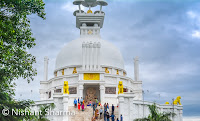
At the heart of Dhauli stands the Shanti Stupa, a gleaming white monument that embodies the spirit of peace and harmony. Built in the early 1970s by the Kalinga Nippon Buddha Sangha and the Japan Buddha Sangha, the stupa radiates an aura of serenity. Its spherical shape and pristine white exterior draw visitors to its premises, where they can meditate, reflect, and pay homage to the timeless ideals of nonviolence and unity.

Best Photography Spots in Odisha

LocationBest subjectIdeal time
Lingaraj area, BhubaneswarTemple architecture and street lifeEarly morning
Mukteshwar TempleSculptural detailsMorning
DhauliLandscape and historical imagerySunrise / sunset
PuriPilgrims, streets, fishermenEarly morning
Puri BeachBoats and silhouettesSunrise
KonarkArchitecture and sculptureMorning / late afternoon
RaghurajpurArtisans and craftsMorning / afternoon
PipiliColour and craft detailsDaytime
ChilikaBirds, boats and landscapesSunrise
BhitarkanikaCrocodiles, mangroves, birdsMorning
ChandipurReceding sea and shorelineLow tide / sunset
SimilipalForest landscapesEarly morning

4. Cuttack: The Cultural Capital  Barabati Fort, Netaji Birthplace Museum, Dhabaleswar Island  Cuttack, with its historical significance, beckons with Barabati Fort, the birthplace of Netaji Subhas Chandra Bose, and the serene Dhabaleswar Island on the Mahanadi River.

Photography Tips for Odisha

Odisha rewards photographers who slow down.

A Riverside Oasis  A Tranquil Haven: Dhabaleswar Temple's location on an island in the Mahanadi River offers a serene escape from the bustling city. The gentle rustling of leaves, the melodious chirping of birds, and the soothing ripple of the river create an ambiance of unparalleled tranquility.

1. Carry both wide and telephoto lenses

A wide lens works for temples and landscapes.

A telephoto lens is invaluable for sculpture details, portraits from a respectful distance and wildlife.

The Kuruma excavation site, located near Konark in the Indian state of Odisha, is a historically significant archaeological site that has revealed key elements of ancient Indian culture and history. Here are some of the key elements associated with the Kuruma excavation site:

2. Don't photograph every temple from the centre

Move sideways.

Change your height.

Look for foreground elements.

Use doorways, trees and people to create layers.

Gift Shop: The museum typically has a gift shop where visitors can purchase traditional crafts and artworks as souvenirs. This provides support to local artisans and promotes the preservation of these traditional crafts.

3. Shoot people naturally

Ask permission for close portraits.

A simple greeting in Odia — "Namaskar" — can open a conversation.

Odisha Tourism also notes that Hindi and English are commonly understood in Bhubaneswar.

Date and Style: The sculpture is believed to date back to the 8th or 9th century CE and bears the hallmark of Odisha's exquisite artistic traditions. Its style is reminiscent of the region's classical sculpture, known for its exquisite attention to detail and emotive expressions.

4. Protect your gear

Humidity, dust and sudden rain can be hard on cameras.

Carry:

  • Microfiber cloths

  • Rain protection

  • Extra batteries

  • Lens cloth

  • Silica gel

  • Spare memory cards

Creating Pattachitra paintings is a meticulous and intricate process that requires skilled craftsmanship. Here's an overview of the traditional process involved in making Pattachitra paintings:  Preparation of the Canvas: The canvas for Pattachitra paintings is typically a piece of cloth or specially treated palm leaf. The cloth is first washed, starched, and sun-dried to create a smooth surface for painting. The palm leaf is cut into desired sizes and polished to make it suitable for painting.

5. Watch the light

Coastal Odisha can become harsh very quickly after sunrise.

Use early morning for people and architecture.

Use late afternoon for monuments.

Use overcast weather for close-up sculpture photography.

Cloudy light is often a gift when photographing carved stone.


Last time our sister had visited the cafeteria in Odisha State Tribal Museum and they had loved the food. This time, we were at the museum before lunch time but waited to ensure we have Fish Thali at the museum. It was delicious and just costed us 90 rupees. The quantity was more that enough for 2 of us. Usually they serve one thali to one person and then you can get refills. We just got a thali, no refills and it was enough for us. Whenever you plan a visit to Odisha State Tribal Museum, I will highly recommend having a meal at the cafeteria which is close to the souvenir shop in this beautiful compound.

Food in Odisha: Don't Leave Without Eating Properly

Odia cuisine is one of India's most underrated regional food traditions.

Start with dalma, a comforting preparation of lentils and vegetables.

Then try pakhala, especially during the hotter months. It is fermented rice soaked in water and traditionally eaten with accompaniments such as fried vegetables and fish. Odisha Tourism describes it as a quintessential summer food.

And then there is Mahaprasad in Puri.

The temple food tradition is fascinating not merely because of what is served but because of how it is prepared. Odisha Tourism describes the unusual practice of stacking earthen cooking pots, with the pot at the top cooking first.

The Making of Khaja:  Ingredients of Khaja: Khaja primarily consists of all-purpose flour (maida), sugar or jaggery, ghee (clarified butter), and cardamom for flavoring. These simple ingredients are transformed into a sweet masterpiece through a series of steps.  Layering Technique of Khaja : The key to Khaja's unique texture lies in its layering technique. The dough is rolled out into thin sheets, which are then layered with ghee and folded multiple times. This process is repeated several times to create multiple layers.  Frying process of Khaja : Once the layered dough is ready, it is cut into desired shapes, typically diamond-shaped. These pieces are deep-fried until they turn golden brown, resulting in a crispy outer layer.  Sugar Syrup for Khaja: After frying, the Khaja pieces are dipped in sugar syrup, which gives them a sweet and slightly sticky coating. The sugar syrup is often flavored with cardamom, adding a delightful aroma.

Also look for:

  • Chhena poda

  • Pitha

  • Dalma

  • Pakhala

  • Dahi bara

  • Machha besara

  • Santula

  • Bara

  • Rasabali

  • Odia rasagola

Chhena poda deserves special attention.

It is essentially a baked cheese-based sweet with caramelised edges and a smoky depth. The dessert is strongly associated with Odisha and is particularly memorable when freshly prepared.

Don't judge Odia food only by restaurant menus.

Try local eateries.

Ask what is cooked that day.


Late Morning: Nandankanan Zoological Park  Embark on a short journey to Nandankanan Zoological Park, a haven for wildlife enthusiasts. Home to a variety of flora and fauna, including the rare white tiger, the zoo provides an opportunity to connect with nature. The serene lake and lush greenery create a perfect backdrop for a leisurely stroll.

Local Conversations Are Part of the Journey

One of the most rewarding things about Odisha is that the best stories often come through conversations.

Talk to a fisherman rather than photographing only his boat.

Ask an artisan how long it takes to complete a painting.

Ask a shopkeeper which sweet he would buy for his own family.

Ask your driver where he eats lunch.

These questions frequently take you somewhere Google Maps cannot.

And don't rush the conversation.

In a place like Raghurajpur, five minutes spent listening can tell you more about the craft economy than a dozen photographs of finished paintings.


Evening: Sunset at Rajarani Temple  Witness the serene beauty of the sunset at Rajarani Temple, known for its ornate sculptures and intricate carvings. The warm glow of the setting sun against the temple's backdrop creates a magical ambiance, providing a perfect end to your two-day itinerary.

Best Time to Visit Odisha

For a broad Odisha itinerary, November to March is generally the most comfortable period.

Bhubaneswar's cooler, drier season is typically between November and March, while summer becomes hot and humid and the monsoon arrives from around June.

SeasonWhat to expect
November–FebruaryBest overall weather, wildlife and birding
MarchIncreasing heat, good for some cultural trips
April–MayVery hot and humid
June–SeptemberMonsoon, lush landscapes, rain
OctoberPost-monsoon greenery and changing weather

The Lingaraj Temple is a place of deep spiritual significance for Hindus, drawing thousands of devotees and pilgrims every year. The presiding deity, Lord Lingaraj, is a manifestation of Lord Shiva, and the temple's rituals and festivities are an integral part of Odisha's cultural fabric. The annual Rukuna Rath Yatra, a grand chariot festival, is a major highlight, attracting devotees from all walks of life.

For photographers

Birds: winter

Architecture: November–February

Green landscapes: monsoon and post-monsoon

Beach photography: winter mornings and evenings

Wildlife: winter generally offers comfortable conditions, but always check current park access and wildlife rules


How to Reach Odisha For most travellers, Bhubaneswar is the easiest entry point.  Biju Patnaik International Airport connects the state capital with major Indian cities.  Bhubaneswar is also an important railway junction.

How to Reach Odisha

For most travellers, Bhubaneswar is the easiest entry point.

Biju Patnaik International Airport connects the state capital with major Indian cities.

Bhubaneswar is also an important railway junction.

From there, Puri and Konark can be combined into a coastal circuit.

For a wider Odisha journey, road travel becomes increasingly useful.

A private car or hired vehicle makes it much easier to combine places such as Bhubaneswar, Puri, Konark, Raghurajpur and Chilika without constantly working around public transport schedules.


Visiting popular tourist attractions often comes with the expectation of long lines and a bit of patience. However, when bad administration at the ticket counter allows queue-jumping to run rampant, it can turn a potentially enjoyable experience into a frustrating ordeal. This is a tale of such mismanagement and the havoc it wreaks on the orderly flow of visitors.

Where to Stay in Odisha

Your choice should depend on the kind of trip you are planning.

Exploring the Surroundings  Beyond the caves, the Khandagiri area offers picturesque views of the surrounding landscape. As you ascend the hills, you'll be treated to panoramic vistas of lush greenery, the city of Bhubaneswar, and the distant horizon. The well-maintained pathways and viewpoints make it an ideal spot for a leisurely stroll or a quiet picnic.

Bhubaneswar

Best for:

  • First-time visitors

  • Heritage exploration

  • Food

  • Business facilities

  • Easy transport

Tradition and History: A Living Heritage  The art of appliqué in Pipili has roots that go back centuries. It's said to have originated as temple decorations, where ornate umbrellas and canopies were crafted to adorn chariots during religious processions. Over time, the craft expanded to include a wide array of items, ranging from decorative hangings to vibrant bags and accessories. Pipili's artisans have meticulously preserved this heritage, passing down skills and techniques through generations.

Puri

Best for:

  • Jagannath culture

  • Beach

  • Temple experiences

  • Coastal photography

Konark

Best for:

  • Photography

  • Slow travel

  • Sun Temple

  • Coastal landscapes

Chilika Best for:  Birding  Boating  Nature photography

Chilika

Best for:

  • Birding

  • Boating

  • Nature photography

Cuttack, a city that embraces a rich tapestry of cultures and faiths, boasts an array of spiritual landmarks that have stood the test of time. Among these, the Bukhari Baba Mazar shines as a beacon of spirituality and a symbol of unity. Located in the heart of the city, this revered shrine has been a source of solace and devotion for countless visitors. In this blog post, we embark on a spiritual journey to explore the charm, history, and cultural significance of the Bukhari Baba Mazar in Cuttack.

Wildlife destinations

Nature camps and eco-tourism accommodation can make more sense than conventional hotels when visiting places such as Bhitarkanika or Satkosia. Odisha Tourism lists nature camps and eco-retreat accommodation across several wildlife and coastal destinations.


Cuttack, a city known for its rich history and vibrant culture, boasts several remarkable landmarks that contribute to its identity. Among these, the Jawaharlal Nehru Indoor Stadium shines as a hub of sporting excellence and cultural vibrancy. In this blog post, we'll take you on a journey to explore the charm, history, and cultural significance of the Jawaharlal Nehru Indoor Stadium in Cuttack.

Budget Tips for a Trip to Odisha

Odisha can be considerably more affordable than many heavily visited Indian destinations.

A sensible strategy is to spend selectively.

Save on:

  • Local meals

  • Public transport for short distances

  • Simple guesthouses

  • Local markets

Spend more on:

  • A knowledgeable local guide

  • Wildlife permits

  • A good boat experience at Chilika or Bhitarkanika

  • A comfortable vehicle for multi-day road trips

Bhubaneswar, often referred to as the "Temple City of India," is a place where history, spirituality, and modernity coalesce seamlessly. Amidst the myriad of ancient temples that dot the cityscape, the ISKCON (International Society for Krishna Consciousness) Temple in Bhubaneswar stands as a testament to devotion, architecture, and a deep connection with Lord Krishna. In this blog post, we'll take you on a spiritual journey to explore the charm, significance, and cultural richness of the Bhubaneswar ISKCON Temple.

For photographers, a knowledgeable local guide can be worth much more than upgrading a lens.

They know where people gather.

They know when boats return.

They know which village lane becomes beautiful in evening light.

That local knowledge produces photographs.


There was a group of tribals who were making these art in one of the exhibition halls of Odisha State Tribal Museum. These art pieces are created out of paddy seeds. First these seeds are fixed along pieces of grass by using colourful threads and then different shapes are given. Like, above you see Ganesha shapes made out of hundreds of paddy seeds.

A 7-Day Odisha Itinerary

Day 1: Bhubaneswar

Explore the old temples.

Visit Lingaraj area, Mukteshwar and nearby heritage sites.

Spend the evening photographing local streets.

Day 2: Bhubaneswar and Dhauli

Visit Dhauli in the morning.

Continue to Udayagiri and Khandagiri.

Return to Bhubaneswar for local food.

Day 3: Puri

Travel to Puri.

Explore the old city and temple surroundings.

Photograph the beach at sunset.

Day 4: Raghurajpur and Konark

Start early.

Visit Raghurajpur and spend time with artisans.

Continue to Konark.

Stay around Konark or return to Puri.

Day 5: Chilika

Travel towards Chilika.

Take a boat trip.

Look for dolphins and migratory birds depending on season.

Stay near the lagoon if possible.

Day 6: Bhitarkanika or Chandipur

If wildlife interests you, choose Bhitarkanika.

For a shorter coastal experience, consider Chandipur.

Day 7: Return to Bhubaneswar

Keep the final day flexible.

Use it for shopping, food or anything missed earlier.


Bhubaneswar, the capital city of the Indian state of Odisha, is a place that effortlessly blends the charm of tradition with the aspirations of modernity. Amidst its bustling streets and historical treasures lies a serene oasis of greenery and tranquility - the Bhubaneswar Botanical Garden. In this blog post, we'll take you on a journey through this natural wonderland and discover the beauty and biodiversity it has to offer.

Responsible Travel in Odisha

Responsible tourism here isn't complicated.

It begins with paying attention.

Buy crafts directly from artisans when possible.

Ask before photographing people.

Don't touch temple sculptures.

Dress appropriately at religious sites.

Don't fly drones near temples, crowds or sensitive wildlife areas without confirming permissions.

Avoid plastic around beaches and wetlands.

Never feed wildlife.

Use designated trails and boats in protected areas.

Nestled in the cultural heartland of India, the Odisha State Tribal Museum stands as a captivating testament to the diverse and vibrant heritage of the state's indigenous communities. With its captivating exhibits, immersive displays, and dedication to preserving tribal traditions, this museum offers visitors a unique journey into the lives, art, and cultures of Odisha's tribal societies.

And when visiting tribal or rural communities, remember that curiosity does not automatically give us the right to photograph everything.

A photograph should be a shared moment, not an extraction.


The Golden Beach also serves as a cultural hotspot, hosting a variety of cultural events and festivals that showcase the rich artistic heritage and traditional craftsmanship of the region. From vibrant sand art exhibitions to enthralling cultural performances, the beach comes alive with the vibrant spirit and cultural vibrancy that define the essence of Puri. Visitors have the opportunity to engage with local artisans, witness traditional dance forms, and immerse themselves in the rich cultural tapestry that flourishes along the golden shores of this coastal paradise.

Common Mistakes to Avoid in Odisha

Trying to see everything in three days

Bhubaneswar, Puri and Konark can fit into a short trip.

Odisha cannot.

Visiting Konark only at noon

The harsh light makes photography difficult and the heat can be exhausting.

Treating Puri only as a beach destination

Its cultural and religious life is much more interesting.

Buying handicrafts without understanding them

Talk to artisans.

Learn what you are buying.

Ignoring the interior

The forests and tribal regions reveal another Odisha.

Overpacking the itinerary

Leave space for conversations, meals and unexpected detours.

Treating wildlife areas like amusement parks

Wildlife photography requires patience and respect for the environment.

Odisha's protected landscapes are ecologically sensitive, and conservation concerns make low-impact tourism especially important.


A visit to the Golden Beach in Puri is not just an escape; it is a journey into the heart of nature's splendor and a communion with the serenity that envelops this picturesque coastline. Whether you seek moments of quiet contemplation, thrilling adventures, or cultural immersion, the Golden Beach promises an unforgettable experience that etches everlasting memories and fosters a deep appreciation for the wonders of the natural world.

Frequently Asked Questions About Odisha State of India

What is Odisha famous for?

Odisha is famous for Jagannath culture in Puri, the Konark Sun Temple, ancient Kalinga architecture, classical dance and music traditions, Pattachitra art, beaches, Chilika Lagoon, wildlife and distinctive Odia cuisine.

Multilingual Presentation:    The show is presented in multiple languages, ensuring that visitors from different linguistic backgrounds can fully comprehend and appreciate the historical narrative. This inclusivity enhances the overall visitor experience.

How many days are enough for an Odisha trip?

Four to five days are enough for a basic Bhubaneswar–Puri–Konark itinerary. A week allows you to add Chilika and Raghurajpur. Ten days or more are better if wildlife, forests and less-visited regions are included.

Whether you are an avid history enthusiast, a passionate art lover, or a curious traveler, the museum promises an immersive and enlightening experience that fosters a deep appreciation for the rich cultural heritage and artistic brilliance of this captivating town.

What is the best time to visit Odisha?

November to March is generally the best period for a broad sightseeing itinerary because temperatures are more comfortable. Winter is particularly useful for birding and outdoor photography.

Is Odisha good for photography?

Absolutely. Odisha offers architectural, documentary, wildlife, landscape, street and cultural photography opportunities within a relatively compact travel circuit.

What should I eat in Odisha?

Try dalma, pakhala, pitha, chhena poda, Mahaprasad in Puri, local fish preparations, dahi bara and traditional Odia sweets.

Nestled in the historic town of Konark, Odisha, the Archaeological Museum stands as a gateway to the region's rich cultural heritage and ancient marvels. This treasure trove of historical artifacts and ancient relics offers visitors a captivating journey through the illustrious past of Konark, shedding light on the architectural finesse, artistic brilliance, and cultural legacy that have defined this enchanting town for centuries.

Can foreigners visit Puri Jagannath Temple?

The Jagannath Temple has specific entry restrictions and non-Hindus are not permitted inside the temple complex. Visitors should respect the rules rather than attempting to bypass them.

Is Odisha expensive to travel?

It doesn't have to be. Odisha offers accommodation and food across a wide range of budgets. Wildlife trips, private transport and specialist experiences will increase the overall cost.

What are the best places to visit in Odisha for photographers?

Bhubaneswar, Puri, Konark, Raghurajpur, Pipili, Chilika, Bhitarkanika, Dhauli, Chandipur and the forest landscapes around Satkosia and Similipal are particularly rewarding.

Is Odisha suitable for a family trip?

Yes. The combination of temples, beaches, wildlife, food and cultural experiences makes Odisha suitable for families, although wildlife areas and long road journeys require more planning.


Rejuvenation and Renovation: Over the years, the temple has undergone renovations and restoration efforts, preserving its architectural and cultural heritage. The temple complex now includes well-maintained gardens and amenities for the convenience of visitors.

Final Thoughts: Don't Just Visit Odisha. Observe It.

The most memorable thing about the Odisha State of India isn't a single monument.

It is the relationship between things.

Stone and sunlight.

Religion and food.

Art and family.

Ocean and livelihood.

Forest and river.

Ancient history and ordinary modern life.

Konark may be the photograph you planned before arriving. But the image you remember may be something entirely different: an artisan bending over a painting in Raghurajpur, a fisherman walking home through the morning haze, a child watching pilgrims pass through a Puri lane, or a flock of birds lifting from Chilika just as the sun breaks through the clouds.

That is the Odisha worth travelling for.

Community and Devotion: Dhabaleswar Temple is not just a place of worship; it's a focal point of community life. It brings people together, fostering a sense of unity and devotion among the residents of Cuttack.

If this is your first trip to India, Odisha offers something particularly valuable: a chance to experience a part of the country where heritage isn't sealed behind glass.

It is still being lived.

Temples still shape daily routines.

Artists still work in family homes.

Food still carries ritual meaning.

Boats still move across ancient waterways.

And in the early morning, when the tourist buses haven't arrived and the light is soft enough to reveal every texture, Odisha feels less like a destination and more like a story unfolding in front of you.

Bring a camera.

But more importantly, bring time.

You will need both.

Related Blogposts :

To understand the Taj Mahal fully, one must not stop at its gates. Across the Yamuna River lies a quieter counterpart — Mehtab Bagh, or the Moonlit Garden — a space that once framed the Taj within a grand Mughal landscape design. Today it serves as one of the most atmospheric viewpoints for the Taj Mahal, especially during late afternoons and twilight.

Explore Uttar Pradesh State of India: A Complete Travel Guide for First-Time Visitors

I never saw a person throwing garbage on the road and almost every place has dustbins. Many of the taxi drivers keep plastic-bins to keep the waste. Every village is equipped with dustbins which are most of the times made up of waste. This level of awareness and proactive planning is very much required to encourage tourism in right way. Involving local communities always help in maintaining places well and they start seeing huge value in ensuring that places remain clean and well maintained. Most of the folks we encountered were very humble and cheerful.


One of the most exciting places we visited during our road-trip from Noida to Rameshwaram is Gandikota and there are multiple reasons for that. This blogpost will share more about Gandikota, the amazing places to explore around it, along with specially curated list of tips by Travellingcamera.


Nested between the Kandariya Mahadev and the Devi Jagdambi Temples is a small temple knowns as the Mahadev Shrine. The sculpture of a rampant lion fighting a kneeling figure has been installed on the porch. This is supposed to be the emblem of the Chandelas.


Tucked away in the lush landscapes of Bhubaneshwar, the capital city of Odisha, lies a temple that whispers secrets of ancient mysticism and feminine power. The Chausath Yogini Temple stands as a mesmerizing testament to a bygone era, where the divine feminine was revered, and the esoteric arts held sway. Join us as we step into the enigmatic world of the Chausath Yogini Temple, a realm where spirituality, history, and artistry intertwine.Chausath Yogini Temple Bhubaneshwar, Odisha: Unveiling the Mystique of the Yoginis


Raja Rani Temple in Bhubaneshwar, Odisha: Carved Stories from a Bygone Era


Exploring the Ancient Beauty: Parshurameswara Temple in Bhubaneshwar, Odisha


Nestled in the heart of Bhubaneswar, the capital city of Odisha, the Mukteswara Temple stands as a testament to the exquisite craftsmanship and rich cultural heritage of ancient India. With its intricate carvings, architectural finesse, and spiritual significance, the temple is a timeless masterpiece that continues to captivate visitors from around the world.Mukteswara Temple: A Marvel of Architectural Elegance in Bhubaneswar, Odisha


Situated in the capital city of Bhubaneswar, the Odisha State Tribal Museum is a treasure trove of knowledge that celebrates the indigenous tribes of the region. The museum pays homage to the age-old traditions, rituals, and lifestyles that have shaped the lives of these communities for generations.Odisha State Tribal Museum: Unveiling the Rich Tapestry of Indigenous Heritage


Nestled in the heart of Bhubaneswar, the capital city of Odisha, lies a historical treasure waiting to be discovered. Udayagiri, which translates to "Sunrise Hill," is a complex of rock-cut caves that transports visitors to a bygone era of spirituality, artistry, and architectural brilliance. As the sun rises and casts its warm embrace over these ancient structures, one can't help but feel a deep connection to the rich history that dwells within.Unveiling Udayagiri: A Journey into Ancient Marvels in Bhubaneswar, Odisha


While in Bhubaneshwar ( Odisha , we planned to drive to Konark Sun Temple and witness it's grandness & heritage.Temple has beautifully carved stone wheels, pillars and walls. A lot of portions of temple are in ruins, although remained part is being maintained. Some work was happening when we visited the temple this month (july’2016).Sun Temple in Konark is 65 kilometers from Bhubaneshwar and 35 km from Puri.ASI maintains the temple and it’s a UNESCO World Heritage Site. Konark Sun temple is also featured in the list of 7 wonders in India, along with Meenakshi Amman Temple of Madurai, Dholavira of Gujarat, Red Fort of Delhi, Jaisalmer Fort of Rajasthan, Nalanda of Bihar and Khajuraho of MP.The name Konark comes from Sanskrit words - Kona and Ark. Europian sailors had 2 important temples in this part of India - Konark Sun Temple and Jaganath Temple in Puri, which are called Black Pagoda and White Padoga respectively.Konark Sun Temple has used iron beams for it’s structure. It was made to look like Surya-Rath (Chariot of Sun God). There are 12 carved stone wheels which are 3 meters wide and is pulled by a set of seven horses, which you see on entry gate of the temple. It followed popular Kalinga Architecture.Maintenance of Konark Sun Temple was in progress and it made us feel good about the care ASI is taking of these beautiful heritage buildings in India. Although it made us worry about the way these structures are restored. Plain stones without any carving are being added to give support to the structure. It's understandable that same carving might be difficult to achieve but some creative stuff can be done. More than structure, the craved stones are decaying with time and wondering if there is a good way to avoid it. I am sure ASI must thinking about all these things.Konark Sun Temple is one of the most visited tourist places in Odisha and it's considered as one of the most popular places to visit around Bubaneshwar. We didn't want to miss and happy that it was a nice experience to be there. Although the weather was not suitable, but we had fun.There are some interesting facts about the architecture of Konark Sun Temple. Original temple had one part of the compound, which was 70 mgr high. Now the highest structure of the Sun Temple is 30 meters high, which is essentially the audience hall along with smaller structures like Dance hall and Dining hall.Orissa Tourism website  lists few interesting details around history behind this temple.Surrounding of the Konark Sun Temple is pretty green and the weather made it greener for us.We had great time roaming around this beautiful campus of Konark Sun Temple, which has lot to surprise you and make you think how it was built many centuries ago. Here we tried to click family selfie with our DSLR  and it came out well :)These are the Ashvas (horses) of Surya Rath. Somehow the faces are different and I am not sure why. There must be some reason behind these shapes.


Comments

Trending Post Today !

How to reach Kasol/Malana and top things to do around this stunning hill-station of Himalayan State of India

Main places to see & Top things to do around Dalhousie : Stunning Hill Station in Himalayan State of India