

Introduction: The Cave That Looks Finished Until You Step Inside
There is something fascinating about unfinished monuments.
A completed temple tells you what its builders wanted you to see. An unfinished monument sometimes tells you how they worked.
That is exactly what makes the Pancha Pandava Cave in Mahabalipuram so interesting.
At first glance, the monument can easily be mistaken for another completed cave temple in this extraordinary landscape of granite, sculpture and Pallava architecture. Its broad façade, pillars and lion-like figures are enough to attract a quick photograph. But step inside, slow down and look beyond the entrance, and the character of the place changes.
You start noticing unfinished surfaces, deep excavated spaces and architectural elements that seem to have been planned but never brought to their intended conclusion.
The Pancha Pandava Mandapam stands close to Arjuna's Penance, in the heart of the remarkable collection of monuments that visitors sometimes describe as the Mahabalipuram Heritage Park. More accurately, it forms part of the UNESCO-listed Group of Monuments at Mahabalipuram.
This distinction matters because Mahabalipuram isn't really a conventional heritage park. It is an entire historic landscape where caves, monolithic temples, enormous rock reliefs, structural temples, boulders and the sea exist within a relatively compact area.
The Pancha Pandava Cave is not necessarily the monument that dominates a first-time visitor's itinerary.
And perhaps that is precisely why it deserves some attention.
Mahabalipuram is not simply a collection of famous temples. It is a landscape where architecture, geology, mythology, craftsmanship and everyday life constantly overlap.
The Pancha Pandava Cave is one of the places where that story becomes particularly visible.

Why Visit Pancha Pandava Cave in Mahabalipuram?
If you have only a few hours in Mahabalipuram, the obvious attractions are Arjuna's Penance, Krishna's Butter Ball, the Shore Temple and Pancha Rathas.
The Pancha Pandava Mandapam is much easier to overlook.
I would approach it differently.
Come here not because you expect another spectacular sculpture-filled cave, but because you want to understand how Pallava rock-cut architecture was conceived and executed.
The cave offers several things photographs often fail to communicate:
The scale of the excavated granite.
The rhythm of its pillars.
The transition between finished and unfinished carving.
The relationship between natural rock and architectural geometry.
The feeling that the craftsmen stopped before completing their original vision.
Its proximity to one of Mahabalipuram's greatest open-air sculptures.
It is also one of those places where spending ten quiet minutes can be more rewarding than rushing through several monuments.
The unfinished quality makes it especially interesting for anyone who enjoys architecture, archaeology, photography or simply observing how historic places were made.

Pancha Pandava Cave and the Mahabalipuram Heritage Park Landscape
“Mahabalipuram Heritage Park” is a useful search phrase, but it is not the official name of a single park containing these monuments.
The better way to understand Mahabalipuram is as a heritage landscape.
Mamallapuram contains an extraordinary concentration of monuments associated with the Pallava period, including rock-cut caves, monolithic rathas, structural temples and large open-air reliefs.
The landscape becomes especially fascinating when you stop treating these as separate tourist attractions.
Walk from one monument to another and you begin noticing the same material everywhere.
Granite.
The Pallava craftsmen took this hard, unforgiving stone and transformed it into pillars, animals, gods, temples and enormous narrative compositions.
One boulder became a ratha.
Another rock face became a mythological story.
A rocky hillside became a cave temple.
And somewhere among these finished masterpieces are monuments such as Pancha Pandava Mandapam, where the process remains partly visible.
That is what makes exploring Mahabalipuram feel less like visiting a collection of monuments and more like walking through an ancient stone-working landscape.

Historical and Cultural Significance of Pancha Pandava Cave
The Pancha Pandava Mandapam belongs to the Pallava tradition of rock-cut architecture that flourished at Mamallapuram.
The Pallava rulers transformed Mahabalipuram into a major centre of experimentation in architecture and sculpture. The period saw the development of cave temples, monolithic structures and increasingly elaborate architectural forms.
The monument is generally associated with the 7th–8th century Pallava period.
However, its exact history is less straightforward than many simplified travel descriptions suggest.
And there is another interesting point.
The Name “Pancha Pandava” Can Be Misleading
The name naturally makes visitors think of Yudhishthira, Bhima, Arjuna, Nakula and Sahadeva.
But there is no archaeological evidence that the five Pandava brothers actually constructed or occupied this cave.
“Pancha Pandava” is part of a later popular naming tradition in which monuments became associated with characters from the Mahabharata.
This is important because several monuments around Mahabalipuram carry names connected with the Pandavas.
The famous Pancha Rathas are the most obvious example.
Their popular names make them immediately accessible to visitors, but the monuments themselves belong to the Pallava period and were created many centuries after the period traditionally associated with the Mahabharata.
So when you stand inside Pancha Pandava Cave, it is more useful to think about Pallava craftsmen and their architectural experiments than to search for a literal Pandava connection.
What Makes the Pancha Pandava Cave Architecturally Interesting?
The façade is the first thing that deserves attention.
A row of substantial pillars and pilasters creates a strong architectural rhythm across the entrance.
Some of the pillars incorporate animal forms, particularly lion or yali-like imagery that is characteristic of Pallava architectural vocabulary.
But the real attraction is the difference in finishing.
Some surfaces appear carefully worked.
Others remain rough.
That contrast gives the monument its unusual character.
It is almost like walking into an ancient sculptor's workshop where one part of a project has been polished while another is still waiting for the next stage.
The unfinished sections are not merely incidental details.
They help us imagine the construction process.
The craftsmen were not simply decorating an existing building. They were creating the architecture from the rock itself.
First came excavation.
Then shaping.
Then architectural refinement.
Then sculpture and detailing.
At Pancha Pandava Mandapam, that process appears to have stopped before reaching completion.
Look at the Pillars Before Looking Inside
This is one of my favourite ways to approach the monument as a photographer.
Don't immediately walk into the cave.
Stand outside first.
Frame the pillars against the darker interior.
Then look carefully at the bases.
The animal forms create an interesting visual transition:
ground → animal → pillar → roof
It gives the architecture a sense of movement even though everything has been carved from the same stone.
Move slowly from one pillar to another.
You may notice differences in surface treatment that disappear when you simply photograph the entire façade.
This is a monument where details reward patience.
My Experience of Exploring Pancha Pandava Cave
What I enjoy about this part of Mahabalipuram is that you don't necessarily need a long explanation before becoming curious.
The cave does that on its own.
The first instinct for many photographers is to look for symmetry.
And there is plenty of it.
The entrance creates a natural frame. The pillars establish vertical repetition. The dark interior provides contrast against the sunlit granite outside.
But after taking that obvious photograph, it is worth putting the camera down.
Walk a little deeper.
Your eyes gradually adjust to the lower light.
The noise from the surrounding heritage area becomes less noticeable.
And suddenly the unfinished sections become much more obvious.
This is when the monument becomes more interesting than its postcard appearance.
You start thinking about the people who actually made it.
They were working directly into granite without modern drilling equipment, laser levels or powered cutting tools.
Every surface represented physical effort.
Every mistake could potentially mean altering the final form.
Every sculpture began as stone.
The unfinished surfaces allow us to imagine the sequence of work.
Excavation.
Shaping.
Measurement.
Correction.
Detailing.
And finally, the finishing process.
That sense of process is one of the most rewarding things about visiting ancient rock-cut monuments.
Detailed Exploration of Pancha Pandava Cave
1. The Façade
Spend time studying the entrance before entering.
Look at the pillars.
Look at their proportions.
Look at the animal forms near the bases.
Then examine the surfaces around them.
The varying degree of completion is one of the most interesting visual clues.
For photographers, this is also where the strongest architectural compositions are found.
2. The Interior Chambers
The cave's interior is relatively restrained compared with some of Mahabalipuram's more elaborate cave temples.
That simplicity is actually useful.
Instead of being distracted by a huge collection of sculptures, you can focus on space, geometry and workmanship.
Stand near the entrance and allow your eyes to adjust.
The granite gradually reveals itself.
3. The Central Shrine
The central area helps explain the intended religious and architectural function of the monument.
Its unfinished state is particularly interesting because it reminds us that ancient monuments did not always reach their planned final form.
We often experience history through completed objects.
Here, the incomplete state becomes part of the historical evidence.
4. The Walls
Run your eyes—not your hands—across the walls.
Look for changes in texture.
Some areas appear relatively smooth while others retain a rougher, more natural surface.
These changes can reveal how much work was completed.
For a photographer, they also create excellent abstract compositions.
5. Ceiling and Shadow
The ceiling can be easy to ignore.
Don't.
The transition between sunlight outside and darkness inside produces naturally dramatic tonal variation.
The cave is therefore an interesting location for learning to expose for high-contrast architectural scenes.
One of the Most Interesting Things About Pancha Pandava Cave: It Was Never Finished
The unfinished nature of Pancha Pandava Mandapam is perhaps its most important characteristic.
It also raises one of the most obvious questions:
Why did the work stop?
There is no universally accepted simple answer that can confidently be presented as fact.
Changes in political circumstances, royal patronage, shifting architectural priorities or interruption of the building programme are possible explanations.
What we can say with greater confidence is that unfinished monuments are not unusual at Mahabalipuram.
The site preserves several examples of architectural work that appears to have stopped before completion.
This gives Mahabalipuram an unusual archaeological quality.
You are not only looking at what the Pallavas completed.
You are also looking at what they attempted.
Lesser-Known Insights Around Pancha Pandava Cave
The unfinished surface is more important than the popular name
It is tempting to focus on the word “Pandava”.
The more interesting story is actually the stone itself.
The unfinished portions reveal something about the methods and ambitions of Pallava-period craftsmen.
Arjuna's Penance is practically next door
This creates a wonderful contrast.
Arjuna's Penance is an enormous outdoor narrative composition filled with humans, animals and divine imagery.
Pancha Pandava Mandapam is much more intimate.
One spreads its story across an enormous rock surface.
The other draws you into a carved architectural space.
Seeing both together provides a much better understanding of Mahabalipuram's artistic range.
Old photographs provide another perspective
Historical photographs of Mahabalipuram from the 19th century are fascinating because they allow us to compare the monuments with their modern surroundings.
The monuments themselves may appear remarkably familiar, while the landscape around them has changed dramatically.
For photographers, this opens up an interesting idea: photograph Mahabalipuram not only as architecture, but as a place with layers of visual history.
Best Photography Spots at Pancha Pandava Cave
If you are carrying a proper camera, give yourself around 30–45 minutes here.
Spot 1: Straight-on façade
Stand directly opposite the entrance.
Use the pillars to create symmetry.
A wide-angle lens in the approximately 20–28mm range on a full-frame camera can work well.
Avoid going excessively wide unless necessary because extreme wide-angle lenses can distort the pillars.
Spot 2: Low-angle pillar composition
Move closer and photograph slightly upward.
The perspective makes the animal-supported pillars appear monumental.
Cloudy conditions can be excellent because the granite retains texture without extremely harsh highlights.
Spot 3: Exterior-to-interior frame
This is one of the most effective compositions.
Expose carefully so that the cave remains dark while retaining detail in the brighter exterior.
The contrast naturally creates depth.
Spot 4: Detail photographs
Forget the large establishing shot for a while.
Photograph:
Chisel marks
Pillar bases
Rough granite
Animal forms
Architectural edges
Finished and unfinished surfaces
Repeating geometric details
These images often tell a better story than another wide photograph of the monument.
Photography Tips for Pancha Pandava Cave
Best time for photography
Early morning: Best for comfortable temperatures, softer light and relatively fewer visitors.
Late afternoon: Useful for warmer granite tones and atmospheric photographs.
Midday: Less attractive for exterior architectural photography but potentially useful for documenting details inside the cave.
The proximity to Arjuna's Penance makes an early start particularly worthwhile if you want to photograph several nearby monuments before the crowds and heat build up.
Camera settings
For interior photographs, consider:
ISO 100–800 depending on available light
f/5.6–f/8 for architectural detail
RAW format
Careful highlight protection
Manual exposure when light is tricky
If people enter your frame, don't automatically wait for them to leave.
A single visitor standing beneath the pillars can communicate scale extremely well.
Local Food Experiences in Mahabalipuram
After walking through granite monuments for several hours, breakfast in Mahabalipuram can feel wonderfully simple.
Start with traditional South Indian food:
Idli
Vada
Pongal
Dosa
Sambar
Coconut chutney
Filter coffee
For lunch or dinner, seafood is another part of the coastal experience.
Depending on availability and the restaurant, you may find fish, prawns, squid or crab preparations.
But one of my favourite travel habits is to avoid automatically choosing the most polished-looking restaurant.
For breakfast, try a simple local eatery where office workers, shopkeepers and residents are eating.
Watch how quickly the plates arrive.
Listen to the conversations.
Notice how the coffee is served.
These ordinary moments often tell you more about a destination than an elaborate tourist meal.
Local Conversations and Human Stories
Mahabalipuram's identity isn't frozen in the 7th century.
That is easy to forget when walking through its monuments.
The town continues to have a strong relationship with stone.
You will encounter sculpture workshops where craftsmen work on contemporary pieces using techniques and visual traditions that connect, at least broadly, with the region's historic sculptural heritage.
If you visit one, don't treat it merely as a shopping opportunity.
Watch the sculptor.
Look at the tools.
Notice how frequently the craftsman steps away from the stone to examine the proportions.
That pause is fascinating.
The ancient monuments around you were also created by people who had to continually judge the relationship between the stone they were removing and the form they were trying to reveal.
The connection between contemporary craftsmanship and the ancient monuments is not identical, of course, but it provides an interesting window into Mahabalipuram's continuing identity as a town of stone carvers.
Best Time to Visit Pancha Pandava Cave
Mahabalipuram can be visited throughout much of the year, but weather has a major impact on the experience.
| Season | What to Expect |
|---|---|
| October–February | More comfortable for walking and photography |
| March–May | Very hot; start early |
| June–September | Humid with occasional rain |
| October–December | Possible rain and tropical weather |
For photographers, the cooler months are easier because you can spend several hours walking between monuments.
During summer, structure your day around early morning and late afternoon.
Don't underestimate the heat reflected from granite surfaces.
How to Reach Pancha Pandava Cave
Mahabalipuram is roughly 60 km south of Chennai, depending on the route.
The most popular road approach is via the East Coast Road.
From Chennai
You can reach Mahabalipuram by:
Car
Taxi
Bus
Organised day trip
Travel time varies considerably with traffic.
By Air
Chennai International Airport is the nearest major airport.
By Rail
Chengalpattu is one of the main railway connections used by travellers approaching Mahabalipuram.
Once you reach Mahabalipuram, the Pancha Pandava Mandapam is located within the main heritage area and can be combined easily with Arjuna's Penance and Krishna Mandapam.
Where to Stay in Mahabalipuram
Staying overnight makes a lot of sense if photography is one of your priorities.
The monuments look and feel very different at 7 AM compared with noon.
For heritage exploration
Stay near the main town so that you can begin walking early.
For a beach experience
Look for accommodation closer to the coast.
For photographers
Prioritise location over luxury.
Being able to reach the monuments early is often more valuable than an elaborate breakfast buffet.
An overnight stay also allows you to experience Mahabalipuram after the large day-trip crowds begin leaving.
That quieter period can be surprisingly enjoyable.
Budget Tips for Visiting Mahabalipuram
Pancha Pandava Cave itself doesn't require an expensive travel plan.
You can keep the overall trip affordable by:
Staying in a modest hotel.
Walking between nearby monuments.
Eating breakfast at local eateries.
Carrying drinking water.
Combining several monuments into one walking circuit.
Avoiding unnecessary short-distance taxi or auto rides.
Visiting early, when walking is more comfortable.
The biggest saving isn't necessarily money.
It is time.
Plan your route before arriving.
The monuments are close enough that a little planning can eliminate unnecessary backtracking.
Suggested One-Day Mahabalipuram Heritage Itinerary
If you have one full day, plan around light and temperature, rather than simply counting monuments.
6:30–8:00 AM
Start with Pancha Pandava Mandapam.
Photograph the façade before the day becomes busy and hot.
8:00–9:00 AM
Explore Arjuna's Penance.
Don't just photograph the entire relief.
Spend time looking at smaller figures and animals.
9:00–10:00 AM
Have breakfast.
Idli, dosa, vada and filter coffee make a perfect combination.
10:00–11:30 AM
Explore Krishna Mandapam and nearby monuments.
11:30 AM–3:00 PM
Take a long lunch and rest.
The middle of the day can be uncomfortable, particularly during warmer months.
3:00–5:00 PM
Visit Pancha Rathas.
5:00 PM onward
Head towards the Shore Temple and coast for evening light.
This approach gives you something that rushed Mahabalipuram day trips often lack:
time to observe.
Nearby Hidden and Less-Discussed Places
Once you've explored the central monuments, consider going a little farther.
Sculpture Workshops
The stone-carving tradition remains an important part of contemporary Mahabalipuram.
For photographers, these workshops can provide fascinating documentary opportunities.
Always ask before photographing craftsmen closely.
Tiger Cave
Located away from the central monument cluster, Tiger Cave offers a very different spatial experience.
Its carved animal heads and open setting make it an interesting addition if you have extra time.
DakshinaChitra
For travellers interested in South Indian architecture, crafts and traditional domestic spaces, DakshinaChitra offers a different perspective on regional heritage.
The Beach
Don't think of the coast merely as the backdrop to the Shore Temple.
Spend some time watching everyday fishing activity.
If you enjoy documentary photography, the beach can provide some of the most authentic images from a Mahabalipuram trip.
Responsible Travel at Pancha Pandava Cave
Ancient granite looks indestructible.
It isn't.
Please:
Don't climb on carved surfaces.
Don't touch sculptures unnecessarily.
Never scratch names into stone.
Don't place objects on architectural elements.
Don't obstruct pathways with photography equipment.
Avoid loud conversations inside the cave.
Follow ASI and site-management instructions.
Ask before photographing people closely.
Support local artisans when purchasing handicrafts.
Avoid leaving plastic bottles or food waste behind.
Most importantly, remember that this isn't a movie set.
It is an archaeological landscape that has survived for more than a thousand years.
Common Mistakes to Avoid
Mistake 1: Spending only five minutes here
The monument rewards observation.
Mistake 2: Assuming the Pandavas built the cave
The name is a popular traditional association, not archaeological proof.
Mistake 3: Visiting only at noon
Harsh light and heat can make both photography and walking difficult.
Mistake 4: Ignoring unfinished surfaces
Those unfinished areas are among the most interesting aspects of the monument.
Mistake 5: Looking only at sculptures
Study the architecture.
Mistake 6: Treating Mahabalipuram as a checklist
The real experience comes from understanding the entire landscape as a Pallava architectural and sculptural centre.
Mistake 7: Rushing through the town
Mahabalipuram rewards slow travel.
Walk.
Eat somewhere local.
Talk to a sculptor.
Watch the fishermen.
Return to a monument at a different time of day.
That is when the place starts feeling less like a tourist attraction and more like a living cultural landscape.
FAQs About Pancha Pandava Cave in Mahabalipuram
What is Pancha Pandava Cave in Mahabalipuram?
Pancha Pandava Cave, commonly known as Pancha Pandava Mandapam, is an unfinished Pallava-period rock-cut cave temple in Mahabalipuram, Tamil Nadu.
Is Pancha Pandava Cave actually connected with the five Pandavas?
There is no archaeological evidence establishing that the five Pandava brothers constructed or occupied the cave. The name is a later popular association with the Mahabharata.
When was Pancha Pandava Cave built?
The monument belongs broadly to the Pallava period and is generally associated with the 7th–8th centuries.
Is Pancha Pandava Cave unfinished?
Yes. Its unfinished architectural and sculptural elements are among its most interesting characteristics.
Why is Pancha Pandava Cave important?
It provides an opportunity to understand Pallava rock-cut architecture and the process of carving monumental structures directly into granite.
Is Pancha Pandava Cave part of the UNESCO heritage site?
Yes. It forms part of the Group of Monuments at Mahabalipuram, a UNESCO World Heritage property.
What should I see near Pancha Pandava Cave?
Arjuna's Penance, Krishna Mandapam and Krishna's Butter Ball are nearby. Pancha Rathas and the Shore Temple can be added later in the day.
What is the best time to photograph Pancha Pandava Cave?
Early morning is particularly good for soft light, comfortable temperatures and fewer visitors. Late afternoon can produce warmer tones on the granite.
How much time should I spend at Pancha Pandava Cave?
Around 30–45 minutes is a good amount of time for a relaxed visit. Photographers and architecture enthusiasts may want longer.
Is Mahabalipuram good for photography?
Yes. The combination of Pallava architecture, granite sculpture, coastal landscapes, fishing communities, artisans, food and everyday life makes Mahabalipuram particularly rewarding for photographers.
How far is Pancha Pandava Cave from Chennai?
Mahabalipuram is approximately 60 km from Chennai by road, although the actual travel time depends heavily on traffic and the route.
What are some other Tamilnadu heritage sites worth visiting near Mahabalipuram?
Mahabalipuram itself contains one of the most remarkable concentrations of historic monuments in Tamil Nadu. For a longer heritage journey, travellers can also explore Kanchipuram, Thanjavur, Gangaikonda Cholapuram, Darasuram and other historic centres across the state.
Final Thoughts: Learn to Look at the Unfinished
The most memorable thing about Pancha Pandava Cave isn't necessarily what you see.
It is what you begin imagining.
You look at an unfinished pillar and wonder what it might have looked like if the sculptor had completed it.
You see rough granite beside carefully worked stone and suddenly understand that ancient monuments were not simply “built”.
They were carved, measured, corrected and patiently transformed.
That is why I find Pancha Pandava Mandapam so rewarding.
Mahabalipuram has grander monuments.
It has more famous photographs.
It has the Shore Temple standing dramatically beside the sea, the enormous narrative surface of Arjuna's Penance and the extraordinary Pancha Rathas.
But Pancha Pandava Cave offers something different.
It gives you a glimpse behind the finished masterpiece.
And perhaps that is the best way to experience the broader Mahabalipuram Heritage Park landscape: not as a checklist of Tamilnadu heritage sites, but as a giant open-air record of people experimenting with stone more than a thousand years ago.
Walk slowly.
Look closely.
Photograph the obvious view once.
Then put the camera down and look again.
That second look is often where Mahabalipuram begins to reveal itself.
Related Blogposts from Tamilnadu -

Mamallapur Lighthouse, Tamil Nadu: A Historic Beacon Above the Bay of Bengal

Ramanuja Mandapam in Mahabalipuram, Tamilnadu: A Quiet Chapter of Pallava Heritage

Krishna’s Butter Ball in Mamallapuram Heritage Park, Tamilnadu: The Giant Boulder That Refuses to Roll

Mahishasuramardini Rock Cut Mandapa, Mahabalipuram, Tamilnadu: A Photographer’s Journey Through Pallava Art

Iswara Temple Hillock, Mahabalipuram, Tamilnadu: A Quiet View into the Temples of Tamil Nadu

Shore Temple in Mahabalipuram, Tamilnadu: Where Pallava Stone Meets the Bay of Bengal

An Eventful Hike around Virupaksha Caves and Skand Ashram in Tiruvannamalai, Tamilnadu, India

The magnificent Arunachalesvara Temple, Tiruvannamalai, Tamilnadu || A Shiva Temple with a rich and interesting history

Chennai Travel Guide: The Cultural Capital of South India - Capital Cities of Indian States [Tamilnadu]

The Majestic Brihadeeshwara Temple: A Glimpse into the Architectural Brilliance of Thanjavur in Tamilnadu, India


Unlocking the Treasures of Saraswati Mahal Library in Thanjavur, Tamilnadu || Exploring India's oldest and most fascinating collection of manuscripts

The Magnificence of Cholapuram Temple: A Glimpse into the Ancient Heritage of Tamil Nadu, India

Discovering the Charms of Rameshwaram: Must-Visit Places for Travelers

Embracing the Serenity of Sunrise: Exploring Dhanushkodi in the Early Hours of the Morning | Tamilnadu Diaries

Vellore Fort in Tamilnadu, India : A Living Museum of South Indian Architecture

Exploring the Architectural Marvels and Historical Significance of Arulmigu Ramanathaswamy Temple in Rameshwaram, Tamilnadu : A Spiritual Journey Through Time

Pilgrimage to the Miraculous Churches of Velankanni: Exploring the History, Culture, and Beauty of this Sacred Town

Capturing the Serene Beauty of Sunset around Pamban Bridge in Rameshwaram, Tamilnadu : A Photographer's Delight

Exploring the Rich Fishing Heritage of Rameshwaram: A Journey Through the Bustling Fishermen Town Thangachimadam in Tamilnadu, India

Preserving the Grandeur of Chola Palace in Gangaikondacholapuram: The Role of the Archaeological Survey of India in Ariyalur District of Tamilnadu
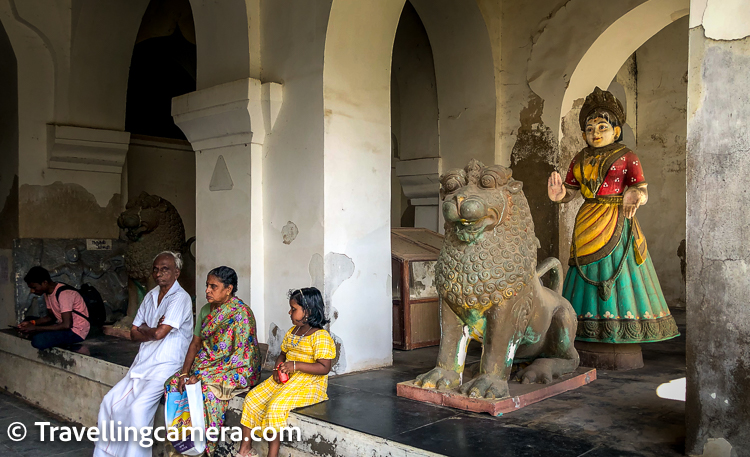
Thanjavur Palace in Tamilnadu: Where History and Art Come Together in a Spectacular Display

Auroville in India : The City of Dawn and a Model for Spirituality & Sustainable Living

Ramarpatham Shrine at Rameshwaram, Tamil Nadu || The site that has Lord Ram's footprints sculpted on a rock

The Sacred and Architectural Marvels of Ranganathaswamy Temple in Tamilnadu, India
%20to%20see%20the%20Danish%20fort%20in%20Tamilnadu%20state%20of%20India-3.jpg "Do you know about the 'Danish' Fort in India which is located at a beautiful location round the coast of Bay of Bengal?")
Do you know about the 'Danish' Fort in India which is located at a beautiful location round the coast of Bay of Bengal?

Uncovering the Rich History and Beauty of the Basilica of the Sacred Heart of Jesus in Pondicherry, India
 |
| Anaikarai Dam |
Anaikarai North and South Dams on Kollidam Rivers, Tamil Nadu || Two of the many dams on Cauvery, some of which are nearly 2000 years old

Starting the Day Right: A Personal Reflection on Sunrise at Serenity Beach in Pondicherry, India

Puducherry Travel Guide: French Charm Meets Indian Spirit - Capital Cities of Indian States or Union Teritorries [Pondicherry]

Madanapalle to Thanjavur via Vellore and Tiruvannamalai - 4th day of our 14 days long trip through east coast of India || Noida to Rameshwaram

Thanjavur to Rameshwaram via Tiruchirapalli - 5th day of our 14 days long trip through east coast of India || Noida to Rameshwaram

Rameshwaram's Marine Museum, Harbour and More: A Guide to the Best Sights and Sounds from Tamilnadu State of India
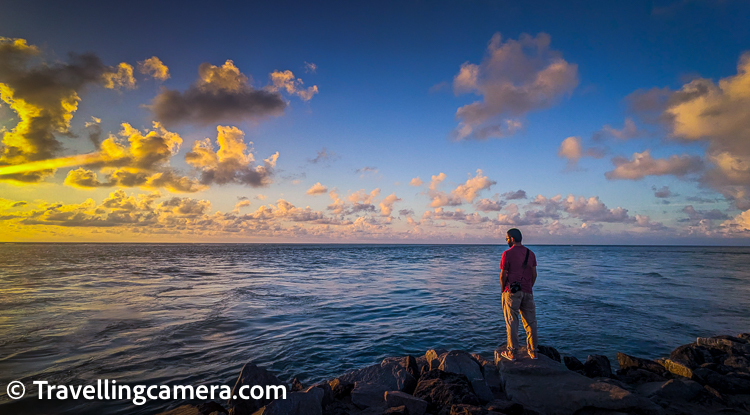
Rameshwaram in Tamilnadu, India - The Land of Sacred Shrines and Mesmerizing Beaches

Villoondi Teertham - Discovering the Spiritual and Natural Wonders of Rameshwaram, India
%20to%20see%20the%20Danish%20fort%20in%20Tamilnadu%20state,%20India-1.jpg "Drive from Rameshwaram to Pondicherry along the coast - 7th day of our 14 days long trip through east coast of India || Noida to Rameshwaram")
Drive from Rameshwaram to Pondicherry along the coast - 7th day of our 14 days long trip through east coast of India || Noida to Rameshwaram

Drive from Pondicherry to Tada - 8th day of our 14 days long trip through east coast of India || Noida to Rameshwaram

Exploring the Mahatma Gandhi Statue and Other Attractions around Promenade Beach in Pondicherry, India

Kolams and Culture: The Significance of Daily Floor Art in Tamilnadu Homes of South India

Healing Waters and Holy Legends: A Visit to Vibhishan Teertham in Rameshwaram, Tamilnadu

Discovering the Mysteries of Sri Panchmukhi Hanuman Mandir and the Floating Stones of Rameshwaram in Tamilnadu
 Climb to the Top of Chennai Lighthouse : Exploring Aerial views of Marine Drive, Sea and other interesting landmarks of Chennai, Tamilnadu


.jpg)
Comments