Explore Uttar Pradesh State of India: A Complete Travel Guide for First-Time Visitors

To understand the Taj Mahal fully, one must not stop at its gates. Across the Yamuna River lies a quieter counterpart — Mehtab Bagh, or the Moonlit Garden — a space that once framed the Taj within a grand Mughal landscape design. Today it serves as one of the most atmospheric viewpoints for the Taj Mahal, especially during late afternoons and twilight.


Introduction: Explore Uttar Pradesh Beyond the Taj Mahal

There are places you visit for a monument. Then there are places you visit because the journey keeps changing the way you see India.

Uttar Pradesh belongs firmly to the second category.

Explore Uttar Pradesh, and within a few hundred kilometres the landscape can shift from the marble geometry of Agra to the narrow lanes of Varanasi, from Lucknow's refined Nawabi culture to the devotional energy of Ayodhya, from the Braj countryside around Mathura and Vrindavan to the forests of Dudhwa.

It is a state where history does not sit quietly behind glass.

It walks through the bazaar.

It rings a temple bell at dawn.

It appears in the handwriting of a shopkeeper, the embroidery on a chikankari kurta, the smoke rising from a roadside tandoor and the silhouette of a boatman against the Ganga.

For photographers, Uttar Pradesh is especially rewarding because the visual story changes dramatically with the hour. Early morning produces mist, soft light and long shadows. Midday reveals architectural detail. Late afternoon turns sandstone, old walls and riverbanks warm and tactile. After dark, cities become a different photographic subject altogether.

And although the Taj Mahal is unquestionably one of India's great monuments, reducing Uttar Pradesh to Agra would be a serious mistake.

Agra Fort is not just a monument you visit; it is a city within walls, a chronicle of Mughal ambition, aesthetics, love, betrayal, and governance etched in red sandstone and marble. Standing on the banks of the Yamuna River, barely 2.5 km from the Taj Mahal, Agra Fort was the true seat of power of the Mughal Empire for several generations. If the Taj Mahal is Shah Jahan’s poem of love, Agra Fort is the empire’s autobiography.

The state contains three UNESCO World Heritage properties in Agra — the Taj Mahal, Agra Fort and Fatehpur Sikri — while Sarnath was inscribed on the UNESCO World Heritage List in 2026, adding another extraordinary layer to Uttar Pradesh's already remarkable cultural landscape.

The real pleasure is connecting these places rather than simply ticking them off.


This Photo Journey is about PREM Mandir, which is quite near to ISKCON Temple in Vrindavan Town. All these photographs are shot during one of our recent trips to Vrindavan !  Let's check out ...Prem Mandir has become another source of pride for lot of Hindu devotees and tourists from all over the world. Prem Mandir is built entirely of gigantic blocks of grainless, pure white Italian marble, with no steel, bricks or cement binding between blocks.Although beautiful to the senses, perhaps its greatest value lies in its utter spiritual significance to countless supporters and devotees. It is the 'Temple of Divine Love'. Prem Mandir is inaugurated on 15 - February 17, 2012 in the presence of Jagadguru Shree Kripaluji Maharaj. It is already being called a wonder of the modern world.Lord Krishna at ground floor of Prem Mandir, Vridavan, Uttar Pradesh, India !On fifty acres of land, Prem Mandir is surrounded with magnificent gardens and beautiful fountains. On the walls of this double story monument, the true theme of our scriptures, the Vedic science of creation, the world history and the unbroken continuity of Bhartiya scriptures for over 1.9 billion years will be depicted. The beautiful deities of Radha Krishn and their leela songs are depicted in an exquisite manner. All creations on outer walls look 3 dimensional Here is a photograph of huge entry gate for Prem Mandir. Entry of Prem Mandir has lot of green patches all around. Lush green lawns look amazing and some flowers planted around the boundaries. Just after the entry gate, there is a green lawn on left side and having some trees around. On one of the tree, there is a creation which shows Lord Krishna and Radha Rani on a jhoola made up of flowers. Since no one is allowed to step over lush green lawns, I can't comment on material used in creating these ! But the quality of all these creations is unmatchable... Above photograph shows one of the artistic creation of white marble. This is a photograph of one part of pillar in Prem Mandir ! These creations were very close to natural objects and it was hard to believe that all these are created in Marble. Wonderful work done at various parts of Prem Mandir. This is one of the magical part of Prem Mandir in Vrindavan. To us this seemed like a tourist place as compared to a typical temple, but we were proved wrong when we entered into the core of Prem Mandir (Temple).Architecture of Prem Mandir is based on the book 'Shilp-Ratnakar', written by Vishwa Karma. It is apparently the first temple in the world where the many pastimes written in Bhagwatam  are illustrated on the wall. The inside view of the temple is said to overwhelm visitors with religious feelings. Huge Deities of Radha Krishna are situated in the center of ground floor. The inside walls are beautified with engraved paintings of Radha Krishn and glimpses of group kirtan (chanting) and lectures of Jagadguru Shree Kripaluji Maharaj. It is said that the beauty and art of the tomb-type roof cannot be described in words. The first floor is glorified with the Deities of Sita Ram. Towards the south side of this floor the scenes of the pastimes of Lord Chaitanya Mahaprabhu are engraved with multi color stones and towards the north side the pictures of all the 4 previous Jagadgurus and great rasik saints like Jeev Goswami, Haridas Ji, Hit Harivansh Ji and Vallabhacharya Ji are engraved beautifully. Besides that the beutiful verses are inscribed on the walls.My photographs don't do any justice to lighting of Prem Mandir ! Huge light chandeliers were used to lit various parts of the temple. Upper storey of Prem Temple is dedicated to Ram Mandir ! Above photograph shows one of the smallest lighting stuff, which was hanging around various walls of Prem Mandir !  This photograph shows a close-up of Lord Krishna while he has picked up Govardhan Parvat on his finger. There is a huge creation in front of Prem Mandir which shows Lord Krishna lifting up the Govardhan Parvat and lot of other folks with cattle under it. Here is a photograph showing some of the creations carved on inner walls of the temple (Prem Mandir). Check out following link for more details about Prem Mandir - http://knol.google.com/k/david-mccaldin/prem-mandir-the-inauguration-of-a/2pr18mcjtayt9/19#

Why Explore Uttar Pradesh?

Uttar Pradesh can be approached in several completely different ways.

You can travel here as a history enthusiast, following the rise and fall of empires.

You can travel as a pilgrim, tracing the Ganga, Ramayana traditions, Buddhist heritage and Krishna's Braj.

You can travel as a foodie, moving between kebabs, kachoris, chaats, sweets and delicate Awadhi dishes.

Or you can travel with a camera and simply watch.

That last approach is often the most rewarding.

The state's great strength is its density of stories. Agra, Lucknow, Varanasi, Prayagraj, Mathura, Ayodhya, Chitrakoot and Jhansi each reveal a different Uttar Pradesh.

Official tourism material itself highlights the extraordinary range, from Agra's Mughal heritage and Lucknow's Nawabi architecture to Varanasi, Ayodhya, Mathura, Jhansi and Chitrakoot.

The challenge is not finding places to visit.

It is deciding how slowly you are willing to travel.
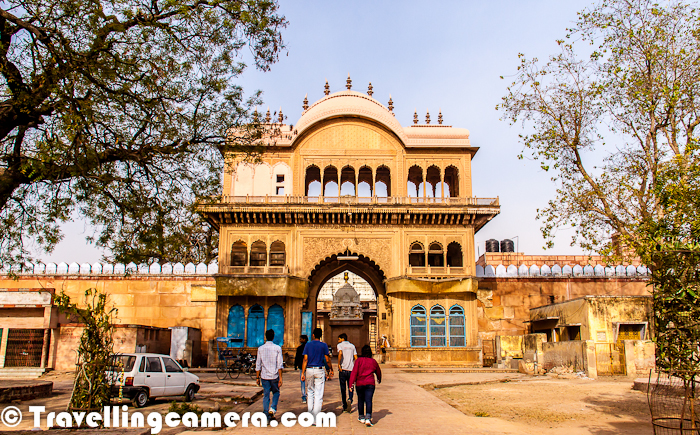

During first weekend of April'2012 we were in Virndavan, which is also known as town of Temples in India. During this visit, we had a quick visit to different temples in early morning. Shri Rangji Temple was the first one...The very first Photograph shows main gate of Shri Rangji Temple in Vridavan and the photograph above shows the next gate to the main temple. Architecture of this temple resembles with South Indian Temples and most of the priests were from South. Overall environment of the temple was quite peaceful.Sri Rangji Mandir is dedicated to Lord Sri Goda-Rangamannar. Goda or Andal is popularly known in South India was a famous 8th century Vaishnava saint who had composed 'Tiruppuvai' which centers around her love for her beloved Lord Krishna and his leela bhoomi Vrindavan. She pines for him, fasts for him, sings songs in his praise and wants to attain him by marrying him. Lord Ranganatha who is none other than Krishna answers her prayers by becoming her bridegroom. In Sri Rangji Mandir, Lord Krishna is present as the bridegroom with a walking stick in his hand as is the custom in a traditional south Indian marriage. To his right is Andal and to his left Garuda, the vahana of Lord KrishnaWhen we reached inside the temple, there were multiple rows of the folks who were lined up for Prasadam at the temple. Curd-rice were being served at Ranganatha Temple in the morning. He had some and it was enough for us in breakfast :)Andal had expressed three wishes in 'NachiyarTirumozhi'. Her first wish was to spend her life at the feet of Lord Krishna in Vrindavan. Her second wish that Lord Krishna accept her as his bride came true when she married Lord Krishna and the third wish that Lord Ranganatha (Lord Krishna) be offered 'Ksheeranna'(dessert made of rice and milk) in a hundred pots was fulfilled by the eleventh century vaishnava saint Sri Ramanujacharya.Her first wish which had not been fulfilled by any of the previous Vaishnava acharyas was fulfilled by Sri Rangadeshik Swamiji by constructing this temple where Sri Goda-Rangamannar reside as divya dampathi. There are lot of other stories associated with this temple. The pillar you see above is made up of gold and dedicated tp parents.There is a beautiful water-pond, which was closed and no one can go inside this space. In the moring, it looked magical.SriRangji temple is considered as one of the largest temples in the whole of North India. Its one of the very few temples in India, where regular festivals are celebrated and all the traditions and rituals are performed according to the prescribed Vedic norms.In SriRangji temple one would find a unique mixture of both south and north Indian traditions. In addition to celebrating all the festivals which are part of South Indian SriVaishnava temple tradition, several festivals which are part of the North tradition are also celebrated here. For example its only at SriRangji temple where devotees can enjoy the pleasure of playing holi with the Lord during SriBrahmotsav.Here is a photograph showing some yogis coming out of their rooms. It seemed there are various rooms/houses inside the temple campus and are in use by various families associated with temple by one or other mean. I don't remember the exact number now, but our guide had told us the number of rooms around the temple;.Here is a photograph with kids living around the temple ! One of the our group member wanted to have a photograph in front of main gate of Temple and these kids volunteered to joined her :All of us were wondering about the ticket amount mentioned in Paisas and not sure if these actually mean 'Paisa' or something else. btw, we didn't see Sheesh-Mahal inside the temple.Here a photograph showing lot of people lined to get Rice Prasadam in the morning. Lot of people visit Vrindavan on daily basis and city has a huge religious significance.Whole group listening very carefully to the stories being told by our guide !

Explore Uttar Pradesh Through Its Great Cities

1. Agra: Start With the Taj, Stay for the History

The first sight of the Taj Mahal can be strangely quiet.

You may have seen thousands of photographs of it. You may think you know exactly what it will look like.

Then you stand in front of it.

The symmetry is almost unsettling.

The Taj is not simply a monument to photograph. It is an exercise in proportion, reflection, texture and changing light.

But don't leave Agra after the Taj.

Agra has three UNESCO World Heritage properties — Taj Mahal, Agra Fort and Fatehpur Sikri — making it one of India's most concentrated heritage destinations.

Declared a UNESCO World Heritage Site in 1983, the fort spans about 94 acres, enclosed by 2.5 km of massive walls rising up to 21 meters. What you see today is largely Mughal, but the site predates them—layered with history that stretches back over a thousand years.

Agra Fort

Spend time inside Agra Fort rather than photographing it only from outside.

The massive red sandstone walls are visually dramatic, but the details are where the place becomes interesting: carved surfaces, arches, courtyards and changing perspectives toward the Yamuna.

Late afternoon is particularly good for photography.

The low sun brings out the texture of sandstone that can appear flat under harsh midday light.

When visitors walk through the colossal gates of Agra Fort, their attention is often pulled toward the grand halls of Diwan-i-Aam, the elegance of Khas Mahal, or the distant shimmer of the Taj Mahal across the Yamuna. Yet tucked quietly within the fort complex lies a structure that tells a far more intimate story of the Mughal empire—Jahangir Palace.

Mehtab Bagh

Across the Yamuna, Mehtab Bagh offers one of the classic perspectives toward the Taj.

However, don't treat it merely as a "sunset viewpoint."

Look for layers.

Trees in the foreground.

The river.

The monument.

Birds crossing the frame.

People moving through the landscape.

The composition becomes much stronger when the Taj isn't simply placed in the centre of the photograph.

UNESCO records that the wider Yamuna-side landscape, including Mehtab Bagh, has historical significance in understanding the Taj's original setting.

Recently when we planned a short road-trip to Bharatpur Bird Sanctuary from Noida, we also planned to quickly visit Fatehpur Sikri and we learned a big lesson during this trip. Travel has this beauty of exposing you to different situations and it leads to different kinds of learnings/experiences. Which certainly make us better travellers and our ability to judge situations/people becomes better. Please don't pick me on 'judging people' because it's important aspect when you make decisions which can impact your time and money, which are precious when you are travelling.     So here goes the story and at the end we have learnings in 2 sections : learnings when you visit Fatehpur Sikri and second section is more about how generics tips while going to new places for exploration.

Fatehpur Sikri

Fatehpur Sikri deserves more time than the typical quick stop between Agra and another destination.

Akbar established it as his capital in the 16th century, and UNESCO describes it as a planned Mughal city combining administrative, residential and religious architecture.

Walk slowly.

The courtyards create excellent frames.

Look for people rather than empty architecture.

A person crossing a massive courtyard immediately communicates the scale of the buildings.


There are many ghats in Varanasi, each with its own unique name and significance. Here are some of the most well-known ghats of Varanasi: Assi Ghat ,Dasaswamedh Ghat ,Manikarnika Ghat ,Harishchandra Ghat ,Kedar Ghat ,Scindia Ghat ,Tulsi Ghat, Chet Singh Ghat, Chaushat Ghat, Raj Ghat, Shivala Ghat, Manmandir Ghat, Bachraj Ghat, Adi Keshava Ghat, Panchganga Ghat...  Each ghat in Varanasi has its own unique history and significance, and many are named after religious figures, historical events, or local landmarks. The ghats of Varanasi are an important part of the city's cultural and religious heritage, and hold great significance for the local people.

Explore Uttar Pradesh Through Varanasi

2. Varanasi: The City That Refuses to Stand Still

If Agra is about architectural perfection, Varanasi is about movement.

The city feels alive before sunrise.

Walk toward the ghats while the sky is still grey and the city is beginning to wake.

Offering of fire in form of brass lamps stacked in the shape of a temple's shikhar, is the high point of this aarti. The site of these gigantic lamps rotating in sync is quite a spectacle. These lamps would be really heavy, so one needs to take a moment and appreciate that not only is this a matter of practice, it is also physically strenuous work.

Boats slide across the Ganga.

Priests prepare for rituals.

Tea stalls begin serving their first customers.

Temple bells compete with bicycle bells and distant voices.

And then the light arrives.

This is one of the best photography experiences in Uttar Pradesh.

Having a strong and imposing fort to symbolize the financial and military strength of your kingdom was usually what most of the visionary Kings resorted to. So you see some really magnificent and overwhelming forts scattered all over the world, mostly from the middle ages.

Photograph Varanasi at Dawn

Don't rush straight to the most famous ghat.

Walk.

Watch.

Find your own visual story.

A 35mm or 50mm lens can be particularly useful for street scenes because it allows you to photograph people and surroundings without flattening the environment.

For boats and distant architecture, a telephoto lens gives you a completely different visual language.

The key is not equipment.

It is patience.

There is also an offering of marigold flower petals and the sight of it is simply beautiful. I think the aarti is a fantastically choreographed event and substantial amount of attention has been paid to the aesthetics of it. The marigold petals floating down create a spectacle for sure.

The Ghats

The ghats are not merely tourist attractions.

They are functioning public spaces where religious rituals, laundry, commerce, cremation, bathing, prayer and everyday life happen side by side.

That requires sensitivity.

Do not photograph intimate rituals aggressively.

Ask before making close portraits.

And remember that a visually dramatic scene may be deeply personal for someone else.

While we were at Benaras, Uttar Pradesh, we planned to also visit Sarnath, which is 10-15 kilometers from Benaras depending upon from which part of Benaras you are starting. It is possible to travel to Sarnath on an auto or in a car. Because of crowded streets, the travel takes anywhere from half an hour to 45 minutes to cover this distance.

Sarnath

About 8 km from Varanasi, Sarnath provides a dramatic contrast to the intensity of the ghats. UNESCO describes it as the place where Buddha delivered his first sermon and met his earliest disciples.

With lot of travel (personal & business) in last 5 months, we are lagging behind in sharing some of these experiences. We were in Benaras during Mahindra Kabira Festival, which happens in the month of November every year. During the same trip, we also took out time to walk around the beautiful city of Kashi and one of the most talked experiences of Varanasi is Ganga Aarti, which takes place on different ghats during morning as well as evening. Through this blogpost, we want to share these Ganga Aarti experiences on different ghats and will also share some recommendations.

Sarnath's archaeological landscape is quieter.

The Dhamek Stupa dominates the visual field, but the surrounding ruins are equally fascinating for photographers.

When Kashi Naresh Maharaja Balwant Singh built the Ramnagar Fort on the Bank of the Holy River Ganga in 1750, world was a very different place. For one, the words "Naresh" and "Maharaja" actually meant something beyond just titles. You were responsible and accountable for the safety and prosperity of your people.

Go early.

Soft light across the brick structures creates subtle textures and long shadows.

Interestingly, Sarnath was inscribed as a UNESCO World Heritage Site in 2026, making it one of the newest additions to India's World Heritage List.
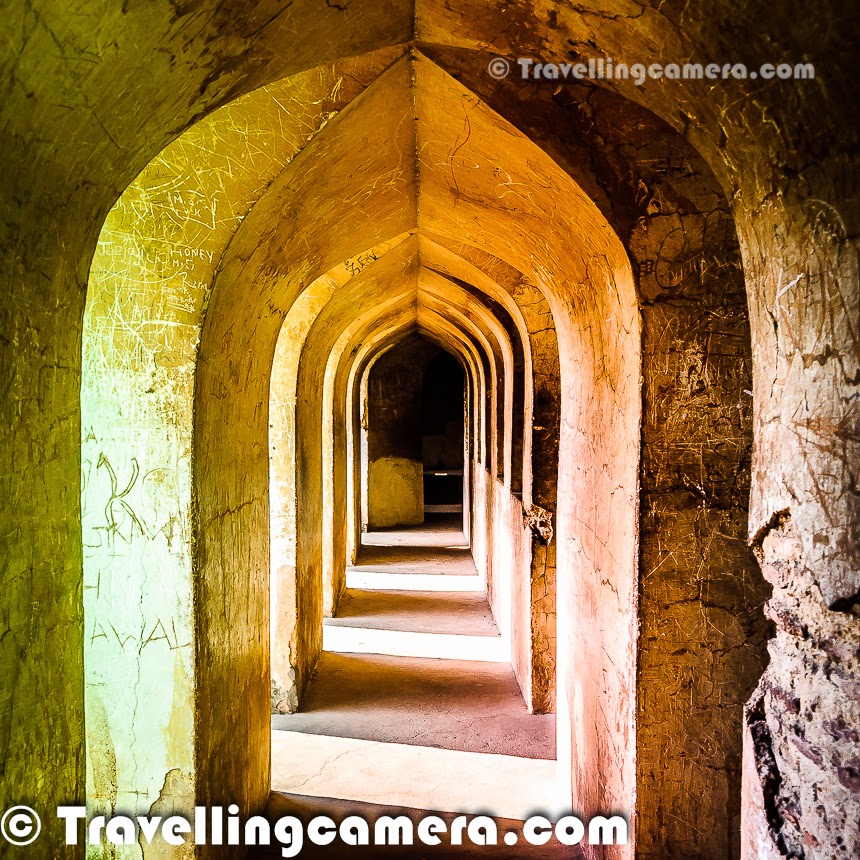

Some time back I shared about recent visit to Bada Imambara in Lucknow, which also has a maze which is popularly known as 'Bhool Bhulaiya'. This Photo Journey shares some interesting facts about Bhool Bhulaiya with appropriate photographs. Bhool Bhulaiya is probably one of best things to explore in Lucknow town and it's more fun to explore without any guide. At times guides can also add fun to this exploration process, because they also understand that people come to see a maze to have some interesting experience of getting lost. Above two photographs shows the way this maze is created. There are series of entry and exit points on both sides of this corridor. This one is one of the extreme corridors which was easy to click. Inside the maze, light was extremely low, so couldn't capture a good photographs inside the bhool bhulaiya. This photograph shows the roof-top of bhool bhuliyaa which offers some amazing views of the city on one side and Bada Imambara campus on the other. Many of the local folks in Lucknow highly recommend a visit to Bada Imambara. Lot of guides wait for tourists to serve them with a guided tour of bada Imambada and Bhool bhulaiya. Some of the guides are brilliant who take you through the tour in interesting way and ensure that you enjoy this exploration. At times, people suggest not to have a guide when going inside this maze called Bhool Bhulaiya. We also preferred not to have any guide at Bhool Bhulaiya. As we entered inside the maze, we were uncomfortable and not sure how much time it will take to come out. But it was fun to be lost and suddenly you start feeling that it's impossible to get out of this maze now. Now the trick is to follow any group which has a guide with them :) . We did the same and came out. There is a basic rule of coming out of this maze. If you want to know the trick, check out bottom of this post and if you want to have real fun, ignore it now and may come back when stuck inside. In my opinion, Bhool Bhulaiyaa is one of the best things to explore inside Bada Imambara complex. It's a must do thing in Lucknow to explore Bhool Bhulaiya and have fun with your friends & family.READ ONLY IF YOU HAVE NEVER WENT INSIDE THE MAZE - As promised, let us share the basic rule of coming out of Bhool Bhulaiya if you don't have guide with you and are stuck inside for a long time. Always take stairs going up and gradually they will lead to the roof-top. I am assuming that you are reading it while inside the maze and stuck, otherwise I will apologize to spoil the fun.

Explore Uttar Pradesh Through Lucknow's Nawabi Culture

3. Lucknow: Where Architecture Meets Appetite

Lucknow is not a city you should rush through.

Its character reveals itself slowly.

The old city is a place of façades, courtyards, food stalls, ornate doorways and conversations that seem to continue long after the formal interaction has ended.

Some time back I shared about recent visit to Bada Imambara in Lucknow, which also has a maze which is popularly known as 'Bhool Bhulaiya'. This Photo Journey shares some interesting facts about Bhool Bhulaiya with appropriate photographs. Bhool Bhulaiya is probably one of best things to explore in Lucknow town and it's more fun to explore without any guide. At times guides can also add fun to this exploration process, because they also understand that people come to see a maze to have some interesting experience of getting lost. Above two photographs shows the way this maze is created. There are series of entry and exit points on both sides of this corridor. This one is one of the extreme corridors which was easy to click. Inside the maze, light was extremely low, so couldn't capture a good photographs inside the bhool bhulaiya. This photograph shows the roof-top of bhool bhuliyaa which offers some amazing views of the city on one side and Bada Imambara campus on the other. Many of the local folks in Lucknow highly recommend a visit to Bada Imambara. Lot of guides wait for tourists to serve them with a guided tour of bada Imambada and Bhool bhulaiya. Some of the guides are brilliant who take you through the tour in interesting way and ensure that you enjoy this exploration. At times, people suggest not to have a guide when going inside this maze called Bhool Bhulaiya. We also preferred not to have any guide at Bhool Bhulaiya. As we entered inside the maze, we were uncomfortable and not sure how much time it will take to come out. But it was fun to be lost and suddenly you start feeling that it's impossible to get out of this maze now. Now the trick is to follow any group which has a guide with them :) . We did the same and came out. There is a basic rule of coming out of this maze. If you want to know the trick, check out bottom of this post and if you want to have real fun, ignore it now and may come back when stuck inside. In my opinion, Bhool Bhulaiyaa is one of the best things to explore inside Bada Imambara complex. It's a must do thing in Lucknow to explore Bhool Bhulaiya and have fun with your friends & family.READ ONLY IF YOU HAVE NEVER WENT INSIDE THE MAZE - As promised, let us share the basic rule of coming out of Bhool Bhulaiya if you don't have guide with you and are stuck inside for a long time. Always take stairs going up and gradually they will lead to the roof-top. I am assuming that you are reading it while inside the maze and stuck, otherwise I will apologize to spoil the fun.

Bara Imambara

The Bara Imambara is perhaps Lucknow's most recognizable architectural landmark.

But photographers should resist photographing only the obvious wide shot.

Look upward.

Look through arches.

Use doorways as frames.

Photograph people moving through the architecture.

The enormous scale of the building becomes much more apparent when a human figure is included.

When you are in Lucknow and creating a priority list of things to do, Bada Imambada is something you should keep on top. This Photo Journey is sharing some photographs of Bada Imambada with appropriate reasons visiting it, even when you have very less time in hand.Some time back I was in Lucknow for a wedding and thought of moving out for some time. After talking to friends in Lucknow, looking at city map I thought of going straight to Bada Imambada and keep my plan flexible.One of the main reasons to visit Bada Imambada was it's popularity which exposes you to beautiful architecture & gives you a sense of the city through people who visit this place. Lot of folks come to this place, you meet interesting guides at this place and has a small market at entry gate where you can buy some souvenirs. Lot of activities happen around this area of the city, through which you get better understanding of the place, it's residents, culture and lot more which we never expect from such places in an Indian city. To my surprise, Lucknow was quite different than what I had imagined and it kept me surprised on regular basis.Auto-Rikshaw is one of the best ways to explore the city. Various parts of Lucknow city are connected well through buses, shared/private Auto-Rickshaws & rickshaws. One needs to negotiate well with Auto-Rickshaw people but definitely the negotiation process is quite happy as compared to Delhi/Noida :). As Lucknow is know for 'tehzeeb', you can clearly see that people in city are polite and sensible. Although you always find exceptions, if you have a bad day.Another reason for choosing Bada Imambada is - Bhool-Bhulaiyaa. Bhool Bhulaiya is located inside Bada imambada campus, which is one of the main places to explore in Lucknow city. This is very interesting place which shouldn't be explored with any guide :). Yes, you read it right. The real fun lies in going inside bhool bhulaiya without any guide and try to figure out your way out. It can be difficult & frustrating when you always lead to wrong path, but it's fun and you feel like winner when you come out of it. We didn't hire any guide and went indie Bhool bhulaiya. After a while we were frustrated by the fact and everyone inside the Bhool bhulaiya was telling wrong path and situations were not even better when you don't follow anyone. But soon after to crack the logic and come out of it. There is a thumb rule, which I don't want to share on this blog. So just visit yourself and have fun. It is possibly the only existing maze in India and came about unintentionally to support the weight of the building which is constructed on marshy land.Bada Imambada was built by Asaf-ud-Daula, Nawab of Lucknow, in 1784. It is also known as Asafi Imambada, but people hardly recognize this name except few from the city. Bada means big, and an imambada is a shrine built by Shia Muslims for the purpose of Azadari. The Bada Imambada is among the grandest buildings of Lucknow city and probably state as well.Bada Imambada a huge campus which is well maintained, in my opinion. I liked the way cleanness is maintained and authorities maintain some rules to keep it clean and maintained. There are different type of tickets for entry inside Bada Imambada. We took 50 Rs ticket, which included everything inside the campus - Bhool Bhualaiyaa, Asfi Mosque, a grave of Asaf ud-Daula under a canopy, Shahi Bawli, Domed Chamber, Hallways, Rumi Darwaja, Tazia & Zari.Asfi Mosque looks similar to Jama Masjid in Delhi, but it was closed when we visited. Not sure, if it was temporary thing or mosque remains closed. It's quite inspiring to know that Nawab started to build this campus for providing work and food to folks around this region. It seems that Bada Imambada was built just because to provide some work to folks for earning food for their families.Above photograph shows a grave of Asaf ud-Daula under a canopy. This is located just below Bhool Bhulaiya on the ground floor. One needs to take of shoes to go inside. It's one of the most colorful and well maintained part of Bada Imambada. This part of the campus is very well lit with colorful lights.Above photograph shows main mosque on the left and gateway on right. This gateway takes visitors inside the main campus and there is a road on the other side which goes to Chhota Imambada.There is a huge area in front of Bhool Bhulaiya, where families & friends like to sit down and enjoy the view of mosque, gardens and other things in Bada Imambada campus.One can see some guides burning a matchbox stick at the other end of the balconies that have openings to the Central Hall. It's another significant and architectural art in Bada Imambada campus.  You can listen the sound  of a match stick at the other end of the hall.  It is really interesting and seems unbelievable. There are many interesting things about the place and local guides play a good role in helping you exploring all this. If you happen to hire a guide, don't take his help in Bhool bhulaiya unless you are extremely frustrated.A beautiful view of Mosque & main gate from Bhool Bhulaiya. Top of Bhool bhulaiya offers bird's eye view of monuments, the Roomi Darwaja, the Gates, Asifi Masjid, Clock Towers, Laxman Tila Masjid,  Gomti river and the busy streets of Lucknow city.Chhota Imambada is visible from roof-top of Bhool-bhulaiya. We didn't have much time so preferred to visit Ganj instead of going towards Chhota Imambada.A caution - If you plan to explore the city using Auto, make sure that you don't change your plans as per information provided by them. Like other tourist destinations, Auto-walas try to take you to shops to earn some commission out of your purchase. We also ended up buying some stuff from lucknow because of our Auto-wala who took us to Ganj after Bada Imambada.Asafi Masjid which you can see in above photograph has sculptured domes and minarets. This mosque provides a most beautiful sight. If you are in Lucknow on Friday, make sure that you plan your visit when thousands of folks come here for namaz.Shahi Bawli is another interesting place inside this campus. This royal well is just opposite to the mosuqe. One can go downstairs to see the well with blue water on surface and the bathrooms constructed around the well on ground, first and second floors of the Well. Above photograph shows water in the middle of this well with mutual-layered building around it.  If you have a look from one side of the well, you can see in the water - the image of person approaching the well. Different guide service can be availed at Bawli, although one can notice this easily.

Rumi Darwaza

The Rumi Darwaza is another architectural favourite.

Try visiting around golden hour when the stone begins to pick up warmer tones.

Then return after dark if possible.

The monument's character changes dramatically with artificial lighting and surrounding street activity.

Lucknow Food

Food is an essential part of understanding Lucknow.

Look beyond the famous dishes and pay attention to how food is served.

Awadhi cuisine is as much about technique and patience as it is about flavour.

Try:

  • Galouti kebab

  • Tunday-style kebabs

  • Lucknowi biryani

  • Nihari

  • Sheermal

  • Kulcha

  • Basket chaat

  • Malai paan

When you are in Lucknow and creating a priority list of things to do, Bada Imambada is something you should keep on top. This Photo Journey is sharing some photographs of Bada Imambada with appropriate reasons visiting it, even when you have very less time in hand.Some time back I was in Lucknow for a wedding and thought of moving out for some time. After talking to friends in Lucknow, looking at city map I thought of going straight to Bada Imambada and keep my plan flexible.One of the main reasons to visit Bada Imambada was it's popularity which exposes you to beautiful architecture & gives you a sense of the city through people who visit this place. Lot of folks come to this place, you meet interesting guides at this place and has a small market at entry gate where you can buy some souvenirs. Lot of activities happen around this area of the city, through which you get better understanding of the place, it's residents, culture and lot more which we never expect from such places in an Indian city. To my surprise, Lucknow was quite different than what I had imagined and it kept me surprised on regular basis.Auto-Rikshaw is one of the best ways to explore the city. Various parts of Lucknow city are connected well through buses, shared/private Auto-Rickshaws & rickshaws. One needs to negotiate well with Auto-Rickshaw people but definitely the negotiation process is quite happy as compared to Delhi/Noida :). As Lucknow is know for 'tehzeeb', you can clearly see that people in city are polite and sensible. Although you always find exceptions, if you have a bad day.Another reason for choosing Bada Imambada is - Bhool-Bhulaiyaa. Bhool Bhulaiya is located inside Bada imambada campus, which is one of the main places to explore in Lucknow city. This is very interesting place which shouldn't be explored with any guide :). Yes, you read it right. The real fun lies in going inside bhool bhulaiya without any guide and try to figure out your way out. It can be difficult & frustrating when you always lead to wrong path, but it's fun and you feel like winner when you come out of it. We didn't hire any guide and went indie Bhool bhulaiya. After a while we were frustrated by the fact and everyone inside the Bhool bhulaiya was telling wrong path and situations were not even better when you don't follow anyone. But soon after to crack the logic and come out of it. There is a thumb rule, which I don't want to share on this blog. So just visit yourself and have fun. It is possibly the only existing maze in India and came about unintentionally to support the weight of the building which is constructed on marshy land.Bada Imambada was built by Asaf-ud-Daula, Nawab of Lucknow, in 1784. It is also known as Asafi Imambada, but people hardly recognize this name except few from the city. Bada means big, and an imambada is a shrine built by Shia Muslims for the purpose of Azadari. The Bada Imambada is among the grandest buildings of Lucknow city and probably state as well.Bada Imambada a huge campus which is well maintained, in my opinion. I liked the way cleanness is maintained and authorities maintain some rules to keep it clean and maintained. There are different type of tickets for entry inside Bada Imambada. We took 50 Rs ticket, which included everything inside the campus - Bhool Bhualaiyaa, Asfi Mosque, a grave of Asaf ud-Daula under a canopy, Shahi Bawli, Domed Chamber, Hallways, Rumi Darwaja, Tazia & Zari.Asfi Mosque looks similar to Jama Masjid in Delhi, but it was closed when we visited. Not sure, if it was temporary thing or mosque remains closed. It's quite inspiring to know that Nawab started to build this campus for providing work and food to folks around this region. It seems that Bada Imambada was built just because to provide some work to folks for earning food for their families.Above photograph shows a grave of Asaf ud-Daula under a canopy. This is located just below Bhool Bhulaiya on the ground floor. One needs to take of shoes to go inside. It's one of the most colorful and well maintained part of Bada Imambada. This part of the campus is very well lit with colorful lights.Above photograph shows main mosque on the left and gateway on right. This gateway takes visitors inside the main campus and there is a road on the other side which goes to Chhota Imambada.There is a huge area in front of Bhool Bhulaiya, where families & friends like to sit down and enjoy the view of mosque, gardens and other things in Bada Imambada campus.One can see some guides burning a matchbox stick at the other end of the balconies that have openings to the Central Hall. It's another significant and architectural art in Bada Imambada campus.  You can listen the sound  of a match stick at the other end of the hall.  It is really interesting and seems unbelievable. There are many interesting things about the place and local guides play a good role in helping you exploring all this. If you happen to hire a guide, don't take his help in Bhool bhulaiya unless you are extremely frustrated.A beautiful view of Mosque & main gate from Bhool Bhulaiya. Top of Bhool bhulaiya offers bird's eye view of monuments, the Roomi Darwaja, the Gates, Asifi Masjid, Clock Towers, Laxman Tila Masjid,  Gomti river and the busy streets of Lucknow city.Chhota Imambada is visible from roof-top of Bhool-bhulaiya. We didn't have much time so preferred to visit Ganj instead of going towards Chhota Imambada.A caution - If you plan to explore the city using Auto, make sure that you don't change your plans as per information provided by them. Like other tourist destinations, Auto-walas try to take you to shops to earn some commission out of your purchase. We also ended up buying some stuff from lucknow because of our Auto-wala who took us to Ganj after Bada Imambada.Asafi Masjid which you can see in above photograph has sculptured domes and minarets. This mosque provides a most beautiful sight. If you are in Lucknow on Friday, make sure that you plan your visit when thousands of folks come here for namaz.Shahi Bawli is another interesting place inside this campus. This royal well is just opposite to the mosuqe. One can go downstairs to see the well with blue water on surface and the bathrooms constructed around the well on ground, first and second floors of the Well. Above photograph shows water in the middle of this well with mutual-layered building around it.  If you have a look from one side of the well, you can see in the water - the image of person approaching the well. Different guide service can be availed at Bawli, although one can notice this easily.

The best food memories often come from places that don't look particularly photogenic.

That is another useful travel lesson.

A shiny restaurant sign doesn't necessarily indicate the better meal.


Located on the banks of the Sarayu River, Ayodhya holds immense spiritual significance as the birthplace of Lord Rama.

Explore Uttar Pradesh Through Faith and Myth

4. Ayodhya: A City Being Reimagined

Ayodhya is one of India's most significant religious destinations and a place where mythology, faith and contemporary infrastructure intersect.

The Sarayu River is central to the experience.

Visit around sunrise or sunset and watch how the river becomes a gathering point rather than simply a scenic backdrop.

Ram Ki Paidi is particularly atmospheric around the evening lighting and devotional activity.

For photographers, the challenge here is avoiding obvious postcard compositions.

Planning a trip to Ayodhya? This detailed travel guide covers everything—Ram Mandir darshan, places to visit, where to stay, itinerary, travel routes, and cost breakdown—to help you experience one of India’s most sacred cities with ease.

Instead, photograph details:

A diya floating on water.

A child's reflection.

Pilgrims walking beside the river.

Flowers being arranged.

The relationship between new construction and old neighbourhoods.

Ayodhya is also a place where respectful observation matters greatly. During major religious festivals and peak pilgrimage periods, crowd levels can rise dramatically.

If photography is your priority, travel outside the busiest festival windows.


This Photo Journey is about PREM Mandir, which is quite near to ISKCON Temple in Vrindavan Town. All these photographs are shot during one of our recent trips to Vrindavan !  Let's check out ...Prem Mandir has become another source of pride for lot of Hindu devotees and tourists from all over the world. Prem Mandir is built entirely of gigantic blocks of grainless, pure white Italian marble, with no steel, bricks or cement binding between blocks.Although beautiful to the senses, perhaps its greatest value lies in its utter spiritual significance to countless supporters and devotees. It is the 'Temple of Divine Love'. Prem Mandir is inaugurated on 15 - February 17, 2012 in the presence of Jagadguru Shree Kripaluji Maharaj. It is already being called a wonder of the modern world.Lord Krishna at ground floor of Prem Mandir, Vridavan, Uttar Pradesh, India !On fifty acres of land, Prem Mandir is surrounded with magnificent gardens and beautiful fountains. On the walls of this double story monument, the true theme of our scriptures, the Vedic science of creation, the world history and the unbroken continuity of Bhartiya scriptures for over 1.9 billion years will be depicted. The beautiful deities of Radha Krishn and their leela songs are depicted in an exquisite manner. All creations on outer walls look 3 dimensional Here is a photograph of huge entry gate for Prem Mandir. Entry of Prem Mandir has lot of green patches all around. Lush green lawns look amazing and some flowers planted around the boundaries. Just after the entry gate, there is a green lawn on left side and having some trees around. On one of the tree, there is a creation which shows Lord Krishna and Radha Rani on a jhoola made up of flowers. Since no one is allowed to step over lush green lawns, I can't comment on material used in creating these ! But the quality of all these creations is unmatchable... Above photograph shows one of the artistic creation of white marble. This is a photograph of one part of pillar in Prem Mandir ! These creations were very close to natural objects and it was hard to believe that all these are created in Marble. Wonderful work done at various parts of Prem Mandir. This is one of the magical part of Prem Mandir in Vrindavan. To us this seemed like a tourist place as compared to a typical temple, but we were proved wrong when we entered into the core of Prem Mandir (Temple).Architecture of Prem Mandir is based on the book 'Shilp-Ratnakar', written by Vishwa Karma. It is apparently the first temple in the world where the many pastimes written in Bhagwatam  are illustrated on the wall. The inside view of the temple is said to overwhelm visitors with religious feelings. Huge Deities of Radha Krishna are situated in the center of ground floor. The inside walls are beautified with engraved paintings of Radha Krishn and glimpses of group kirtan (chanting) and lectures of Jagadguru Shree Kripaluji Maharaj. It is said that the beauty and art of the tomb-type roof cannot be described in words. The first floor is glorified with the Deities of Sita Ram. Towards the south side of this floor the scenes of the pastimes of Lord Chaitanya Mahaprabhu are engraved with multi color stones and towards the north side the pictures of all the 4 previous Jagadgurus and great rasik saints like Jeev Goswami, Haridas Ji, Hit Harivansh Ji and Vallabhacharya Ji are engraved beautifully. Besides that the beutiful verses are inscribed on the walls.My photographs don't do any justice to lighting of Prem Mandir ! Huge light chandeliers were used to lit various parts of the temple. Upper storey of Prem Temple is dedicated to Ram Mandir ! Above photograph shows one of the smallest lighting stuff, which was hanging around various walls of Prem Mandir !  This photograph shows a close-up of Lord Krishna while he has picked up Govardhan Parvat on his finger. There is a huge creation in front of Prem Mandir which shows Lord Krishna lifting up the Govardhan Parvat and lot of other folks with cattle under it. Here is a photograph showing some of the creations carved on inner walls of the temple (Prem Mandir). Check out following link for more details about Prem Mandir - http://knol.google.com/k/david-mccaldin/prem-mandir-the-inauguration-of-a/2pr18mcjtayt9/19#

5. Mathura and Vrindavan: Photographing the Braj Landscape

Mathura and Vrindavan are associated with Krishna traditions, but their photographic appeal extends far beyond temples.

The surrounding Braj landscape contains cows, painted walls, old buildings, devotional music, colourful clothing and constantly moving street scenes.

Vrindavan is particularly interesting early in the morning.

Before the streets become crowded, the lanes can feel surprisingly intimate.

Watch for light entering through narrow gaps between buildings.

This is where a small prime lens can be more useful than a large zoom.

Barsana For travellers looking beyond the main Mathura-Vrindavan circuit, Barsana provides a fascinating extension into the Braj landscape.  The town becomes especially energetic around Holi celebrations, although the crowds can make photography challenging.

Barsana

For travellers looking beyond the main Mathura-Vrindavan circuit, Barsana provides a fascinating extension into the Braj landscape.

The town becomes especially energetic around Holi celebrations, although the crowds can make photography challenging.

If you photograph people, engage first rather than treating the crowd as anonymous scenery.


6. Prayagraj: Where Rivers Become a Story Prayagraj, historically Allahabad, is defined by the Sangam — the meeting point associated with the Ganga, Yamuna and the invisible Saraswati in Hindu tradition.  The confluence is best understood from the water.  A boat journey provides changing perspectives and gives photographers opportunities to work with layers: river, boats, pilgrims, distant shoreline and sky.

6. Prayagraj: Where Rivers Become a Story

Prayagraj, historically Allahabad, is defined by the Sangam — the meeting point associated with the Ganga, Yamuna and the invisible Saraswati in Hindu tradition.

The confluence is best understood from the water.

A boat journey provides changing perspectives and gives photographers opportunities to work with layers: river, boats, pilgrims, distant shoreline and sky.

The scale becomes especially apparent from above the river rather than from the shore.

Prayagraj also has important modern Indian history.

Anand Bhavan, associated with the Nehru family, offers a different narrative from the religious heritage dominating much of Uttar Pradesh.

That contrast is worth experiencing.


Rising above the eastern edge of Agra Fort, overlooking the gentle flow of the Yamuna River and the distant silhouette of the Taj Mahal, stands the Shahi Burj — the most private, powerful, and emotionally charged structure within the fort complex. More than a palace or tower, Shahi Burj was the imperial nerve centre of the Mughal empire, a space where governance, luxury, and fate converged.

7. Chitrakoot: The Uttar Pradesh That Slows Down

Chitrakoot is one of the places that can change your perception of the state.

Associated with the Ramayana tradition, it is surrounded by hills, forests, temples and the Mandakini River.

The landscape is more intimate than the monumental cities of Agra and Lucknow.

For photographers, this is an opportunity to step away from architecture and work with landscape, people and atmosphere.

Go early to Ramghat.

The first light on the river can be beautiful.

Later in the morning, explore the surrounding areas rather than spending the entire day around the main pilgrimage points.


While on our trip to Orchha and Khajuraho, Madhya Pradesh, in October 2021, we also had the good fortune to visit Jhansi as well. It was fascinating to learn that while Orchha is in Madhya Pradesh, Jhansi is in Uttar Pradesh, and the two cities are just half an hour apart.

8. Jhansi and Bundelkhand: History With Rough Edges

Jhansi offers a very different experience.

The fort rises dramatically above the city, and its association with Rani Lakshmibai gives it a powerful place in India's modern historical memory.

But Bundelkhand deserves attention beyond the famous queen.

The region has a distinct architectural and cultural character, shaped by its drier landscape and historic warrior traditions.

In 1742 Naro Shanker was made the Subedar of Jhansi. He had a tenure of 15 years in this position and this was a good tenure for Jhansi Fort. Because during this time, he added a new extension called Shanker Garh to the Jhansi Fort.

Photography here benefits from strong directional light.

The harshness of the landscape can actually work in your favour.

Use shadows.

Use stone textures.

Use silhouettes.

Don't try to make everything soft and postcard-like.


Dudhwa: Uttar Pradesh's Wild Side One of the biggest misconceptions about Uttar Pradesh is that it is primarily a heritage and pilgrimage destination.  The northern Terai tells another story.  Dudhwa landscape is associated with forests, grasslands and wildlife, offering a very different experience from the state's major cities.  A wildlife trip here requires patience.

9. Dudhwa: Uttar Pradesh's Wild Side

One of the biggest misconceptions about Uttar Pradesh is that it is primarily a heritage and pilgrimage destination.

The northern Terai tells another story.

Dudhwa landscape is associated with forests, grasslands and wildlife, offering a very different experience from the state's major cities.

A wildlife trip here requires patience.

You may drive for hours without seeing the animal you came hoping to photograph.

Then, suddenly, a movement in tall grass changes everything.

That unpredictability is the attraction.

If wildlife photography is your goal, carry appropriate long lenses, keep noise low and follow the instructions of forest staff and guides.

Never pressure a driver to approach wildlife too closely for a photograph.


A few hundred meters from the marvelous Jhansi Fort is the relatively inconspicuous Rani Mahal. The mahal is tucked away in the crowded Jhansi Market and if it wasn't for google maps, one wouldn't even notice the unimposing entrance to it. The fact that there are several hawkers and cars blocking its stark yellow façade, make it even more subdued.

Hidden Gems and Lesser-Known Uttar Pradesh

The best places to see in Uttar Pradesh aren't always the famous ones.

Consider adding some of these to a longer itinerary:

PlaceWhy GoBest For
BateshwarTemple complex along the YamunaArchitecture, river photography
DeogarhHistoric temples and rural landscapeHeritage photography
KannaujTraditional perfume-making heritageCulture, people, craft
SarnathBuddhist archaeological landscapeHistory, architecture
ChitrakootRiver, hills and pilgrimage traditionsLandscape, culture
BarsanaBraj culture and dramatic townscapeFestivals, street photography
HastinapurMahabharata traditions and Jain heritageHistory, spirituality
Nawabganj Bird SanctuaryWetland and birdlifeBird photography
Soor SarovarWetland ecosystem near AgraNature photography
KalinjarFortified Bundelkhand landscapeHistory, ruins, landscapes

Kannauj is particularly interesting for travellers who enjoy craft traditions.

The town is associated with traditional attar production, where fragrance is still part of the local cultural economy.

Instead of simply buying a bottle, ask about the process.

A craft becomes memorable when you understand the hands behind it.


It is an L-shaped space, and you can either decide to park your vehicle deep inside the parking, if the parking isn't already full, or park it closer to the parking entrance and leave your keys with the parking guy. We weren't too comfortable to leave the keys with anyone as we were travelling with some luggage, so we didn't have much choice but to park it deep inside. But this would cause considerable hassle later on. Will share more later.

Best Photography Spots in Uttar Pradesh

For a photography-focused trip, these are some of the strongest locations:

Taj Mahal, Agra

Best time: Sunrise
Look for: Symmetry, reflections, silhouettes and changing marble tones.

Agra Fort

Best time: Late afternoon
Look for: Red sandstone textures, arches and layered compositions.

Mehtab Bagh

Best time: Late afternoon to sunset
Look for: Taj, Yamuna, trees and foreground layers.

Fatehpur Sikri

Best time: Morning or late afternoon
Look for: Architectural geometry and human scale.

Varanasi Ghats

Best time: Dawn and blue hour
Look for: Boats, mist, rituals, reflections and silhouettes.

Sarnath

Best time: Early morning
Look for: Brick textures, shadows and minimalist compositions.

Lucknow Old City

Best time: Morning and evening
Look for: Street life, architecture, food and portraits.

Ayodhya

Best time: Sunrise or evening
Look for: Sarayu River, lamps, reflections and devotional activity.

Chitrakoot

Best time: Sunrise
Look for: River landscapes and atmospheric scenes.


Taj Mahal is one of the most visited tourist place in India and popular amongst local as well as international travelers. I have been to the Taj Mahal a few times and came back with mixed feelings, but some of the memories from Taj are still fresh because of certain exceptional experiences around this grand monument built in 1600s. We will get to know more about Taj Mahal in this post, along with details like how to reach Agra, along with other tips to make your experience most enjoyable by avoiding unnecessary hassles & by taking safety measures.

Photography Tips for Uttar Pradesh

A few practical lessons make a significant difference.

Travel light. A camera body, 24–70mm equivalent lens and a fast prime can cover an enormous range.

Carry a telephoto. It is useful for wildlife, compressed architectural perspectives and candid scenes from a respectful distance.

Use dawn aggressively. The difference between photographing the Taj at 9 a.m. and 6 a.m. is enormous.

Look for layers. Uttar Pradesh is full of foreground, middle-ground and background possibilities.

Don't photograph everything from eye level. Try low perspectives, reflections, doorways and elevated viewpoints.

Respect people. Especially during religious ceremonies.

Keep a small cloth in your camera bag. Dust, humidity and river spray can become surprisingly annoying.

And most importantly:

Photograph the pause between the famous moments.

The tea seller preparing his first cup.

A boatman waiting for passengers.

A tailor working beside an open doorway.

A child watching a procession.

Those images often become the photographs you remember longest.


Local Food Experiences in Uttar Pradesh Food is one of the strongest reasons to explore Uttar Pradesh.  The cuisine changes noticeably from region to region.  Agra Try petha, bedai and local Mughlai dishes.  Lucknow Look for kebabs, nihari, biryani, sheermal and chaat.

Local Food Experiences in Uttar Pradesh

Food is one of the strongest reasons to explore Uttar Pradesh.

The cuisine changes noticeably from region to region.

Agra

Try petha, bedai and local Mughlai dishes.

Lucknow

Look for kebabs, nihari, biryani, sheermal and chaat.

Varanasi

Try kachori-sabzi, tamatar chaat, lassi, malaiyyo in season and Banarasi paan.

Mathura

Pedas are an obvious choice, but street food and dairy-based snacks are equally important to the local food culture.

Prayagraj

Try local kachori-sabzi and chaat.

The practical rule is simple: eat where there is a steady local crowd, especially during normal meal hours.

There are very few Indian Sweets that instantly awaken memories the way Jalebi does. The mere sight of golden spirals bubbling in a giant iron wok, the aroma of hot ghee mingling with sugar syrup, and the unmistakable crackle as a fresh Jalebi breaks between your fingers—these moments transcend geography. Whether you're wandering through the narrow lanes of Old Delhi before sunrise, stopping at a roadside dhaba in Rajasthan, exploring temple towns in South India, or attending a wedding in Punjab, chances are you'll find Jalebi waiting to welcome you.

And don't underestimate breakfast.

In many Uttar Pradesh towns, breakfast is one of the best windows into everyday food culture.


Local Conversations: The Stories Between the Attractions One of my favourite ways to travel through Uttar Pradesh is to ask simple questions.  Not:  "Where is the tourist attraction?"  Instead:  "Where do you eat?"  "Which ghat is quiet in the morning?"  "What happens here during the festival?"

Local Conversations: The Stories Between the Attractions

One of my favourite ways to travel through Uttar Pradesh is to ask simple questions.

Not:

"Where is the tourist attraction?"

Instead:

"Where do you eat?"

"Which ghat is quiet in the morning?"

"What happens here during the festival?"

"How long has your family been doing this work?"

Those questions can completely change the journey.

A conversation with a boatman in Varanasi can reveal how the river changes through the seasons.

A shopkeeper in Agra may explain why a particular lane is known for marble work.

A food vendor in Lucknow can point you toward a dish you would never have ordered from a menu.

Travel becomes richer when the local person stops being part of the background and becomes part of the story.


Historical Background: Shah Jahan’s Love for Light and Luxury The Sheesh Mahal was constructed during the reign of Emperor Shah Jahan (1628–1658), a ruler whose architectural legacy is defined by white marble, intricate ornamentation, and poetic use of light — qualities perfected in the Taj Mahal.

Best Time to Visit Uttar Pradesh

There isn't one perfect season for the entire state.

October to March: Best Overall

This is generally the most comfortable period for exploring cities, heritage sites and outdoor attractions.

Winter mornings can be cold, especially around Agra and the Gangetic plains.

Fog can also affect visibility.

For photographers, however, winter mist can create beautiful atmospheric images.

April to June: Hot but Photogenic

Temperatures can become extremely high.

Midday sightseeing can be uncomfortable.

However, early mornings and evenings can still work well.

Wildlife trips may offer interesting conditions, but always check local park rules and seasonal access.

July to September: Monsoon

The landscape becomes greener, rivers change character and dramatic skies can produce excellent photographs.

But rain can complicate road travel and outdoor itineraries.


Inside the formidable red sandstone walls of Agra Fort, amid palaces meant for royalty and gardens reserved for emperors, stands a space that belonged to the people — the Diwan-e-Aam, or the Hall of Public Audience. This was not a palace of leisure or a private retreat; it was the beating heart of Mughal governance, where emperors appeared before their subjects, heard grievances, rewarded loyalty, and displayed imperial authority.

How to Reach Uttar Pradesh

Uttar Pradesh is unusually well connected.

Major airports include:

  • Chaudhary Charan Singh International Airport, Lucknow

  • Lal Bahadur Shastri International Airport, Varanasi

  • Agra Airport

  • Ayodhya Airport

  • Kushinagar Airport

Rail travel is particularly useful.

Varanasi is one of North India's major railway hubs, with stations including Varanasi Junction, Banaras, Kashi and nearby Pt. Deen Dayal Upadhyaya Junction.

For a multi-city trip, trains combined with local taxis or hired cars often make more sense than trying to drive the entire distance yourself.


Hidden behind the towering red sandstone walls of Agra Fort lies a garden that feels almost intimate in scale yet imperial in intent—Anguri Bagh. Translating literally to “Garden of Grapes,” this Mughal charbagh is one of the most refined examples of Shah Jahan’s aesthetic sensibility, where symmetry, leisure, and imperial domestic life merge into a single, perfectly proportioned space.

Where to Stay in Uttar Pradesh

Choose accommodation based on your itinerary rather than simply searching for the highest-rated hotel.

Agra

Stay near the Taj if early-morning photography is important.

We were at Guleria ghat for early morning sessions of Mahindra Kabira Festival and after the sessions were over, we started walking up towards the streets of Benaras. We were in Thatheri Bazar and we were trying to find a lassi shop. While walking around, we came across a street which was full of people and as we went closer, we realised that it's a breakfast shop selling kachori with some special sabzi.    We took a stop and thought of trying it out. I am using the word 'trying it out' because we didn't know anything about this place and idea was just to taste the stuff being served in this shop. After some struggle, I reached the counter to get a token. I got 2 plates for 5 people. As I stepped out and smelled the food, I realised that may be I should have paid for 3 plates if not 4 :. But it was too late now. On my token, there was waiting time of 20 mins and taking another token would have added 10-15 mins more.

Varanasi

A property near the ghats gives you immediate access to the old city, although narrow lanes and stairs can make luggage difficult.

Lucknow

The Hazratganj and central areas are convenient for combining heritage, food and shopping.

Ayodhya Stay close enough to the main pilgrimage areas if you want early-morning and evening access.  Chitrakoot Simple accommodation can be perfectly adequate if the purpose of the trip is exploration rather than luxury.  For photographers, location often matters more than hotel facilities.

Ayodhya

Stay close enough to the main pilgrimage areas if you want early-morning and evening access.

Chitrakoot

Simple accommodation can be perfectly adequate if the purpose of the trip is exploration rather than luxury.

For photographers, location often matters more than hotel facilities.


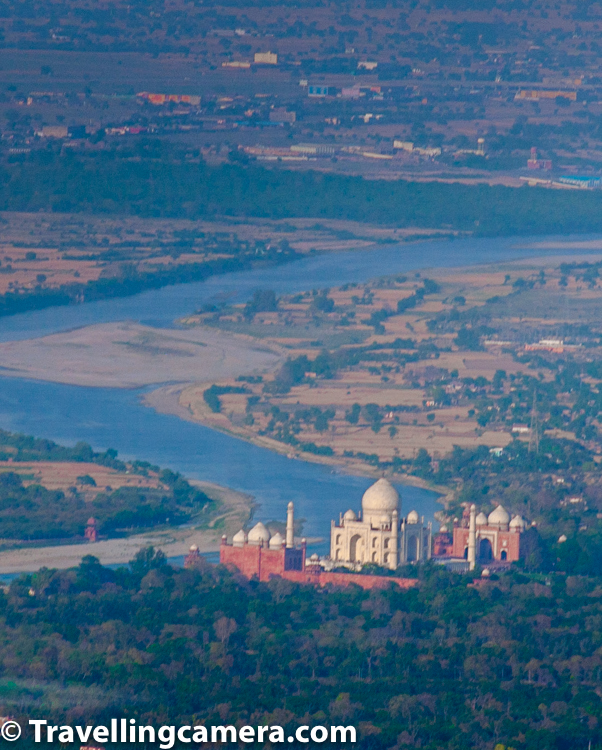
Flying in the air and experiecing the world from top is an amazing experience. All such experiences are only because of great friends around me. This time again, one of my friend referred me for a completely different project in Madhya Pradesh. This Photo Journey doesn't include any project related photograph but some aerial shots we took on the way to Madhya Pradesh from Greater Noida. --------------------------------------------------------------------------------The very first photograph of this journey which was clicked very quickly when pilot of the chopper messaged me to see on the right and try to concentrate on right edge of river. It was quite hazy and we were quite far from the Taj. Overall I am happy with what I could capture. Here is the first photograph clicked as we started our flight from Great Noida. This view shows Express Way which connects Noida with Greater Noida.We had one chopper engineer along with Pilot. Three of us drove to Muraina Town where some of the officers had to join us for breifing of the real project. This whole day was a great experience to meet people from different walks of life - Chopper Pilot, Engineers who take care of helicopters & private aircrafts for India's big businessmen, Madhya Pradesh Administrative officers, local politicians, Villagers around Chambal etcIt was awesome to see ground from 2000-3000 feet. Our Helicopter was flying around 2 thusand feets and kept changing the height and path, as per guidelines shared by ground officials. Pilot was always connected to ground officers to understand traffic in air and get appropriate directions. First time I felt that Uttar Pradesh has plenty of natural water resources and same water is distributed to agricultural areas through cannals. It was amazing to see huge agricultural lands..Along with marvelous views, it was a great experience to hear the conversation which happens between the pilot and ground authories. Buffalos and cows having fun after bath in water bodies in Madhya Pradesh State of India. - An Aerial View !Captain Chekhawat and Mr. Jitendra talking to local folks in Chambal region. It was awesome to hear stories of local farmers and how their lives has changed in last 100 years. Over the time, regulations have changed which has helped in controlling crime rate in this region. We also got a view of police officials who shared their stories of initiavites to control crime in the region.One of the aerial view of a river and borken bridge...We shall be sharing the real project photographs soon on this blog. That will be real fun to see some of the rare photographs from Muraina District of Madhya Pradesh State in India.

Budget Tips for Travelling in Uttar Pradesh

Uttar Pradesh can be surprisingly affordable if planned carefully.

Travel StyleApproximate Daily Budget
Budget₹1,500–₹2,500
Comfortable₹3,500–₹6,000
Premium₹8,000+

These are broad planning figures rather than fixed prices. Hotel rates, festivals, weekends and peak pilgrimage periods can change costs significantly.

To save money:

  • Use trains between major cities.

  • Book accommodation outside peak festival periods.

  • Eat local rather than exclusively at hotel restaurants.

  • Hire guides selectively for major monuments.

  • Use walking tours in old city areas.

  • Avoid changing hotels every night.

The cheapest trip is not necessarily the best trip.

Saving ₹500 on a hotel is pointless if it means losing two hours every morning in traffic.


Flying in the air and experiecing the world from top is an amazing experience. All such experiences are only because of great friends around me. This time again, one of my friend referred me for a completely different project in Madhya Pradesh. This Photo Journey doesn't include any project related photograph but some aerial shots we took on the way to Madhya Pradesh from Greater Noida. --------------------------------------------------------------------------------The very first photograph of this journey which was clicked very quickly when pilot of the chopper messaged me to see on the right and try to concentrate on right edge of river. It was quite hazy and we were quite far from the Taj. Overall I am happy with what I could capture. Here is the first photograph clicked as we started our flight from Great Noida. This view shows Express Way which connects Noida with Greater Noida.We had one chopper engineer along with Pilot. Three of us drove to Muraina Town where some of the officers had to join us for breifing of the real project. This whole day was a great experience to meet people from different walks of life - Chopper Pilot, Engineers who take care of helicopters & private aircrafts for India's big businessmen, Madhya Pradesh Administrative officers, local politicians, Villagers around Chambal etcIt was awesome to see ground from 2000-3000 feet. Our Helicopter was flying around 2 thusand feets and kept changing the height and path, as per guidelines shared by ground officials. Pilot was always connected to ground officers to understand traffic in air and get appropriate directions. First time I felt that Uttar Pradesh has plenty of natural water resources and same water is distributed to agricultural areas through cannals. It was amazing to see huge agricultural lands..Along with marvelous views, it was a great experience to hear the conversation which happens between the pilot and ground authories. Buffalos and cows having fun after bath in water bodies in Madhya Pradesh State of India. - An Aerial View !Captain Chekhawat and Mr. Jitendra talking to local folks in Chambal region. It was awesome to hear stories of local farmers and how their lives has changed in last 100 years. Over the time, regulations have changed which has helped in controlling crime rate in this region. We also got a view of police officials who shared their stories of initiavites to control crime in the region.One of the aerial view of a river and borken bridge...We shall be sharing the real project photographs soon on this blog. That will be real fun to see some of the rare photographs from Muraina District of Madhya Pradesh State in India.

A 10-Day Uttar Pradesh Itinerary

If you have around ten days, this route provides a good balance of heritage, spirituality, food and photography.

Day 1–2: Agra

Taj Mahal, Agra Fort, old city and Mehtab Bagh.

Day 3: Fatehpur Sikri

Spend half to a full day exploring the Mughal city before continuing toward Lucknow.

Day 4–5: Lucknow

Bara Imambara, Rumi Darwaza, Residency, old markets and food exploration.

Day 6: Ayodhya

Explore the riverfront and major cultural sites.

Day 7–9: Varanasi

Spend several mornings and evenings around the ghats. Keep one half-day for Sarnath.

Day 10: Departure

Fly or take a train from Varanasi.

For a slower trip

Replace one city with Chitrakoot or Mathura-Vrindavan.

That will give the itinerary more breathing room.

And breathing room is important in Uttar Pradesh.

The most memorable moments often happen when you have nowhere else to be.


Flying in the air and experiecing the world from top is an amazing experience. All such experiences are only because of great friends around me. This time again, one of my friend referred me for a completely different project in Madhya Pradesh. This Photo Journey doesn't include any project related photograph but some aerial shots we took on the way to Madhya Pradesh from Greater Noida. --------------------------------------------------------------------------------The very first photograph of this journey which was clicked very quickly when pilot of the chopper messaged me to see on the right and try to concentrate on right edge of river. It was quite hazy and we were quite far from the Taj. Overall I am happy with what I could capture. Here is the first photograph clicked as we started our flight from Great Noida. This view shows Express Way which connects Noida with Greater Noida.We had one chopper engineer along with Pilot. Three of us drove to Muraina Town where some of the officers had to join us for breifing of the real project. This whole day was a great experience to meet people from different walks of life - Chopper Pilot, Engineers who take care of helicopters & private aircrafts for India's big businessmen, Madhya Pradesh Administrative officers, local politicians, Villagers around Chambal etcIt was awesome to see ground from 2000-3000 feet. Our Helicopter was flying around 2 thusand feets and kept changing the height and path, as per guidelines shared by ground officials. Pilot was always connected to ground officers to understand traffic in air and get appropriate directions. First time I felt that Uttar Pradesh has plenty of natural water resources and same water is distributed to agricultural areas through cannals. It was amazing to see huge agricultural lands..Along with marvelous views, it was a great experience to hear the conversation which happens between the pilot and ground authories. Buffalos and cows having fun after bath in water bodies in Madhya Pradesh State of India. - An Aerial View !Captain Chekhawat and Mr. Jitendra talking to local folks in Chambal region. It was awesome to hear stories of local farmers and how their lives has changed in last 100 years. Over the time, regulations have changed which has helped in controlling crime rate in this region. We also got a view of police officials who shared their stories of initiavites to control crime in the region.One of the aerial view of a river and borken bridge...We shall be sharing the real project photographs soon on this blog. That will be real fun to see some of the rare photographs from Muraina District of Madhya Pradesh State in India.

Responsible Travel in Uttar Pradesh

Travel thoughtfully, particularly around religious destinations.

  • Dress respectfully at religious sites.

  • Ask before photographing people closely.

  • Follow photography restrictions inside monuments.

  • Don't photograph cremation rituals intrusively.

  • Avoid littering near rivers and heritage sites.

  • Don't touch historic structures.

  • Avoid plastic where possible.

  • Use registered guides where appropriate.

  • Don't feed wildlife.

  • Follow forest rules in wildlife areas.

  • Support local artisans directly when buying crafts.

  • Avoid bargaining aggressively over small handmade products.

Responsible travel isn't complicated.

Mostly, it means remembering that you are visiting someone else's home, workplace, sacred space or heritage.


Flying in the air and experiecing the world from top is an amazing experience. All such experiences are only because of great friends around me. This time again, one of my friend referred me for a completely different project in Madhya Pradesh. This Photo Journey doesn't include any project related photograph but some aerial shots we took on the way to Madhya Pradesh from Greater Noida. --------------------------------------------------------------------------------The very first photograph of this journey which was clicked very quickly when pilot of the chopper messaged me to see on the right and try to concentrate on right edge of river. It was quite hazy and we were quite far from the Taj. Overall I am happy with what I could capture. Here is the first photograph clicked as we started our flight from Great Noida. This view shows Express Way which connects Noida with Greater Noida.We had one chopper engineer along with Pilot. Three of us drove to Muraina Town where some of the officers had to join us for breifing of the real project. This whole day was a great experience to meet people from different walks of life - Chopper Pilot, Engineers who take care of helicopters & private aircrafts for India's big businessmen, Madhya Pradesh Administrative officers, local politicians, Villagers around Chambal etcIt was awesome to see ground from 2000-3000 feet. Our Helicopter was flying around 2 thusand feets and kept changing the height and path, as per guidelines shared by ground officials. Pilot was always connected to ground officers to understand traffic in air and get appropriate directions. First time I felt that Uttar Pradesh has plenty of natural water resources and same water is distributed to agricultural areas through cannals. It was amazing to see huge agricultural lands..Along with marvelous views, it was a great experience to hear the conversation which happens between the pilot and ground authories. Buffalos and cows having fun after bath in water bodies in Madhya Pradesh State of India. - An Aerial View !Captain Chekhawat and Mr. Jitendra talking to local folks in Chambal region. It was awesome to hear stories of local farmers and how their lives has changed in last 100 years. Over the time, regulations have changed which has helped in controlling crime rate in this region. We also got a view of police officials who shared their stories of initiavites to control crime in the region.One of the aerial view of a river and borken bridge...We shall be sharing the real project photographs soon on this blog. That will be real fun to see some of the rare photographs from Muraina District of Madhya Pradesh State in India.

Common Mistakes to Avoid

Trying to see everything

Uttar Pradesh is enormous.

Don't attempt Agra, Mathura, Lucknow, Ayodhya, Prayagraj, Chitrakoot and Varanasi in four days.

You'll spend more time in traffic than experiencing the destinations.

Visiting monuments only at midday

This is particularly damaging for photographers.

Get up early.

Treating Varanasi like a photographic set

It isn't.

People are living real lives around you.

Ignoring smaller towns

Some of the strongest cultural experiences happen outside the famous cities.

Overplanning

Leave gaps.

A missed train, an unexpected conversation or a recommendation from a tea seller can sometimes produce the best part of the trip.


Flying in the air and experiecing the world from top is an amazing experience. All such experiences are only because of great friends around me. This time again, one of my friend referred me for a completely different project in Madhya Pradesh. This Photo Journey doesn't include any project related photograph but some aerial shots we took on the way to Madhya Pradesh from Greater Noida. --------------------------------------------------------------------------------The very first photograph of this journey which was clicked very quickly when pilot of the chopper messaged me to see on the right and try to concentrate on right edge of river. It was quite hazy and we were quite far from the Taj. Overall I am happy with what I could capture. Here is the first photograph clicked as we started our flight from Great Noida. This view shows Express Way which connects Noida with Greater Noida.We had one chopper engineer along with Pilot. Three of us drove to Muraina Town where some of the officers had to join us for breifing of the real project. This whole day was a great experience to meet people from different walks of life - Chopper Pilot, Engineers who take care of helicopters & private aircrafts for India's big businessmen, Madhya Pradesh Administrative officers, local politicians, Villagers around Chambal etcIt was awesome to see ground from 2000-3000 feet. Our Helicopter was flying around 2 thusand feets and kept changing the height and path, as per guidelines shared by ground officials. Pilot was always connected to ground officers to understand traffic in air and get appropriate directions. First time I felt that Uttar Pradesh has plenty of natural water resources and same water is distributed to agricultural areas through cannals. It was amazing to see huge agricultural lands..Along with marvelous views, it was a great experience to hear the conversation which happens between the pilot and ground authories. Buffalos and cows having fun after bath in water bodies in Madhya Pradesh State of India. - An Aerial View !Captain Chekhawat and Mr. Jitendra talking to local folks in Chambal region. It was awesome to hear stories of local farmers and how their lives has changed in last 100 years. Over the time, regulations have changed which has helped in controlling crime rate in this region. We also got a view of police officials who shared their stories of initiavites to control crime in the region.One of the aerial view of a river and borken bridge...We shall be sharing the real project photographs soon on this blog. That will be real fun to see some of the rare photographs from Muraina District of Madhya Pradesh State in India.

Frequently Asked Questions About Exploring Uttar Pradesh

What are the best places to see in Uttar Pradesh?

The best places to see in Uttar Pradesh include Agra, Varanasi, Lucknow, Ayodhya, Mathura-Vrindavan, Prayagraj, Chitrakoot, Jhansi, Fatehpur Sikri and Dudhwa.

The right choice depends on whether your interests are heritage, spirituality, food, wildlife or photography.

How many days are enough to explore Uttar Pradesh?

A week gives you a taste of the state, while 10–14 days allows a much more comfortable multi-city itinerary.

For deeper exploration, two to three weeks is even better.

What is the best time to explore Uttar Pradesh?

October to March is generally the most comfortable period for sightseeing.

Winter is particularly good for heritage photography, although fog can occasionally reduce visibility.

Which city is best for photography in Uttar Pradesh?

Varanasi is arguably the most continuously interesting city for street and documentary photography.

Agra is exceptional for architecture, while Lucknow offers excellent combinations of architecture, food and people.

Is Uttar Pradesh good for a family trip?

Yes. Agra, Lucknow, Varanasi, Ayodhya and Mathura can all be incorporated into family itineraries.

However, keep travel days realistic and avoid packing too many cities into a short trip.

What food is Uttar Pradesh famous for?

Uttar Pradesh is known for Awadhi cuisine, kebabs, biryani, kachori-sabzi, chaat, petha, Mathura peda, Banarasi paan and a wide variety of regional sweets and snacks.

Is Varanasi worth visiting beyond the Ganga Aarti?

Absolutely.

The ghats are only one part of Varanasi. Explore the lanes, temples, food culture, boat life, neighbourhoods and nearby Sarnath.

What are some lesser-known places in Uttar Pradesh?

Bateshwar, Kannauj, Chitrakoot, Deogarh, Hastinapur, Barsana and parts of Bundelkhand offer experiences away from the state's most crowded tourist routes.

Is Uttar Pradesh good for wildlife photography?

Yes.

Dudhwa and several wetlands and bird sanctuaries provide opportunities for wildlife and bird photography. Wildlife sightings are never guaranteed, so patience is essential.


Final Thoughts: Don't Just Visit Uttar Pradesh. Watch It. The first time you see the Taj Mahal, you will probably take the obvious photograph.  That's okay.  Take it.  Then put the camera down.  Look at the people around you.  Watch the light move across the marble.  Listen to the conversations.

Final Thoughts: Don't Just Visit Uttar Pradesh. Watch It.

The first time you see the Taj Mahal, you will probably take the obvious photograph.

That's okay.

Take it.

Then put the camera down.

Look at the people around you.

Watch the light move across the marble.

Listen to the conversations.

Notice the Yamuna.

Later, travel toward Varanasi.

Watch a boatman work before sunrise.

Eat breakfast standing beside a busy street.

Walk through Lucknow when the old city is waking up.

Sit beside the Sarayu in Ayodhya.

Follow a quieter road toward Chitrakoot.

Stop somewhere you hadn't planned to stop.

This is how Uttar Pradesh slowly reveals itself.

The monuments are extraordinary, but they are only the beginning.

The deeper story is found in the spaces between them — in food, faith, craft, rivers, old neighbourhoods, unexpected conversations and landscapes that rarely appear on the front page of a travel brochure.

For a photographer, that makes Uttar Pradesh particularly special.

The state keeps changing the frame.

And just when you think you understand what you are looking at, someone walks into the photograph and gives the scene an entirely different meaning.

That is perhaps the best reason to explore Uttar Pradesh.

Come for the Taj Mahal.

Stay for everything else.

Related Posts -

I never saw a person throwing garbage on the road and almost every place has dustbins. Many of the taxi drivers keep plastic-bins to keep the waste. Every village is equipped with dustbins which are most of the times made up of waste. This level of awareness and proactive planning is very much required to encourage tourism in right way. Involving local communities always help in maintaining places well and they start seeing huge value in ensuring that places remain clean and well maintained. Most of the folks we encountered were very humble and cheerful.


One of the most exciting places we visited during our road-trip from Noida to Rameshwaram is Gandikota and there are multiple reasons for that. This blogpost will share more about Gandikota, the amazing places to explore around it, along with specially curated list of tips by Travellingcamera.


Nested between the Kandariya Mahadev and the Devi Jagdambi Temples is a small temple knowns as the Mahadev Shrine. The sculpture of a rampant lion fighting a kneeling figure has been installed on the porch. This is supposed to be the emblem of the Chandelas.

Varanasi is also known for its vibrant and colorful carved doors that can be found throughout the city. Here are some interesting facts about these doors:  History: The tradition of carving doors in Varanasi dates back to the 18th and 19th centuries, when wealthy merchants and landowners would commission skilled craftsmen to create ornate and decorative doors for their homes.

Varanasi Travel Guide: Ghats, Ganga Aarti, Itinerary, Hotels & Cost

Travel Guide for weekend trip from Delhi to Taj Mahal, Fatehpur Sikri and Bharatpur Bird Sanctuary

Travel Guide for weekend trip from Delhi to Taj Mahal, Fatehpur Sikri and Bharatpur Bird Sanctuary


As shared through the Annual Glipmses, 2013 was again a very eventful year for us and we explored some new aspects of Photography. These were not only about travel but lot more than that. With continuous support of our viewers, authors, Photographer friends, mentors and close friends, we got some exciting opportunities in 2013. Many of you came to us with different types of Photography projects and we also executed some of them equal enthusiasm. Thanks you all ! But the most memorable and exciting Photography experience was Aerial Photography Project in Madhya Pradesh. This Photo Journey is sharing some of the photographs which are not part of real project delivery, but few random shots taken on the way to Muraina from DelhiA friend of mine, Smita Dhall, recommended me for this project and Viveck helped to prepare well to plan and execute it. After exchanging few emails and a meeting, it was finalized to the shoot in one day. Plan was to start in a chopper from Greater Noida, land at Marena which is district headquarter of one of the district in Madhya Pradesh. Shoot some of the important monuments and locations and come back on same day. I can't share more about the project but this whole day was a very special experience. Quick flights from one location to another, taking aerial shots, special hospitality by MP officers and met with some of the popular Indian faces. But for me the most special part was photographing the beauty of Murena district from height.If you not aware of Aerial photography, then let me define is again for you :) .. It's about taking photographs of ground from an elevated position and in our case, it was the chopper which used to take us to a point from where we could capture things well. From Murena, few local folks joined us to guide us through right route and locations.Most of the photographs shared in this Photo Journey are shot on the way from Greater Noida to Murena via Agra. These water bodies looked most beautiful from top, although we clicked lot of villages, brick furnaces, huge farmlands etc.Above photograph shows the Noida Expressway, which connects Noida with Greater Noida. This is extended further through Yamuna Expressway which has reduced the travel time to Agra. It seems that Agra is 2.5 kilometers away from Delhi now. It was awesome to see fast moving vehicles on these highways, especially when vehicles were moving in opposite direction of our Helicopter.Check out more about Aerial Photography at http://en.wikipedia.org/wiki/Aerial_photography and enjoy rest of the Photo Journey.Here is the old story from this Photography Experience - http://phototravelings.blogspot.com/2013/04/helicopter-ride-from-great-noida-to_3485.html#.Usb65bQtnsE

This Photo Journey is about PREM Mandir, which is quite near to ISKCON Temple in Vrindavan Town. All these photographs are shot during one of our recent trips to Vrindavan !  Let's check out ...Prem Mandir has become another source of pride for lot of Hindu devotees and tourists from all over the world. Prem Mandir is built entirely of gigantic blocks of grainless, pure white Italian marble, with no steel, bricks or cement binding between blocks.Although beautiful to the senses, perhaps its greatest value lies in its utter spiritual significance to countless supporters and devotees. It is the 'Temple of Divine Love'. Prem Mandir is inaugurated on 15 - February 17, 2012 in the presence of Jagadguru Shree Kripaluji Maharaj. It is already being called a wonder of the modern world.Lord Krishna at ground floor of Prem Mandir, Vridavan, Uttar Pradesh, India !On fifty acres of land, Prem Mandir is surrounded with magnificent gardens and beautiful fountains. On the walls of this double story monument, the true theme of our scriptures, the Vedic science of creation, the world history and the unbroken continuity of Bhartiya scriptures for over 1.9 billion years will be depicted. The beautiful deities of Radha Krishn and their leela songs are depicted in an exquisite manner. All creations on outer walls look 3 dimensional Here is a photograph of huge entry gate for Prem Mandir. Entry of Prem Mandir has lot of green patches all around. Lush green lawns look amazing and some flowers planted around the boundaries. Just after the entry gate, there is a green lawn on left side and having some trees around. On one of the tree, there is a creation which shows Lord Krishna and Radha Rani on a jhoola made up of flowers. Since no one is allowed to step over lush green lawns, I can't comment on material used in creating these ! But the quality of all these creations is unmatchable... Above photograph shows one of the artistic creation of white marble. This is a photograph of one part of pillar in Prem Mandir ! These creations were very close to natural objects and it was hard to believe that all these are created in Marble. Wonderful work done at various parts of Prem Mandir. This is one of the magical part of Prem Mandir in Vrindavan. To us this seemed like a tourist place as compared to a typical temple, but we were proved wrong when we entered into the core of Prem Mandir (Temple).Architecture of Prem Mandir is based on the book 'Shilp-Ratnakar', written by Vishwa Karma. It is apparently the first temple in the world where the many pastimes written in Bhagwatam  are illustrated on the wall. The inside view of the temple is said to overwhelm visitors with religious feelings. Huge Deities of Radha Krishna are situated in the center of ground floor. The inside walls are beautified with engraved paintings of Radha Krishn and glimpses of group kirtan (chanting) and lectures of Jagadguru Shree Kripaluji Maharaj. It is said that the beauty and art of the tomb-type roof cannot be described in words. The first floor is glorified with the Deities of Sita Ram. Towards the south side of this floor the scenes of the pastimes of Lord Chaitanya Mahaprabhu are engraved with multi color stones and towards the north side the pictures of all the 4 previous Jagadgurus and great rasik saints like Jeev Goswami, Haridas Ji, Hit Harivansh Ji and Vallabhacharya Ji are engraved beautifully. Besides that the beutiful verses are inscribed on the walls.My photographs don't do any justice to lighting of Prem Mandir ! Huge light chandeliers were used to lit various parts of the temple. Upper storey of Prem Temple is dedicated to Ram Mandir ! Above photograph shows one of the smallest lighting stuff, which was hanging around various walls of Prem Mandir !  This photograph shows a close-up of Lord Krishna while he has picked up Govardhan Parvat on his finger. There is a huge creation in front of Prem Mandir which shows Lord Krishna lifting up the Govardhan Parvat and lot of other folks with cattle under it. Here is a photograph showing some of the creations carved on inner walls of the temple (Prem Mandir). Check out following link for more details about Prem Mandir - http://knol.google.com/k/david-mccaldin/prem-mandir-the-inauguration-of-a/2pr18mcjtayt9/19#

Historical Background: From Akbar’s Stronghold to Shah Jahan’s Sanctuary The earliest version of Shahi Burj dates back to Emperor Akbar, who envisioned it as a military watchtower within his newly built fort (1565–1573). However, it was Shah Jahan who transformed it into a refined marble palace during his extensive remodelling of Agra Fort in the 17th century.

Shahi Burj, Agra Fort: The Imperial Tower of Power, Privacy, and Tragedy


Hidden within the royal residential quarters of Agra Fort, away from public courts and ceremonial spaces, lies one of the most enchanting creations of the Mughal era — the Sheesh Mahal, or the Palace of Mirrors. Unlike the imposing red sandstone exteriors of the fort, this palace reveals a world of shimmering reflections, white marble elegance, and intimate luxury meant solely for the emperor.

This weekend we planned an outing with office friends and after various discussions, we zeroed down at Agra. Personally I couldn't relate it as I never think of visiting these hot places in summers. But certainly there are various aspects associated with office trips and place where you stay plays an important role. We decided to stay in ITC Mughal, Agra. This post shares about the experience of staying in ITC Mughal, services offered, food variety & quality and other related stuff.

A Weekend at Vrindavan - Vatsalya Gram, Temples, Street Walks, Food, Games, Music etc... || Pure PHOTO JOURNEY from Vrindavan


During the reign of Maharaja Chhattrasal, in 1728, Mohammed Khan Bangash attacked his kingdom, and at that time Peshwa Bajirao helped Maharaja Chattrasal defeat the Mughal army. And in return, Maharaja Chattrasal offered the Peshwa a part of his kingdom, which included Jhansi.

A Day Tour of Lucknow City in an Auto-Rickshaw || Uttar Pradesh, India

It is an L-shaped space, and you can either decide to park your vehicle deep inside the parking, if the parking isn't already full, or park it closer to the parking entrance and leave your keys with the parking guy. We weren't too comfortable to leave the keys with anyone as we were travelling with some luggage, so we didn't have much choice but to park it deep inside. But this would cause considerable hassle later on. Will share more later.

There are very few Indian Sweets that instantly awaken memories the way Jalebi does. The mere sight of golden spirals bubbling in a giant iron wok, the aroma of hot ghee mingling with sugar syrup, and the unmistakable crackle as a fresh Jalebi breaks between your fingers—these moments transcend geography. Whether you're wandering through the narrow lanes of Old Delhi before sunrise, stopping at a roadside dhaba in Rajasthan, exploring temple towns in South India, or attending a wedding in Punjab, chances are you'll find Jalebi waiting to welcome you.

A tryst with the city of nawabs Lucknow : by Anchita Dogra: Part-1 : Posted by Anchita Dogra on www.travellingcamera.com : Bara Imambara...Bara Imambara is an imambara complex in Lucknow which is capital of largest state of  India ; Uttar Pradesh... It was built by Asaf-ud-daulah, Nawab of Lucknow, in 1784... It is also called the Asafi Imambara... Bara means big, and an imambara is a shrine built by Shia Muslims for the purpose of Azadari. The Bara Imambara is among the grandest buildings of Lucknow... Check out more details about Imambara @ http://en.wikipedia.org/wiki/Bara_Imambara Cathedral - Lucknowites' favorite haunt on Christmas evesTunde Kababi- The world famous non veg shop in Lucknow, Utter Pradesh, INDIA Thats the roof of a famous mall- Saharaganj in Lucknow... They say its d sky dat you see through the roof up there but I could never see the stars even after staring at it for hours :O The available multiple modes of public transport in the city are taxis, city buses, cycle rickshaws, auto rickshaws and CNG Buses. CNG has been introduced recently as an auto fuel to keep the air pollution in control. The city bus service is run by Lucknow Mahanagar Parivahan Sewa... A scene you will see in the movie pakeezah :) ... Asfi Mosque @ Lucknow in INDIA... Aminabad, a quaint bazaar like Delhi's Chandni Chowk, is situated in the heart of the city. It is a large shopping centre that caters to a wide variety of consumers. Chowk and Nakhhas are markets in the old Lucknow area where you can get a feel of traditional Lucknow. .. On a recent visit back home, I got the chance to capture some of the fond memories of my hometown Lucknow ... Here are some of those Photographs...Entrance to the city - Rumi Gate. Its a replica of a gate in Rome... The Rumi Darwaza served as the entrance to the city of Lucknow; it is 60 feet high and was built by Nawab Asafuddaula (r. 1775-1797) in 1784. It is also known as the Turkish Gateway, as it was erroneously thought to be identical to the gateway at Constantinople. It is the west entrance to the Great Imambara and is embellished with lavish decorations.Satkhanda- Still Appeals... A putrefying of 67 meter red-brick watchtower, located just opposite to the Hussainabad Imambara is a splendor of medieval architecture. The structure shows a curios blend of French and Italian style structural designs...  The view of Clock Tower from Picture Gallery ... Lucknow Clock Tower is located very near to the Rumi Darwaza. Built in 1881 by the British, this 67 m-high clock tower on the river Gomti is said to the tallest clock tower in India. The tower features European style artwork. The part of the clock is built of pure gunmetal... Chota Imambara... Chota Imambara or the Husainabad Imambara... it displays a curious mixture of Charbagh, Persian and Indo-Islamic structuThis neatly designed monument where a placid stream runs through middle of the garden provides the miracles of artistic brilliance and structural grandeur... Interiors are ornamented with Arabic calligraphy and intricate glass works... Often called as the palace of lights, this Imambara shines its best during the eve of Muharam when the entire edifice would be lit with ornamental lamps and Belgium chandeliers.ral designs...Roza Shahzadi- The reclining palace for the princesses inside Bada Imambara...  The British-built architectural sights in Lucknow include the Vidhan Sabha (State Legislative Assembly), the Clock Tower and the Charbagh Railway Station, with its distinctive domes, arches and pillars... Lucknow is placed among the fastest growing cities of India and is rapidly emerging as a manufacturing, commercial and retailing hub. This unique combination of rich cultural traditions and brisk economic growth provides Lucknow with an aura that refuses to fade away. Lucknow has developed as a metro city of Uttar Pradesh and is second largest in the state, the biggest city is Kanpur....Located in what was historically known as the Awadh  region, Lucknow has always been a multicultural city. Courtly manners, beautiful gardens, poetry, music, and fine cuisine patronized by the Persian-loving Shia Nawabs of the city are well known amongst Indians and students of South Asian culture and history.. Lucknow is popularly known as The City of Nawabs. It is also known as the Golden City of the East, Shiraz-i-Hind and The Constantinople of India.... 

Experience at Fatehpur Sikri :     So as we got down from the highway which connects Bharatpur with Fatehpur Sikri, after a short drive, few well dressed folks with some sort of badges around the neck indicated to stop the car. These folks were standing close to a parking area just close to the old gate of Fatehpur Sikri Palace. We thought of these guys as authority people who want to help us park the car. As we stopped, we were told that Petrol/Diesel cars can't go beyond the gate so we need to park the car outside and walk or take CNG auto-rickshaw to go ahead.     CNG vehicles close to Palace sounded pretty reasonable and then the guy explained us about different costs for the visit : 50 Rs entry ticket for each person, 100 Rs parking fees, 10 rs for shoes when we visit the place with Dargah and 200 Rs for pick & drop in an auto-rickshaw. And he would accompany us a guide is needed. He sold whole package to us in 650 Rs for 2 (me and my wife).    We parked the car, and sat in the auto-rickshaw. We met another guide recommended by this person who took us to Jama Mosque where we had to take off the shoes. It's a huge campus with Jama Masjid, Buland Darwaza, Tomb of Salim Chishti etc. He showed us these places pretty well and along with that took us to different shops inside this campus where he wanted us to explore and buy stuff. That behaviour didn't sound right to me while Vibha was little interested in to knowing what these shops are selling and certainly they had some nice creations of marble. We didn't buy anything because of unreasonable pricing. Then he took us to a man selling sheets which are presented at Dargah and the man started telling us weird stories around how this shop helps poor etc. The costs ranged from 1100 to 11000. Certainly I didn't buy his stories and denied to buy anything. At the end he was selling me flowers which I would have bought but that personality repelled me to talk to him any further.

Learnings and Tips for visiting a new place in the world :  At tourist places, don't make immediate plans with folks who come on your way and suggest something proactively. At times, these folks present themselves as Tourism employees or Tourism dept recognised agents etc.   Read well before visiting a place - Must know things are transportation system, places to visit, things to be careful about etc. Better preparedness is always helpful in avoiding such unwanted situations.   Be careful about making advanced payments before figuring out the credibility and one must be more cautious when cost is higher for sure.  Be clear about priorities. E.g. - We messed up by hiring a guide when I wanted to spend more time photographing in a relaxed way.   Be aware of timings when you are outside and be watchful of your surroundings, especially in odd hours. And that's true for any new place you go to.

There is something about Benaras that makes one believe in magical things like destiny and happenstance. Except that when such things happen in Benaras, they do not appear magical. They appear normal.

Some time back I shared about recent visit to Bada Imambara in Lucknow, which also has a maze which is popularly known as 'Bhool Bhulaiya'. This Photo Journey shares some interesting facts about Bhool Bhulaiya with appropriate photographs. Bhool Bhulaiya is probably one of best things to explore in Lucknow town and it's more fun to explore without any guide. At times guides can also add fun to this exploration process, because they also understand that people come to see a maze to have some interesting experience of getting lost. Above two photographs shows the way this maze is created. There are series of entry and exit points on both sides of this corridor. This one is one of the extreme corridors which was easy to click. Inside the maze, light was extremely low, so couldn't capture a good photographs inside the bhool bhulaiya. This photograph shows the roof-top of bhool bhuliyaa which offers some amazing views of the city on one side and Bada Imambara campus on the other. Many of the local folks in Lucknow highly recommend a visit to Bada Imambara. Lot of guides wait for tourists to serve them with a guided tour of bada Imambada and Bhool bhulaiya. Some of the guides are brilliant who take you through the tour in interesting way and ensure that you enjoy this exploration. At times, people suggest not to have a guide when going inside this maze called Bhool Bhulaiya. We also preferred not to have any guide at Bhool Bhulaiya. As we entered inside the maze, we were uncomfortable and not sure how much time it will take to come out. But it was fun to be lost and suddenly you start feeling that it's impossible to get out of this maze now. Now the trick is to follow any group which has a guide with them :) . We did the same and came out. There is a basic rule of coming out of this maze. If you want to know the trick, check out bottom of this post and if you want to have real fun, ignore it now and may come back when stuck inside. In my opinion, Bhool Bhulaiyaa is one of the best things to explore inside Bada Imambara complex. It's a must do thing in Lucknow to explore Bhool Bhulaiya and have fun with your friends & family.READ ONLY IF YOU HAVE NEVER WENT INSIDE THE MAZE - As promised, let us share the basic rule of coming out of Bhool Bhulaiya if you don't have guide with you and are stuck inside for a long time. Always take stairs going up and gradually they will lead to the roof-top. I am assuming that you are reading it while inside the maze and stuck, otherwise I will apologize to spoil the fun.

Above photograph is very special for me which was clicked from my first helicopter ride, when I was going to Morena for an Aerial photo-shoot. It's not a sharp image because of lot of vibrations in a helicopter and I had no option but to click with hand-hold camera on a not so clear day. Irrespective of all that, I love this aerial view of Taj Mahal, huge green patch in front of it and Yamuna flowing behind it. And notice that Yamuna is looking blue in this aerial shot of Taj Mahal. Certainly this photograph is edited but you see the colors which were present, may be a little more saturated.

When you are in Lucknow and creating a priority list of things to do, Bada Imambada is something you should keep on top. This Photo Journey is sharing some photographs of Bada Imambada with appropriate reasons visiting it, even when you have very less time in hand.Some time back I was in Lucknow for a wedding and thought of moving out for some time. After talking to friends in Lucknow, looking at city map I thought of going straight to Bada Imambada and keep my plan flexible.One of the main reasons to visit Bada Imambada was it's popularity which exposes you to beautiful architecture & gives you a sense of the city through people who visit this place. Lot of folks come to this place, you meet interesting guides at this place and has a small market at entry gate where you can buy some souvenirs. Lot of activities happen around this area of the city, through which you get better understanding of the place, it's residents, culture and lot more which we never expect from such places in an Indian city. To my surprise, Lucknow was quite different than what I had imagined and it kept me surprised on regular basis.Auto-Rikshaw is one of the best ways to explore the city. Various parts of Lucknow city are connected well through buses, shared/private Auto-Rickshaws & rickshaws. One needs to negotiate well with Auto-Rickshaw people but definitely the negotiation process is quite happy as compared to Delhi/Noida :). As Lucknow is know for 'tehzeeb', you can clearly see that people in city are polite and sensible. Although you always find exceptions, if you have a bad day.Another reason for choosing Bada Imambada is - Bhool-Bhulaiyaa. Bhool Bhulaiya is located inside Bada imambada campus, which is one of the main places to explore in Lucknow city. This is very interesting place which shouldn't be explored with any guide :). Yes, you read it right. The real fun lies in going inside bhool bhulaiya without any guide and try to figure out your way out. It can be difficult & frustrating when you always lead to wrong path, but it's fun and you feel like winner when you come out of it. We didn't hire any guide and went indie Bhool bhulaiya. After a while we were frustrated by the fact and everyone inside the Bhool bhulaiya was telling wrong path and situations were not even better when you don't follow anyone. But soon after to crack the logic and come out of it. There is a thumb rule, which I don't want to share on this blog. So just visit yourself and have fun. It is possibly the only existing maze in India and came about unintentionally to support the weight of the building which is constructed on marshy land.Bada Imambada was built by Asaf-ud-Daula, Nawab of Lucknow, in 1784. It is also known as Asafi Imambada, but people hardly recognize this name except few from the city. Bada means big, and an imambada is a shrine built by Shia Muslims for the purpose of Azadari. The Bada Imambada is among the grandest buildings of Lucknow city and probably state as well.Bada Imambada a huge campus which is well maintained, in my opinion. I liked the way cleanness is maintained and authorities maintain some rules to keep it clean and maintained. There are different type of tickets for entry inside Bada Imambada. We took 50 Rs ticket, which included everything inside the campus - Bhool Bhualaiyaa, Asfi Mosque, a grave of Asaf ud-Daula under a canopy, Shahi Bawli, Domed Chamber, Hallways, Rumi Darwaja, Tazia & Zari.Asfi Mosque looks similar to Jama Masjid in Delhi, but it was closed when we visited. Not sure, if it was temporary thing or mosque remains closed. It's quite inspiring to know that Nawab started to build this campus for providing work and food to folks around this region. It seems that Bada Imambada was built just because to provide some work to folks for earning food for their families.Above photograph shows a grave of Asaf ud-Daula under a canopy. This is located just below Bhool Bhulaiya on the ground floor. One needs to take of shoes to go inside. It's one of the most colorful and well maintained part of Bada Imambada. This part of the campus is very well lit with colorful lights.Above photograph shows main mosque on the left and gateway on right. This gateway takes visitors inside the main campus and there is a road on the other side which goes to Chhota Imambada.There is a huge area in front of Bhool Bhulaiya, where families & friends like to sit down and enjoy the view of mosque, gardens and other things in Bada Imambada campus.One can see some guides burning a matchbox stick at the other end of the balconies that have openings to the Central Hall. It's another significant and architectural art in Bada Imambada campus.  You can listen the sound  of a match stick at the other end of the hall.  It is really interesting and seems unbelievable. There are many interesting things about the place and local guides play a good role in helping you exploring all this. If you happen to hire a guide, don't take his help in Bhool bhulaiya unless you are extremely frustrated.A beautiful view of Mosque & main gate from Bhool Bhulaiya. Top of Bhool bhulaiya offers bird's eye view of monuments, the Roomi Darwaja, the Gates, Asifi Masjid, Clock Towers, Laxman Tila Masjid,  Gomti river and the busy streets of Lucknow city.Chhota Imambada is visible from roof-top of Bhool-bhulaiya. We didn't have much time so preferred to visit Ganj instead of going towards Chhota Imambada.A caution - If you plan to explore the city using Auto, make sure that you don't change your plans as per information provided by them. Like other tourist destinations, Auto-walas try to take you to shops to earn some commission out of your purchase. We also ended up buying some stuff from lucknow because of our Auto-wala who took us to Ganj after Bada Imambada.Asafi Masjid which you can see in above photograph has sculptured domes and minarets. This mosque provides a most beautiful sight. If you are in Lucknow on Friday, make sure that you plan your visit when thousands of folks come here for namaz.Shahi Bawli is another interesting place inside this campus. This royal well is just opposite to the mosuqe. One can go downstairs to see the well with blue water on surface and the bathrooms constructed around the well on ground, first and second floors of the Well. Above photograph shows water in the middle of this well with mutual-layered building around it.  If you have a look from one side of the well, you can see in the water - the image of person approaching the well. Different guide service can be availed at Bawli, although one can notice this easily.

Ayodhya is not just a destination—it’s a deeply spiritual experience rooted in history and faith. With the right planning, your visit can be peaceful, meaningful, and memorable.


With lot of travel (personal & business) in last 5 months, we are lagging behind in sharing some of these experiences. We were in Benaras during Mahindra Kabira Festival, which happens in the month of November every year. During the same trip, we also took out time to walk around the beautiful city of Kashi and one of the most talked experiences of Varanasi is Ganga Aarti, which takes place on different ghats during morning as well as evening. Through this blogpost, we want to share these Ganga Aarti experiences on different ghats and will also share some recommendations.
Ganga Aarti in Varanasi - Is it really an exceptional experience or an over-hyped activity to do in Kashi of India?


Comments

Trending Post Today !

How to reach Kasol/Malana and top things to do around this stunning hill-station of Himalayan State of India

Main places to see & Top things to do around Dalhousie : Stunning Hill Station in Himalayan State of India