

Introduction
Some monuments announce themselves loudly.
The Shore Temple does it with the sea behind it. The enormous bas-relief of Arjuna's Penance does it through sheer scale. Krishna's Butter Ball does it by sitting improbably on the slope of a granite hill.
Then there is Trimurti Cave.
It is quieter.
Located among the rocky monuments of Mahabalipuram, the Trimurti rock-cut cave temple does not immediately feel as dramatic as some of the better-known monuments around it. But spend a little time here and another side of Pallava architecture begins to reveal itself.
The cave is carved directly into the granite hillside and contains three shrine spaces associated with Brahma, Vishnu and Shiva. The architecture is inseparable from the natural rock. There is no conventional construction in which blocks were brought together to create the temple. Instead, the mountain itself became the building material.
This is what makes exploring the Mamallapuram Heritage Park so rewarding.
You are not simply moving between individual monuments. You are walking through an ancient landscape where Pallava craftsmen experimented with rock-cut caves, monolithic temples, enormous sculptural panels and structural architecture.
As a photographer, I find these quieter monuments particularly interesting.
The changing light, the rough granite, the deep shadows inside the cave and the sculpted guardians around the shrine entrances create photographs that feel very different from the more familiar postcard images of Mahabalipuram.
And if you are interested in Tamilnadu heritage sites, Trimurti Cave is one of those places where slowing down actually makes the experience better.

Why Visit Trimurti Cave in the Mamallapuram Heritage Park?
Trimurti Cave is associated with the Hindu concept of the Trimurti — Brahma, Vishnu and Shiva representing creation, preservation and transformation.
The three shrine chambers are carved into the rock and are approached separately.
That is important because the experience is not simply about seeing three sculptures.
There is a sense of movement.
You approach the rock.
You enter the architectural space.
You encounter the guardian figures.
Then your eyes adjust to the darker interior.
The granite outside is exposed to the intense coastal sunlight, while the carved interior holds onto shadow. That contrast is one of the first things a photographer notices.
The cave also provides an opportunity to understand an important phase of South Indian architecture.
When visiting the famous temples of Tamil Nadu, it is easy to associate the region's architectural identity with enormous towers, elaborate gopurams and vast temple complexes.
Trimurti Cave belongs to an earlier and very different architectural vocabulary.
Here, the challenge was not how to construct a monumental building.
The challenge was how to transform a mountain into sacred architecture.

The Pallavas and the Making of Mamallapuram
Mahabalipuram, also known as Mamallapuram, became one of the great artistic centres of the Pallava period.
The town developed along the Coromandel Coast and was connected with maritime activity as well as political and cultural life.
Much of the monumental landscape visible today dates broadly from the 7th and 8th centuries.
The reign of Narasimhavarman I, better known by his title Mamalla, was particularly significant in the development of Mamallapuram's monumental architecture.
The name Mamallapuram itself is associated with Mamalla.
During this period, artists and craftsmen worked extensively with the granite landscape.
Instead of treating the rocky terrain as an obstacle, they incorporated it into their architectural vision.
That produced several distinct forms:
Rock-cut caves
Monolithic rathas
Open-air reliefs
Structural temples
Sculptural panels integrated with natural rock
Trimurti Cave is one small but important part of this larger experiment.

Understanding the Three Shrines of Trimurti Cave
The basic concept is wonderfully simple.
Three divine forms.
Three sacred spaces.
One rocky hill.
The three shrines are traditionally associated with:
Brahma
Brahma represents creation in the Trimurti concept.
Vishnu
Vishnu represents preservation and protection.
Shiva
Shiva represents transformation and dissolution.
The individual shrine spaces give each deity a certain architectural independence.
Rather than creating one enormous composition, the sculptural programme is distributed across the excavated rock.
This makes the cave feel intimate.
It also creates interesting photographic possibilities because every opening becomes a natural frame.

Trimurti Cave and the Larger Mamallapuram Heritage Park
One mistake visitors sometimes make in Mahabalipuram is treating each monument as an isolated attraction.
The better approach is to understand the entire landscape as one enormous chapter of Pallava artistic experimentation.
After Trimurti Cave, you can explore several other important monuments in the surrounding area.
These include:
Krishna's Butter Ball
Arjuna's Penance
Krishna Mandapam
Varaha Cave
Mahishasuramardini Cave
Ganesha Ratha
Raya Gopuram
Mahabalipuram Lighthouse
Shore Temple
Pancha Rathas
The experience becomes much richer when you compare the monuments.
Look at how the sculptors handled bodies in different spaces.
Compare the treatment of pillars.
Observe how much detail was possible inside a confined cave.
Then compare that with the monolithic rathas.
By the end of the day, you begin to see Mamallapuram not as a collection of monuments but as a giant open-air laboratory of stone architecture.
My Experience at Trimurti Cave
The first instinct at a heritage site is usually to take out the camera.
At Trimurti Cave, I would recommend doing the opposite.
For a few minutes, simply stand there.
Look at the rock.
The granite landscape around Mahabalipuram has an almost stubborn character. It feels hard, heavy and permanent.
Then look at what the Pallava sculptors managed to do with it.
A massive piece of rock suddenly becomes a doorway.
A vertical surface becomes a wall.
A dark recess becomes a shrine.
A rough stone surface becomes a human figure.
This transformation is what makes rock-cut architecture so fascinating.
The deeper you look, the more details appear.
The guardian figures at the entrances are especially worth observing.
Their stance gives the otherwise static stone architecture a sense of movement and physical presence.
Then there is the light.
Outside the cave, the coastal sun can be intense. Inside, the atmosphere changes completely.
The eye takes a few seconds to adjust.
Details emerge slowly.
This is when the monument begins to feel less like a tourist attraction and more like a place with its own atmosphere.
Look Beyond the Main Shrine
One of the best habits you can develop while photographing heritage sites is to walk around the monument instead of photographing only what everyone else is photographing.
Trimurti Cave rewards this approach.
Look at the side and rear portions of the rocky outcrop.
There are sculptural details that can easily be overlooked when visitors concentrate only on the main cave.
Elephant carvings associated with the rock are particularly interesting.
They also make excellent subjects for a different kind of photograph.
Instead of taking a wide image showing the entire monument, try isolating one elephant, one weathered section of granite or one particular sculptural detail.
Sometimes a close photograph communicates the age of a monument better than a wide-angle image.
What Makes Trimurti Cave Different from Other Mahabalipuram Monuments?
The easiest answer is scale.
Trimurti Cave does not compete with the Shore Temple or the enormous open-air reliefs.
Its strength is intimacy.
You are close to the sculptures.
The space is enclosed.
The rock surrounds you.
The transition from sunlight to shadow is immediate.
This makes the experience more personal.
It also makes the cave particularly interesting for photographers who enjoy details rather than monumental landscape photographs.
A wide-angle photograph tells the viewer where the monument is.
A close photograph can sometimes tell the viewer how old it feels.
Best Photography Spots Around Trimurti Cave
There are several approaches worth trying.
1. Photograph the Cave Entrance
Stand a little farther away and allow the rock face to frame the shrine.
Try to keep the composition simple.
The dark opening naturally draws attention toward the interior.
2. Photograph the Guardians
Move closer to the entrances and concentrate on the dvarapalas.
Look for:
Facial expressions
Body posture
Jewellery
Drapery
Hands
Interaction with the doorway
A medium telephoto lens is particularly useful here.
3. Use the Rock as a Frame
Don't always centre the sculpture.
Use the surrounding granite to create a natural frame.
This works especially well when part of the rock falls into shadow.
4. Photograph Human Scale
If circumstances allow, include a visitor naturally in the composition to show the scale of the rock-cut architecture.
Don't ask strangers to pose simply for the photograph.
Instead, wait.
Someone walking naturally through the landscape can create a much more authentic frame.
5. Look for Abstract Textures
The weathered granite can become an image in itself.
Try close-ups of:
Cracks
Tool marks
Weathered surfaces
Moss or lichen after rainy periods
Edges of carved figures
Contrasting smooth and rough stone
These photographs can work particularly well as part of a travel photo essay.
Photography Tips for Trimurti Cave
Visit Early or Late
The strongest general recommendation is to avoid the harshest middle-of-the-day light.
Early morning provides:
Cooler temperatures
Fewer visitors
Softer light
More peaceful surroundings
Late afternoon can provide warmer directional light and longer shadows.
The wider monument landscape is especially enjoyable during these hours.
Be Careful With Dynamic Range
The entrance can be dramatically brighter than the cave interior.
If you expose for the outside, the interior may become almost black.
If you expose for the sculpture inside, the exterior can become overexposed.
Shoot a few variations.
If your camera allows it, bracketing can be useful.
Don't Automatically Use Flash
Flash can flatten the texture of ancient stone and remove the natural atmosphere.
Available light often produces a much more convincing photograph.
Try Different Focal Lengths
A wide-angle lens is useful for showing the relationship between the cave and the rocky landscape.
A normal or short telephoto lens is better for sculpture.
Don't assume one lens is enough.
A Photographer's Way of Seeing the Cave
One of my favourite ways to photograph old monuments is to divide the visit into three stages.
First, photograph the place.
Then photograph the details.
Finally, photograph the relationship between people and place.
At Trimurti Cave, that could mean:
Place: the granite hillside and cave.
Detail: the deity or guardian sculpture.
Relationship: a visitor quietly looking into the shrine.
Together, these three kinds of images tell a story.
A collection of only wide-angle monument photographs often becomes visually repetitive.
Details and human scale give the story depth.
Lesser-Known Things to Notice
The Rock Is the Architecture
This sounds obvious, but it changes how you look at the monument.
Don't separate the cave from the hill.
The hill is the temple.
The sculpted interior exists because the craftsmen removed material from it.
Weathering Is Part of the Story
Not every surface will look perfectly sharp.
Centuries of exposure to wind, rain and the coastal environment have affected the stone.
Instead of seeing weathering only as damage, photograph it as evidence of time.
Compare the Caves
If you have enough time, visit Varaha Cave and Mahishasuramardini Cave as well.
The comparison helps reveal how differently the Pallava sculptors used relatively similar raw material.
This is one of the most rewarding things about exploring the Mamallapuram Heritage Park.
Local Food Experiences in Mahabalipuram
A morning of walking around granite monuments creates a serious appetite.
Mahabalipuram has plenty of restaurants catering to visitors, but don't overlook ordinary South Indian food.
A simple breakfast can include:
Idli
Vada
Dosa
Pongal
Sambar
Coconut chutney
Filter coffee
If you eat seafood, the coastal setting makes fish, prawns, crab and other seafood dishes an obvious choice.
For lunch, a traditional South Indian thali served on a banana leaf can be a much more memorable experience than another international-style restaurant meal.
And then there is filter coffee.
Strong, aromatic and served hot, it is almost mandatory after a long morning walking around the monuments.
Conversations With Local People
One of the most interesting aspects of Mahabalipuram is that the tradition of working with stone has not disappeared.
The town has a long association with stone carving and sculpture.
If you meet a local sculptor or artisan, don't limit the conversation to asking what something costs.
Ask about the process.
Ask how they select stone.
Ask which tools they use.
Ask how they decide where to begin.
A conversation like this can completely change how you look at the ancient monuments.
Suddenly, the marks on a centuries-old sculpture stop looking random.
You begin imagining the process.
One blow of the tool at a time.
One surface removed.
One form gradually appearing from the rock.
Local Myths, Legends and Historical Memory
Mahabalipuram has a rich collection of stories surrounding its monuments.
One of the most famous is the old association with the idea of Seven Pagodas, a group of temples supposedly standing along the coast, with only the Shore Temple remaining visible today.
Stories like these have become part of the cultural identity of the town.
But it is worth separating legend from archaeological evidence.
That doesn't make the stories less interesting.
In fact, the opposite is true.
A good traveller can hold two ideas at the same time:
"This is what local tradition says."
And:
"This is what historians and archaeologists can establish."
That distinction makes cultural travel more meaningful.
Best Time to Visit Trimurti Cave
The cooler months are generally more comfortable for exploring Mahabalipuram.
October to March
This is a good period for long heritage walks.
The weather is generally more manageable than the hotter months, although October and November can bring rain and humidity.
December to February
These months are particularly pleasant for walking and photography, although popular weekends can become busy.
March to May
Temperatures rise significantly.
If you visit during this period, start early.
June to September
The southwest monsoon is not as dominant here as on India's western coast, but humid and wet conditions are possible.
The stone can also become visually interesting after rain, particularly when darker granite contrasts with vegetation.
How to Avoid Crowds
If photography matters to you, timing is more important than equipment.
Try arriving early.
Avoid weekends and major holidays if you have flexibility.
The first couple of hours of the day can feel completely different from the late morning period when tour groups arrive.
Another useful strategy is to spend the busiest period having breakfast or lunch and return to the monuments later.
You don't have to fight the crowd.
Work around it.
How to Reach Trimurti Cave, Mahabalipuram
Mahabalipuram is well connected to Chennai by road.
From Chennai
The journey is commonly made by road, with the East Coast Road providing one of the most scenic approaches.
Traffic can make travel times unpredictable, particularly on weekends and holidays.
By Air
Chennai International Airport is the nearest major airport.
From the airport, you can hire a taxi or use other road transport to reach Mahabalipuram.
By Train
Chengalpattu is an important railway connection for travellers approaching the region by train.
From there, road transport can be used to reach Mahabalipuram.
Getting Around Mahabalipuram
Some monuments are comfortably walkable from one another.
For the more dispersed attractions, an auto-rickshaw, taxi or rented vehicle can save time.
For photographers, walking has one major advantage.
You notice things.
A sculptor's workshop.
A tiny shrine.
An old wall.
A street vendor preparing breakfast.
A fragment of stone architecture.
These details rarely appear when you move everywhere by car.
Where to Stay in Mahabalipuram
There is accommodation for different budgets.
Budget
Small hotels and guesthouses around the town are practical for travellers who intend to spend most of their time outside.
Mid-range
These work well for couples and families who want comfortable rooms while remaining relatively close to the monument area.
Beach Resorts
Mahabalipuram also has several higher-end properties along the coast.
These make sense if you want to combine heritage sightseeing with a relaxed beach stay.
For photography, I would choose accommodation based on one simple question:
Can I get out early enough to photograph the monuments before the heat and crowds arrive?
That is often more valuable than an impressive swimming pool.
Budget Tips for Visiting Mahabalipuram
You don't need an expensive trip to experience the heritage landscape well.
A few simple choices can reduce costs:
Stay near the main town rather than choosing an expensive resort.
Eat breakfast locally.
Walk wherever practical.
Carry a reusable water bottle.
Combine nearby monuments in one walking route.
Use local transport for longer distances.
Avoid buying souvenirs immediately at the first shop you encounter.
Spend more time at fewer monuments.
Mahabalipuram rewards slow travel.
There is little benefit in seeing ten monuments if you remember none of them.
One-Day Mahabalipuram Heritage Itinerary
If I had one full day, I would avoid trying to squeeze every monument into a rigid schedule.
Instead, I would plan around the light.
Early Morning
Start with Trimurti Cave.
Take time to photograph the cave, surrounding rocks and sculptures before the day becomes hot.
Breakfast
Find a local restaurant for idli, dosa, vada and filter coffee.
Late Morning
Explore:
Krishna's Butter Ball
Arjuna's Penance
Krishna Mandapam
Nearby cave temples
Lunch and Rest
Take a proper break.
The afternoon heat can be exhausting.
Late Afternoon
Return to the heritage zone.
Explore another cave or revisit an earlier monument in better light.
Evening
Finish around the Shore Temple and coastline.
The transition from ancient stone to the sea is one of the most memorable aspects of Mahabalipuram.
Responsible Travel at Trimurti Cave
Ancient stone can appear indestructible.
It isn't.
Please don't:
Climb on sculptures.
Touch carvings unnecessarily.
Scratch names into rock.
Lean against fragile sculptures.
Place objects on monuments for photographs.
Leave food or plastic behind.
Use drones where they are not permitted.
Enter restricted areas.
Disturb people who are praying.
Also remember that a heritage monument isn't a photo studio.
Sometimes the best photograph is the one you take without asking everyone around you to move.
Respect the place first.
Take the photograph second.
Common Mistakes to Avoid
Spending only a few minutes here
Trimurti Cave is small compared with some of Mahabalipuram's major attractions, but that doesn't mean it should be rushed.
Visiting only the famous monuments
The lesser-known caves can often provide a deeper understanding of Pallava architecture.
Arriving in the middle of the day
The combination of heat, glare and crowds can make the experience tiring.
Using an ultra-wide lens for everything
Wide lenses are useful, but they can make sculptures look distant and insignificant.
Ignoring the surrounding landscape
The granite hills are part of the story.
Treating every local legend as archaeological fact
Enjoy the stories, but understand the difference between oral tradition and documented history.
Forgetting water
Mahabalipuram's coastal climate can be deceptively tiring.
Carry water, especially if you intend to walk between monuments.
Frequently Asked Questions About Trimurti Cave
What is Trimurti Cave in Mahabalipuram?
Trimurti Cave is a Pallava-period rock-cut cave temple in Mamallapuram, Tamil Nadu. It contains three shrine spaces associated with Brahma, Vishnu and Shiva.
Where is Trimurti Cave located?
Trimurti Cave is located within the rocky monument landscape of Mahabalipuram, close to several important Pallava monuments.
Why is Trimurti Cave important?
It demonstrates the Pallava approach to rock-cut architecture, where sacred spaces and sculptures were excavated directly from natural granite.
Is Trimurti Cave part of the UNESCO heritage monuments of Mahabalipuram?
Yes. It forms part of the wider Group of Monuments at Mahabalipuram, recognised as a UNESCO World Heritage property.
Which three gods are represented at Trimurti Cave?
The three shrine spaces are associated with Brahma, Vishnu and Shiva, collectively known as the Trimurti.
Who built Trimurti Cave?
The cave belongs to the Pallava architectural tradition of Mamallapuram and is generally dated to the Pallava period. Individual monuments in Mahabalipuram can have different interpretations regarding exact dates and patronage.
Is Trimurti Cave good for photography?
Very much so. The contrast between bright exterior light and darker interiors, granite textures, sculptural details and guardian figures offers numerous photographic possibilities.
What is the best time to photograph Trimurti Cave?
Early morning and late afternoon are generally preferable. The light is less harsh, temperatures are more comfortable and there are usually fewer visitors than during the middle of the day.
How much time should I spend at Trimurti Cave?
Around 30 to 45 minutes is reasonable for a relaxed visit. Photographers and architecture enthusiasts may want longer.
What other places should I visit near Trimurti Cave?
Combine it with Arjuna's Penance, Krishna Mandapam, Krishna's Butter Ball, Varaha Cave, Mahishasuramardini Cave, Ganesha Ratha, the Lighthouse, Shore Temple and Pancha Rathas.
What are the best Tamilnadu heritage sites to combine with Mahabalipuram?
Mahabalipuram can be combined with other important heritage destinations in Tamil Nadu, including Kanchipuram, Thanjavur, Gangaikonda Cholapuram, Darasuram and Chidambaram, depending on the length of your trip.
Final Thoughts
Trimurti Cave is not necessarily the monument that will dominate your first photograph of Mahabalipuram.
And perhaps that is exactly what makes it special.
The Shore Temple gives you an unforgettable relationship between architecture and sea.
Arjuna's Penance gives you scale.
The Pancha Rathas demonstrate the possibilities of monolithic architecture.
Trimurti Cave gives you something quieter.
It brings you close to the stone.
Close to the sculptures.
Close to the shadows.
Standing there, it becomes easier to imagine the extraordinary idea behind Pallava rock-cut architecture: that an entire sacred space could be discovered by removing stone from a mountain.
That thought stayed with me more than any single photograph.
If you visit the Mamallapuram Heritage Park, don't rush from one famous monument to another. Give yourself time to explore the quieter caves. Walk around the rocks. Look at the details that most visitors pass without noticing.
And if you are carrying a camera, don't only photograph what the guidebook tells you to photograph.
Look for the changing light.
Look for weathered granite.
Look for a sculptor working nearby.
Look for a visitor standing silently before an ancient carving.
Look for the small details that connect the monumental past with the living town around it.
That is where Mahabalipuram becomes more than a heritage destination.
It becomes a place you actually remember.
Related Blogposts from Tamilnadu -

Mamallapur Lighthouse, Tamil Nadu: A Historic Beacon Above the Bay of Bengal

Ramanuja Mandapam in Mahabalipuram, Tamilnadu: A Quiet Chapter of Pallava Heritage

Krishna’s Butter Ball in Mamallapuram Heritage Park, Tamilnadu: The Giant Boulder That Refuses to Roll

Mahishasuramardini Rock Cut Mandapa, Mahabalipuram, Tamilnadu: A Photographer’s Journey Through Pallava Art

Iswara Temple Hillock, Mahabalipuram, Tamilnadu: A Quiet View into the Temples of Tamil Nadu

Shore Temple in Mahabalipuram, Tamilnadu: Where Pallava Stone Meets the Bay of Bengal

An Eventful Hike around Virupaksha Caves and Skand Ashram in Tiruvannamalai, Tamilnadu, India

The magnificent Arunachalesvara Temple, Tiruvannamalai, Tamilnadu || A Shiva Temple with a rich and interesting history

Chennai Travel Guide: The Cultural Capital of South India - Capital Cities of Indian States [Tamilnadu]

The Majestic Brihadeeshwara Temple: A Glimpse into the Architectural Brilliance of Thanjavur in Tamilnadu, India


Unlocking the Treasures of Saraswati Mahal Library in Thanjavur, Tamilnadu || Exploring India's oldest and most fascinating collection of manuscripts

The Magnificence of Cholapuram Temple: A Glimpse into the Ancient Heritage of Tamil Nadu, India

Discovering the Charms of Rameshwaram: Must-Visit Places for Travelers

Embracing the Serenity of Sunrise: Exploring Dhanushkodi in the Early Hours of the Morning | Tamilnadu Diaries

Vellore Fort in Tamilnadu, India : A Living Museum of South Indian Architecture

Exploring the Architectural Marvels and Historical Significance of Arulmigu Ramanathaswamy Temple in Rameshwaram, Tamilnadu : A Spiritual Journey Through Time

Pilgrimage to the Miraculous Churches of Velankanni: Exploring the History, Culture, and Beauty of this Sacred Town

Capturing the Serene Beauty of Sunset around Pamban Bridge in Rameshwaram, Tamilnadu : A Photographer's Delight

Exploring the Rich Fishing Heritage of Rameshwaram: A Journey Through the Bustling Fishermen Town Thangachimadam in Tamilnadu, India

Preserving the Grandeur of Chola Palace in Gangaikondacholapuram: The Role of the Archaeological Survey of India in Ariyalur District of Tamilnadu
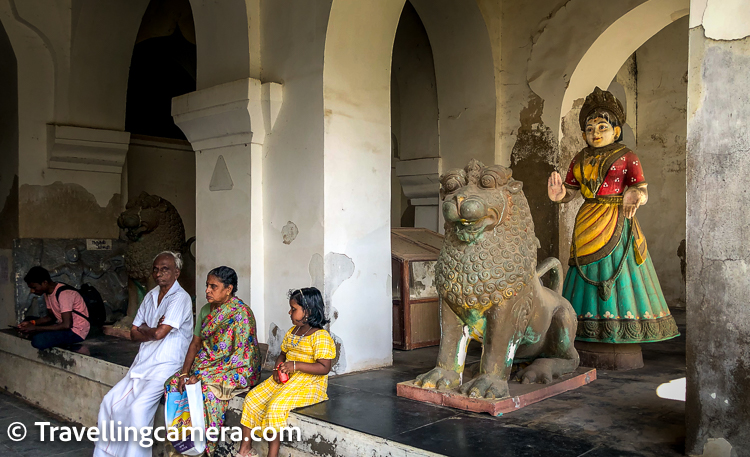
Thanjavur Palace in Tamilnadu: Where History and Art Come Together in a Spectacular Display

Auroville in India : The City of Dawn and a Model for Spirituality & Sustainable Living

Ramarpatham Shrine at Rameshwaram, Tamil Nadu || The site that has Lord Ram's footprints sculpted on a rock

The Sacred and Architectural Marvels of Ranganathaswamy Temple in Tamilnadu, India
%20to%20see%20the%20Danish%20fort%20in%20Tamilnadu%20state%20of%20India-3.jpg "Do you know about the 'Danish' Fort in India which is located at a beautiful location round the coast of Bay of Bengal?")
Do you know about the 'Danish' Fort in India which is located at a beautiful location round the coast of Bay of Bengal?

Uncovering the Rich History and Beauty of the Basilica of the Sacred Heart of Jesus in Pondicherry, India
 |
| Anaikarai Dam |
Anaikarai North and South Dams on Kollidam Rivers, Tamil Nadu || Two of the many dams on Cauvery, some of which are nearly 2000 years old

Starting the Day Right: A Personal Reflection on Sunrise at Serenity Beach in Pondicherry, India

Puducherry Travel Guide: French Charm Meets Indian Spirit - Capital Cities of Indian States or Union Teritorries [Pondicherry]

Madanapalle to Thanjavur via Vellore and Tiruvannamalai - 4th day of our 14 days long trip through east coast of India || Noida to Rameshwaram

Thanjavur to Rameshwaram via Tiruchirapalli - 5th day of our 14 days long trip through east coast of India || Noida to Rameshwaram

Rameshwaram's Marine Museum, Harbour and More: A Guide to the Best Sights and Sounds from Tamilnadu State of India
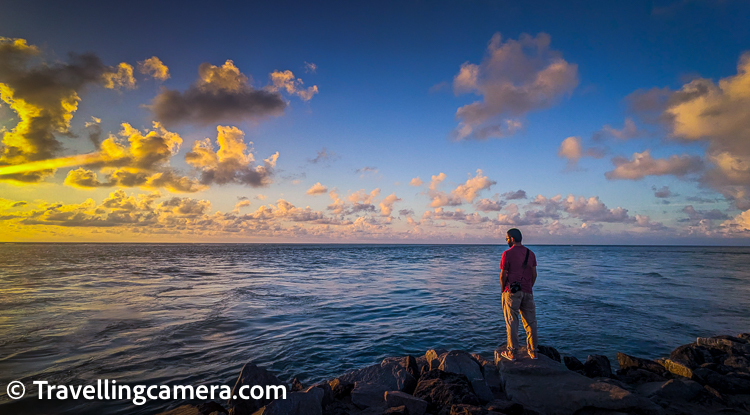
Rameshwaram in Tamilnadu, India - The Land of Sacred Shrines and Mesmerizing Beaches

Villoondi Teertham - Discovering the Spiritual and Natural Wonders of Rameshwaram, India
%20to%20see%20the%20Danish%20fort%20in%20Tamilnadu%20state,%20India-1.jpg "Drive from Rameshwaram to Pondicherry along the coast - 7th day of our 14 days long trip through east coast of India || Noida to Rameshwaram")
Drive from Rameshwaram to Pondicherry along the coast - 7th day of our 14 days long trip through east coast of India || Noida to Rameshwaram

Drive from Pondicherry to Tada - 8th day of our 14 days long trip through east coast of India || Noida to Rameshwaram

Exploring the Mahatma Gandhi Statue and Other Attractions around Promenade Beach in Pondicherry, India

Kolams and Culture: The Significance of Daily Floor Art in Tamilnadu Homes of South India

Healing Waters and Holy Legends: A Visit to Vibhishan Teertham in Rameshwaram, Tamilnadu

Discovering the Mysteries of Sri Panchmukhi Hanuman Mandir and the Floating Stones of Rameshwaram in Tamilnadu
 Climb to the Top of Chennai Lighthouse : Exploring Aerial views of Marine Drive, Sea and other interesting landmarks of Chennai, Tamilnadu


.jpg)
Comments