Nishat Bagh in Srinagar, Kashmir || A Splendid Garden with a Breathtaking View of the Dal Lake beneath Pir Panjal Mountain Range

The garden has several fountains on each terrace and also beautiful and ornate cascades through which the water travels from the topmost terrace to the bottommost one. Overall it is a pleasant area to spend a few hours with your family and friends.

Nishat Bagh is a Mughal Garden built facing the Dal lake, with the back drop of Zabarwan Range. Nishat Bagh provides the view of Dal Lake at the foot of Pir Panjal Range. This was the first garden we visited in Srinagar right after the Tulip Garden. The garden is huge and we were tired after an early morning travel and the flight, so weren't really in the best of our forms. But we tried to do our best. 


The garden is built in the style of Persian Gardens. However, the style had to be adapted to the hilly terrain and, therefore, instead of a central water source, the water source here is on the top terrace from where it flows down to the bottommost terrace.

The garden is built in the style of Persian Gardens. However, the style had to be adapted to the hilly terrain and, therefore, instead of a central water source, the water source here is on the top terrace from where it flows down to the bottommost terrace.  

Related Blogpost - Indians don't need to plan Holland's Keukenhof Gardens, as we have our own splendid Tulip Garden in Kashmir, surrounded by Grand Himalayan Mountain Ranges

In the traditional Persian design, four arms of water channels radiate from a central water source and supply water to the garden. And therefore, the gardens are usually square in design. However, in hilly terrain, this kind of a square plan isn't feasible, so the Mughal Gardens here are rectangular in plan and have just one central water channel running from the top-most terrace to the bottommost one.

In the traditional Persian design, four arms of water channels radiate from a central water source and supply water to the garden. And therefore, the gardens are usually square in design. However, in hilly terrain, this kind of a square plan isn't feasible, so the Mughal Gardens here are rectangular in plan and have just one central water channel running from the top-most terrace to the bottommost one. 


The garden has a lush green cover and a tall green canopy owing to the cypress and chinar trees. The garden has well-planned areas of shade and sun that make it a perfect place for all seasons. the central water channel also helps in providing comfort during the warm summer months.

The garden has a lush green cover and a tall green canopy owing to the cypress and chinar trees. The garden has well-planned areas of shade and sun that make it a perfect place for all seasons. the central water channel also helps in providing comfort during the warm summer months. 


The garden was designed and built in 1633 by Asif Khan, the elder brother of Nur Jahan. when Emperor Shah Jahan saw the beautiful Garden, he expressed his appreciation of the garden's gradeur thrice to his father-in-law Asif Khan, apparently in hopes of receiving the garden as a gift. However, when that did not happen, the Emperor stopped the water supply to the garden.

The garden was designed and built in 1633 by Asif Khan, the elder brother of Nur Jahan. when Emperor Shah Jahan saw the beautiful Garden, he expressed his appreciation of the garden's gradeur thrice to his father-in-law Asif Khan, apparently in hopes of receiving the garden as a gift. However, when that did not happen, the Emperor stopped the water supply to the garden. 


Asif Khan was heartbroken and seeing his state, one of his loyal servants turned on the water supply from Shalimar Garden. Afraid that the Emperor will get offended by this, Asif Khan immediately asked for the supply to be shut down. However, the loyalty of the servant managed to touch Shah Jahan's heart and he not only forgave this act, but also officially restored the water supply to the garden.

Asif Khan was heartbroken and seeing his state, one of his loyal servants turned on the water supply from Shalimar Garden. Afraid that the Emperor will get offended by this, Asif Khan immediately asked for the supply to be shut down. However, the loyalty of the servant managed to touch Shah Jahan's heart and he not only forgave this act, but also officially restored the water supply to the garden. 


Nishat Bagh is a Mughal Garden built facing the Dal lake, with the back drop of Zabarwan Range. Nishat Bagh provides the view of Dal Lake at the foot of Pir Panjal Range. This was the first garden we visited in Srinagar right after the Tulip Garden. The garden is huge and we were tired after an early morning travel and the flight, so weren't really in the best of our forms. But we tried to do our best.

The garden has several fountains on each terrace and also beautiful and ornate cascades through which the water travels from the topmost terrace to the bottommost one. Overall it is a pleasant area to spend a few hours with your family and friends. 

Related Blogposts -

Kashmir Travel Guide covering Srinagar, Gulmarg, Pahalgam, Sonamarg, hidden valleys, food, photography, itineraries and practical tips for a memorable

Pari Mahal in Srinagar of Kashmir Valley || The paradise within the paradise on earth, which offers great panoramic views of the city and Dal Lake


Kashmir Travel Guide covering Srinagar, Gulmarg, Pahalgam, Sonamarg, hidden valleys, food, photography, itineraries and practical tips for a memorable


Kashmir Travel Guide covering Srinagar, Gulmarg, Pahalgam, Sonamarg, hidden valleys, food, photography, itineraries and practical tips for a memorable


Kashmir Travel Guide covering Srinagar, Gulmarg, Pahalgam, Sonamarg, hidden valleys, food, photography, itineraries and practical tips for a memorable


Sonmarg, also known as Sonamarg or Sonamarag, is a hill station located in the the Ganderbal District of Jammu and Kashmir. Literally, its name means "Golden Meadow". Sonmarg is at a distance of 62 kilometers from Gandebal town and 80 Kilometers from Srinagar.


Kashmir Travel Guide covering Srinagar, Gulmarg, Pahalgam, Sonamarg, hidden valleys, food, photography, itineraries and practical tips for a memorable


Kashmir Travel Guide covering Srinagar, Gulmarg, Pahalgam, Sonamarg, hidden valleys, food, photography, itineraries and practical tips for a memorable


Kashmir Travel Guide covering Srinagar, Gulmarg, Pahalgam, Sonamarg, hidden valleys, food, photography, itineraries and practical tips for a memorable


Tourism Development is a very important aspect in many ways, but doing it right way is equally important. Different regions, states and countries put lot of efforts to develop tourism, which are much needed for overall economy. But many tourist-places remind you about unorganised ways of doing things and somehow our recent Kashmir experience was the worst ever. Before you read further, I want to share that it's a rant along with some useful tips to avoid irritable factors to enjoy your visit well.


Kashmir Travel Guide covering Srinagar, Gulmarg, Pahalgam, Sonamarg, hidden valleys, food, photography, itineraries and practical tips for a memorable


Kashmir Travel Guide covering Srinagar, Gulmarg, Pahalgam, Sonamarg, hidden valleys, food, photography, itineraries and practical tips for a memorable


6. Sonmarg follows the same pattern as Pahalgam, so will not repeat it.     Am I saying that don't go to these places or these are not worth visiting? No. Mainly I am recommending to not get influenced by locals, do your own research, make your own plan and enjoy your trip instead of let these tourism vendors decide what you want to see and how. Kashmir is beautiful and probably I would recommend taking your own car if possible. That will cut lot of chaos for you.     Related Blogpost - A short Pilgrimage Tour to Jammu and it's surrounding - by Shankar Rajaram


Kashmir Travel Guide covering Srinagar, Gulmarg, Pahalgam, Sonamarg, hidden valleys, food, photography, itineraries and practical tips for a memorable


Kashmir Travel Guide covering Srinagar, Gulmarg, Pahalgam, Sonamarg, hidden valleys, food, photography, itineraries and practical tips for a memorable


Bottomline - Think how you want to spend your time in Gulmarg and also think about the crowd you need to deal with when you go with obvious options. Also be aware of the scams like pony rides which are forced upon you because you are new to the place. Don't get the jacket/boots when you are there in summers and pick when you are sure you are going to indulge in snow activities. Even then it's worth when there is lot of snow. Phase-1 doesn't have that much snow, so save your money and energy to carry this unnecessary stuff with you.


To say that we were excited to go to Pahalgam during our visit to Kashmir, would be an understatement. The excursion, from what we had heard, promised to be the first glimpse of real paradise. While there will be another post about Pahalgam and its realities, this post is about the journey from Srinagar to Pahalgam, because the journey is at least as important as the destination.


Kashmir Travel Guide covering Srinagar, Gulmarg, Pahalgam, Sonamarg, hidden valleys, food, photography, itineraries and practical tips for a memorable


All of us have heard of Dal Lake in Srinagar, but I was not aware of Nagin Lake before I visited Kashmir Valley. During this visit, I stayed at Centaur Hotel which is close to Nagin lake and that's how I got a chance to explore this lake well in Srinagar.  During my 3 days stay at Srinagar, I had various Shikara rides in Nagin lake and explored different parts of the lake. This PHOTO JOURNEY shares some of the photographs clicked around Nagin Lake and information about houseboats, markets, vegetation, Shikara rides, shopping and lot more. In fact, I found Nagin lake better than Dal lake. Less crowded, better maintained, cleaner and peaceful. The lake looks awesome during sunset time whenever most of the Shikaras move towards the shoreline and lake market closes down by handing over all the tourists & travellers to houseboats. Glittering lights of houseboats and their reflections in Nagin lake look amazing. Evening is best time for Shikara ride in Nagin lake. There are multiple reasons for that. I prefer Nagin lake over Dal lake because of less commercialization and hence peace :). Lot of families can be seen sitting around the lake during evening time. Some of them also enjoy fishing, although not sure if that's legal or not. There are some houses around the lake and hence you can see lot of local folks riding their boats to commute to other side of the lake. In morning, mothers can be seen riding their boats to drop kids on other side for joining school.   Shikaras can be seen at various places around the shoreline. After every 300 meters you can find Shikaras waiting for tourists. There are different kinds of Shikaras and tariff varies accordingly. The Shikara ride is usually 45 mins to 1 hr 15 mins. These Shikaras take you to lake market, which is in the middle of lake. All the shops are floating over the lake. On your way, you see some of the brilliant and popular houseboats in Srinagar. If not staying in these houseboats, you can plan to have lunch at one of those. Only few of them have restaurants. It can be a great experience to enjoy lunch on the lake, while listening to local folk songs.   We were fortunate to board the Shikara, who's owner was a singer. He sang few Kashmiri songs for us. Unfortunately we forgot to make videos, otherwise that could have been a great addition to this blog-post. After visiting lake market in the middle of Nagin lake, the Shikara takes you little further and exposes you to clusters of houses in the lake. Like we own cars to commute in cities, these folks own a boat to go to other side of the lake. In above photograph you see a boat, which is being used by a local to go back home after day job. Some of my friends had told that Nagin lake is little dirty, but when we were there it was much cleaner and cleaning project was under progress. The colorful lotuses were looking brilliant with millions of lotus-leaves all around. If you are having a Shikara ride during day, you can relax and have a nap :) and we did that when coming back from Lake market. There are lot of Shikaras in Nagin lake, which would come to you and sell snacks, bhutta & handicraft. You can enjoy fruit chats, bhutta, tea, local snacks when enjoying shikara ride. At the same time, if you don't have much time, you can do little shopping in lake only. One of my friends bought Kashmiri Jewelry for his friends & family.   I would rate Nagin lake experience much better in Srinagar and in my next trip, I intend to stay in one of the Houseboats in Nagin Lake.


Dal Lake is one of the most popular lakes of India, which is located in Srinagar, the summer capital of Jammu and Kashmir. The urban lake, which is the second largest in the state, is integral to tourism and recreation in Kashmir and is nicknamed the 'Jewel in the crown of Kashmir' or 'Srinagar's Jewel'. The lake is also an important source for commercial operations in fishing and water plant harvesting.The shore line of the lake is encompassed by a boulevard lined with Mughal era gardens, parks, houseboats and hotels. Scenic views of the lake can be witnessed from the shore line Mughal gardens, such as Shalimar Bagh and Nishat Bagh built during the reign of Mughal Emperor Jahangir) and from houseboats cruising along the lake in the colourful shikaras. Dal Lake has some Floating gardens as well. The floating gardens, known as 'Rad' in Kashmiri, blossom with lotus flowers during July and August. The wetland is divided by causeways into four basins - Gagribal, Lokut Dal, Bod Dal and Nagin (although Nagin is also considered as an independent lake). During our trip to Shrinagar, we stayed in a hotel around Nagin lake only. Oldest Five star of the city is located on the bank of Nagin Lake. Lokut-dal and Bod-dal each have an island in the centre, known as Rup Lank (or Char Chinari) and Sona Lank respectively.  There are some personal houses around Dal Lake and people have their own boats to travel from one place to another for getting stuff from Lake-Market, which is again located inside Dal Lake only. Houseboats and the Dal Lake are widely associated with Srinigar and are nicknamed 'floating palaces', built according to British customs.The houseboats are generally made from local cedar-wood and are graded in a similar fashion to hotels according to level of comfort.Many of them have lavishly furnished rooms, with verandas and a terrace to serve as a sun-deck or to serve evening cocktails.They are mainly moored along the western periphery of the lake, close to the lakeside boulevard in the vicinity of the Dal gate and on small islands in the lake. They are anchored individually, with interconnecting bridges providing access from one boat to the other.The kitchen-boat is annexed to the main houseboat, which also serves as residence of the boatkeeper and his family.Many boats on Dal Lake are used for selling stuff to tourists. Anything like Artificial Jewellery, Corns, Fruits, Cloths, Wooden Articles, Flowers etc. Some of the vendors can be seen selling digital-cards for still/video cameras.        Each houseboat has an exclusive shikara for ferrying guests to the shore. A shikara is small paddled taxi boat, often about 15 feet and made of wood with a canopy and a spade shaped bottom.It is the cultural symbol of Kashmir and is used not only for ferrying visitors but is also used for the vending of fruits, vegetables and flowers and for the fishing and harvesting of aquatic vegetation.All gardens in the lake periphery and houseboats anchored in the lake are approachable through shikaras.The boats are often navigated by two boatmen dressed in 'Phiron' (traditional dress) and carry 'Kangris' or portable heaters on the boat.A shikara can seat about six people and have heavily cushioned seats and backrests to provide comfort in Mughul style.All houseboat owners provide shikara transport to their house guests free of charge. The shikara is also used to provide for other sightseeing locations in the valley, notably a cruise along the Jhelum River, offering scenic views of the Pir Panjal mountains and passing through the famous seven bridges and the backwaters enroute.


Kashmir Travel Guide covering Srinagar, Gulmarg, Pahalgam, Sonamarg, hidden valleys, food, photography, itineraries and practical tips for a memorable


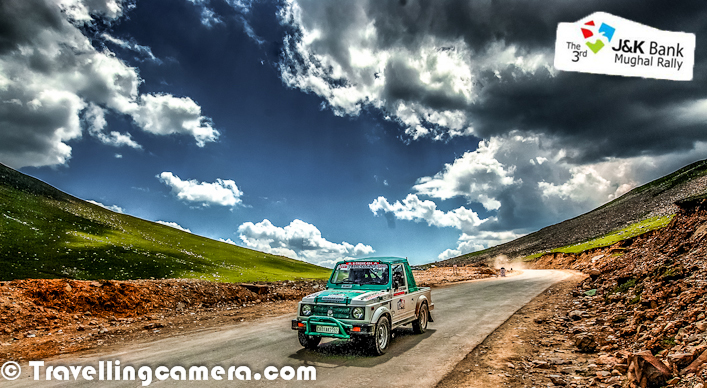
When in Kashmir, we drove to Daksum, Anantnag, Sinthan Top and Kishtwar from Srinagar. This road also connects Srinagar with Jammu, but we had taken Mughal road  to hit Kashmir Valley when drove from Delhi. These is one of the most beautiful terrains of Kashmir Valley. In fact, it would be unfair to compare various terrains in Kashmir Valley, because all of these have unique character and equally beautiful. This Photo Journey shares more about this route, it's terrains and some important facts.Daksum is surrounded by dense forests with Bringhi River flowing right through its center. Daksum has been a popular destination for explorers and adventure lovers. Green meadows around Daksum look amazing and if you are lucky, you can find few shepherds singing some local songs. We met a gentleman, who loves playing flute. Unfortunately we didn't want to get clicked, so I don't have his photograph. All this may sound filmy but that's what you experience in Kashmir Valley.Clouds of Kashmir Valley are very interesting and naughty. They keep playing games with you, especially hide-n-seek.I clicked hundreds of cloud photographs in Kashmir. If you are lucky, these clouds also try to surround you from closer distance. Especially in early morning and late evening. Most of the times, these hills get drizzle.  On these terrains around Sinthan Top, you feel like stopping your car and sit around the edge to experience the cool breeze blowing through the valley and green landscapes all around. It's a must do experience at a place where you find peace around these hills.Road connecting Srinagar with Sinthan Pass goes through beautiful landscapes full of green meadows, dense forests, cities, some beautiful mosques and paddy fields.Above photographs is clicked during Mughal Rally (A motorsport event organized by Himalayan Motorsports). The Sinthan pass connects Kashmir valley with Jammu Province through Kistwar. Pass is 12500 feet above sea level and is snow-capped for most of the year. It is located at the Anantnag-Kokernag-Kishtwar NH1B Highway and is 130 km south of Srinagar and 72 kilometers from Anantnag and approximately 50 kilometers from Kokernag.These curvy hills offer you unmatchable views of snow capped hills shimmering with sunlight and intense shadows of clouds. Flora and fauna of Kashmir valley welcomes you with open arms on the way to Sinthan top. There are very few tourists come to this part of Kashmir valley. Some of the most popular destinations in Kashmir are Srinagar, Pehalgaon, Gulmarg and Leh.Sinthan Top has no local population. Shepherds from adjoining places like Kokernag, Duksum, and tourists and those working in the tourism industry may stay overnight in tents. There is a small tea shop at top, which serves tea and basic snacks to tourists and army folks roaming around.This post is sharing only the landscapes of green meadows and some of the hills full of snow. But the drive from Srinagar to Sinthan Pass offers you lot more than that. Foothills of Sinthan Pass on both sides have very beautiful villages full of wooden houses, which are usually seen in movies. All of those seemed old and most of the newer houses near road were all modern with concrete construction.  From Sinthan pass, there is an uphill trek to Sinthan top. The uphill climb to Sinthan top is a difficult and steep. Initially we hesitated to take this challenge but when did it, we found it worth. That was one of the best moments from our kashmir valley.How to reach this part of Kashmir Valley -Srinagar has nearest airport.  Anantnag railway station is also connected with Kashmir Railway that runs from Baramulla to Qazigund. If you are in Jammu or Srinagar, you can hire a taxi or take bus for this part of Kashmir Valley.Lodging around Sinthan Pass, Anantnag -There are not many places to stay in Daksum. A few decent options can be found in Anantnag or Kokernag. Now some of the NGOs are actively running homestays in this part of Kashmir. One can find some goods option to stay in Anantnag. There are enough dhabas and restaurants serving local and Indian cuisine. It's recommended to do more research about the place and do advance booking. Also keep a track of local news, before you head there.This part of Kashmir and Peer Panjal mountain ranges are like heaven on earth. These grand views hypnotize all travellers and tourists crossing through Sinthan Pass. Every turn offers you new surprise and journey remains interesting.You can find lot of snow around Sinthan Pass, but remains of snow can be seen at distant places as well. Above photograph share true colors and mood of Kashmir - the bright blue sky, pure white clouds and snow covered green meadows.Two companions of Travellingcamera who were accompanying me in Kashmir exploration.

Comments

Trending Post Today !

How to reach Kasol/Malana and top things to do around this stunning hill-station of Himalayan State of India

Main places to see & Top things to do around Dalhousie : Stunning Hill Station in Himalayan State of India