Peacocks: Nature's Living Masterpiece of Color, Grace, and Courtship

Few birds capture human imagination quite like the peacock. Whether gracefully wandering through ancient forts, displaying its magnificent plumage after the first monsoon showers, or calling from the branches of a tall tree at sunrise, the peacock is impossible to ignore. With its shimmering blue neck, iridescent train decorated with intricate eye-like patterns, and elegant courtship dance, it has earned its place among the world's most celebrated birds.

Few birds capture human imagination quite like the peacock. Whether gracefully wandering through ancient forts, displaying its magnificent plumage after the first monsoon showers, or calling from the branches of a tall tree at sunrise, the peacock is impossible to ignore. With its shimmering blue neck, iridescent train decorated with intricate eye-like patterns, and elegant courtship dance, it has earned its place among the world's most celebrated birds.

In India, the peacock holds a special significance beyond its beauty. As the country's national bird, it symbolizes grace, pride, prosperity, and the rich diversity of Indian wildlife. It has inspired artists, poets, sculptors, and storytellers for centuries, becoming an enduring part of India's cultural and natural heritage.

For birdwatchers, wildlife photographers, and nature lovers, witnessing a peacock in its natural habitat is an unforgettable experience. Watching a male spread its enormous train into a shimmering fan while performing an elaborate dance is one of nature's most extraordinary spectacles.

This guide explores everything you need to know about peacocks, from their physical characteristics and fascinating behavior to their ecological importance, cultural significance, and practical tips for observing them responsibly.


What Is a Peacock? Although the word "peacock" is commonly used for the entire species, it technically refers only to the male bird. The female is called a peahen, while both males and females together are known as peafowl.  There are three recognized species of peafowl:  Indian Peafowl Green Peafowl Congo Peafowl

What Is a Peacock?

Although the word "peacock" is commonly used for the entire species, it technically refers only to the male bird. The female is called a peahen, while both males and females together are known as peafowl.

There are three recognized species of peafowl:

  • Indian Peafowl
  • Green Peafowl
  • Congo Peafowl

Among these, the Indian Peafowl is the most widespread and well-known. Native to the Indian subcontinent, it is admired around the world for its spectacular appearance and has been introduced to many countries as an ornamental bird.

Unlike many colorful birds that spend most of their lives in trees, peafowl are primarily ground-dwelling birds. They forage across fields, forests, and open landscapes during the day before flying up to tall trees to roost safely for the night.


The Indian Peacock – India's National Bird The Indian Peacock was declared the National Bird of India in 1963 because of its widespread presence, striking appearance, and deep cultural significance.  Its metallic blue neck, emerald-green train, elegant crest, and graceful movements make it one of the most recognizable birds in the world. Despite its royal appearance, the peacock is highly adaptable and can often be seen near villages, agricultural fields, temple complexes, and forest edges.

The Indian Peacock – India's National Bird

The Indian Peacock was declared the National Bird of India in 1963 because of its widespread presence, striking appearance, and deep cultural significance.

Its metallic blue neck, emerald-green train, elegant crest, and graceful movements make it one of the most recognizable birds in the world. Despite its royal appearance, the peacock is highly adaptable and can often be seen near villages, agricultural fields, temple complexes, and forest edges.


Physical Characteristics Size and Appearance The Indian Peacock is among the largest flying birds.  An adult male typically measures between one and two meters in length, with much of this length contributed by its ornamental train. It usually weighs between four and six kilograms and has a wingspan of approximately 1.4 meters.  Females are noticeably smaller and lack the spectacular train. Their plumage is mostly brown and green, providing excellent camouflage while nesting on the ground.

Physical Characteristics

Size and Appearance

The Indian Peacock is among the largest flying birds.

An adult male typically measures between one and two meters in length, with much of this length contributed by its ornamental train. It usually weighs between four and six kilograms and has a wingspan of approximately 1.4 meters.

Females are noticeably smaller and lack the spectacular train. Their plumage is mostly brown and green, providing excellent camouflage while nesting on the ground.

One of the most common misconceptions about peacocks is that their famous display consists of tail feathers.  In reality, the colorful fan is made up of elongated upper tail coverts, commonly referred to as the train. The actual tail is relatively short and functions as a support structure when the train is raised during courtship displays.  A fully grown male may possess more than 200 elongated feathers, each decorated with beautifully patterned eye-like markings known as ocelli.

The Spectacular Train

One of the most common misconceptions about peacocks is that their famous display consists of tail feathers.

In reality, the colorful fan is made up of elongated upper tail coverts, commonly referred to as the train. The actual tail is relatively short and functions as a support structure when the train is raised during courtship displays.

A fully grown male may possess more than 200 elongated feathers, each decorated with beautifully patterned eye-like markings known as ocelli.


Why Do Peacock Feathers Shine? The brilliant colors of a peacock's feathers are not created by pigments alone. Instead, microscopic structures within the feathers reflect and scatter light in different ways, producing their remarkable iridescent appearance.  As sunlight changes throughout the day, the feathers appear to shift between shades of blue, green, bronze, and gold, making every viewing angle unique.

Why Do Peacock Feathers Shine?

The brilliant colors of a peacock's feathers are not created by pigments alone. Instead, microscopic structures within the feathers reflect and scatter light in different ways, producing their remarkable iridescent appearance.

As sunlight changes throughout the day, the feathers appear to shift between shades of blue, green, bronze, and gold, making every viewing angle unique.


Habitat and Distribution Indian Peafowl are remarkably adaptable birds capable of thriving in a variety of habitats.  They are commonly found in:  Dry deciduous forests Open woodlands Agricultural landscapes Grasslands Riverbanks Village outskirts Temple complexes Historic forts and palace gardens Their ability to coexist with humans has contributed significantly to their widespread distribution across India.

Habitat and Distribution

Indian Peafowl are remarkably adaptable birds capable of thriving in a variety of habitats.

They are commonly found in:

  • Dry deciduous forests
  • Open woodlands
  • Agricultural landscapes
  • Grasslands
  • Riverbanks
  • Village outskirts
  • Temple complexes
  • Historic forts and palace gardens

Their ability to coexist with humans has contributed significantly to their widespread distribution across India.


Peacocks are found throughout most parts of India, except the highest Himalayan regions.  They are particularly common in states such as Rajasthan, Gujarat, Madhya Pradesh, Uttar Pradesh, Haryana, Maharashtra, Karnataka, Tamil Nadu, and the lower foothills of Himachal Pradesh and Uttarakhand.  Protected forests, wildlife sanctuaries, rural landscapes, and heritage sites often provide excellent opportunities to observe these birds in their natural environment.

Where Can You See Peacocks?

Peacocks are found throughout most parts of India, except the highest Himalayan regions.

They are particularly common in states such as Rajasthan, Gujarat, Madhya Pradesh, Uttar Pradesh, Haryana, Maharashtra, Karnataka, Tamil Nadu, and the lower foothills of Himachal Pradesh and Uttarakhand.

Protected forests, wildlife sanctuaries, rural landscapes, and heritage sites often provide excellent opportunities to observe these birds in their natural environment.


Diet and Feeding Habits Peafowl are omnivorous and opportunistic feeders with a highly varied diet.  Their food includes:  Seeds Grains Fruits Berries Flower buds Insects Ants Beetles Grasshoppers Termites Small reptiles Frogs Small rodents

Diet and Feeding Habits

Peafowl are omnivorous and opportunistic feeders with a highly varied diet.

Their food includes:

  • Seeds
  • Grains
  • Fruits
  • Berries
  • Flower buds
  • Insects
  • Ants
  • Beetles
  • Grasshoppers
  • Termites
  • Small reptiles
  • Frogs
  • Small rodents

Their habit of feeding on insects and small snakes often makes them beneficial to farmers by helping control agricultural pests.


The Famous Peacock Dance

The courtship display of a peacock is among the most spectacular behaviors in the animal kingdom.

During the breeding season, males spread their enormous trains into a near-perfect fan and perform an elaborate dance to attract females.

The display includes:

  • Raising the train vertically
  • Vibrating the feathers rapidly
  • Producing soft rattling sounds
  • Walking in circles around the female
  • Turning continuously to catch the sunlight

The shimmering feathers create constantly changing colors as they move, making the display even more mesmerizing.

A peahen may carefully observe several displaying males before selecting a mate.


From an evolutionary perspective, the elaborate train evolved through sexual selection.  Although the train can make flying more difficult and increases visibility to predators, females generally prefer males with:  Longer trains More eye-like spots Symmetrical feather patterns Energetic courtship displays

Why Do Male Peacocks Have Such Long Feathers?

From an evolutionary perspective, the elaborate train evolved through sexual selection.

Although the train can make flying more difficult and increases visibility to predators, females generally prefer males with:

  • Longer trains
  • More eye-like spots
  • Symmetrical feather patterns
  • Energetic courtship displays

Over thousands of generations, these preferences have resulted in the spectacular appearance seen today.


Breeding and Nesting

The breeding season generally coincides with the arrival of the monsoon, when food becomes abundant and environmental conditions are favorable.

Unlike many birds that build nests in trees, peahens create shallow nests on the ground, usually hidden beneath shrubs or tall grasses.

A typical clutch contains four to eight eggs.

The female alone incubates the eggs and raises the chicks after hatching, while the male plays no role in parental care.


Growing Up: The Life of Peachicks Baby peafowl are known as peachicks.  Within hours of hatching, they are capable of walking and following their mother in search of food.  Young males gradually develop their ornamental train over several years, with the full display usually appearing at around three years of age.

Growing Up: The Life of Peachicks

Baby peafowl are known as peachicks.

Within hours of hatching, they are capable of walking and following their mother in search of food.

Young males gradually develop their ornamental train over several years, with the full display usually appearing at around three years of age.


Daily Routine of a Peacock

Peafowl follow a predictable daily rhythm.

Early in the morning, they descend from their nighttime roosts and begin feeding in open areas.

During the hotter parts of the day, they rest in shaded locations, dust-bathe to maintain healthy feathers, and spend considerable time preening.

As evening approaches, they feed again before flying onto tall trees, where they remain safe from ground predators throughout the night.

Despite their large size, peacocks are capable of surprisingly powerful short-distance flights.


Why Do Peacocks Sleep in Trees? Although they spend much of the day on the ground, peafowl roost in trees every night.  This behavior protects them from predators such as jackals, foxes, wild dogs, and large cats.  Their loud evening calls often echo through forests as they gather at their preferred roosting sites before sunset.

Why Do Peacocks Sleep in Trees?

Although they spend much of the day on the ground, peafowl roost in trees every night.

This behavior protects them from predators such as jackals, foxes, wild dogs, and large cats.

Their loud evening calls often echo through forests as they gather at their preferred roosting sites before sunset.


The Distinctive Peacock Call

One of the easiest ways to locate a peacock is by listening rather than looking.

Their loud, far-carrying calls are especially common:

  • Early in the morning
  • Late in the evening
  • During the breeding season
  • Before rainfall
  • When disturbed by predators

Many rural communities believe that increased peacock calling signals the arrival of rain, a belief that likely developed because their breeding activity coincides with the monsoon.


Ecological Importance

Peafowl play an important role in maintaining healthy ecosystems.

They help control insect populations, consume agricultural pests, disperse seeds, and contribute to the natural balance of food chains.

Their presence often indicates healthy woodland and agricultural ecosystems where wildlife continues to thrive alongside human communities.


Natural Predators

Despite their impressive appearance, peafowl face several natural threats.

Adult birds may be hunted by large carnivores, while eggs and chicks are vulnerable to snakes, birds of prey, foxes, jackals, and other predators.

Their vigilance, strong legs, and ability to fly quickly into trees provide effective protection against many dangers.


Cultural Significance

Few birds have influenced Indian culture as profoundly as the peacock.

For centuries, it has symbolized beauty, elegance, royalty, prosperity, and spirituality.

Peacock motifs appear in temple architecture, miniature paintings, textiles, jewelry, sculptures, and traditional handicrafts throughout the country.

The bird is also closely associated with Indian mythology and classical art, where its graceful form has inspired countless artistic expressions across generations.


Tips for Watching Peacocks

Observing peacocks in the wild requires patience and respect for their natural behavior.

Some useful tips include:

  • Visit forests or open countryside early in the morning.
  • Explore during the monsoon when courtship displays are most frequent.
  • Move quietly and avoid sudden movements.
  • Use binoculars for close observation.
  • Maintain a respectful distance and avoid disturbing nesting birds.
  • Listen carefully for their loud calls, which often reveal their location before they become visible.

And the best part was to witness one of these peacocks spreading it's wings and dancing in front of deers in one of the sections of Sayaji Park in Vadodara. We spent around 10-15 minutes at this place and enjoyed this peacock enjoying the moves while changing the wing-spread at various moments.     Related Blogpost from Gujrat - Travelling Camera in Gujarat || Exploring old Ahmedabad on foot

Photography Tips

Peacocks are among the most rewarding subjects for wildlife photography.

To capture compelling images:

  • Photograph during the golden hours after sunrise or before sunset.
  • Use a telephoto lens to avoid disturbing the birds.
  • Focus on the eyes for sharp and engaging portraits.
  • Wait patiently for natural behavior instead of attempting to provoke displays.
  • Include surrounding landscapes to tell a richer story about their habitat.

The monsoon season offers especially dramatic opportunities, with displaying males often framed against dark clouds or lush green landscapes.


Conservation

The Indian Peafowl continues to enjoy a healthy population across much of its range, thanks to legal protection and widespread cultural respect.

However, local populations still face challenges such as habitat loss, expanding urban development, pesticide use, road accidents, and disturbances during nesting.

Protecting natural habitats, preserving woodland corridors, and encouraging responsible wildlife tourism will help ensure that future generations continue to experience the beauty of these remarkable birds.


Fascinating Facts About Peacocks

  • Only male peafowl are called peacocks.
  • The colorful train is not the bird's actual tail.
  • A mature male may have more than 200 display feathers.
  • Peacock feathers produce their brilliant colors through microscopic structures rather than pigments alone.
  • The ornamental train is shed and regrown every year after the breeding season.
  • Peafowl are strong runners and capable of short but powerful flights.
  • Young males take several years to develop their full ornamental train.
  • Peacocks spend most of the day on the ground but sleep high in trees at night.
  • Their calls become especially frequent during the monsoon breeding season.
  • They are among the most photographed birds in India because of their striking appearance and dramatic courtship displays.

The first day of our Warwick and Cotswolds trip was spent in Warwick, roaming around Warwick Castle and the city of Warwick. The Castle was erected by William the conquerer in 1068 AD. It is built on the banks of the river Avon in the county of Warwickshire.The castle was surrounded by expansive gardens and many Indian peacocks were roaming around freely. One of them was feeling particularly amorous and kept on chasing a peahen with its magnificient wings spread wide. Every few seconds, it would shake the wings so that they shivered in tune with some private song playing its heart. And I could not believe that I was witnessing the legendary peacock dance.The outer wall  and one of the towers of the Warwick Castle. The Castle was fairly intact considering how old it actually is. The ground was lush green and the grey Castle stood out in stark contrast with it.Kelsey and Hannah in front of the tall gates of the castle. Surrounding the castle was a moat that is no longer filled with water.Once you walk into the gates, you find yourself in an open space surrounded by centuries-old walls and towers. When we went there, we found that it was quite crowded with many other coaches visiting the castle at the same time. Roaming amongst them were several employees of the castle who had dressed up in period costumes.Look at this beautiful lady and her maid who's helping her get dressed. The dress itself is lavish and royal. And now to reveal the secret. These aren't actual people. They are statues. Another employee dressed in period costume. Some were friendly while some seemed to plainly hate their jobs. It must be stressful to dress up in the same costume day-after-day and try to interact with visitors.Just a stuffed bear. Hunting must've been a popular sport back then. I'm glad the trends have changed now.Not only were people dressed up, there were some animals as well. Here's a horse with a knight on its back. I'm glad that none of them are real. I was wondering how horses felt about dressing up in such uncomfortable gear. Nobody asked them ever I'm sure.Another horse statue and this one in a much more comfortable attire. Though that metal thing on its face seems extremely restrictive. However, this horsey's tale swished and it occassionally batted its eyelids. So I think this one wasn't so miserable.The main residential and administrative buildings of the castle. On the far left was a Gael (pronounced Jail and means Jail too). I'll take you inside soon.The picture was clicked from the top of the Castle Wall.This is the insides of the Gael and hanging on the top is a Gibbet one of the torture devices used in medieval times for criminals like murderers and sheep stealers. Why sheep stealers though, I cannot imagine. Anyways bodies of ciminals were usually suspended in these after they had been executed to set an example for other criminals. Worse still, sometimes people were gibbetted alive and starved to death in public places. Needless to say, the public were not having it and such practices often backfired against the monarchs.Somewhere on the grounds we found a skeleton trying to escape its grave. Hannah made friends with it and it does look happy as a result. *grin* *wink* *grin* a boathouse behind the castle on the opposite bank of the river Avon. This picture was also clicked from the top of the castle walls.Hope you enjoyed this brief walk inside the castle. Before this we've been to Banbury. Here's a link to that post: A Chance Stop at Banbury. UK, Warwick, Warwick Castle, peacocks, History

Final Thoughts

The peacock is much more than a symbol of beauty. It is a remarkable example of nature's creativity, a vital part of India's ecosystems, and an enduring emblem of the country's rich cultural heritage. From its dazzling iridescent feathers and mesmerizing courtship dance to its adaptability across forests, farmlands, and heritage landscapes, the peacock continues to captivate scientists, artists, photographers, and travelers alike.

Watching a peacock emerge from the morning mist, hearing its unmistakable call echo through a forest, or witnessing a full courtship display during the first monsoon showers is an experience that leaves a lasting impression. These moments remind us that some of nature's greatest spectacles are often found not in distant wilderness alone but in the everyday landscapes where wildlife and human history continue to coexist.

Whether you are exploring a national park, wandering through a centuries-old fort, or simply enjoying the countryside, encountering a peacock is a reminder of the extraordinary beauty and diversity of the natural world. It is a bird that inspires admiration, encourages conservation, and continues to enchant generations with its timeless elegance.

Related Blogposts -

As winter approaches North India, various wetlands start seeing thousands of Migratory Birds and Bharatpur's Keoladeo Bird Sanctuary is one of the most popular wetlands around National Capital region of India and hence sees lot of tourists from Delhi/Noida/Gurgaon region. And it's not limited to nearby tourists. Lot of serious birders visit Bharatpur during Winters from various parts of the country as well as foreigner tourists. This blog-post shares tips to plan a successful trip to Bharatpur from Delhi and what kind of things to take care while planning this birding trip. One day Road-Trip to Bharatpur Birds Sanctuary from Delhi : Winters Special


We were definitely fortunate when it comes to the number of Herons and Egrets we were able to sight during our visit to the Keoladeo National Park in November. However, at that time, we did not know which was which. These two birds are so similar when it comes to their behavior that it takes an expert to identify them separately. We referred to our birding companion - A Pictorial Field Guide to Birds of India. However, I am sure we have made some mistakes in case of a few birds. In case you can spot any, please do point them out. We would be eternally grateful. Great Egrets.Both Herons and Egrets, and also the Bitterns, belong to the family Ardeidae. Though some argue that these are actually same birds with the only differences being that Egrets usually have white or buff plumage and develop distinctive white plumes during the breeding season. Otherwise, both these birds seek the same kind of habitat - wetlands. They breed in trees close to the wetlands, and they fly with their necks retracted, unlike storks and cranes who fly with their necks outstretched. Grey Heron in Flight. Experts are still undecided about what makes a heron, a heron and an egret, an egret. So much so that though these birds are classified under separate genera - Ardea and Egretta - the only marked difference in the definition of  these genera is the size. Ardea consists of larger of the Herons whereas Egretta consists of the smaller ones. Though the size difference is often indistinct. Both the birds typically have a large wingspan and look very graceful in flight. Great Egret in Flight. You will often see these birds standing still with one leg raised and their necks outstretched carefully watching out for prey to come close enough so that they can snap it up with a quick movement of their neck and beaks. These birds are carnivorous and feed mainly on fish, frogs, lizards, and molluscs. Some herons, such as the cattle egret, often move away from the wetlands and follow cattle. These egrets feed on the insects that are disturbed by the movement of cattle in bushes. Juvenile Purple Heron(?) in the foreground with Great Egrets in the Distance. Another aspect that is unique about Herons is that they have powder down. These peculiar down feathers that often disintegrate into a powdery substance are thought to be of special significance to these birds because of their wet habitat and damp surroundings. It is also believed that these birds use the powder to preen and coat the feathers that cover the rest of their body. It is supposed to protect these feathers from slime and dirt. Purple Heron. It took us a while to associate these tall, graceful birds with the little cattle egrets we are used to seeing in the city. Initially I thought that these were cranes. However, when upon further research I discovered that though cranes and herons may look alike at a glance, they are indeed two very different birds. While Herons belong to the order Pelecaniformes, Cranes are part of the Gruiformes order. Unlike Herons who hold their necks in an "S" shape and completely retract them during flight, cranes old their necks straight. Herons have longer beaks and necks than cranes, though cranes typically are bigger in size. Indian Pond Heron. We were unfortunately not able to spot any cranes during our visit to Keoladeo. Cranes that are supposed to flock in Keoladeo during winters are Siberian Crane, Sarus Crane, Demoiselle Crane, and Common Crane. Of these, Siberian Crane does not visit India any more. A single pair of these critically endangered birds was last seen in Keoladeo National Park in 2002. Since then there is no recorded sighting of these birds in India. This is sad. If you think you have seen a Siberian crane during your visit to Keoladeo National Park, you are either mistaken or unbelievably fortunate and on the verge of being famous. Grey Heron keeping company with Black-Headed and Glossy Ibises. Herons and Egrets keep company with other water birds such as ducks, coots, waterhens etc. You will often spot one or two individuals standing tall among a flock of other smaller birds. In the above photograph, a grey heron is seen peacefully existing with the much smaller ibises. The ibises in this picture are the black-necked Ibis and the Glossy Ibis, which are often mistaken as white Ibis and Black Ibis, respectively. Though the black-necked Ibis is nearly threatened, they were a common sight in Keoladeo National Park. Grey Heron up close. The dotted line running down then neck of a grey heron creates an illusion of stitch marks and you may be forgiven if you confuse the bird with a stuff toy. From a distance and also at various stages of this heron's life, it may resemble the Great Egret quite a bit. However, two of the most distinctive identifying characteristics of the Egret are its dark legs and yellow beaks, which are also almost always easily identifiable from a distance, unless the legs are hidden behind the bushes or under water. Juvenile Cinnamon Bittern. A smaller member of the Ardeidae family, the bittern is classified into a separate subfamily Botaurinae. Typically smaller than the other herons, bitterns also exhibit slightly different behavior patterns. Bitterns are smaller and plumper than a typical Heron. They also have shorter necks, though they too can retract and elongate their necks. Unlike Herons who patiently wait for their prey to wander close enough, bitterns, and also pond herons, at times are known to chase down their prey. This kind of active hunting is not seen in other Herons. The bittern seen above has a similar plumage to the Indian Pond Heron (scroll up to see), but has a cinnamon colored underbelly as opposed to a white one in the pond heron.  Grey Heron with Cattle Egret (?). In the photograph above, you can see a Grey Heron in close vicinity of a cattle egret. While structurally, both the birds seem similar, there are clear differences that can help you distinguish one from the other. While the Heron (on the left) has light-colored legs, the egret has darker, almost black, legs. Also, the beak in case of a Heron is pinkish, whereas an egret has a yellow beak. Both these birds, in the photograph above, are quite interested in something that is happening on their left. Intermediate Egret (?). This looks like a cattle egret though I cannot be sure. It's neck is too short for a great egret, though admittedly the bird looks a bit bigger than the egrets we see in the city. So may be it is an intermediate Egret. I will leave it to the experts to judge. However, such a picture of an egret standing still at the edge of water looks deceptively peaceful. I also found out what is known as the bagula in India (bagula bhagat for its unique habit of standing with one leg folded) is the same bird as the Great Egret. Purple Heron with Great Egret in the distance. Here are two of the larger birds in the same frame. The bird in the foreground is the purple heron and the one in the far distance is the great egret. You can see the thick "S" shaped neck of the Great Egret, while the purple heron up close has a slender neck, though this bird too can retract its neck when it so feels like. We were really grateful to spot these graceful birds in their natural habitat. The Keoladeo National Park is one of the very few walled wetlands where migratory and resident birds are safe from human interference. Cattle Egret. The sheer variety of birds at Keoladeo National Park is overwhelming. More than 400 different species have been observed here. Of those, we were only able to see a handful. At the time, we thought some of these herons and egrets and storks were migratory, but it turns out that they are all resident. The only migratory birds we saw were the smaller ones. The park is already lively, and I wonder how much more lively it would be once the migratory birds arrive. Anyhow, I think February would be a good time for another visit.
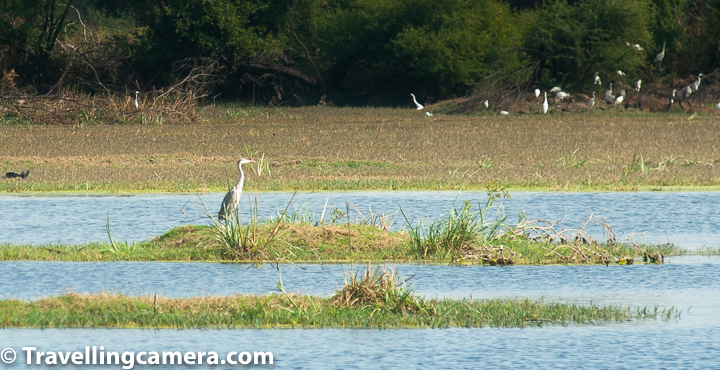
Juvenile Purple Heron(?) in the foreground with Great Egrets in the Distance

Herons and Egrets at Keoladeo National Park || Waterbirds and Waders at Bharatpur


Comments

Trending Post Today !

How to reach Kasol/Malana and top things to do around this stunning hill-station of Himalayan State of India

Main places to see & Top things to do around Dalhousie : Stunning Hill Station in Himalayan State of India