A visit to Surajpur Birds Sanctuary - A Bird Sanctuary at Risk - Part 1

If you are interested in spotting migratory birds, now is the best time. And the best part is that you do not even have to go too far. Migratory birds can be spotted in any wetlands close to your home. While we were in Gujarat, we had seen cranes in fields on the side of the highway. Of course, none of these can actually match up to a full day Bharatpur experience, but they are good enough, especially if you have only a few hours in your hands and are close to a flooded field.
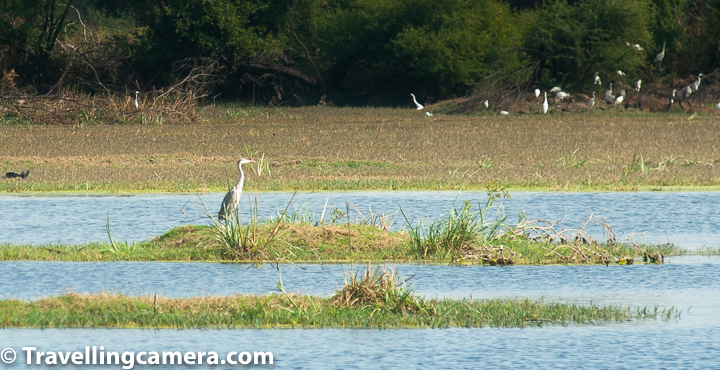
Greylag Goose
If you are interested in spotting migratory birds, now is the best time. And the best part is that you do not even have to go too far. Migratory birds can be spotted in any wetlands close to your home. While we were in Gujarat, we had seen cranes in fields on the side of the highway. Of course, none of these can actually match up to a full day Bharatpur experience, but they are good enough, especially if you have only a few hours in your hands and are close to a flooded field. 

VJ and I are both birding enthusiasts. And we had been wanting to explore the wetlands in Surajpur for quite some time. This is a relatively smaller bird sanctuary with a trail that is about 2 kilometers in length. It goes around a central wetland and you have an opportunity to see migratory birds up close. And while you are at it, you can also probably spot quite a few resident birds as well.
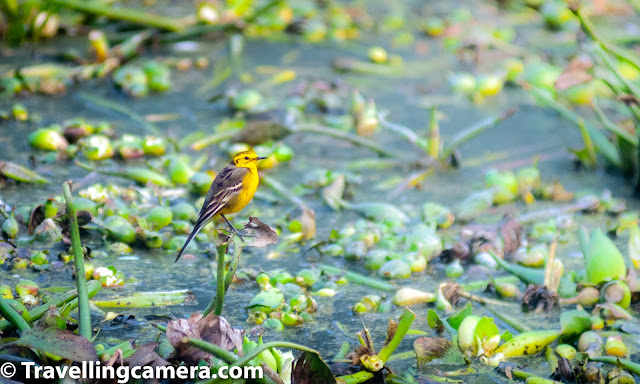
Yellow Wagtail
VJ and I are both birding enthusiasts. And we had been wanting to explore the wetlands in Surajpur for quite some time. This is a relatively smaller bird sanctuary with a trail that is about 2 kilometers in length. It goes around a central wetland and you have an opportunity to see migratory birds up close. And while you are at it, you can also probably spot quite a few resident birds as well. 


The walk is even shorter than that inside the Okhla Bird Sanctuary, but the plus point is that the birds are up close and can be photographed much more easily. Also, the wetlands start as soon as you enter the sanctuary, unlike Bharatpur, where you have the walk considerable distance before you are able to spot big flocks of large birds.
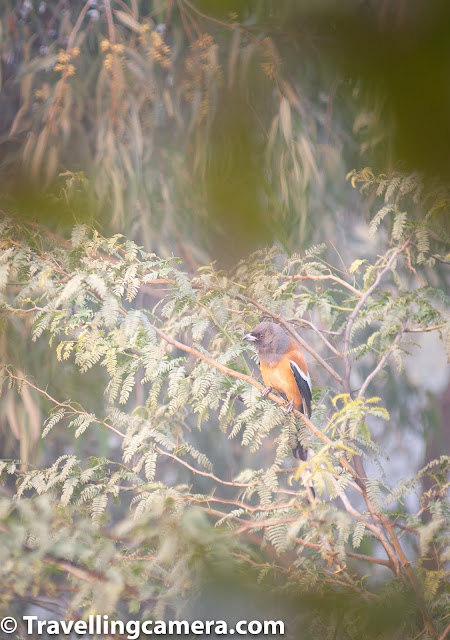
Rufus Treepie


The walk is even shorter than that inside the Okhla Bird Sanctuary, but the plus point is that the birds are up close and can be photographed much more easily. Also, the wetlands start as soon as you enter the sanctuary, unlike Bharatpur, where you have the walk considerable distance before you are able to spot big flocks of large birds.


However, this sanctuary is also at a great risk. The land around the sanctuary has been bought by some big builders, and small housing colonies are also coming up around the sanctuary. These residential areas are so close by that you can hear what people residing there are talking about in their houses. The presence of humans also brings stray dogs, some of whom have made the sanctuary their home.
Black-winged Stilt
However, this sanctuary is also at a great risk. The land around the sanctuary has been bought by some big builders, and small housing colonies are also coming up around the sanctuary. These residential areas are so close by that you can hear what people residing there are talking about in their houses. The presence of humans also brings stray dogs, some of whom have made the sanctuary their home. 


As if the noise and encroachment wasn't enough, we also saw some drains flowing into the water of the wetlands, and we hope that it is treated water that is being let into the sanctuary. We also noticed electric fences around the sanctuary, which does not seem like such a great idea. Blue bulls (neelgai) often cross this fence and may end up hurting themselves.
Black-winged Stilts
As if the noise and encroachment wasn't enough, we also saw some drains flowing into the water of the wetlands, and we hope that it is treated water that is being let into the sanctuary. We also noticed electric fences around the sanctuary, which does not seem like such a great idea. Blue bulls (neelgai) often cross this fence and may end up hurting themselves. 


Things seem to be headed towards a disaster, but there is still time to avert it. If the authorities take action, these wetlands can still be saved. A large number of migratory birds still manage to find their way to this sanctuary, so that is a good sign. The wetlands also houses a considerable population of neelgai, so that is another good thing.
Black-winged Stilt
Things seem to be headed towards a disaster, but there is still time to avert it. If the authorities take action, these wetlands can still be saved. A large number of migratory birds still manage to find their way to this sanctuary, so that is a good sign. The wetlands also houses a considerable population of neelgai, so that is another good thing. 


Anyways, on previous Saturday morning, we woke up early and headed out towards Greater Noida. It was here that we had to pick up our friend who was to be our guide. Let me take a few minutes to talk about this gentleman. He is an entrepreneur and a photographer with a deep-rooted interest in birding. He splits his time between India and the US and while he is in India, he ends up visiting the Surajpur Bird Sanctuary almost every alternate weekend.
Yellow Wagtail
Anyways, on previous Saturday morning, we woke up early and headed out towards Greater Noida. It was here that we had to pick up our friend who was to be our guide. Let me take a few minutes to talk about this gentleman. He is an entrepreneur and a photographer with a deep-rooted interest in birding. He splits his time between India and the US and while he is in India, he ends up visiting the Surajpur Bird Sanctuary almost every alternate weekend. 


Not only this, he has also inculcated this love for nature and birds in his two young sons. In most of his visits, his sons accompany him. In fact the day he accompanied us, his family was travelling and did not know about his visit. He was sure they would have protested loudly had they known. It is quite heartening to see young children preferring to visit a bird sanctuary instead of a mall.
Marsh Sandpiper
Not only this, he has also inculcated this love for nature and birds in his two young sons. In most of his visits, his sons accompany him. In fact the day he accompanied us, his family was travelling and did not know about his visit. He was sure they would have protested loudly had they known. It is quite heartening to see young children preferring to visit a bird sanctuary instead of a mall. 


One important thing to know when you head to the Surajpur Bird Sanctuary is that you need permission from the DFO to enter. You can visit their website to and check out the contact details there or check with your birder friends, they are sure to have some clue as to how to get the permissions. This strictness is to ensure that only those who are really interested in birding get here. Otherwise the bird sanctuary was becoming notorious for lack of security.
Black-winged Stilts (the one with the black spot on head is the female)
One important thing to know when you head to the Surajpur Bird Sanctuary is that you need permission from the DFO to enter. You can visit their website to and check out the contact details there or check with your birder friends, they are sure to have some clue as to how to get the permissions. This strictness is to ensure that only those who are really interested in birding get here. Otherwise the bird sanctuary was becoming notorious for lack of security. 


Unlike most other sanctuaries, there are no charges to visit this bird sanctuary. If you have the permissions, you can simply walk in. There are people who go there for bird photography, and others that go there simply for birding. They usually just carry a field guide and a pair of binoculars, and spend hours just looking at the birds. However, the lack of tickets and proper boundaries has its own drawback. There have been sporadic incidents of snatching and also extreme PDA here because of which some of the reviews say that this is not a family destination. However, after the strictness, all that is under control.
Black-winged Stilt
Unlike most other sanctuaries, there are no charges to visit this bird sanctuary. If you have the permissions, you can simply walk in. There are people who go there for bird photography, and others that go there simply for birding. They usually just carry a field guide and a pair of binoculars, and spend hours just looking at the birds. However, the lack of tickets and proper boundaries has its own drawback. There have been sporadic incidents of snatching and also extreme PDA here because of which some of the reviews say that this is not a family destination. However, after the strictness, all that is under control. 


The first bird that greeted us as we entered Surajpur Bird Sanctuary was the Black-winged Stint. This bird looks really cute with its really long orange legs and black and white bodies. The female often has black spots on the head. The call is shrill and the bird mostly only calls during flight. The birds are social and are seen in close proximity of other waders near marshes, lakes, and even oceans.
Common Chiffchaff
The first bird that greeted us as we entered Surajpur Bird Sanctuary was the Black-winged Stint. This bird looks really cute with its really long orange legs and black and white bodies. The female often has black spots on the head. The call is shrill and the bird mostly only calls during flight. The birds are social and are seen in close proximity of other waders near marshes, lakes, and even oceans. 


Then we saw a flock of what we thought were gulls flying overhead. VJ managed to capture these in his camera. When we came back and looked at the pictures, these weren't gulls at all. These were Ruff. Females are known as Reeve. These are medium-sized waders and indulge in interesting migratory patterns.
Ruff
Then we saw a flock of what we thought were gulls flying overhead. VJ managed to capture these in his camera. When we came back and looked at the pictures, these weren't gulls at all. These were Ruff. Females are known as Reeve. These are medium-sized waders and indulge in interesting migratory patterns. 


Ruffs and reeves usually only get together during the breeding season. Males play no part in chick care and nesting, so they leave the breeding ground early and make a shorter flight for wintering. So most of the birds that winter in Britain are Males and all birds that winter in Kenya are female. Male ruffs have ornate plumage on the head before or during the breeding season and form leks to entice the visiting females.
Black-winged Stilt
Ruffs and reeves usually only get together during the breeding season. Males play no part in chick care and nesting, so they leave the breeding ground early and make a shorter flight for wintering. So most of the birds that winter in Britain are Males and all birds that winter in Kenya are female. Male ruffs have ornate plumage on the head before or during the breeding season and form leks to entice the visiting females.  

Related Blogpost - Millions of Migratory Birds in Pong Wetland, Himachal Pradesh (India)


Our birder friend mentioned that he had seen Greylag geese here but the birds seemed to be missing for now. We decided to start walking deeper inside the sanctuary to find them. In the meanwhile some small birds kept us company throughout our walk - flitting from bush to bush, keeping VJ on his toes in his attempt to click them. While large migratory birds are fascinating, I find these little ones trickier to identify and, therefore, more interesting to chase.
White-tailed lapwing
Our birder friend mentioned that he had seen Greylag geese here but the birds seemed to be missing for now. We decided to start walking deeper inside the sanctuary to find them. In the meanwhile some small birds kept us company throughout our walk - flitting from bush to bush, keeping VJ on his toes in his attempt to click them. While large migratory birds are fascinating, I find these little ones trickier to identify and, therefore, more interesting to chase. 


The first small bird that VJ managed to capture a decent photo of was the restless Ashy Prinia. This bird is also known as the ashy wren-warbler and the southern population has distinct breeding and non-breeding plumage. The bird is easily identifiable by its long and often upright tail. It keeps flitting from branch to branch and is very difficult to photograph.
Pond Heron
The first small bird that VJ managed to capture a decent photo of was the restless Ashy Prinia. This bird is also known as the ashy wren-warbler and the southern population has distinct breeding and non-breeding plumage. The bird is easily identifiable by its long and often upright tail. It keeps flitting from branch to branch and is very difficult to photograph. 

The Ashy Prinia in the North does not change its plumage. It has rufus underparts and dark brown head and wings. The Ashy Prinia's call is a short and snappy twee  which it usually synchronizes with its rapid movements. Like most other warblers, the Ashy Prinia is insectivorous. The bird usually builds nests on the ground, even though the breeding actually officially starts from the top branch where start their mating rituals.
Ashy Prinia
The Ashy Prinia in the North does not change its plumage. It has rufus underparts and dark brown head and wings. The Ashy Prinia's call is a short and snappy twee  which it usually synchronizes with its rapid movements. Like most other warblers, the Ashy Prinia is insectivorous. The bird usually builds nests on the ground, even though the breeding actually officially starts from the top branch where start their mating rituals. 

This was when we spotted two Great Cormorants sitting on tree stumps in the middle of the wetlands. They were striking a great pose and had to be clicked. There are majorly three types of cormorants in India - Great Cormorant, Indian Cormorant, and Little Cormorant. The ones at Surajpur were all Great Cormorants.
Great Cormorants 
This was when we spotted two Great Cormorants sitting on tree stumps in the middle of the wetlands. They were striking a great pose and had to be clicked. There are majorly three types of cormorants in India - Great Cormorant, Indian Cormorant, and Little Cormorant. The ones at Surajpur were all Great Cormorants. 

Great cormorants have black bodies, some white patches on the chest and a largish beak with orange splash. They are beautiful in flight, especially when they are starting their flights. They splash the water surface a few times before they take off. If you have ever skipped stones in lakes, you would know what I mean.
Great Cormorant
Great cormorants have black bodies, some white patches on the chest and a largish beak with orange splash. They are beautiful in flight, especially when they are starting their flights. They splash the water surface a few times before they take off. If you have ever skipped stones in lakes, you would know what I mean.  

Another little bird that was everywhere was the yellow wagtail. We saw it first from a distance, and then we kept seeing it everywhere. The birds were mostly in pairs and were rummaging around the hyacinth. They are known as wagtails for an obvious reason. They keep wagging their tails up and down incessantly. Usually they have yellow bellies but lighter, almost while plumage is also not unheard of.
Yellow Wagtail (Female)
Another little bird that was everywhere was the yellow wagtail. We saw it first from a distance, and then we kept seeing it everywhere. The birds were mostly in pairs and were rummaging around the hyacinth. They are known as wagtails for an obvious reason. They keep wagging their tails up and down incessantly. Usually they have yellow bellies but lighter, almost while plumage is also not unheard of. 

The common Chiffchaff or simply Chiffchaff is a leaf warbler which is a non-breeding migrant from up north. Looking at the bird and its size, it is hard to imagine that it migrates all the way from Russia and other northern countries every winter. The warbler has dark beak and legs and dark upper parts and almost whitish belly.
Common Chiffchaff
The common Chiffchaff or simply Chiffchaff is a leaf warbler which is a non-breeding migrant from up north. Looking at the bird and its size, it is hard to imagine that it migrates all the way from Russia and other northern countries every winter. The warbler has dark beak and legs and dark upper parts and almost whitish belly. 

One bird that kept flitting in and out of our view was the Great Coucal. Every time, it was really far off though and we were not able to photograph it. It is a rather beautiful bird with black body and brown wings. It is a non-parasitic member of the cuckoo family, but is a very elusive bird, mostly observed at a distance. We had clicked this bird at Bharatpur. Click here to check it out.   We were now quite deep inside the sanctuary, but we were yet to spot the elusive Greylag geese. We kept walking and would soon come across some really pretty birds and some wildlife as well. But for that, please wait for part 2 of this post. Till then...
Ashy Prinia
One bird that kept flitting in and out of our view was the Great Coucal. Every time, it was really far off though and we were not able to photograph it. It is a rather beautiful bird with black body and brown wings. It is a non-parasitic member of the cuckoo family, but is a very elusive bird, mostly observed at a distance. We had clicked this bird at Bharatpur. Click here to check it out.


We were now quite deep inside the sanctuary, but we were yet to spot the elusive Greylag geese. We kept walking and would soon come across some really pretty birds and some wildlife as well. But for that, please wait for part 2 of this post. Till then...

Related Blogposts -

As winter approaches North India, various wetlands start seeing thousands of Migratory Birds and Bharatpur's Keoladeo Bird Sanctuary is one of the most popular wetlands around National Capital region of India and hence sees lot of tourists from Delhi/Noida/Gurgaon region. And it's not limited to nearby tourists. Lot of serious birders visit Bharatpur during Winters from various parts of the country as well as foreigner tourists. This blog-post shares tips to plan a successful trip to Bharatpur from Delhi and what kind of things to take care while planning this birding trip. One day Road-Trip to Bharatpur Birds Sanctuary from Delhi : Winters Special


We were definitely fortunate when it comes to the number of Herons and Egrets we were able to sight during our visit to the Keoladeo National Park in November. However, at that time, we did not know which was which. These two birds are so similar when it comes to their behavior that it takes an expert to identify them separately. We referred to our birding companion - A Pictorial Field Guide to Birds of India. However, I am sure we have made some mistakes in case of a few birds. In case you can spot any, please do point them out. We would be eternally grateful. Great Egrets.Both Herons and Egrets, and also the Bitterns, belong to the family Ardeidae. Though some argue that these are actually same birds with the only differences being that Egrets usually have white or buff plumage and develop distinctive white plumes during the breeding season. Otherwise, both these birds seek the same kind of habitat - wetlands. They breed in trees close to the wetlands, and they fly with their necks retracted, unlike storks and cranes who fly with their necks outstretched. Grey Heron in Flight. Experts are still undecided about what makes a heron, a heron and an egret, an egret. So much so that though these birds are classified under separate genera - Ardea and Egretta - the only marked difference in the definition of  these genera is the size. Ardea consists of larger of the Herons whereas Egretta consists of the smaller ones. Though the size difference is often indistinct. Both the birds typically have a large wingspan and look very graceful in flight. Great Egret in Flight. You will often see these birds standing still with one leg raised and their necks outstretched carefully watching out for prey to come close enough so that they can snap it up with a quick movement of their neck and beaks. These birds are carnivorous and feed mainly on fish, frogs, lizards, and molluscs. Some herons, such as the cattle egret, often move away from the wetlands and follow cattle. These egrets feed on the insects that are disturbed by the movement of cattle in bushes. Juvenile Purple Heron(?) in the foreground with Great Egrets in the Distance. Another aspect that is unique about Herons is that they have powder down. These peculiar down feathers that often disintegrate into a powdery substance are thought to be of special significance to these birds because of their wet habitat and damp surroundings. It is also believed that these birds use the powder to preen and coat the feathers that cover the rest of their body. It is supposed to protect these feathers from slime and dirt. Purple Heron. It took us a while to associate these tall, graceful birds with the little cattle egrets we are used to seeing in the city. Initially I thought that these were cranes. However, when upon further research I discovered that though cranes and herons may look alike at a glance, they are indeed two very different birds. While Herons belong to the order Pelecaniformes, Cranes are part of the Gruiformes order. Unlike Herons who hold their necks in an "S" shape and completely retract them during flight, cranes old their necks straight. Herons have longer beaks and necks than cranes, though cranes typically are bigger in size. Indian Pond Heron. We were unfortunately not able to spot any cranes during our visit to Keoladeo. Cranes that are supposed to flock in Keoladeo during winters are Siberian Crane, Sarus Crane, Demoiselle Crane, and Common Crane. Of these, Siberian Crane does not visit India any more. A single pair of these critically endangered birds was last seen in Keoladeo National Park in 2002. Since then there is no recorded sighting of these birds in India. This is sad. If you think you have seen a Siberian crane during your visit to Keoladeo National Park, you are either mistaken or unbelievably fortunate and on the verge of being famous. Grey Heron keeping company with Black-Headed and Glossy Ibises. Herons and Egrets keep company with other water birds such as ducks, coots, waterhens etc. You will often spot one or two individuals standing tall among a flock of other smaller birds. In the above photograph, a grey heron is seen peacefully existing with the much smaller ibises. The ibises in this picture are the black-necked Ibis and the Glossy Ibis, which are often mistaken as white Ibis and Black Ibis, respectively. Though the black-necked Ibis is nearly threatened, they were a common sight in Keoladeo National Park. Grey Heron up close. The dotted line running down then neck of a grey heron creates an illusion of stitch marks and you may be forgiven if you confuse the bird with a stuff toy. From a distance and also at various stages of this heron's life, it may resemble the Great Egret quite a bit. However, two of the most distinctive identifying characteristics of the Egret are its dark legs and yellow beaks, which are also almost always easily identifiable from a distance, unless the legs are hidden behind the bushes or under water. Juvenile Cinnamon Bittern. A smaller member of the Ardeidae family, the bittern is classified into a separate subfamily Botaurinae. Typically smaller than the other herons, bitterns also exhibit slightly different behavior patterns. Bitterns are smaller and plumper than a typical Heron. They also have shorter necks, though they too can retract and elongate their necks. Unlike Herons who patiently wait for their prey to wander close enough, bitterns, and also pond herons, at times are known to chase down their prey. This kind of active hunting is not seen in other Herons. The bittern seen above has a similar plumage to the Indian Pond Heron (scroll up to see), but has a cinnamon colored underbelly as opposed to a white one in the pond heron.  Grey Heron with Cattle Egret (?). In the photograph above, you can see a Grey Heron in close vicinity of a cattle egret. While structurally, both the birds seem similar, there are clear differences that can help you distinguish one from the other. While the Heron (on the left) has light-colored legs, the egret has darker, almost black, legs. Also, the beak in case of a Heron is pinkish, whereas an egret has a yellow beak. Both these birds, in the photograph above, are quite interested in something that is happening on their left. Intermediate Egret (?). This looks like a cattle egret though I cannot be sure. It's neck is too short for a great egret, though admittedly the bird looks a bit bigger than the egrets we see in the city. So may be it is an intermediate Egret. I will leave it to the experts to judge. However, such a picture of an egret standing still at the edge of water looks deceptively peaceful. I also found out what is known as the bagula in India (bagula bhagat for its unique habit of standing with one leg folded) is the same bird as the Great Egret. Purple Heron with Great Egret in the distance. Here are two of the larger birds in the same frame. The bird in the foreground is the purple heron and the one in the far distance is the great egret. You can see the thick "S" shaped neck of the Great Egret, while the purple heron up close has a slender neck, though this bird too can retract its neck when it so feels like. We were really grateful to spot these graceful birds in their natural habitat. The Keoladeo National Park is one of the very few walled wetlands where migratory and resident birds are safe from human interference. Cattle Egret. The sheer variety of birds at Keoladeo National Park is overwhelming. More than 400 different species have been observed here. Of those, we were only able to see a handful. At the time, we thought some of these herons and egrets and storks were migratory, but it turns out that they are all resident. The only migratory birds we saw were the smaller ones. The park is already lively, and I wonder how much more lively it would be once the migratory birds arrive. Anyhow, I think February would be a good time for another visit.
Juvenile Purple Heron(?) in the foreground with Great Egrets in the Distance

Herons and Egrets at Keoladeo National Park || Waterbirds and Waders at Bharatpur


Comments

Trending Post Today !

How to reach Kasol/Malana and top things to do around this stunning hill-station of Himalayan State of India

Main places to see & Top things to do around Dalhousie : Stunning Hill Station in Himalayan State of India