
Main Cities to Explore in USA: Beyond the Famous Landmarks
The first thing you notice when traveling through the main cities to explore in USA is that America doesn't really have a single urban identity.
New York feels like several countries compressed into one city. New Orleans seems to operate according to its own clock. San Francisco folds hills, fog, immigrant histories and the Pacific into almost every photograph. Chicago turns architecture into an outdoor museum, while Miami can make a Tuesday afternoon feel like a Caribbean holiday.
That is what makes exploring the cities of USA so rewarding.
For a photographer, these cities are particularly fascinating because the obvious landmarks are only the beginning. The real photographs often happen one street away: a baker opening a shop before sunrise, commuters reflected in a subway window, a jazz musician setting up before the evening crowd arrives, an old neon sign glowing above a modern restaurant, or two strangers talking outside a neighborhood café.
I would not approach these cities as a checklist.
Instead, give each city enough time to reveal its personality.
Here are ten of the main cities to explore in USA if you want a journey combining history, architecture, food, neighborhoods, people and visual storytelling.

1. New York City, New York
New York is probably the easiest city in America to underestimate.
You can spend three days visiting Times Square, the Empire State Building and the Statue of Liberty and still barely meet the real city.
The better approach is to think of New York as a collection of constantly changing neighborhoods. Brooklyn, Queens, Harlem, the Lower East Side, Chinatown, Greenwich Village and Jackson Heights can feel like completely different destinations.
New York's official tourism organization has long promoted exploration beyond Manhattan and across all five boroughs, including neighborhood-focused experiences in Brooklyn, Queens, the Bronx and Staten Island.
Why New York belongs on your USA city list
New York combines:
- Immigrant cultures
- World-class museums
- Historic neighborhoods
- Street photography
- Broadway and performing arts
- Incredible food
- Architecture from multiple eras
- Public parks
- Nightlife
- Some of the best urban people-watching anywhere
But what makes it special is density.
Walk ten minutes and the visual language changes.
The photographer's New York
Start early.
At 6:30 AM, before Manhattan becomes a moving river of people, the streets around Lower Manhattan can be surprisingly quiet. Morning light hitting old brick buildings creates beautiful side lighting.
For classic skyline photographs, consider Brooklyn Bridge Park around sunrise. For street photography, wander through Chinatown and the Lower East Side later in the morning.
At dusk, look for reflections rather than landmarks.
Wet pavement, shop windows and subway entrances can produce much more interesting images than another straight photograph of the Empire State Building.
Don't miss the less obvious New York
Try:
- Jackson Heights for South Asian food and street life
- Harlem for music, architecture and Black history
- Red Hook for waterfront views and old industrial character
- Roosevelt Island for unusual Manhattan perspectives
- The Bronx for a different side of New York culture
- Astoria for Greek, Middle Eastern and Mediterranean influences
What to eat
Don't make every meal a restaurant reservation.
Eat a bagel standing at a counter. Try a slice from a neighborhood pizzeria. Explore Chinese bakeries. Have a proper deli sandwich.
New York's food culture is best understood by walking.
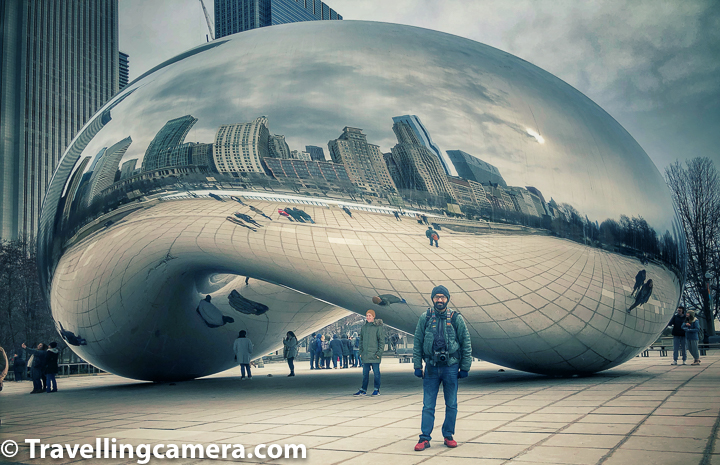
2. Chicago, Illinois
Chicago is the city I would recommend to anyone who thinks American cities are visually monotonous.
It isn't.
Chicago is monumental, geometric and surprisingly intimate.
The skyline rises dramatically from Lake Michigan, while entire neighborhoods are filled with brick two-flats, churches, murals, corner stores and restaurants.
The city has 77 distinct community areas, each with its own cultural character.
That alone should tell you why spending all your time around downtown is a mistake.
Why Chicago is one of the main cities to explore in USA
Chicago's architecture is its obvious attraction, but architecture is only the beginning.
The Chicago River provides one of America's most spectacular urban photographic environments. The Riverwalk runs beside the Chicago River and provides views toward the architecture of the Loop and River North.
Photographing Chicago
Go to the Riverwalk early in the morning.
The light between the skyscrapers can be beautiful before the harsh midday sun arrives.
Then photograph the city from the water if possible.
Another great exercise is to look upward.
Chicago's buildings create layers of balconies, steel, glass, stone and shadow that become almost abstract when photographed vertically.
For sunset, head toward the lakefront.
The city skyline against Lake Michigan gives you a rare combination: water, architecture and enormous skies.
Explore beyond the Loop
Spend time in:
- Pilsen
- Logan Square
- Wicker Park
- Hyde Park
- Andersonville
- Chinatown
- Pullman
Pilsen is particularly rewarding for street photographers because murals, food, architecture and community life intersect naturally.
What to eat in Chicago
Yes, try deep-dish pizza.
But don't stop there.
Look for Italian beef, Chicago-style hot dogs, Polish food, Mexican food in Pilsen and the city's enormous range of international cuisines.
Chicago rewards travelers who eat beyond the tourist circuit.

3. San Francisco, California
San Francisco is almost unfair to photographers.
There are steep streets, Victorian houses, cable cars, bridges, fog, waterfronts, boats and constantly changing weather.
The city is compact enough to explore without a car, yet visually diverse enough to feel much larger.
San Francisco officially describes itself as a city of neighborhoods, with areas ranging from Chinatown and North Beach to the Mission, Castro, Richmond and Sunset.
Why San Francisco is one of the main cities to explore in USA
The city's greatest strength is visual contrast.
A morning can begin in fog near the Pacific, move through bright sunlight in the Mission and finish with golden light over the bay.
The Golden Gate Bridge problem
Everyone photographs it.
Very few people photograph it differently.
Instead of making the obvious frontal composition, experiment with:
- Fog partially hiding the bridge
- Cars creating light trails
- People walking across the bridge
- The bridge framed through vegetation
- Telephoto compression from distant viewpoints
- Reflections from the bay
- Boats passing beneath it
San Francisco Travel specifically highlights the Golden Gate Bridge, Alcatraz and the city's cable cars among its iconic experiences.
Explore the Mission
The Mission is where San Francisco becomes more intimate.
Murals, taquerias, old storefronts and neighborhood life create opportunities for documentary photography.
Chinatown is another place where slowing down pays off.
Don't simply photograph the gates and lanterns. Photograph the details: handwritten signs, market displays, steam rising from food stalls and people moving through narrow streets.
A photographer's timing
The famous San Francisco fog can completely change your itinerary.
Don't treat fog as bad weather.
For photography, fog is often the weather you were hoping for.

4. Los Angeles, California
Los Angeles is difficult to understand from a map.
It makes more sense through neighborhoods.
The city stretches along roughly 75 miles of coastline and contains a remarkable collection of multicultural communities.
Hollywood is only one small part of it.
Why Los Angeles deserves a place among the main cities to explore in USA
LA is particularly good for travelers who enjoy:
- Photography
- Film
- Architecture
- Street culture
- Food
- Beaches
- Museums
- Vintage culture
- Road trips
The city's official tourism organization highlights everything from Downtown's Arts District and Little Tokyo to Chinatown, Hollywood and the coastline.
Don't spend your entire trip in Hollywood
Walk through the Arts District.
Visit Little Tokyo.
Explore Koreatown.
Drive through neighborhoods where the city's famous visual identity is less polished and more human.
Los Angeles is one of the world's great immigrant cities, and its food scene reflects that.
You can eat Korean barbecue for lunch, Mexican food in the afternoon and Japanese cuisine for dinner without leaving the metropolitan area.
Best photography experiences
For sunrise, head toward the coast.
For architecture, photograph Downtown LA in the early morning when streets are relatively quiet.
For sunset, look toward the Hollywood Hills from Griffith Observatory or another elevated viewpoint.
But don't underestimate ordinary streets.
Los Angeles is full of old neon signs, palm-tree silhouettes, low-rise commercial strips and mid-century buildings.
Sometimes the best LA photograph is the one that looks nothing like Hollywood.

5. New Orleans, Louisiana
New Orleans is not a city you simply see.
You hear it.
You smell it.
You eat it.
And occasionally, you stumble into it.
Jazz coming through an open doorway, the metallic sound of a streetcar, the smell of food drifting from a restaurant and old balconies hanging above narrow streets create an atmosphere that is difficult to reproduce anywhere else.
New Orleans has an unusually deep cultural identity shaped by French, Spanish, African, Caribbean, Creole and American influences.
Its neighborhoods are essential to understanding that story. The official tourism organization highlights areas including the French Quarter, Tremé, Marigny, Bywater and the Garden District.
Why New Orleans is one of the main cities to explore in USA
The mistake is spending the entire trip on Bourbon Street.
Bourbon Street is an experience.
It is not the whole city.
Explore Tremé
Tremé is particularly important for understanding New Orleans' African American history and musical heritage. The neighborhood includes Congo Square and Armstrong Park, among other historically significant places.
For a traveler interested in culture rather than nightlife, this can be far more rewarding than simply walking through the French Quarter.
Photography in New Orleans
The Garden District is wonderful in the morning.
Soft light filters through enormous oak trees and creates patterns across old façades.
The French Quarter becomes more atmospheric later in the day.
Look for:
- Wrought-iron balconies
- Weathered shutters
- Old signs
- Street musicians
- Doorways
- Shadows
- Café tables
- Streetcars
And photograph the city after rain.
The reflections can be spectacular.
What to eat
Try gumbo, jambalaya, po'boys, crawfish when in season, beignets and Creole dishes.
But food here isn't merely fuel.
Food is part of the city's history.

6. Washington, D.C.
Washington, D.C. can initially feel formal.
Monuments. Government buildings. Museums. Wide avenues.
Then you begin walking into the neighborhoods.
Suddenly the city feels completely different.
Destination DC emphasizes that the capital is made up of diverse neighborhoods, including Georgetown, Capitol Hill, Adams Morgan, H Street and others.
Why Washington belongs among the main cities to explore in USA
For history lovers, few American cities can compete with Washington.
The National Mall alone can occupy several days if you explore the museums properly.
But the real surprise is that many of the best experiences cost very little.
Several major Smithsonian museums are free, and walking around the monumental core itself costs nothing.
Photography in Washington
Sunrise is the best time for the National Mall.
The light is softer, crowds are smaller and monuments feel dramatically different before tour groups arrive.
Try photographing the Lincoln Memorial around dawn and then walking toward the Washington Monument.
For something less obvious, explore Georgetown's side streets.
Old brick buildings, staircases and narrow lanes create a completely different visual language.
A useful strategy
Don't photograph only monuments.
Photograph the people who use the city.
Joggers around the Mall.
School groups entering museums.
Street vendors.
Cyclists.
People sitting beneath trees.
Washington becomes more interesting when you stop photographing it as a political capital and start seeing it as a living city.

7. Boston, Massachusetts
Boston is a city where history is hiding in plain sight.
You don't necessarily need a museum to experience it.
Sometimes a street corner is enough.
Old brick buildings, narrow lanes, church towers, burial grounds and waterfront warehouses make Boston one of the most rewarding American cities for walking.
Boston has 23 neighborhoods, each contributing its own history, food traditions and community character.
Why Boston is one of the main cities to explore in USA
Boston is ideal for:
- History lovers
- Architecture enthusiasts
- Walkers
- Families
- Photographers
- Food travelers
- Short city breaks
Explore beyond the Freedom Trail
The Freedom Trail is useful, but don't let it become your entire Boston experience.
Walk through Beacon Hill.
Explore the North End.
Spend time around the waterfront.
Cross into Cambridge.
The contrast between old Boston and university-driven Cambridge creates fascinating photographic opportunities.
Photography tip
Boston looks particularly beautiful in autumn.
The combination of old brick, yellow leaves and soft afternoon light can produce photographs that almost look cinematic.
For architecture, early morning is best.
For street life, late afternoon is better.
What to eat
Clam chowder is the obvious starting point.
But Boston's modern food scene goes well beyond seafood.
Explore bakeries, Italian food in the North End, seafood markets and neighborhood cafés.
-11.jpg "Main Cities to Explore in USA: 10 American Cities Every Traveler Should Experience")
8. Seattle, Washington
Seattle often gets reduced to three things:
Coffee.
Rain.
The Space Needle.
That misses the point.
Seattle is a city of neighborhoods, water and mountains, with a strong relationship between urban life and the surrounding landscape.
Visit Seattle lists more than twenty distinct neighborhoods, including Ballard, Capitol Hill, Pioneer Square, Beacon Hill, the Central District and West Seattle.
Why Seattle belongs on the list
Seattle is particularly attractive for photographers because weather becomes part of the composition.
Clouds soften the light.
Rain creates reflections.
Mist creates depth.
Water gives you natural foregrounds.
And mountains occasionally appear in the distance like a backdrop that someone forgot to turn off.
Photographing Seattle
Pike Place Market is busiest later in the day.
For photography, arrive early.
Look for workers unloading produce, vendors preparing stalls and the market before it becomes crowded.
Then move toward the waterfront.
For sunset, experiment with viewpoints around Kerry Park, though it can become crowded.
Don't forget Pioneer Square.
Its older architecture provides a completely different visual character from the modern downtown skyline.
Visit Seattle's own photography guide emphasizes the opportunities created by soft shadows, foliage, reflections and overlooked details.
Explore Ballard
Ballard has maritime roots and a strong food culture.
It is a good place to slow down after the intensity of downtown.

9. Miami, Florida
Miami can fool you.
At first, it appears to be a city of beaches, luxury hotels, nightlife and expensive cars.
Look closer and you find one of America's most culturally complex urban environments.
Spanish is heard everywhere.
Cuban culture is deeply embedded in everyday life.
Caribbean influences are everywhere.
And neighborhoods such as Little Havana, Little Haiti, Historic Overtown and Coconut Grove tell very different stories.
Miami's official tourism resources emphasize the cultural diversity of these neighborhoods rather than treating Miami simply as a beach destination.
Why Miami is one of the main cities to explore in USA
For photographers, Miami offers:
- Art Deco architecture
- Tropical vegetation
- Street murals
- Beaches
- Latin American culture
- Caribbean influences
- Neon
- Boats
- Colorful food markets
- Dramatic sunsets
Little Havana
Spend time on Calle Ocho.
Don't rush.
Watch people playing dominoes at Máximo Gómez Park, commonly called Domino Park. Little Havana's streets combine restaurants, bakeries, cigar shops, music venues, murals and cafés.
The best photographs often happen when you stop looking for photographs.
A conversation at a café.
A cigar maker working with tobacco.
An elderly man watching a domino game.
A musician preparing for an evening performance.
These are the images that explain Miami better than a beach photograph.
Coconut Grove
Coconut Grove is another fascinating contrast.
It has historic Bahamian roots dating back to the 1870s and is known for its tropical landscape, waterfront parks and slower pace.
Photographing Miami
South Beach works beautifully around sunrise.
The low sun emphasizes the geometry and pastel colors of the Art Deco buildings.
For Wynwood murals, late afternoon can produce richer colors without the harshest midday light.
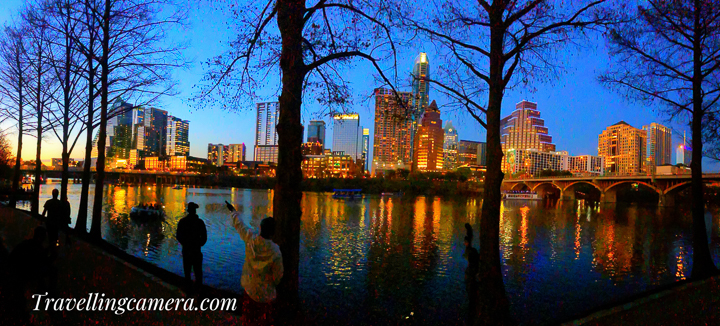
10. Nashville, Tennessee
Nashville is often marketed as "Music City."
That description is accurate.
But it is incomplete.
Music isn't simply an attraction here. It is embedded in neighborhoods, restaurants, bars, recording studios and everyday life.
Nashville has more than 250 live music venues, with music ranging across country, bluegrass, rock, jazz, hip-hop, folk and other genres.
Why Nashville belongs among the main cities to explore in USA
Nashville is ideal for travelers who enjoy:
- Live music
- Southern food
- Road trips
- Photography
- History
- Nightlife
- Local culture
Go beyond Broadway
Lower Broadway is entertaining, but it can feel overwhelming.
Spend time in East Nashville.
Explore Germantown.
Walk through 12South.
Visit Music Row.
The city's official neighborhood guide highlights the contrasting character of these districts, from historic Germantown to creative East Nashville and walkable 12South.
Photograph Nashville
The obvious photograph is a neon-lit Broadway at night.
Take it.
Then look for something else.
A guitarist tuning an instrument.
An empty stage before a show.
A songwriter working in a small venue.
Old signs.
Boots outside a country store.
Morning light falling across a quiet neighborhood.
Those images tell a deeper story about Nashville.
Listen before you photograph
This is particularly important here.
A musician performing in a small venue isn't simply an object for your camera.
Listen first.
If the situation allows photography, make the photograph respectfully.
A Grecian Gem in Music City: Unveiling Nashville's Iconic Parthenon
 Nashville’s Crown Jewel: The Tennessee State Capitol


 Where History Was Made: The Tennessee Woman Suffrage Monument in Nashville

 Discovering Downtown Nashville: The Soul of Music City

 More Than a Landmark: Discovering the Enduring Heart of Nashville First Baptist Church

 Centennial Park: Nashville’s Urban Oasis

The 10 Cities at a Glance
| City | Best For | Ideal Stay | Photography Strength |
|---|---|---|---|
| New York City | Culture, food, museums | 4–6 days | Street life & architecture |
| Chicago | Architecture, food, history | 3–4 days | Skyline & urban geometry |
| San Francisco | Photography, neighborhoods | 3–4 days | Fog, hills & bridges |
| Los Angeles | Food, film, beaches | 4–5 days | Street scenes & landscapes |
| New Orleans | Music, food, culture | 3–4 days | Architecture & people |
| Washington, D.C. | History, museums | 3–4 days | Monuments & architecture |
| Boston | History, walking, food | 3 days | Architecture & autumn |
| Seattle | Nature, coffee, culture | 3–4 days | Rain, water & reflections |
| Miami | Beaches, culture, nightlife | 3–4 days | Color, people & architecture |
| Nashville | Music, food, road trips | 3 days | Nightlife & documentary |
Hidden Gems That Make These Cities Special
The most memorable experiences often come from leaving the headline attractions behind.
In New York, explore Jackson Heights rather than spending another hour in Times Square.
In Chicago, visit Pullman or Pilsen.
In San Francisco, wander through the Richmond or Sunset districts.
In Los Angeles, explore Little Tokyo, Koreatown or the Arts District.
In New Orleans, spend time in Tremé and the Marigny.
In Washington, explore neighborhoods such as H Street and Adams Morgan.
In Boston, cross the river and explore Cambridge.
In Seattle, visit Ballard or Beacon Hill.
In Miami, look beyond South Beach toward Little Haiti, Historic Overtown and Coconut Grove.
In Nashville, spend an evening in East Nashville rather than another night on Lower Broadway.
The common thread is simple:
Go where people live, not only where tourists arrive.
Best Photography Spots in the Main Cities to Explore in USA
If photography is central to your trip, plan around light rather than opening hours.
| City | Sunrise | Golden Hour | Night Photography |
| New York | Brooklyn Bridge area | Manhattan viewpoints | Times Square, Lower Manhattan |
| Chicago | Lake Michigan | Riverwalk | Downtown skyline |
| San Francisco | Golden Gate viewpoints | Bay waterfront | Downtown & cable cars |
| Los Angeles | Santa Monica | Griffith area | Downtown LA |
| New Orleans | Garden District | French Quarter | Bourbon/Marigny |
| Washington DC | National Mall | Georgetown | Monuments |
| Boston | Beacon Hill | Waterfront | Downtown streets |
| Seattle | Waterfront | Kerry Park area | Pike Place & downtown |
| Miami | South Beach | Biscayne Bay | Art Deco District |
| Nashville | Residential neighborhoods | Downtown | Broadway |
A useful rule for photographers is to photograph the same location twice.
Visit once in the morning and once after sunset.
You may be surprised by how different the city becomes.
Photography Tips for a USA City Trip
Carry a small lens
A 24–70mm equivalent is incredibly versatile for city travel.
For architecture and compressed skyline shots, carry a telephoto lens if your luggage allows it.
Photograph reflections
Look for:
- Rain
- Shop windows
- Car mirrors
- Puddles
- Glass buildings
- River surfaces
Don't photograph everything at eye level
Try:
- Very low angles
- High viewpoints
- Reflections
- Frames through doorways
- Long exposures
- Layered compositions
Photograph people responsibly
Street photography works best when it feels observational rather than intrusive.
If someone notices you and clearly objects, respect that.
If you're photographing a portrait intentionally, ask.
Leave room for imperfect photographs
A slightly blurred image of a musician moving through a dark club may communicate more emotion than a technically perfect photograph.
Local Food Experiences You Shouldn't Miss
America's cities are essentially food maps created by immigration.
Instead of asking, "What is the city's famous food?", ask:
Who lives here, and what do they eat?
In New York, explore immigrant neighborhoods.
In Chicago, try Mexican food in Pilsen.
In Los Angeles, eat across Koreatown, East LA and the San Gabriel Valley.
In San Francisco, explore Chinatown and the Mission.
In Miami, eat Cuban and Caribbean food.
In New Orleans, explore Creole and Cajun traditions.
In Seattle, combine Pacific Northwest ingredients with the city's Asian food culture.
In Boston, explore seafood and Italian traditions.
In Nashville, try Southern classics alongside the city's increasingly diverse restaurant scene.
In Washington, DC, explore Ethiopian, Salvadoran, Middle Eastern and international cuisines.
This is one of the most rewarding ways to understand the country.
The Human Side of American Cities
One of my favorite ways to understand a city is to spend fifteen minutes somewhere without taking a photograph.
Sit at a café.
Stand at a market.
Watch a neighborhood intersection.
Listen.
The exercise is surprisingly difficult for photographers because we're trained to constantly search for the next frame.
But people reveal themselves when you aren't chasing them with a camera.
A New York commuter has a different rhythm from someone sitting outside a New Orleans café.
A Seattle market vendor interacts differently from a Nashville musician.
A Miami café conversation can switch effortlessly between English and Spanish.
A Chicago neighborhood restaurant can tell you more about migration than a museum display.
These everyday interactions are the invisible architecture of American cities.
Best Time to Visit the USA's Major Cities
There isn't one perfect season for all ten cities.
Spring
Excellent for:
- Washington, D.C.
- New York
- Boston
- San Francisco
Spring offers comfortable temperatures and strong photography opportunities.
Summer
Best for:
- Seattle
- Chicago
- Boston
- New York
However, major attractions can become crowded.
Autumn
One of the best seasons for:
- Boston
- New York
- Chicago
- Seattle
Fall colors add another layer to urban photography.
Winter
Consider:
- Miami
- Los Angeles
- New Orleans
Southern destinations can be particularly attractive when northern cities become cold.
A note about New Orleans and Miami
Summer can be extremely hot and humid.
If you are sensitive to heat, schedule outdoor exploration early in the morning and late afternoon.
How to Reach the Main Cities in USA
For international travelers, these cities are generally well connected by major airports.
A practical multi-city itinerary could be:
New York → Boston → Washington DC → Chicago → Nashville → New Orleans → Miami
For a western route:
San Francisco → Los Angeles → Seattle
Trying to visit all ten cities in one trip would be exhausting.
America is enormous.
Distances that look manageable on a map can consume entire days.
For a first trip, choose three or four cities rather than ten.
Where to Stay
Don't automatically choose the cheapest hotel near an airport.
For city exploration, location often matters more than room size.
For first-time visitors
Stay reasonably close to the neighborhoods you plan to explore.
For photographers
Choose accommodation near public transportation.
Being able to walk outside at 5:30 AM without arranging transportation can make a huge difference.
For families
Look for:
- Kitchen facilities
- Larger rooms
- Easy public transport
- Walkable neighborhoods
For luxury travelers
The major cities have excellent luxury hotels, but consider staying in a neighborhood rather than beside the biggest landmark.
You may get a more interesting experience.
Budget Tips for Exploring American Cities
The United States can be expensive, but city travel doesn't have to mean constant luxury spending.
Save money by:
- Using public transportation
- Walking between attractions
- Eating lunch rather than dinner at expensive restaurants
- Using free museums and public spaces
- Staying slightly outside the most expensive tourist zone
- Booking accommodation early
- Visiting major attractions early rather than paying for every premium experience
- Buying groceries for breakfast
- Using city passes only after calculating whether they actually save money
Washington, D.C. is particularly attractive for budget-conscious travelers because many major cultural institutions and public attractions are free.
A 21-Day USA City Itinerary
If you have three weeks and want a broad introduction, this route works well:
Days 1–4: New York City
Neighborhood walks, museums, Brooklyn, Manhattan and food.
Days 5–6: Boston
History, Beacon Hill, North End and waterfront.
Days 7–9: Washington, D.C.
National Mall, museums, Georgetown and neighborhood exploration.
Days 10–12: Chicago
Architecture, Riverwalk, neighborhoods and food.
Days 13–15: New Orleans
Music, food, French Quarter, Garden District and Tremé.
Days 16–18: Miami
Little Havana, South Beach, Wynwood and Coconut Grove.
Days 19–21: Nashville
Music, neighborhoods, food and live performances.
For a photography-focused journey, I would actually remove one or two cities and give the remaining destinations more time.
Responsible Travel Tips
Large American cities have real communities behind their tourist attractions.
Remember that.
Don't photograph vulnerable people without permission.
Don't block sidewalks for photographs.
Don't enter residential spaces simply because they look photogenic.
Support independent restaurants and neighborhood businesses.
Use public transportation where practical.
Avoid turning culturally significant neighborhoods into Instagram backdrops without understanding their history.
And most importantly, remember that a neighborhood isn't a theme park.
People live there.
Common Mistakes to Avoid
Trying to see everything
You can't.
And you shouldn't.
Three meaningful experiences are better than fifteen rushed attractions.
Renting a car everywhere
In New York, Boston, Washington and Chicago, a car can become more of a burden than an advantage.
Staying only downtown
Downtown is often the least representative part of a city.
Ignoring weather
Fog in San Francisco, rain in Seattle and heat in Miami aren't necessarily problems.
They can become part of your photographs.
Eating only at famous restaurants
Some of your best meals may come from a tiny neighborhood restaurant that never appears on a "Top 10" list.
Photographing only landmarks
Landmarks tell you what a city looks like.
People tell you what it feels like.
FAQs About the Main Cities to Explore in USA
What are the main cities to explore in USA?
Some of the best major cities to explore in the USA include New York City, Chicago, San Francisco, Los Angeles, New Orleans, Washington, D.C., Boston, Seattle, Miami and Nashville. Each offers a distinct combination of history, food, culture, architecture and entertainment.
Which US city is best for first-time international visitors?
New York City is arguably the easiest starting point because it combines iconic American landmarks with immigrant communities, museums, food, public transportation and diverse neighborhoods.
Which city in USA is best for photography?
San Francisco, New York, Chicago and New Orleans are particularly rewarding for photographers. San Francisco offers dramatic landscapes, New York excels at street photography, Chicago is exceptional for architecture, and New Orleans provides distinctive architecture and documentary opportunities.
Which American city is best for food?
There is no single answer. New York and Los Angeles offer enormous international diversity, New Orleans is famous for Creole and Cajun traditions, Chicago has an outstanding multicultural food scene, and Miami is particularly strong for Cuban and Caribbean cuisine.
Which US cities are best for a short weekend trip?
Boston, Washington, D.C., Chicago, New Orleans and Nashville can work particularly well for three-day trips because many attractions and neighborhoods can be explored without covering enormous distances.
What are the best cities of USA for families?
New York, Washington, Chicago, Boston and Seattle offer strong combinations of museums, parks, educational attractions and family-friendly neighborhoods.
Which US cities are best for solo travelers?
New York, San Francisco, Chicago, Boston and New Orleans are excellent options because they have walkable areas, public transportation, hostels and hotels across different budgets, and plenty of activities that can be enjoyed alone.
What is the best time to visit the USA's major cities?
Spring and autumn are generally excellent for many northern cities because temperatures are comfortable. Winter is attractive for destinations such as Miami and Los Angeles, while summer is particularly pleasant in places such as Seattle.
How many days should I spend in each US city?
Three days is enough for an introduction to most cities, but four to five days allows you to move beyond the famous attractions and explore neighborhoods, food and local culture.
Can I visit several major US cities on one trip?
Absolutely, but plan around geography. The Northeast is particularly convenient for combining New York, Boston and Washington, D.C. Chicago can be connected to other destinations by air or rail, while San Francisco and Los Angeles make a natural West Coast combination.
Final Thoughts: Don't Just Visit the Cities of USA
The most interesting thing about traveling through America's major cities is how quickly the stereotypes disappear.
New York isn't just skyscrapers.
Chicago isn't just architecture.
Los Angeles isn't just Hollywood.
San Francisco isn't just the Golden Gate Bridge.
New Orleans isn't just Bourbon Street.
Miami isn't just beaches.
Nashville isn't just country music.
Washington isn't just politics.
Boston isn't just history.
Seattle isn't just coffee.
Every one of these cities contains contradictions, forgotten stories, immigrant histories, neighborhood identities and ordinary moments that never make it onto a postcard.
And that is precisely why they are worth exploring.
For a photographer, the challenge is not finding something beautiful.
There is too much beauty.
The challenge is finding something true.
Walk one neighborhood longer than you planned.
Eat somewhere without reading a review first.
Talk to someone.
Take the wrong train occasionally.
Wake up before the city does.
Stay out after the tourists have gone.
Put the camera down once in a while.
Then pick it up again.
You may discover that the best photograph from your American journey isn't the skyline you traveled thousands of miles to see.
It might be a stranger laughing outside a diner.
A musician tuning a guitar.
Rain reflected in a Chicago street.
Fog swallowing the Golden Gate Bridge.
A New Orleans balcony glowing under a streetlamp.
Or an ordinary morning in a neighborhood you had never heard of before you arrived.
That is the real beauty of exploring the main cities to explore in USA.
The landmarks get you there.
The people, neighborhoods and unexpected moments are what make you remember the journey.

















.jpg)
Comments