

Introduction: The Pheasant That Makes You Stop Walking
There are birds you notice immediately, and then there are birds you discover.
The Kalij Pheasant belongs firmly to the second category.
Among the many pheasants found across the mountains of South Asia, the Kalij is perhaps one of the most rewarding birds to encounter because it rarely gives itself away easily. A rustle in the undergrowth. A sudden movement beneath an oak tree. A dark shape running across a forest trail. And then, just when you are trying to understand what you saw, it disappears.

Its scientific name is Lophura leucomelanos, and it is one of the characteristic birds of the Himalayas, particularly the forested foothills and middle elevations. In Himachal Pradesh, the Forest Department records it from habitats reaching up to around 3,000 metres, including evergreen and deciduous forests, oak, sal, spruce and rhododendron woodland, dense valley undergrowth, thickets and even abandoned cultivation. Its local colloquial name in Himachal is Kala Murga.
The first thing that strikes you about a male Kalij is the contrast.
At a distance it can look almost black. But bring it into good light and the plumage suddenly reveals layers of blue, violet and greenish gloss. The face is bare and red, while some Himalayan forms have a striking white crest. The female, by contrast, is predominantly brown and wonderfully camouflaged.
That difference between the sexes is one reason a casual forest walk can turn into a serious bird-photography session.
And there is another reason.
Kalij Pheasants are much more comfortable on the forest floor than in open skies. If you want to photograph one, you need to slow down.
Very slow.

Why Kalij Pheasants Are Special
The Kalij is a member of the pheasant family, Phasianidae, within the order Galliformes. The species is currently classified as Least Concern globally, although that status should not be interpreted as meaning that every local population is secure. India's State of India's Birds assessment lists the species as a Schedule I bird under the Wildlife Protection Act and notes that long-term and current trends in Himachal Pradesh remain data-limited.
What makes the species particularly interesting is its adaptability.
Unlike some high-altitude pheasants that are strongly associated with specific mountain habitats, Kalij can occupy a surprisingly broad range of forest environments. The Himachal Pradesh Forest Department describes it from dense forest undergrowth to thickets, secondary vegetation and abandoned cultivation.
That means you do not necessarily have to undertake an expedition into remote wilderness to find one.
Sometimes the bird is much closer to human habitation than expected.
A forest edge.
An old village trail.
A quiet hillside.
A patch of dense vegetation beside a mountain stream.
These transitional landscapes can be excellent places to look.

Kalij Pheasant: Identification Guide
Before going into photography and travel, it helps to know exactly what you are looking for.
Male Kalij Pheasant
The male is the bird most people imagine when they hear "Kalij Pheasant."
Look for:
- Glossy blue-black to black plumage
- A prominent crest
- Bare red facial skin
- Long, dark tail
- White or pale markings depending on the subspecies
- Strong contrast between dark body and red face
- Large, chicken-like body
Himachal Pradesh's official wildlife guide gives males a body length of approximately 63–74 cm and a weight of roughly 795–1,150 grams.
The interesting thing about photographing a male Kalij is that its plumage is not really black.
In harsh sunlight it can appear black. In soft morning light, however, the feathers may suddenly reveal metallic blue, violet or greenish tones.
This is one of those birds where light genuinely changes the subject.
Female Kalij Pheasant
The female is considerably less dramatic at first glance.
She is predominantly brown, with subtle patterning that helps her disappear into fallen leaves, branches and forest floor vegetation.
And that is precisely what makes her fascinating.
A female sitting motionless beside a tree root can be almost impossible to detect.
This camouflage is particularly effective in Himalayan forests where the ground is covered with layers of dry oak leaves, pine needles, twigs and moss.

Where Do Kalij Pheasants Live?
The species has an extensive distribution across the Himalayan region, extending from Pakistan through northern India and Nepal and eastward into parts of Southeast Asia. Different subspecies show considerable variation in appearance.
In India, Kalij occurs across several Himalayan and northeastern states.
The bird is particularly associated with:
- Jammu & Kashmir
- Himachal Pradesh
- Uttarakhand
- Sikkim
- West Bengal
- Arunachal Pradesh
- Other northeastern hill regions
A fascinating feature of its distribution is that it occurs in both western and eastern Himalayan landscapes.
Research from the Khangchendzonga Biosphere region describes Kalij habitat as forest with dense undergrowth and steep, overgrown gullies, often not far from water. Groups can include several individuals, although sightings may also involve pairs or solitary birds.
That last detail is useful for photographers.
If you see one bird, don't immediately leave.
There may be another nearby.

Kalij Pheasant and the Forest Floor
One of the biggest mistakes first-time birders make is looking too high.
Kalij Pheasants are essentially birds of the forest floor.
They walk.
They scratch.
They forage.
They freeze.
Then they run.
And when sufficiently alarmed, they can explode into flight with surprising speed.
Their diet is varied. They forage for seeds, plant material, fruits and invertebrates, and their omnivorous feeding habits mean they are constantly investigating the forest floor.
This is why areas with leaf litter and dense vegetation can be particularly productive.
Look for disturbed patches under trees.
Watch the edges of bushes.
Scan the ground beside streams.
And listen.
Very often, the sound comes before the bird.
The Best Time to Look for Kalij Pheasants
If there is one rule worth remembering, it is this:
Don't start your birding day late.
Kalij Pheasants are most active during the cooler parts of the day, and Himalayan observations frequently report them around dawn and dusk.
Early Morning
The first few hours after sunrise are excellent.
The forest is cooler. Human activity is lower. Bird activity is high.
Morning light also has another advantage for photographers.
It is soft.
A male Kalij standing beneath an oak tree at 7 AM can look dramatically different from the same bird photographed under hard midday sunlight.
Late Afternoon
The other productive window is late afternoon.
As temperatures drop, birds become active again.
This can be particularly beautiful photographically because low-angle sunlight can illuminate the crest and create a subtle rim of light around the feathers.
Avoid Midday
Midday is generally the least rewarding period.
The bird may still be around, but photographic conditions are usually poor, vegetation becomes harshly contrasty and wildlife activity often slows.
Use the middle of the day for lunch, village exploration or simply walking without the pressure of finding a bird.
A Personal-Style Kalij Encounter: When the Forest Moves
The best wildlife encounters rarely begin with a dramatic announcement.
They begin with uncertainty.
You are walking along a narrow Himalayan trail, camera hanging from your shoulder, thinking about something completely unrelated.
Then the forest floor moves.
Not much.
Just enough.
You stop.
The first instinct is to search for a squirrel.
Then comes another movement.
A dark bird steps out from beneath the vegetation.
For a moment it seems almost ordinary.
Then the light catches the feathers.
Blue.
Black.
A hint of metallic sheen.
And there is that unmistakable red face.
The temptation is to raise the camera immediately.
Don't.
Watch first.
The bird may be completely unaware of you. If you move slowly, you may get several seconds of natural behavior instead of one hurried frame.
This is where wildlife photography becomes less about equipment and more about observation.
The photograph often improves when you spend the first minute simply watching.
Photography: How to Photograph a Kalij Pheasant
Kalij Pheasants are excellent photographic subjects, but they are not easy ones.
They tend to stay low, move through cluttered vegetation and disappear behind leaves.
Use a Long Lens
A telephoto lens is extremely useful.
A 400mm, 500mm or 600mm lens gives you working distance without forcing you close to the bird.
For smaller cameras or crop-sensor bodies, even a 300mm or 400mm lens can be very effective.
The goal is not simply magnification.
Distance helps the bird behave naturally.
Keep the Camera Low
This is one of the most important tips.
If the bird is walking on the ground, don't automatically photograph from standing height.
Kneel or lower the camera when conditions permit.
A lower viewpoint puts the viewer into the bird's world.
Instead of photographing down at the pheasant, you photograph across the forest floor.
The result is usually far more intimate.
Watch the Background
Himalayan forests can be visually chaotic.
Branches, leaves, rocks and shadows compete for attention.
Try to photograph when the bird moves into a slightly cleaner patch.
Sometimes moving only a few metres can transform an average image into a strong one.
Shoot in Soft Light
Overcast mornings can actually be excellent.
Cloud cover reduces the extreme contrast between black plumage and bright background.
If the male is sitting in shade with a bright background behind it, expose carefully for the bird.
Don't allow the black feathers to become a featureless silhouette.
Photograph the Female
This is my personal recommendation.
Everyone wants the spectacular male.
But the female can produce more interesting photographs.
Her camouflage allows you to create environmental portraits where the bird becomes part of the forest.
Look for moments when she emerges from leaf litter or pauses beside moss-covered rocks.
A Photographer's Kalij Pheasant Checklist
| Situation | What to do |
|---|---|
| Dawn | Reach the forest before activity begins |
| Dense vegetation | Reduce movement and scan slowly |
| Male in sunlight | Watch highlights on glossy plumage |
| Female on leaf litter | Look for camouflage rather than contrast |
| Bird crossing trail | Pre-focus on the likely path |
| Bird feeding | Wait for natural behavior |
| Bird looks toward you | Stop moving and photograph |
| Bird becomes nervous | Increase distance |
| Bird runs away | Do not chase |
The most valuable photograph may not be the closest one.
The Different Faces of Kalij Across the Himalayas
One of the lesser-known aspects of this species is its variation.
Kalij is not visually identical throughout its range. Several subspecies are recognized, and males in western and central populations can differ substantially from eastern forms. Some eastern subspecies have much more extensive pale or white patterning.
This creates an interesting opportunity for photographers.
A Kalij photographed in Himachal Pradesh may look noticeably different from one photographed farther east.
In other words, "Kalij Pheasant" is not necessarily one uniform visual experience.
For bird photographers, that makes the species worth documenting across different Himalayan regions.
Kalij Pheasant and Himalayan Culture
The relationship between mountain communities and forest birds is complicated.
For generations, people living close to forests have known birds through sound, seasonal movement and local names rather than scientific identification.
In Himachal Pradesh, the Kalij is colloquially known as Kala Murga, literally reflecting its dark, rooster-like appearance.
In Jammu & Kashmir, the bird has a different cultural presence. The species was declared the bird of the Union Territory in 2021, and Kashmiri names reported for it include Wan Kokur, meaning wild cock.
This is one of the reasons I find birding in the Himalayas so rewarding.
A field guide tells you what a bird is.
A local person may tell you what the bird has meant to the landscape for decades.
Those are two very different kinds of knowledge.
Local Conversations: Ask About the Bird, Not Just the Location
If you are travelling through a Himalayan village and want to find Kalij Pheasants, don't simply ask:
"Where can I see pheasants?"
Instead, ask locals about the forest chicken, Kala Murga, or whatever local name is used in that region.
Ask where people hear it early in the morning.
Ask which forest trail has dense undergrowth.
Ask whether the birds come close to fields.
Local knowledge can be surprisingly precise.
However, there is an important distinction: do not ask anyone for information that could facilitate hunting or capture.
The purpose of local knowledge should be observation and conservation, not exploitation.
Hidden Habitat: Look Beyond Famous Birding Destinations
You don't always need a famous bird sanctuary.
Kalij Pheasants can occur in secondary vegetation, thickets and abandoned cultivation as well as mature forest.
This makes the edges of Himalayan villages particularly interesting.
Look around:
- Old agricultural terraces
- Forest edges
- Quiet village paths
- Oak and rhododendron patches
- Stream corridors
- Dense roadside vegetation away from traffic
- Abandoned fields gradually returning to forest
These places may not appear in glossy birding itineraries.
But birds don't read itineraries.
They follow habitat.
Other Pheasants You May Encounter
The Himalayan region is one of the world's great pheasant landscapes.
In Himachal Pradesh, the pheasant community includes species such as:
- Kalij Pheasant
- Himalayan Monal
- Western Tragopan
- Koklass Pheasant
- Cheer Pheasant
The Great Himalayan National Park, for example, is known for five pheasant species and has been an important location for ecological research on Himalayan pheasants.
The Kalij is therefore not an isolated curiosity.
It is part of a much larger Himalayan pheasant story.
And that makes a single sighting feel more meaningful.
Local Food: What to Eat on a Kalij Birding Trip
Birding mornings in the Himalayas create a particular kind of appetite.
After several hours outside in cool mountain air, simple food tastes unusually good.
Rather than looking for elaborate tourist menus, try local staples wherever available:
- Siddu
- Rajma with rice
- Madra
- Chana-based Himachali preparations
- Local breads
- Seasonal vegetables
- Tea with something freshly cooked
Food experiences will vary considerably between Himachal, Uttarakhand, Jammu & Kashmir, Sikkim and the northeastern Himalayas.
One useful rule is to eat where local people eat.
A small roadside kitchen or homestay breakfast can often tell you more about a region than an expensive restaurant.
And if you are heading out before sunrise, arrange breakfast in advance.
Mountain kitchens do not necessarily operate according to a bird photographer's schedule.
Best Places to Look for Kalij Pheasants
There is no single "best place" because the species has a broad Himalayan distribution.
Instead, think in terms of habitat.
Himachal Pradesh
Himachal is particularly interesting for photographers because Kalij occurs across forest types and elevations, and the state's protected-area literature specifically documents the species.
The broader Great Himalayan landscape also offers opportunities to encounter several pheasant species.
Uttarakhand
The forests around the Mussoorie and broader Garhwal region are well known for Kalij sightings, particularly in areas with oak, rhododendron and dense understory. Recent field footage from the Mussoorie region also documents breeding and roosting behavior.
Jammu & Kashmir
The western Himalayas provide another strong opportunity, and the species has considerable cultural recognition here following its designation as the Union Territory's bird.
Eastern Himalayas
Kalij extends into Sikkim, Arunachal Pradesh and northeastern India, where the species may appear quite different from western Himalayan birds.
Best Time to Photograph Kalij Pheasants
For photography, I would divide the year into four broad periods.
Spring
Excellent for observing courtship and increased activity.
Fresh vegetation can also make the background more attractive.
Summer and Early Monsoon
Dense vegetation creates beautiful environmental portraits, although finding the birds becomes harder.
Rainy conditions can produce spectacular greens and soft light.
Autumn
Possibly one of the most comfortable periods for Himalayan birding.
The forest becomes easier to navigate, while the landscape retains substantial vegetation.
Winter
Winter can make the forest floor more open in some areas, potentially improving visibility.
The cold also encourages you to take the early morning window seriously.
How to Reach Kalij Pheasant Habitat
Because Kalij occurs across a huge geographical range, there is no single route.
The practical approach is to choose a Himalayan birding base first.
For example:
Delhi → Chandigarh → Himachal birding destination
or
Delhi → Dehradun → Mussoorie/Garhwal birding region
or
Delhi → Jammu → western Himalayan birding areas
For eastern Himalayan birding, flights to major regional airports followed by road travel may be more practical.
Once you reach the destination, don't assume that the bird will be beside the main road.
The final part of the journey is usually on foot.
That's where the fun begins.
Where to Stay
For Kalij photography, a luxury hotel is not necessarily the best choice.
A comfortable forest-side homestay, eco-lodge or small mountain guesthouse can be much more useful.
Look for accommodation that offers:
- Early breakfast
- Access to forest trails
- Quiet surroundings
- Local birding knowledge
- Safe parking if road-tripping
- A place to dry wet camera equipment
- Flexible check-in/check-out
- Local guides
A property surrounded by trees is often more valuable than one with spectacular valley views.
The bird does not care about the view from your balcony.
It cares about habitat.
Budget Tips for Bird Photographers
You don't need an expensive wildlife expedition to look for Kalij.
A sensible trip can be built around:
- Public transport or shared taxis to the mountain base.
- A modest homestay.
- Local food.
- Walking trails instead of expensive vehicle safaris.
- A local bird guide for one or two mornings rather than the entire trip.
The most important investment is often not accommodation.
It is time.
Spend three quiet mornings in suitable habitat rather than trying to see ten destinations in one day.
A Suggested 3-Day Kalij Pheasant Photography Itinerary
Day 1: Arrive and Scout
Reach your Himalayan base by afternoon.
Don't immediately start serious birding.
Walk around the village and identify forest edges, streams, old agricultural land and quiet trails.
Talk to locals.
Look for signs of bird activity.
Day 2: Dedicated Birding Morning
Wake before sunrise.
Reach the forest while it is still quiet.
Spend three to four hours moving slowly.
Don't cover too much ground.
Return for breakfast.
Spend the afternoon exploring the village or photographing landscapes.
Return to the forest during the final two hours of daylight.
Day 3: Follow the Bird
Return to the most promising location from Day 2.
If you saw a Kalij, study where it appeared.
Was it near water?
Dense bushes?
An open patch?
Leaf litter?
Repeat the conditions.
This is far more effective than randomly searching new places.
Responsible Travel: The Photograph Is Not Worth Disturbing the Bird
This deserves emphasis.
Kalij Pheasants are protected wildlife in India, and State of India's Birds lists them under Schedule I of the Wildlife Protection Act.
So the ethical approach is simple.
Do not:
- Chase a pheasant for a photograph
- Block its escape route
- Use playback repeatedly
- Throw food to attract it
- Approach nests
- Handle chicks
- Encourage captive-bird interactions
- Share precise nesting locations publicly
- Disturb roosting birds
A photograph should document behavior, not manufacture it.
If the bird walks away, let it walk away.
Sometimes the most responsible photograph is the one you don't take.
Common Mistakes to Avoid
1. Arriving at Noon
The forest is often quieter and the light is harder.
2. Looking Only for Males
Females are superbly camouflaged and can be much harder to spot.
3. Walking Too Fast
You can easily pass within metres of a bird without noticing it.
4. Wearing Noisy Clothing
Rustling jackets and aggressive movement can end an encounter before it begins.
5. Shooting Everything at Maximum ISO
Try to use available light intelligently. Modern cameras can handle high ISO, but exposure and shutter speed still matter.
6. Ignoring the Background
A technically sharp bird photograph can still be visually weak if the background is chaotic.
7. Getting Too Close
Long lenses are useful precisely because they allow distance.
8. Expecting a "Perfect" Portrait
A photograph of a Kalij disappearing into rhododendron branches may tell a better story than a studio-like portrait.
Frequently Asked Questions About Kalij Pheasants
Is the Kalij Pheasant rare?
The species is globally classified as Least Concern, but its local population trends are not equally well understood everywhere. In Himachal Pradesh, State of India's Birds currently reports insufficient data for reliable long-term and annual trend assessment.
Where can I see Kalij Pheasants in India?
Kalij Pheasants occur across several Himalayan and northeastern regions, including Himachal Pradesh, Uttarakhand, Jammu & Kashmir, Sikkim, Arunachal Pradesh and other parts of northeastern India.
What does a male Kalij Pheasant look like?
The male generally has glossy blue-black plumage, a prominent crest, red facial skin and a long dark tail. Appearance varies between subspecies.
What does a female Kalij Pheasant look like?
Females are predominantly brown and heavily camouflaged against the forest floor. They are smaller and have shorter tails than males.
What is the scientific name of Kalij Pheasant?
Its scientific name is Lophura leucomelanos.
What does the Kalij Pheasant eat?
It is omnivorous and feeds on a mixture of plant material, seeds, fruits and small invertebrates. Its feeding behavior involves actively searching and scratching through the forest floor.
What is the best time to photograph Kalij Pheasant?
Early morning and late afternoon are generally the most productive periods because the birds are more active and the light is softer.
Is Kalij Pheasant found in Himachal Pradesh?
Yes. The Himachal Pradesh Forest Department identifies the Kalij Pheasant as one of the state's pheasants and records it across a broad range of forest habitats, potentially reaching about 3,000 metres.
How many pheasant species are found in the Himalayas?
The Himalayas support an exceptional diversity of pheasants. In India's Himalayan region, species include Kalij, Himalayan Monal, Koklass, Cheer Pheasant and several tragopans, among others. Great Himalayan National Park alone recognizes five pheasant species.
Is Kalij Pheasant the same as a Himalayan Monal?
No. Both belong to the pheasant family, but they are different species. The Himalayan Monal is famous for its spectacular iridescent multicoloured male, while the Kalij is generally darker and more strongly associated with dense forest undergrowth.
Final Thoughts: Learn to See the Forest, Not Just the Bird
The real attraction of the Kalij Pheasant is not simply its appearance.
It is the way it changes how you walk through a Himalayan forest.
Before seeing one, you may walk quickly.
After seeing one, every rustle becomes interesting.
Every patch of leaf litter deserves a second look.
Every dark shape beneath a rhododendron bush becomes a possibility.
That, for me, is the real magic of wildlife photography.
A bird does not merely give you a photograph.
It changes the way you observe.
The Kalij Pheasant is a particularly good teacher.
It teaches patience.
It teaches restraint.
It teaches you to pay attention to sound before sight.
And perhaps most importantly, it reminds us that some of the most beautiful wildlife experiences in the Himalayas don't happen at famous viewpoints. They happen quietly, somewhere between a village and a forest, when the morning is still cold and the trail is empty.
You stop.
The forest moves.
And for a few seconds, the Himalayan undergrowth reveals one of its most secretive inhabitants.
The Kalij Pheasant.
That is usually enough reason to keep walking slowly.
 One day Road-Trip to Bharatpur Birds Sanctuary from Delhi : Winters Special


 Travel Guide for weekend trip from Delhi to Taj Mahal, Fatehpur Sikri and Bharatpur Bird Sanctuary
 |
| Adult Egyptian Vulture - the Indian subspecies |
Birds of Prey at Keoladeo National Park || Watchful Eyes that Track your Every Movement

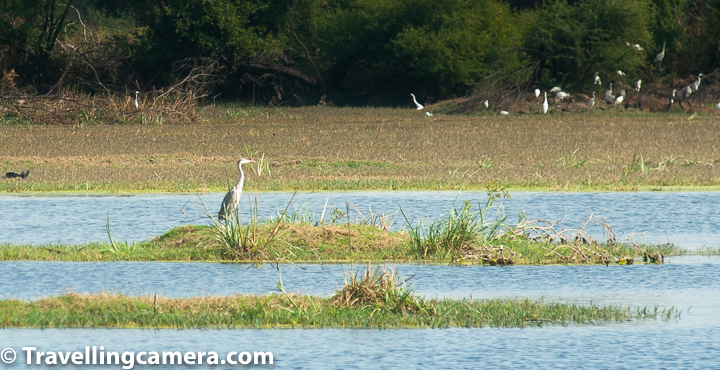 |
| Juvenile Purple Heron(?) in the foreground with Great Egrets in the Distance |
Herons and Egrets at Keoladeo National Park || Waterbirds and Waders at Bharatpur
 |
Lesser Whistling Duck |
Smaller Waterbirds at Bharatpur || Birds of Keoladeo National Park


 |
| Blue-throated Barbet |


.jpg)
Comments