

There are places in Mahabalipuram where you arrive expecting a monument and leave remembering a small detail instead. Gopi’s Churn in Mahabalipuram is one such place.
It does not have the visual drama of the Shore Temple. It does not dominate the landscape like Krishna’s Butter Ball. It does not attract the same crowds as Arjuna’s Penance. In fact, if you walk through this extraordinary landscape of Pallava monuments too quickly, you could easily miss it.
And that is precisely what makes Gopi’s Churn interesting.
Set in front of the Trimurti Cave, this large circular rock-cut cistern looks almost like an unusually shaped boulder at first glance. Look closer and its geometry becomes obvious. There is a carefully formed circular basin, stone steps leading towards its rim, and an old inscription associated with the rock-cut complex.
The name is much newer and more evocative than the stone itself. “Gopi’s Churn” brings to mind Krishna, the gopis and the traditional image of butter being churned. Yet the archaeological character of the feature is considerably more practical: it is generally understood as a rock-cut water cistern associated with the ancient monument complex.
For a photographer, it is an especially rewarding stop because it teaches an important lesson about Mahabalipuram: not every interesting story is carved into a giant temple façade. Sometimes it is hidden in a piece of infrastructure.
Gopi’s Churn and the Mamallapuram Heritage Park Experience
If you are searching online for Mamallapuram Heritage Park, you will encounter a slightly confusing mix of terminology.
The historic monuments around Mahabalipuram are part of the Group of Monuments at Mahabalipuram, a UNESCO World Heritage property containing rock-cut caves, monolithic temples, structural temples, open-air reliefs and excavated remains. The property was inscribed in 1984.
Separately, the Government of India has sanctioned the development of Nandavanam Heritage Park in Mamallapuram, a major tourism infrastructure project. The project includes spaces described as Cholai Vanam, Viharam and Maidanam and is intended to strengthen the wider tourism experience of the town.
So, technically, Gopi’s Churn is not a monument inside a place officially named “Mamallapuram Heritage Park.” It belongs to the historic monument landscape of Mamallapuram.
For travellers searching for Mamallapuram Heritage Park, however, Gopi’s Churn is exactly the kind of lesser-known heritage feature worth adding to a wider exploration of the town.
Why Visit Gopi’s Churn in Mahabalipuram?
Gopi’s Churn is worth seeing for reasons that have little to do with size.
It reveals the practical side of Pallava architecture
When people talk about Pallava architecture, the conversation usually revolves around temples, sculptures and monumental compositions.
A water cistern tells another story.
Ancient monuments needed water. Ritual activity required water. People working around temples needed water. A site was not simply a collection of beautiful carvings; it was also a functioning cultural environment.
The circular cistern therefore helps us think about Mahabalipuram as a lived landscape rather than an open-air sculpture gallery.
It sits beside an important rock-cut shrine
The Trimurti Cave is itself an important monument. Government tourism material describes it as a rock-cut shrine associated with Brahma, Vishnu and Shiva, while scholarly and heritage sources place the broader cave-temple development within the Pallava period.
The relationship between the cave and the cistern is what makes the stop particularly interesting.
It is comparatively easy to overlook
Mahabalipuram rewards slow walking.
The more famous monuments naturally pull your attention. A guide may spend several minutes explaining a dramatic relief while a small water structure sits quietly nearby.
For photographers, these overlooked features can sometimes produce more interesting images than the postcard landmarks.
Gopi’s Churn in Mahabalipuram: Understanding the Ancient Cistern
The physical form is surprisingly simple.
A large rock has been shaped to create a circular cistern, with the outer portion retaining much of the natural appearance of the boulder. Older descriptions of the site identify it as a stone cistern popularly known as Gopi’s Churn.
That unfinished-looking exterior is important visually.
From a distance, the feature can appear almost natural. Then the circular geometry suddenly reveals human intervention.
This is one of those archaeological moments where the distinction between landscape and architecture becomes blurred.
The Pallava builders were exceptionally skilled at working with living rock. UNESCO describes Mahabalipuram as an important centre of experimentation in rupestral architecture, where natural rock was transformed into caves, monoliths and sculptural compositions.
Gopi’s Churn belongs to this broader philosophy of working with stone rather than simply placing architecture on top of it.
The Inscription Near Gopi’s Churn
One of the more fascinating details is that the stone landscape around Gopi’s Churn is not completely silent.
Historical epigraphic studies record a Pallava-period inscription near the “Gopis’ Churn.” An inscription was documented on a pillar of the rock-cut mandapa southwest of the cistern, and it consists of a royal biruda, or title.
This is significant because inscriptions allow us to move beyond visual interpretation.
A sculpture can suggest a story. An inscription can preserve a name, title or institutional association.
For anyone interested in Tamilnadu heritage sites, this is a useful reminder that archaeology is often built from tiny pieces of evidence.
A large monument may receive the attention, but a few carved characters can sometimes tell historians something that a monumental façade cannot.
The Trimurti Cave: The Monument Behind the Story
Gopi’s Churn becomes much more meaningful when seen together with the Trimurti Cave.
The cave is a triple-celled rock-cut shrine and forms part of the wider Pallava architectural landscape of Mamallapuram. Its façade contains the characteristic decorative vocabulary of the period, including pillars, pilasters, sculptural niches and architectural motifs.
UNESCO places the major phase of Mamallapuram's rock-cut architectural experimentation in the Pallava period, particularly around the reign of Narasimhavarman I, known as Mamalla.
The exact attribution of individual monuments can be more complicated than a simple “built by King X” explanation often found in tourist literature. Different architectural studies have assigned monuments to different phases of Pallava rule.
That uncertainty is actually part of the attraction.
The stone does not always give us a neat answer.
And perhaps it shouldn't.
What Makes Gopi’s Churn Different From Draupadi’s Bath?
This is one of the easiest mistakes to make when exploring Mahabalipuram.
Some descriptions of the site have noted that visitors sometimes confuse Gopi’s Churn with Draupadi’s Bath.
They are not simply two names for the same feature.
Mahabalipuram has accumulated layers of popular names over generations. Many monuments received names connected with the Mahabharata, Krishna and other Hindu traditions, even when the original Pallava purpose may have been different.
This is common across Indian heritage landscapes.
A local or popular name can become so established that it eventually feels ancient even when its association is much later.
That is why I prefer to treat names like Gopi’s Churn as part of the cultural history of the monument rather than automatically assuming that the name reveals its original purpose.
A Photographer’s Walk Around Gopi’s Churn
For photographers, this little monument offers something that the larger Mahabalipuram monuments sometimes struggle to provide: scale, texture and abstraction.
The circular shape is immediately useful.
Stand slightly away from it and look for the relationship between:
The circular cistern
The irregular boulder
The Trimurti Cave behind it
The surrounding vegetation
Human figures passing through the frame
A wide-angle lens can establish the archaeological setting.
A standard lens is better for documenting the geometry.
A short telephoto can isolate textures, inscriptions and weathering.
Look for the contrast between geometry and nature
The circle is man-made.
The outer rock feels organic.
The combination creates a beautiful visual contradiction.
Try photographing the rim at an angle rather than making a straightforward top-down record shot.
Use people for scale
Do not be afraid to include visitors in the composition.
A person standing near the cistern instantly communicates its size.
If the person is walking towards the Trimurti Cave, the image can also tell a visual story about the relationship between water, rock and shrine.
Best Photography Time for Gopi’s Churn
For photography, I would divide the day into three useful windows.
| Time | Photography Character |
|---|---|
| Early morning | Softer light, fewer people, cooler atmosphere |
| Late morning | Stronger textures and contrast, but harsher sunlight |
| Late afternoon | Warmer tones and longer shadows |
The early morning period is particularly attractive if you want photographs without crowds.
The low-angle sunlight can reveal the texture of the granite without flattening it.
Late afternoon can work beautifully when the sun begins to create shadows around the circular stonework.
However, don't wait for sunset expecting Gopi’s Churn itself to become a dramatic golden-hour monument. The surrounding rock formations and nearby sculptures may benefit more from late light than the cistern does.
The Government of India's current visitor information for the Trimurti Cave lists opening hours as 6:00 AM to 6:00 PM, although visitors should confirm access conditions locally because heritage-site arrangements can change.
Photography Tips for Gopi’s Churn
1. Carry a polarizer carefully
A polarizing filter can help control reflections and deepen skies, but don't use it automatically. In harsh midday light, rotating the filter can dramatically change the appearance of the granite.
2. Shoot details
Look beyond the obvious circle.
Photograph:
Chisel marks
Rock texture
Weathering
Carved edges
Steps
Inscriptions
Lichen and surface variations
These details often tell a better archaeological story than a single wide photograph.
3. Try monochrome
The stone is naturally suited to black-and-white photography.
Strong side light can bring out tiny ridges and surface imperfections.
4. Include environmental context
One of the biggest mistakes in heritage photography is cropping away the surroundings.
Gopi’s Churn becomes more meaningful when the viewer can see where it sits.
5. Avoid climbing where prohibited
A better photograph is never worth touching, leaning on or damaging an archaeological feature.
Hidden Stories Around Gopi’s Churn
One of the most interesting aspects of the site is how much history exists outside the famous monuments.
The British Library's archive contains an early twentieth-century Archaeological Survey of India photograph specifically catalogued as “Mahabalipuram [Mamallapuram]… Gopi's Churn.” The archival record dates the photograph to the 1917–18 period.
There is also a separate archival photograph documenting a Durga figure opposite Gopi’s Churn.
That is a wonderful reminder that the feature was considered worth documenting by archaeological photographers more than a century ago.
In other words, Gopi’s Churn isn't a modern discovery made interesting by travel bloggers.
It has been part of the archaeological record for generations.
Local Myths, Names and the Gopi Connection
The name “Gopi’s Churn” naturally evokes the pastoral world of Krishna and the gopis.
The popular association is with the idea of churning butter, an image deeply embedded in Krishna traditions.
But travellers should distinguish between popular interpretation and archaeological evidence.
There is no need to dismiss the traditional name. Names themselves are cultural documents.
They tell us how later generations looked at ancient monuments.
This is particularly fascinating in Mahabalipuram because the town contains many popular names that connect monuments to the Mahabharata and Hindu mythology.
The names make the landscape accessible.
Archaeology then adds another layer.
Local Food After Exploring the Monuments
One of the pleasures of exploring Mahabalipuram is how quickly the experience shifts from stone to food.
After walking across sun-heated granite, a simple South Indian meal feels unusually satisfying.
Look for local staples such as:
Idli
Vada
Dosa
Pongal
Sambar
Coconut chutney
Lemon rice
Curd rice
Filter coffee
If you are travelling with a camera, don't underestimate breakfast.
A plate of idli arriving on a steel plate, steam rising into the morning light, can become one of those small travel photographs that says more about a place than another temple postcard.
For seafood lovers, Mahabalipuram's coastal location also means fish and other seafood dishes are widely available, particularly around the beachside dining areas.
For a more local rhythm, eat at a time when residents are eating rather than choosing a restaurant only because it has the best tourist-facing décor.
Conversations Around the Monuments
One of the things I enjoy about places like Mahabalipuram is that the most useful information is not always on the monument board.
A local guide may point out an inscription.
A shopkeeper may explain which road becomes crowded in the afternoon.
A driver may know a quieter approach to a monument.
A sculptor may have an entirely different relationship with the stone.
Mahabalipuram remains an active stone-carving centre, and that living craft tradition adds another dimension to understanding the Pallava monuments.
When speaking with local people, ask questions rather than arriving with assumptions.
“Which monument do you like most?”
is often more interesting than
“Tell me the history.”
The first question invites a personal answer.
Best Time to Visit Gopi’s Churn and Mahabalipuram
The broad tourist season is generally more comfortable from November to February, when temperatures are easier for walking.
The hotter months can be physically demanding, especially if you are carrying photography equipment.
The monsoon and post-monsoon period can bring changing skies and occasional dramatic cloud formations, which photographers may appreciate, although weather conditions can be less predictable.
For photographers
Consider:
The practical rule is simple:
Visit early, photograph patiently, and avoid spending the middle of a hot day walking between exposed granite monuments unless you have a good reason.
How to Reach Gopi’s Churn in Mahabalipuram
Mahabalipuram, also known as Mamallapuram, is located on the Coromandel Coast south of Chennai.
By air
The nearest major airport is Chennai International Airport.
From the airport, you can continue by road towards Mahabalipuram.
By train
Chengalpattu Junction is an important nearby railway station. Government tourism information identifies Chengalpattu as the nearest railway station for the Trimurti Cave.
By road
From Chennai, Mahabalipuram is commonly approached via the East Coast Road.
The road journey itself can be enjoyable if you are not rushing.
Once inside Mahabalipuram, the monuments are spread across several clusters. A combination of walking, auto-rickshaw and local transport can work depending on your itinerary.
Gopi’s Churn is associated with the Trimurti Cave area, so it is best planned as part of a cluster of monuments rather than a standalone destination.
Where to Stay in Mahabalipuram
Mahabalipuram offers a wide range of accommodation.
You can choose between:
Budget guesthouses near the town
Mid-range hotels
Boutique stays
Beachside properties
Luxury resorts along the coast
Homestay-style accommodation
For photographers, location matters more than luxury.
Staying closer to the heritage zone means you can reach the monuments early, return for breakfast and then go out again later.
That is much more useful than staying far away and spending your best morning light in traffic.
Budget Tips for Visiting Mahabalipuram
Mahabalipuram can be explored on a relatively moderate budget if you plan carefully.
Save money by:
Staying slightly away from premium beachfront properties
Eating breakfast at local restaurants
Walking between monuments where practical
Grouping nearby attractions into one walking route
Avoiding unnecessary private transport for every short journey
Carrying your own water bottle
Visiting early rather than paying for convenience-driven transport later
Your biggest hidden expense can actually be food and transportation if you repeatedly move back and forth between monument clusters.
Plan the geography first.
Then plan the photography.
A One-Day Mahabalipuram Heritage Itinerary
If you have only one day, don't attempt to photograph every monument equally.
Early Morning
Start around the heritage monument zone.
Visit:
Arjuna's Penance
Krishna Mandapam
Krishna's Butter Ball
Trimurti Cave
Gopi's Churn
Spend more time than you think you need at the smaller monuments.
Late Morning
Explore other nearby cave temples and sculptural sites.
Take a break during the hottest part of the day.
Have lunch locally.
Afternoon
Continue towards the Shore Temple area.
Allow time to simply walk.
Mahabalipuram becomes more interesting when you stop treating every monument as a checkbox.
Evening
Return towards the coast.
Photograph the changing light around the Shore Temple and surrounding landscape.
If you are staying overnight, keep your camera ready for the town after the monument crowd
Related Blogposts from Tamilnadu:

Main Places to Explore in Mahabalipuram: A Complete Guide to Mahabalipuram Tourism in Tamilnadu

Varaha Cave in Mahabalipuram: Exploring a Quiet Masterpiece of the Mamallapuram Heritage Site

Heritage Sites in Mamallapuram, Tamilnadu : Discovering the Unfinished Raya Gopuram

Draupadi’s Bath in Mahabalipuram, Tamilnadu : A Small Rock-Cut Cistern With a Curious Story

Trimurti Rock-Cut Cave Temple in Mahabalipuram, Tamilnadu : A Quiet Pallava Masterpiece

Mamallapur Lighthouse, Tamil Nadu: A Historic Beacon Above the Bay of Bengal

Ramanuja Mandapam in Mahabalipuram, Tamilnadu: A Quiet Chapter of Pallava Heritage

Krishna’s Butter Ball in Mamallapuram Heritage Park, Tamilnadu: The Giant Boulder That Refuses to Roll

Mahishasuramardini Rock Cut Mandapa, Mahabalipuram, Tamilnadu: A Photographer’s Journey Through Pallava Art

Iswara Temple Hillock, Mahabalipuram, Tamilnadu: A Quiet View into the Temples of Tamil Nadu

Shore Temple in Mahabalipuram, Tamilnadu: Where Pallava Stone Meets the Bay of Bengal

An Eventful Hike around Virupaksha Caves and Skand Ashram in Tiruvannamalai, Tamilnadu, India

The magnificent Arunachalesvara Temple, Tiruvannamalai, Tamilnadu || A Shiva Temple with a rich and interesting history

Chennai Travel Guide: The Cultural Capital of South India - Capital Cities of Indian States [Tamilnadu]

The Majestic Brihadeeshwara Temple: A Glimpse into the Architectural Brilliance of Thanjavur in Tamilnadu, India


Unlocking the Treasures of Saraswati Mahal Library in Thanjavur, Tamilnadu || Exploring India's oldest and most fascinating collection of manuscripts

The Magnificence of Cholapuram Temple: A Glimpse into the Ancient Heritage of Tamil Nadu, India

Discovering the Charms of Rameshwaram: Must-Visit Places for Travelers

Embracing the Serenity of Sunrise: Exploring Dhanushkodi in the Early Hours of the Morning | Tamilnadu Diaries

Vellore Fort in Tamilnadu, India : A Living Museum of South Indian Architecture

Exploring the Architectural Marvels and Historical Significance of Arulmigu Ramanathaswamy Temple in Rameshwaram, Tamilnadu : A Spiritual Journey Through Time

Pilgrimage to the Miraculous Churches of Velankanni: Exploring the History, Culture, and Beauty of this Sacred Town

Capturing the Serene Beauty of Sunset around Pamban Bridge in Rameshwaram, Tamilnadu : A Photographer's Delight

Exploring the Rich Fishing Heritage of Rameshwaram: A Journey Through the Bustling Fishermen Town Thangachimadam in Tamilnadu, India

Preserving the Grandeur of Chola Palace in Gangaikondacholapuram: The Role of the Archaeological Survey of India in Ariyalur District of Tamilnadu
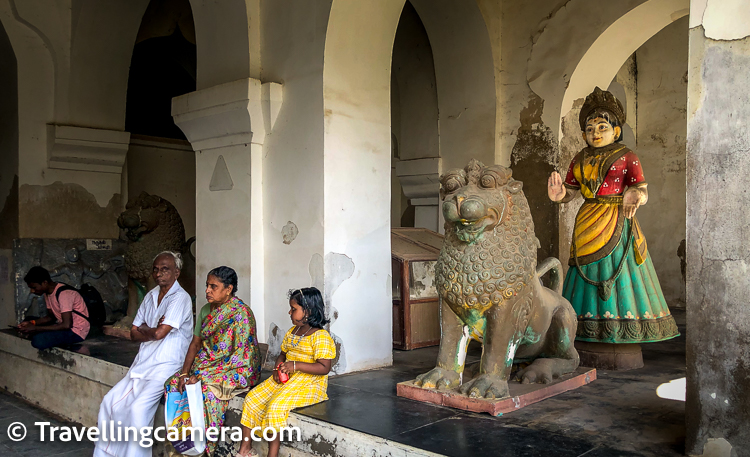
Thanjavur Palace in Tamilnadu: Where History and Art Come Together in a Spectacular Display

Auroville in India : The City of Dawn and a Model for Spirituality & Sustainable Living

Ramarpatham Shrine at Rameshwaram, Tamil Nadu || The site that has Lord Ram's footprints sculpted on a rock

The Sacred and Architectural Marvels of Ranganathaswamy Temple in Tamilnadu, India

Do you know about the 'Danish' Fort in India which is located at a beautiful location round the coast of Bay of Bengal?

Uncovering the Rich History and Beauty of the Basilica of the Sacred Heart of Jesus in Pondicherry, India
 |
| Anaikarai Dam |
Anaikarai North and South Dams on Kollidam Rivers, Tamil Nadu || Two of the many dams on Cauvery, some of which are nearly 2000 years old

Starting the Day Right: A Personal Reflection on Sunrise at Serenity Beach in Pondicherry, India

Puducherry Travel Guide: French Charm Meets Indian Spirit - Capital Cities of Indian States or Union Teritorries [Pondicherry]

Madanapalle to Thanjavur via Vellore and Tiruvannamalai - 4th day of our 14 days long trip through east coast of India || Noida to Rameshwaram

Thanjavur to Rameshwaram via Tiruchirapalli - 5th day of our 14 days long trip through east coast of India || Noida to Rameshwaram

Rameshwaram's Marine Museum, Harbour and More: A Guide to the Best Sights and Sounds from Tamilnadu State of India

Rameshwaram in Tamilnadu, India - The Land of Sacred Shrines and Mesmerizing Beaches

Villoondi Teertham - Discovering the Spiritual and Natural Wonders of Rameshwaram, India

Drive from Rameshwaram to Pondicherry along the coast - 7th day of our 14 days long trip through east coast of India || Noida to Rameshwaram

Drive from Pondicherry to Tada - 8th day of our 14 days long trip through east coast of India || Noida to Rameshwaram

Exploring the Mahatma Gandhi Statue and Other Attractions around Promenade Beach in Pondicherry, India

Kolams and Culture: The Significance of Daily Floor Art in Tamilnadu Homes of South India

Healing Waters and Holy Legends: A Visit to Vibhishan Teertham in Rameshwaram, Tamilnadu

Discovering the Mysteries of Sri Panchmukhi Hanuman Mandir and the Floating Stones of Rameshwaram in Tamilnadu
 Climb to the Top of Chennai Lighthouse : Exploring Aerial views of Marine Drive, Sea and other interesting landmarks of Chennai, Tamilnadu


Comments