
Karnataka at DakshinaChitra Museum, Chennai: A Journey into Karnataka’s Living Heritage in Tamilnadu

There are museums where you walk from one glass display case to another, reading labels about a culture that existed somewhere else.
And then there is DakshinaChitra Museum Chennai, where you can walk through the doorway of a house that once stood hundreds of kilometres away, sit beneath its traditional roof, look into its courtyard and begin to understand how architecture once followed climate, occupation, community and everyday life.
My interest in DakshinaChitra becomes particularly strong when I reach the Karnataka section.
Here, Karnataka isn't represented through a random collection of objects. Its story is told through houses, building materials, craftsmanship, domestic spaces and the communities that once inhabited them. The contrast is fascinating: the stone-and-wood character of northern Karnataka sits alongside the more elaborate timber traditions associated with the Malnad region. More recently, the museum has also added a reconstructed Kodava house from Coorg, making the Karnataka story even richer.

For a photographer, this part of DakshinaChitra is especially rewarding. There are deep doorways, weathered wood, stone surfaces, courtyards, shadows, decorative details and architectural compositions that change dramatically as the sun moves.
But the real attraction isn't the architecture alone.
It is the story behind each building.

Why Visit DakshinaChitra Museum Chennai for Karnataka Heritage?
DakshinaChitra is a cross-cultural living museum dedicated to the art, architecture, lifestyles, crafts and performing traditions of South India. It opened to the public in December 1996 as the principal project of the Madras Craft Foundation.
The museum sits at Muttukadu on the East Coast Road, south of Chennai, overlooking the Bay of Bengal. Its setting is important because this isn't an indoor museum squeezed into a conventional urban building. Traditional houses, pathways, courtyards and recreated streetscapes are distributed across a large open-air heritage environment.
The museum currently presents 18 authentic historic houses from different parts of South India. These houses were acquired when their original owners had decided to demolish or replace them, then dismantled, transported and reconstructed at DakshinaChitra with regional craftsmanship.
That approach changes the experience completely.
You aren't simply looking at an old house.
You are looking at a piece of a real settlement that has been given another life.
And for visitors searching for Tamilnadu Museums, DakshinaChitra offers something unusual: although it is located in Tamil Nadu, its subject extends across the cultural geography of southern India.
The Karnataka section is a perfect example.

Karnataka at DakshinaChitra Museum Chennai
The Karnataka collection has traditionally included two particularly important heritage representations:
The Ilkal Weavers' House from Bagalkote district
The Chikmagalur House from Karnataka's Malnad region
A newer addition is the Kodava House, based on an Ainmane from the Coorg region.
Together, these buildings make an interesting architectural journey across Karnataka.
Northern Karnataka and the Malnad region could hardly have offered identical answers to questions such as:
How should a house deal with climate?
What materials are locally available?
Where should people work?
How should a family organise domestic space?
What does wealth look like in architecture?
And how does a community express its identity through a house?
The answers are visible in the buildings.

The Ilkal Weavers' House: A Different Face of Karnataka
The first building that deserves close attention is the Ilkal Weavers' House.
Ilkal, in present-day Bagalkote district, is famous for its handloom tradition and the distinctive Ilkal saree. But the house at DakshinaChitra tells a broader story about the built environment of northern Karnataka.
Unlike the heavily timbered houses one might associate with the wetter parts of Karnataka, northern Karnataka traditionally had greater dependence on stone.
That difference is immediately noticeable.
The entrance has a strong, almost monumental quality. Stone and wood work together, producing an architectural character that feels very different from the houses elsewhere in the museum.
There is another fascinating story behind this reconstruction.
Some of the wooden architectural elements used in the Ilkal cluster came from houses in the region, including a gateway, stone and wooden window elements associated with an old house in Ilkal. Other parts were reconstructed through research because the original settlement had already disappeared.
This is one reason I find heritage museums more interesting when you slow down.
A doorway isn't merely a doorway.
It may be one of the few remaining physical fragments of a settlement that has otherwise vanished.
Look for the relationship between stone and wood
For photographers, the Ilkal section is full of textures.
Look closely at:
Stone surfaces
Wooden beams
Door frames
Windows
Repeated geometric forms
Shadow falling across the entrance
The transition between exterior and interior
Rather than immediately taking a wide-angle photograph, try a 50mm or equivalent focal length.
Compress the composition.
Let the doorway occupy part of the frame and allow the darker interior to become a natural visual anchor.
The result can feel more like a photograph of an old Karnataka village than a photograph taken inside a museum.

The Chikmagalur House: Coffee, Trade and a Shared Heritage
The Chikmagalur House tells a very different story.
The house was built in 1914 by K. A. Mohamed Ismail in Chikmagalur district. His family had roots extending from West Asia to Bijapur before eventually settling in Chikmagalur.
Ismail was a trader and owned a general store in Aldur, near Chikmagalur. The house reflects more than one cultural influence.
There are elements associated with Muslim domestic architecture, colonial-era influences, decorative stucco work, furniture and imported objects.
This makes the building particularly interesting because it challenges the simplistic idea that regional architecture belongs neatly inside modern religious or state boundaries.
Trade changes architecture.
Travel changes architecture.
People change architecture.
And Karnataka's history has always been connected to movement.
Look closely at the decorative work
The stucco details are among the features worth photographing.
Instead of photographing the entire building, move closer.
Look for:
Decorative plasterwork
Door and window details
Furniture
Lamps
Porcelain
Wall surfaces
Intersections of light and shadow
The Chikmagalur House also became associated with an exhibition exploring the shared heritage of Muslims and Hindus in South India.
That makes it more than an architectural reconstruction.
It becomes a reminder that South Indian culture has been shaped by trade, migration, craftsmanship and interaction between communities over centuries.

The Kodava House: A New Chapter in Karnataka at DakshinaChitra
If you have visited DakshinaChitra in earlier years, there is an important addition to look for.
The museum acquired an old Kodava Ainmane from Kadanga village near Virajpet in Coorg. The house belonged to the Kodira family and dates back to the mid-19th century.
It was dismantled in Coorg, transported to DakshinaChitra and reconstructed in the Karnataka section.
The Kodava house adds a completely different dimension to the Karnataka story.
The Ainmane is not simply a residence. Traditionally, it is closely connected with the ancestral and social life of a Kodava family.
The reconstructed house and its associated exhibition provide an opportunity to understand Kodava customs, family history and material culture without travelling all the way to Kodagu.
For someone planning a Karnataka trip, this is particularly useful.
It gives you a visual introduction before you eventually travel into Coorg itself.
And for someone who has already travelled through Kodagu, it offers a different perspective: instead of seeing the region only through coffee plantations, misty roads and homestays, you begin to look at its domestic architecture and social traditions.

What Makes the Karnataka Section Special?
The best way to experience Karnataka at DakshinaChitra is not to treat the houses as isolated monuments.
Compare them.
The Ilkal house tells you about northern Karnataka.
The Chikmagalur House reflects the wooded highlands, trade and a Muslim family's history.
The Kodava Ainmane introduces the distinctive cultural world of Coorg.
Suddenly, "Karnataka architecture" stops being a single category.
It becomes a collection of regional responses to geography and society.
That is perhaps the most valuable lesson DakshinaChitra offers.

DakshinaChitra Museum Chennai as an Open-Air Architecture Archive
One of the things I appreciate about DakshinaChitra is that the museum doesn't force you to experience heritage only through objects behind glass.
The buildings themselves become exhibits.
You can walk around them.
You can see how the threshold works.
You can observe the relationship between public and private spaces.
You can notice where light enters.
You can understand why courtyards were important.
And if you photograph architecture regularly, this becomes an informal lesson in visual composition.
Traditional houses were rarely designed merely to look attractive.
They were practical.
Materials came from the surrounding region.
Roofs responded to rain.
Open spaces supported domestic activities.
Walls provided privacy.
Courtyards brought light and air.
Verandas created shaded transitional spaces.
The architecture therefore becomes a record of environmental intelligence.

Photography at DakshinaChitra Museum Chennai
If you are carrying a camera, don't rush.
This is not a location where taking 200 photographs in 30 minutes will give you the best results.
The architecture rewards observation.
Best time for photography
The museum opens at 10 am, which means early visitors have an advantage.
For architectural photography, I would aim to arrive around opening time.
Morning light is softer and generally more forgiving. It can bring out the texture of stone and wood without creating excessively harsh highlights.
Late afternoon is another excellent period, particularly when the sun begins to fall at an angle across walls and pathways.
The strongest overhead light around midday can still work for detail photography, especially where shadows create geometric patterns.
My preferred photography approach
I would divide the visit into three visual exercises.
First: architecture
Photograph complete structures from different angles.
Second: details
Move closer to doors, locks, beams, windows, stonework and decorative surfaces.
Third: human scale
Wait for a visitor, artisan or staff member to naturally enter the frame.
A person walking through a traditional doorway can immediately communicate the scale of the building.

Best Photography Spots in the Karnataka Section
1. Ilkal House Entrance
The entrance provides strong symmetry and texture.
Try photographing slightly off-centre rather than always keeping the doorway perfectly symmetrical.
2. Stone and Wood Details
Use a telephoto or standard lens to isolate architectural details.
Stone against wood creates a natural contrast.
3. Chikmagalur House Interior
The transition from bright exterior to darker interior is ideal for atmospheric photography.
Expose carefully for the highlights outside.
4. Courtyard Spaces
Courtyards provide geometric compositions.
Look down.
Look upward.
Look diagonally across the space.
The same courtyard can produce several completely different photographs.
5. Kodava House
Spend time understanding the structure before photographing it.
Wide-angle images can communicate scale, while tighter frames can reveal the character of the woodwork and domestic spaces.

Photography Tips for DakshinaChitra
A few practical suggestions can make a substantial difference.
Carry a 24–70mm equivalent lens if possible.
A 35mm or 50mm lens is excellent for architectural storytelling.
Use a polarising filter outdoors if reflections and harsh light become distracting.
Watch your highlights when photographing interiors with bright doorways.
Shoot RAW if you plan to process the photographs later.
Don't overcorrect perspective in Lightroom. Some architectural photographs look more natural when a little of the original perspective remains.
Look for negative space.
Photograph textures separately from complete buildings.
Wait for people rather than asking strangers to pose.
Ask permission before making close portraits of artisans or performers.
If you are planning a professional or commercial shoot, check the museum's current photography rules and charges in advance.
Regular visitors should also remember that ordinary photography and commercial photography may be treated differently.

The Human Side of DakshinaChitra
The architecture may get you through the entrance, but people often make the visit memorable.
DakshinaChitra regularly hosts artisans, demonstrations, workshops and traditional performances. Depending on the day's programme, you may encounter craft activities, traditional games, puppet performances or demonstrations.
This is where the museum shifts from being an architectural archive to something closer to a living cultural centre.
Watch how an artisan handles a material.
Notice how much of the work depends on hand movement.
Ask questions.
But don't turn the interaction into an interrogation.
A simple question such as, "Where did you learn this?" can lead to a much more interesting conversation than asking only how much something costs.

Local Food Around DakshinaChitra
Food is not the central attraction inside DakshinaChitra, and visitors should note that outside food is not permitted inside the museum grounds. The museum provides space near the parking area for eating.
This is actually useful to know before arriving.
Plan your meal around the visit rather than carrying a packed lunch expecting to eat while walking through the heritage sections.
The ECR stretch around Muttukadu and nearby areas offers plenty of opportunities for South Indian meals, seafood and casual eating.
For a traveller interested in experiencing the region rather than simply ticking off attractions, I would keep some time after the museum for a relaxed meal.
Try a proper South Indian breakfast if visiting early, or plan a lunch stop along the ECR.
And if seafood is your preference, the coastal setting provides plenty of choices, though restaurant quality and pricing vary considerably.

Hidden and Lesser-Known Things to Notice
The houses were not simply copied
This is perhaps the most important fact many casual visitors miss.
Several heritage houses were acquired, dismantled, transported and reconstructed.
That means conservation here involves a complicated process of documentation, craftsmanship and interpretation.
The museum's work is therefore as much about recording disappearing architecture as displaying it.
The Ilkal house carries a story of disappearance
Parts of the Ilkal architectural story are connected to buildings that no longer survive in their original context.
This makes the reconstructed structure feel less like a replica and more like an architectural memory.
The Chikmagalur House tells a migration story
The history of the family associated with the house reminds us that Karnataka's cultural landscape was never isolated.
People travelled.
Merchants moved.
Ideas travelled with them.
Architecture absorbed those influences.
The museum itself has an architectural philosophy
Architect Laurie Baker contributed his services to the foundation, while architect Benny Kuriakose was involved in designing public buildings and supervising heritage reconstruction.
That matters because the museum's contemporary infrastructure was conceived with sensitivity to traditional building practices rather than as a completely separate modern enclosure.

Best Time to Visit DakshinaChitra Museum Chennai
The museum is open from 10 am to 6 pm on weekdays and 10 am to 7 pm on weekends, according to its current visitor information. Tuesday is the regular weekly holiday, although the museum states that it remains open on national holidays except Diwali.
For photographers, I would choose a weekday morning.
Why?
Fewer people make it easier to photograph architectural details without constantly waiting for visitors to move out of the frame.
Seasonal considerations

How to Reach DakshinaChitra Museum Chennai
DakshinaChitra is located on the East Coast Road at Muttukadu, south of central Chennai and on the route towards Mahabalipuram.
It is next to MGM Dizzee World.
Public buses serving the area include routes such as 109, 588 and 599, although services can change, so verify current availability before travelling.
For most visitors coming from Chennai, a taxi or private vehicle is considerably more convenient, particularly if DakshinaChitra is being combined with other ECR attractions.
If you are travelling towards Mahabalipuram, DakshinaChitra can make a natural cultural stop before continuing south.
Where to Stay Near DakshinaChitra
If your primary purpose is visiting the museum, you don't necessarily need to stay nearby.
Chennai provides a much wider range of accommodation.
However, travellers wanting a quieter ECR experience can consider staying around Muttukadu, Kovalam or Mahabalipuram.
An interesting option is the DakshinaChitra guest house itself, where rooms and dormitory-style accommodation are available. Staying there can be useful if you want to photograph the museum over a longer period or attend an early programme.
Always confirm the current tariff and availability directly before planning around the guest house.

DakshinaChitra Budget Guide
For Indian visitors, the museum's current listed adult entry fee is around ₹200, with separate charges for children and cameras. Parking is also charged separately.
Photography charges can differ depending on whether you are carrying a normal camera or arranging a professional/commercial shoot.
Because these rates and photography policies can change, check the museum's official visitor information before travelling.
A simple visit does not need to be expensive.
Your main costs are likely to be:
| Expense | Approximate consideration |
|---|---|
| Museum entry | Moderate |
| Camera fee | Additional |
| Parking | Additional |
| Food | Outside museum |
| Local transport | Depends on starting point |
| Guide | Can be arranged in advance |
| Professional shoot | Separate commercial rates |
The real budget advantage is that DakshinaChitra can easily occupy half a day without requiring additional paid attractions inside the complex.

Suggested Half-Day Itinerary
If you have only half a day, don't try to photograph every building.
10:00 am – Arrive at DakshinaChitra
Start early.
Buy your ticket and spend a few minutes understanding the layout.
10:15 am – Karnataka Section
Begin with the Ilkal and Chikmagalur houses.
Photograph them before the light becomes harsh.
11:15 am – Kodava House
Spend time understanding the Ainmane tradition and associated displays.
12:00 pm – Explore Other Heritage Sections
Move through the Tamil Nadu, Kerala and Andhra Pradesh sections.
The contrast between them is one of the museum's greatest strengths.
1:00 pm – Crafts and Performances
If a demonstration or performance is scheduled, slow down.
This is often when the visit becomes more memorable.
2:00 pm – Lunch / ECR
Leave the museum and explore a nearby restaurant.
If you're heading towards Mahabalipuram, continue south along ECR.
DakshinaChitra and Other Tamilnadu Museums
For travellers searching online for Tamilnadu Museums, DakshinaChitra occupies an unusual position.
It isn't simply a museum of Tamil Nadu.
It is a museum located in Tamil Nadu that attempts to present the cultural diversity of South India.
That distinction is worth remembering.
If your interests are primarily archaeology, ancient sculptures or dynastic history, Chennai has other museums and heritage sites that may better match your interests.
But if you want to understand how people lived, worked, built homes and practised crafts, DakshinaChitra offers a very different experience.
For photographers, it is particularly valuable because the exhibits have physical scale.
You can photograph architecture rather than just objects.

Responsible Travel at DakshinaChitra
Traditional buildings are fragile.
Even when they look robust, old timber, plaster, stone and decorative elements can be vulnerable to careless handling.
A few simple habits help:
Don't touch fragile surfaces unnecessarily.
Don't lean against old wooden structures.
Follow photography restrictions.
Don't use flash where it is prohibited.
Don't move objects to create a better photograph.
Ask before photographing artisans closely.
Don't treat performers as props.
Buy crafts directly from legitimate artisans when possible.
Avoid bargaining aggressively over handmade work.
Don't leave food or plastic behind.
Respect religious or community-specific objects displayed inside the houses.
The most meaningful souvenir from a place like this may be a photograph, but the experience should leave the place no worse than you found it.

Common Mistakes to Avoid
1. Visiting only for an hour
DakshinaChitra looks manageable on a map but deserves time.
2. Photographing everything from the entrance
Walk first.
Photograph later.
You will make better compositions once you understand the space.
3. Ignoring the Karnataka section
Many visitors naturally gravitate towards the most visually elaborate houses.
The Karnataka section can be quieter and therefore easier to appreciate.
4. Thinking every traditional house represents the same culture
It doesn't.
Architecture changes dramatically across South India.
5. Visiting in the hottest part of the afternoon
The complex is largely open-air.
Plan around Chennai's heat.
6. Assuming photography rules are the same for everyone
Casual personal photography and professional photography may have different requirements and charges.
7. Skipping the people
If there is a craft demonstration or performance happening, stay.
The museum is about living traditions, not just buildings.

Frequently Asked Questions About DakshinaChitra Museum Chennai
What is DakshinaChitra Museum Chennai famous for?
DakshinaChitra is known for its collection of traditional South Indian heritage houses, crafts, performing arts, lifestyles and vernacular architecture. It presents cultural traditions from Tamil Nadu, Kerala, Karnataka and Andhra Pradesh.
Where is the Karnataka section in DakshinaChitra?
The Karnataka section is within the open-air heritage museum at Muttukadu on Chennai's East Coast Road. It includes traditional architectural representations from Karnataka, including the Ilkal Weavers' House and Chikmagalur House, with the Kodava House adding another important representation of the state's heritage.
What can I see in the Karnataka section of DakshinaChitra?
The Karnataka section allows visitors to explore traditional domestic architecture and associated cultural displays. The Ilkal house represents northern Karnataka's architectural traditions, while the Chikmagalur House reflects the region's Muslim heritage, trade connections and architectural influences. The Kodava House introduces the Ainmane tradition of Coorg.
Is DakshinaChitra worth visiting for photographers?
Yes, particularly if you enjoy architecture, documentary photography, textures, cultural photography and environmental portraits. The combination of old houses, courtyards, wood, stone, crafts and natural light creates many opportunities for visual storytelling.
How much time do you need at DakshinaChitra?
Allow at least three hours for a meaningful visit. Photographers and visitors interested in architecture, crafts and cultural programmes can easily spend half a day or longer.
What is the best time to visit DakshinaChitra?
Morning is particularly good for comfortable walking and architectural photography. Late afternoon can also provide attractive directional light. Weekdays are generally preferable if your priority is quieter photography.
Is DakshinaChitra open every day?
The museum currently lists Tuesday as its weekly holiday. Its published visitor information states that it is open from 10 am to 6 pm on weekdays and 10 am to 7 pm on weekends, with exceptions for certain holidays.
Can I take photographs inside DakshinaChitra?
Personal photography is permitted subject to the museum's rules and applicable camera charges. Professional and commercial photography has separate arrangements and charges, so photographers planning a shoot should contact the museum beforehand.
Is food allowed inside DakshinaChitra?
The museum's visitor information says that outside eatables are not permitted inside the museum. A designated space is available near the parking area for eating.
Is DakshinaChitra close to Mahabalipuram?
Yes. DakshinaChitra is on the East Coast Road south of Chennai, along the route towards Mahabalipuram. This makes it convenient to combine with a broader ECR and Mahabalipuram itinerary.

Final Thoughts: Why the Karnataka Houses Stay With You
What I like most about the Karnataka section at DakshinaChitra is that it doesn't try to explain Karnataka with a long list of dates and dynasties.
Instead, it lets architecture speak.
A stone entrance tells one story.
A wooden beam tells another.
A courtyard suggests how a family once lived.
A decorative stucco pattern hints at travel and trade.
A weaver's house reminds us that a home could also be a workplace.
A Kodava Ainmane points towards ancestry, community and memory.
And suddenly, a museum visit becomes something much more personal.
You begin thinking about the houses you have seen during your own travels.
The old homes in villages.
The wooden balconies in the hills.
The stone walls of northern Karnataka.
The tiled roofs of coastal South India.
The courtyards that are disappearing as concrete apartment blocks replace older ways of living.
That is perhaps what makes DakshinaChitra Museum Chennai valuable.
It doesn't merely preserve old buildings.
It preserves questions.
How did people live?
What materials did they use?
How did climate influence architecture?
How did trade change culture?
What happens when traditional skills disappear?
And what can we learn from houses that were designed long before air-conditioning, concrete towers and modern construction?
For a traveller, these questions make the visit deeper.
For a photographer, they provide stories.
And for anyone interested in Tamilnadu Museums, South Indian architecture and cultural heritage, DakshinaChitra offers something increasingly rare: the chance to walk through history at human scale.
The Karnataka section is only one part of the larger museum.
But it is a particularly rewarding one to explore slowly, camera in hand, looking beyond the obvious frame.
Related Blogposts from Tamilnadu -

Krishna’s Butter Ball in Mamallapuram Heritage Park, Tamilnadu: The Giant Boulder That Refuses to Roll

Mahishasuramardini Rock Cut Mandapa, Mahabalipuram, Tamilnadu: A Photographer’s Journey Through Pallava Art

Iswara Temple Hillock, Mahabalipuram, Tamilnadu: A Quiet View into the Temples of Tamil Nadu

Shore Temple in Mahabalipuram, Tamilnadu: Where Pallava Stone Meets the Bay of Bengal

An Eventful Hike around Virupaksha Caves and Skand Ashram in Tiruvannamalai, Tamilnadu, India

The magnificent Arunachalesvara Temple, Tiruvannamalai, Tamilnadu || A Shiva Temple with a rich and interesting history

Chennai Travel Guide: The Cultural Capital of South India - Capital Cities of Indian States [Tamilnadu]

The Majestic Brihadeeshwara Temple: A Glimpse into the Architectural Brilliance of Thanjavur in Tamilnadu, India


Unlocking the Treasures of Saraswati Mahal Library in Thanjavur, Tamilnadu || Exploring India's oldest and most fascinating collection of manuscripts

The Magnificence of Cholapuram Temple: A Glimpse into the Ancient Heritage of Tamil Nadu, India

Discovering the Charms of Rameshwaram: Must-Visit Places for Travelers

Embracing the Serenity of Sunrise: Exploring Dhanushkodi in the Early Hours of the Morning | Tamilnadu Diaries

Vellore Fort in Tamilnadu, India : A Living Museum of South Indian Architecture

Exploring the Architectural Marvels and Historical Significance of Arulmigu Ramanathaswamy Temple in Rameshwaram, Tamilnadu : A Spiritual Journey Through Time

Pilgrimage to the Miraculous Churches of Velankanni: Exploring the History, Culture, and Beauty of this Sacred Town

Capturing the Serene Beauty of Sunset around Pamban Bridge in Rameshwaram, Tamilnadu : A Photographer's Delight

Exploring the Rich Fishing Heritage of Rameshwaram: A Journey Through the Bustling Fishermen Town Thangachimadam in Tamilnadu, India

Preserving the Grandeur of Chola Palace in Gangaikondacholapuram: The Role of the Archaeological Survey of India in Ariyalur District of Tamilnadu
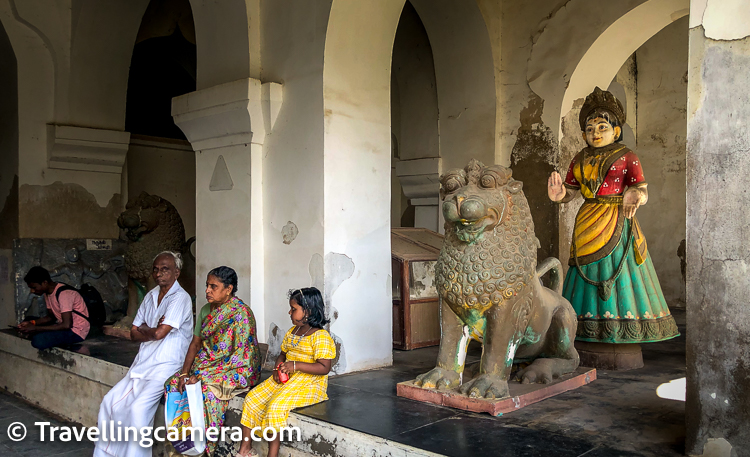
Thanjavur Palace in Tamilnadu: Where History and Art Come Together in a Spectacular Display

Auroville in India : The City of Dawn and a Model for Spirituality & Sustainable Living

Ramarpatham Shrine at Rameshwaram, Tamil Nadu || The site that has Lord Ram's footprints sculpted on a rock

The Sacred and Architectural Marvels of Ranganathaswamy Temple in Tamilnadu, India

Do you know about the 'Danish' Fort in India which is located at a beautiful location round the coast of Bay of Bengal?

Uncovering the Rich History and Beauty of the Basilica of the Sacred Heart of Jesus in Pondicherry, India
 |
| Anaikarai Dam |
Anaikarai North and South Dams on Kollidam Rivers, Tamil Nadu || Two of the many dams on Cauvery, some of which are nearly 2000 years old

Starting the Day Right: A Personal Reflection on Sunrise at Serenity Beach in Pondicherry, India

Puducherry Travel Guide: French Charm Meets Indian Spirit - Capital Cities of Indian States or Union Teritorries [Pondicherry]

Madanapalle to Thanjavur via Vellore and Tiruvannamalai - 4th day of our 14 days long trip through east coast of India || Noida to Rameshwaram

Thanjavur to Rameshwaram via Tiruchirapalli - 5th day of our 14 days long trip through east coast of India || Noida to Rameshwaram

Rameshwaram's Marine Museum, Harbour and More: A Guide to the Best Sights and Sounds from Tamilnadu State of India
Rameshwaram in Tamilnadu, India - The Land of Sacred Shrines and Mesmerizing Beaches

Villoondi Teertham - Discovering the Spiritual and Natural Wonders of Rameshwaram, India

Drive from Rameshwaram to Pondicherry along the coast - 7th day of our 14 days long trip through east coast of India || Noida to Rameshwaram

Drive from Pondicherry to Tada - 8th day of our 14 days long trip through east coast of India || Noida to Rameshwaram

Exploring the Mahatma Gandhi Statue and Other Attractions around Promenade Beach in Pondicherry, India

Kolams and Culture: The Significance of Daily Floor Art in Tamilnadu Homes of South India

Healing Waters and Holy Legends: A Visit to Vibhishan Teertham in Rameshwaram, Tamilnadu

Discovering the Mysteries of Sri Panchmukhi Hanuman Mandir and the Floating Stones of Rameshwaram in Tamilnadu
 Climb to the Top of Chennai Lighthouse : Exploring Aerial views of Marine Drive, Sea and other interesting landmarks of Chennai, Tamilnadu


Comments