
Andhra Pradesh at DakshinaChitra Museum Chennai: A Journey Through Traditional Homes, Crafts and Everyday Heritage

Introduction: Discovering Andhra Pradesh on Chennai's ECR
There are museums where you walk past glass cases, read a few descriptions and move on.
And then there are places where you walk through a doorway and suddenly begin imagining another life.
That is what makes the Andhra Pradesh section at DakshinaChitra Museum Chennai fascinating.
Located along the East Coast Road at Muttukadu, south of Chennai, DakshinaChitra is not a conventional museum. It is a living heritage museum where traditional houses, crafts, lifestyles and cultural practices of South India are presented through architecture and human stories.
The Andhra Pradesh section is particularly interesting because it doesn't depend on monumental architecture to make an impression.
There are no giant gateways.
No imposing palaces.
Instead, you encounter mud walls, thatched roofs, courtyards, low doorways, weaving spaces and architectural details that evolved from the practical realities of everyday life.
And that is precisely what makes these houses worth looking at closely.
One traditional house represents coastal Andhra architecture and its response to cyclones and heavy rain. Another represents the life of a weaving community from the Nalgonda region.
For a photographer, this is a wonderful combination.
The houses offer textures, geometry, natural light, human stories and plenty of small details that can easily be missed if you simply walk through the museum looking for famous sights.

Why Visit Andhra Pradesh at DakshinaChitra Museum Chennai?
If you are researching Tamilnadu museums, DakshinaChitra deserves a place on your itinerary because it allows you to experience heritage at human scale.
Instead of seeing an old building from a distance, you can walk around it.
You can look at its roof.
Study the walls.
Stand beneath its doorway.
Observe how the rooms connect.
Imagine where people cooked, worked, slept and interacted with their neighbours.
The Andhra Pradesh section contains two particularly interesting examples:
| Heritage House | Region Represented | What It Reveals |
|---|---|---|
| Coastal Andhra Chuttillu House | Yellamanchilli area, Visakhapatnam district | Climate-responsive coastal architecture |
| Ikat Weaver's House | Nalgonda region | Traditional weaving and domestic life |
These two houses tell very different stories.
The Chuttillu reflects a community adapting its homes to a difficult coastal environment.
The Ikat house demonstrates how occupation and domestic life could exist within the same architectural space.
Together they reveal an important idea:
Traditional architecture is often a practical record of geography, climate and livelihood.

A Brief History of DakshinaChitra
To understand the importance of the Andhra Pradesh houses, it helps to understand why DakshinaChitra was created.
DakshinaChitra was developed by the Madras Craft Foundation, a non-profit organisation established in 1984 under the leadership of Dr Deborah Thiagarajan.
The museum opened to the public in December 1996.
Its purpose was not simply to create another cultural attraction.
Traditional houses across South India were disappearing as older buildings were demolished or replaced with modern structures. DakshinaChitra developed an approach in which selected historic houses could be documented, carefully dismantled, transported and reconstructed at the museum.
This makes the museum something more than an open-air collection of old buildings.
It is also an architectural archive.
The houses preserve construction methods, spatial arrangements, materials and domestic traditions that are becoming increasingly difficult to encounter in rapidly urbanising parts of South India.
DakshinaChitra today includes historic houses representing different regions and communities of South India, along with craft demonstrations, exhibitions, workshops and cultural programmes.
Its extensive library and archive also document South Indian architecture, crafts, textiles and cultural traditions.

Andhra Pradesh at DakshinaChitra Museum Chennai
The Andhra Pradesh section becomes more interesting when you stop thinking about the houses as museum exhibits and start thinking about the forces that shaped them.
One house is largely a response to weather.
The other is closely connected to work.
The Chuttillu tells us how coastal communities adapted architecture to cyclones and rain.
The Ikat house tells us how a traditional occupation could become part of the domestic environment.
This is one of the strongest reasons to spend time here.
The buildings are not just beautiful objects.
They are solutions.
The Coastal Andhra Chuttillu House
The Coastal Andhra house is perhaps the most unusual structure in the Andhra Pradesh section.
The house comes from the Haripuram area of Yellamanchilli Mandal in present-day Visakhapatnam district.
It represents a traditional house form known as Chuttillu.
The word illu means house in Telugu.
At first glance, the circular form immediately catches your attention.
But the shape isn't simply an aesthetic choice.
It has a practical relationship with the coastal environment.
Traditional Chuttillu houses were associated with fishing and agricultural communities living in areas vulnerable to cyclones.
Their circular form, closely grouped arrangement and construction techniques helped them respond to strong winds and heavy weather.
This is vernacular architecture in its most interesting form.
The environment influenced the house.
The house influenced the way people lived.
And the resulting architecture became part of the community's identity.

Why Is the Chuttillu House Circular?
This is one of those questions worth asking while standing beside the house.
Why build a circular house when rectangular houses are so common?
One reason is the relationship between the shape and strong winds.
A circular building presents a different wind profile from a conventional rectangular structure with broad exposed walls.
The houses were also traditionally constructed close to one another, creating a clustered settlement pattern.
This is a wonderful example of how traditional architecture often evolved through accumulated experience rather than formal architectural theory.
People living in cyclone-prone areas learned what survived.
Those lessons eventually became part of the architecture.

Mud Walls With a Surprisingly Sophisticated Construction Method
The walls of the Chuttillu house are another detail worth examining carefully.
They were traditionally constructed using a cob-like technique in which earth was mixed with water and formed into mud balls.
These were then built up gradually to create the walls.
The process was slow.
Only limited height could be constructed at a time because the material needed to dry before the next layer was added.
Today, when construction is often associated with speed, this approach feels almost radically patient.
But the slowness was part of the material's logic.
The builders weren't trying to force the earth to behave like concrete.
They were working with it.

The Thatched Roof: Architecture Designed for Rain
The roof is perhaps the most photogenic part of the Chuttillu house.
The steeply pitched roof is designed to shed rainwater efficiently.
The large overhang also protects the mud walls from excessive exposure to rain.
Stand a little away from the house and look at the relationship between roof and wall.
The roof seems to descend almost towards the ground.
This isn't merely decorative.
It is part of the house's environmental strategy.
For photographers, this creates a strong visual opportunity.
Instead of photographing the house straight-on, move lower.
Use the roofline as the dominant shape.
Include a little vegetation or foreground texture.
Suddenly, the photograph begins to communicate the relationship between architecture and climate.
Entering the Chuttillu House
The doorway is another small but revealing detail.
Traditional homes were built around different proportions from many contemporary urban houses.
The entrance feels low and intimate.
When you physically lower yourself to enter, you become more aware of the transition between the exterior and interior.
Inside, the atmosphere changes.
The thick walls reduce the visual intensity of the outside world.
The space feels enclosed and personal.
This is where photography becomes less about taking pictures and more about observing.
Look at the junction between the walls and roof.
Look at the texture of the mud.
Look at the way natural light enters.
These small details tell the story of the house better than a wide-angle photograph alone.
The Ikat Weaver's House
The second major Andhra Pradesh structure at DakshinaChitra tells a very different story.
The Ikat House represents a traditional weaver's home from the Nalgonda region of Telangana, historically part of the wider Telugu cultural landscape.
The house is associated with the lifestyle of weaving communities.
Its architecture includes a courtyard and spaces connected with domestic activities and textile production.
This is significant because the traditional Indian home was often also a workplace.
A weaver did not necessarily leave home to enter a separate industrial building.
The loom could be part of the domestic environment.
Family life and work existed side by side.
That relationship between architecture and livelihood is easy to overlook today.

Understanding Ikat Beyond the Finished Textile
Ikat is one of India's most fascinating textile traditions.
Unlike printing a pattern onto an already woven cloth, Ikat involves resist-dyeing sections of yarn before weaving.
The yarn itself is prepared so that, when woven, the dyed sections create intricate patterns.
This means the final design depends on careful planning.
Even a small misalignment can change the appearance of the pattern.
Look closely at an Ikat textile and you may notice a slight softness or feathering around some edges of the pattern.
Those subtle imperfections are part of the charm of hand-produced textiles.
For photographers, this offers a completely different subject from architecture.
Don't just photograph the finished fabric.
Look for the process.
The threads.
The loom.
The hands.
The wooden components.
The repetition of geometric motifs.
These details make much stronger documentary photographs.
The Courtyard as the Heart of the House
The courtyard is another feature that deserves attention.
Traditional courtyards were multifunctional spaces.
They could bring daylight into the house, improve ventilation and provide space for domestic activities.
From a photographic perspective, courtyards also create natural transitions between bright outdoor spaces and darker interiors.
This gives you opportunities for strong compositions.
Stand just inside a darker room.
Allow the courtyard to form a bright rectangle in the background.
Wait for a person to enter the frame.
The resulting photograph can communicate scale, architecture and human presence at the same time.

Why DakshinaChitra Is Different From Conventional Tamilnadu Museums
The phrase Tamilnadu Museums usually brings conventional museums to mind.
Display cases.
Artefacts.
Paintings.
Sculptures.
Information panels.
DakshinaChitra offers something different.
Here, the building itself becomes an exhibit.
A doorway becomes part of the collection.
A roof becomes evidence of traditional engineering.
A courtyard becomes a record of domestic life.
A loom becomes evidence of an occupation.
This is what makes DakshinaChitra particularly valuable for photographers, architects, designers, historians and curious travellers.
You don't need specialist knowledge to appreciate it.
You only need to slow down.

Photography at DakshinaChitra Museum Chennai
If you're visiting DakshinaChitra Museum Chennai with a camera, don't treat the museum as a checklist of buildings.
Treat it as a visual story.
The best photographs are often not the obvious ones.
Instead of photographing every house from directly in front, look for relationships between objects.
A doorway framing a courtyard.
A roof against the sky.
A person walking through an old passage.
Sunlight falling across a mud wall.
Hands working on a traditional craft.
These are the images that make a travel story feel alive.

Best Photography Spots at DakshinaChitra
1. Coastal Andhra Chuttillu
Look for a position that allows the circular form to become obvious.
A slightly low viewpoint can emphasise the roof and make the house appear more substantial.
2. Thatched Roof Details
Get closer.
Photograph the texture of the thatch.
Look for overlapping layers and patterns.
These details work particularly well in monochrome too.
3. Low Doorways
Use the doorway as a natural frame.
Photograph from outside towards the darker interior.
4. Ikat House Courtyard
Look for geometric relationships between walls, doors, rooflines and shadows.
5. Craft Demonstrations
If artisans are working, photograph the process rather than only the finished product.
Hands are often the strongest storytelling element.
Best Time to Photograph DakshinaChitra
The museum generally opens at 10 AM.
For photographers, 10 AM to noon is a comfortable window for exploring the architecture before the afternoon heat becomes too intense.
Late afternoon is also rewarding.
From around 3:30 PM onward, shadows can become longer and the light warmer.
However, don't assume that harsh midday light is always bad.
Strong sunlight can reveal the texture of mud walls, timber and thatch extremely well.
Cloudy weather can also be beautiful.
The softer light reduces harsh contrast and can make architectural photographs easier to expose.
Practical Photography Tips
A versatile zoom lens is useful here.
Something around the 24–70mm range can handle most situations.
A very wide lens can be useful inside smaller rooms, but don't use it for everything.
Excessive wide-angle distortion can make traditional architecture look unnatural.
Try:
24mm for environmental architecture
35mm for storytelling
50mm for natural perspectives
70mm for details and portraits
Also look down.
Floors, thresholds, stone textures and shadows can make excellent compositions.
And remember to ask before photographing artisans closely.
A photograph becomes more meaningful when the person in it is treated as a participant rather than a prop.
Food Around DakshinaChitra
DakshinaChitra is best experienced as part of a broader East Coast Road outing.
You can plan breakfast in Chennai, visit the museum in the morning and continue south towards Mahabalipuram for lunch.
The ECR offers plenty of restaurants serving South Indian and coastal food.
If you enjoy seafood, ask about the day's fresh catch rather than automatically ordering familiar dishes.
Depending on the restaurant, you may encounter preparations featuring fish, prawns, crab and other coastal ingredients.
For a traveller interested in food culture, this is another way to connect the museum's architectural story with the geography of the region.
The coast isn't just visible in the landscape.
It appears in people's food traditions too.
Nearby Places to Explore
DakshinaChitra can easily become part of a full ECR cultural itinerary.
Consider combining it with:
Muttukadu
Cholamandal Artists' Village
Madras Crocodile Bank
Mahabalipuram
Shore Temple
Pancha Rathas
Krishna's Butter Ball
Mahabalipuram's stone-carving workshops
The combination of DakshinaChitra and Mahabalipuram is particularly interesting.
At DakshinaChitra, you encounter everyday architecture.
At Mahabalipuram, you encounter monumental stone architecture.
One tells stories through houses and domestic spaces.
The other tells stories through temples, mandapas and monumental sculpture.
Together, they offer a much broader understanding of South Indian architectural traditions.

A Hidden Cultural Connection: Craft and Architecture
One of the most interesting things about DakshinaChitra is the relationship between craft and architecture.
Traditional buildings weren't necessarily designed by architects in the modern professional sense.
They evolved through generations of craftsmanship.
The people constructing the house understood the materials because they worked with those materials.
A carpenter understood timber.
A thatcher understood roofing.
A mason understood earth and stone.
A weaver understood fibre and colour.
Architecture and craft were therefore not isolated disciplines.
They were interconnected parts of everyday life.
Best Time to Visit DakshinaChitra
Chennai's climate should influence your planning.
October to February
This is generally the most comfortable period for exploring the open-air museum.
The relatively pleasant weather makes it easier to spend several hours walking between buildings.
March to June
The heat can be intense.
If travelling during these months, arrive close to opening time and take regular breaks.
Carry drinking water and wear comfortable footwear.
July to September
The weather can be variable.
Cloudy conditions can actually make for excellent architectural photography.
The softer light is particularly useful when photographing whitewashed walls, mud surfaces and courtyards.
How to Reach DakshinaChitra Museum Chennai
DakshinaChitra is located at Muttukadu on East Coast Road, south of Chennai.
It is approximately 25 km from central Chennai, although actual travel time depends heavily on traffic.
By Car
Driving is one of the easiest options, particularly if you plan to continue towards Mahabalipuram.
By Taxi
App-based taxis and private cabs are convenient for visitors staying in central or southern Chennai.
By Bus
Public buses also connect the area with Chennai.
The museum is located close to MGM Dizzee World, which is a useful landmark when navigating the ECR.
From Chennai Airport
A taxi or private vehicle is generally the simplest option from Chennai International Airport.
Where to Stay
If DakshinaChitra is part of a larger ECR trip, staying around the ECR or Mahabalipuram can make the itinerary more relaxed.
However, there is another interesting option.
DakshinaChitra itself offers guest accommodation.
This can be particularly appealing if you're interested in heritage environments and want to experience the museum surroundings beyond normal visiting hours.
Accommodation options have included air-conditioned rooms, non-air-conditioned rooms and dormitory beds.
Check the current tariff and availability directly before planning an overnight stay.
Budget Tips
DakshinaChitra is relatively easy to include in a budget-conscious Chennai itinerary.
Your main expenses will generally be:
Entry tickets
Transport
Parking
Food
Optional workshops
Photography or professional shooting charges where applicable
If you're travelling as a family, check the current ticket categories before arriving because prices and concessions can change.
Photographers planning a professional or commercial shoot should also check photography permissions and applicable charges in advance.
Suggested One-Day ECR Itinerary
Here's how I would structure a relaxed cultural day.
8:00 AM — Breakfast in Chennai
Have breakfast before heading south.
9:00 AM — Drive towards Muttukadu
The ECR journey itself becomes part of the experience.
10:00 AM — Enter DakshinaChitra
Start with the Andhra Pradesh section.
10:15 AM to 12:30 PM — Andhra Pradesh Houses
Spend time with:
Chuttillu house
Ikat house
courtyards
architectural details
crafts
weaving demonstrations
12:30 PM to 1:30 PM — Explore Other Sections
Continue through selected houses from other South Indian regions.
2:00 PM — Lunch on the ECR
Choose a restaurant according to your preference for South Indian, vegetarian or seafood cuisine.
3:30 PM — Continue Towards Mahabalipuram
Use the afternoon for the heritage monuments.
5:00 PM onwards — Photography and Sunset
Explore the monuments or head towards the beach for sunset.
This creates a beautiful progression:
Traditional homes → crafts → coastal road → stone monuments → Bay of Bengal.
Responsible Travel at DakshinaChitra
Traditional houses are not playgrounds.
Avoid climbing on structures, touching fragile objects unnecessarily or entering restricted areas for photographs.
If artisans are demonstrating traditional crafts, allow them space to work.
Ask before making close portraits.
And when buying handicrafts, remember that purchasing directly from artisans or legitimate craft outlets can help keep traditional skills economically relevant.
Most importantly, don't treat traditional architecture simply as an Instagram backdrop.
The house you're photographing may represent generations of knowledge.
Common Mistakes to Avoid
Spending Too Little Time
DakshinaChitra isn't a 30-minute attraction.
Give yourself at least two to three hours.
Photographing Only the Exterior
The interiors often contain the most interesting details.
Ignoring the Andhra Houses
The more elaborate Kerala and Tamil houses may initially attract more attention.
Don't let the quieter Andhra structures slip past unnoticed.
Visiting Only for Photographs
The visual experience is wonderful, but the history behind the structures is even more interesting.
Using an Ultra-Wide Lens for Everything
Traditional architecture can look distorted and unnatural.
Change focal lengths.
Move physically.
Let the building dictate the composition.
Assuming One House Represents All of Andhra Pradesh
The Andhra Pradesh section contains selected regional examples.
Andhra Pradesh has an enormous diversity of architecture, landscapes, communities and building traditions.
These houses are windows into particular cultural contexts rather than a complete representation of the state.
Frequently Asked Questions
What can I see from Andhra Pradesh at DakshinaChitra Museum Chennai?
The Andhra Pradesh section includes a traditional Coastal Andhra Chuttillu house associated with the Visakhapatnam region and an Ikat weaver's house representing the Nalgonda region.
What is a Chuttillu house?
A Chuttillu is a traditional circular house form associated with parts of coastal Andhra Pradesh. Its design reflects the environmental conditions of cyclone-prone coastal areas.
Why are some traditional Andhra houses circular?
The circular form was an adaptation to the local environment, particularly strong winds and cyclones. Traditional settlement patterns also placed houses close together.
What is special about the Ikat house?
The Ikat house represents a traditional weaving community and demonstrates how domestic space and textile production could exist together within the same home.
What is Ikat weaving?
Ikat is a textile technique in which yarns are resist-dyed before weaving so that the final fabric develops intricate patterns.
Is DakshinaChitra Museum Chennai good for photographers?
Yes. Traditional architecture, courtyards, crafts, textiles, natural light, textures and human activity provide excellent opportunities for documentary and architectural photography.
How much time should I spend at DakshinaChitra?
Allow at least two to three hours for a meaningful visit. Photographers and architecture enthusiasts may want considerably longer.
What is the best time to visit DakshinaChitra?
The cooler months from October to February are generally comfortable. For photography, mornings and late afternoons are particularly useful.
Can I combine DakshinaChitra with Mahabalipuram?
Yes. The two destinations work very well together as part of an East Coast Road itinerary.
Where is DakshinaChitra located?
DakshinaChitra is located at Muttukadu along the East Coast Road, south of Chennai.
Is DakshinaChitra suitable for children?
Yes. The open-air setting, traditional homes, crafts and demonstrations can make cultural history much easier for children to understand than a conventional museum display.
Final Thoughts: When a House Becomes a History Book
The Andhra Pradesh section at DakshinaChitra Museum Chennai is not necessarily the loudest part of the museum.
And perhaps that is why it deserves a slower visit.
The circular Chuttillu house doesn't need monumental sculpture to tell a story.
Its shape speaks about cyclones.
Its mud walls speak about local materials.
Its steep thatched roof speaks about rain.
Its low doorway speaks about domestic life.
The Ikat house tells another story.
Here, architecture is connected with occupation.
The home becomes a workplace.
The loom becomes part of family life.
Threads become patterns.
Patterns become textiles.
And textiles become a cultural identity.
For me, this is the real charm of DakshinaChitra.
It doesn't merely preserve old buildings.
It preserves fragments of the way people once lived.
That makes it much more than another entry on a list of Tamilnadu museums.
It is a place where architecture becomes storytelling.
Where craft becomes history.
And where a photographer can discover that sometimes the most powerful travel photograph isn't of a famous monument at all.
It might simply be sunlight falling across an old mud wall.
Related Blogposts from Tamilnadu:

Draupadi’s Bath in Mahabalipuram, Tamilnadu : A Small Rock-Cut Cistern With a Curious Story

Trimurti Rock-Cut Cave Temple in Mahabalipuram, Tamilnadu : A Quiet Pallava Masterpiece

Mamallapur Lighthouse, Tamil Nadu: A Historic Beacon Above the Bay of Bengal

Ramanuja Mandapam in Mahabalipuram, Tamilnadu: A Quiet Chapter of Pallava Heritage

Krishna’s Butter Ball in Mamallapuram Heritage Park, Tamilnadu: The Giant Boulder That Refuses to Roll

Mahishasuramardini Rock Cut Mandapa, Mahabalipuram, Tamilnadu: A Photographer’s Journey Through Pallava Art

Iswara Temple Hillock, Mahabalipuram, Tamilnadu: A Quiet View into the Temples of Tamil Nadu

Shore Temple in Mahabalipuram, Tamilnadu: Where Pallava Stone Meets the Bay of Bengal

An Eventful Hike around Virupaksha Caves and Skand Ashram in Tiruvannamalai, Tamilnadu, India

The magnificent Arunachalesvara Temple, Tiruvannamalai, Tamilnadu || A Shiva Temple with a rich and interesting history

Chennai Travel Guide: The Cultural Capital of South India - Capital Cities of Indian States [Tamilnadu]

The Majestic Brihadeeshwara Temple: A Glimpse into the Architectural Brilliance of Thanjavur in Tamilnadu, India

Remembering the Missile Man: A Visit to the Inspiring Kalam Memorial in Rameshwaram, Tamilnadu

Unlocking the Treasures of Saraswati Mahal Library in Thanjavur, Tamilnadu || Exploring India's oldest and most fascinating collection of manuscripts

The Magnificence of Cholapuram Temple: A Glimpse into the Ancient Heritage of Tamil Nadu, India

Discovering the Charms of Rameshwaram: Must-Visit Places for Travelers

Embracing the Serenity of Sunrise: Exploring Dhanushkodi in the Early Hours of the Morning | Tamilnadu Diaries

Vellore Fort in Tamilnadu, India : A Living Museum of South Indian Architecture

Exploring the Architectural Marvels and Historical Significance of Arulmigu Ramanathaswamy Temple in Rameshwaram, Tamilnadu : A Spiritual Journey Through Time

Pilgrimage to the Miraculous Churches of Velankanni: Exploring the History, Culture, and Beauty of this Sacred Town

Capturing the Serene Beauty of Sunset around Pamban Bridge in Rameshwaram, Tamilnadu : A Photographer's Delight

Exploring the Rich Fishing Heritage of Rameshwaram: A Journey Through the Bustling Fishermen Town Thangachimadam in Tamilnadu, India

Preserving the Grandeur of Chola Palace in Gangaikondacholapuram: The Role of the Archaeological Survey of India in Ariyalur District of Tamilnadu
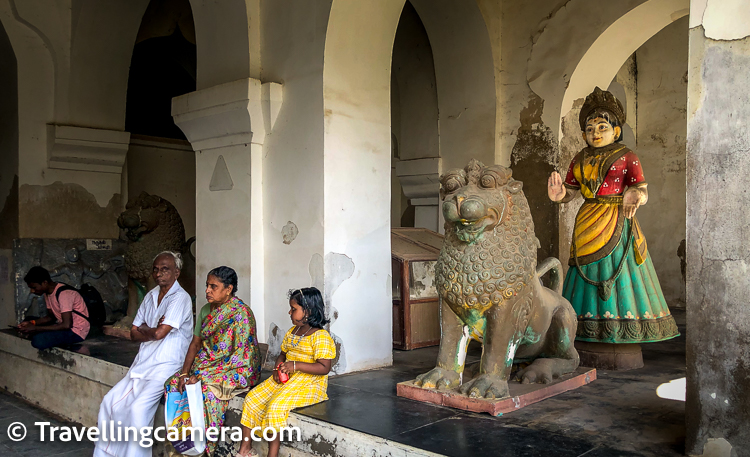
Thanjavur Palace in Tamilnadu: Where History and Art Come Together in a Spectacular Display

Auroville in India : The City of Dawn and a Model for Spirituality & Sustainable Living

Ramarpatham Shrine at Rameshwaram, Tamil Nadu || The site that has Lord Ram's footprints sculpted on a rock

The Sacred and Architectural Marvels of Ranganathaswamy Temple in Tamilnadu, India

Do you know about the 'Danish' Fort in India which is located at a beautiful location round the coast of Bay of Bengal?

Uncovering the Rich History and Beauty of the Basilica of the Sacred Heart of Jesus in Pondicherry, India
 |
| Anaikarai Dam |
Anaikarai North and South Dams on Kollidam Rivers, Tamil Nadu || Two of the many dams on Cauvery, some of which are nearly 2000 years old

Starting the Day Right: A Personal Reflection on Sunrise at Serenity Beach in Pondicherry, India

Puducherry Travel Guide: French Charm Meets Indian Spirit - Capital Cities of Indian States or Union Teritorries [Pondicherry]

Madanapalle to Thanjavur via Vellore and Tiruvannamalai - 4th day of our 14 days long trip through east coast of India || Noida to Rameshwaram

Thanjavur to Rameshwaram via Tiruchirapalli - 5th day of our 14 days long trip through east coast of India || Noida to Rameshwaram

Rameshwaram's Marine Museum, Harbour and More: A Guide to the Best Sights and Sounds from Tamilnadu State of India
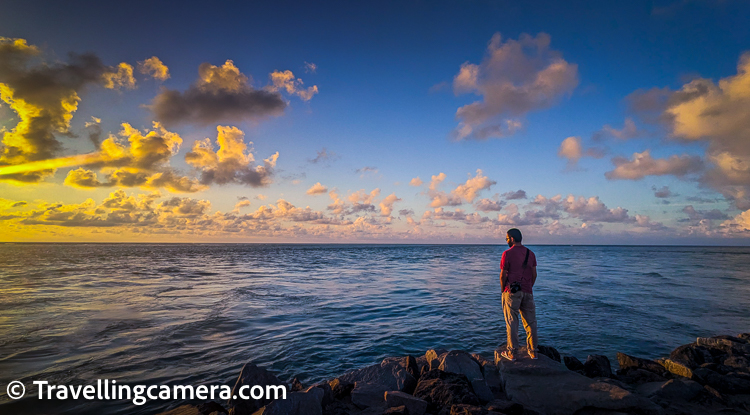
Rameshwaram in Tamilnadu, India - The Land of Sacred Shrines and Mesmerizing Beaches

Villoondi Teertham - Discovering the Spiritual and Natural Wonders of Rameshwaram, India

Drive from Rameshwaram to Pondicherry along the coast - 7th day of our 14 days long trip through east coast of India || Noida to Rameshwaram

Drive from Pondicherry to Tada - 8th day of our 14 days long trip through east coast of India || Noida to Rameshwaram

Exploring the Mahatma Gandhi Statue and Other Attractions around Promenade Beach in Pondicherry, India

Kolams and Culture: The Significance of Daily Floor Art in Tamilnadu Homes of South India

Healing Waters and Holy Legends: A Visit to Vibhishan Teertham in Rameshwaram, Tamilnadu


Comments