
Experience Tamil Nadu at DakshinaChitra Museum: A Living Journey Through South India

Introduction: When a Museum Feels Like a Village There are museums where you walk from one glass display to another, read a description, take a photograph and move on.  And then there is DakshinaChitra Museum.  Here, you don't simply look at South Indian heritage. You walk through it.

Introduction: When a Museum Feels Like a Village

There are museums where you walk from one glass display to another, read a description, take a photograph and move on.

And then there is DakshinaChitra Museum.

Here, you don't simply look at South Indian heritage. You walk through it.

A wooden doorway opens into an old house. A shaded courtyard appears behind a narrow passage. Clay walls feel warm under the Chennai sun. Traditional furniture sits where you can almost imagine a family using it decades ago. Somewhere nearby, an artisan demonstrates a craft, children try their hands at traditional activities, and the smell of a South Indian meal drifts from the restaurant.

That is what makes DakshinaChitra different from a conventional museum in Chennai.  Located at Muttukadu on the East Coast Road, roughly 25 kilometres south of central Chennai, DakshinaChitra is a living museum dedicated to the architecture, lifestyles, crafts, art and performing traditions of South India.  It opened to the public in December 1996 as a project of the Madras Craft Foundation.

That is what makes DakshinaChitra different from a conventional museum in Chennai.

Located at Muttukadu on the East Coast Road, roughly 25 kilometres south of central Chennai, DakshinaChitra is a living museum dedicated to the architecture, lifestyles, crafts, art and performing traditions of South India.

It opened to the public in December 1996 as a project of the Madras Craft Foundation.

For a photographer, it is particularly fascinating because almost every corner offers a visual story.

And if you are travelling towards Mahabalipuram along ECR, DakshinaChitra can become much more than another sightseeing stop. It offers a way to understand the homes, materials, crafts and traditions that form an important part of Tamil Nadu's cultural landscape.


The simplest answer is that DakshinaChitra brings together heritage from four southern states:  Tamil Nadu  Kerala  Karnataka  Andhra Pradesh  But that description doesn't quite capture the experience.

Why Visit DakshinaChitra Museum?

The simplest answer is that DakshinaChitra brings together heritage from four southern states:

  • Tamil Nadu

  • Kerala

  • Karnataka

  • Andhra Pradesh

But that description doesn't quite capture the experience.

The museum has around 18 authentic historical houses that were purchased, dismantled, transported and reconstructed at the site. These aren't simply modern buildings designed to appear old. Many were originally destined for demolition and were carefully relocated with the involvement of traditional craftsmen and architects.

That changes the way you look at them.

You begin noticing things that are easy to miss in a conventional museum:

  • Why is the entrance so narrow?

  • Why does the house have such a large courtyard?

  • Why are some roofs dramatically sloped?

  • Why are particular materials common in one region but not another?

  • How did climate influence house design?

  • Where did people cook, work, sleep and socialise?

  • How did the home of a merchant family differ from that of a farmer or artisan?

Suddenly, architecture stops being decoration.

It becomes evidence of everyday life.


The name DakshinaChitra can be understood as "a picture of the south."  The idea grew out of the work of the Madras Craft Foundation, founded in 1984 by Dr Deborah Thiagarajan.  The foundation's larger objective was to document and preserve the traditional architecture, crafts, lifestyles and performing traditions of South India at a time when rapid urbanisation and changing lifestyles were putting many of these traditions under pressure.

The Story Behind DakshinaChitra Museum

The name DakshinaChitra can be understood as "a picture of the south."

The idea grew out of the work of the Madras Craft Foundation, founded in 1984 by Dr Deborah Thiagarajan.

The foundation's larger objective was to document and preserve the traditional architecture, crafts, lifestyles and performing traditions of South India at a time when rapid urbanisation and changing lifestyles were putting many of these traditions under pressure.

The project developed over several years through research, documentation, grants and community involvement.

Architect Laurie Baker was associated with the foundation's architectural work, while architect Benny Kuriakose contributed significantly to the design and development of the museum.

The result was deliberately different from a conventional museum.

DakshinaChitra was imagined as a place where people could encounter living traditions rather than simply look at objects behind glass.

That distinction remains important.

Craft demonstrations, workshops, exhibitions, folk performances and educational programmes continue to form an important part of the experience.


The best way to explore DakshinaChitra is slowly.  Don't treat it like a checklist where you rush from one building to another.  Spend time looking.  The interesting details are often smaller than the things highlighted in guidebooks.  A weathered wooden door.  A brass vessel.  A hand-carved beam.

Exploring DakshinaChitra Museum: More Than Old Houses

The best way to explore DakshinaChitra is slowly.

Don't treat it like a checklist where you rush from one building to another.

Spend time looking.

The interesting details are often smaller than the things highlighted in guidebooks.

A weathered wooden door.

A brass vessel.

A hand-carved beam.

A tiled roof.

A shadow falling across a courtyard.

An artisan concentrating on a repetitive movement.

A child attempting a traditional craft for the first time.

These details reveal the character of the place.


The Tamil Nadu section is perhaps the most immediately familiar if you have travelled through the state's villages and temple towns.  One particularly interesting example is the Nattukottai Chettiar merchant house.  The Nattukottai Chettiar community developed a distinctive architectural tradition, particularly in areas such as Sivaganga, Pudukottai and Ramanathapuram.

Tamil Nadu Houses

The Tamil Nadu section is perhaps the most immediately familiar if you have travelled through the state's villages and temple towns.

One particularly interesting example is the Nattukottai Chettiar merchant house.

The Nattukottai Chettiar community developed a distinctive architectural tradition, particularly in areas such as Sivaganga, Pudukottai and Ramanathapuram.

Their large ancestral homes were designed around courtyards and often featured elaborate wooden details, spacious halls and carefully planned circulation.

DakshinaChitra's reconstructed Chettiar house incorporates architectural elements associated with houses from places including Aryakudi and Kandanur.

Stand inside one of these spaces and look towards the courtyard.

The geometry is striking.

Columns create rhythm.

Doorways frame other doorways.

Light enters differently through every layer.

For photography, this is much more interesting than simply photographing the front facade.

Try composing through two or three architectural openings.

The photograph begins to look like a journey into the house rather than a record of a building.


DakshinaChitra Museum and the Architecture of Everyday Life One of the most fascinating aspects of DakshinaChitra is that the houses reveal how architecture responded to everyday needs.  The Potter's House, for example, demonstrates the use of locally available materials such as mud, thatch and palmyra.  At first glance, such a house may appear simple.  Look closer.

DakshinaChitra Museum and the Architecture of Everyday Life

One of the most fascinating aspects of DakshinaChitra is that the houses reveal how architecture responded to everyday needs.

The Potter's House, for example, demonstrates the use of locally available materials such as mud, thatch and palmyra.

At first glance, such a house may appear simple.

Look closer.

The simplicity is deliberate.

Traditional houses often used materials that were available nearby, relatively inexpensive and easy to repair.

This tells us something important about traditional architecture.

It wasn't simply about appearance.

It was about climate, occupation, economy and community.

The house of a potter reflected a different lifestyle from the home of a wealthy merchant.

Architecture was essentially a map of social life.


The Architecture of Climate Perhaps one of the most interesting things to observe at DakshinaChitra is how geography appears in architecture.  Consider the Coastal Andhra house.  Traditional houses in cyclone-prone coastal areas had to deal with heavy rain, strong winds and locally available materials.  Circular house clusters, mud walls, palmyra timber and thatched roofs were practical responses to those conditions.  Large roof overhangs could protect walls from rain.

The Architecture of Climate

Perhaps one of the most interesting things to observe at DakshinaChitra is how geography appears in architecture.

Consider the Coastal Andhra house.

Traditional houses in cyclone-prone coastal areas had to deal with heavy rain, strong winds and locally available materials.

Circular house clusters, mud walls, palmyra timber and thatched roofs were practical responses to those conditions.

Large roof overhangs could protect walls from rain.

The materials themselves were closely connected to the surrounding landscape.

Kerala houses tell another story.

The heavy use of timber, laterite and sloping roofs reflects a region with a very different climate and building tradition.

Walk through the houses at DakshinaChitra and you begin to understand something easily lost in modern architecture:

There isn't one "South Indian architecture."

There are many.

Each one is shaped by climate, geography, occupation, wealth, available materials and social customs.


It is easy to arrive with a camera, photograph the most obvious houses and leave.  But the interesting details are usually at eye level.  A weathered wooden door.  A brass vessel.  A shadow falling across a courtyard.  A hand-carved beam.  A row of roof tiles.  An artisan working with his hands.

My Experience at DakshinaChitra Museum

The first thing I would recommend is resisting the temptation to treat DakshinaChitra as a checklist.

It is easy to arrive with a camera, photograph the most obvious houses and leave.

But the interesting details are usually at eye level.

A weathered wooden door.

A brass vessel.

A shadow falling across a courtyard.

A hand-carved beam.

A row of roof tiles.

An artisan working with his hands.

A child exploring an unfamiliar traditional game.

These are the moments that make the visit memorable.

As a photographer, I found myself repeatedly slowing down.

The museum creates an unusual combination of architecture and human activity.

A house can look beautiful when empty, but the presence of people gives it scale.

A person standing in a doorway tells you how large the doorway actually is.

Someone sitting in a courtyard gives you a sense of how that space might have been used.

An artisan working with his hands connects an otherwise historical object to the present.

That is the real strength of a living museum.


Experience Tamil Nadu at DakshinaChitra Museum: A Living Journey Through South India Crafts at DakshinaChitra: Watch the Hands DakshinaChitra is not simply a place to see finished handicrafts.  Depending on the day and programme, visitors may encounter demonstrations and activities involving traditional crafts, pottery, puppetry, glass work, textiles, painting and traditional games.  If you are photographing craftspeople, don't immediately photograph the finished object.  Watch the process.

Crafts at DakshinaChitra: Watch the Hands

DakshinaChitra is not simply a place to see finished handicrafts.

Depending on the day and programme, visitors may encounter demonstrations and activities involving traditional crafts, pottery, puppetry, glass work, textiles, painting and traditional games.

If you are photographing craftspeople, don't immediately photograph the finished object.

Watch the process.

The hand.

The tool.

The raw material.

The repetitive movement.

The concentration on the face.

Then photograph the finished object.

You have just created a visual story instead of a product photograph.

For a travel photographer, this difference is significant.

A photograph of a clay pot tells you what was made.

A photograph of a potter shaping clay tells you how it came into existence.

The second image carries a story.


Lesser-Known Insights About DakshinaChitra Museum The Museum Has an Extensive Archive DakshinaChitra isn't only an outdoor heritage village.  Its library and archives contain thousands of books and journals, along with a very large photographic collection documenting South Indian architecture, crafts, folklore, performances and cultural traditions.

Lesser-Known Insights About DakshinaChitra Museum

The Museum Has an Extensive Archive

DakshinaChitra isn't only an outdoor heritage village.

Its library and archives contain thousands of books and journals, along with a very large photographic collection documenting South Indian architecture, crafts, folklore, performances and cultural traditions.

For photographers, architecture enthusiasts, researchers and students of Indian culture, this is a particularly interesting dimension of the institution.

The museum is therefore not just preserving buildings.

It is also preserving documentation.


The Houses Are Documents of Social Life

Look beyond the walls and roofs.

Ask yourself:

Who lived here?

What was their occupation?

Where would guests have been received?

Where would food have been prepared?

Where would textiles have been stored?

Where would children have played?

Where would family members have gathered?

Traditional architecture becomes much more interesting when you connect it with people.


Look at the Thresholds

Some of my favourite photographic opportunities in heritage spaces are not grand facades.

They are thresholds.

Doors.

Windows.

Verandahs.

Passageways.

The transition between sunlight and shadow.

DakshinaChitra has plenty of these.

A 35mm or 50mm equivalent lens can work beautifully for architectural details and environmental portraits, while a wider lens is useful for courtyards and larger structures.


Best Photography Spots at DakshinaChitra Museum If you are visiting primarily with a camera, don't restrict yourself to the obvious views.  Central Courtyards Courtyards offer wonderful geometry.  Wait for someone to enter the frame and use the person for scale.  A lone person walking through the frame can transform an architectural photograph.

Best Photography Spots at DakshinaChitra Museum

If you are visiting primarily with a camera, don't restrict yourself to the obvious views.

Central Courtyards

Courtyards offer wonderful geometry.

Wait for someone to enter the frame and use the person for scale.

A lone person walking through the frame can transform an architectural photograph.

Wooden Doorways

Look for layered compositions.

One doorway framing another doorway can create natural depth.

Verandahs

Columns, tiled floors and wooden beams often create beautiful repeating patterns.

Early morning or late afternoon light works particularly well.

Craft Demonstrations

Photograph the process rather than only the final object.

Try environmental portraits as well as close-up details.

Mud and Thatched Houses

Soft light brings out textures in mud walls, thatch and timber without creating excessively harsh highlights.

People

Don't photograph only empty architecture.

People provide scale and emotion.

A visitor walking through a traditional house can make the photograph feel lived-in.


Photography Tips for DakshinaChitra Museum Because much of DakshinaChitra is outdoors, light matters enormously.  Morning Photography Morning is generally more comfortable for walking.  The softer light is also useful for architecture.  If photography is a priority, reaching close to opening time gives you an advantage.  Midday Photography The Chennai sun can be unforgiving.  But harsh light isn't necessarily bad.

Photography Tips for DakshinaChitra Museum

Because much of DakshinaChitra is outdoors, light matters enormously.

Morning Photography

Morning is generally more comfortable for walking.

The softer light is also useful for architecture.

If photography is a priority, reaching close to opening time gives you an advantage.

Midday Photography

The Chennai sun can be unforgiving.

But harsh light isn't necessarily bad.

Look for:

  • Deep shadows

  • Doorway silhouettes

  • Strong geometric patterns

  • Textured walls

  • Backlit foliage

  • High-contrast architectural details

Instead of trying to photograph everything, use the contrast creatively.

Late Afternoon

The changing light can create beautiful patterns across courtyards and verandahs.

If opening hours allow, late afternoon is an excellent period for photographs of people and architecture.

Monsoon Photography

Cloudy weather can actually be excellent for heritage photography.

The sky becomes a natural diffuser.

Mud walls, greenery, wood and tiles can acquire richer tones after rain.

Carry protection for your camera and expect wet or slippery outdoor surfaces.


Food at DakshinaChitra Museum A museum visit becomes much more enjoyable when lunch is part of the plan.  DakshinaChitra has an on-site South Indian restaurant, Bekal, serving meals and snacks, along with a canteen for lighter refreshments.  There is something appropriate about having a South Indian meal while exploring traditional South Indian homes.  Don't treat lunch as an interruption.  Use it as a pause.  Sit down.  Slow down.  Look around.  Let the heat of the afternoon settle.  Then continue exploring.

Food at DakshinaChitra Museum

A museum visit becomes much more enjoyable when lunch is part of the plan.

DakshinaChitra has an on-site South Indian restaurant, Bekal, serving meals and snacks, along with a canteen for lighter refreshments.

There is something appropriate about having a South Indian meal while exploring traditional South Indian homes.

Don't treat lunch as an interruption.

Use it as a pause.

Sit down.

Slow down.

Look around.

Let the heat of the afternoon settle.

Then continue exploring.

For travellers planning a full ECR day, having food available within the museum also means you don't have to break the flow of your visit by searching for a restaurant elsewhere.


Local Conversations and Human Stories One of the things that makes DakshinaChitra more meaningful than a conventional museum is the possibility of interaction.  Ask artisans about what they are making.  Ask where the craft originated.  Ask how long they have practised it.  Ask what materials they use.  But don't turn every interaction into an interview.  Sometimes the best approach is simply to observe.

Local Conversations and Human Stories

One of the things that makes DakshinaChitra more meaningful than a conventional museum is the possibility of interaction.

Ask artisans about what they are making.

Ask where the craft originated.

Ask how long they have practised it.

Ask what materials they use.

But don't turn every interaction into an interview.

Sometimes the best approach is simply to observe.

And if you want a close portrait, ask first.

For a photographer, that small moment of acknowledgement can completely change the nature of an image.

You are no longer simply photographing someone.

You are photographing a person who has agreed to be part of your story.


The museum is generally open from 10 AM to 6 PM on weekdays and 10 AM to 7 PM on weekends, with Tuesday being the usual weekly holiday.  The most comfortable months for exploring the outdoor sections are generally October to February, when Chennai's weather is comparatively pleasant.  However, every season has something to offer.  Season	Experience October–February	Comfortable weather and pleasant walking March–May	Hotter afternoons; start early June–September	Humidity and occasional rain; interesting photography after showers October–December	Monsoon influence and greener surroundings

Best Time to Visit DakshinaChitra Museum

The museum is generally open from 10 AM to 6 PM on weekdays and 10 AM to 7 PM on weekends, with Tuesday being the usual weekly holiday.

The most comfortable months for exploring the outdoor sections are generally October to February, when Chennai's weather is comparatively pleasant.

However, every season has something to offer.

SeasonExperience
October–FebruaryComfortable weather and pleasant walking
March–MayHotter afternoons; start early
June–SeptemberHumidity and occasional rain; interesting photography after showers
October–DecemberMonsoon influence and greener surroundings

If you are mainly interested in photography, choose early morning or late afternoon whenever possible.

If you are interested in cultural performances or workshops, check the museum's current programme before visiting because special events can significantly change the experience.


How to Reach DakshinaChitra Museum DakshinaChitra is located at Muttukadu on East Coast Road, along the Chennai–Mahabalipuram route.  It is approximately 25 kilometres south of central Chennai.  By Car Driving along ECR is probably the easiest option if you want to combine DakshinaChitra with Muttukadu, Kovalam or Mahabalipuram.  By Taxi App-based cabs and regular taxis are convenient from Chennai.

How to Reach DakshinaChitra Museum

DakshinaChitra is located at Muttukadu on East Coast Road, along the Chennai–Mahabalipuram route.

It is approximately 25 kilometres south of central Chennai.

By Car

Driving along ECR is probably the easiest option if you want to combine DakshinaChitra with Muttukadu, Kovalam or Mahabalipuram.

By Taxi

App-based cabs and regular taxis are convenient from Chennai.

For a group of travellers, a full-day cab can make sense if you plan to explore several ECR attractions.

By Bus

Public buses operate along the ECR corridor, and the DakshinaChitra bus stop is close to the museum.

If you are travelling by public transport, check current routes and timings before starting because services can change.


Where to Stay Near DakshinaChitra You don't necessarily need to stay near the museum.  If DakshinaChitra is part of a larger Chennai itinerary, staying in Chennai works perfectly well.  However, if you are exploring ECR slowly, consider staying around:  Muttukadu  Kovalam  Kelambakkam  Mahabalipuram

Where to Stay Near DakshinaChitra

You don't necessarily need to stay near the museum.

If DakshinaChitra is part of a larger Chennai itinerary, staying in Chennai works perfectly well.

However, if you are exploring ECR slowly, consider staying around:

  • Muttukadu

  • Kovalam

  • Kelambakkam

  • Mahabalipuram

DakshinaChitra itself also has accommodation facilities, including air-conditioned and non-air-conditioned rooms and dormitory options.

For travellers interested in photography, staying around ECR has another advantage.

You don't have to treat the coast as a highway between Chennai and Mahabalipuram.

You can experience the region at a slower pace.


Budget Tips for Visiting DakshinaChitra The museum is reasonably manageable as a day outing, but it is worth checking the latest ticket rates before visiting because charges can change.  Keep some additional budget for:  Food  Parking  Craft purchases  Workshops  Photography or professional shooting permissions, if applicable

Budget Tips for Visiting DakshinaChitra

The museum is reasonably manageable as a day outing, but it is worth checking the latest ticket rates before visiting because charges can change.

Keep some additional budget for:

  • Food

  • Parking

  • Craft purchases

  • Workshops

  • Photography or professional shooting permissions, if applicable

If you are travelling with children, factor in additional time for interactive activities rather than planning a tightly packed sightseeing schedule.

One practical tip: don't bring food expecting to eat it throughout the museum. Outside food restrictions apply inside the museum, although designated areas and on-site food options are available.


Suggested DakshinaChitra–ECR Day Itinerary

If I were planning a full day from Chennai, I would keep it relatively relaxed.

8:00 AM

Leave Chennai.

9:30–10:00 AM

Reach DakshinaChitra.

10:00 AM–1:00 PM

Explore the traditional houses, exhibitions, crafts and architecture.

Don't rush.

1:00–2:00 PM

Have lunch at the museum.

2:00–3:30 PM

Explore sections you missed in the morning.

Spend additional time with artisans and architectural details.

3:30–4:30 PM

Drive towards Muttukadu or Kovalam.

Evening

Continue towards Mahabalipuram or return to Chennai depending on your plan.

If you are staying overnight around Mahabalipuram, you can continue your photography there during the evening and explore the heritage monuments early the following morning.

This creates a beautiful cultural sequence:

traditional homes → living crafts → coastal landscape → Pallava architecture.


Nearby Places Worth Combining With DakshinaChitra Muttukadu Backwaters Muttukadu offers a completely different visual experience from DakshinaChitra.  Here the dominant elements are water, boats, palms and reflections.  Early morning and evening are particularly attractive for photography.

Nearby Places Worth Combining With DakshinaChitra

Muttukadu Backwaters

Muttukadu offers a completely different visual experience from DakshinaChitra.

Here the dominant elements are water, boats, palms and reflections.

Early morning and evening are particularly attractive for photography.

Look for reflections rather than simply photographing the water.


Kovalam Kovalam is another interesting stop along ECR.  The coastal landscape, fishing activity, boats and working communities provide opportunities for more candid travel photography.  Instead of photographing only the beach, look for everyday life.  Fishing nets.  Boats.  People repairing equipment.

Kovalam

Kovalam is another interesting stop along ECR.

The coastal landscape, fishing activity, boats and working communities provide opportunities for more candid travel photography.

Instead of photographing only the beach, look for everyday life.

Fishing nets.

Boats.

People repairing equipment.

Children playing.

Workers returning from the sea.

These details tell a stronger story of the coast.


Mahabalipuram

Mahabalipuram is the natural extension of a DakshinaChitra visit.

Its Pallava monuments include rock-cut caves, monolithic rathas, enormous open-air reliefs and structural temples.

The connection is fascinating.

At DakshinaChitra, you see the spaces where ordinary people lived.

At Mahabalipuram, you see the monumental architecture produced by the Pallava civilisation.

Photographically, the two places also offer completely different opportunities.


Responsible Travel at DakshinaChitra A living museum requires a slightly different attitude from a conventional tourist attraction.  These buildings represent real communities, occupations and traditions.  Treat them accordingly.  Remember to: Avoid touching fragile architectural elements.  Ask before taking close-up portraits.  Don't enter restricted areas.

Responsible Travel at DakshinaChitra

A living museum requires a slightly different attitude from a conventional tourist attraction.

These buildings represent real communities, occupations and traditions.

Treat them accordingly.

Remember to:

  • Avoid touching fragile architectural elements.

  • Ask before taking close-up portraits.

  • Don't enter restricted areas.

  • Don't climb structures for photographs.

  • Keep voices low inside heritage houses.

  • Don't leave plastic or food waste behind.

  • Respect artisans while they work.

  • Avoid interrupting demonstrations for photographs.

  • Buy crafts directly when you find something meaningful.

The objective isn't simply to preserve old buildings.

It is to keep knowledge and cultural practices visible.

Your behaviour contributes to that process.


Common Mistakes to Avoid Spending only an hour You can walk through the museum in an hour.  You cannot really experience it in an hour.  Allow at least three hours.  Photographing only the buildings The people and crafts add context.  Don't leave with hundreds of empty-building photographs.  Ignoring the information panels

Common Mistakes to Avoid

Spending only an hour

You can walk through the museum in an hour.

You cannot really experience it in an hour.

Allow at least three hours.

Photographing only the buildings

The people and crafts add context.

Don't leave with hundreds of empty-building photographs.

Ignoring the information panels

A house becomes far more interesting when you understand who lived there and why it was built the way it was.

Visiting without checking the events schedule

Workshops and performances can make the experience very different.

Underestimating the Chennai heat

This is an outdoor museum.

Carry water.

Wear comfortable footwear.

Use sun protection.

Take breaks.

Trying to combine too many ECR attractions

DakshinaChitra deserves time.

If you try to combine it with six other

Related Blogposts from Tamilnadu:

There are monuments you visit to admire.  And then there are monuments that make you stop, look again, and wonder how someone could possibly have imagined such a thing more than a thousand years ago.  The Descent of the Ganga River, popularly known as Arjuna's Penance, belongs firmly to the second category.

Descent of the Ganga River and Arjuna's Penance: Exploring Mahabalipuram Heritage Park

Introduction There are destinations where you visit a monument, take a photograph and move on. Then there are places where the entire landscape becomes part of the experience.  Mahabalipuram is one of them.

Main Places to Explore in Mahabalipuram: A Complete Guide to Mahabalipuram Tourism in Tamilnadu

Introduction: The Cave You Could Easily Walk Past The most famous monuments of Mahabalipuram are difficult to miss.  The Shore Temple stands dramatically beside the Bay of Bengal. The enormous rock relief of Arjuna's Penance stretches across a massive granite surface. The Pancha Rathas look almost like a collection of stone chariots frozen in time.

Varaha Cave in Mahabalipuram: Exploring a Quiet Masterpiece of the Mamallapuram Heritage Site

Introduction: The Monument That Was Never Finished There is something strangely compelling about an unfinished monument.  A completed temple tells you what its builders wanted the world to see. An unfinished structure tells you something more intimate. It exposes the process — the stone before the final polish, the pillar before the ornamentation, the ambitious idea before it became architecture.  That is exactly what makes the Raya Gopuram in Mamallapuram fascinating.

Heritage Sites in Mamallapuram, Tamilnadu : Discovering the Unfinished Raya Gopuram

Introduction: The Monument You Could Easily Walk Past Mahabalipuram has no shortage of monuments that demand your attention.  The Shore Temple stands dramatically beside the Bay of Bengal. Arjuna’s Penance spreads across an enormous rock surface. Krishna’s Butter Ball appears to be balancing impossibly on a slope. The Pancha Rathas are among the most recognisable examples of Pallava monolithic architecture.

Draupadi’s Bath in Mahabalipuram, Tamilnadu : A Small Rock-Cut Cistern With a Curious Story

Where to Stay in Mahabalipuram Mahabalipuram has accommodation options ranging from budget guesthouses and homestays to larger hotels and coastal resorts.  For photographers, location matters more than luxury.  Staying relatively close to the heritage area or beach means you can walk out early in the morning.

Trimurti Rock-Cut Cave Temple in Mahabalipuram, Tamilnadu : A Quiet Pallava Masterpiece

Introduction: Where Stone Temples Meet the Sea There are places where history is preserved inside museums. And then there are places where history still seems to be standing outdoors, exposed to sunlight, salt air and the sound of waves.  Mamallapur Lighthouse is one of those places.  Among the many lighthouses in India, the lighthouse at Mamallapuram, also known as Mahabalipuram, is unusual because it sits in a landscape where maritime history, Pallava architecture and the Bay of Bengal come together within a surprisingly small area.

Mamallapur Lighthouse, Tamil Nadu: A Historic Beacon Above the Bay of Bengal

Introduction: The Monument You Can Easily Walk Past There are monuments in Mahabalipuram that almost demand attention.  The Shore Temple does it with the Bay of Bengal behind it. Krishna's Butter Ball does it simply by refusing to roll down a slope. Arjuna's Penance overwhelms visitors with the sheer scale of its open-air sculpture.

Ramanuja Mandapam in Mahabalipuram, Tamilnadu: A Quiet Chapter of Pallava Heritage

Introduction: A Rock That Looks Like It Should Be Falling There are monuments you admire because someone built them.  And then there are places where nature seems to have played a joke on gravity.  Krishna’s Butter Ball in the Mamallapuram Heritage Park belongs firmly to the second category.  The first time you see this enormous granite boulder, the reaction is almost instinctive: How is that still there?

Krishna’s Butter Ball in Mamallapuram Heritage Park, Tamilnadu: The Giant Boulder That Refuses to Roll

Mahishasuramardini Rock Cut Mandapa is one of those places in Mahabalipuram that can easily get overshadowed by the Shore Temple, Pancha Rathas and the enormous Arjuna's Penance. Yet, if you are interested in heritage sites in Mahabalipuram, ancient Indian sculpture, photography or simply places where history feels unusually intimate, this small rock-cut cave deserves much more time than most visitors give it.

Mahishasuramardini Rock Cut Mandapa, Mahabalipuram, Tamilnadu: A Photographer’s Journey Through Pallava Art

Introduction: The Mahabalipuram View Most Visitors Walk Past There is a particular moment in Mahabalipuram when the town suddenly looks different.  You climb a flight of rough stone steps, leave the noise of the road behind and slowly gain height. The granite beneath your feet is warm, the sea breeze becomes stronger, and the familiar monuments begin to rearrange themselves in your field of view.

Iswara Temple Hillock, Mahabalipuram, Tamilnadu: A Quiet View into the Temples of Tamil Nadu

Introduction: When the Sea Becomes Part of the Temple There are monuments you visit for their architecture. Then there are monuments where the surroundings become inseparable from the architecture.  The Shore Temple in Mahabalipuram belongs firmly to the second category.

Shore Temple in Mahabalipuram, Tamilnadu: Where Pallava Stone Meets the Bay of Bengal


As you emerge from the caves, you'll be greeted with a panoramic view of the town and the surrounding hills. The view is breathtaking, and provides a sense of awe and wonder that is hard to put into words.  Overall, the hike to the Virupaksha Caves is a challenging but rewarding experience that offers a glimpse into the spiritual heritage and natural beauty of Tiruvannamalai. Whether you're a spiritual seeker or an adventure enthusiast, this hike is a must-do activity that should be on your bucket list.

An Eventful Hike around Virupaksha Caves and Skand Ashram in Tiruvannamalai, Tamilnadu, India

Tiruvannamalai Temple is a famous Hindu temple dedicated to Lord Shiva, located in the town of Tiruvannamalai, Tamil Nadu. The temple is one of the largest temples in India and is considered to be one of the Pancha Bhoota Stalams, which represent the five elements of nature. The Tiruvannamalai Temple represents the element of fire.

The magnificent Arunachalesvara Temple, Tiruvannamalai, Tamilnadu || A Shiva Temple with a rich and interesting history

One of the highlights of the lighthouse is the light itself. Thelight is powered by an electric bulb and has a range of 28 nautical miles, making it one of the most powerful lighthouses in the country. The light is also synchronized with other lighthouses in the region, ensuring safe navigation for ships.    The lighthouse is an important part of Chennai's maritime history and is a symbol of the city's enduring connection with the sea. It has played a vital role in guiding ships and mariners, especially during times of inclement weather and rough seas. The lighthouse has been witness to many historical events, such as the arrival of the British Navy in 1801 and the bombing of Chennai during World War II.

Chennai Travel Guide: The Cultural Capital of South India - Capital Cities of Indian States [Tamilnadu]

The Brihadeeshwara Temple is known for its magnificent architecture and grandeur. The temple complex spans over 20 acres and features several structures, including a towering vimana (temple tower) that is over 200 feet tall. The vimana is made of granite and features intricate carvings and sculptures that depict scenes from Hindu mythology.

The Majestic Brihadeeshwara Temple: A Glimpse into the Architectural Brilliance of Thanjavur in Tamilnadu, India


The Kalam Memorial is a memorial dedicated to the former President of India, Dr. APJ Abdul Kalam, located in Rameswaram, Tamil Nadu, India. Dr. Kalam was born in Rameswaram and the memorial is built to honour his contributions to India and his hometown.    The Kalam Memorial was inaugurated in 2017 and is built on a 2.11-acre site, with a built-up area of 2,500 square meters. The memorial consists of a central tower with a height of 27 meters, which symbolizes Dr. Kalam's belief in the power of youth. The tower is surrounded by 12 pillars, which represent Dr. Kalam's dedication to the 12 states of India.

When we were at Tanjore (Thanjavur), one of the places that we were the most excited to see was the Saraswati Mahal Library. And when you have high expectations of a place, ninety percent of the times the place does not match up. But the Saraswati Mahal Library more than exceeded our expectations. It has one of the best collections of old manuscripts on display. We had great fun going around this place and looking at the various studies documented by Indian, Britisher, Mughal, and Chinese scholars.

Unlocking the Treasures of Saraswati Mahal Library in Thanjavur, Tamilnadu || Exploring India's oldest and most fascinating collection of manuscripts

The Magnificence of Cholapuram Temple: A Glimpse into the Ancient Heritage of Tamil Nadu, India

Abdul Kalam Memorial: Pay homage to one of India's greatest visionaries, Dr. A.P.J. Abdul Kalam, at his memorial located in Pei Karumbu. The memorial, built in honor of the former President and renowned scientist, showcases his life and achievements through photographs, quotes, and personal belongings.

Discovering the Charms of Rameshwaram: Must-Visit Places for Travelers

Dhanushkodi, the southernmost tip of Rameswaram island in Tamil Nadu, India, is a place of great historical significance and natural beauty. It is a small fishing village that was once a bustling port town, until it was destroyed by a devastating cyclone in 1964. Today, Dhanushkodi is a ghost town, but it is still a fascinating place to visit for those who want to experience the beauty of nature and the power of the sea.

Embracing the Serenity of Sunrise: Exploring Dhanushkodi in the Early Hours of the Morning | Tamilnadu Diaries

As I entered the fort, I was transported back in time to a bygone era. The fort has a rich history that dates back to the 16th century, when it was built by the Vijayanagara Empire. Over the centuries, the fort has been occupied by various rulers, including the Marathas, the Mughals, and the British.

Vellore Fort in Tamilnadu, India : A Living Museum of South Indian Architecture

The temple is also significant for its association with the Hindu epic, Ramayana. According to the legend, Lord Rama is said to have prayed to Lord Shiva at the site where the temple now stands, seeking blessings before he went to battle against the demon king Ravana.

Exploring the Architectural Marvels and Historical Significance of Arulmigu Ramanathaswamy Temple in Rameshwaram, Tamilnadu : A Spiritual Journey Through Time

I had the pleasure of visiting Velankanni, a small coastal town in the southern Indian state of Tamil Nadu, and I must say it was a truly unique experience. Velankanni is known for its famous Basilica of Our Lady of Good Health, a revered Catholic shrine that attracts millions of pilgrims each year.

Pilgrimage to the Miraculous Churches of Velankanni: Exploring the History, Culture, and Beauty of this Sacred Town

Pamban Bridge, also known as the Pamban Rail Bridge, is an iconic bridge located in the southern Indian state of Tamil Nadu. The bridge connects the mainland of India with the island of Rameswaram, which is a popular pilgrimage site for Hindus. Built in 1914, the Pamban Bridge is a historic engineering marvel that spans the Palk Strait, a narrow strip of water that separates the Indian mainland from the island of Sri Lanka.

Capturing the Serene Beauty of Sunset around Pamban Bridge in Rameshwaram, Tamilnadu : A Photographer's Delight

Thangachimadam is a fascinating destination that offers a glimpse into the local culture and way of life in Tamil Nadu. It is a must-visit destination for travelers interested in exploring the natural beauty and rich cultural heritage of the region.

Exploring the Rich Fishing Heritage of Rameshwaram: A Journey Through the Bustling Fishermen Town Thangachimadam in Tamilnadu, India

The ruins of Chola Palace in Gangaikondacholapuram offer a glimpse into the grandeur and architectural prowess of the Chola dynasty. The palace, built in the 11th century, was once a sprawling complex that covered an area of around 4 acres. What remains today are the ruins of this once magnificent palace, which still command awe and respect from visitors.

Preserving the Grandeur of Chola Palace in Gangaikondacholapuram: The Role of the Archaeological Survey of India in Ariyalur District of Tamilnadu
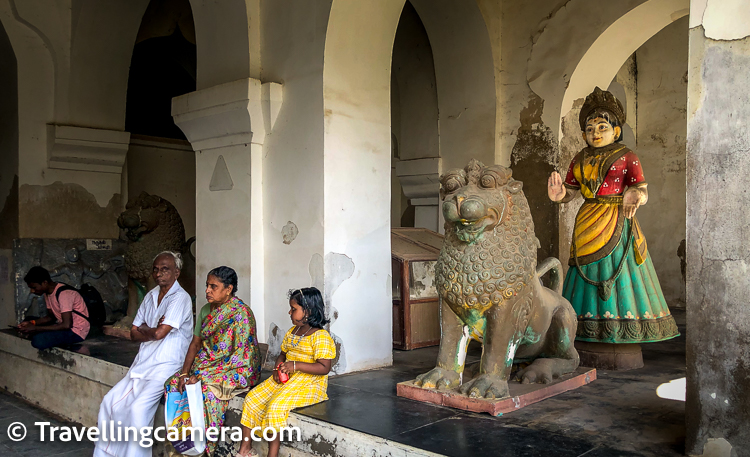
As we stepped into the Tanjavur Palace, I was immediately transported back in time. The grandeur and splendor of the palace were truly awe-inspiring. Located in the heart of the bustling city of Tanjavur, the palace is a testament to the rich cultural heritage of the region.

Thanjavur Palace in Tamilnadu: Where History and Art Come Together in a Spectacular Display

Auroville is a unique and experimental township located near Pondicherry in southern India. The township was founded in 1968 by Mirra Alfassa, also known as The Mother, and is dedicated to the ideals of human unity, peace, and spiritual growth. Auroville attracts visitors from around the world who come to explore its unique culture, sustainable living practices, and alternative approach to community living.

Auroville in India : The City of Dawn and a Model for Spirituality & Sustainable Living

When you explore Rameshwaram, Tamil Nadu, you discover many shrines, some hidden in the wilderness, others out in the ocean, and almost all of them revolving around the life of Lord Ram. One such shrine is the Ramarpatham, which is located on a little hill, surrounded by shrubs and bushes.

Ramarpatham Shrine at Rameshwaram, Tamil Nadu || The site that has Lord Ram's footprints sculpted on a rock

Ranganathaswamy temple is a popular Hindu temple located in Srirangam, Tamil Nadu. The temple is dedicated to Lord Ranganatha, a form of Lord Vishnu, and is one of the largest temple complexes in India. The temple is a must-visit destination for travelers interested in exploring the rich culture and heritage of Tamil Nadu.

The Sacred and Architectural Marvels of Ranganathaswamy Temple in Tamilnadu, India

One of the most exciting places we visited during our road-trip from Noida to Rameshwaram is Danish Fort in Tharangambadi and there are multiple reasons for that. This blogpost will share more about the Danish fort, the amazing places to explore around it, along with specially curated list of tips by Travellingcamera.

Do you know about the 'Danish' Fort in India which is located at a beautiful location round the coast of Bay of Bengal?

The Basilica of the Sacred Heart of Jesus is a beautiful church located in Pondicherry, a former French colony in southern India. Here is some additional information about the Basilica:    Architecture of The Basilica of the Sacred Heart of Jesus: The Basilica of the Sacred Heart of Jesus is a stunning example of neo-Gothic architecture. The church features a cruciform layout and has two tall spires that rise up to 50 meters in height. The interior of the church is adorned with beautiful stained glass windows and intricate carvings.    History of The Basilica of the Sacred Heart of Jesus:: The Basilica of the Sacred Heart of Jesus was built in the late 19th century by French missionaries. It is one of the most important landmarks of Pondicherry and attracts visitors from all over the world.    Services at The Basilica of the Sacred Heart of Jesus: The Basilica of the Sacred Heart of Jesus is an active church and holds regular services throughout the week. Visitors are welcome to attend these services and participate in the religious activities.    Location of The Basilica of the Sacred Heart of Jesus: The Basilica of the Sacred Heart of Jesus is located in the heart of Pondicherry's French Quarter, which is known for its historic buildings and charming streets. It is easily accessible by car or auto-rickshaw.    Festivals of The Basilica of the Sacred Heart of Jesus: The Basilica of the Sacred Heart of Jesus is known for its vibrant celebrations during Christmas and Easter. The church is beautifully decorated during these festivals, and special services and events are held to mark the occasions.    Museum at The Basilica of the Sacred Heart of Jesus: The Basilica of the Sacred Heart of Jesus also has a museum that showcases the history of Christianity in the region. The museum features a collection of artifacts, paintings, and photographs that tell the story of the church's rich cultural heritage.    The Basilica of the Sacred Heart of Jesus is a must-visit destination for anyone interested in history, architecture, and religion. Its stunning design and rich history make it a unique and fascinating landmark of Pondicherry.

Uncovering the Rich History and Beauty of the Basilica of the Sacred Heart of Jesus in Pondicherry, India

The ancient texts of South India often talk about the exploits of the legendary Chola Kings, some of whom were visionaries who transformed the region for centuries to come. One of them was Karikala who was one of the early Chola Kings.
Anaikarai Dam

Anaikarai North and South Dams on Kollidam Rivers, Tamil Nadu || Two of the many dams on Cauvery, some of which are nearly 2000 years old

Watching the sunrise is a beautiful and serene experience, and Serenity Beach in Pondicherry is a great place to enjoy a stunning sunrise. Watching the sunrise at Serenity Beach is a peaceful and meditative experience, with the sound of the waves and the gentle sea breeze creating a serene atmosphere. It's a great way to start the day and connect with nature. We were staying around the Serenity beach so we simply walked down to the beach for sunset and after the sunrise, we had tea at one of the small shops around the beach. This blogpost shares more about the sunrise and other details about Serenity Beach along with other beaches in Pondicherry.

Starting the Day Right: A Personal Reflection on Sunrise at Serenity Beach in Pondicherry, India

The French Quarter is a charming neighborhood located in the heart of Pondicherry, a coastal city in southern India. The neighborhood is named after the French colonial period of Pondicherry, which lasted from the 17th century until the mid-20th century. The French Quarter features a mix of French and Indian architecture and is known for its rich cultural heritage.

Puducherry Travel Guide: French Charm Meets Indian Spirit - Capital Cities of Indian States or Union Teritorries [Pondicherry]

On our way from Virupaksha Caves to Skandasramam, we came across a large troop of monkeys and seriously considered heading back down. But then we thought that we have come a long way from Virupaksha cave already and the fact that we have made it this far must mean something, so holding on to some faith (or madness) inside us, we stood rooted to our spot to let the monkeys pass. They did that and did not bother us in the process. It felt nothing short of a miracle.

Madanapalle to Thanjavur via Vellore and Tiruvannamalai - 4th day of our 14 days long trip through east coast of India || Noida to Rameshwaram

On Day 5, when we woke up in Thanjavur, we found that the rains had subsided and everything was shrouded by a thin mist. We started our day with a visit to the magnificent Brihadeeshwara Temple or the Big Temple. The huge Shikhara was shrouded in mist and looked incredible appearing out of it as we walked toward it.


Thanjavur to Rameshwaram via Tiruchirapalli - 5th day of our 14 days long trip through east coast of India || Noida to Rameshwaram


The Marine Museum in Rameshwaram is a popular tourist attraction that showcases the rich marine biodiversity of the Gulf of Mannar Biosphere Reserve. Here is some information about the Marine Museum:    Location: The Marine Museum is located in Rameshwaram town, near the Ramanathaswamy Temple.    Exhibits: The Marine Museum features a variety of exhibits that showcase the marine life of the Gulf of Mannar Biosphere Reserve. The exhibits include live specimens of various marine creatures, such as sea horses, lobsters, and crabs, as well as preserved specimens of shells, corals, and other marine life.    Information: The Marine Museum also provides information about the marine ecosystems of the region, including the coral reefs, mangrove forests, and sea grass beds. Visitors can learn about the importance of these ecosystems and the threats they face.    Activities: The Marine Museum offers several activities for visitors, including a glass-bottom boat ride to explore the marine life of the region, and a virtual reality experience that simulates diving in the Gulf of Mannar.    Accessibility: The Marine Museum is easily accessible by car or auto-rickshaw from Rameshwaram town. It is open every day from 9:00 am to 5:00 pm, and admission is free.

Rameshwaram's Marine Museum, Harbour and More: A Guide to the Best Sights and Sounds from Tamilnadu State of India
But despite its eerie atmosphere, Dhanushkodi is also a place of great natural beauty. The beach here is stunning, with crystal clear water and soft white sand. It's the perfect place to relax and soak up the sun, or to take a refreshing dip in the sea. If you're lucky, you might even spot some dolphins swimming in the distance.

Rameshwaram in Tamilnadu, India - The Land of Sacred Shrines and Mesmerizing Beaches

Villoondi Teertham - Discovering the Spiritual and Natural Wonders of Rameshwaram, India

The Zion church is also an active place of worship for the local community. Visitors can attend a service and experience the unique blend of Danish and Indian culture that is evident in the town. A visit to the Zion Church in Tharangambadi is a must for history buffs, architecture enthusiasts and those who are interested in the unique blend of cultures. The church is a great way to learn about the past and see a beautiful example of colonial architecture.

Drive from Rameshwaram to Pondicherry along the coast - 7th day of our 14 days long trip through east coast of India || Noida to Rameshwaram

On the 8th day of our 14-days-long trip from Noida to Rameshwaram and back via Eastern Ghats, we made one of the most intriguing stops. We will get to that, but let's start with the morning first.

Drive from Pondicherry to Tada - 8th day of our 14 days long trip through east coast of India || Noida to Rameshwaram

The Mahatma Gandhi statue on the Pondicherry Promenade is a bronze statue that commemorates the life and work of Mahatma Gandhi, one of the most influential figures in India's struggle for independence from British colonial rule. The statue is located on the Promenade Beach in the heart of Pondicherry, a coastal town in southern India.

Exploring the Mahatma Gandhi Statue and Other Attractions around Promenade Beach in Pondicherry, India

Kolams are usually created early in the morning, before sunrise, and are a common sight in many South Indian neighborhoods. Women typically draw the kolam designs, which range from simple geometric patterns to more complex designs inspired by nature, such as flowers, birds, and animals.

Kolams and Culture: The Significance of Daily Floor Art in Tamilnadu Homes of South India

Healing Waters and Holy Legends: A Visit to Vibhishan Teertham in Rameshwaram, Tamilnadu

The main attraction of the temple is the presence of the floating stones, which are kept on display in a small room inside the temple. According to legend, Lord Hanuman used these stones to build the Ram Setu bridge to help Lord Rama cross the ocean to rescue his wife Sita from the demon king Ravana. The stones are believed to be so light that they float on water, and visitors can see this phenomenon for themselves by placing the stones in a bowl of water.

Discovering the Mysteries of Sri Panchmukhi Hanuman Mandir and the Floating Stones of Rameshwaram in Tamilnadu

The lighthouse in Chennai, located in the Marina Beach area, is a historic landmark that has been guiding seafarers and ships for over 200 years. The lighthouse, which stands at a height of 46 meters, is one of the oldest in the country and is a must-visit destination for those who want to learn about the maritime history of India.Climb to the Top of Chennai Lighthouse : Exploring Aerial views of Marine Drive, Sea and other interesting landmarks of Chennai, Tamilnadu


Comments

Trending Post Today !

How to reach Kasol/Malana and top things to do around this stunning hill-station of Himalayan State of India

Main places to see & Top things to do around Dalhousie : Stunning Hill Station in Himalayan State of India