
Perched gracefully on the historic Ridge, overlooking the bustling charm of Mall Road, Christ Church, Shimla is more than just a place of worship—it is the soul of Shimla’s colonial past and one of the most photographed landmarks in the Himalayas.
Whether you arrive in Shimla for the first time or return after years, this pale yellow structure quietly draws you in. It doesn’t demand attention; it simply exists—elegant, enduring, and deeply rooted in time.

A Walk Through History
Built in 1857, during the height of British rule in India, Christ Church stands as a reminder of Shimla’s days as the summer capital of British India. The Ridge, where the church stands, was once the social and cultural heart of the colonial elite.
British officers, their families, and civil servants would gather here—not just for prayers, but for conversations, events, and leisurely evenings overlooking the valleys. The church became a spiritual anchor in a hill town that was otherwise a political powerhouse during the summers.
Even today, as you walk across the Ridge, it’s easy to imagine horse-drawn carriages, Victorian gowns, and a slower, more deliberate pace of life.

Architecture That Speaks in Silence
Christ Church is designed in the Neo-Gothic architectural style, which was widely used in British ecclesiastical buildings.
Its most striking features include:
- Tall spire and arched windows, pointing skyward in classic Gothic fashion
- Stained-glass windows, representing virtues like Faith, Hope, Charity, Fortitude, Patience, and Humility
- A clock tower, added later, which still marks time over the Ridge
Step inside, and the world outside fades away. The wooden interiors, soft light filtering through colored glass, and the quiet stillness create a deeply reflective atmosphere.
One of the most fascinating elements inside is the pipe organ, one of the largest in the Indian subcontinent, which once filled the church with music that echoed across the hills.

The Church and Mall Road: A Living Contrast
Just a few steps away lies the ever-busy Mall Road, Shimla—lined with cafés, shops, colonial buildings, and crowds that never seem to thin out.
This proximity creates a beautiful contrast:
- Outside: chatter, footsteps, laughter, and movement
- Inside: silence, stillness, and introspection
It’s this duality that makes Christ Church special. It is both part of the city and somehow untouched by it.
A Photographer’s Perspective
If you’re someone who sees the world through a lens, Christ Church offers endless possibilities.
Best times to shoot:
- Early morning: Soft golden light with fewer crowds
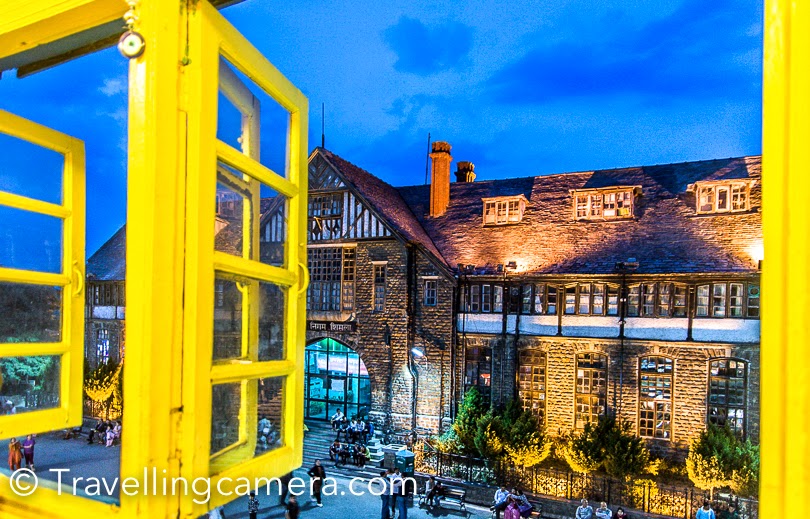
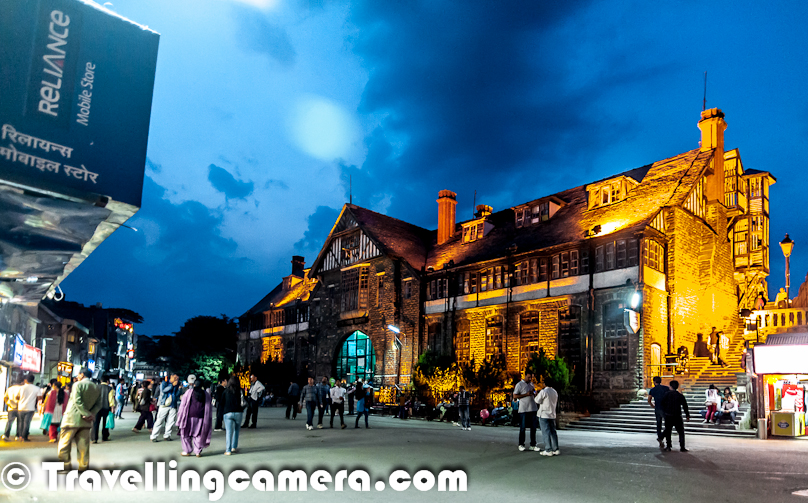
- Evening blue hour: The church lights up, creating a magical glow against the twilight sky
- Foggy days: The structure emerging through mist creates an almost dreamlike frame
Composition ideas:
- Frame the church with people walking on the Ridge for scale
- Capture reflections after rain on the stone pathways
- Shoot from slightly lower angles to emphasize the height and symmetry
At night, when the church is illuminated, it becomes the visual centerpiece of Shimla—a glowing beacon against the dark mountains.

Seasons and Changing Moods
Christ Church wears different personalities with every season:
- Summer: Lively and vibrant, surrounded by tourists and activity
- Monsoon: Wrapped in mist, mysterious and poetic
- Winter: Covered in snow, resembling a European postcard scene
Each season transforms not just the church, but the entire mood of the Ridge.
Cultural and Spiritual Significance
While it is undeniably a tourist attraction, Christ Church remains an active place of worship. Services are still held, especially during Christmas and Easter, when the church is beautifully decorated and filled with locals and visitors alike.
During Christmas, the Ridge comes alive with lights, carols, and a festive spirit that feels almost timeless.
Why It Still Matters
In a town that has seen rapid commercialization and changing landscapes, Christ Church continues to stand still—both literally and metaphorically.
It reminds you that Shimla was not always about traffic, hotels, and crowds. It was once a retreat, a quiet hill station where time moved slowly and purposefully.
And perhaps, in some way, it still is.

You don’t just “visit” Christ Church—you pause there.
You sit on a bench, watch the mountains fade into the horizon, listen to distant conversations, and for a brief moment, disconnect from everything else.
In that pause, Shimla reveals itself—not as a destination, but as a feeling
Related Blogposts -

Indian Institute of Advanced Study, Shimla: Where Power, Philosophy, and Pines Converge







.jpg)
Comments