

The first thing that catches your attention in Kochi is not the sea.
It is the doors.
Old wooden doors with fading turquoise paint. Tall colonial arches with brass knockers shaped like lions. Tiny tiled entrances hiding cafés. Portuguese-style windows opening into courtyards scented with cardamom and fish curry. Some are cracked by monsoon moisture. Some are freshly painted in impossible shades of yellow and blue. Some stand abandoned, yet still dignified.

The Doors of Kochi are not merely architectural details. They are fragments of memory.
Walking through the lanes of Fort Kochi feels like moving through a living museum where every doorway seems to hold a story — of traders, sailors, artists, migrants, fishermen, spice merchants, colonial families, wandering backpackers, and local residents who still sit outside these homes every evening discussing politics and rain.
For photographers, Kochi offers something rare: visual depth without artificiality.
Nothing here feels staged.

The peeling paint, rusted hinges, handwritten signs, tangled electrical wires, cats sleeping beside doorsteps, and soft coastal light together create an endlessly rewarding photography destination.
This is not just a guide to photographing the Doors of Kochi. It is a slow journey through history, textures, conversations, and the quiet poetry hidden in everyday architecture.

Why Visit Kochi for Door Photography?
The city has layers
Kochi is unlike most Indian cities. It feels assembled from different civilizations.
Arab traders came here long before Europeans arrived. Then came the Portuguese, Dutch, British, Jews, Syrians, Gujaratis, Konkanis, and Malayali communities — all leaving visual fingerprints on the city’s architecture.
You can see this layered identity directly in the doors.
A single street may contain:
- Dutch-style pastel homes
- Portuguese-era arches
- British colonial facades
- Traditional Kerala wooden carvings
- Jewish quarter entrances
- Modern artistic reinterpretations
Very few places in India offer this kind of visual variety within walkable distances.

The textures are extraordinary
Photographers often chase grand landscapes and dramatic monuments. Kochi rewards patience instead.
The beauty lies in details:
- Rust patterns
- Salt-weathered wood
- Hand-painted house numbers
- Old locks
- Coconut shadows on walls
- Monsoon stains
- Moss growing around hinges
Every frame feels tactile.

Light behaves beautifully here
Fort Kochi receives soft diffused coastal light for much of the day. Even harsh afternoon sunlight becomes photographable because narrow streets create natural shadows and contrast.
Golden hour near Princess Street and Napier Street can turn ordinary walls into cinematic compositions.

Historical and Cultural Significance of the Doors of Kochi
More than entrances
Traditionally in Kerala, doors represented social status, craftsmanship, and spiritual protection.
Older homes often had:
- Teakwood entrances
- Intricate carvings
- Brass detailing
- Symbolic motifs
- Elevated thresholds to prevent flooding during monsoons
In Fort Kochi, however, these Kerala influences merged with European aesthetics.
Portuguese homes introduced:
- Arched frames
- Symmetrical facades
- Colored shutters
Dutch structures brought:
- Simpler geometry
- Functional design
- Thick wooden panels
British influence added:
- Victorian proportions
- Numbered residences
- Decorative ironwork
Today, the Doors of Kochi silently document centuries of migration and trade.

Rare fact: Spice trade shaped architecture
Many wealthy spice merchants once used oversized entrance doors to display prosperity. Wider entrances also allowed movement of spice sacks and goods from storage courtyards.
Certain homes near Jew Town still feature unusually tall wooden doors because cardamom, pepper, and cinnamon shipments frequently passed through these buildings.

My First Morning Photographing the Doors of Kochi
I woke before sunrise in Fort Kochi because locals had warned me about two things:
- The humidity
- The crowds
At 6:15 AM, the streets were almost empty except for cyclists, fishermen, and tea vendors.
A pale blue door near Bastion Street caught my attention first. The paint had peeled away in layers, revealing older shades beneath — blue over green over white. It looked like time itself had been painted repeatedly on the same surface.
An elderly man opened the door slowly and smiled.
“You are photographing doors?” he asked.
I nodded.
“Then Kochi will keep you busy for many days.”
He laughed and disappeared inside.
That moment changed how I photographed the city.
I stopped looking for perfect symmetry and started searching for stories.

Exploring the Most Photogenic Doors of Kochi
Fort Kochi Streets
Why photographers love it
Fort Kochi’s streets feel visually balanced. The roads are narrow enough to create intimacy but wide enough for layered compositions.
Best areas:
- Princess Street
- Napier Street
- Peter Celli Street
- Bastion Street
Look for:
- Contrasting wall colors
- Bicycles parked near entrances
- Window-door symmetry
- Shadows from overhead trees
Best timing
- 6:00 AM – 8:00 AM
- 4:30 PM – sunset
Morning offers emptier frames. Evening offers warmer tones.

Jew Town
Jew Town has some of the most atmospheric Doors of Kochi.
Many buildings here contain:
- Antique stores
- Spice warehouses
- Jewish heritage homes
- Colonial trading offices
The doors often appear darker, older, and more mysterious than those in Fort Kochi.
Photographically, this area works beautifully for:
- Moody monochrome images
- Texture studies
- Minimalist compositions

Mattancherry
Mattancherry feels more chaotic and lived-in.
Unlike Fort Kochi’s curated artistic vibe, Mattancherry is intensely functional. You will find:
- Spice carts
- Scooter traffic
- Workers unloading sacks
- Street-side tea shops
This creates stronger human storytelling opportunities.
A red doorway partially hidden behind hanging pepper sacks can become a far more powerful image than a perfectly clean tourist façade.

Hidden Portuguese Lanes
Some of the best Doors of Kochi are found away from popular walking routes.
Look for:
- Narrow unnamed lanes
- Homes with tiled roofs
- Buildings close to churches
These quieter sections often reveal:
- Elderly residents
- Open kitchens
- Drying fish nets
- Hand-painted crosses above doors
The emotional depth here is remarkable.

Stories Through Doors: Human Moments That Stay With You
The woman watering plants
One evening near Napier Street, I noticed a pale green doorway framed by hanging plants.
I waited for pedestrians to clear the frame.
Just then, an elderly woman stepped outside holding a metal watering can. She looked directly at me and asked softly:
“Why photograph this old house?”
I showed her the image on my camera screen.
She stared at it for several seconds.
“We never see it like this,” she said.
That sentence stayed with me throughout the trip.
Photography often reveals beauty to the very people who live inside it.

The carpenter restoring old frames
Near Mattancherry, I met a carpenter repairing damaged teakwood doors.
He explained how older Kerala homes used dense teak because coastal humidity destroys softer woods quickly.
“New doors survive less,” he told me. “Old wood survives more.”
That philosophy seems true for Kochi itself.

Hidden Gems Most Tourists Miss
Koonan Kurishu area
Most tourists remain near Chinese Fishing Nets. Walk further inland and you discover quieter residential lanes with exceptional architectural textures.
The doors here are:
- Less restored
- More authentic
- Better for storytelling photography

Vasco da Gama Square side lanes
Instead of photographing only the fishing nets, explore the side streets nearby.
You may find:
- Faded blue churches
- Abandoned Portuguese structures
- Old tiled homes
- Fishing community residences
The visual density is incredible.

Local ferry neighborhoods
Take a ferry toward smaller residential pockets around Kochi.
The tourist crowds disappear almost immediately.
These neighborhoods offer:
- Everyday life
- Authentic coastal homes
- Untouched architecture
- More approachable residents

Best Photography Spots for the Doors of Kochi
| Location | Best For | Ideal Time |
|---|---|---|
| Princess Street | Colorful colonial doors | Early morning |
| Napier Street | Artistic compositions | Golden hour |
| Jew Town | Texture photography | Afternoon |
| Mattancherry | Human storytelling | Morning |
| Bastion Street | Symmetry and shadows | Sunrise |
| Residential back lanes | Authentic moments | Anytime |
| Near old churches | Heritage architecture | Evening |

Photography Tips for Capturing the Doors of Kochi
Shoot after rain
Monsoon moisture deepens colors dramatically.
Wet walls reflect light beautifully, and textures become more pronounced.

Use a prime lens
A 35mm or 50mm lens works extremely well here because:
- Streets are narrow
- Distortion remains minimal
- Human interaction feels natural

Include people occasionally
A solitary doorway can look beautiful.
But a doorway with:
- a bicycle,
- a tea vendor,
- a cat,
- or a resident sitting outside
suddenly becomes a story.

Don’t over-edit colors
Kochi already contains rich natural tones.
Over-saturation ruins the authenticity.
Keep:
- textures realistic,
- shadows soft,
- colors balanced.

Observe light direction
Morning light creates side illumination in many Fort Kochi lanes, emphasizing texture.
Afternoon often creates flatter images unless you intentionally use shadows.

Local Food Experiences Between Photography Walks
Photography in Kochi inevitably leads to food because the city smells constantly alive.
You notice:
- fried pearl spot fish,
- curry leaves crackling in oil,
- cardamom tea,
- fresh appams,
- roasted spices.
What photographers should try
Appam and stew
Soft appams with coconut-based stew are perfect before early morning walks.
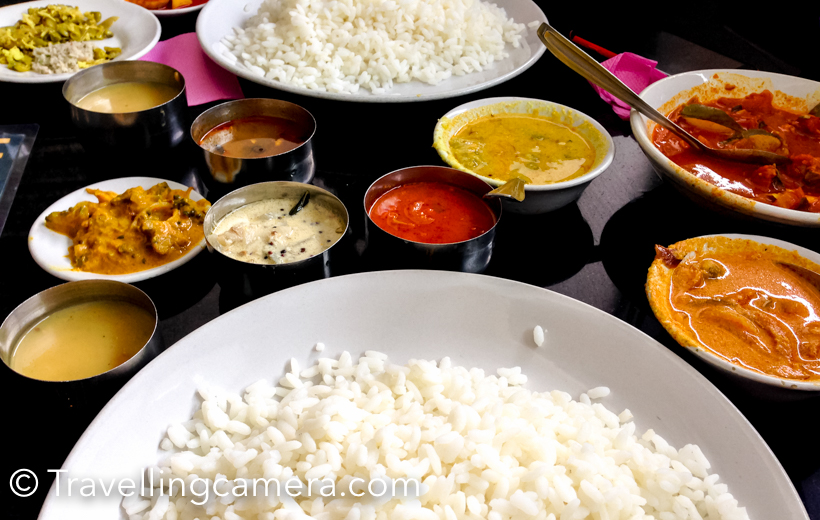
Kerala fish meals
Served traditionally on banana leaves with:
- rice,
- fish curry,
- thoran,
- pickle,
- papadam.

Kappa and meen curry
Tapioca with spicy fish curry is deeply local and wonderfully comforting after long humid walks.
Ginger chai from roadside stalls
Small tea shops become excellent observation points for street photography.
Sit quietly.
Watch life unfold.
Local Conversations That Reveal Kochi’s Soul
Kochi rewards curiosity.
People often ask photographers questions:
- “Which country?”
- “Why this street?”
- “What camera?”
- “Why old doors?”
These interactions matter because they change your relationship with the city.
That line explains Fort Kochi better than any guidebook.

Best Time to Visit Kochi for Photography
October to March
This is the best season for:
- walking comfortably,
- photography,
- cultural exploration.
Humidity reduces slightly, and the skies remain photogenic.
Monsoon season (June–September)
Underrated for photographers.
Yes, rain interrupts plans.
But monsoon transforms Kochi into:
- deeper greens,
- reflective streets,
- dramatic skies,
- richer textures.
Carry weather protection for cameras.
Summer (April–May)
Very humid.
Photography is still possible, but morning and evening become essential.
How to Reach Kochi
By Air
The nearest airport is Cochin International Airport.
It connects well with:
- Delhi
- Mumbai
- Bengaluru
- Chennai
- international Gulf destinations
By Train
Ernakulam Junction and Ernakulam Town are major railway stations with excellent connectivity.
By Ferry
Local ferries are inexpensive and highly photogenic.
They also provide authentic glimpses into everyday Kochi life.
Where to Stay in Kochi
Fort Kochi
Best for:
- photographers,
- walkers,
- café culture,
- heritage stays.
Look for:
- restored colonial homes,
- boutique guesthouses,
- homestays.
Mattancherry
More local and budget-friendly.
Ideal for:
- cultural immersion,
- street photography,
- longer stays.
Ernakulam
Better for:
- business travelers,
- luxury hotels,
- transport connectivity.
But less atmospheric for photography.
Budget Tips for Photographers
- Walk instead of taking autos inside Fort Kochi.
- Use ferries whenever possible.
- Stay in heritage homestays instead of chain hotels.
- Eat at local cafés and messes.
- Carry reusable water bottles.
- Photograph early to avoid expensive crowd-heavy tours.
Suggested 2-Day Photography Itinerary
Day 1
Morning
- Sunrise near Chinese Fishing Nets
- Bastion Street
- Princess Street doors
Afternoon
- Jew Town textures
- Spice markets
- Café break
Evening
- Napier Street golden hour
- Street portraits
Day 2
Morning
- Mattancherry local life
- Residential lanes
Afternoon
- Ferry rides
- Hidden neighborhoods
Evening
- Rainy street photography if possible
- Blue hour architecture shots
Responsible Travel Tips
- Ask permission before photographing residents.
- Avoid blocking entrances.
- Support local cafés and artisans.
- Do not treat residential neighborhoods like museum exhibits.
- Respect religious spaces.
- Dress modestly in quieter residential areas.
Common Mistakes to Avoid
Only photographing Chinese Fishing Nets
Kochi is much richer beyond that landmark.
Ignoring midday breaks
Humidity drains energy quickly.
Rushing through Fort Kochi
The city rewards slow observation.
Carrying too much gear
Minimal setups work best in Kochi’s narrow streets.
Frequently Asked Questions About the Doors of Kochi
Why are the Doors of Kochi famous?
The Doors of Kochi reflect centuries of Portuguese, Dutch, British, and Kerala architectural influences. Their textures, colors, and craftsmanship make them highly photogenic.
Which area in Kochi is best for photography?
Fort Kochi is the most popular photography district, especially around Princess Street, Napier Street, and Mattancherry.
What is the best time to photograph Kochi?
Early mornings and golden hour evenings provide the best light and fewer crowds.
Is Kochi good for street photography?
Yes. Kochi offers excellent opportunities for street photography because of its layered culture, coastal atmosphere, heritage architecture, and approachable residents.
Can beginners photograph the Doors of Kochi?
Absolutely. Even smartphone photographers can capture compelling frames because the city naturally offers color, texture, and depth.

Final Thoughts
The Doors of Kochi are not famous monuments.
They do not appear on postcards as aggressively as palaces or beaches. Yet they may become your strongest memories of the city.
Because doors symbolize transition.
And Kochi itself feels suspended between worlds:
- sea and land,
- Europe and Kerala,
- commerce and art,
- decay and preservation,
- memory and reinvention.
As a photographer, you eventually stop searching for perfect doors.
You begin searching for imperfect ones.
That is where Kochi becomes unforgettable.
Related Blogposts:




.jpg)
Comments