
Shri Malligeswarar Temple Mahabalipuram, Tamilnadu : A Quiet Shiva Temple Beyond the Famous Monuments

Introduction: Discovering a Different Side of Mahabalipuram
When people think of Mahabalipuram Temples, the first images that usually come to mind are the Shore Temple facing the Bay of Bengal, the magnificent Pancha Rathas and the enormous open-air relief of Arjuna's Penance. These monuments are deservedly famous.
But Mahabalipuram has another layer.
This is a temple where architecture, worship and everyday life exist together.
The temple is particularly interesting because its history is not as straightforward as one might assume. Local and devotional sources associate it with the Pallava and Chola periods, while a detailed heritage documentation project notes that there are no inscriptions currently establishing that claim and suggests that much of the present structure may be considerably later. That uncertainty is itself fascinating: Mahabalipuram is a place where centuries of memory, rebuilding and living worship overlap.
For a photographer, the experience is equally different. Here, the photograph is not simply about stone. It is about a flower offering, a shaft of morning light, an elderly devotee walking around the prakaram, the sound of a bell from somewhere inside, or the contrast between the quiet temple and the busy tourist streets outside.
That is what makes Shri Malligeswarar Temple worth seeking out.
Why Visit Shri Malligeswarar Temple in Mahabalipuram?
There are several reasons to include this lesser-known temple in a Mahabalipuram itinerary.
1. It shows Mahabalipuram as a living town
The celebrated Pallava monuments are extraordinary archaeological and architectural landmarks. Shri Malligeswarar Temple offers something different: a functioning place of worship integrated into the local community.
The temple is listed by the Tamil Nadu Hindu Religious and Charitable Endowments system among temples in the Chengalpattu region, confirming its institutional presence as a living temple rather than simply an archaeological site.
2. It is close to the better-known heritage circuit
The temple is situated toward the northern side of Mamallapuram, close to the northeastern edge of the UNESCO heritage area. A heritage documentation visit placed it roughly 500 metres from the Mamallapuram bus stand.
This makes it easy to combine with other places without committing half a day to a separate excursion.
3. The scale is intimate
There is something refreshing about entering a smaller temple after spending time among Mahabalipuram's enormous granite monuments.
You begin noticing details that are easy to overlook in larger monuments: the alignment of the Nandi, the threshold of the sanctum, smaller shrine images, the texture of granite under changing light and the way devotees move through the space.
4. It is interesting for photographers
The temple is particularly rewarding if you enjoy architectural details rather than only postcard views.
The east-facing entrance, dark stone surfaces, relatively compact courtyard and sculptural details create opportunities for compositions using light, shadow and geometry.

Mahabalipuram Temples: Where Shri Malligeswarar Fits Into the Story
Mahabalipuram's identity is inseparable from the Pallavas.
During the 7th century, the Pallava rulers developed Mamallapuram as an important port and artistic centre. The town became associated with rock-cut caves, monolithic rathas, structural temples and large sculptural panels.
Shri Malligeswarar Temple occupies an interesting position within this broader cultural landscape.
Some devotional accounts describe the temple as an ancient shrine connected with the Pallava period and associate its origins with Paranjothi, described as an important figure in the court of Narasimhavarman I.
However, this should be treated as a traditional historical account rather than an established archaeological fact. A detailed temple documentation project specifically notes that the claim of Chola-period origin is not supported by inscriptions and suggests that the present structure could be around 200–300 years old.
That distinction matters.
When visiting historic Tamil Nadu temples, it is tempting to attach a famous dynasty to every old stone. But buildings evolve. Temples are repaired, rebuilt, enlarged and sometimes reconstructed after periods of decline.
Shri Malligeswarar is perhaps more interesting when viewed through that lens.
It represents not just one historical moment but the continuing life of a sacred place.

The History of Shri Malligeswarar Temple
The temple is dedicated to Sri Mallikeswarar, with Sri Mallikeswari as the accompanying goddess. The sanctum faces east, while the goddess has a separate south-facing shrine.
There is also an important modern chapter in the temple's history.
According to a 2024 report, the temple had fallen into poor condition and worship had become inactive for a period. Devotees subsequently took up restoration, with a major kumbabhishekam performed in 2004. Additional shrines, including those for Vinayagar, Murugan and Nataraja, were added over time, followed by another kumbabhishekam in 2017.
Further renovation followed, including a new three-tier granite rajagopuram, granite flooring in the mandapa area, a compound wall and other improvements. A major kumbabhishekam was scheduled in September 2024.
This is one of the lesser-known stories behind many Tamilnadu Temples: preservation is not always about an archaeological department freezing a monument in time.
Sometimes preservation happens because local devotees refuse to let a place of worship disappear.
Architecture of Shri Malligeswarar Temple
The architecture is comparatively modest, but that does not mean it is visually uninteresting.
A detailed heritage visit describes the temple as consisting of the garbhagriha, antarala and ardha mandapa. The sanctum rests on a three-part adhisthana, with an eka-tala vesara-style vimana above it. Sculptural representations of Shiva, Dakshinamurthy, Vishnu and Brahma are found around the upper portion of the sanctum.
Inside the temple complex, you can encounter several familiar elements of a South Indian Shaiva temple:
Nandi
Bali peetha
Dwajasthambam
Dwarapalakas
Vinayagar
Dakshinamurthy
Vishnu
Brahma
Durga
Chandikeswarar
Nataraja
Subramaniar with Valli and Deivanai
Navagrahas
Shaiva saints
The current temple also has a three-storey granite rajagopuram, described in a 2024 report as approximately 23 feet high.
For someone accustomed to the massive monuments of Mahabalipuram, this smaller architectural vocabulary can actually be more enjoyable to study.
You can stand closer.
You can observe the transitions between stone surfaces.
And you can see how a temple is used rather than simply admired.
Walking Through the Temple
The first thing I would recommend is resisting the temptation to photograph immediately.
Stand for a minute.
Listen.
A temple such as this has its own rhythm. Footsteps are softer. Conversations become quieter. Bells punctuate the stillness. The smell of flowers, oil lamps and incense creates a sensory layer that photographs can never completely capture.
The entrance leads into a mandapa where the traditional sequence of sacred elements begins to make sense.
The Nandi becomes an important visual anchor.
Beyond it lies the sanctum.
The deeper you look, the more the temple becomes less about one grand architectural statement and more about a sequence of smaller experiences.
The goddess shrine is particularly interesting because it faces south, unlike the east-facing main sanctum.
In the prakaram, the presence of multiple smaller shrines encourages a slower circumambulation.
This is not a monument to rush through.
A Photographer's Perspective: Mahabalipuram Temples Beyond the Shore Temple
If you photograph Mahabalipuram regularly, you may find Shri Malligeswarar especially rewarding because the light behaves very differently from the open monuments.
The Shore Temple is about expansive compositions.
Malligeswarar is about layers.
A doorway.
A pillar.
A flower.
Nandi.
A fragment of sculpture.
A devotee moving through a shaft of light.
These become your subjects.
Best Photography Spots
The eastern entrance
The east-facing entrance is the natural starting point.
Morning light can provide a gentle illumination of the exterior and create depth around the entrance.
Try a vertical composition that includes the entrance, sky and a portion of the surrounding street.
Nandi and the sanctum axis
Instead of photographing Nandi as an isolated object, use the traditional temple axis.
Shoot from behind or slightly to the side of Nandi and allow the sanctum architecture to create a visual destination.
A moderate wide-angle lens works better than an ultra-wide lens here.
Mandapa details
Look for repetition.
Pillars, beams and door frames can create natural leading lines.
If you have a prime lens, this is an excellent place to experiment with shallow depth of field.
Prakaram
The circumambulatory passage can produce beautiful frames when sunlight enters from one side.
Wait for a person to walk through your composition.
That person gives scale.
More importantly, they tell the story of a living temple.
Sculptural details
Do not photograph every sculpture straight-on.
Move.
Look from below.
Try side lighting.
Look for worn edges and surface texture.
Historic stone often photographs better when the light comes from an angle rather than directly from the front.
Photography Tips for Shri Malligeswarar Temple
| What to Photograph | Best Time | Suggested Approach |
|---|---|---|
| Entrance and gopuram | Early morning | Wide/standard lens |
| Nandi | Morning or evening | Use temple axis and symmetry |
| Stone details | Side light | 50–100mm or equivalent |
| Prakaram | Morning/evening | Wait for human movement |
| Devotional details | During active worship | Ask before photographing people |
| Exterior street life | Early morning | Candid observational photography |
| Evening atmosphere | Around opening hours | Higher ISO and slower compositions |
A few practical points matter.
Do not use flash inside the shrine.
Avoid photographing devotees during prayer without permission.
And remember that the most interesting photograph may not be the deity itself. Sometimes the photograph is the devotee's hands holding flowers outside the sanctum.
Lesser-Known Insights About Malligeswarar Temple
One of the most interesting aspects of this temple is the disagreement over its age.
A 2017 report described it as approximately 700 years old and noted that it was under the control of the Hindu Religious and Charitable Endowments department.
Other sources connect it with much earlier Pallava or Chola traditions. Yet the heritage documentation mentioned above found no inscriptional evidence confirming those claims and estimated the present structure at perhaps 200–300 years old.
Rather than presenting one date as definitive, it is better to acknowledge this uncertainty.
That is a useful lesson when exploring Tamilnadu Temples.
A temple's sacred history and its archaeological history are not necessarily identical.
The former is preserved through oral tradition, worship and community memory.
The latter depends on inscriptions, architectural evidence, dated records and material analysis.
Both are part of the story.
Festivals and Temple Life
Shri Malligeswarar Temple continues to function as a living place of worship.
Sources documenting the temple mention special observances on:
Pradosham
Maha Shivaratri
Panguni Uthiram
Aani Uthiram
Sani Peyarchi
Thirukalyanam
The temple also hosts worship associated with the goddess Mallikeswari. Devotional accounts describe devotees seeking blessings related to marriage and children.
In 2024, a Thirukalyanam celebration was followed by a procession through the streets of Mamallapuram, showing how the temple's religious life extends beyond its walls into the town.
For photographers, festival days offer extraordinary opportunities, but they also demand more sensitivity.
The people around you are participating in a religious event, not performing for cameras.
Local Stories and Human Connections
There is something distinctive about smaller South Indian temples.
At a major monument, conversations often revolve around directions, tickets, guides and photography.
At a neighbourhood temple, people are more likely to talk about the deity.
Someone may explain when a particular puja takes place.
Another person may tell you why a shrine is important to their family.
Someone else may simply smile and continue with their prayer.
These conversations are rarely found in guidebooks.
If you speak even a few words of Tamil, use them.
A simple "Vanakkam" goes a long way.
And if someone begins telling you a local story, listen before reaching for the camera.
Mahabalipuram Food After Visiting the Temple
One of the pleasures of exploring Mahabalipuram is that temple visits can easily be combined with local food.
Do not think only in terms of restaurants aimed at tourists.
Walk around the town and look for simple South Indian meals, tiffin places and small eateries.
For breakfast, look for:
Idli
Vada
Pongal
Dosa
Sambar
Coconut chutney
Filter coffee
For lunch, a traditional vegetarian meal served on a banana leaf can be a satisfying continuation of the temple experience.
If seafood is part of your diet, Mahabalipuram's coastal location also means that fish and other seafood dishes are widely available.
One practical observation: heat and humidity can make a heavy sightseeing schedule surprisingly tiring. A simple breakfast, plenty of water and an early start often work better than trying to cover every monument between late morning and afternoon.
Best Time to Visit Shri Malligeswarar Temple
For sightseeing and photography, early morning and early evening are the most comfortable periods.
A heritage documentation source lists temple hours as approximately 6:30 AM–9:00 AM and 5:00 PM–8:00 PM, but timings can change with rituals, festivals and temple administration.
Therefore, verify locally on the day of your visit, particularly if the temple is the main purpose of your trip.
October to February
These months are generally more comfortable for exploring Mahabalipuram.
Morning walks are pleasant, and the softer winter light is useful for photography.
March to May
The heat can become intense.
Plan your temple and monument visits early.
The advantage is that sunrise photography along the coast can be beautiful.
June to September
The weather can be humid and unpredictable.
Clouds can sometimes create beautiful dramatic skies, although rain can disrupt outdoor sightseeing.
For photography, however, a cloudy sky can be an advantage rather than a problem.
How to Reach Shri Malligeswarar Temple
Shri Malligeswarar Temple is located in Mamallapuram (Mahabalipuram), Chengalpattu district, Tamil Nadu.
A heritage documentation source places it about 500 metres from the Mamallapuram bus stand and identifies Chengalpattu as the nearest railway station.
From Chennai
Mahabalipuram is commonly reached by road via the East Coast Road.
A private car or taxi provides flexibility if you want to combine the temple with multiple heritage sites.
From Chengalpattu
You can travel onward by road to Mamallapuram.
This is useful if you are arriving by train.
Within Mahabalipuram
Once you are in the town, walking can be a practical option for several attractions.
The compact nature of the central heritage area makes it possible to combine the temple with other nearby sites rather than repeatedly using a vehicle.
Where to Stay in Mahabalipuram
If photography is your priority, consider staying in Mahabalipuram rather than treating the town as a quick day trip.
Staying overnight gives you access to something a day visitor misses:
early morning Mahabalipuram.
The streets are quieter.
The light is softer.
The Shore Temple can be approached before the main daytime rush.
And you can return to the temple area in the evening without worrying about the drive back to Chennai.
Accommodation ranges from simple guesthouses and budget hotels to upscale beach resorts.
For a heritage-focused trip, staying close to the central town is convenient. For a slower coastal holiday, properties farther toward the beach can make more sense.
Budget Tips
Mahabalipuram does not require an expensive trip.
You can keep the experience relatively simple by:
Staying in a modest hotel or guesthouse.
Using local transport for short distances.
Walking between nearby monuments.
Eating at local South Indian restaurants.
Spending more time observing rather than trying to enter every commercial attraction.
Combining Malligeswarar Temple with other nearby heritage sites.
The temple itself should be approached primarily as a place of worship rather than a commercial tourist attraction.
A Suggested One-Day Mahabalipuram Temple and Heritage Itinerary
6:00–7:00 AM
Begin with sunrise near the coast.
The early light can be excellent for photographing waves, fishermen and the Shore Temple exterior.
7:00–8:00 AM
Visit Shri Malligeswarar Temple.
Spend time rather than simply checking it off your list.
Observe the rituals, architecture and morning activity.
8:00–9:00 AM
Breakfast at a local South Indian eatery.
Filter coffee is almost mandatory.
9:00 AM–12:00 PM
Explore the major Pallava monuments:
Shore Temple
Pancha Rathas
Arjuna's Penance
Krishna Mandapam
12:00–2:00 PM
Lunch and rest.
Avoid attempting to photograph exposed stone monuments in the harshest midday sun.
3:00–5:00 PM
Explore lesser-known corners of the town and stone-carving workshops.
Watch artisans working on granite.
This is one of the best ways to understand why Mahabalipuram's relationship with stone continues even today.
5:00–7:00 PM
Return toward the temple area.
If the temple is open, spend some time observing the evening worship.
Then walk toward the coast for sunset or blue-hour photography.
Nearby Places Worth Exploring
The biggest advantage of visiting Malligeswarar Temple is its location.
You can combine it with several better-known attractions without creating a complicated itinerary.
Consider exploring:
Shore Temple
Pancha Rathas
Arjuna's Penance
Krishna Mandapam
Varaha Cave Temple
Mahishasuramardini Cave
Tiger Cave
Mahabalipuram beach
Local stone-carving workshops
But leave some empty space in your itinerary.
Mahabalipuram rewards wandering.
Sometimes a narrow street, an old stone fragment or an artisan working outside a workshop becomes more memorable than another monument photographed from the standard viewpoint.
Responsible Travel at a Living Tamil Temple
Shri Malligeswarar is not simply a heritage structure.
It is a place where people come to pray.
Keep that distinction in mind.
Dress respectfully
Clothing should be appropriate for a Hindu temple environment.
Remove footwear where required
Follow the temple's instructions rather than assuming where footwear can be left.
Ask before photographing people
Especially when someone is performing a ritual.
Do not interrupt worship
If a ritual is underway, step aside and observe.
Avoid flash photography
Flash can disturb worshippers and is unnecessary for most architectural photography.
Do not touch sculptures
Stone surfaces can be damaged by repeated touching, oil, water and other substances.
Keep your voice low
The atmosphere of a temple is part of its experience.
Common Mistakes to Avoid
Mistake 1: Assuming every old structure is Pallava
Mahabalipuram is synonymous with Pallava art, but not every existing structure can automatically be dated to the Pallava period.
The history of Malligeswarar Temple itself illustrates why careful wording matters.
Mistake 2: Visiting only at midday
The harsh coastal sun can flatten architectural details.
Morning and evening are much more rewarding.
Mistake 3: Photographing everything immediately
Take time to understand the space.
Your strongest photograph may emerge after you stop looking at the temple as a collection of objects.
Mistake 4: Treating a living temple like a museum
People are not background props.
They are part of the temple's continuing story.
Mistake 5: Relying blindly on online timings
Temple timings can change during festivals, special pujas and renovation-related activities.
Check locally before planning your visit around a specific ritual.
Frequently Asked Questions About Shri Malligeswarar Temple Mahabalipuram
Where is Shri Malligeswarar Temple located?
Shri Malligeswarar Temple is located in Mamallapuram, also known as Mahabalipuram, in Chengalpattu district of Tamil Nadu. It lies toward the northern side of the town, close to the northeastern part of the UNESCO heritage area.
Who is the main deity of Malligeswarar Temple?
The principal deity is Sri Mallikeswarar, a form of Lord Shiva. The temple also has a separate shrine dedicated to Sri Mallikeswari.
Is Malligeswarar Temple a Pallava temple?
Traditional accounts associate the temple with the Pallava period, and some sources describe the Shiva lingam as belonging to the Pallava period. However, heritage documentation notes that there are no inscriptions currently establishing the claimed early date and suggests that the present structure may be considerably later.
Therefore, it is better to describe the temple as an old and traditionally significant Shiva shrine in historic Mamallapuram rather than confidently assigning the entire existing structure to the Pallavas.
What are the timings of Shri Malligeswarar Temple?
A detailed 2023 temple visit record lists timings of approximately 6:30 AM to 9:00 AM and 5:00 PM to 8:00 PM. Timings may change, particularly during festivals and special rituals, so visitors should verify them locally.
Is photography allowed inside Malligeswarar Temple?
Photography rules can vary by area and occasion. Avoid photographing the sanctum or worshippers if restrictions apply, and never use flash during worship. When uncertain, ask the temple staff or priest.
What other Mahabalipuram Temples can I visit nearby?
A broader Mahabalipuram temple itinerary can include the Shore Temple, Varaha Cave Temple, Mahishasuramardini Cave Temple and other Pallava-period monuments.
How far is Malligeswarar Temple from the Mahabalipuram bus stand?
A heritage documentation source places the temple at approximately 500 metres from the Mamallapuram bus stand.
Is Shri Malligeswarar Temple worth visiting for photographers?
Yes, particularly if you enjoy architectural details, temple life, textures and documentary photography. It offers a very different photographic experience from Mahabalipuram's large open-air monuments.
Final Thoughts: The Mahabalipuram Most Visitors Miss
Mahabalipuram is famous because of its stone.
But spend enough time here and you realise that the real story is not only in the monuments.
It is in the people who continue to worship in old temples.
It is in the artisans who still shape granite.
It is in the flower seller arranging jasmine early in the morning.
It is in the sound of a temple bell travelling through a street where tourists are beginning their day.
Shri Malligeswarar Temple belongs to this living side of Mahabalipuram.
Its history may not fit neatly into a single century. Its present architecture may represent layers of rebuilding rather than one uninterrupted Pallava creation. And that is precisely why it deserves attention.
The temple reminds us that Mahabalipuram Temples are not only monuments to photograph.
They are places that have survived because generations of people continued to care about them.
For a traveller, that changes the experience.
Instead of simply looking at ancient stone, you begin looking at continuity.
And in a town as visually spectacular as Mahabalipuram, that quieter story may be one of the most rewarding things to photograph.
Related Blogposts from Tamilnadu:

Descent of the Ganga River and Arjuna's Penance: Exploring Mahabalipuram Heritage Park

Main Places to Explore in Mahabalipuram: A Complete Guide to Mahabalipuram Tourism in Tamilnadu

Varaha Cave in Mahabalipuram: Exploring a Quiet Masterpiece of the Mamallapuram Heritage Site

Heritage Sites in Mamallapuram, Tamilnadu : Discovering the Unfinished Raya Gopuram

Draupadi’s Bath in Mahabalipuram, Tamilnadu : A Small Rock-Cut Cistern With a Curious Story

Trimurti Rock-Cut Cave Temple in Mahabalipuram, Tamilnadu : A Quiet Pallava Masterpiece

Mamallapur Lighthouse, Tamil Nadu: A Historic Beacon Above the Bay of Bengal

Ramanuja Mandapam in Mahabalipuram, Tamilnadu: A Quiet Chapter of Pallava Heritage

Krishna’s Butter Ball in Mamallapuram Heritage Park, Tamilnadu: The Giant Boulder That Refuses to Roll

Mahishasuramardini Rock Cut Mandapa, Mahabalipuram, Tamilnadu: A Photographer’s Journey Through Pallava Art

Iswara Temple Hillock, Mahabalipuram, Tamilnadu: A Quiet View into the Temples of Tamil Nadu

Shore Temple in Mahabalipuram, Tamilnadu: Where Pallava Stone Meets the Bay of Bengal

An Eventful Hike around Virupaksha Caves and Skand Ashram in Tiruvannamalai, Tamilnadu, India

The magnificent Arunachalesvara Temple, Tiruvannamalai, Tamilnadu || A Shiva Temple with a rich and interesting history

Chennai Travel Guide: The Cultural Capital of South India - Capital Cities of Indian States [Tamilnadu]

The Majestic Brihadeeshwara Temple: A Glimpse into the Architectural Brilliance of Thanjavur in Tamilnadu, India


Unlocking the Treasures of Saraswati Mahal Library in Thanjavur, Tamilnadu || Exploring India's oldest and most fascinating collection of manuscripts

The Magnificence of Cholapuram Temple: A Glimpse into the Ancient Heritage of Tamil Nadu, India

Discovering the Charms of Rameshwaram: Must-Visit Places for Travelers

Embracing the Serenity of Sunrise: Exploring Dhanushkodi in the Early Hours of the Morning | Tamilnadu Diaries

Vellore Fort in Tamilnadu, India : A Living Museum of South Indian Architecture

Exploring the Architectural Marvels and Historical Significance of Arulmigu Ramanathaswamy Temple in Rameshwaram, Tamilnadu : A Spiritual Journey Through Time

Pilgrimage to the Miraculous Churches of Velankanni: Exploring the History, Culture, and Beauty of this Sacred Town

Capturing the Serene Beauty of Sunset around Pamban Bridge in Rameshwaram, Tamilnadu : A Photographer's Delight

Exploring the Rich Fishing Heritage of Rameshwaram: A Journey Through the Bustling Fishermen Town Thangachimadam in Tamilnadu, India

Preserving the Grandeur of Chola Palace in Gangaikondacholapuram: The Role of the Archaeological Survey of India in Ariyalur District of Tamilnadu
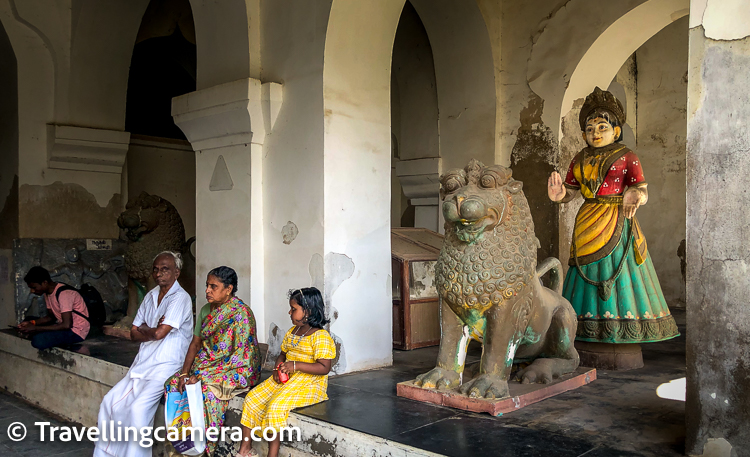
Thanjavur Palace in Tamilnadu: Where History and Art Come Together in a Spectacular Display

Auroville in India : The City of Dawn and a Model for Spirituality & Sustainable Living

Ramarpatham Shrine at Rameshwaram, Tamil Nadu || The site that has Lord Ram's footprints sculpted on a rock

The Sacred and Architectural Marvels of Ranganathaswamy Temple in Tamilnadu, India

Do you know about the 'Danish' Fort in India which is located at a beautiful location round the coast of Bay of Bengal?

Uncovering the Rich History and Beauty of the Basilica of the Sacred Heart of Jesus in Pondicherry, India
 |
| Anaikarai Dam |
Anaikarai North and South Dams on Kollidam Rivers, Tamil Nadu || Two of the many dams on Cauvery, some of which are nearly 2000 years old

Starting the Day Right: A Personal Reflection on Sunrise at Serenity Beach in Pondicherry, India

Puducherry Travel Guide: French Charm Meets Indian Spirit - Capital Cities of Indian States or Union Teritorries [Pondicherry]

Madanapalle to Thanjavur via Vellore and Tiruvannamalai - 4th day of our 14 days long trip through east coast of India || Noida to Rameshwaram

Thanjavur to Rameshwaram via Tiruchirapalli - 5th day of our 14 days long trip through east coast of India || Noida to Rameshwaram

Rameshwaram's Marine Museum, Harbour and More: A Guide to the Best Sights and Sounds from Tamilnadu State of India
Rameshwaram in Tamilnadu, India - The Land of Sacred Shrines and Mesmerizing Beaches

Villoondi Teertham - Discovering the Spiritual and Natural Wonders of Rameshwaram, India

Drive from Rameshwaram to Pondicherry along the coast - 7th day of our 14 days long trip through east coast of India || Noida to Rameshwaram

Drive from Pondicherry to Tada - 8th day of our 14 days long trip through east coast of India || Noida to Rameshwaram

Exploring the Mahatma Gandhi Statue and Other Attractions around Promenade Beach in Pondicherry, India

Kolams and Culture: The Significance of Daily Floor Art in Tamilnadu Homes of South India

Healing Waters and Holy Legends: A Visit to Vibhishan Teertham in Rameshwaram, Tamilnadu

Discovering the Mysteries of Sri Panchmukhi Hanuman Mandir and the Floating Stones of Rameshwaram in Tamilnadu
 Climb to the Top of Chennai Lighthouse : Exploring Aerial views of Marine Drive, Sea and other interesting landmarks of Chennai, Tamilnadu


Comments