

Introduction: When Stone Begins to Look Alive
There are places where history sits behind glass, protected from the outside world. And then there is Mahabalipuram, where history stands under the tropical sun, faces the sea breeze and continues to share space with ordinary life.
The first time you begin paying attention to Mahabalipuram Stone Art, it is easy to see only the grand monuments. The Shore Temple. The Pancha Rathas. Arjuna's Penance. The cave temples.
But spend some time walking around the town and another story begins to emerge.
You notice the face of a deity carved into a wall. An elephant emerging from granite. A lion tucked into an architectural detail. A figure whose clothing appears to move despite being made from an incredibly hard stone.
And then, somewhere along one of the streets, you hear it.
Tak. Tak. Tak.
A hammer striking a chisel.
That sound connects modern Mahabalipuram with the sculptors who worked here more than a thousand years ago.
This is what makes the Stone Sculptures of Tamilnadu particularly fascinating. In Mahabalipuram, stone is not merely a material used to construct temples. It is a medium through which mythology, architecture, nature and everyday life have been recorded.
The Pallava monuments may belong to another era, but stone carving remains part of the identity of Mamallapuram today.
For someone interested in photography, architecture, history or traditional Indian craftsmanship, this creates an unusual travel experience.
You are not simply looking at ancient art.
You are walking through a place where the conversation between humans and stone is still continuing.

Why Visit Mahabalipuram for Its Stone Art?
Mahabalipuram is one of those destinations where you can spend an entire day looking at essentially the same material and still keep discovering new things.
Granite dominates the landscape.
Yet the sculptors found an extraordinary variety of expression within it.
There are rock-cut caves where the architecture was carved into living rock. There are enormous reliefs spread across natural stone surfaces. There are monolithic temples carved from individual boulders. There are structural temples assembled from carved stone blocks.
And alongside all of this is a contemporary community of stone artisans.
The historic monuments are associated primarily with the Pallava period, especially the 7th and 8th centuries. The Group of Monuments at Mahabalipuram was later recognized as a UNESCO World Heritage Site.
But a list of dates does not really explain why the place is special.
The better way to understand Mahabalipuram is to walk.
Don't rush from monument to monument.
Look at the stone.
Look at the marks left by tools.
Look at the way weather has softened some surfaces while leaving other details surprisingly sharp.
And, if possible, spend some time watching a contemporary sculptor work.
Only then does the scale of the ancient achievement begin to sink in.

The Pallavas and the Birth of Mahabalipuram Stone Art
Mahabalipuram is closely associated with the Pallava dynasty, which played an important role in the development of South Indian temple architecture and sculpture.
The town is traditionally associated with Narasimhavarman I, the Pallava ruler whose title was Mamalla. This is why the town is also known as Mamallapuram.
The Pallavas experimented extensively with stone architecture.
Rather than following just one architectural formula, they explored several approaches.
Some structures were carved directly into rock.
Others were created as monolithic forms.
Still others were built using individual stone blocks.
This experimentation is one reason Mahabalipuram is so valuable to anyone interested in the history of Indian architecture.
You can almost see an architectural laboratory spread across the town.
The Pancha Rathas are particularly important in this regard. Each monolithic structure presents a different architectural form, allowing visitors to compare plans, roofs, columns and decorative elements.
The popular names of the rathas connect them with the Pandavas and Draupadi, but these names should not be interpreted as proof that the structures were literally built as residences or chariots for the characters of the Mahabharata.
The reality is more interesting.
They demonstrate Pallava experimentation with temple architecture.

Mahabalipuram Stone Art at Arjuna's Penance
If I had to choose one place in Mahabalipuram where I could spend an hour with a camera without getting bored, it would be the enormous rock relief commonly known as Arjuna's Penance or the Descent of the Ganges.
At first glance, it looks overwhelming.
There are figures everywhere.
Humans.
Animals.
Celestial beings.
Serpents.
Ascetics.
Elephants.
But the longer you look, the more details emerge.
The elephant group is particularly remarkable.
The sculptors didn't treat the animals as background decoration. Their bodies have weight and presence. The smaller elephants add another layer to the composition and make the scene feel almost observational.
The natural cleft running through the rock is central to the composition and has traditionally been associated with the descent of the Ganges.
This is a sculpture that should not be photographed only as a wide establishing shot.
Get closer.
Look for individual stories.
A face.
A hand.
An animal.
A gesture.
A weathered section of stone.
A photographer's approach
Start with a wide composition to establish the enormous scale.
Then switch to a longer lens.
Compression can help isolate individual characters within the larger relief.
Early morning or late afternoon is particularly useful because low-angle sunlight creates shadows inside the carved recesses.
The sculpture suddenly becomes three-dimensional.
At harsh midday, some of that subtlety disappears.

Krishna Mandapam: Mythology Meets Everyday Life
Krishna Mandapam is another place where slowing down pays off.
The relief depicts Krishna lifting Govardhan Hill to protect people and animals from torrential rain.
The scene includes gods and mythological elements, but what makes it particularly engaging is the presence of ordinary people and animals.
There are cows.
There are herders.
There are women and children.
There are everyday gestures.
That makes the relief feel surprisingly human.
Instead of showing mythology as something completely separated from ordinary existence, the sculptors incorporated the community into the story.
For a photographer, this creates a wonderful opportunity.
Don't just photograph Krishna.
Look at the people around him.
Study the relationship between the figures.
Observe how animals are positioned.
Try photographing small sections of the relief instead of always showing the entire composition.
Sometimes a two-foot section of ancient stone can tell a stronger story than a full monument.
Mahishasuramardini Cave: Movement Carved Into Stone
The Mahishasuramardini Cave offers one of the most striking contrasts in Mahabalipuram.
One major relief depicts Vishnu reclining in cosmic repose.
Another presents Durga confronting Mahishasura.
The visual difference is immediate.
One composition feels calm.
The other is full of energy.
This is a useful reminder that sculptors do not need animation to communicate movement.
Posture does it.
Direction does it.
The arrangement of bodies does it.
The positioning of weapons and limbs does it.
The Pallava sculptors understood how the human eye reads movement.
Spend a few minutes studying the Durga panel without taking photographs.
Then photograph it.
You may find that you start composing differently.
Pancha Rathas: Five Monuments, Five Experiments
The Pancha Rathas are perhaps the most instantly recognizable examples of Mahabalipuram's monolithic architecture.
They were carved from large granite outcrops rather than constructed in the conventional way from separately assembled blocks.
This is one of the reasons they are so fascinating.
Walk around each structure.
Don't photograph only the side that appears most symmetrical.
Look behind it.
Look at the corners.
Look at the roof.
Look at the columns.
Look at the sculpted animals nearby.
The granite surfaces respond dramatically to changing sunlight.
Early morning is particularly rewarding because the lower sun produces long shadows and better definition in carved details.
By late morning, the same structures can look much flatter photographically.
The Shore Temple and the Sea
The Shore Temple is perhaps the most famous image associated with Mahabalipuram.
Its location is part of its magic.
Here, architecture and coastline come together.
The temple complex represents the later phase of Pallava architectural development and is a structural rather than monolithic monument.
For photography, sunrise can be especially atmospheric.
The sea provides movement.
The granite provides permanence.
The sky provides changing colour and texture.
Instead of photographing only the temple frontally, look for compositions where the monument becomes part of the landscape.
Try including:
Waves
Sea spray
Fishermen
Passing visitors
Palm trees
Clouds
Reflections after rain
Silhouettes
The best image may not be the most technically perfect one.
It may be the one that communicates the relationship between the temple and the sea.
Mahabalipuram's Living Stone-Carving Tradition
This is perhaps the most important part of the Mahabalipuram story for me.
The ancient monuments are not the end of the tradition.
Stone carving continues in the town.
Walk through the streets and you will find workshops where artisans work on sculptures ranging from small decorative pieces to large religious figures.
The sound is unmistakable.
Hammer.
Chisel.
Granite.
Dust.
Silence.
Hammer again.
Watch a sculptor closely and the apparent simplicity of the process disappears.
Every strike is controlled.
A sculptor has to understand where the stone can safely be removed and where it cannot.
A mistake on a finished section can destroy hours or days of work.
This is not simply manual labour.
It is a combination of drawing, three-dimensional visualization, material knowledge, patience and muscle memory.
Mahabalipuram also has a formal educational tradition associated with the Government College of Architecture and Sculpture, which teaches traditional forms of sculpture and architecture.
That makes the town unusual.
The craft is simultaneously archaeological heritage, education and contemporary livelihood.
What Does a Stone Sculptor Actually See?
This is something worth thinking about while visiting a workshop.
A visitor sees a block of granite.
A sculptor sees a possibility.
Before the first major cut, the artist has to think about proportions, balance, anatomy, composition and the final shape.
Unlike clay, stone does not allow easy correction.
You can add clay.
You cannot put granite back.
That fundamental difference changes the entire process.
The sculptor is therefore working both with the design and against the limitations of the material.
This is one reason I find unfinished sculptures particularly fascinating.
They reveal the process.
A finished statue tells you what the artist created.
An unfinished block can show you how the artist thought.
Lesser-Known Places Around Mahabalipuram
Krishna's Butter Ball
Not every famous piece of stone in Mahabalipuram was carved by humans.
Krishna's Butter Ball is an enormous naturally occurring granite boulder sitting dramatically on a slope.
Its unusual balance has made it one of the town's most photographed natural features.
The popular name connects the rock with Krishna's childhood stories involving butter.
Whether you approach it as geology, mythology or simply an extraordinary visual curiosity, it is worth seeing.
For photography, don't photograph the boulder alone.
Put a person beside it.
That gives the photograph a sense of scale.
Tiger Cave
Tiger Cave lies a little away from the main monument cluster and tends to receive fewer visitors than Mahabalipuram's headline attractions.
Its sculpted entrance and surrounding rocky landscape provide a different experience from the monumental core of the town.
It is particularly useful for photographers who want to move away from the standard Mahabalipuram photographs.
The surrounding space also makes it easier to appreciate the relationship between natural rock and Pallava carving.
Olakkanesvara Temple
Located on higher ground, Olakkanesvara offers another perspective on the historic landscape.
One of the pleasures of exploring Mahabalipuram is realizing that the monuments are not isolated objects.
They occupy a coastal landscape.
The sea is always somewhere nearby.
The granite outcrops are part of the setting.
And the town grew around this environment.
Once you understand that relationship, Mahabalipuram begins to feel less like an archaeological park and more like a historic landscape.
Best Photography Spots in Mahabalipuram
If photography is an important part of your visit, timing can completely change your experience.
| Location | Best Time | Photography Opportunity |
|---|---|---|
| Shore Temple | Sunrise | Temple, sea, silhouettes |
| Pancha Rathas | Early morning | Architecture and long shadows |
| Arjuna's Penance | Morning or late afternoon | Relief details and textures |
| Krishna Mandapam | Morning | Figures, animals and storytelling |
| Mahishasuramardini Cave | Morning/afternoon | Dramatic reliefs |
| Krishna's Butter Ball | Morning/evening | Scale and landscape |
| Tiger Cave | Morning | Sculptural details and surroundings |
| Stone workshops | Mid-morning | Documentary and people photography |

Photography Tips for the Stone Sculptures of Tamilnadu
1. Look for side light
Granite comes alive when light travels across its surface rather than hitting it directly.
Side lighting reveals tiny depressions and raised edges.
2. Don't always use a wide-angle lens
Wide lenses are excellent for architecture.
But sculpture often benefits from compression.
A short telephoto or smartphone zoom can help isolate details.
3. Photograph the details
Look for:
Eyes
Hands
Jewellery
Animal faces
Drapery
Chisel marks
Weathered surfaces
Cracks and natural textures
4. Use people for scale
A person standing beside a massive granite structure immediately communicates its size.
5. Shoot the workshops as documentary photography
The most interesting workshop images are often not posed portraits.
Photograph the process.
Hands.
Tools.
Dust.
Concentration.
Partially completed sculptures.
6. Be careful with midday exposure
Bright granite under tropical sunlight can produce harsh highlights.
Watch the brightest surfaces carefully.
7. Return to the same monument
If you have time, photograph one place twice.
Morning and afternoon light can make the same sculpture look completely different.
Food in Mahabalipuram
After walking around granite monuments under the Tamil Nadu sun, food becomes part of the experience.
Start a morning with a simple South Indian breakfast.
Idli.
Vada.
Pongal.
Dosa.
Sambar.
Coconut chutney.
And, of course, filter coffee.
For lunch or dinner, the coastal location makes seafood an obvious choice.
Fish, prawns and crab appear on menus in many restaurants, although the exact availability depends on the season and establishment.
One of my favourite approaches to eating in places like Mahabalipuram is to ask a local what is fresh that day.
That question is often more useful than reading an enormous menu.
If you have spent the morning photographing stone, don't underestimate the pleasure of sitting down with a simple meal and watching everyday life outside.
Talking to the Local Stone Artists
If you meet a sculptor, ask questions.
But don't begin with the camera.
Watch first.
Then introduce yourself.
Ask:
How long have you been carving?
What type of stone do you prefer?
How long does a sculpture of this size take?
How did you learn?
Do you work from drawings?
Which tools do you use?
How do you know where to strike the stone?
The answers can completely change your understanding of what you have seen at the monuments.
Also remember that a workshop is someone's workplace.
Ask before photographing.
Don't stand directly over a sculptor working on a delicate section.
And if you are interested in buying something, ask about the material, workmanship and time involved.
A handmade stone sculpture is not simply a souvenir.
It represents skilled labour.
Best Time to Visit Mahabalipuram
The cooler months from November to February are generally the most comfortable for exploring Mahabalipuram.
December and January can also bring cultural activity and dance performances associated with the Mahabalipuram Dance Festival.
March onwards, temperatures can become increasingly uncomfortable in the middle of the day.
The monsoon period brings its own visual character.
Cloudy skies can produce wonderfully soft light for photography, while wet granite can become darker and more dramatic.
However, rain can also affect outdoor exploration.
For photographers
The most useful rule is simple:
Don't plan your photography around the middle of the day.
A good daily rhythm is:
6:00–9:00 AM: Monuments and architectural photography
9:00–11:00 AM: Breakfast and stone workshops
11:00 AM–3:30 PM: Lunch, indoor activities and rest
3:30–6:00 PM: Reliefs, caves and outdoor exploration
Sunset: Beach and coastal photography
This schedule also makes the trip considerably less exhausting.
How to Reach Mahabalipuram
From Chennai
Mahabalipuram is approximately 55–60 km from Chennai, depending on your starting point and route.
The East Coast Road is the most scenic approach and makes the drive itself part of the journey.
By Air
Chennai International Airport is the nearest major airport.
From the airport, you can hire a taxi or arrange a private transfer.
By Train
Chengalpattu is the nearest major railway connection, after which you can continue by road.
By Bus
Regular buses connect Chennai and Mahabalipuram.
For photographers carrying multiple bags, a private car or taxi is generally more convenient.
Where to Stay in Mahabalipuram
Mahabalipuram has accommodation ranging from simple guesthouses to luxury beachfront resorts.
For a photography-focused trip, location matters more than luxury.
Staying within or close to town means you can reach the monuments early, take a break during the hottest part of the afternoon and return for evening photography.
Choose according to your travel style
| Accommodation | Suitable For |
|---|---|
| Budget guesthouse | Independent travellers |
| Boutique hotel | Couples and photographers |
| Beach resort | Relaxation-focused trips |
| Homestay | Travellers seeking local interaction |
| Chennai hotel | Short day trips |
If your priority is sunrise photography, I would strongly prefer staying in Mahabalipuram rather than commuting from Chennai every morning.
Budget Tips for Mahabalipuram
Mahabalipuram does not have to be an expensive destination.
A few simple decisions can keep costs under control:
Stay in a modest property close to town.
Eat breakfast at local restaurants.
Walk between nearby monuments where practical.
Use autos for longer distances.
Carry drinking water.
Avoid shopping simply because a sculpture looks attractive.
Compare workmanship before purchasing stone art.
Consider spending money on local experiences rather than unnecessary souvenirs.
If you are buying sculpture, remember that transportation can become an issue with larger pieces.
Ask the seller how packing and delivery will be handled before making a purchase.
A Practical One-Day Mahabalipuram Stone Art Itinerary
6:00 AM — Shore Temple
Begin near the coast.
Photograph the temple in soft morning light and spend some time observing the relationship between architecture and sea.
7:30 AM — Pancha Rathas
Explore the monolithic structures before the heat becomes intense.
Walk around each ratha rather than photographing only the front.
9:00 AM — Breakfast
Have a traditional South Indian breakfast and filter coffee.
10:00 AM — Stone-Carving Workshops
Spend time watching local sculptors.
This is one of the most important parts of the trip if your interest is specifically Mahabalipuram Stone Art.
12:00 PM — Lunch
Take a proper break.
The afternoon heat can be surprisingly tiring.
3:30 PM — Arjuna's Penance
Return to the major reliefs when the light begins becoming more forgiving.
Spend time on individual figures and animals.
4:30 PM — Krishna Mandapam and Cave Temples
Look for smaller details and contrasting expressions.
5:30 PM — Krishna's Butter Ball
End the day with one of Mahabalipuram's strangest natural landmarks.
Stay around long enough to photograph people interacting with the giant boulder.
Responsible Travel Around Ancient Stone
These monuments have survived for centuries, but that does not mean they are indestructible.
A few simple habits can help protect them.
Don't climb protected sculptures or monuments.
Don't touch delicate carvings unnecessarily.
Never scratch names or messages into stone.
Follow photography restrictions inside protected areas.
Ask before photographing artisans closely.
Don't interrupt people while they are working.
Avoid littering.
Don't bargain disrespectfully with artisans.
Buy directly from genuine local craftsmen when possible.
Treat religious structures as active cultural spaces rather than merely photographic backgrounds.
The goal is simple.
Leave the stone exactly as you found it.
Common Mistakes to Avoid
Seeing only the Shore Temple
The Shore Temple is spectacular, but it represents only one part of Mahabalipuram's story.
Visiting everything at noon
The heat can be exhausting and the light is often unforgiving.
Rushing through Arjuna's Penance
This relief deserves time.
Stand there.
Observe.
Let your eyes wander.
Ignoring the workshops
The contemporary stone-carving tradition gives context to the ancient monuments.
Photographing everything from eye level
Change your perspective.
Crouch.
Move sideways.
Look upward.
Use foreground elements.
Treating every sculpture as a religious object only
Many reliefs also contain observations of people, animals, clothing, occupations and social life.
Look beyond the obvious mythology.
FAQs About Mahabalipuram Stone Art
What is Mahabalipuram Stone Art famous for?
Mahabalipuram is famous for its Pallava-era rock-cut caves, monolithic rathas, enormous open-air reliefs, sculpted boulders and structural temples.
Why are the Stone Sculptures of Tamilnadu at Mahabalipuram important?
The sculptures of Mahabalipuram represent an important stage in the development of South Indian architecture and stone carving. They demonstrate how Pallava artists used natural rock and granite to create complex architectural and narrative forms.
Is stone carving still practiced in Mahabalipuram?
Yes. Stone carving remains an important traditional craft in Mamallapuram, with workshops and formal institutions continuing to teach and practice traditional sculpture.
Where can I see stone sculptors working in Mahabalipuram?
Stone-carving workshops can be found around Mamallapuram. The Government College of Architecture and Sculpture is also an important centre for traditional sculpture education.
What is the best time to photograph Mahabalipuram sculptures?
Early morning and late afternoon generally offer the most interesting light. Low-angle sunlight brings out the texture and depth of granite carvings.
How many days are enough for Mahabalipuram?
One full day is enough to cover the principal monuments. Two days are better if you want to explore workshops, lesser-known sites, the beach and photography opportunities at a relaxed pace.
What is Krishna's Butter Ball?
Krishna's Butter Ball is a huge naturally occurring granite boulder resting dramatically on a slope. Its unusual appearance has made it one of Mahabalipuram's most recognizable natural landmarks.
Is Mahabalipuram good for photography?
Yes. It offers an unusually diverse combination of ancient sculpture, architecture, natural rock formations, coastal landscapes, traditional craftsmen, street life and local culture.
Can I buy stone sculptures in Mahabalipuram?
Yes. Numerous workshops sell stone sculptures. If you plan to purchase one, ask about the stone, carving process, workmanship, packing and transportation before buying.
What is the difference between Mamallapuram and Mahabalipuram?
They refer to the same historic town. Mamallapuram is the traditional name, while Mahabalipuram is the name commonly used by travellers and in many English-language references.
Final Thoughts: Listen to the Stone
What stays with me most about Mahabalipuram isn't simply the grandeur of the monuments.
It is the sound.
The sound of a hammer striking a chisel.
That small, ordinary sound creates an extraordinary connection between two very different moments in history.
A Pallava sculptor once stood before a block of granite, imagining what could emerge from it.
Centuries later, another artisan stands in the same broad cultural landscape, doing something remarkably similar.
The tools may have changed.
The designs may have changed.
The demands of the modern world have certainly changed.
But the fundamental relationship between the sculptor and the stone remains.
That is why I think the best way to experience Mahabalipuram Stone Art is not to treat the town as an archaeological checklist.
Walk slowly.
Look closely.
Watch the craftsmen.
Study unfinished sculptures.
Look at the animals hidden in the reliefs.
Return to the same monument in different light.
Talk to people.
Eat something simple.
Listen to the hammer.
And then stand quietly before a Pallava sculpture that has survived more than a thousand years.
You may find yourself looking at it differently.
It stops being merely an ancient monument.
You begin to see the hands behind it.
The decisions.
The mistakes that could not be corrected.
The patience.
The imagination.
And ultimately, the remarkable human desire to leave a story behind in stone.
Related Blogposts from Tamilnadu:

Descent of the Ganga River and Arjuna's Penance: Exploring Mahabalipuram Heritage Park

Main Places to Explore in Mahabalipuram: A Complete Guide to Mahabalipuram Tourism in Tamilnadu

Varaha Cave in Mahabalipuram: Exploring a Quiet Masterpiece of the Mamallapuram Heritage Site

Heritage Sites in Mamallapuram, Tamilnadu : Discovering the Unfinished Raya Gopuram

Draupadi’s Bath in Mahabalipuram, Tamilnadu : A Small Rock-Cut Cistern With a Curious Story

Trimurti Rock-Cut Cave Temple in Mahabalipuram, Tamilnadu : A Quiet Pallava Masterpiece

Mamallapur Lighthouse, Tamil Nadu: A Historic Beacon Above the Bay of Bengal

Ramanuja Mandapam in Mahabalipuram, Tamilnadu: A Quiet Chapter of Pallava Heritage

Krishna’s Butter Ball in Mamallapuram Heritage Park, Tamilnadu: The Giant Boulder That Refuses to Roll

Mahishasuramardini Rock Cut Mandapa, Mahabalipuram, Tamilnadu: A Photographer’s Journey Through Pallava Art

Iswara Temple Hillock, Mahabalipuram, Tamilnadu: A Quiet View into the Temples of Tamil Nadu

Shore Temple in Mahabalipuram, Tamilnadu: Where Pallava Stone Meets the Bay of Bengal

An Eventful Hike around Virupaksha Caves and Skand Ashram in Tiruvannamalai, Tamilnadu, India

The magnificent Arunachalesvara Temple, Tiruvannamalai, Tamilnadu || A Shiva Temple with a rich and interesting history

Chennai Travel Guide: The Cultural Capital of South India - Capital Cities of Indian States [Tamilnadu]

The Majestic Brihadeeshwara Temple: A Glimpse into the Architectural Brilliance of Thanjavur in Tamilnadu, India


Unlocking the Treasures of Saraswati Mahal Library in Thanjavur, Tamilnadu || Exploring India's oldest and most fascinating collection of manuscripts

The Magnificence of Cholapuram Temple: A Glimpse into the Ancient Heritage of Tamil Nadu, India

Discovering the Charms of Rameshwaram: Must-Visit Places for Travelers

Embracing the Serenity of Sunrise: Exploring Dhanushkodi in the Early Hours of the Morning | Tamilnadu Diaries

Vellore Fort in Tamilnadu, India : A Living Museum of South Indian Architecture

Exploring the Architectural Marvels and Historical Significance of Arulmigu Ramanathaswamy Temple in Rameshwaram, Tamilnadu : A Spiritual Journey Through Time

Pilgrimage to the Miraculous Churches of Velankanni: Exploring the History, Culture, and Beauty of this Sacred Town

Capturing the Serene Beauty of Sunset around Pamban Bridge in Rameshwaram, Tamilnadu : A Photographer's Delight

Exploring the Rich Fishing Heritage of Rameshwaram: A Journey Through the Bustling Fishermen Town Thangachimadam in Tamilnadu, India

Preserving the Grandeur of Chola Palace in Gangaikondacholapuram: The Role of the Archaeological Survey of India in Ariyalur District of Tamilnadu
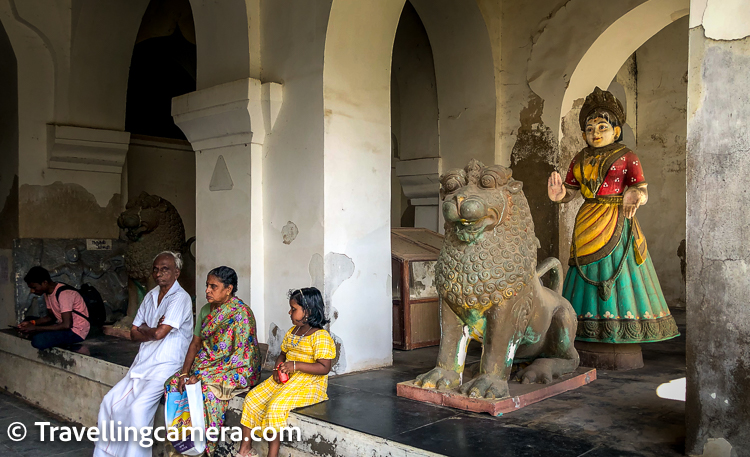
Thanjavur Palace in Tamilnadu: Where History and Art Come Together in a Spectacular Display

Auroville in India : The City of Dawn and a Model for Spirituality & Sustainable Living

Ramarpatham Shrine at Rameshwaram, Tamil Nadu || The site that has Lord Ram's footprints sculpted on a rock

The Sacred and Architectural Marvels of Ranganathaswamy Temple in Tamilnadu, India
%20to%20see%20the%20Danish%20fort%20in%20Tamilnadu%20state%20of%20India-3.jpg "Do you know about the 'Danish' Fort in India which is located at a beautiful location round the coast of Bay of Bengal?")
Do you know about the 'Danish' Fort in India which is located at a beautiful location round the coast of Bay of Bengal?

Uncovering the Rich History and Beauty of the Basilica of the Sacred Heart of Jesus in Pondicherry, India
 |
| Anaikarai Dam |
Anaikarai North and South Dams on Kollidam Rivers, Tamil Nadu || Two of the many dams on Cauvery, some of which are nearly 2000 years old

Starting the Day Right: A Personal Reflection on Sunrise at Serenity Beach in Pondicherry, India

Puducherry Travel Guide: French Charm Meets Indian Spirit - Capital Cities of Indian States or Union Teritorries [Pondicherry]

Madanapalle to Thanjavur via Vellore and Tiruvannamalai - 4th day of our 14 days long trip through east coast of India || Noida to Rameshwaram

Thanjavur to Rameshwaram via Tiruchirapalli - 5th day of our 14 days long trip through east coast of India || Noida to Rameshwaram

Rameshwaram's Marine Museum, Harbour and More: A Guide to the Best Sights and Sounds from Tamilnadu State of India
Rameshwaram in Tamilnadu, India - The Land of Sacred Shrines and Mesmerizing Beaches

Villoondi Teertham - Discovering the Spiritual and Natural Wonders of Rameshwaram, India
%20to%20see%20the%20Danish%20fort%20in%20Tamilnadu%20state,%20India-1.jpg "Drive from Rameshwaram to Pondicherry along the coast - 7th day of our 14 days long trip through east coast of India || Noida to Rameshwaram")
Drive from Rameshwaram to Pondicherry along the coast - 7th day of our 14 days long trip through east coast of India || Noida to Rameshwaram

Drive from Pondicherry to Tada - 8th day of our 14 days long trip through east coast of India || Noida to Rameshwaram

Exploring the Mahatma Gandhi Statue and Other Attractions around Promenade Beach in Pondicherry, India

Kolams and Culture: The Significance of Daily Floor Art in Tamilnadu Homes of South India

Healing Waters and Holy Legends: A Visit to Vibhishan Teertham in Rameshwaram, Tamilnadu

Discovering the Mysteries of Sri Panchmukhi Hanuman Mandir and the Floating Stones of Rameshwaram in Tamilnadu
 Climb to the Top of Chennai Lighthouse : Exploring Aerial views of Marine Drive, Sea and other interesting landmarks of Chennai, Tamilnadu


.jpg)
Comments