
Introduction: My First Poland Trip Was Less About Places and More About Layers
A Poland trip can begin with a beautiful medieval square, but it rarely ends with the square.
What stays with you is something quieter: a tram disappearing into the evening light, an elderly couple walking slowly through a park, a bowl of steaming soup after hours outside, a church bell echoing across an almost empty street, or a building that looks centuries old until you discover that it was rebuilt almost entirely after the Second World War.
That is what makes a first trip to Poland so interesting.
At first glance, Poland appears to offer the familiar ingredients of a European holiday: historic cities, castles, churches, cafés, museums and attractive old towns. But spend a little more time looking and another Poland emerges. It is a country shaped by shifting borders, war, migration, religion, resistance, communism, independence and an extraordinary determination to rebuild.
For a photographer, this makes Poland particularly rewarding.
You can photograph ornate medieval architecture in Kraków in the morning, communist-era geometry in Warsaw in the afternoon and industrial heritage or Baltic light in Gdańsk the next day.
And then there are the small details.
Poland is not a country I would recommend experiencing through a checklist.
It deserves to be walked.

Why Visit Poland?
Poland occupies an interesting position in Europe, both geographically and culturally. Its history has repeatedly placed it at the meeting point of different European influences, and that complexity is visible in its architecture, food, language and city landscapes.
The country currently has 17 UNESCO World Heritage properties, ranging from historic city centres and medieval castles to salt mines and ancient forests.
But UNESCO sites are only part of the story.
One of the best reasons to visit Poland is the variety packed into a relatively manageable journey.
You can experience:
Medieval Kraków
The reconstructed historic centre of Warsaw
Baltic architecture and maritime culture in Gdańsk
The playful streets of Wrocław
Gothic Toruń
Malbork's enormous Teutonic castle
The mountains of southern Poland
Białowieża Forest and European bison
Mazury's lakes
Traditional Polish cuisine
Contemporary cafés, design and urban culture
For someone travelling from India, there is another attraction: Poland can feel European without feeling overly polished or predictable.
There are plenty of tourist-friendly places, but there are also ordinary neighbourhoods where daily life continues largely away from the tourist gaze.
That contrast is worth experiencing.

Poland Trip: Understanding the Country Before You Explore It
Poland becomes much easier to understand once you stop looking at it simply as a collection of tourist attractions.
Its modern identity has been shaped by centuries of political change and, particularly, the devastating experiences of the 20th century.
Warsaw is perhaps the clearest example.
During the Warsaw Uprising in 1944, more than 85% of the city's historic centre was destroyed. After the war, residents undertook a painstaking reconstruction of the Old Town. UNESCO later recognised this reconstruction as an exceptional example of rebuilding a historic urban environment.
That changes the way you photograph Warsaw.
A beautiful historic street is not necessarily an untouched medieval street.
Sometimes the photograph is beautiful precisely because you know what happened before the photograph became possible.
Gdańsk tells another story.
The city has a maritime history stretching back more than a thousand years, while its modern history is closely associated with the Solidarity movement and the Gdańsk Shipyard. The strike that began there in August 1980 became an important turning point in the struggle against communist rule.
Kraków, meanwhile, feels different.
It escaped much of the physical destruction suffered by Warsaw during the Second World War and retains an extraordinarily rich historic fabric. Its Historic Centre was among the first places inscribed on the UNESCO World Heritage List in 1978.
The result is a country where history is not confined to museums.
It is embedded in streets.

First Poland Trip: Start With Kraków
If this is your first visit to Poland, Kraków is one of the best places to begin.
The temptation is to rush straight towards the Main Market Square.
Don't.
Start at Planty, the green belt surrounding Kraków's Old Town. Walk slowly towards St. Florian's Gate and let the city reveal itself gradually.
Eventually, the streets open into Rynek Główny, the enormous Main Market Square.
It is one of those places where the first impression can be almost too obvious: colourful facades, horse carriages, cafés, the Cloth Hall and St. Mary's Basilica.
But photographers know that the obvious location often becomes interesting only when the light changes.
Photographing Kraków Early in the Morning
Arrive around sunrise.
The square is transformed before the tour groups arrive.
The architecture becomes cleaner. Shadows stretch across the cobblestones. Delivery vehicles and locals briefly replace sightseeing crowds.
This is when you can photograph Kraków rather than simply photograph tourists photographing Kraków.
Later, explore Kazimierz, the historic Jewish district.
Here the experience becomes more intimate. Synagogues, courtyards, old shopfronts, restaurants and weathered walls create a visual vocabulary very different from the postcard Kraków.
Then cross towards Podgórze.
The farther you move from the centre, the more the city feels lived-in.
That transition is worth documenting.

Kraków's Dragon and the Power of Local Legends
Polish cities are full of legends, and Kraków has one of its most famous in the Wawel Dragon.
According to legend, a dragon lived beneath Wawel Hill and terrorised the city until it was outsmarted by the clever shoemaker Skuba, who fed it a sheep stuffed with sulphur.
The dragon is now represented by a sculpture near the Vistula River.
It may sound like a simple children's story, but legends like this are useful for understanding how European cities preserve memory.
Don't just photograph the dragon.
Photograph children waiting for it to breathe fire.
Photograph families laughing beside it.
Photograph the river behind it.
A place becomes more interesting when you photograph the relationship between people and the place.

Things to Do and Explore in Poland Beyond Kraków
Kraków is an excellent introduction, but stopping there would give you only one version of Poland.
Warsaw: A City That Refused to Disappear
Warsaw should be approached differently.
The Old Town is beautiful, but its beauty carries an unusual historical fact: much of what you see was painstakingly reconstructed after wartime destruction.
Spend time around Castle Square and the Old Town, but then deliberately leave it.
Walk towards the Vistula.
Warsaw's riverfront has become an important recreational space, with beaches, cycle paths, boulevards and places where locals gather during warmer months.
For photographers, the river is particularly rewarding around sunset.
Look for silhouettes.
Don't photograph only the skyline. Photograph cyclists, runners, couples and people sitting beside the water.
A Different Warsaw: Praga
Cross the Vistula to Praga.
This side of the river has historically retained more of its pre-war urban character than the devastated central areas. Courtyards, shrines, murals and older buildings create a much rougher visual texture.
This is where a 35mm or 50mm lens can become more useful than a wide-angle lens.
Look for details.
A tiny religious shrine in a courtyard.
A peeling doorway.
A handwritten sign.
A cat sitting on a windowsill.
These are the photographs that tell you what Warsaw feels like rather than what Warsaw looks like.
Gdańsk: Where Poland Meets the Baltic
Gdańsk feels completely different from Warsaw and Kraków.
The Baltic influences are immediately visible in its architecture, history and atmosphere.
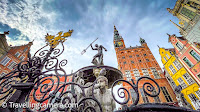
The Royal Way, centred around Długa Street and Długi Targ, is one of the city's best-known areas. Interestingly, Gdańsk does not have the conventional central market square found in many European cities; its long representative street effectively performs that role.
But don't stop there.
Walk towards the Motława River.
The Crane is one of the city's most recognisable structures and reflects Gdańsk's historic importance as a port city.
For photography, blue hour is exceptional here.
Wait until the artificial lights begin to dominate but the sky still retains some colour.
Use reflections in the river.
A tripod can be useful if conditions permit, although modern cameras at higher ISO settings make handheld photography increasingly practical.
Then explore the European Solidarity Centre.
The story of Gdańsk is not simply medieval.
It is also industrial, political and deeply modern.
Wrocław: A City That Turns a Walk Into a Treasure Hunt
Wrocław is one of the most enjoyable cities in Poland for photographers who like discovering details.
Its Market Square is spectacular, but the real fun begins when you start looking down side streets.
Then come the dwarfs.
Hundreds of small dwarf sculptures are scattered around the city, originally connected to the Orange Alternative movement and later becoming a distinctive part of Wrocław's identity.
Instead of photographing ten of them in a row, turn the experience into a photographic treasure hunt.
Find unusual ones.
Look for interesting compositions where a dwarf interacts visually with its surroundings.
A tiny bronze figure next to a massive Gothic building creates scale almost automatically.
Wrocław's historic Market Square is also one of the largest in Europe, surrounded by richly decorated buildings.
Visit early.
Then return after dark.
The same square can look like two completely different places.
Poland's Hidden Gems: Leave the Major Cities
One of the biggest mistakes on a first Poland trip is trying to visit only famous cities.
Poland rewards detours.
Toruń
Toruń is known for its medieval architecture and association with Nicolaus Copernicus.
It is also famous for pierniki, traditional gingerbread.
The historic town is UNESCO-listed, and its medieval character makes it particularly rewarding for architectural photography. Poland's UNESCO list recognises Toruń's medieval town among the country's cultural heritage sites.
Malbork
Malbork Castle is enormous.
It was built by the Teutonic Order and is one of Europe's great medieval fortifications. It is also a UNESCO World Heritage property.
Don't treat it as merely another castle.
Give yourself several hours.
The scale becomes apparent only when you move through its courtyards and defensive structures.
A wide-angle lens is useful for architecture, but a telephoto lens can reveal fascinating details in brickwork, towers and windows.
Białowieża Forest
For wildlife photographers, this is a completely different Poland.
Białowieża is one of Europe's most important surviving primeval forest landscapes and is famous for its European bison. Poland's tourism organisation describes it as the only place where European bison can be seen freely roaming in the wild.
The photography here is not about guaranteed sightings.
It is about patience.
Forest photography requires a different mindset from city photography.

Best Photography Spots in Poland
| Location | Best time | What to photograph |
|---|---|---|
| Kraków Main Market Square | Sunrise | Architecture, empty streets, soft light |
| Wawel Castle | Early morning | Castle, river, layered compositions |
| Kazimierz | Morning/evening | Street life, architecture, details |
| Warsaw Old Town | Blue hour | Architecture and evening atmosphere |
| Warsaw Vistula River | Sunset | Silhouettes, reflections, skyline |
| Praga, Warsaw | Morning/late afternoon | Street photography, textures |
| Gdańsk Motława waterfront | Blue hour | Reflections, Crane, architecture |
| Wrocław Market Square | Early morning/night | Architecture and people |
| Malbork Castle | Morning | Scale, brick architecture, geometry |
| Białowieża Forest | Early morning | Wildlife and forest landscapes |

Photography Tips for a Poland Trip
Poland is an excellent country for photographers because it gives you variety without requiring enormous distances between visual themes.
1. Photograph before breakfast
This is probably the single most useful tip.
Historic centres that feel crowded at 11 a.m. can feel almost deserted at 6:30 a.m.
Morning light is also kinder to architecture.
2. Don't always use the widest lens
European architecture encourages photographers to reach for ultra-wide lenses.
Resist that temptation sometimes.
A 50mm or 85mm lens can isolate architectural details and create much more intimate photographs.
3. Photograph ordinary life
A tram.
A bakery window.
A newspaper stand.
Someone walking a dog.
A café table.
A person waiting at a crossing.
These details provide context to the grand monuments.
4. Return after sunset
Many Polish cities become dramatically different after dark.
Gdańsk's waterfront, Kraków's Old Town and Warsaw's central districts are particularly interesting once artificial light takes over.
5. Watch the weather
Cloudy skies can be excellent for architecture.
Rain is not necessarily a reason to put the camera away.
Wet cobblestones produce reflections, and the softer light reduces harsh contrast.

What to Eat in Poland
A Poland trip should be partly planned around food.
And don't make the mistake of assuming Polish food is simply pierogi.
Start with pierogi, of course.
Try different fillings rather than ordering the same familiar version everywhere.
Look for:
Pierogi ruskie
Pierogi with cabbage and mushrooms
Meat-filled pierogi
Barszcz
Żurek
Bigos
Placki ziemniaczane
Kielbasa
Oscypek in southern Poland
Polish cheesecake
Paczki
Then find a bar mleczny, or milk bar.
These establishments have roots in Poland's communist-era food culture and remain an interesting way to experience inexpensive, traditional Polish meals.
The atmosphere can be more revealing than a fashionable restaurant.
You may see office workers, students, older residents and visitors sharing the same room.
That is exactly the kind of everyday cultural experience worth seeking.

Local Conversations and Small Human Moments
One of the most memorable parts of travelling is often the conversation you didn't plan to have.
In Poland, don't be surprised if a simple interaction over food, directions or photography becomes unexpectedly warm.
Learning a few Polish words helps.
Dzień dobry — good morning/hello.
Dziękuję — thank you.
Proszę — please/you're welcome.
Even imperfect pronunciation is usually better than immediately assuming everyone will communicate in English.
Polish culture also has a strong tradition of hospitality. The Polish Tourism Organisation points to the old expression "Guest at home, God at home" as a reflection of this cultural value.
But hospitality doesn't mean treating people as photographic subjects.
Ask before making close-up portraits.
Respect religious spaces.
And remember that not every interesting face needs to become an Instagram photograph.
Sometimes the respectful thing is simply to put the camera down.

Best Time to Visit Poland
There isn't one perfect season.
The best time depends on what you want to photograph.
Spring
Spring brings fresh greens, longer days and fewer visitors than peak summer.
It is particularly good for city walks and gardens.
Summer
Summer provides long daylight hours and lively outdoor culture.
The disadvantage is obvious: popular areas become crowded.
If you visit in summer, photograph major attractions early and reserve afternoons for neighbourhood exploration.
Autumn
For me, autumn would be high on the list for photography.
Golden foliage, lower-angle sunlight and cooler temperatures can transform parks and historic streets.
Winter
Winter Poland can be magical.
Snow completely changes the visual character of historic cities.
But daylight hours are short, temperatures can be harsh and weather conditions are unpredictable.
For photography, that isn't necessarily a disadvantage.

How to Reach Poland
For international travellers, Warsaw is often the most straightforward entry point because it is Poland's capital and a major transportation hub.
Kraków, Gdańsk and other major cities also have international airports.
Once inside Poland, trains are often the most practical option for connecting major cities.
For a first trip, consider travelling by rail between major destinations instead of renting a car immediately.
A car becomes much more useful once you move into rural areas, smaller towns and national parks.
Where to Stay in Poland
For a first trip, location matters more than luxury.
In historic cities, staying within walking distance of the central area can completely change the experience.
You can leave the hotel before breakfast, photograph the streets and return while everyone else is still preparing for the day.
For photographers, I would prioritise:
Walkability
Easy public transport
Quiet rooms
Early breakfast or flexible check-out
Nearby cafés
Easy access to sunrise locations
Don't automatically book the most famous square.
Sometimes a hotel two or three streets away gives you better value and a more authentic neighbourhood experience.

Poland Trip Budget Tips
Poland can be approached at several budget levels.
Your biggest savings often come from how you structure the trip rather than from cutting individual expenses.
Save money by:
Using trains between major cities
Eating lunch at local establishments rather than tourist-centre restaurants
Staying slightly outside the most expensive historic cores
Walking wherever practical
Using public transport
Booking intercity travel in advance when possible
Combining paid attractions with free neighbourhood exploration
Poland uses the Polish złoty (PLN) rather than the euro. Cards are widely accepted, although keeping some cash is sensible.

A Practical 10-Day Poland Itinerary
If this is your first visit, I would resist trying to cover the entire country.
A balanced itinerary could look like this:
| Day | Destination | Focus |
|---|---|---|
| 1 | Warsaw | Old Town, evening city walk |
| 2 | Warsaw | Museums, Vistula, Praga |
| 3 | Warsaw → Kraków | Train and Kraków evening |
| 4 | Kraków | Old Town, Wawel, Kazimierz |
| 5 | Kraków | Podgórze, local food, photography |
| 6 | Kraków → Wrocław | Travel and evening exploration |
| 7 | Wrocław | Market Square, dwarfs, neighbourhoods |
| 8 | Wrocław → Gdańsk | Travel and waterfront |
| 9 | Gdańsk | Old Town, shipyard, Solidarity history |
| 10 | Gdańsk | Baltic coast / departure |
If you have additional days, add Malbork, Toruń, the Tatra Mountains, Białowieża Forest or the Mazury lakes rather than squeezing more cities into the existing itinerary.

Responsible Travel in Poland
Responsible travel doesn't need to be complicated.
The basics matter.
Respect churches and religious ceremonies.
Ask before photographing people closely.
Don't climb historic structures for photographs.
Stay on marked paths in forests and protected areas.
Don't disturb wildlife for a better photograph.
Carry reusable water bottles.
Use public transport where practical.
Support small local restaurants and independent businesses.
Don't treat historic sites connected to tragedy as casual photo props.
This is particularly important at places associated with war and genocide.
Some locations should be photographed with reflection rather than spectacle.

Common Mistakes on a First Poland Trip
Trying to See Everything
Poland is larger and more varied than it looks on a map.
A rushed itinerary turns interesting places into train stations between photographs.
Staying Only in Old Towns
Old towns are beautiful.
But neighbourhoods often tell you more about contemporary Poland.
Ignoring Warsaw's Modern Side
Warsaw isn't only reconstructed medieval architecture.
It is a modern capital with contemporary architecture, restaurants, nightlife, river culture and neighbourhoods with very different personalities.
Eating Only at Tourist Restaurants
Walk a few streets away from the major squares.
Prices often improve, but more importantly, the atmosphere changes.
Photographing Only Monuments
A monument tells you where you are.
A person waiting for a tram tells you something about how the city lives.
Photograph both.

FAQs About a First Poland Trip
How many days are enough for a first Poland trip?
Seven to ten days is a good starting point for a first Poland trip. Ten days allows you to combine Warsaw, Kraków, Wrocław and Gdańsk without turning the journey into a race.
What are the best things to do and explore in Poland?
Some of the best experiences include exploring Kraków's historic centre, understanding Warsaw's reconstruction, discovering Gdańsk's maritime and Solidarity history, photographing Wrocław's streets, visiting Malbork Castle, exploring Polish food culture and experiencing Poland's forests and mountains.
Is Poland good for photography?
Absolutely. Poland offers architecture, street photography, landscapes, wildlife, cultural photography, industrial heritage and strong seasonal changes.
What is the best city to visit in Poland for the first time?
Kraków is arguably the easiest introduction because of its compact historic centre and concentration of cultural attractions. Warsaw is essential if you want to understand modern Polish history and identity.
Is Poland expensive for tourists?
Compared with many Western European destinations, Poland can offer good value, particularly for food, accommodation and local transport. Your overall budget will depend heavily on the season and accommodation style.
What food should I try in Poland?
Start with pierogi, żurek, barszcz, bigos, placki ziemniaczane, kielbasa and regional cheeses such as oscypek. Also try eating at a traditional milk bar.
Is Poland good for a photography trip?
Yes. The combination of historic cities, changing seasons, diverse architecture, forests, mountains and everyday street life makes Poland particularly suitable for photographers.
Should I visit Poland in summer or winter?
Summer provides long daylight hours and lively outdoor life, while winter offers snow, atmospheric streets and fewer tourists. Autumn is especially attractive for landscape and city photography.
Is public transport good in Poland?
Major Polish cities are well connected by public transport, while intercity trains are particularly useful for connecting destinations such as Warsaw, Kraków, Wrocław and Gdańsk.

Final Thoughts: Don't Just Collect Polish Cities
The first time you visit Poland, it is tempting to measure the journey by cities.
Warsaw: done.
Kraków: done.
Gdańsk: done.
Wrocław: done.
But that isn't really how I would measure a Poland trip.
I would remember the morning when a historic square was almost empty.
The smell of fresh bread coming from a bakery.
A tram moving through rain.
A plate of pierogi that tasted better because I had been walking for hours.
A conversation that lasted longer than expected.
A forest that seemed impossibly quiet.
A castle that was much larger than photographs suggested.
And perhaps most importantly, the realisation that some of Poland's most interesting stories are not immediately visible.
The reconstructed walls of Warsaw tell one story.
The preserved streets of Kraków tell another.
The shipyards of Gdańsk tell another.
The tiny dwarfs of Wrocław tell another.
And the ordinary streets between them tell perhaps the most important story of all: Poland is not simply a historical destination.
It is a country that has repeatedly had to reinvent itself.
That is why a first trip here can be surprisingly emotional.
Come for the castles and medieval squares.
Stay for the stories.
And if you carry a camera, don't spend the entire trip looking for the perfect postcard.
Look sideways.
Look behind the obvious attraction.
Wait for the light.
Watch the people.
Sometimes the photograph you didn't plan to take becomes the photograph you remember longest.
Related Blogposts -









.jpg)
Comments