

Introduction: Where a Palace Meets the Horizon
Some historical places draw you in through their architecture. Others make you pause because of the landscape surrounding them. Roopmati Mahal in Mandu, Madhya Pradesh, belongs to the second kind. Perched high above the Narmada valley, this historic pavilion brings together the romance of an old legend, the beauty of Malwa's rugged plateau and views that seem to stretch endlessly towards the horizon.
Among the celebrated Palaces of Madhya Pradesh, Roopmati Mahal occupies a special place in the imagination of travellers. Its appeal is not simply about royal chambers, stone walls or architectural details. It is also about the story associated with Rani Roopmati and Baz Bahadur, the last independent ruler of Malwa, whose romance has survived through songs, local traditions and centuries of retelling.
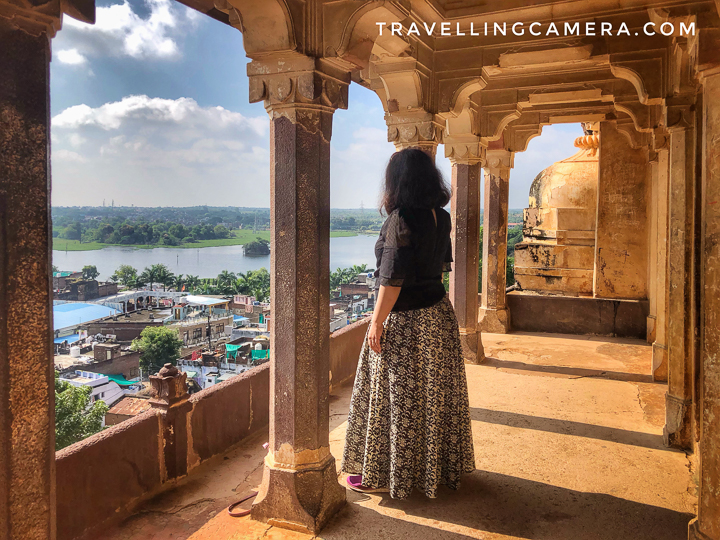
Stand near the pavilion's arched openings and look out across the countryside. The wind moves freely through the structure. Far below, the landscape unfolds into fields, wooded slopes and distant ridges. On a clear day, the horizon appears remarkably expansive. It is easy to understand why a place like this became associated with a love story.
Yet Roopmati Mahal is more than a romantic viewpoint. It offers a way to understand Mandu's strategic importance, its architectural heritage and the relationship between history and legend in central India.
Mandu is often explored as a collection of monuments, with visitors moving between palaces, mosques, reservoirs and gateways. Roopmati Mahal rewards a slightly different approach. Arrive with enough time to slow down, notice the changing light and look beyond the familiar story. The experience becomes richer when you begin to see the monument not just as a symbol of romance, but as part of a larger landscape shaped by rulers, musicians, travellers and the rhythms of life on the Malwa plateau.

Why Visit Roopmati Mahal in Mandu?
Roopmati Mahal is one of those heritage sites where the setting is inseparable from the monument itself. The building is relatively restrained compared with some of Mandu's grander architectural complexes, but its elevated position gives it a distinctive character.
Here are the main reasons to include it in your Mandu itinerary:
Panoramic views: The pavilion overlooks a broad stretch of countryside, with layered hills, agricultural land and the distant Narmada valley landscape.
A celebrated historical legend: The association with Rani Roopmati and Baz Bahadur gives the monument a strong cultural identity.
Distinctive architecture: Arches, open pavilions, stone surfaces and roofline structures create interesting patterns for architectural photography.
A quieter heritage experience: Depending on the season and time of day, you may find opportunities to appreciate the surroundings without the crowds that gather at more prominent monuments.
A connection to Malwa's history: Roopmati Mahal helps tell the story of Mandu as a centre of regional power, culture and artistic patronage.
Excellent photography opportunities: The combination of old masonry, open skies, distant hills and changing light offers a range of compositions.
For travellers exploring the Palaces of Madhya Pradesh, the monument is particularly rewarding because it combines architectural interest with a strong sense of place. It is also a natural stop for anyone researching the Heritage Sites of Madhya Pradesh, especially those interested in medieval architecture and the cultural history of Mandu.

Historical and Cultural Significance of Roopmati Mahal
The story of Rani Roopmati and Baz Bahadur
The most famous story connected with Roopmati Mahal concerns Rani Roopmati and Baz Bahadur, the ruler associated with Mandu during the sixteenth century.
Baz Bahadur is remembered in regional history and cultural tradition as a ruler with a strong interest in music and the arts. Roopmati, meanwhile, is celebrated in popular accounts as a gifted singer whose beauty and musical ability captured his attention. Their relationship became the subject of a romantic narrative that has endured long after the political world in which they lived disappeared.
One of the best-known elements of the story is Roopmati's attachment to the Narmada River. According to popular tradition, she wished to see the river regularly, and Baz Bahadur arranged for a pavilion to be built at a high point from which she could look towards the valley.
The story is compelling, but it is important to distinguish legend from documented history. The romance has been transmitted through literary accounts and local traditions, and details vary between retellings. The monument's association with Roopmati is firmly embedded in Mandu's cultural identity, but not every popular detail can be treated as independently verified historical fact.
That distinction does not diminish the experience. If anything, it makes the place more interesting. At Roopmati Mahal, history and storytelling exist side by side, each adding another layer to the visitor's understanding.
Mandu under Baz Bahadur
Baz Bahadur ruled Malwa during a period of considerable political change. His reign is generally placed in the middle of the sixteenth century, before the Mughal conquest of Malwa in 1561.
Mandu had long been an important fortified settlement. Its elevated plateau, natural escarpments and access to water made it a significant centre of power. Its rulers invested in palaces, mosques, gardens, reservoirs and other structures that reflected both practical needs and courtly ambitions.
Baz Bahadur's name is particularly associated with music and artistic culture. His relationship with Roopmati became one of the most enduring narratives connected with the region. The story is also a reminder that medieval courts were not merely centres of administration and warfare; music, poetry and performance could be important parts of elite life.
The Mughal conquest and the end of an era
In 1561, Mughal forces under Adham Khan invaded Malwa and defeated Baz Bahadur's forces. Baz Bahadur eventually sought refuge and later entered Mughal service, according to historical accounts.
The events surrounding Roopmati's death are often recounted in tragic terms. Popular versions describe her taking poison rather than being captured, but the details of the episode are part of a tradition that should be approached cautiously rather than presented as a fully settled historical record.
What remains beyond dispute is the lasting cultural power of the story. The romance of Roopmati and Baz Bahadur has outlived the kingdom itself, giving the monument a place in the popular imagination that extends well beyond its physical dimensions.
Was Roopmati Mahal built as a palace?
The name suggests a royal residence, but Roopmati Mahal is more accurately understood as a hilltop pavilion or palace-like structure associated with the Roopmati legend. Its open design and commanding location make it different from a conventional residential palace.
The monument is often described as a place from which Roopmati could view the Narmada River. While this explanation is central to the site's popular identity, visitors should remember that the exact historical purpose of the structure is not established solely by the legend.
This distinction is useful when exploring Mandu's architecture. The names attached to monuments often preserve stories and traditions, but they do not always provide a complete account of how a building was originally used.

Roopmati Mahal and the Other Heritage Sites of Madhya Pradesh
Mandu is one of the most rewarding destinations for anyone interested in the Heritage Sites of Madhya Pradesh. Its monuments represent a landscape of fortified settlements, royal residences, religious architecture and water-management systems.
Roopmati Mahal is best understood as part of this larger historical setting.
Nearby, Baz Bahadur's Palace offers a different architectural experience. Its courtyards, terraces and water features reveal more about the organisation of a royal complex. The contrast between the two sites is revealing: one is celebrated for its open views and romantic associations, while the other gives visitors a stronger sense of enclosed courtly space.
Jahaz Mahal, the famous palace that appears to float between two water bodies, offers another perspective on Mandu's architectural ambitions. Hindola Mahal is known for its distinctive sloping walls, while the Jami Masjid reflects the monumental religious architecture of the region.
Together, these monuments show that Mandu was not built around a single palace or a single story. It was a carefully developed settlement whose architecture responded to geography, defence, water availability, political power and cultural life.

Exploring Roopmati Mahal: What to Look for
1. The approach to the hilltop pavilion
The journey towards Roopmati Mahal is part of the experience. As you move through Mandu's historic landscape, the sense of enclosure created by the plateau and its ridges begins to give way to more open views.
Take your time on the approach. Notice how the surrounding vegetation, exposed stone and uneven terrain change with the season. During the monsoon, the landscape can appear dramatically greener, while the drier months reveal more of the underlying earth and rock.
The monument is not isolated from its surroundings. Its elevated position is central to its identity, and the landscape provides the context needed to appreciate why this location has attracted so much attention.
2. The arches and open pavilions
Once inside, look carefully at the openings, pillars and roofline rather than rushing straight towards the viewpoint.
The arches frame the landscape like a series of natural picture windows. Their geometry provides strong compositional lines, while the weathered stone surfaces show subtle changes in colour depending on the light.
For photographers, these openings are especially useful. You can frame distant hills through an arch, place a person in the foreground to convey scale or photograph the contrast between the shaded interior and the brighter landscape outside.
Spend a few minutes observing how the building directs your gaze. Unlike a heavily enclosed palace, this pavilion feels connected to the open air. The architecture allows the landscape to remain the main visual attraction.
3. The panoramic landscape
The views are the main reason many visitors linger here.
From the elevated vantage point, the land falls away towards the valley. Depending on visibility, you may see agricultural fields, distant ridges and broad stretches of countryside. The precise appearance changes throughout the year, making repeat visits worthwhile.
During the monsoon, clouds can settle over the hills and transform the landscape into a layered composition of green slopes and mist. In winter, clearer air can make the distant terrain easier to distinguish. In the summer, the scene may appear drier and more muted, with stronger contrasts between sunlit earth and shaded vegetation.
Rather than looking only for the widest possible view, try studying smaller sections of the landscape. A distant ridge emerging through haze, a patchwork of fields or a lone tree against the horizon can sometimes make a more compelling photograph than a panoramic frame.
4. The roofline and upper structures
Look upwards as well as outwards. The roofline and upper architectural elements offer opportunities to photograph the monument against the sky.
The contrast between solid masonry and open sky is especially effective in black-and-white photography. In colour, warmer stone tones can work beautifully against a blue sky or the soft grey light of the monsoon.
Avoid treating every architectural detail as a separate subject. Look for relationships between elements: a curve echoed by another curve, an arch aligned with a distant hill, or a small architectural feature breaking the symmetry of the roofline.
5. The atmosphere around the monument
Roopmati Mahal is not only about what you can see; it is also about how the place feels.
Wind, birdsong, shifting clouds and the changing light all influence the experience. At quieter moments, the open setting can make the monument feel surprisingly removed from the modern world.
If other visitors are present, watch how they interact with the site. Some move quickly towards the view, while others pause to take photographs or simply stand quietly. These small moments can become part of your travel memory, provided you photograph people respectfully and avoid intruding on private experiences.

Hidden Gems and Lesser-known Insights About Roopmati Mahal
The view is as important as the building
Many travellers evaluate historic architecture through its ornamentation, scale or decorative richness. Roopmati Mahal invites a different approach.
Its location is central to its appeal. The relationship between the pavilion and the valley may tell you more about the site's character than any single architectural detail.
This makes it particularly rewarding for travellers who enjoy landscape history, environmental photography and the interaction between buildings and terrain.
The Narmada connection is cultural as well as geographical
The Narmada is one of India's most culturally significant rivers. Its importance extends far beyond its role as a watercourse, and it appears in religious traditions, regional literature and local identity.
The Roopmati story connects the river with the emotional life of the Malwa court. Even when the precise details of the legend remain uncertain, the association reveals how landscapes become part of cultural memory.
The river itself may not be clearly visible from the pavilion on every visit. Distance, haze, vegetation and the viewing angle can affect what you see. It is better to appreciate the broader valley landscape than to expect an uninterrupted, close-up view of the water.
Mandu's water systems deserve attention
Mandu's historical architecture is inseparable from its management of water. Reservoirs, tanks and other water-related structures helped sustain life on the plateau, where seasonal rainfall and storage were crucial.
While exploring the town, look beyond the palaces to the relationship between monuments, water bodies and terrain. This broader perspective helps explain why Mandu developed as an important fortified settlement.
The legend changes how people see the monument
Visitors often arrive already knowing some version of the Roopmati and Baz Bahadur story. That expectation shapes their experience of the pavilion.
Yet the same place can be read in several ways: as a historical structure, a scenic viewpoint, an example of regional architecture or a monument made famous by romantic storytelling.
Allowing these interpretations to coexist makes the visit more rewarding than treating the legend as the only story worth knowing.

Best Photography Spots at Roopmati Mahal
Roopmati Mahal is a particularly rewarding location for photographers who enjoy combining architecture with landscapes.
| Photography spot | What to photograph | Best conditions |
|---|---|---|
| Arched openings | Framed hills and countryside | Morning or late afternoon |
| Outer pavilion edges | Architecture against the valley | Soft side lighting |
| Upper roofline | Silhouette and stone geometry | Early morning or golden hour |
| Open viewing areas | Wide landscape compositions | Clear mornings or dramatic monsoon skies |
| Shaded architectural sections | Textures, arches and tonal contrast | Bright daylight, when shade provides softer light |
| Visitors within the structure | Human scale and the experience of exploring | Quieter periods, with consent where appropriate |
Photographing the landscape through an arch
An arch can act as a natural frame, but the most effective compositions are not always perfectly symmetrical.
Try placing the horizon in the lower third of the frame if the sky is dramatic. If the hills are the main subject, reduce the amount of empty sky. A person standing near the edge of an opening can provide scale, but make sure the person remains a natural part of the composition rather than an obvious prop.
Capturing the monument in the wider landscape
Wide-angle lenses are useful for showing the relationship between the structure and its surroundings. However, extremely wide focal lengths can exaggerate the foreground and make distant hills appear smaller than they feel in person.
If you have a telephoto lens, try isolating sections of the distant landscape. Compressed layers of hills, fields and trees can create an image that communicates the depth of the valley.
Photographing people and everyday moments
Travel photography becomes richer when it includes human presence. Visitors studying an arch, a family pausing to look across the valley or a traveller resting in the shade can communicate how the monument is experienced today.
Be considerate. Ask before making close portraits, particularly of local residents or people who are not participating in a public performance. Avoid interrupting someone else's quiet moment for a photograph.

Photography Tips for Roopmati Mahal
The best time to photograph Roopmati Mahal is generally early morning or late afternoon, when the light is softer and the stone architecture is less likely to lose detail in harsh highlights.
Here are a few practical suggestions:
Arrive early: You may get more time to explore without large groups moving through your frame.
Use side lighting: Light coming from one side reveals the texture of the masonry and gives the arches greater depth.
Watch the exposure: When photographing from a shaded interior towards a bright landscape, expose carefully for the view or make separate exposures if your camera allows it.
Carry a wide-angle lens: It helps capture the architecture and its surroundings in one frame.
Use a longer focal length: This is useful for distant hills and layered landscapes.
Try black and white: Strong architectural lines and changing cloud patterns can work particularly well in monochrome.
Return to the same viewpoint: A scene that looks ordinary in flat midday light may become dramatic when clouds move across the hills.
Protect your equipment during the monsoon: Moisture, wind-driven rain and damp conditions require extra care.
For mobile photography, clean the lens before shooting and avoid relying entirely on digital zoom. Use the natural frame created by the arches, tap to focus on the intended subject and check whether the sky has become overexposed.
Above all, do not spend the entire visit looking at the place through a screen. Take your photographs, put the camera away for a while and experience the landscape directly.
Local Food Experiences Around Mandu
A visit to Mandu is incomplete without exploring the food of the Malwa region. While Roopmati Mahal itself is primarily a heritage attraction, the surrounding town and nearby settlements offer opportunities to sample local dishes.
Malwa cuisine combines hearty grain-based foods, seasonal vegetables, snacks and preparations that reflect the region's agricultural traditions.
Look out for:
Dal bafla: A regional speciality made with baked wheat dough balls served with dal, often accompanied by ghee and chutney.
Poha: A familiar breakfast dish across much of Madhya Pradesh, typically prepared with flattened rice and local seasoning.
Jalebi: A popular sweet that pairs well with a morning snack.
Bhutte ka kees: A preparation made with grated corn, especially associated with the wider Malwa food tradition.
Seasonal local meals: Small eateries may serve simple vegetarian thalis or home-style preparations depending on availability.
Food options and opening hours can vary, particularly outside the busiest visitor periods. If you are exploring several monuments in one day, plan a proper meal break instead of relying entirely on packaged snacks.
A useful approach is to ask your accommodation host or a local shopkeeper where people usually eat rather than automatically choosing the first restaurant near a major attraction. The most memorable meal may be a simple one, served without much ceremony.
Respect local customs around food, avoid wasting what you order and carry drinking water in a reusable bottle where practical. During hot weather, prioritise safe, freshly prepared food and adequate hydration.

Local Conversations and Human Stories
One of the best ways to understand a place like Mandu is to pay attention to how people talk about it.
For many visitors, Roopmati Mahal is inseparable from the story of two lovers. For others, it is a scenic stop on a day spent exploring Mandu's architectural remains. Local guides may bring out details that are easy to miss when travelling independently, including the political history of Malwa, the symbolism attached to the landscape and the differences between popular stories and recorded events.
If you have the opportunity, ask a guide how the Roopmati legend is told locally. You may hear variations in the narrative, and those variations can be as interesting as the familiar story itself.
Avoid treating a local person's account as either unquestionable history or a mere tourist anecdote. Oral traditions are valuable cultural records, but they can change over time. Listening carefully, asking respectful questions and distinguishing between personal interpretation and documented evidence makes the conversation more meaningful.
You may also notice that people working around heritage sites have their own practical knowledge of the place. They understand how visitor numbers change, which periods bring dramatic weather and how the landscape looks through the seasons. These observations add a useful, everyday dimension to the monument's history.
A respectful conversation does not have to be long. Sometimes a simple question, asked without rushing, opens a more interesting window into a destination than another hour spent reading a signboard.






Comments