

Introduction: A Palace That Looks Like a Ship
Imagine a long stone palace standing between two lakes, its domes rising above the water and its reflection changing with every passing cloud. From a distance, the building almost looks like a ship that has dropped anchor in the middle of a medieval landscape.
This is Jahaz Mahal in Mandu, Madhya Pradesh, one of the most distinctive monuments in central India.
Among the main places to see in Mandu, Jahaz Mahal stands out for its unusual architecture and the way it blends into the surrounding landscape. Its elongated structure, open corridors, arched windows and rooftop pavilions create a visual experience that feels different from that of most historic Indian palaces.
What makes Mandu special is the relationship between its architecture and its environment. Water was carefully managed, buildings were designed around the local climate, and elevated locations offered both strategic advantages and beautiful views.
Jahaz Mahal brings these elements together particularly well. Its story is connected with the rulers of the Malwa Sultanate, the importance of water in medieval Mandu and the architectural imagination of a period when functional spaces could also be places of extraordinary beauty.
Whether you enjoy history, architectural photography, cultural travel or discovering lesser-known destinations in India, Jahaz Mahal offers plenty to explore. And if you are planning a trip to Mandu, it is an excellent starting point for discovering the wider historic landscape.

Why Visit Jahaz Mahal in Mandu?
Jahaz Mahal is worth visiting for more than its famous ship-like appearance. The monument offers a combination of architecture, history, photography and landscape that makes it one of Mandu's most rewarding attractions.
Here are some reasons to include it in your itinerary:
Distinctive architecture: Its long, narrow structure creates the impression of a ship resting between two water bodies.
A glimpse into royal life: The palace reflects the architectural ambitions and leisure culture associated with medieval Mandu.
Seasonal beauty: The surroundings change dramatically between the dry months and the monsoon.
Photography opportunities: Arches, domes, reflections, stone textures and expansive views provide plenty of subjects.
Nearby monuments: Hindola Mahal, Taveli Mahal, Jami Masjid and other historic structures can be explored in the same general area.
A deeper understanding of Mandu: The palace introduces visitors to the relationship between water management, architecture and the landscape.
For travellers researching the main places to see in Mandu, Jahaz Mahal is a natural first choice. It offers an immediate introduction to the character of the destination while leaving plenty of possibilities for further exploration.

Historical and Cultural Significance of Jahaz Mahal
Who built Jahaz Mahal?
Jahaz Mahal is generally attributed to Sultan Ghiyas-ud-din Khalji, who ruled the Malwa Sultanate from approximately 1469 to 1500. The palace is usually associated with the late fifteenth century.
Ghiyas-ud-din Khalji is remembered in historical accounts for a courtly lifestyle associated with luxury and leisure. Jahaz Mahal is often described as a pleasure palace connected with the royal household, although popular accounts of its precise original function vary.
The building's name translates to Ship Palace. The explanation is immediately apparent when you see its long profile and its position between Munj Talao and Kapur Talao.
Unlike a palace dominated by a single towering structure, Jahaz Mahal extends horizontally. Its rooftop pavilions and domes create a distinctive outline, while the water surrounding it enhances the impression of a vessel resting on a lake.
The architecture is a reminder that medieval palaces were not always designed simply to impress visitors from the outside. They also had to accommodate movement, changing weather, private spaces and the practical needs of royal life.

Mandu during the Malwa Sultanate
Mandu's history stretches back centuries before Jahaz Mahal was built. Its elevated position made it strategically valuable, while its fortified landscape provided natural advantages for defence.
Under the independent rulers of the Malwa Sultanate, Mandu developed into an important political and cultural centre. Palaces, mosques, tombs and reservoirs became part of an extensive urban landscape.
The architecture reflects the influence of Islamic building traditions alongside regional craftsmanship and adaptations to the local environment. Stone, arches, domes, courtyards and open terraces were used in ways that responded to both aesthetic ambitions and practical requirements.
Water was particularly important. Life on a plateau required systems for collecting and storing rainwater, especially during the dry months. Reservoirs and associated water structures helped support the settlement and contributed to the appearance of its royal complexes.
Mandu subsequently passed through different periods of political control, including Mughal rule. Its surviving monuments preserve traces of these changing fortunes, making the town much more than a collection of isolated ruins.

Why was Jahaz Mahal built between two lakes?
Water gives Jahaz Mahal much of its character.
Munj Talao and Kapur Talao form the setting that makes the building look like a ship. When the reservoirs contain sufficient water, the palace appears almost surrounded by a reflective surface. When water levels fall, more of the surrounding ground becomes visible, changing the entire composition.
The lakes also point towards a practical aspect of Mandu's history. Water collection and storage were essential to sustaining life in a fortified settlement on elevated terrain.
At Jahaz Mahal, the relationship between architecture and water appears deliberately harmonious. The reservoirs provide more than a picturesque background. They help define the visual identity of the palace and connect it with the wider landscape.
This is one of the most interesting aspects of historic Indian architecture: engineering and aesthetics often worked together. A structure could serve a practical purpose while also creating an atmosphere of leisure and refinement.

The legends of Mandu
Mandu is famous for the romantic story of Baz Bahadur and Rani Roopmati. Their tale of love, music and separation has become deeply associated with the destination.
However, Jahaz Mahal should not be confused with Baz Bahadur's Palace or Rani Roopmati's Pavilion. These are separate monuments associated with a later chapter of Mandu's history.
Popular travel accounts sometimes connect every palace in Mandu with the same romantic narrative or repeat precise claims about the number of women who supposedly lived at Jahaz Mahal. Such details should be approached cautiously when historical evidence is uncertain.
The palace is fascinating even without embellishment. Its architecture, water setting and place within Mandu's history provide more than enough reasons to explore it.

Exploring Jahaz Mahal: Architectural Details Worth Noticing
The first view of Jahaz Mahal can make you reach for your camera immediately. However, if you spend a little time observing the building before photographing it, you may notice details that a quick visit would otherwise miss.
The exterior: A ship made of stone
Jahaz Mahal is approximately 110 metres long and 15 metres wide. Its narrow, elongated form is central to the impression that gives the palace its name.
Walk around the accessible areas and look at the building from different angles. The repeated arches and rooftop pavilions create a rhythm along the façade, while the domes interrupt the horizontal line of the roof.
The monument can appear quite different depending on where you stand. A distant view emphasises its length and its relationship with the water. A closer view reveals the textures of the stonework and the arrangement of the openings.
During the monsoon, green surroundings and fuller reservoirs can make the palace appear especially dramatic. In drier months, the structure's architectural details become more prominent against the comparatively bare landscape.

Arches and corridors
The arches are among the most recognisable elements of Jahaz Mahal.
Look at how they repeat along the structure, creating a sequence of openings that connects the interior with the outside. The arrangement contributes to the building's visual rhythm while allowing light and air to enter.
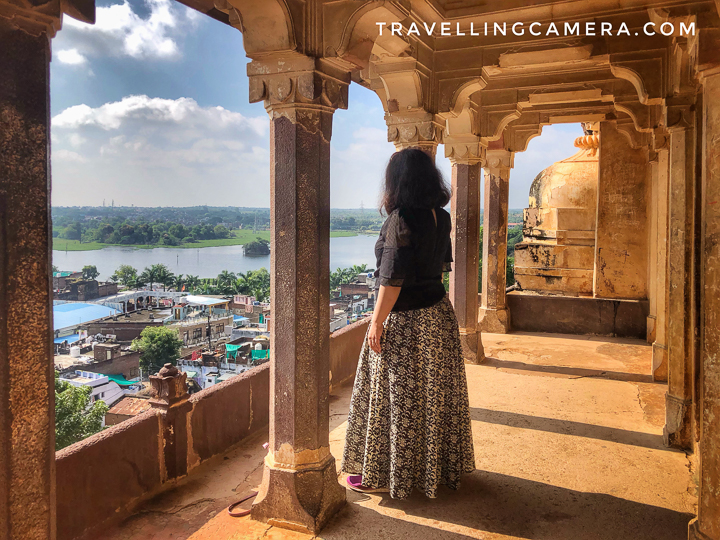
These arches also provide excellent photographic frames. Try composing a photograph through one opening, with a dome or another architectural element visible beyond it.
The contrast between the shaded stone in the foreground and the brighter landscape beyond can create a compelling image without requiring complicated camera settings.
Notice the details around the cornices and the stone brackets supporting overhanging sections. Such elements can be easy to overlook when the entire palace is competing for attention.
The halls and interior spaces
The ground floor contains large halls connected by corridors, with smaller rooms forming part of the overall arrangement.
As you explore the accessible spaces, imagine moving through a long building with views towards the surrounding reservoirs. The relationship between enclosed rooms and open corridors helps explain how the palace combines shelter with a sense of openness.
Observe the thickness of the walls, the shapes of the openings and the way light falls across the floors. These are useful details for understanding historic architecture beyond its appearance in photographs.
Access to particular sections may vary, so follow site rules and avoid entering closed or restricted areas.
The rooftop terrace and domed pavilions
The rooftop pavilions give Jahaz Mahal much of its distinctive character. Their domes rise above the long roofline, creating a lighter silhouette against the sky.
From accessible viewpoints, look at how the pavilions are distributed along the structure. Photographing them together communicates the scale of the palace, while isolating one dome can produce a more intimate architectural image.
The rooftop and elevated viewpoints are also useful for observing the surrounding landscape. On clear days, the broader setting becomes easier to appreciate. During the monsoon, clouds and mist may add atmosphere, although visibility can change quickly.
Do not assume every rooftop section will be open during your visit. Follow the site's access restrictions and enjoy the views from permitted areas.
Water and the practical intelligence of the palace
Jahaz Mahal's setting encourages visitors to think about water as part of its design rather than merely as scenery.
Mandu's historic landscape depended on the collection and storage of rainwater. Water-related features and reservoirs were important to sustaining life on the plateau.
Look for the relationship between the palace, the lakes and the surrounding structures. Even without understanding every engineering detail, you can appreciate how water influenced the placement and appearance of the building.
This perspective adds another dimension to the visit. Jahaz Mahal becomes not just a beautiful royal structure, but part of a larger system in which architecture and the environment worked together.

Other Main Places to See in Mandu Near Jahaz Mahal
One of the advantages of visiting Jahaz Mahal is that several other important monuments are located nearby. Exploring them together provides a fuller understanding of Mandu's historic landscape.
Hindola Mahal: The Swinging Palace
Hindola Mahal is known for its distinctive sloping walls, which create the impression that the structure is leaning.
Its name is commonly translated as Swinging Palace. The building's monumental arches and unusual profile make it particularly interesting for anyone who enjoys architectural photography.
Compare it with Jahaz Mahal. One uses its relationship with water and its horizontal proportions to create a distinctive impression, while the other stands out through its sloping walls and bold geometry.
For photographs, look for compositions that emphasise the walls' angles and the proportions of the arches. Including a person at a suitable distance can help communicate the scale of the building.

Taveli Mahal: A quieter architectural stop
Taveli Mahal is situated close to the main palace complex. It is part of the broader group of historic structures that help explain the development of Mandu.
Depending on the current site arrangements, access to individual areas may vary. Check the local signage rather than assuming every part is open.
It is worth including Taveli Mahal in your route because the experience of Mandu becomes richer when you explore the buildings surrounding its most famous monument.
Champa Baoli: Discovering Mandu's water heritage
Champa Baoli offers another perspective on the importance of water in historic Mandu.
Stepwells and wells reveal the practical side of life in a settlement where water management was essential. Their steps, enclosed spaces and openings create an architectural experience quite different from that of an open palace.
Look closely at the arrangement of the structure and imagine the everyday activities that depended on reliable access to water.
This is a useful stop for understanding that Mandu's architectural achievements extended beyond royal residences and monumental religious buildings.
Jami Masjid: A monument of scale and symmetry
Jami Masjid is one of Mandu's important historic religious buildings.
Its expansive courtyard, repeated arches and covered spaces create a striking contrast with Jahaz Mahal's elongated form. Here, the experience centres on symmetry, openness and the relationship between the courtyard and the surrounding arcades.
Spend some time observing the repetition of the architectural elements instead of trying to photograph the entire building at once.
As this is a religious heritage site, dress respectfully, follow posted rules and remain considerate of anyone visiting for worship.
Hoshang Shah's Tomb: Marble craftsmanship
Hoshang Shah's Tomb offers another architectural experience. Its pale stone surfaces, dome and carefully arranged arches provide a visual contrast with Jahaz Mahal's darker stonework and water-facing setting.
The tomb is also an important monument for anyone interested in the development of Indo-Islamic architecture in India.
Look at how the building's proportions create a sense of balance. Close-up photographs can reveal details that become less obvious in wider views.
Baz Bahadur's Palace and Rani Roopmati's Pavilion
These monuments are farther from Jahaz Mahal and are best explored as a separate part of your sightseeing route.
Baz Bahadur's Palace is associated with the ruler whose name became inseparable from Mandu's famous romantic legend. Its architectural remains and open spaces offer a different experience from the principal palace complex.
Rani Roopmati's Pavilion is particularly celebrated for its location near the edge of the plateau. The expansive views of the surrounding countryside help explain why the place has become such an enduring part of Mandu's identity.
Visit when the light is soft and visibility is good. Give yourself enough time to enjoy the setting rather than treating the pavilion as just another stop on a checklist.
Together, these monuments show why Mandu deserves more than a brief visit to Jahaz Mahal. The main places to see in Mandu reveal a connected story of royal life, religion, water management and architectural ingenuity.

Hidden Gems and Lesser-Known Insights Around Jahaz Mahal
The most interesting discoveries at Jahaz Mahal are not always separate attractions. Sometimes they are details that become visible only when you slow down.
Observe the palace as part of a water landscape
It is easy to see Munj Talao and Kapur Talao as scenic backdrops. Try looking at them as part of the infrastructure that helped support a fortified settlement.
Water collection and storage were essential to life on Mandu's plateau. The relationship between the palace and its reservoirs helps explain why the setting is so important to its identity.
Notice how the architecture changes through the day
The arches and pavilions respond differently to morning and afternoon light.
In softer light, the stone surfaces may appear more subtle and textured. Under stronger sunlight, the contrast between bright walls and dark openings becomes more pronounced.
If your schedule permits, revisit a viewpoint after an hour. You may find that the palace looks quite different even though you are standing in almost the same place.
Explore beyond the obvious viewpoint
Many visitors concentrate on the most familiar exterior photograph and then leave for the next attraction.
Instead, explore the permitted paths around the complex and observe how the palace relates to the reservoirs and nearby buildings. You do not need to find a secret entrance or an inaccessible corner to discover something interesting.
The simple act of looking carefully often reveals more than rushing between attractions.
Look beyond the romantic legends
Mandu's romantic stories are part of its cultural appeal, but the destination also has a rich history of political ambition, defensive architecture, religious life and urban planning.
Allow the legends to enrich your understanding without treating every popular story as established fact. This balance makes the experience more meaningful.

Best Photography Spots at Jahaz Mahal
Jahaz Mahal offers several photographic possibilities, and each tells a slightly different story.
1. The classic ship-like composition
Find an accessible viewpoint that shows the palace's long façade. Include the water or surrounding landscape in the foreground wherever possible.
Keep the rooftop pavilions within the frame because they contribute to the building's distinctive outline.
2. Arches framing the landscape
Use an accessible archway to frame another architectural feature, a section of the reservoir or the sky.
The contrast between a shaded foreground and a brighter background can create a compelling composition. Check your exposure carefully so that important details are not lost in excessively bright highlights.
3. Rooftop pavilions against the sky
The domes and pavilions can make excellent silhouettes against a bright sky.
On days with scattered clouds, try to include the cloud patterns rather than relying only on a plain blue background. A longer focal length can also help isolate individual architectural elements.
4. Reflections during the monsoon
When the reservoirs contain sufficient water and the surface is calm, reflections can add depth and symmetry.
Look for moments when the wind drops. However, do not expect perfect reflections every time you visit; water levels, weather and viewing angles all affect the result.
5. Architectural details
Photograph the brackets, cornices, stone surfaces and transitions between light and shadow.
A good photographic sequence could include one wide establishing image, a couple of architectural compositions, a landscape photograph and several close-up details. Together, these photographs tell a much richer story than a series of similar wide shots.

Photography Tips for Jahaz Mahal
| Photography goal | Recommended approach |
|---|---|
| Wide architectural photographs | Use a wide-angle lens while keeping the camera level to minimise converging vertical lines |
| Architectural details | Use a standard or short telephoto lens to isolate arches, brackets and domes |
| Symmetrical compositions | Centre the main feature and check alignment carefully |
| Monsoon landscapes | Consider a polarising filter, but adjust it carefully because it can affect reflections |
| Low-light interiors | Increase ISO or stabilise your camera where permitted |
| People for scale | Photograph visitors naturally and ask permission before making identifiable portraits |
| Smartphone photography | Clean the lens, avoid excessive digital zoom and use the grid to check verticals |
What is the best time to photograph Jahaz Mahal?
Early morning is generally an excellent starting point for photography. The softer light helps reveal stone textures, and arriving early can provide a quieter experience before visitor numbers increase.
Late afternoon can also be rewarding, depending on the direction of the light and your chosen viewpoint. Stronger light may help emphasise the arches, while softer conditions are often better for subtle textures.
During the monsoon, carry a cloth to wipe your lens and protect your equipment from sudden showers. Wet stone can become slippery, so avoid walking onto damp or restricted surfaces to obtain a better photograph.

Local Food Experiences: What to Eat in Mandu
Exploring Mandu can involve more walking than you expect. After a morning of visiting palaces, mosques and reservoirs, a good local meal becomes an important part of the experience.
Try Mandu ka Dal Paniya
One regional speciality worth looking for is Mandu ka Dal Paniya, associated with the food traditions of the Malwa region.
Paniya is a preparation made from maize flour and traditionally cooked between leaves over a fire. It is served with dal, creating a hearty meal with a distinctive smoky flavour.
Recipes and presentation can vary, so ask local eateries how they prepare it. If you are unfamiliar with Malwa cuisine, this dish is a good introduction to the region's traditional food.
Explore local snacks and simple meals
Depending on the season and availability, you may find roasted corn from roadside vendors. Poha, dal, roti, vegetable dishes and local thalis are other options to look for around Mandu.
Do not expect every restaurant to offer an extensive regional menu. Mandu is a relatively small heritage destination, and food choices can be more limited than in nearby Indore.
A practical tip is to eat a proper meal before beginning a long sightseeing circuit. Carry drinking water and a small snack if you plan to visit monuments that are farther apart.

Local Conversations and Human Stories
Mandu is best understood through more than its monuments. Its landscape is also part of the everyday lives of people who live and work here.
You may meet local guides who have spent years explaining the differences between the monuments, shopkeepers who serve visitors throughout the day, and residents whose daily journeys pass through places that others travel hundreds of kilometres to photograph.
If you speak with a guide, ask questions beyond the dates of construction. Which monuments are busiest during the monsoon? What do visitors commonly misunderstand about Jahaz Mahal? Which nearby places deserve more attention?
These conversations can add useful context to what you see.
At the same time, remember that local residents are not simply part of the scenery. Ask before taking close-up portraits, respect requests not to be photographed and avoid interrupting someone's work.
Sometimes the most memorable interactions are simple: a recommendation for lunch, a conversation about the weather or an explanation of a detail you might otherwise have missed.

Best Time to Visit Jahaz Mahal and Mandu
Mandu can be rewarding throughout much of the year, but the experience changes considerably with the seasons.
| Season | What to expect | Best for |
|---|---|---|
| July to September | Green hills, rain-washed landscapes, mist and potentially fuller reservoirs | Monsoon scenery and atmospheric photography |
| October to November | Fresh landscapes after the rains and generally improving sightseeing conditions | Architecture and comfortable exploration |
| December to February | Cooler weather and often pleasant walking conditions | Extended heritage visits and photography |
| March | Warmer days and changing vegetation | Exploring outside the cooler peak season |
| April to June | Potentially intense heat and harsh midday light | Travellers prepared to manage the heat carefully |
Is the monsoon the best season for Jahaz Mahal?
For many landscape photographers, the monsoon is the most visually rewarding season. Green hills, cloudy skies and water can transform the setting.
However, rain may reduce visibility, make steps slippery and complicate travel between monuments. Heavy clouds can also flatten the light, so flexibility is important.
For a first visit combining sightseeing with comfortable walks, October through February is a sensible choice. If you have already visited Mandu in the dry season, returning during the monsoon can offer a completely different photographic experience.
How to avoid crowds
Arrive early, particularly on weekends and public holidays. Begin with Jahaz Mahal before moving towards nearby monuments.
If a tour group arrives at your preferred viewpoint, use the opportunity to explore an architectural detail or wait a few minutes before taking your main photograph. Visitors often move through the most obvious viewpoints in waves.
A little patience can make a considerable difference to both your photographs and your overall experience.

How to Reach Jahaz Mahal in Mandu
Jahaz Mahal is located in Mandu, also known as Mandav, in Dhar district of Madhya Pradesh. Indore is the most practical gateway for many travellers.
By air
Devi Ahilyabai Holkar Airport in Indore is the nearest major airport, approximately 95 kilometres from Mandu by road, depending on the route.
From Indore, you can hire a taxi or arrange a vehicle for a day trip or an overnight stay. A private vehicle is particularly convenient if you want to explore monuments scattered across the plateau.
By train
Indore is a practical rail gateway for many visitors. Ratlam is another possible option, although you will need onward road transport.
Check current train routes and onward connections before finalising your plans, especially if you expect to arrive late in the day.
By road
Mandu is approximately 95 kilometres from Indore and around 35–40 kilometres from Dhar, depending on your starting point and route.
Bus services connect Mandu with nearby towns, although schedules and frequency can vary. A taxi or self-driven vehicle provides greater flexibility for sightseeing.
If you travel by bus, plan your return journey before setting out. Do not assume transport will be readily available late in the evening after visiting the more distant monuments.
Reaching Jahaz Mahal
Once you reach Mandu, Jahaz Mahal is part of the principal historic monument complex. Follow local signs and check the current entrance arrangements.
Wear comfortable walking shoes because some sections involve steps, uneven surfaces and exposed outdoor paths.
Before travelling, confirm current entry fees, opening arrangements and any temporary closures. These details can change, so avoid relying on old ticket prices or timings.

Where to Stay in Mandu
If your schedule allows, spend at least one night in Mandu instead of treating it only as a day trip from Indore.
An overnight stay gives you more time to explore Jahaz Mahal, visit nearby monuments and travel to Baz Bahadur's Palace and Rani Roopmati's Pavilion without constantly watching the clock.
It also lets you experience Mandu after the main sightseeing groups have left.
Types of accommodation
Budget guesthouses and simple hotels: Suitable for travellers who want a practical base and plan to spend most of the day exploring.
Mid-range hotels: Worth considering if you prefer greater comfort and a relaxed evening.
Heritage-style or tourism-oriented accommodation: An option for travellers who want to stay close to the historic landscape, subject to current availability.
Mandu has fewer accommodation choices than a large city. During busy weekends and holiday periods, booking ahead is sensible.
If you prefer a wider selection of restaurants and urban amenities, you can stay in Indore and visit Mandu on a day trip. However, you will spend a significant part of the day travelling, leaving less time to explore the monuments at your own pace.

Budget Tips for Visiting Jahaz Mahal
You do not need an expensive trip to enjoy Mandu. Transport, accommodation, food and monument entry will usually account for most of your expenses.
| Expense | How to save money |
|---|---|
| Transport from Indore | Compare public transport with shared or private taxis, depending on your group size |
| Local sightseeing | Group nearby monuments together to avoid unnecessary driving |
| Accommodation | Consider weekdays and periods outside major holidays |
| Food | Try local eateries and regional dishes instead of relying only on hotel restaurants |
| Photography | Use your existing phone or camera rather than buying special equipment |
| Guides | Consider a knowledgeable local guide if you want historical context across several monuments |
Travelling with companions and sharing the cost of a vehicle can make sightseeing more economical. If you are travelling alone, compare the total cost of public transport with a private day trip before deciding.
Keep some cash available for small purchases and local services. Confirm current ticket payment options rather than assuming every counter accepts digital payments.

Suggested Itinerary for Jahaz Mahal and the Main Places to See in Mandu
One-day Mandu itinerary
If you have only one day, focus on the principal monuments instead of trying to cover everything.
Morning
Arrive at Jahaz Mahal early.
Explore the palace's exterior and accessible interior areas.
Visit Hindola Mahal and Taveli Mahal.
Explore Champa Baoli if access permits.
Late morning and early afternoon
Visit Jami Masjid.
Explore Hoshang Shah's Tomb.
Take a lunch break and look for a regional Malwa dish.
Afternoon
Travel to Baz Bahadur's Palace.
Continue to Rani Roopmati's Pavilion.
Allow enough time to enjoy the views rather than rushing between attractions.
Evening
Return to your accommodation or begin the drive back to Indore, allowing sufficient time for the journey.
This itinerary works best with a private vehicle or a carefully planned local transport arrangement.
Two-day Mandu itinerary
If you have two days, you can explore at a more comfortable pace.
| Day | Morning | Afternoon |
|---|---|---|
| Day 1 | Jahaz Mahal, Hindola Mahal, Taveli Mahal and Champa Baoli | Jami Masjid, Hoshang Shah's Tomb and Ashrafi Mahal |
| Day 2 | Baz Bahadur's Palace and Rani Roopmati's Pavilion | Explore other accessible heritage sites, enjoy local food and revisit a favourite photography location |
A two-day visit leaves room for changes in weather, longer photography sessions and conversations with local guides.

Responsible Travel Tips for Mandu
Mandu's ruins form part of a fragile historic landscape. Responsible behaviour helps preserve them for future visitors.
Do not carve initials, write on walls or damage decorative features.
Follow barriers and respect signs indicating restricted areas.
Avoid climbing on unstable walls or using historic structures as photography props.
Carry your waste out of the monument complex and use designated bins where available.
Dress respectfully and follow the rules at religious sites.
Ask permission before photographing local residents closely.
Avoid loud music and disruptive behaviour inside heritage spaces.
Take extra care during the monsoon, when stone steps and paths may become slippery.
Support local businesses where practical and treat guides and vendors respectfully.
Responsible travel often comes down to simple decisions: leaving a place as you found it, respecting its people and allowing other visitors to enjoy the same sense of discovery.

Common Mistakes to Avoid When Visiting Jahaz Mahal

Frequently Asked Questions About Jahaz Mahal, Mandu
1. Why is Jahaz Mahal in Mandu called the Ship Palace?
Jahaz Mahal is called the Ship Palace because it stands between Munj Talao and Kapur Talao. Its long, narrow shape and surrounding water create the impression of a ship floating on a lake.
2. Who built Jahaz Mahal in Mandu?
Jahaz Mahal is generally attributed to Sultan Ghiyas-ud-din Khalji of the Malwa Sultanate. It is usually dated to the late fifteenth century, during his reign from approximately 1469 to 1500.
3. What are the main places to see in Mandu besides Jahaz Mahal?
Other important attractions include Hindola Mahal, Jami Masjid, Hoshang Shah's Tomb, Champa Baoli, Ashrafi Mahal, Baz Bahadur's Palace and Rani Roopmati's Pavilion.
4. How much time should I spend at Jahaz Mahal?
Allow approximately 60–90 minutes if you want to explore the architecture and take photographs without rushing. You may need more time if you are interested in architectural details or are visiting during the monsoon.
5. What is the best time to visit Jahaz Mahal?
October to February is generally comfortable for exploring Mandu's monuments. July to September is attractive for greenery and monsoon scenery, although rain and slippery surfaces can affect sightseeing.
6. Is Jahaz Mahal suitable for photography?
Yes. Its elongated façade, arches, domed pavilions, water views and changing seasonal landscape make it an excellent subject for architectural and travel photography. Early morning is a good starting point for softer light and a quieter visit.
7. Can I visit Jahaz Mahal on a day trip from Indore?
Yes. Indore is approximately 95 kilometres from Mandu by road. A day trip is possible, especially with a private vehicle, but an overnight stay allows you to explore more monuments at a relaxed pace.
8. Is Mandu a UNESCO World Heritage Site?
The Group of Monuments at Mandu has been included on UNESCO's Tentative List. This is different from being formally inscribed on the UNESCO World Heritage List.
9. What local food should I try in Mandu?
Look for Mandu ka Dal Paniya, a regional preparation involving maize-based paniya served with dal. Availability and recipes vary, so ask local eateries what they prepare.
10. Are Jahaz Mahal and Rani Roopmati's Pavilion the same place?
No. Jahaz Mahal is the Ship Palace near Mandu's principal historic complex. Rani Roopmati's Pavilion is a separate monument on the plateau's edge, associated with the famous story of Rani Roopmati and Baz Bahadur.
11. Is Jahaz Mahal worth visiting during the monsoon?
Yes, especially if you enjoy landscapes and photography. Green hills, clouds and water can create beautiful conditions. However, check the weather and follow local safety advice because rain can make steps and paths slippery.
12. What should I carry for a visit to Jahaz Mahal?
Carry comfortable walking shoes, drinking water, sun protection, a phone or camera and a rain jacket during the monsoon. A wide-angle lens and a standard lens are useful for photography, but a smartphone can capture excellent images too.

Final Thoughts: A Palace Worth Looking at Slowly
Jahaz Mahal is one of those monuments that becomes more interesting the longer you spend with it.
At first, its appeal is obvious. The long stone structure, rooftop domes and surrounding water explain its unusual name almost immediately. But stay a little longer, and the details begin to matter: the rhythm of the arches, the movement between enclosed halls and open spaces, the relationship between architecture and water, and the way the landscape changes with the weather.
That is what makes Mandu special. Its monuments are not isolated attractions placed on a sightseeing map. They belong to a larger story about a fortified settlement, the rulers who shaped it, the people who lived within its walls and the ingenuity required to build a thriving centre on a plateau.
For anyone exploring the main places to see in Mandu, Jahaz Mahal is an ideal introduction to the town's architectural character. Combine it with Hindola Mahal, Jami Masjid, Hoshang Shah's Tomb and the monuments associated with Baz Bahadur and Rani Roopmati, and you begin to appreciate the depth of Mandu's heritage.
If you enjoy photography, consider returning in a different season. If you love history, look beyond the familiar legends. And if you simply enjoy discovering places at a slower pace, give yourself enough time to wander, observe and absorb the atmosphere.
Among the many Heritage Sites of Madhya Pradesh, Jahaz Mahal remains memorable not just because it resembles a ship, but because it demonstrates how architecture, water and landscape can come together to create something extraordinary.
Mandu is best experienced without rushing. Jahaz Mahal is a wonderful place to begin.






Comments