Indian Sweets: A Delicious Journey Through Jalebi and the Fascinating Types of Jalebis in India

There are very few Indian Sweets that instantly awaken memories the way Jalebi does. The mere sight of golden spirals bubbling in a giant iron wok, the aroma of hot ghee mingling with sugar syrup, and the unmistakable crackle as a fresh Jalebi breaks between your fingers—these moments transcend geography. Whether you're wandering through the narrow lanes of Old Delhi before sunrise, stopping at a roadside dhaba in Rajasthan, exploring temple towns in South India, or attending a wedding in Punjab, chances are you'll find Jalebi waiting to welcome you.

There are very few Indian Sweets that instantly awaken memories the way Jalebi does. The mere sight of golden spirals bubbling in a giant iron wok, the aroma of hot ghee mingling with sugar syrup, and the unmistakable crackle as a fresh Jalebi breaks between your fingers—these moments transcend geography. Whether you're wandering through the narrow lanes of Old Delhi before sunrise, stopping at a roadside dhaba in Rajasthan, exploring temple towns in South India, or attending a wedding in Punjab, chances are you'll find Jalebi waiting to welcome you.

Unlike many desserts that belong to festive occasions alone, Jalebi is woven into everyday life across India. It accompanies morning milk in small towns, becomes breakfast with poha in Madhya Pradesh, pairs with fafda during Gujarati festivals, and is celebrated alongside rabri in North India.

For a travel photographer, Jalebi is equally fascinating. It's not just a dessert—it is street theatre. Every stage of its preparation tells a story worth documenting: the swirling batter, sizzling oil, steaming syrup, eager customers, and generations-old sweet makers whose hands seem to move purely by instinct.

This is not just an exploration of Jalebi. It is a journey through culture, craftsmanship, photography, regional diversity, and one of the most beloved Indian Sweets ever created.


Why Jalebi Deserves a Place in Every Food Lover's Journey Travel often begins with monuments but is remembered through flavors.  Jalebi offers something unique because every city has its own interpretation. Unlike standardized desserts found worldwide, Jalebi changes shape, texture, sweetness, size, ingredients, and even cooking technique depending on where you travel.

Why Jalebi Deserves a Place in Every Food Lover's Journey

Travel often begins with monuments but is remembered through flavors.

Jalebi offers something unique because every city has its own interpretation. Unlike standardized desserts found worldwide, Jalebi changes shape, texture, sweetness, size, ingredients, and even cooking technique depending on where you travel.

Some are impossibly crisp.

Others are soft and syrup-heavy.

Some resemble tiny lacework.

Others look like giant edible sculptures.

The diversity makes exploring the Types of Jalebis in India surprisingly exciting for travelers.

Every region adds its own culinary personality.


Historical and Cultural Significance of Jalebi Although Jalebi feels deeply Indian today, historians generally trace its origins to the Middle East. Ancient Persian texts mention a sweet known as "Zulabiya" or "Zalabiya," which traveled to the Indian subcontinent through trade routes several centuries ago.  Once introduced to India, local cooks transformed it completely.

Historical and Cultural Significance of Jalebi

Although Jalebi feels deeply Indian today, historians generally trace its origins to the Middle East. Ancient Persian texts mention a sweet known as "Zulabiya" or "Zalabiya," which traveled to the Indian subcontinent through trade routes several centuries ago.

Once introduced to India, local cooks transformed it completely.

Indian sweet makers experimented with fermentation, local flours, clarified butter, regional sugars, and varying syrup consistencies until Jalebi evolved into something uniquely Indian.

Today, Jalebi has become:

  • A temple offering
  • A festive dessert
  • A wedding favorite
  • A breakfast dish
  • A street food icon
  • A celebration sweet

Many regions even associate Jalebi with prosperity because of its circular form symbolizing continuity and abundance.


Encounter with Fresh Jalebi

Some travel memories fade with time.

Others remain surprisingly vivid.

One winter morning in Chandni Chowk, I reached before sunrise hoping to photograph empty streets. Instead, I found something far more captivating.

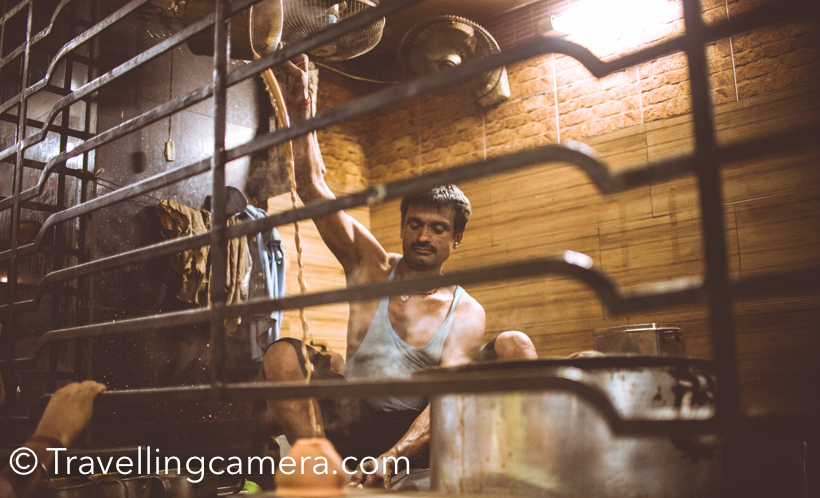
Outside a tiny sweet shop, an elderly halwai was already preparing Jalebis.

Without measuring anything, he poured fermented batter into a cloth bag and effortlessly created perfect spirals inside a massive iron kadhai.

The oil hissed.

The Jalebis puffed gently.

Within moments, they were lifted into warm saffron-infused sugar syrup.

Steam rose in the cold morning air.

Customers gathered silently.

Nobody checked their phones.

Everyone simply waited.

That first bite explained why fresh Jalebi is impossible to compare with packaged sweets.

It wasn't merely sweet.

It was warm, crisp, fragrant, slightly tangy from fermentation, and astonishingly light despite being deep fried.

As photographers often say, some moments deserve to be experienced before they're photographed.

This was one of them.


Exploring the Incredible Types of Jalebis in India

Traditional North Indian Jalebi

This is probably the version most travelers recognize.

Made using fermented refined flour batter, these Jalebis are medium-sized, crisp outside, juicy inside, and lightly flavored with saffron or cardamom.

Best enjoyed fresh.


Imarti – Jalebi's Rich Cousin

Although technically different from Jalebi, many travelers confuse the two.

Imarti uses urad dal batter instead of flour.

Its flower-like design is thicker and softer, with a richer taste.

Popular across Uttar Pradesh, Rajasthan, and Madhya Pradesh.


Paneer Jalebi

Found mainly in Bengal and Odisha, Paneer Jalebi replaces traditional batter with fresh cottage cheese.

The result is incredibly soft, mildly chewy, and less crisp.

It pairs beautifully with evening tea.


Khoya Jalebi

One of Rajasthan's indulgent creations.

Khoya enriches the batter, creating thicker Jalebis that remain soft while absorbing more syrup.

Perfect during winter.


Chenna Jalebi

A specialty of Odisha.

Prepared using fresh chenna, it has a distinct texture unlike conventional Jalebi.

Less crunchy but wonderfully juicy.


Mawa Jalebi

Popular in Madhya Pradesh, especially Indore.

These enormous Jalebis often resemble edible sculptures rather than sweets.

They're dense, rich, and meant for sharing.


Jhangiri of South India

Tamil Nadu and Andhra Pradesh celebrate Jhangiri.

Although closely related to Imarti, regional recipes vary slightly.

The intricate floral shapes make them especially photogenic.


Fafda Jalebi Combination

Perhaps Gujarat's most iconic breakfast.

The contrast between crunchy salty fafda and syrupy Jalebi creates remarkable balance.

It becomes especially popular during Dussehra mornings.


Lesser-Known Facts About Jalebi

Many travelers don't realize:

  • Traditional batter ferments overnight.
  • Older sweet shops still use cloth piping bags instead of bottles.
  • Iron kadhais create more consistent heat than steel.
  • Pure desi ghee Jalebi tastes noticeably different from vegetable oil versions.
  • Some recipes use natural sour curd for fermentation.
  • Fresh Jalebi remains crisp for only a short period.

The best Jalebi is rarely found inside luxury hotels.

It usually lives in century-old neighborhood sweet shops.


Hidden Gems Every Jalebi Lover Should Explore

Instead of famous tourist restaurants, explore local morning markets.

Some wonderful experiences include:

DestinationSpecialty
Old DelhiEarly morning Jalebi with milk
IndoreGiant Mawa Jalebi
JaipurThick Khoya Jalebi
AhmedabadFafda-Jalebi breakfast
VaranasiTemple-style hot Jalebi
KolkataPaneer Jalebi

Often, the smallest shops have the longest history.

Ask locals where they buy Jalebi for festivals.

That recommendation rarely disappoints.


Best Photography Spots for Capturing Jalebi

Food photography becomes storytelling when you include people.

Instead of photographing only the finished dessert, capture the complete process.

Great compositions include:

  • Batter swirling into oil
  • Sugar syrup dripping
  • Steam rising in winter mornings
  • Customer interactions
  • Close-ups of bubbling oil
  • Halwai concentrating while making perfect spirals

Morning light is particularly beautiful because sunlight reflects through syrup, creating warm golden highlights.


Photography Tips for Food and Street Photography

Golden Hour Isn't Always Best

Unlike landscapes, Jalebi photography often benefits from indirect natural light inside shop entrances.


Focus on Motion

Use burst mode while batter enters hot oil.

The swirling motion creates dramatic frames.


Include Human Hands

Hands tell stories.

Photograph experienced sweet makers lifting Jalebis using large bamboo sticks or steel rods.


Avoid Flash

Flash destroys the warmth and texture of syrup.

Natural side lighting works much better.


Try Macro Shots

Capture:

  • Sugar crystals
  • Crisp bubbles
  • Syrup reflections
  • Tiny saffron strands

Local Food Experiences Around Jalebi

One of India's greatest pleasures is discovering what accompanies Jalebi.

Popular pairings include:

RegionCombination
DelhiJalebi with Rabri
Uttar PradeshJalebi with Milk
GujaratJalebi with Fafda
Madhya PradeshPoha and Jalebi
RajasthanKachori and Jalebi
PunjabLassi with Jalebi

Each pairing reflects local eating habits developed over generations.


Conversations with Sweet Makers

During travels, conversations often reveal fascinating details.

One elderly halwai once smiled while preparing Jalebi and said,

"People think we make sweets. Actually, we make memories."

Another explained that every batch depends on weather.

Humidity changes fermentation.

Winter requires different syrup temperatures.

Summer alters batter consistency.

It's this craftsmanship—not recipes alone—that separates extraordinary Jalebi from ordinary ones.


Best Time to Enjoy Fresh Jalebi

SeasonExperience
WinterBest overall texture and warmth
MonsoonComfort food with tea
FestivalsMaximum variety available
SummerEarly mornings before heat

Morning remains the ideal time because Jalebi is usually prepared fresh.


How to Reach the Best Jalebi Shops

Unlike monuments, great Jalebi rarely has signboards pointing toward it.

The best strategy is surprisingly simple:

  • Ask local taxi drivers.
  • Speak to tea vendors.
  • Visit traditional markets.
  • Explore old city neighborhoods.
  • Follow early morning crowds.

Often, the busiest sweet shop is busy for good reason.


Where to Stay

If your trip revolves around exploring regional Indian Sweets, choose accommodation close to heritage markets rather than modern commercial districts.

Old city neighborhoods provide easy walking access to legendary sweet shops before tourist crowds arrive.

Boutique heritage hotels also offer excellent opportunities to combine food exploration with photography walks.


Budget Tips

  • Morning Jalebi is often fresher and cheaper.
  • Buy smaller portions from multiple shops instead of one large serving.
  • Carry cash for traditional sweet shops.
  • Visit during festivals to explore seasonal varieties.
  • Avoid heavily commercial tourist markets if authenticity matters.

Suggested One-Day Food Itinerary

TimeExperience
7:00 AMFresh Jalebi breakfast
8:00 AMStreet photography
10:00 AMVisit traditional sweet markets
1:00 PMRegional lunch
4:00 PMTea with Paneer Jalebi
EveningDessert with Rabri or Kulfi

Responsible Culinary Travel

Respect the people behind the food.

  • Always ask before photographing cooks.
  • Support family-run businesses.
  • Avoid wasting food while sampling.
  • Learn local names of sweets.
  • Appreciate craftsmanship rather than bargaining aggressively.

Small gestures often lead to wonderful conversations.


Common Mistakes Travelers Make

  • Eating reheated Jalebi instead of fresh batches.
  • Visiting only famous tourist shops.
  • Ignoring regional varieties.
  • Photographing without permission.
  • Assuming every Jalebi tastes the same.
  • Missing breakfast hours when Jalebi is at its freshest.

Frequently Asked Questions

Which is the best place to eat Jalebi in India?

There isn't a single answer. Cities like Delhi, Jaipur, Indore, Ahmedabad, Varanasi, and Kolkata each offer distinctive regional styles and are among the best places to explore Types of Jalebis in India.


Why is Jalebi considered one of the most popular Indian Sweets?

Its unique combination of crisp texture, juicy sugar syrup, affordability, and deep cultural association with festivals, celebrations, and breakfast traditions has made it one of India's most beloved sweets.


Is Jalebi originally Indian?

Most food historians believe Jalebi evolved from the Middle Eastern sweet Zulabiya before becoming uniquely Indian through regional adaptations and centuries of culinary innovation.


What makes fresh Jalebi taste better?

Freshly prepared Jalebi has a crisp exterior and warm syrup-filled interior. As it cools, the texture softens and loses much of its signature crunch.


Which state has the biggest Jalebi?

Madhya Pradesh, particularly Indore, is famous for giant Mawa Jalebis that are significantly larger and richer than conventional versions.


Can photographers capture Jalebi preparation?

Absolutely. Traditional sweet shops offer exceptional opportunities to document food craftsmanship, especially during early morning preparation when batter is freshly fermented and the first batches are cooked.


Final Thoughts

Travel is often measured in kilometers, but the most memorable journeys are measured in flavors.

Among all Indian Sweets, Jalebi occupies a special place because it brings together history, craftsmanship, celebration, and everyday life in one beautifully imperfect spiral. Every region reshapes it, every sweet maker adds a personal touch, and every traveler discovers a version that becomes their favorite.

Exploring the many Types of Jalebis in India is more than a culinary adventure—it's an invitation to understand the country's extraordinary diversity through its food. Whether you're standing in a bustling market at dawn, chatting with a veteran halwai, or framing the perfect photograph of syrup glistening in the morning light, Jalebi reminds you that the simplest experiences often become the most enduring travel memories.

The next time you plan a journey across India, don't just search for monuments or landscapes. Follow the aroma of hot ghee, listen for the gentle hiss of batter meeting oil, and let a freshly made Jalebi lead you into the heart of India's rich culinary heritage.


Related Blogposts -

On our way from Jaisalmer to Jodhpur, we made a couple of detours, and one of those detours was for Mandore Fort. While the Mandore Fort Complex was really interesting and we will share details about that trip in another blogpost, in this post, I want to talk about the unusual lunch we had after exploring the fort.

Mandore Kachori || A feast of Dahi Kachori and Kadhi Kachori right outside Mandore Fort Complex
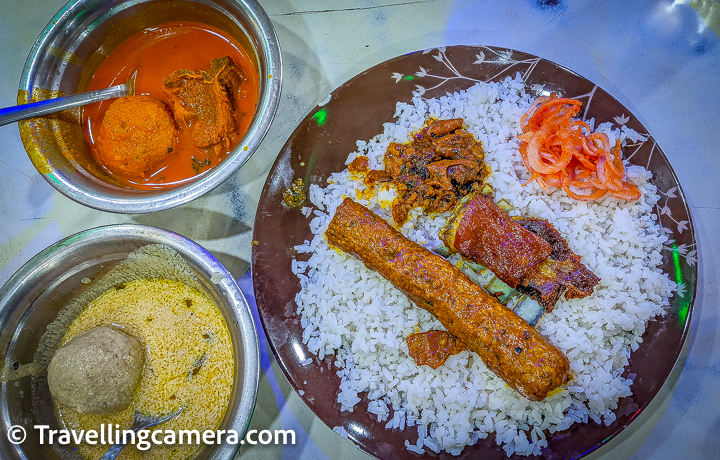

I am a little embarrassed to admit it, but I wasn't aware of Kashmiri Wazwan before our trip (my first-ever) trip to Kashmir this year. However once you land in Srinagar and visit any tourist destination, billboards inscribed with "Kashmiri Wazwan" keep popping up in your line of sight. So we were naturally curious.   After landing in the morning and then roaming around for half a day, we decided we were hungry and went into a small dhaba-like shop that was also serving Kashmiri Wazwan. It was then that we discovered that Wazwan was an elaborate, traditional meal with several meat-based dishes and rice.   We were in a dhaba, so we did not really get to experience the traditional way of cooking, serving, or eating wazwan, but a research on the internet and a conversation with our taxi driver did make it apparent that wazwan is not just about food, it is also about the pride Kashmiri's take in this tradition.   Our driver was delighted when we asked him about Kashmiri Wazwan. He informed us that households hire specialized chefs to prepare Wazwan for special occasions, and it is never a single-day affair. It lasts for at least a couple of days.


Whenever we travel different places, we try to find any place which can offer local food. Honestly we don't put lot of efforts to find local food when we are on the move but we have been lucky most of the times.  When we were in Kajuraho, we noticed that Khajuraho has plenty of those cool cafes with nice ambiance and most of them are serving all the fancier food which is served in Restaurants in Delhi. I personally prefer simpler food so I skip some of these places, unless there is no other good option around or in case, we feel lie having snacks with a good drink. Like we loved the Raja Cafe which is in front of Western Group of Temples in Khajuraho.     We were staying in Golden Tulip and checked with the staff about what kind of things they serve which are known as Madhya Pradesh delicacies. The response was not very convincing, so we chose to have most of the meals outside and go to different places. But most of the times, we were landing at good places with all the options which we get usually around our place in Noida.     During one of the conversations, someone recommend this Marwadi Thali place which was very close to our hotel. The place is called Badri Seth Marwari Bhoj and this place served other Indian food options as well.    While driving back, Vibha and I were wondering about key dishes of Madhya Pradesh that anyone should try. Then she reminded me about our morning walks in Khajuraho when we used to see MP Breakfast options in small halwai shops. You will find Poha which is popular in Madhya Pradesh, Jalebi and Dal Bafla. We saw people making Dal Bafla but not sure if that's consumed during breakfast or in lunch. Then we also realised that probably small dhabas may be serving some Madhya Pradesh food, which we may have missed.  Probably during our next trip we will try some of these following things in Madhya Pradesh.   - Poha  - Dal Bafla  - Bhutte ki Kees  - Palak Poori  - Bhopal Gosht Korma  - Chakki ki Shak  - Malpua  - Mawa Bati  - Jalebi    If you are from Madhya Pradesh or know about MP food, please drop a comment below to share your inputs/suggestions. Thanks !

Looking at the popularity of our blog-posts on Spiti and the kind of questions come to us, we thought of sharing about this awesome place to have a meal when you are entering into Kinnaur region if you plan to take the route via Shimla & Kinnaur. We got best road-side food at this place during our week long journey to Spiti Valley.     Supposedly a gentleman started a small setup to serve food to folks traveling to Kinnaur & Spiti, when there were not a lot of options to take a break and have lunch. It was primarily for lunch. Roadways buses and a handful cars/bikes used to stop here for food. He always used pretty good quality of rice in comparison to rice served in other dhabas on this whole stretch and people started calling it Basmati Dhaba. Just to clarify, Basmati is considered as high quality rice although the rice which is served in this dhaba is not technical basmati but still the quality if pretty good.

Let's talk about breakfast options which are commonly available across Ahmedabad City. In this post, we will avoid mentioning places as we haven't explored that well to claim that we can recommend one place over other.     Related Blogpost from Gujrat - Travelling Camera in Gujarat || Interesting tour of Hutheesing Jain Temple    Some of the popular breakfast things which you find commonly in Ahmedabad are - Fafda-Kadhi, Jalebi, Aaloo Poori, Lilva Kachori, Gota, and I am sure I must be missing few other things we could see on the streets, but couldn't identify.     Related Blogpost from Gujrat - Modhera Sun Temple - A Brilliant Place to see in Gujrat, India    During breakfast, we opted for one plate of Fafda which is served with Gujrati kadhi, one plate of Aaloo Poori and some Jalebi which was served with Rabri. Everything tasted different except Jalebi. Fafda is a crunchy & deep fried, which is consumed with Gujrati Kadhi. I couldn't appreciate Gujrati Kadhi with Fafda (probably because of sweet taste which doesn't align with default expectations), so I ate Fafda without Kadhi and had tea with it.     Related Blogpost from Gujrat - Sidi Sayyed Mosque - A small structure located at an ignorable location in Ahmedabad    Aalo Poori also tasted very different with some sweetness in potato gravy as well. The chillies served with breakfast were quite interesting. I had one poori only with the green chilly.

Last winter, Vibha and I visted North Kerala. This was first time for me in Kerala while it was second time for Vibha. Earlier she had explored south Kerala which is most popular among tourists. During this trip, we had decided to try only Kerala food and avoid anything which we usually eat in Delhi or North India. This exploration made us try varied stuff and our decision of staying in Home-stays made this trip even more exciting. This Photo Journey shares more about food of Kerala.

During our stay in Udaipur, we decided to visit Garden Hotel restaurant for lunch, as this place serves delicious Rajasthani thali. And thali means, unlimited food at fixed price :) . Nandan had visited this place a few years back and he recommended the place. and certainly it's a place we would love to share with Travellingcamera family. This blogpost shares about Garden Hotel, it's location, why it's popular in Udaipur, kind of food to expect and what else can you do around this place after lunch.


Andhra Bhawan is a popular restaurant(maybe a mess) located in the heart of Delhi, serving authentic Andhra-style cuisine. The restaurant is operated by the Andhra Pradesh State Government and is known for its delicious food, affordable prices, and casual atmosphere.

Kake da Dhaba is a legendary restaurant located in the heart of Delhi's bustling Connaught Place area. Known for its mouth-watering Punjabi cuisine and warm hospitality, Kake da Dhaba has been a favorite among locals and tourists alike for over 75 years.

We missed stopping at this restaurant back in 2015 when we were travelling to Binsar. It's not that we hadn't heard of the place, it was just that if you do not know how unobvious this small, yet insanely famous, eatery is, you will most likely miss noticing it as you pass the otherwise crowded road near Kainchi Dham.  Though the restaurant has great food options for vegetarians as well as non-vegetarians, the restaurant is most talked about for two things - its mutton curry which they serve with Tandoori roti, and also the pakode, which are prepared by the shop next door and are served with a spicy green chutney.   We were at this place again in July this year (2021) post the lockdown when we went visiting Firdaus with friends. But this time the difference was that we were with people who are well familiar with the area and we had specifically planned to have lunch at Kirola restaurant.

Most likely you have heard about famous Paranthe Wali Gali in Old Delhi, but you may not know all the realities of this street. Through this post, we will share some realities which may change your perception of the place. Idea is not to discourage or encourage anyone to visit this place for Paranthas but to ensure you make an informed decision on the basis of details shared in this blogpost.

After a delicious meal at Kutty's, we headed back and after a few meters we saw Kerala House on our left. We took a small stop at the canteen which is located on other road which is on backside of the Kerala House. We got some stuff packed for dinner/breakfast.    Post Pandemic, it was first time we left home to go to these places where we used to go frequently. So an evening very well spent after a long time.

Stella Cafe, located within the charming Alps Resort in Bakrota Hills of Dalhousie, Himachal Pradesh, is a must-visit destination for food lovers seeking a blend of good food and stunning views. Nestled in the tranquil surroundings of Bakrota Hills, this café offers a perfect spot to relax and enjoy delicious meals amidst nature's beauty.

In the heart of Himachal Pradesh lies a culinary treasure waiting to be discovered – the famous Luchi of Mandi Town. Amidst the majestic mountains and lush greenery, Mandi offers not only breathtaking landscapes but also a rich gastronomic heritage. Among its culinary delights, Luchi holds a special place, drawing food enthusiasts and travelers alike to savor its delectable taste. Let's embark on a flavorful journey to explore the charm of Luchi served in various shops across Mandi Town.

We finally broke our long hiatus from moving about in the city this weekend. It was quite a while that we had been hearing about Chokhi Haveli - A Rajasthani Cultural experience in the heart of Noida. The tickets to the place were available on BookMyShow at Rs 500/person. We found it interesting and decided to try it out. Since it was open air, we felt it would be safer than closed spaces during pandemic. Also, February is probably the best month to be hanging out in the Sun during the day.

Another popular breakfast item in Chanderi is samosa. Samosas are crispy, deep-fried pastry pockets filled with spiced potatoes, peas, and sometimes meat. They are often served with tamarind chutney or mint chutney and are a perfect way to start your day.    If you have a sweet tooth, you might want to try jalebi in Chanderi. Jalebi is a deep-fried sweet made with a batter of flour, water, and sugar, which is then soaked in syrup. The result is a crispy and sweet treat that is a popular breakfast option in Chanderi.    Chanderi is also known for its chai, which is a staple drink in India. The chai in Chanderi is brewed with a blend of spices, including cardamom, ginger, and cinnamon, which gives it a unique flavor. A cup of chai is the perfect way to wash down your breakfast and start your day on the right note.    If you're visiting Chanderi, be sure to explore the town's street food scene, especially the breakfast options. From savory poha and samosas to sweet jalebi and chai, Chanderi has something to offer for everyone. So, wake up early, hit the streets, and savor the delicious flavors of Chanderi's street food for an unforgettable culinary experience.

Different parts of Himachal has different cuisines and it varies according to the weather & other factors like agricultural status, communities, population density etc. During normal days dal-chawal, roti-sabzi, curd & other mild products are used in meals. But special preparations are done during festivals or special occasions. The whole setup of having specialize cooks making selected food items is called Dham. Dham of Mandi is different than what you get in Kangra. This Photo Journey shares more about Himachali Dham and various aspects associated with it. As a traveller you should find out opportunities to experience Himachali Dham. This post will also share some tips for that :).

Tucked away in the charming lanes of Panjim, Mum's Kitchen is far more than just a place to eat—it is a heartfelt celebration of Goa’s rich and diverse culinary heritage. For travelers who wish to look beyond the beaches and nightlife, this restaurant offers an intimate and authentic journey into the flavors that define Goan identity.

The restaurant did not serve coffee, so we decided to search for it. And once again this shop was a few meters from Hotel Gokulam. And it seems that it was quite a popular place too. There were several youngsters hanging out and people who were probably on their way back from their work, had stopped on the way for a cup of coffee.

If you're looking for an authentic South Indian breakfast experience, look no further than Reddy Tifin Centre in Medak. This popular food joint has been serving up delicious breakfast dishes to locals and tourists alike for years, and it's not hard to see why.

We had been walking around the city of old Bikaner for hours and we hadn't had anything to eat. The lengendary kachoris of Bikaner had evaded us thus far and had started appearing like myths or mirages to us. And we did not want to have momos, dosas, or punjabi thali when in Bikaner. It was right when we were about to get desperate when we took a turn and noticed a strange scene on our left.

Nestled amidst the serene beauty of Himachal Pradesh, Mandi is not only known for its breathtaking landscapes but also for its rich culinary heritage. Among the many culinary delights that grace the bustling streets of this charming town, one dish stands out for its simplicity, yet irresistible flavor - Dahi Boondi. Join us as we embark on a culinary journey to explore the savory charm of Mandi's famous Dahi Boondi.

Last week, we went for lunch at Soda Bottle Openerwala in Noida. It’s in DLF Mall of India. I had heard a lot about SBOW, especially the one in Cyberhub Gurgaon. This post shares about my experience along with few photographs. Sorry, I couldn’t click all the food items we ordered but those can be searched online or on Zomato.We reached the place by 12:30pm and it’s best time to reach if you are planning to have lunch at Soda Bottle Openerwala at DLF Mall of India in Noida. It's known for Parsi cuisine, which is served by very few Restaurants in Delhi. There were very few tables occupied at that point of time and after 30 minutes, there was long waiting queue. We got a nice circular table for 6.Since it was a working day and some of us had to reach back at 2pm, we ordered main course and drinks in one go. And here is what we ordered (at least the ones I still remember :) ) - Tareli Machhi , Chicken Baida Roti, Eggs Kejriwal, Chicken Berry Pulao, Chicken Cutlet, Pav Combo, Vegetable Berry Pulao, Dhansak. And in drinks - Masala Pepsi , Parsi Choy, Irani Faluda and Ganne nu ras.Most of the dishes come in small quantity and served in old styled steel tiffin-box. At the same time, the prices are reasonable. And most importantly, most of the dishes served are unique and have nice flavor. I liked all of their Pulao/Biryanis. Chicken Berry Pulao had juicy chicken pieces with great aroma. Egg Kegriwal is also a nice dish. It seems Mr. Arvind Kejriwal liked this dish and they renamed it. Dhansak is the way dal is cooked by Parsis. It’s a thick gravy of dal and most of us loved it. I didn’t try Chicken Cutlet, but have heard good views from folks who enjoyed it with pav.Masala Pepsi was interesting, Ganne nu ras is sweeter than usual and Parsi tea was strong tea with lot of milk.The place has nice ambiance. It’s a mixed look of a modern restaurant and an old styled Parsi shop. You would be able to recall the scenes in bollywood movies from 80s.Overall we enjoyed the meal at Soda Bottle Openerwala. Bill was around 3.5K for 6

We were at Guleria ghat for early morning sessions of Mahindra Kabira Festival and after the sessions were over, we started walking up towards the streets of Benaras. We were in Thatheri Bazar and we were trying to find a lassi shop. While walking around, we came across a street which was full of people and as we went closer, we realised that it's a breakfast shop selling kachori with some special sabzi.    We took a stop and thought of trying it out. I am using the word 'trying it out' because we didn't know anything about this place and idea was just to taste the stuff being served in this shop. After some struggle, I reached the counter to get a token. I got 2 plates for 5 people. As I stepped out and smelled the food, I realised that may be I should have paid for 3 plates if not 4 :. But it was too late now. On my token, there was waiting time of 20 mins and taking another token would have added 10-15 mins more.


In the bustling heart of Leh, near the historic Jama Masjid, lies a network of local bakeries that play a significant role in Ladakh's daily life. These small, family-run bakeries offer an array of traditional Ladakhi breads, each with its own unique flavor and history. For travelers and locals alike, these bakeries are not just places to grab a snack—they are cultural institutions that provide an insight into Ladakh’s rich culinary heritage.

There are cities that are remembered by their monuments. Some linger in memory because of the food served on old wooden tables overlooking quiet streets. And then there is Kochi, a city where even the changing seasons seem to have their own fragrance.

The first thing that hits you in Kochi’s spice market isn’t the sight. It’s the smell.  Warm pepper. Sharp clove. Sweet cinnamon. Earthy turmeric. Green cardamom carrying a faint hint of eucalyptus. The air itself feels textured here — layered with centuries of trade, monsoon moisture, and human movement.

Kolkata, the cultural capital of India, is a city steeped in history, bustling with life, and brimming with stories waiting to be discovered. Among its many vibrant neighborhoods, Shyam Bazar stands out as a testament to the city's rich heritage and dynamic spirit. In this comprehensive guide, we delve deep into the heart of Shyam Bazar, uncovering its hidden gems, historical significance, and vibrant culture.

We are blessed that Vibha’s cousin Bhuwan lives in Hyderabad. Hyderabad means great biryanis and of course Karachi Bakery. To say that the Bakery is famous will be a gross understatement. To say that its goods are some of the most coveted food items in Hyderabad, will also be an understatement. One statement that I would still like to make is that we love its Fruit Biscuits.  Whenever Bhuwan visits Delhi, he knows that he needs to carry at least three boxes of Karachi Bakery’s Fruit Biscuits – one for us, one for Nishant, and one for my Parents-in-law. We are a family crazy about these biscuits you see.  The biscuits simply melt in your mouth leaving and make a great combination with chai. Square and generously studded with candied fruits, these biscuits are simply divine.  Karachi Bakery has several branches in Hyderabad and Telangana, so one must make an effort to visit the place if you happen to be in the area. Their fruit biscuits, however, are available at several outlets and even at the domestic and international airports I believe. In fact, the bakery has opened official outlets at the airports so you may be able to find other varieties as well.  More often than not, we always have these biscuits in our kitchen. Some of the best biscuits to be served to guests (after all who can resist the temptation of snacking on some Tooti frooti) these biscuits have the power to transport you to your childhood of Tooti Frooti icecreams and cakes.


Few weeks I received an invite from Le Meridien to join them for Tea Trails. Some of my good blogger friends also encouraged me to participate in this well curated event. Finally I joined the team of bloggers, media and tea lovers at Le Merodien and I am very happy for this good decision. This Photo Journey shares about the famous tea shop in Old Delhi which is in business for more than 70 years now, a tea-seller who has authored 24 books and tea tasting session by tea sommelier Vikram Batra followed by lunch.

When we were in Kolkata Sohail from 'The Beacon' took us on Night tour of the city and ourfirst stop was Kolkata's famous Doodh-Fanta. The name is not thatexciting but both  Vibha and I were excited to try new thing in thecity. This post shares more about Doodh(Milk)-Fanta of Kolkata.From Bikers Cafe,we drove to Balwant Singh Dhaba, Bhawanipur. It was around 10:30pm andthere was huge queue of cars outside the dhaba. There were lot of folkson the road who were taking order. While sitting in the car, we alsoordered a Doodh-Fanta. After few minutes, we were given a jug of Doodh-Fanta and few bhats (earthen cups). Sohail served us the drink in Kulhad(bhat) . After first sip, I realized that it is very different than what I imagined. A cold mild with a very different flavor and in orange color. Definitely Fanta was not the prominent flavor, which I liked. Milk has subtle fruity taste with very nice flavor. It seems, no one knowns the recipe. I would say that drink was not very impressive. It's not like I would crave for it, but it's not bad at all. A nice drink and probably you would fall in love if you drink it more often. It takes time to develop taste for any drink. After having 3 cups of Doodh-Fanta, we went out to check the place and they were also selling tea. There were lot of people around the counter to get token for tea. I loved the environment around this street - lot of cars parked and people enjoying Doodh-Fanta and services in car. Few discussions about Doodh-Fanta on Facebook - Later on Sohail told us about 7 such places in Kolkata where you get a very different experience of food/drinks. Check out their link to know more about '7 places in Kolkata where you will find the quirkiest foods'.

Comments

Trending Post Today !

How to reach Kasol/Malana and top things to do around this stunning hill-station of Himalayan State of India

Main places to see & Top things to do around Dalhousie : Stunning Hill Station in Himalayan State of India