

Murari Devi Temple and the Highest Peaks in Mandi
There are places in Himachal Pradesh where the journey to a temple feels almost as important as the prayer waiting at the end of it. Murari Devi Temple is one of those places.
Perched on Murari Dhar at around 7,000 feet (2,133 metres) above sea level, the temple rises above Sundernagar in Mandi district. It is surrounded by forests, mountain ridges and enormous views across the landscape below. The Himachal Pradesh government describes the temple as being on a sacred hill west of Sundernagar and notes that the surrounding Balh and Sundernagar landscapes can be seen from the temple.
For anyone researching the highest peaks in Mandi, Murari Devi is particularly interesting because it combines elevation with something much more intimate: a living mountain shrine. This isn't simply a viewpoint where you arrive, take a photograph and leave.
The mountain itself is part of the experience.
The road climbs gradually. The town disappears behind you. Houses become fewer. The air changes. And eventually, when you stand near the temple, Sundernagar seems surprisingly far below.
That is when Murari Devi begins to make sense.

Why Visit Murari Devi Temple?
Murari Devi Temple is worth visiting for several different reasons, depending on what you seek from the mountains.
For pilgrims, it is a revered shrine associated with Goddess Murari Devi.
For photographers, it is an elevated viewpoint with constantly changing Himalayan light.
For road trippers, it is an unusual detour from the better-known destinations of Himachal Pradesh.
For families, it offers a relatively accessible mountain experience without committing to a major Himalayan trek.
And for anyone interested in the Temples of Himachal Pradesh, Murari Devi offers something particularly valuable: mythology, landscape and local tradition existing together rather than separately.
The temple stands on Murari Dhar, also known by the older name Sikandara Dhar. The elevation is approximately 2,133 metres.
Yet numbers don't really explain the place.
What stays with you is the feeling of standing on a ridge above the valley and watching clouds move across distant slopes.

The Story of Murari Devi: Pandavas, a Demon and a Mountain Goddess
Like many ancient shrines across Himachal Pradesh, Murari Devi exists at the intersection of history, faith and oral tradition.
According to local belief, the temple was established by the Pandavas during their Agyatwas, the period of exile when they were required to remain anonymous. The temple's own account preserves this tradition and also points to large human-like footprints carved or visible on rocks nearby, which devotees associate with the Pandavas.
The district administration records another fascinating local legend.
According to the story, a powerful demon named Moore performed severe austerities to obtain immortality from Brahma. Brahma could not grant absolute immortality but gave him a boon that he would not be killed by a god, human or animal. The demon became arrogant, believing himself invincible.
The loophole was that his death would come at the hands of a daughter.
That daughter was associated with Murari Devi.
The legend says that the mountain subsequently became known as Murari Dhar because of the goddess's connection with the defeat of Moore.
Whether one approaches this as mythology, oral history or sacred tradition, the story gives the landscape another dimension.
You are not simply standing on a hill.
You are standing in a landscape whose identity has been narrated for generations.

A Temple Connected to the Pandavas
The Pandava connection is particularly common among old mountain temples in northern India, but Murari Devi has its own local version.
According to the temple tradition, the Pandavas encountered the goddess while they were in exile. She instructed them to excavate the mountaintop, where they would find sacred objects. They were then instructed to establish a temple there.
The story continues to live through physical features around the temple, including the rock footprints associated by local belief with the Pandavas.
This is an important distinction when travelling through Himachal.
Not every story needs to be approached as a historical claim.
Sometimes its importance lies in understanding why a community considers a particular rock, spring, tree or mountain sacred.
That is often more revealing than trying to separate every legend into "true" and "false."

Murari Dhar: One of the Highest Peaks in Mandi's Sundernagar Landscape
At approximately 2,133 metres, Murari Dhar is substantially higher than Sundernagar town below it. The district administration specifically identifies the temple's location at about 7,000 feet.
However, there is an important SEO and geographical clarification.
If you search for the highest peaks in Mandi, Murari Devi should not be described as the highest peak in the entire Mandi district.
The district includes considerably higher mountains. Shikari Devi, for example, rises to approximately 2,850 metres and is commonly identified as the highest peak in Mandi district.
Murari Dhar's significance is different.
It is a high, accessible mountain summit in the Sundernagar area and a remarkable viewpoint over the surrounding landscape.
That distinction makes the place more interesting rather than less.

What You See From Murari Devi
The view changes dramatically with weather.
On a clear morning, Sundernagar and the surrounding valleys spread below the temple. The official district tourism description specifically mentions views of the Balh valley, Sundernagar and surrounding areas.
Look beyond the obvious.
Don't spend your entire visit photographing the town.
Turn around.
Study the mountain layers.
Notice how one ridge overlaps another. Watch how atmospheric haze gradually removes detail from distant mountains. Look for villages appearing as tiny clusters between folds in the terrain.
This is where a telephoto lens becomes more interesting than a wide-angle lens.
A 70–200mm lens can compress several layers of ridges into a single photograph, creating the impression that the mountains are stacked one behind another.

My Kind of Visit: Slow Down Before You Photograph
Murari Devi is the kind of place where a photographer can easily make the mistake of becoming too busy.
You arrive.
You see the view.
You reach for the camera.
You photograph the temple.
You photograph the valley.
Then you leave.
Instead, spend the first ten minutes without taking a photograph.
Listen.
There may be bells from the shrine, conversations between devotees, the sound of wind moving through trees and the occasional vehicle climbing the road.
Then begin looking for photographs.
The most interesting frames are often not the postcard views.
A devotee adjusting a shawl before entering the temple.
Incense smoke catching a shaft of sunlight.
A bell against an enormous sky.
A weathered wooden detail.
A priest preparing offerings.
A child looking over the valley.
A mountain ridge disappearing into cloud.
These photographs tell you more about Murari Devi than a perfectly symmetrical picture of the temple.

Best Photography Spots at Murari Devi
Murari Devi is particularly rewarding for photographers because elevation gives you several visual layers.
1. The Temple Foreground
Use the temple architecture as your foreground and the mountains as background.
Try shooting slightly lower than eye level so that the shrine occupies the lower portion of the frame while the landscape dominates the upper half.
Avoid photographing people during prayer without permission.
2. The Valley View
Move around rather than stopping at the first viewpoint.
The valley changes character as you move only a few metres.
Look for compositions where a foreground tree frames Sundernagar below.
3. Mountain Layers
This is probably my favourite photographic opportunity.
Use a telephoto lens.
Early morning and late afternoon are particularly good because side lighting reveals the texture of mountain ridges.
4. Details Around the Shrine
Don't overlook carved wood and architectural elements.
The district tourism page specifically highlights the temple's carved wooden work.
A 50mm or short telephoto lens works beautifully for these details.
5. Clouds
Mountain weather can transform the composition within minutes.
Instead of treating clouds as an obstacle, use them.
A partially obscured ridge can create a much stronger photograph than a completely clear sky.

Photography Tips for Murari Devi Temple
If photography is the main reason for your visit, plan around light rather than simply opening hours.
| Photography Goal | Best Time | What to Look For |
|---|---|---|
| Valley landscapes | Early morning | Clearer atmosphere and soft light |
| Mountain layers | Morning/late afternoon | Side lighting |
| Temple details | Morning | Gentle directional light |
| People and daily life | Morning | Pilgrims and temple activity |
| Dramatic clouds | Monsoon/shoulder seasons | Rapidly changing skies |
| Snow landscapes | Winter | Snow-covered surroundings |
| Sunset atmosphere | Late afternoon | Warm light and silhouettes |
A polarising filter can help control reflections and deepen distant landscape tones, although its effect varies with the angle of the sun.
If you use a tripod, be considerate around devotional spaces. A temple is not a studio.
And don't fly a drone simply because the landscape looks perfect for aerial photography. Check local restrictions and obtain any permissions required before launching.

The Hidden Pleasure: The Journey Up
One of the best things about Murari Devi is that the destination does not suddenly appear like a conventional tourist attraction.
The road itself becomes part of the experience.
Local route information varies depending on the approach, and road conditions can change. Older accounts describe access from Sundernagar via the Murari Devi road, with some sections being narrow and rough.
This is why I would avoid planning the visit around a tight timetable.
In the hills, a short distance can take much longer than expected.
A road that looks like a 20-minute drive on a map may take considerably longer when you factor in narrow sections, traffic, photography stops and weather.
Drive slowly.
Especially on unfamiliar mountain roads.

A Quiet Corner of the Temples of Himachal Pradesh
Himachal Pradesh is famous for temples that sit dramatically against mountain landscapes.
Mandi itself is sometimes called the "Varanasi of the Hills" or "Choti Kashi" because of its extraordinary concentration of temples. Himachal Tourism notes that Mandi has more than 80 stone-built temples within the historic town, many associated with Shiva.
Murari Devi feels different.
It is not an urban heritage temple surrounded by old streets.
It is a mountain shrine.
Its relationship with the landscape is central to its identity.
That makes it an excellent addition to a broader exploration of the Temples of Himachal Pradesh, especially if you prefer places where the physical journey remains part of the pilgrimage.
Langar at Murari Devi
One of the most useful things to know before visiting is that the temple provides langar every day.
The temple's own website states that sacred food is prepared daily and served to pilgrims irrespective of religion or caste.
This is more than a convenient meal for travellers.
It is part of the culture of the shrine.
If you are offered food, accept it respectfully. Sit down. Eat simply. Don't treat the langar as a free tourist meal.
There is something beautiful about eating a basic meal in a mountain temple after spending time on the road.
It brings the journey back to something uncomplicated.
What Local Food Should You Try?
Don't expect Murari Devi itself to be a destination for elaborate restaurant dining.
The better approach is to combine your temple visit with food exploration in Sundernagar or Mandi.
Look for everyday Himachali food rather than only restaurant versions of "Himachali cuisine."
Depending on what's available, try:
- Siddu
- Rajma with rice
- Madra
- Chana madra
- Dham-style preparations
- Babru
- Local pickles
- Tea with simple snacks
Mandi's traditional food culture is especially visible during festivals, fairs and community gatherings. Himachal Tourism notes the importance of dham, traditional local dishes served during major cultural occasions.
For a photographer, food also provides an opportunity to document the journey beyond landscapes.
Photograph hands preparing food.
Steam rising from a plate.
A roadside tea stall.
The texture of a wooden kitchen.
These details make a travel story feel lived rather than merely visited.
Listen to the People, Not Just the Legends
One of the best ways to experience Murari Devi is to speak to people who regularly visit the temple.
Ask simple questions.
"How often do you come here?"
"What is the story of this place?"
"Does it snow here every year?"
"Which village does this trail lead to?"
"What does Murari Devi mean to your family?"
You may get different answers.
That's okay.
In fact, that's the interesting part.
Mountain traditions are often transmitted orally. A story may have several versions, with details changing from one generation or village to another.
Don't interrupt to correct someone because you read a different version online.
You're not conducting an archaeological excavation.
You're travelling through a living culture.
Best Time to Visit Murari Devi Temple
The best time depends on what you want to photograph.
Spring
Spring brings fresher vegetation and pleasant daytime conditions.
This is one of the better periods for combining photography with comfortable road travel.
Summer
Summer is attractive if you're escaping hotter plains.
The higher elevation provides a cooler environment than the lowlands, although afternoons can still become bright and harsh.
For photography, start early.
Monsoon
This can be spectacular and frustrating at the same time.
Clouds can create extraordinary mountain photographs, but rain can make hill roads more difficult.
Avoid making a monsoon visit if you're uncomfortable driving on wet mountain roads.
Autumn
Autumn often brings clearer skies and excellent mountain visibility.
For photographers, this can be one of the most rewarding seasons.
Winter
Winter adds a completely different character.
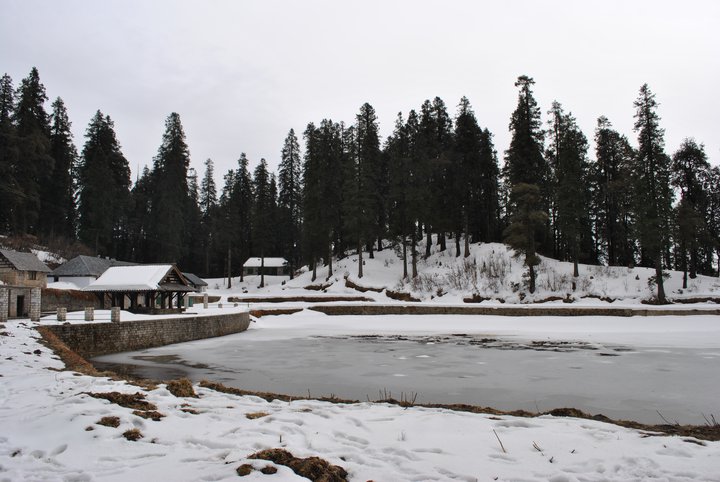
The district administration notes that Murari Devi can receive snowfall in January.
Snow transforms the temple surroundings, but road conditions can change quickly.
Before travelling, check local conditions rather than assuming the road will remain easily accessible.

How to Reach Murari Devi Temple
The temple is located above Sundernagar in Mandi district.
Sundernagar is well connected by road and lies roughly 25 km from Mandi according to the district administration. The nearest airport mentioned by the district is Bhuntar, approximately 90 km from Sundernagar.
From Sundernagar
This is the most natural base for visiting Murari Devi.
The exact driving route and travel time can vary because of road conditions and the approach used. Some route information places the temple road roughly 15 km from Sundernagar, while other route descriptions vary considerably.
For that reason, don't rely blindly on an old blog's kilometre figure.
Use current navigation on the day of travel and ask locally if there is any doubt about the final approach.
From Mandi
Drive towards Sundernagar and then continue towards Murari Dhar.
Mandi is also a useful base if you want to combine Murari Devi with the historic temples of Mandi town.
By Air
Bhuntar Airport is the nearest airport identified by the district administration, approximately 90 km from Sundernagar.
By Rail
Rail access is less convenient. The district administration identifies Pathankot as the broad-gauge railhead and Joginder Nagar as a narrow-gauge connection.
For most travellers, road travel is the practical choice.
Where to Stay
For most travellers, Sundernagar is the most convenient base for Murari Devi.
This gives you flexibility to start early, return comfortably and explore the surrounding area without turning the temple visit into an exhausting day trip.
Mandi is another good option if your trip includes:
- Mandi's historic temples
- Rewalsar
- Prashar Lake
- Nearby mountain destinations
For a photography-focused trip, I would choose accommodation based less on luxury and more on:
- Easy parking
- Early breakfast availability
- Flexible check-out
- Reliable hot water
- Mobile connectivity
- A quiet location
- Easy access to the road towards Murari Devi
The temple committee also states that facilities including langar are available at the shrine, while older travel accounts mention accommodation managed by the temple committee. Because facilities can change, confirm availability locally rather than depending on old travel information.

Budget Tips for Visiting Murari Devi
Murari Devi can be a very affordable mountain outing.
Your biggest expense is likely to be transportation.
Save money by:
- Staying in Sundernagar instead of a resort destination
- Sharing a taxi if travelling with friends
- Carrying water
- Eating at local establishments
- Using the temple langar respectfully rather than buying unnecessary packaged food
- Combining the visit with nearby attractions
A photographer should also carry enough batteries and memory cards.
There may be mobile connectivity around the temple area, and the temple committee says telecom infrastructure has been developed around the site.
Still, don't treat mountain connectivity as guaranteed.
Download offline maps before leaving town.

A One-Day Murari Devi Itinerary
6:00 AM — Leave Sundernagar
Start early.
The morning light is more forgiving for photography, and you avoid the strongest daytime heat.
7:00–8:00 AM — Reach Murari Devi
Spend some quiet time around the temple.
Don't immediately start photographing.
8:00–9:30 AM — Explore the temple and viewpoints
Photograph the architecture, surrounding forest, valley and mountain layers.
Look for the rock features associated with the Pandava tradition.
9:30–10:30 AM — Breakfast / Langar
If langar is being served, participate respectfully.
Otherwise, return towards Sundernagar for breakfast.
11:00 AM onwards — Explore Sundernagar
Spend time around the town and its lake, or continue towards other attractions.
Afternoon — Mandi
If you're interested in the Temples of Himachal Pradesh, continue towards Mandi town and explore its historic temple landscape.
Mandi's historic centre contains more than 80 temples, making it one of the most interesting temple towns in the state.

Hidden Places to Combine With Murari Devi
Murari Devi works particularly well as part of a larger Mandi itinerary.
Sundernagar Lake
Combine your mountain visit with time around Sundernagar itself.
The contrast is interesting: the orderly urban landscape below and the forested mountain world above.
Mandi Old Town
If you're interested in architecture and cultural photography, Mandi deserves several hours.
Look beyond the major temples.
Walk.
Look at doorways, courtyards, stonework and everyday life.
Rewalsar
Rewalsar is an especially interesting extension because it brings together Hindu, Buddhist and Sikh traditions around a sacred lake landscape.
Prashar Lake
If you have more time, Prashar provides a completely different high-altitude landscape and another perspective on Mandi's sacred geography.
Responsible Travel at Murari Devi
A mountain temple is not an outdoor theme park.
Keep the place quiet.
Dress respectfully.
Remove footwear wherever required.
Ask before photographing priests or devotees.
Don't climb onto sacred structures for photographs.
Don't leave plastic bottles, food wrappers or incense packaging behind.
Avoid loud music.
And never assume that something is "just a rock."
In Himalayan religious landscapes, seemingly ordinary natural objects can have deep cultural meaning.
The best travel photograph is never worth disrespecting the place you're photographing.

Common Mistakes to Avoid
1. Calling Murari Devi the highest peak in Mandi
Murari Dhar is high at about 2,133 metres, but it is not the highest peak in the entire Mandi district. Shikari Devi is higher at around 2,850 metres.
2. Treating the Pandava story as established archaeological fact
The Pandava connection is a deeply rooted local belief and tradition. Present it as such.
3. Visiting only for the viewpoint
The temple and its cultural landscape are more important than the Instagram frame.
4. Driving too fast
Mountain roads punish impatience.
5. Arriving at midday for landscape photography
The harsh overhead light can flatten the mountains.
6. Ignoring weather
Fog, rain and snow can alter both the experience and accessibility.
7. Photographing people without asking
Especially in religious spaces.
A simple "Can I take a photograph?" goes a long way.
FAQs About Murari Devi Temple
Where is Murari Devi Temple located?
Murari Devi Temple is located on Murari Dhar, west of Sundernagar in Mandi district, Himachal Pradesh, at approximately 2,133 metres above sea level.
Is Murari Devi one of the highest peaks in Mandi?
Murari Dhar is one of the prominent high points around Sundernagar, standing at approximately 2,133 metres. However, it is not the highest peak in the entire Mandi district. Shikari Devi is considerably higher, at approximately 2,850 metres.
What is Murari Devi Temple famous for?
The temple is known for its association with Goddess Murari Devi, its mountain location, panoramic views and local traditions connecting the shrine with the Pandavas during their exile.
What is the altitude of Murari Devi Temple?
Murari Devi Temple is located at approximately 7,000 feet (2,133 metres) above sea level.
Is Murari Devi Temple associated with the Pandavas?
Yes. Local tradition says the Pandavas established the temple during their Agyatwas. Rocks bearing large footprints near the temple are also traditionally associated with the Pandavas.
Does it snow at Murari Devi Temple?
Yes. The Mandi district administration notes that the area often receives snowfall in January.
Is food available at Murari Devi Temple?
The temple's official website states that langar is prepared every day for pilgrims regardless of religion or caste.
What is the best time to photograph Murari Devi?
Early morning is excellent for soft light, clearer mountain layers and quieter surroundings. Late afternoon can produce attractive side lighting and silhouettes.
Can families visit Murari Devi Temple?
Yes, provided everyone is comfortable with mountain-road travel. The temple is more accessible than many high-altitude Himalayan shrines, but road conditions should always be checked before travelling.
How far is Murari Devi Temple from Sundernagar?
The exact distance depends on the route and point measured. Current route information places the Murari Devi road at roughly 15 km from Sundernagar, although online route descriptions vary.
What other temples can I visit in Mandi?
Mandi itself is an excellent destination for temple lovers. Himachal Tourism notes that the historic town has more than 80 stone-built temples and is popularly known as the "Varanasi of the Hills" or "Choti Kashi."
Final Thoughts: The Mountain Is Part of the Temple
Murari Devi is not one of those Himachal destinations where the attraction can be reduced to a checklist.
Its appeal lies in the combination.
A mountain road.
A sacred summit.
An old legend.
A view over Sundernagar.
Wooden temple details.
Clouds moving across distant ridges.
A simple meal shared through langar.
And conversations with people who have their own relationship with the goddess and the mountain.
For photographers, it is a reminder that the strongest landscape photographs aren't always about dramatic peaks. Sometimes the most compelling image is a small temple bell with an enormous valley disappearing behind it.
For travellers exploring the highest peaks in Mandi, Murari Dhar offers something particularly valuable: altitude without the feeling of having conquered a mountain.
And for anyone exploring the Temples of Himachal Pradesh, Murari Devi demonstrates why these shrines cannot be separated from the landscapes around them.
The mountain isn't merely where the temple stands.
The mountain is part of the temple.
And that is probably the best reason to go.
Related Blogposts -
.jpg "Celebrating Divinity: The Enchanting International Shivratri Fair in Mandi, Himachal Pradesh") Celebrating Divinity: The Enchanting International Shivratri Fair in Mandi, Himachal Pradesh
Celebrating Divinity: The Enchanting International Shivratri Fair in Mandi, Himachal Pradesh
 Bhootnath Temple: Embracing the Divine Essence of Mandi's Spiritual Heritage in Himachal Pradesh

 Chhoti Kashi Chronicles: A Journey Through Mandi's Temples and Trails in Himachal Pradesh





.jpg)
Comments