

Introduction: A Trip to Rajasthan Is More Than a Visit to the Desert
A Trip to Rajasthan often begins with an image.
A sandstone fort glowing orange in the late afternoon. A blue-painted house beneath Mehrangarh. A camel silhouette disappearing into the Thar Desert. Perhaps a woman in a bright red odhni walking through an otherwise dusty landscape.

But Rajasthan becomes much more interesting when you stop chasing those postcard moments.
The real Rajasthan appears in smaller scenes: a chai seller wiping down his glasses before the morning rush, an elderly man sitting outside a haveli in Bundi, women returning from a village well, musicians tuning their instruments before a performance, or the sudden silence inside a centuries-old temple after the tourist groups leave.

This is a state where architecture, landscape and everyday life are unusually photogenic. Yet photography also teaches you something important here: light changes Rajasthan completely.
The same sandstone building that looks harsh at noon can become almost luminous at 5 p.m. A crowded market can feel chaotic at midday but intimate just after sunrise. And the desert, often reduced to “sand dunes,” reveals its subtler character when you travel beyond the obvious tourist camps.

Rajasthan is India's largest state by area, stretching from the Aravalli hills to the Thar Desert. Its history is equally expansive, shaped by Rajput kingdoms, Mughal interactions, merchant communities, religious traditions, desert trade routes and centuries of adaptation to an unforgiving climate.
That combination makes Rajasthan especially rewarding for slow travelers and photographers.

Why Visit Rajasthan?
The easiest answer is forts and palaces.
The better answer is contrast.
In a single Rajasthan trip, you can move from the pink streets of Jaipur to the blue neighbourhoods of Jodhpur, from the lakes of Udaipur to the desert around Jaisalmer.
You can photograph:
Mughal-Rajput architecture
Stepwells and ancient water systems
Desert landscapes
Textile and handicraft traditions
Street markets
Wildlife
Rural villages
Jain and Hindu temples
Blue and pink urban architecture
Traditional kitchens
Folk music and dance
Elaborately painted havelis
Rajasthan's famous forts are particularly significant. UNESCO's Hill Forts of Rajasthan includes six forts at Chittorgarh, Kumbhalgarh, Ranthambore, Gagron, Amber and Jaisalmer. Together they illustrate how Rajput rulers used hills, forests, rivers and desert landscapes as part of their defensive architecture.
But don't make the mistake of treating Rajasthan as one homogeneous destination.
The Rajasthan of Shekhawati feels very different from Jaisalmer. Bundi has a completely different personality from Jaipur. The Mewar region has its own historical identity, while Marwar feels visually and culturally distinct.
That regional variety is one of the best reasons to return.

Historical and Cultural Significance of Rajasthan
Rajasthan's history is often simplified into stories of kings, battles and forts.
The reality is considerably richer.
The great Rajput fortresses were not simply military structures. UNESCO notes that several contained palaces, temples, trading centres, settlements and sophisticated water-harvesting systems. Some of these complexes developed into functioning urban environments rather than isolated castles.

Chittorgarh: History Written in Stone
Chittorgarh is perhaps the clearest example of how history and legend overlap in Rajasthan.
The enormous Chittorgarh Fort is associated with stories of Rajput resistance, sacrifice and the legendary figure of Rani Padmini. Some of these stories have been debated by historians and should be understood as part of Rajasthan's cultural memory rather than automatically treated as literal historical fact.
The fort itself is the more compelling story.
Its scale forces you to slow down.
Walk rather than simply drive between monuments. Notice the gateways, reservoirs, temples and ruined structures. Look beyond the famous towers.

Kumbhalgarh and the Great Wall of Rajasthan
Kumbhalgarh is another place where scale changes your understanding of Rajput architecture.
Its massive defensive wall winds across the Aravalli landscape for roughly 36 kilometres, although popular descriptions sometimes exaggerate comparisons with the Great Wall of China.
The fort is also traditionally associated with Maharana Pratap, one of the most celebrated figures of Mewar.
Come late in the afternoon.
The surrounding hills become layered silhouettes, and the fort's stonework takes on a warmer, more tactile appearance.

The Best Trip to Rajasthan Starts With Choosing the Right Route
One of the biggest mistakes travelers make is trying to cover Rajasthan as if it were a compact region.
It isn't.
A route connecting Jaipur, Jodhpur, Udaipur and Jaisalmer already involves substantial travel. Add Pushkar, Ranthambore, Bikaner or Bundi and you can quickly spend more time sitting in vehicles than experiencing places.
For a first Rajasthan trip, I prefer thinking in regions rather than checklists.

The Classic Rajasthan Circuit
Jaipur → Pushkar → Jodhpur → Jaisalmer → Udaipur
This works well for first-time visitors.
The Heritage-Focused Route
Jaipur → Bundi → Chittorgarh → Kumbhalgarh → Udaipur
Better for travelers interested in architecture, history and photography.
The Desert and Marwar Route
Jodhpur → Osian → Pokhran → Jaisalmer → Khuri
This gives you more opportunities to see desert landscapes beyond the standard Sam Sand Dunes experience.

The Slow Rajasthan Route
Jaipur → Bundi → Jodhpur → rural Marwar → Udaipur
This is the route I would recommend to photographers who care more about atmosphere than collecting famous landmarks.

Jaipur: Look Beyond the Pink Facades
Jaipur is often the starting point for a Rajasthan trip, and the famous landmarks deserve their reputation.
But don't spend the entire day moving between them.
Start early.
The area around Hawa Mahal becomes particularly interesting when the city is waking up. Shopkeepers begin opening shutters, milk deliveries move through narrow lanes and the first light hits the upper levels of the old buildings.
For photography, early morning gives you three advantages: softer light, fewer people and more authentic street activity.
Amber Fort deserves at least half a day.
Don't rush through the palace rooms. Study the relationship between architecture and landscape. From elevated viewpoints, the surrounding Aravalli hills become part of the composition.
Also look for Panna Meena ka Kund, an extraordinary geometric stepwell near Amber.
The repeating staircases create almost abstract patterns when photographed from above.

Pushkar: A Sacred Town With Layers
Pushkar is famous for its lake, temples and annual camel fair.
But the more interesting experience can be found around the ghats when the town is quieter.
Photography here requires sensitivity.
People may be praying, performing rituals or visiting sacred spaces. Ask before making close portraits, particularly during ceremonies.
The Pushkar Camel Fair is visually spectacular, but it is also a working cultural event rather than a giant photography set. Photograph people respectfully and avoid treating religious or traditional practices purely as exotic subjects.

Jodhpur: The Blue City From Above
Jodhpur is one of those places where photography can become addictive.
From Mehrangarh Fort, the old city spreads below you in a dense patchwork of blue.
But here's the trick: don't photograph the Blue City only from the famous viewpoints.
Walk through it.
The blue houses are not uniformly blue, and the colour changes depending on sunlight, dust and the age of the paint. Look for doors, peeling walls, shadows, rooftop water tanks and human activity.
Mehrangarh itself deserves time.
Late afternoon is ideal for exterior photography because the sandstone develops warmer tones. For street photography, however, early morning can be better.
A narrow lane with a single person walking through a patch of sunlight can produce a more memorable photograph than another wide-angle fort image.

Jaisalmer: The Golden City and the Living Fort
Jaisalmer is visually different from almost every other major Rajasthan destination.
The city seems to rise from the desert.
The fort is especially fascinating because it is not simply a monument. Jaisalmer Fort remains a living urban settlement, with residents, shops, temples and homes within its walls.
That creates a complicated conservation story.
UNESCO has specifically highlighted concerns around water seepage and the vulnerability of the hill on which Jaisalmer Fort stands.
This is why responsible tourism matters here.
Avoid wasting water. Don't damage walls for photographs. Be cautious about where you stay and how your accommodation handles wastewater.
For photographers, the golden hour is obvious—but don't ignore dawn.
At sunrise, the fort can appear almost monochromatic, with soft shadows revealing the texture of the sandstone.

Udaipur: When Rajasthan Becomes Softer
After the desert cities, Udaipur can feel almost dreamlike.
Water changes the visual rhythm.
Lake Pichola reflects palaces, hills and evening light. The City Palace rises above the old city, while narrow streets around the lake provide opportunities for quieter photography.
The best photographs are not necessarily from a rooftop restaurant.
Try photographing the lake early in the morning when the surface is calmer. Reflections become cleaner, boat traffic is limited and the surrounding hills often sit in atmospheric haze.
At sunset, switch your attention to silhouettes.
Don't photograph everything in HDR-like detail. Rajasthan's light is often at its best when you allow shadows to remain shadows.

Hidden Gems on a Rajasthan Trip
Rajasthan's famous cities receive most of the attention, but some of my favourite experiences come from places that appear almost as footnotes on a map.

Bundi
Bundi is one of the best alternatives to Jaipur for travelers who want historic architecture without the same level of urban intensity.
The old city, Taragarh Fort and palace murals deserve time.
The painted interiors are particularly interesting for photographers because the visual experience changes dramatically depending on available light.

Shekhawati
For architecture and photography, Shekhawati is a treasure.
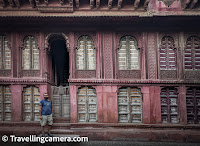
Towns such as Mandawa, Nawalgarh and Fatehpur are known for elaborately painted havelis.
The fascinating detail is that many of these buildings were commissioned by wealthy merchant families connected to long-distance trade.

Look closely at the murals.
Alongside religious and mythological scenes, you may find depictions of trains, cars, Europeans and other symbols of changing technology and society.

Abhaneri
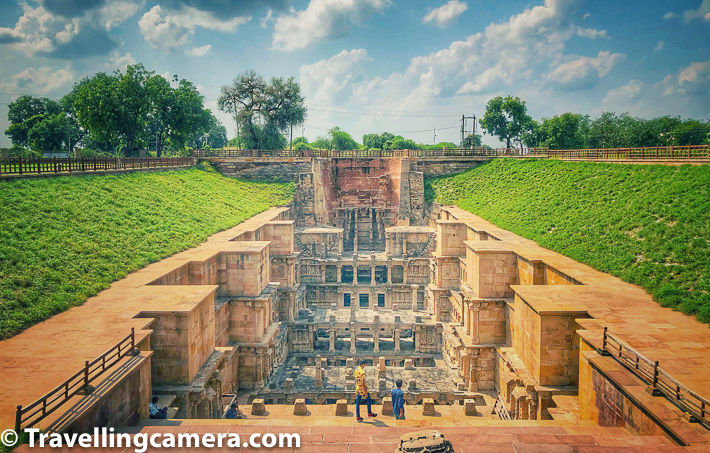
The Chand Baori stepwell at Abhaneri is one of Rajasthan's most extraordinary examples of traditional water architecture.
It is also a reminder that water management was never an afterthought in this region.
The geometric repetition is spectacular for photography.
Use a wide lens for scale, then switch to a telephoto lens and isolate repeating patterns.

Osian
Around 65 kilometres from Jodhpur, Osian is known for its ancient temples and desert setting.
It can make an interesting alternative or addition to a Jodhpur itinerary, especially for travelers interested in religious architecture.

Best Photography Spots in Rajasthan
| Location | Best Time | What to Photograph |
|---|---|---|
| Hawa Mahal, Jaipur | Early morning | Facade, street life |
| Amber Fort | Morning / late afternoon | Architecture, hills |
| Panna Meena ka Kund | Morning | Geometry and patterns |
| Mehrangarh Fort | Late afternoon | Blue City, sandstone |
| Jodhpur old city | Early morning | Street life, doors, textures |
| Bundi Palace | Morning | Murals and architecture |
| Chittorgarh Fort | Late afternoon | Ruins, towers, landscape |
| Kumbhalgarh | Late afternoon | Walls and Aravalli hills |
| Jaisalmer Fort | Sunrise / sunset | Sandstone, silhouettes |
| Patwon Ki Haveli | Morning | Facades and details |
| Thar Desert | Sunrise / sunset | Dunes, silhouettes |
| Lake Pichola, Udaipur | Sunrise | Reflections |
| Shekhawati | Morning / late afternoon | Haveli murals |

A Photographer's Rajasthan Tip
Carry both a wide-angle and a short telephoto lens.
The wide lens is useful for forts and architecture, but the telephoto is often more valuable for everyday Rajasthan.
It compresses layers of desert, isolates a doorway, frames a person against a wall or turns a crowded market into a study of shapes and colour.
And don't underestimate dust.
Keep your camera bag closed when you're not shooting, particularly around desert roads and dunes.

Food Experiences You Should Not Miss
Rajasthani food evolved within a landscape where water and fresh vegetables were historically limited.
That helps explain dishes built around dried ingredients, grains, pulses, dairy and long-lasting preparations.
Try:
Dal baati churma
Gatte ki sabzi
Ker sangri
Bajra roti
Laal maas
Mirchi bada
Pyaaz kachori
Mawa kachori
Ghevar
Rabri
Chaas
Don't judge Rajasthani food only by restaurant buffets.
A simple bajra roti with local vegetables can tell you more about the region's food traditions than an elaborate hotel thali.
In rural areas, ask what people actually cook at home rather than automatically requesting "the famous local dish."
That small question often leads to better meals.

Local Conversations: The Rajasthan Beyond the Camera
The strongest travel memories often come from conversations rather than monuments.
A shopkeeper explaining why his family still maintains an old haveli.
A driver describing how summer temperatures affect his work.
A village artisan explaining why a particular textile pattern is made in one region but not another.
These conversations change how you photograph.
Instead of seeing a colourful turban simply as a visual element, you start noticing the occasion for which it is worn. Instead of photographing an old doorway, you become curious about the family behind it.
Learn a few words of Hindi.
Even simple phrases such as "Namaste," "Dhanyavaad" and "Kitne saal purana hai?" can open conversations.
And if someone allows you to make a portrait, show them the photograph on your camera.
That small gesture creates a very different relationship between photographer and subject.

Best Time to Visit Rajasthan
For most travelers, October to March is the most comfortable period.
Rajasthan Tourism also identifies the cooler months as the principal travel period, while noting the state's diverse landscapes and attractions across seasons.
| Season | Conditions | Best For |
|---|---|---|
| October–November | Pleasant, increasingly cool | General sightseeing |
| December–January | Cold mornings and evenings | Heritage, desert, photography |
| February–March | Warmer but manageable | Festivals, wildlife, photography |
| April–June | Very hot | Early mornings, wildlife in some areas |
| July–September | Monsoon influence | Green landscapes, fewer crowds |
The monsoon is the overlooked season.
Rajasthan is not uniformly desert-dry. Rain can transform parts of the state, particularly around the Aravallis, lakes and wildlife areas. Recent reporting has also highlighted how monsoon landscapes are attracting travelers looking for a different side of Rajasthan.
For photographers, this can be a fascinating time.
The famous golden palette becomes greener and more dramatic.

How to Reach Rajasthan
The most convenient entry point for many international and domestic travelers is Jaipur.
Jaipur has strong air, rail and road connections.
Other useful gateways include Jodhpur, Udaipur and Jaisalmer, depending on your itinerary.
For a multi-city Rajasthan trip, trains can be excellent for some routes, while a private car with driver can make sense when visiting smaller towns and rural areas.
Don't underestimate driving times.
A map can make Jodhpur and Jaisalmer appear close. Rajasthan's roads, traffic, stops and sightseeing detours can turn a seemingly short journey into much of a day.
Build travel time into the itinerary instead of treating it as wasted time.

Where to Stay in Rajasthan
Choose accommodation based on the experience you want rather than simply star rating.
For history
Look for restored havelis and heritage properties.
For photography
Stay inside or close to the old city where possible.
Being able to walk out at sunrise is a huge advantage.
For the desert
Consider a smaller desert camp rather than the largest entertainment-oriented camps.
Ask about:
Water management
Waste disposal
Electricity
Local employment
Whether camel activities are conducted responsibly
For rural experiences
Choose locally managed homestays where possible.
The best stays are often the ones where dinner turns into a conversation rather than a buffet.

Rajasthan Trip Budget Tips
Rajasthan can accommodate very different budgets.
| Travel Style | Approximate Daily Budget |
|---|---|
| Budget | ₹1,500–₹3,000 |
| Comfortable | ₹4,000–₹8,000 |
| Premium | ₹10,000+ |
These are broad planning ranges rather than fixed prices. Festivals, weekends, heritage hotels and peak winter dates can change costs considerably.
To save money:
Travel between major cities by train where practical.
Stay slightly outside the most expensive heritage zones.
Eat at busy local restaurants rather than hotel restaurants for every meal.
Negotiate auto-rickshaw fares before starting.
Book popular heritage hotels well ahead during peak season.
Avoid changing hotels every night.
The last point matters more than it sounds.
Rajasthan rewards travelers who leave enough time to wander.
.jpg "Rajasthan State of India: A Complete Travel Guide for First-Time Visitors")
A 10-Day Rajasthan Itinerary
Day 1–2: Jaipur
Explore the old city, Amber Fort, stepwells and markets.
Day 3: Pushkar
Spend time around the lake and explore the old lanes.
Day 4–5: Jodhpur
Explore Mehrangarh Fort, the blue city and local markets.
Day 6–7: Jaisalmer
Explore the living fort, havelis and surrounding desert.
Day 8: Desert / Khuri or nearby village
Choose a quieter desert experience rather than spending the entire evening at a large tourist camp.
Day 9–10: Udaipur
Finish around Lake Pichola and the old city.
If you have more time, add Bundi, Chittorgarh or Kumbhalgarh rather than squeezing another major city into the itinerary.
.jpg "Rajasthan State of India: A Complete Travel Guide for First-Time Visitors")
Responsible Travel in Rajasthan
Rajasthan's tourism economy depends heavily on heritage, crafts, hospitality and cultural experiences.
Travelers can help protect that ecosystem.
Respect religious spaces
Dress appropriately and ask before photographing ceremonies.
Don't photograph children without permission
This is especially important in rural areas.
Buy crafts directly
If possible, purchase textiles, pottery, paintings or handicrafts directly from artisans or reputable cooperatives.
Be careful with water
Water scarcity is a defining environmental reality of Rajasthan. Don't treat unlimited hotel water as a given.
Avoid unnecessary plastic
Carry a refillable bottle where safe drinking-water facilities are available.
Don't climb monuments for photographs
A better photograph is never worth damaging a centuries-old structure.

Common Mistakes to Avoid on a Rajasthan Trip
1. Trying to see everything
Rajasthan is too large for that.
2. Visiting forts only at midday
The harsh light can flatten architecture and make photography difficult.
3. Treating people as props
Ask before taking portraits.
4. Booking only luxury hotels
You can miss everyday Rajasthan.
5. Spending too much time inside your car
Walk whenever practical.
6. Assuming every "traditional" experience is authentic
Some performances and tourist activities are designed primarily for visitors.
Ask questions.
7. Ignoring lesser-known towns
Bundi and Shekhawati can be more rewarding than another crowded palace complex.
8. Underestimating winter nights
The desert can become surprisingly cold after sunset.
Pack layers.

Frequently Asked Questions About a Trip to Rajasthan
How many days are enough for a Rajasthan trip?
Seven to ten days is a good starting point for a first visit. Ten to fourteen days allows you to travel more slowly and include places such as Bundi, Chittorgarh or Kumbhalgarh.
What is the best time for a Trip to Rajasthan?
October to March is generally the most comfortable period. December and January offer excellent conditions for sightseeing but can have cold mornings and evenings.
Which cities should I visit in Rajasthan for the first time?
Jaipur, Jodhpur, Jaisalmer and Udaipur make a strong first-time itinerary. Add Pushkar if you have extra time.
Is Rajasthan good for photography?
Absolutely. Rajasthan offers architectural, documentary, landscape, wildlife and street photography opportunities. Early morning and late afternoon are generally the most useful times for outdoor photography.
Is Rajasthan expensive to travel?
It doesn't have to be. Rajasthan works for budget travelers as well as luxury travelers. Transportation, accommodation and food can be adjusted according to your travel style.
Is Jaisalmer worth visiting?
Yes, particularly if you are interested in desert landscapes, sandstone architecture and the living heritage of the old city. Spend at least two nights if your schedule allows.
What should I eat in Rajasthan?
Try dal baati churma, gatte ki sabzi, ker sangri, bajra roti, laal maas, pyaaz kachori and ghevar. Look beyond hotel buffets and explore local eateries.
Is Rajasthan safe for solo travelers?
Popular tourist routes are well established, but normal travel precautions still apply. Avoid isolated areas after dark, use reputable transportation and be cautious when accepting unsolicited tour or shopping offers.
Can I visit Rajasthan during the monsoon?
Yes. Monsoon changes the landscape considerably and can offer greener scenery, lower crowds and interesting photographic conditions. However, weather and road conditions can vary by region.
Which is better for photography: Jaipur, Jodhpur or Udaipur?
They offer different experiences. Jaipur is strongest for architecture and street photography, Jodhpur for urban landscapes and fort views, and Udaipur for water, reflections and atmospheric scenes.

Final Thoughts: Don't Just Photograph Rajasthan
A Rajasthan trip can easily become a checklist.
Fort. Palace. Haveli. Camel ride. Sunset. Market. Next city.
But Rajasthan deserves more patience than that.
Sit for fifteen minutes without taking a photograph.
Watch how a market changes as the morning progresses. Listen to the rhythm of a temple bell. Notice the dust hanging in a shaft of light inside an old building. Look at how people adapt their lives to heat, water scarcity and the landscape.
Then make your photograph.
Rajasthan's famous sights are spectacular, but they are only the beginning.
The deeper reward lies in discovering that the state is not really a collection of forts and palaces at all. It is a living landscape shaped by water, trade, faith, craftsmanship, music, migration, memory and extraordinary human adaptation.
That is the Rajasthan worth photographing.
And once you have experienced it slowly, you may find yourself planning another Rajasthan trip before you have even unpacked your camera bag.
Related Blogposts:

Exploring India: The Ultimate Travel Guide to Experiencing the Soul of a Timeless Civilization

 Chand Baori in Abhaneri: A Marvel of Ancient Indian Architecture in Rajasthan
 Bhandarej Baori: An Ancient Stepwell of Rajasthan's Heritage


.jpg)






.jpg) World famous indigenous art of Rajasthan, India - Lacquer Jewellery ('Lakh ki chudiyan')
World famous indigenous art of Rajasthan, India - Lacquer Jewellery ('Lakh ki chudiyan')

Related Blogposts-
Exploring India: The Ultimate Travel Guide to Experiencing the Soul of a Timeless Civilization
What Advice Would You Give to Someone Travelling to India for the First Time?
Rajasthan State of India: A Complete Travel Guide for First-Time Visitors
Trip to Gujarat State of India: A Complete Travel Guide for First-Time Visitors
 |
| A Theyyam blessing the priests. These performers are considered as God themselves once they don the Theyyam costume |


.jpg)
Comments