Santa Cruz Cathedral Basilica, Kochi: Exploring One of the Most Historic Churches in Kochi

Some places command attention the moment they appear in front of you. Others reveal themselves slowly, layer by layer, rewarding curiosity. Santa Cruz Cathedral Basilica in Fort Kochi belongs to the second category.  Walking through the narrow streets of Fort Kochi, past heritage cafés, old Portuguese-era homes, spice-scented lanes, and wandering travelers carrying cameras, you suddenly encounter a striking cream-colored structure rising above the neighborhood skyline. Its twin spires seem almost unexpected amid the laid-back atmosphere of coastal Kochi.

Some places command attention the moment they appear in front of you. Others reveal themselves slowly, layer by layer, rewarding curiosity. Santa Cruz Cathedral Basilica in Fort Kochi belongs to the second category.

Walking through the narrow streets of Fort Kochi, past heritage cafés, old Portuguese-era homes, spice-scented lanes, and wandering travelers carrying cameras, you suddenly encounter a striking cream-colored structure rising above the neighborhood skyline. Its twin spires seem almost unexpected amid the laid-back atmosphere of coastal Kochi.

The first impression is architectural beauty.

The second impression is silence.

And the third is realization: you are standing inside one of the oldest and most historically significant Churches in Kochi.

For photographers, the basilica offers endless compositions. For history lovers, it preserves centuries of colonial encounters and religious heritage. For travelers seeking cultural depth beyond beaches and cafés, it provides a fascinating glimpse into the layered identity of Fort Kochi.

During my visit, I found myself spending much longer than planned. The sunlight filtering through stained-glass windows, the intricate ceiling artwork, and conversations with local residents transformed what could have been a quick stop into one of the most memorable experiences in Kochi.

This guide explores everything you need to know about Santa Cruz Cathedral Basilica—from history and architecture to photography, local culture, food, practical travel tips, and hidden details often overlooked by visitors.


Why Visit Santa Cruz Cathedral Basilica? Among all the Churches in Kochi, Santa Cruz Cathedral Basilica stands out because it combines history, spirituality, architecture, art, and local life in one destination.  Reasons to visit include:  One of India's eight basilicas Rich Portuguese colonial heritage Remarkable Gothic-inspired architecture Beautiful interior paintings and frescoes Excellent photography opportunities Easy access from major Fort Kochi attractions

Why Visit Santa Cruz Cathedral Basilica?

Among all the Churches in Kochi, Santa Cruz Cathedral Basilica stands out because it combines history, spirituality, architecture, art, and local life in one destination.

Reasons to visit include:

  • One of India's eight basilicas
  • Rich Portuguese colonial heritage
  • Remarkable Gothic-inspired architecture
  • Beautiful interior paintings and frescoes
  • Excellent photography opportunities
  • Easy access from major Fort Kochi attractions
  • Cultural significance for Kerala's Christian community
  • Peaceful atmosphere amid busy tourist areas

Unlike many monuments that feel disconnected from contemporary life, Santa Cruz Basilica remains an active place of worship. This living connection between past and present gives the site its unique character.


Historical and Cultural Significance To understand Santa Cruz Cathedral Basilica, you need to understand Fort Kochi itself.  For centuries, Kochi served as a major trading center connecting Europe, Arabia, Africa, and Asia. Spices brought merchants from across the world to Kerala's shores.

Historical and Cultural Significance

To understand Santa Cruz Cathedral Basilica, you need to understand Fort Kochi itself.

For centuries, Kochi served as a major trading center connecting Europe, Arabia, Africa, and Asia. Spices brought merchants from across the world to Kerala's shores.

The Portuguese arrived in Kochi in the early sixteenth century and quickly established political and religious influence.

The original church was built around 1505 by the Portuguese. In 1558, it was elevated to cathedral status by Pope Paul IV.

This was not merely a religious building.

It became a symbol of Portuguese presence on India's southwestern coast.

However, history was not always kind to the structure.

When the Dutch gained control of Kochi in the seventeenth century, many Catholic institutions suffered destruction. The original cathedral was eventually demolished.

The present basilica emerged much later.

Construction of the current church began in the late nineteenth century and was completed in 1905. In 1984, Pope John Paul II declared it a basilica, recognizing its historical and ecclesiastical importance.

Today, it remains one of the most important Churches in India and a major landmark within Fort Kochi's heritage landscape.


My Personal Experience at Santa Cruz Cathedral Basilica I arrived shortly after sunrise.  Fort Kochi was still waking up.  Fishermen were returning from the sea. Tea stalls had begun serving steaming cups of chai. The streets were unusually quiet compared to later hours.  The basilica appeared almost luminous under the soft morning light.

My Personal Experience at Santa Cruz Cathedral Basilica

I arrived shortly after sunrise.

Fort Kochi was still waking up.

Fishermen were returning from the sea. Tea stalls had begun serving steaming cups of chai. The streets were unusually quiet compared to later hours.

The basilica appeared almost luminous under the soft morning light.

A few locals entered for morning prayers. Birds circled above the twin towers. The atmosphere felt contemplative rather than touristic.

Inside, my attention immediately shifted upward.

The ceiling artwork was extraordinary.

Most visitors focus first on the exterior architecture, but the interior deserves equal appreciation. Delicate paintings, decorative arches, and artistic details create an immersive visual experience.

I sat quietly for nearly half an hour, observing changing light patterns across the sanctuary.

A local gentleman noticed my camera and began sharing stories about Christmas celebrations at the church. His memories transformed the building from a historical monument into a living community space.

That conversation became one of the highlights of my morning.

Travel is often remembered through human interactions rather than monuments, and Santa Cruz Basilica provided both.


Some landmarks impress through scale. Others through history. Santa Cruz Cathedral Basilica succeeds because it combines both while remaining deeply connected to the everyday life of Fort Kochi.  The church is more than a beautiful building. It is a witness to centuries of trade, faith, cultural exchange, colonial encounters, and local community life. Standing beneath its painted ceilings, listening to distant prayers, and watching sunlight move across ancient walls, it becomes clear why this basilica remains one of the most meaningful Churches in Kochi.

Detailed Exploration of the Basilica

The Twin Towers

The most recognizable feature of the basilica is its symmetrical twin towers.

These towers dominate the surrounding streetscape and serve as visual anchors throughout Fort Kochi.

Approaching from different streets reveals constantly changing perspectives.

Photographers will appreciate how the towers frame against Kerala's tropical skies.


The Facade

The cream-colored facade balances elegance and simplicity.

Unlike heavily ornamented European cathedrals, the design feels adapted to local climatic and cultural contexts.

Look carefully at:

  • Arched windows
  • Decorative moldings
  • Religious sculptures
  • Symmetrical architectural alignment

Morning and evening light add depth and texture to these features.


The Interior Artwork

Perhaps the greatest surprise awaits inside.

The painted ceilings and decorative panels display remarkable artistic craftsmanship.

Many first-time visitors expect a simple church interior and are astonished by the level of detail.

Highlights include:

  • Painted biblical scenes
  • Ornamental columns
  • Colorful decorative motifs
  • Intricately designed altar

The artwork reflects both European influences and local interpretations.


The Main Altar

The altar acts as the visual focal point of the basilica.

Gold accents, artistic detailing, and architectural framing draw visitors' eyes naturally toward the sanctuary.

During prayer services, the atmosphere becomes particularly moving.


Hidden Gems and Lesser-Known Insights

Look for Light Beams

Visit during early morning hours.

Sunlight entering through high windows often creates dramatic beams across the interior.

Many tourists miss this because they arrive later in the day.


Explore the Surrounding Streets

The basilica is surrounded by photogenic lanes featuring:

  • Colonial architecture
  • Heritage homes
  • Local bakeries
  • Small cafés
  • Street art

These nearby streets often provide equally rewarding photography opportunities.


Christmas Celebrations

If visiting during December, you'll witness a completely different atmosphere.

Decorations, lights, choirs, and community gatherings transform the basilica into one of the most vibrant Churches in Kochi.


Observe Local Worshippers

Respectfully observing daily worship reveals how deeply integrated the church remains within local life.

Many visitors focus solely on architecture and overlook this living cultural dimension.


Best Photography Spots

Front Plaza

Ideal for:

  • Symmetrical compositions
  • Architectural photography
  • Wide-angle shots

Best time:
Early morning.


Opposite Street View

Step back farther than most visitors.

This creates space to capture:

  • Entire facade
  • Twin towers
  • Street context

Interior Nave

Excellent for:

  • Leading lines
  • Ceiling details
  • Perspective photography

Use a wide-angle lens if available.


Side Angles

The side elevations reveal architectural layers often ignored by tourists.

These angles work particularly well during golden hour.


Night Photography

The illuminated facade creates dramatic evening images.

Tripod users can capture excellent long-exposure photographs.


Some landmarks impress through scale. Others through history. Santa Cruz Cathedral Basilica succeeds because it combines both while remaining deeply connected to the everyday life of Fort Kochi.  The church is more than a beautiful building. It is a witness to centuries of trade, faith, cultural exchange, colonial encounters, and local community life. Standing beneath its painted ceilings, listening to distant prayers, and watching sunlight move across ancient walls, it becomes clear why this basilica remains one of the most meaningful Churches in Kochi.

Photography Tips

Best Time

TimePhotography Quality
Sunrise to 8 AMExcellent
8 AM–11 AMVery Good
NoonHarsh Light
4 PM–6 PMExcellent
After SunsetGood for Night Shots

Recommended Gear

  • Wide-angle lens (16–35mm)
  • Standard zoom lens
  • Tripod for low light
  • Polarizing filter

Composition Ideas

  • Symmetry
  • Reflections after rain
  • Framing through trees
  • Human scale storytelling
  • Architectural details

Respectful Photography

Always avoid photographing worshippers during prayer without permission.


Local Food Experiences Near the Basilica

Exploring Churches in Kochi naturally leads to discovering Kochi's remarkable food culture.

After visiting the basilica, spend time sampling local cuisine nearby.

Popular experiences include:

Kerala Breakfast

Try:

  • Appam
  • Stew
  • Puttu
  • Kadala curry

Seafood

Fort Kochi is famous for:

  • Pearl spot fish
  • Prawns
  • Crab dishes
  • Fish curry meals

Local Cafés

Many heritage cafés occupy restored colonial buildings.

These cafés provide excellent spaces to review photographs and reflect on your exploration.


Local Conversations and Human Stories

One of the most memorable aspects of visiting Santa Cruz Cathedral Basilica is the warmth of local residents.

Many families in Fort Kochi have multi-generational connections with the church.

Conversations often reveal stories unavailable in guidebooks:

  • Wedding traditions
  • Christmas celebrations
  • Feast days
  • Historical memories passed down through generations

These personal narratives add depth to the physical structure.


Best Time to Visit

October to March

Ideal weather.

Comfortable temperatures.

Excellent photography conditions.

Most recommended season.


June to September

Monsoon season transforms Fort Kochi.

Advantages:

  • Dramatic skies
  • Rich colors
  • Fewer tourists

Challenges:

  • Rain interruptions
  • Humidity

April and May

Hot and humid.

Visit early morning.


How to Reach

By Air

Nearest airport:

Cochin International Airport

Distance:
Approximately 40 kilometers.


By Train

Nearest stations:

  • Ernakulam Junction
  • Ernakulam Town

By Road

Fort Kochi is well connected by:

  • Taxi
  • Auto-rickshaw
  • Local bus

By Ferry

One of the most enjoyable options.

Ferries connect Ernakulam and Fort Kochi while offering beautiful waterfront views.


Where to Stay

Heritage Experience

Choose restored colonial homes converted into guesthouses.


Mid-Range Hotels

Numerous comfortable options exist throughout Fort Kochi.


Boutique Stays

Ideal for photographers and culture-focused travelers.


Budget Tips

  • Visit early to avoid crowds.
  • Use ferries instead of taxis where possible.
  • Walk between attractions.
  • Carry water.
  • Explore local eateries rather than tourist-focused restaurants.
  • Combine multiple Fort Kochi landmarks into one day.

Suggested One-Day Itinerary

Morning

  • Sunrise walk
  • Chinese Fishing Nets
  • Santa Cruz Cathedral Basilica

Breakfast

Traditional Kerala breakfast.

Mid-Morning

Explore heritage streets.

Lunch

Seafood restaurant.

Afternoon

Museums and art galleries.

Evening

Sunset waterfront walk.

Night

Photography of illuminated basilica.


Responsible Travel Tips

  • Dress modestly.
  • Maintain silence during services.
  • Avoid flash photography inside.
  • Respect local customs.
  • Support local businesses.
  • Do not block entrances while taking photos.

Common Mistakes to Avoid

  1. Visiting only for exterior photos.
  2. Skipping the interior artwork.
  3. Arriving at midday.
  4. Ignoring nearby heritage streets.
  5. Treating the church solely as a tourist attraction.
  6. Using flash during worship.
  7. Rushing through the visit.

Frequently Asked Questions

Why is Santa Cruz Cathedral Basilica famous?

It is one of the most historically important Churches in Kochi and one of India's designated basilicas, known for its architecture, artwork, and colonial heritage.

How much time is needed to visit Santa Cruz Basilica?

Most travelers spend 30–90 minutes exploring the church and surrounding streets.

Is photography allowed inside Santa Cruz Cathedral Basilica?

Photography policies may vary depending on services and special events. Always follow posted guidelines and respect worship activities.

What is the best time to visit Santa Cruz Basilica?

Early morning and late afternoon offer the best lighting and atmosphere.

Is Santa Cruz Cathedral Basilica suitable for families?

Yes. The site combines history, architecture, culture, and educational value for visitors of all ages.

Which other churches can be visited nearby?

Fort Kochi and surrounding areas contain several historic churches reflecting Kerala's rich Christian heritage.

Is Santa Cruz Basilica among the most important Churches in India?

Yes. It holds significant religious, architectural, and historical importance within India's Christian heritage.


Final Thoughts

Some landmarks impress through scale. Others through history. Santa Cruz Cathedral Basilica succeeds because it combines both while remaining deeply connected to the everyday life of Fort Kochi.

The church is more than a beautiful building. It is a witness to centuries of trade, faith, cultural exchange, colonial encounters, and local community life. Standing beneath its painted ceilings, listening to distant prayers, and watching sunlight move across ancient walls, it becomes clear why this basilica remains one of the most meaningful Churches in Kochi.

For photographers, it offers endless visual possibilities. For history enthusiasts, it provides rich context. For travelers seeking authenticity, it reveals a side of Kochi that extends far beyond postcard attractions.

Leave time to wander. Sit quietly. Look upward. Talk to local residents.

The most memorable experiences often emerge from those unplanned moments.

Related Blogposts:

Soochipara waterfalls - Just another touristic place in Wayanad || Kerala Diaries


On the very first day of our stay in Wayanad, our host suggested us to trek to Edakkal Caves. 'Trekking' word did the magic and we decided to go there next day only. This Photo Journey shares some of the photographs and information around the trek & caves.We requested Sunil (our host at Treasure Trove to arrange an auto for the day. We left in the morning after breakfast and Edakkal is 15 kilometers from Meenangadi, the place where we were staying.We drove through some beautiful landscapes and beautiful sights. The mountain in above photograph looked beautiful and was shot from moving auto only. Later we realized that Edakkal caves offer another great view of the mountain from the hill top.We took some breaks on the way and soon we came a cross a diversion which lead us to 4 kilometers climb in auto, till the parking of Edakkal Caves. There is a small market at the base, where all vehicles need to be parked and then the trek starts for Edakkal Caves.The trek is concrete, but quite steep. Initially we were in hurry but realized that we should go slow. We enjoyed trekking to Edakkal caves and took some breaks on the way.After walking for 30 minutes we reached a counter where we had to buy entry tickets for the caves. Ticket costed 20 Rs per person and 30 Rs for camera. Please do read message in above photograph. One needs to deposit 20 rs if you want to take water bottle beyond this point. They paste a sticker on the bottle and you can get back the money when you come back. This model really works in Kerala and they have implemented it in most of the tourist destinations in Kerala.These stickers are pasted on the bottles. People bring back their empty bottles to the counter and get back the deposited money.These stairs start from the ticket counter till main caves of Edakkal.There are various shops on the way to have some snacks or buy stuff for home. Lot of Kerala products are sold in these shops - tea, coffee, spices, coconut products, herbal soaps etc.There are good number of stairs from ticket counter till caves. The main cave is on the top of this hill and one needs to trek through other smaller caves. There are folks around this hill who ensure smooth movement of crowd. This is quite a crowded place and discipline is important. Mostly people walk in queue and ensure that things happen smoothly.This is the entry to first cave at Edakkal. Above photograph is clicked from the cave. It was good to see a disciplined movement of folks and of-course credit goes to the local administration for appropriate arrangements in terms of marking & people to help.Now the trek continued through caves and few more steep climbs till we hit the final cave. Steel stairs are installed inside these caves. Edakkal caves lie at around 1200 metres above sea level on Ambukutty Mala, beside an ancient trade route connecting the high mountains of Mysore to the ports of the Malabar coast .Kids expressions in above photograph shows the level of next climb :). Yes, it was getting steeper. Next few climbs exposed everyone to some of the beautiful sights of Wayanad.Finally we hit the main cave which has varied designs carved on all the rocks.  Edakkal Caves are two natural caves which are approximately 24 kilometers from Kalpetta in the Wayanad district of Kerala. This lies around India Western Ghats.Inside the caves are pictorial writings. These signs are believed to date to at least 6000 BC,  from theNeolithic man, indicating the presence of a prehistoric civilization or settlement in this region. The Stone Age  carvings of Edakkal are rare and are the only known examples from south India.Check out wikipedia to know more about Edakkal caves.These are the stairs to come down on the back journey from Edakkal caves to the base. It was a nice experience to be there at Edakkal caves and enjoyed some of the amazing views from the top of this hill. It's a proper tourist spot so it's always crowded.


A Daunting Trek to Edakkal Caves in Wayanad || Kerala Diaries


After trekking to Edakkal caves in Wayanad, we headed towards Curuva Island in an auto. The word ‘Island’ made us visit there. After inquiring more, we got to know that it’s maintained by Forest department and good place to find different kinds of birds. One needs to use bamboo rafts to reach the Island and same rafts are used to come back.It took approximately 1 hr to reach Curuva Island from Edakkal Caves. It shouldn’t take more than 45 minutes in a car.The drive was beautiful through dense forests and coffee plantations.Our Auto-Rickshaw driver are quite fast as he wanted to ensure that we have enough time to explore the Island. It gets closed at 5pm, so you need to be back from the Island by then.We reached the entry counter of Curuva Island and bought our tickets from the counter of Kerala Forest and Wildlife conservation department. Single ticket costs 80 Rs which included to and fro in bamboo rafts. Camera ticket costs 40 Rs and you are also supposed to pay vehicle parking at same counter, so it was just 30 rs for the Auto-Rickshaw we were using.There is some walk from this counter to the water-body from where we needed to take Bamboo raft. It was around 200 meters away from the ticket counter. There are long queue at the port and we waited for approximately 20 minutes to board on the raft and reach the island. In this queue, a guard comes to check your bags and ensures that you don’t have any plastic item to carry to the island. If you want to carry a water bottle, get a sticker pasted on it for 20 rs and money is refundable by the showing the bottle on you back journey. I liked this model implemented by Kerala Tourism and it works. A good thing for other state tourism departments to learn. A ride on bamboo raft was something special, although our expectations were very high :). One raft was carrying approximtaley 50 folks at a time and I had always seen bamboo rafts carrying 4-6 folks. We wanted to do a ride on such raft, but time didn’t allow and such sights were located far from our homestays. I have used safety jackets at various places so far, but these were one of the best ones. Similar experience was there at Banasura dam as well.Bamboo raft hardly  took 10 minutes to hit the other side. We got off the boat and put our safety jackets in designated basket. There was a huge bamboo bridge on the other side. After walking for a while, you see two small pathways – one takes you inside island and other leads you to the other port. We headed towards the core of the island where everyone was going. Btw, Curuva Island is again a typical touristic place and hence crowded. There was lot of noise on the island and we realized that we should forget about finding any birds around. And we were right. We didn’t see a single bird, although various sounds were coming from the other part which was restricted.After a while we hit a region of this island which had various water streams. And whole of this region of the island was full of people having fun in water. We were little disappointed, because we were expecting it to be a peaceful place which is close to the nature. Unfortunately it was opposite. But most of the folks were having fun, so it's definitely a good place for folks who want to enjoy in water splashes. Idea is to go there with right expectations :). Hope that readers of Photo Journey would benefit from this information.We had a round of the island and then headed back towards the rafts to head back to Meenagadi (our homestay). It was not so experience for us, probably because of very high expectations. This was a learning for us to be more informative about such places. During this trip, we had hardly any pre-planning except our travel and stay. Many times we intensionally keep things open but they may end up with such experiences. It was another experience, I would say :)Time to go other side of the water body and head towards our homestay…Curuva(Kuruva) Island - A potential paradise for nature lovers


During december we were in Wayanad region of Kerala and planned a day visit to Suchipara Waterfalls. When we drive towards the waterfalls, one need to cross through these beautiful tea gardens. We had various breaks on our way and this Photo Journey shares more about this region of Wayanad.Although Wayanad is full of Tea gardens and coffee plantations, but this part around Suchipara waterfalls is very special. The landscapes are very beautiful and can't be compared with other gardens. This part is relatively hilly.Usually we don't click our own photographs but these lush gardens made us click some of our shots. Our auto-rickshaw driver also requested me to click him photograph :), although he requested us not to post on facebook because he doesn't post any photograph with his auto-dress. This Photograph is only for his family to show that how Suchipara looks like these days.Yes, we were travelling in Auto-rickshaw. 4 days spent in Wayanad and throughout we used Auto-rickshaw for tarvelling. They are cost effective and you enjoy the pleasant weather of Wayanad region.Wayanad is one of the highest producers in India and there are various regions which produce Coffee as well. The place where we were staying was a coffee farm.Lush green tea gardens around Suchipara Waterfalls, Wayanad || Kerala Diaries


The first thing that strikes you during a Kathakali Dance performance is not the music. Not the elaborate costumes either. It is the eyes.  Under warm stage lights in Kochi, a performer slowly turns his face toward the audience. His eyes widen dramatically, then narrow with impossible precision. Every movement feels amplified. Every glance carries meaning. Even before the drums begin, the story has already started.Kathakali Dance in Kochi: Behind the Makeup, Music, and Mythology


There are some places in India that stay with you long after the journey ends. In the historic coastal city of Kochi, the iconic Chinese Fishing Nets are one such experience. Standing silently against the backdrop of the Arabian Sea, these massive cantilevered fishing structures are more than just fishing equipment — they are living symbols of history, trade, culture, and the rhythm of coastal life in Kerala.Chinese Fishing Nets in Kochi – The Timeless Symbol of Kerala’s Coastal Heritage


The first thing that catches your attention in Kochi is not the sea.  It is the doors.  Old wooden doors with fading turquoise paint. Tall colonial arches with brass knockers shaped like lions. Tiny tiled entrances hiding cafés. Portuguese-style windows opening into courtyards scented with cardamom and fish curry. Some are cracked by monsoon moisture. Some are freshly painted in impossible shades of yellow and blue. Some stand abandoned, yet still dignified.Doors of Kochi: Stories Hidden Behind Weathered Wooden Frames


Artist we met in Kerala - Tanish Daniels || Kerala Diaries


If you land in Bangalore, you can catch a KRSTC bus running regularly to Kozikhode or directly to Wayanad. Some kerala transportation buses are also available. It is highly recommended to plan it well and know about bus timings before hand, to plan your trip well.    Let's also talk about travel by Rail/train. Nearest railway station is Kozikode and beyond that you need to either take a taxi or bus.     Related Post : Journey from Delhi to Wayanad via Bengaluru, Mysore, and Sultan Battery || Kerala DiariesHow to reach Wayanad and main places to explore, along with interesting things to do


I had always heard about Wayanad as one of the biggest tea producers in India, but when I actually visited this beautiful place I realized that coffee is also produced in abundance. Wherever we went in Wayanad, we found acres of lands covered by coffee plantations. This Photo Journey shares some information about coffee plantations in Wayanad region of Kerala. Coffee production in India is dominated in the hilly terrains of South Indian states. Karnataka produces the max followed by Kerala. Indian coffee is said to be the finest coffee grown in the shade rather than direct sunlight anywhere in the world. Our host at Meenangadi had huge coffee farm around his homestay and he shared the fact about coffee in shadow. Most of the the plants were in shades of various trees including black pepper, jackfruit, coconut & rubber trees.Above is the view from out cottage at Treasure Trove which was surrounded by coffee plantations all around. After coming back from Wayanad, I read more about Coffee plantations in India and got to know that we have approximately 2.5 lac coffee growers and majority of them are small growers. Major part of the coffee grown in India exported to Germany, Russian, Spain, Belgium, Slovenia, United States, Japan, Greece, Netherlands, France and Italy.There are two methods to process Coffee - dry processing and wet processing. Dry processing is the traditional method of drying in the sun which is favoured for its flavour producing characteristics. This what we witnessed during our stay in Wayanad. Indian coffee, grown mostly in southern India under monsoon rainfall conditions, is also termed as “Indian monsooned coffee. Two well known species of coffee grown are the Arabica  and Robusta.Drawn by the aroma into the Coffee Plantations of Wayanad || Kerala Diaries


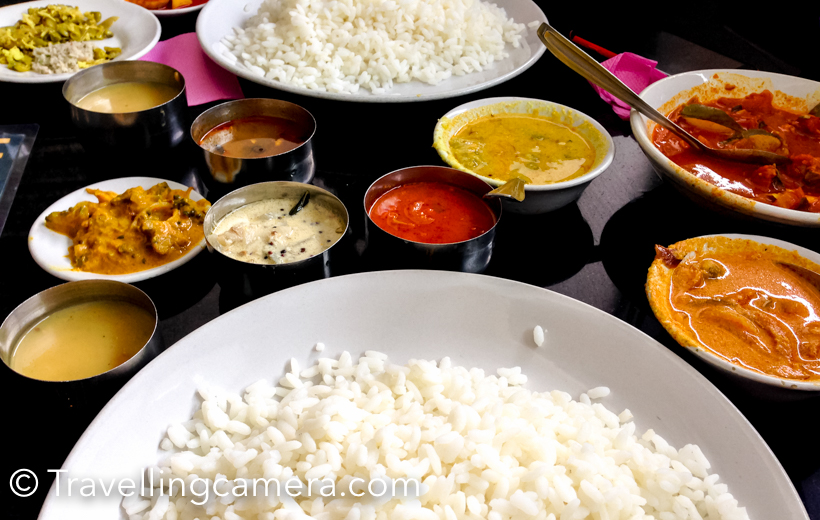
I did a post on main places to explore and things to do in God's Own Country - Kerala and one of the followers mentioned on Facebook that it's unfair not to mention food of Kerala. And I agree, so thought of compiling this post about Food of Kerala. I am sure that some of the following names would sound familiar - Puttu and Kadala Curry, Thalassery biryani , Appam with Stew, Dosa Ghee Roast with Kerala styled Sambar , Idiyappam with Egg Curry, Spicy Chicken Fry (locally known as Nadan Kozhi Varuthathu), Kerala Prawn Curry, Mussel Stir Fry (popularly known as Kallumakkaya Ularthiyath ) , Pumpkin (Erissery) and Lentil Stew, Naadan Beef fry or Kerala Style Beef Fry and Malabar Parota, Kerala style Fish Molee  and Kerala rice(boiled rice) along with sambar, parippukari with ghee, pachadi, kichadi, aviyal, puliyan, kuttukari, Kalan, Olan, Injikkari, rasam, pappadam, pickle, raita, sweetners(two or three different types), payasam.I clearly remember the Theayyam feast we enjoyed at Kannur. After spending whole day at Theyyam temple, one of the priest invited us to join for the feast. Everyone is invited to have lunch at temple and some of the popular food items are served on banana leaf. The same day we were wondering about the banana trees which would have lost those leaves. Hundreds of folks had lunch at the temple during Theyyam festival. Whenever anyone talk about Kerala food, that feast come to my mind. So my recommendation is to find a community event where you can enjoy authentic Kerala food.If you have visited Kerala you would know how Kerala rice look like and if not, just have a look at above photograph. These are very light as compared to rice we get in North India.If you are visiting Kerala, it's recommended to buy some spices to bring back home for family and friends. Patimugam is something which we liked and bought in abundance. The pink colored water served with food is basically boiled water by putting Patimugam in it.  Travellers very well know that food of any place is very much inspired by it's weather and local ingredients. You can very much guess the major ingredients of Kerala food. Coconuts grow in abundance in Kerala and hence coconut cream & coconut milk  are widely used in dishes for thickening and flavouring. Owing to the weather of Kerala and the availability of spices, the Kerala cuisine is richly spicy especially the hot ones - chilli , black pepper , cardamom , cloves , ginger  and cinnamon.Kerala's long coastline, various rivers, backwaters and strong fishing industry have contributed to many sea & river food based dishes. Rice and cassava (Tapioca) form the staple food of Kerala. All main dishes are made with them and served along with Kootan; the side dishes which may be made from vegetables, meat, fish or a mix of all of them. The main dish for lunch and dinner is boiled rice.If you love cooking and prefer healthy food for your family, you may want to check this brilliant blog by Sangeeta . And here is a recipe for Chicken stew Mughlai Style.Let me give another tip to fellow travellers for exploring authentic food of Kerala. Prefer staying in Home Stays and do proper research. We were lucky to have great experience of home stays in Kerala. If you plan to explore Wayanad, here are 2 recommendations - Treasure Trove and Bamboo Village.As you can see, banana leaves are used in different forms. Apart from serving food on banana leaf, it's also used for cooking. At our homestay, we used to get home cooked snacks with evening tea. What an awesome stay it was. I wish to go there right now.  Non-veg was main part of all our meals at Kerala. I found it interesting when fish and chicken vendors sell various types of fish on bicycle. While staying at Bamboo village, we met some vendors who were selling 4-5 types of small fish and almost every villager was buying fish. Banana is other main ingredient of Kerala food. In fact, unripe  banana are also used in various ways. Banana pakoras, boiled banana, banana chips etc. I am sure that banana must be used in 10 other forms in Kerala. I didn't like boiled banana which was served to us in breakfast. Either I ate it in wrong way or I could relate to it's taste.Food Trail in God's own country, Kerala (India)


India is also referred to as 'God's Own Country'. Kerala is a coastal state in India and has rich traditions, culture and lush unspoiled tropical beauty with unmatchable landscapes. Kerala is popularly known for its landscapes, backwaters, food, elephants, Theyyam  & various types of spices. Kerala is perfect destination for folks visiting India and even for Indians who want to spend some time at peace & slow pace of life. Kerala has options for different types for tourists and travellers. This post lists some of the popular places to explore and things to do in Kerala state of India. Munnar  - Usually I hate to do comparisons of places because it's usually unfair, as every place is unique. But I would like to call out that Munnar is popularly known as Kashmir of South India. Munnar is one of the key destination in Kerala which attracts lot of domestic and foreigner tourists to Kerala. It's a beautiful hill station which has lush green tea estates apart from spice plantations.Some of the popular places to explore in Munnar  are Eravikulam National Park, Indo Swiss Dairy Farm, Chinnar Wild Life Sanctuary, Anamudi, Tata Tea Museum, Idukki Arch Dam.Thekkady  - Thekkady is one of the most important tourist destinations in Kerala state of South India.  Thekkady is located in the famous Periyar National Park. The Periyar National Park is home to a large number of Indian elephants, lion-tailed Macaques, Nilgiri Langurs, Indian bison and Bengal Tigers. Mullaperiyar Dam around the area on the Periyar River and formed an artificial lake for Periyar Wildlife Sanctuary.Kovalam Light house beach in Kovalam is must visit place. And I am sure that you must have seen some exceptional photographs of lighthouse beach. Just notice the lighthouse in above photograph and you would be able to recall other photographs from same place and beach. Kovalam is also known as beach town of Kerala. It is also known as the paradise of the south and beaches of KOvalam are considered some of the best beaches in India. Kovalam means a grove of coconut trees and true to its name the village offers an endless sight of coconut trees. Alleppey - Alappuzha is an important backwater tourist destination in Kerala. Alleppey is one of the most preferred place for tourists, which attracts several thousands of foreign tourists each year. If you have ever watched boat races, Alleppy is the place to host these events. Apart from boat races Alleppy is also popularly known for beaches, marine products and coir industry. Allapuza Backwaters is a must experience thing in Kerala.Some of the other interesting other places around Alleppy include Statue Of Karumadikuttan, Mannarasala Sri Nagaraja Temple and Revi Karuna Karan (RKK) Memorial Museum.Wayanad  - Wayanad is north Kerala and popular for it's tea & coffee plantations. Hilly region of Kerala which has plenty of natural things to explores. Lakes, Waterfalls, caves, tea estates, adventure activities, home stays, wildlife and lot more. Kalpetta, Pookot Lake , Edakkal Caves , Pakshipathalam, Lakkidi, Sulthan Bathery, Banasura Sagar , Wayanad Wildlife Sanctuary, Neelimala view point , Meenmutty falls and Curuva Island are some of the popular places to explore in Wayanad. On our blog, we have shared about some of the best home-stays in Wayanad and incredible experience of Bamboo village.  Check out more on the blog and I am sure that you would definitely plan for this region of Kerala.Vagamon hill station is located on Idukki - Kottayam border area. A best place to spend time during summers of Kerala. Vagamon is immensely beautiful with many points of tourist interest, which offer great landscapes. The meadows, forests and hills surrounded by fog/clouds make this place more interesting. ( Cochin ) / Ernakulam  - If you are taking flight to south Kerala, most likely you would be hitting Kochi first. Kochi  is located in Ernakulam district of Kerela, which was earlier known as Cochin. Kochi is also an important seaport in India. Ernakulam is popular for shopping options in Kerala. I haven't really done shopping in Kerala but this is well known fact about Ernakulam. Some of the popular places to explore around Cochin include Jewish Synagogue, Cherai Beach, Marine Drive, Santa Cruz Cathedral Basilica, Fort kochi & Chinese Fishing Nets, Mattancherry Palace, Kodanad Elephant Sanctuary, Ezhattumugham Nature Village and Athirappally Falls. Thiruvananthapuram - Poovar is a small village in the Southern tip of Trivendrum. Around Poovar beach you can explore mangroves, floating restaurants, varieties of birds and biodiversity. The beach is pristine with golden sand with no or less people. Solitude’s comfort, you see! Fisherman waiting to trap the fishes in their giant nets at one corner and eagles and crows waiting for the fishes to be their fodder. Nature, oh nature, vicious circle, it is Some of the interesting places to explore around Thiruvanantpuram are Priyadarshini Planetarium, Vizhinjam Rock Cut Temple, Kuthiramalika, Kanakakunnu Palace. A photograph of Coffee plants from Kerala state of India. some of the old temples. Some of the temples around Kannur celebrate Theyyam festival and lot of foreigner tourists visit Kannur for Theyyam. Thottada beach is one of the popular and isolated beach in Kannur. Riding around these beaches and backwaters can be interesting.Kumarakom Houseboats  Kumarakom is most popular tourist spot located near the Kottayam city and famous for its houseboats in backwaters of Vembanad Lake. Vembanad Lake is the largest freshwater lake of Kerala and longest lake in India. Kumarakom is a famous Bird Sanctuary and home to a wide variety of local and migratory birds.One of the most important recommendation is to try Kerala food when you are in Kerala, but be careful about the quantity you order. Usually lot of curries are served, so it's recommended to order the minimum portion from menu and then decide, if you need more.Main places to visit and things to do in Kerala, India

Comments

Trending Post Today !

How to reach Kasol/Malana and top things to do around this stunning hill-station of Himalayan State of India

Main places to see & Top things to do around Dalhousie : Stunning Hill Station in Himalayan State of India