
Introduction: Why a Madhya Pradesh Trip Feels Different
A Madhya Pradesh Trip rarely begins with one obvious attraction.
There is no single monument that defines the state. Instead, Madhya Pradesh reveals itself slowly — through the sound of temple bells in Khajuraho, the orange light falling across the Betwa River at Orchha, the sudden silence of a tiger forest, the smell of poha and jalebi at an Indore breakfast stall, and the almost unbelievable realization that some of India's oldest human paintings are hidden inside sandstone shelters not far from Bhopal.

This is perhaps what makes travelling through Madhya Pradesh so rewarding.

The state sits almost at the geographical heart of India, but its real significance is cultural. Ancient Buddhist traditions, Rajput kingdoms, Mughal-era architecture, Maratha influence, tribal communities, medieval Islamic architecture and remarkably rich wildlife landscapes all overlap here.

For a photographer, Madhya Pradesh is particularly fascinating because the visual character changes dramatically every few hundred kilometres.

You can photograph prehistoric rock art in the morning, medieval temples in the afternoon and a forest landscape at sunrise the next day.

And unlike destinations where every famous attraction feels heavily packaged for visitors, many parts of Madhya Pradesh still offer opportunities to slow down, wander, observe and photograph without constantly feeling that you are following a predetermined tourist route.
That is the real appeal of a trip to Madhya Pradesh.
Why Take a Trip to Madhya Pradesh?
Madhya Pradesh is one of those Indian states where several completely different journeys can be stitched together.
The official tourism portfolio itself spans heritage destinations such as Khajuraho, Sanchi, Bhimbetka, Mandu, Orchha, Gwalior and Chanderi, alongside wildlife destinations including Kanha, Bandhavgarh, Pench, Panna and Kuno.
For a first visit, five experiences stand out.
1. Ancient India without the usual crowds
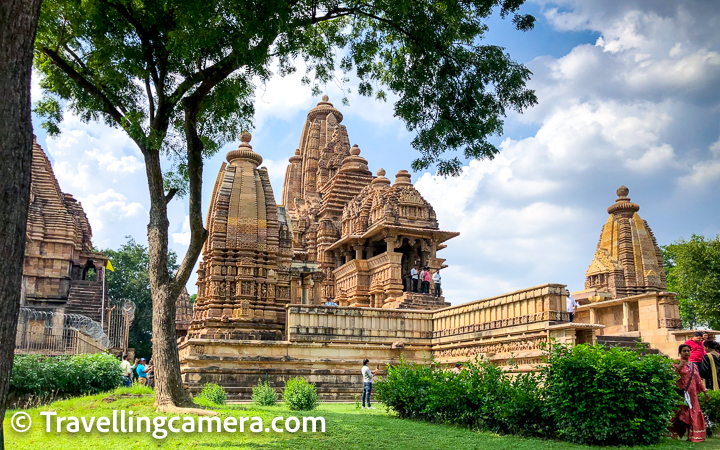
Khajuraho is internationally famous, but its sculptures are only one part of the story. The temples reveal an extraordinary combination of architecture, mythology, everyday life and artistic expression.

2. Some of India's best wildlife
Kanha, Bandhavgarh and Pench offer classic Central Indian forest experiences, while Panna provides a very different landscape around the Ken River.

3. Medieval towns that still feel atmospheric
Orchha and Mandu are especially rewarding because their monuments are embedded within living landscapes rather than isolated behind modern city development.

4. Extraordinary prehistoric history
Bhimbetka is not simply another archaeological site. Its rock shelters preserve paintings spanning prehistoric and later periods and offer evidence of a remarkably long relationship between people and the landscape. UNESCO recognizes the site for this cultural continuity.

5. Food that deserves more attention
Madhya Pradesh's food is often overshadowed by better-known cuisines from neighbouring states. That is a mistake.
Indore's breakfast culture, Malwa's dal bafla, bhutte ka kees, poha-jalebi and seasonal street food can become some of the most memorable parts of the journey.

Madhya Pradesh Trip: Understanding the History Behind the Landscape
Madhya Pradesh is less a single historical story than a collection of overlapping chapters.
The Buddhist monuments of Sanchi take you back to the Mauryan period and Emperor Ashoka. UNESCO describes Sanchi as one of the oldest surviving Buddhist sanctuaries, with monuments dating predominantly from the 2nd and 1st centuries BCE. The site remained an important Buddhist centre for centuries.
Move forward in time and Khajuraho introduces the Chandela dynasty.
The temples were built broadly between the 10th and 11th centuries, and their surviving sculptures are much more varied than the modern tourist image of Khajuraho suggests. UNESCO and Madhya Pradesh Tourism highlight the sophistication of the temple architecture and the breadth of sculptural themes.

Then there is Mandu.
Here, architecture becomes inseparable from landscape and legend. The romantic story of Baz Bahadur and Rani Roopmati has become part of Mandu's cultural identity, while the city's surviving palaces, pavilions and mosques reveal its importance under medieval Afghan rulers.

Orchha offers yet another character.
Established by the Bundela Rajputs, it grew beside the Betwa River and today feels almost suspended between history and the present.
And then comes Bhimbetka — a reminder that Madhya Pradesh's history doesn't begin with kings.
It begins with human beings looking at stone and deciding to leave something behind.

The Experiences That Make a Madhya Pradesh Trip Special
Khajuraho: Look Beyond the Famous Sculptures
Khajuraho is one of the places where a camera can easily become a distraction.
The obvious temptation is to photograph the most elaborate sculptures. But spend some time looking at the architecture as a whole.
Notice how the temple silhouettes rise vertically against the sky.

Look for repetition.
Look for tiny figures tucked into larger sculptural compositions.
And photograph the temple not only as a monument but as part of the surrounding landscape.
The Western Group of Monuments is the obvious starting point. Early morning is particularly beautiful because the light is softer and the stone gradually warms as the sun rises.
A longer lens can compress temple towers against the sky, while a wide-angle lens works better when you want to establish the relationship between the monuments, lawns and surrounding landscape.

Khajuraho's temples are generally associated with erotic sculpture in popular culture, but that narrow interpretation misses much of the complex. The carvings also portray musicians, dancers, warriors, animals, mythical beings and scenes reflecting aspects of medieval life.
The more time you spend looking, the less the temples seem like a collection of famous sculptures and the more they feel like an enormous medieval visual archive.

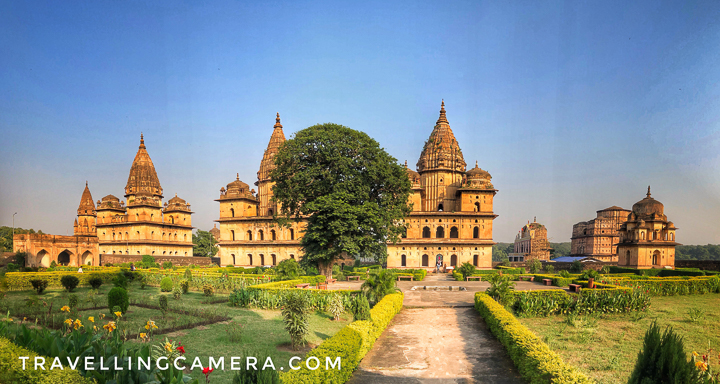
Orchha: Where the Betwa Does Half the Storytelling
Orchha is one of my favourite kinds of photographic destination — a place where you don't need to constantly chase attractions.
Walk.
Wait.
Watch the light.
The Chaturbhuj Temple, Orchha Fort complex and riverside cenotaphs create endless compositions.

But the best photographs may come after you stop looking for them.
At sunrise, the chhatris along the Betwa can appear almost monochromatic before the first warm light touches their upper domes.
At sunset, the river provides reflections and the sandstone structures become dramatically warmer.
Try photographing from across the river rather than standing immediately beside the monuments.

Use the river as foreground.
Include people when appropriate.
A lone person walking near the cenotaphs can provide scale and turn a conventional architectural photograph into a more evocative frame.
Orchha literally rewards patience.
Madhya Pradesh Trip for Wildlife: Kanha, Bandhavgarh and Pench
If heritage is one half of Madhya Pradesh, wildlife is the other.
The state's forests are among the strongest reasons to plan a longer journey.

Kanha National Park
Kanha is particularly interesting because the safari experience isn't only about tigers.
The landscape itself is beautiful — forests, meadows, sal trees and open areas create constantly changing compositions.
The hard-ground barasingha is one of the park's great conservation stories. Once seriously threatened, the species became the focus of conservation efforts at Kanha and can now be seen in the park.
For photographers, Kanha rewards patience.
Don't spend every minute searching for a tiger.
Photograph the forest.
A chital standing in a shaft of morning light can be a better photograph than a distant tiger hidden behind vegetation.
The official tourism information notes that summer can concentrate wildlife around remaining water sources, while early mornings and late afternoons offer especially attractive light.

Bandhavgarh National Park
Bandhavgarh has a different personality.
The landscape around the fort and hill creates strong visual compositions, particularly in Tala.
The park is associated with legends surrounding the Ramayana, and the name Bandhavgarh is commonly interpreted as "brother's fort."
The ancient fort sitting above the forest gives the landscape a distinctive character.
Don't treat the safari as a tiger lottery.
Listen.
Watch langurs.
Follow alarm calls.
Look for pugmarks and other signs.
A good naturalist can make an apparently unsuccessful safari fascinating because the forest starts becoming a story rather than a checklist.

Pench: A Forest With Literary Connections
Pench is another excellent option, especially for travellers who want a quieter wildlife experience.
The landscape is strongly associated with Rudyard Kipling's The Jungle Book, although it is better to approach the connection as part of the region's literary history rather than expecting to encounter a real-life version of the fictional jungle.
The forest is also excellent for bird photography.
Carry binoculars.
Keep your camera ready.
And don't make the mistake of photographing only large mammals.
Central India's smaller birds, reptiles, insects and forest textures can create a much richer photographic story.
 Bhimbetka: Photographing India's Deepest Past

Bhimbetka may be the most profound stop on a Madhya Pradesh itinerary.
The site consists of natural rock shelters among sandstone formations in the Vindhyan landscape. UNESCO notes that the paintings span from the Mesolithic period into later historical periods and that nearby village traditions retain cultural similarities with the traditions represented in the rock art.
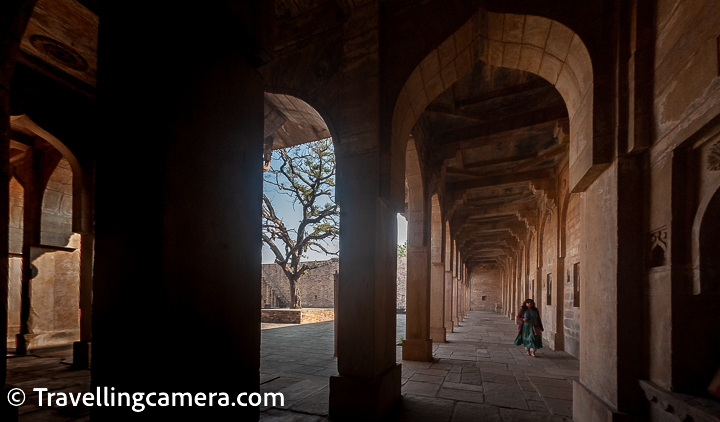
Standing inside one of the shelters creates an unusual photographic challenge.
You are dealing with extremely low light, uneven rock surfaces and delicate artwork.
This isn't a place for flash photography.
Instead, pay attention to the relationship between the paintings and the natural geometry of the shelter.
A wider composition showing the rock overhang, painting and surrounding landscape can communicate more than a tight crop of a single figure.
And remember that the paintings are fragile cultural heritage.
Do not touch the surfaces.
Do not lean equipment against the rock.
Do not use aggressive lighting simply to get a brighter photograph.
Sometimes the best photograph is the one that respects the place enough to remain quiet.

Sanchi: A Different Kind of Silence
Sanchi sits on a hill overlooking the surrounding landscape, roughly 40 kilometres from Bhopal. UNESCO identifies it as the oldest Buddhist sanctuary in existence and highlights its stupas, monasteries, temples and gateways.
The gateways are extraordinary photographic subjects.
But look closely at the carvings.
One of the most fascinating aspects of early Buddhist art at Sanchi is that Buddha was frequently represented symbolically rather than through a human figure.
The storytelling happens through symbols, animals, trees, footprints and narrative scenes.
For photography, arrive early.
Morning light gives the stonework gentle modelling and makes the relief carvings easier to read.
Avoid photographing every gateway straight-on.
Move laterally.
Use foreground elements.
Look for shadows falling across the reliefs.
The result is more three-dimensional and less like a record photograph.

Mandu: Architecture, Rain and Romance
Mandu becomes especially atmospheric during and after the monsoon.
The plateau turns green, old stone structures appear against mist and water collects around architectural details.
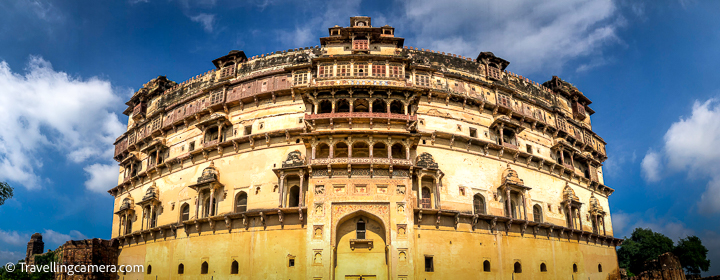
The Jahaz Mahal is one of the most recognisable structures, but don't stop there.
Explore the wider complex.
Visit the Hoshang Shah's Tomb, Hindola Mahal and the Roopmati Pavilion.
The latter is particularly interesting for photographers because the landscape itself becomes part of the story.
The popular legend connects Rani Roopmati to her desire to see the Narmada River. Whether every detail of the romantic story should be taken literally is less important than understanding how deeply landscape and memory have become intertwined in Mandu.
That's often how travel works in Madhya Pradesh.
History isn't always presented as a clean timeline.
It survives as architecture, folklore, songs and stories repeated by local people.
Hidden Gems to Add to Your Madhya Pradesh Trip
If you have extra time, consider moving beyond the conventional circuit.
Maheshwar
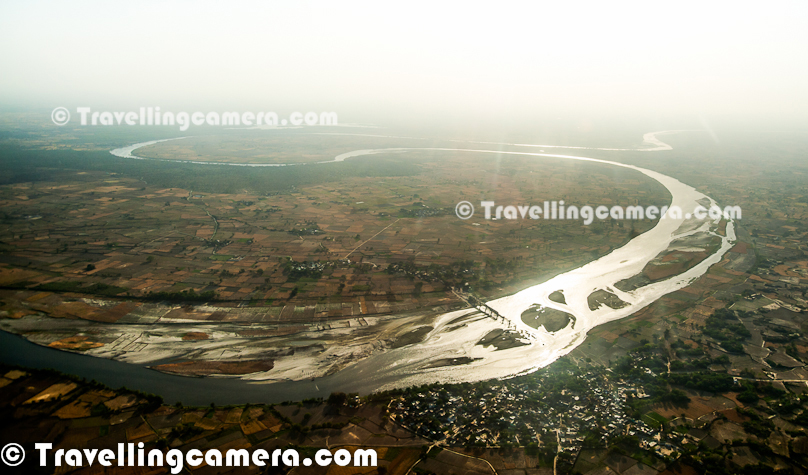
Maheshwar combines the Narmada, temples, ghats and the legacy of Ahilyabai Holkar.
For photographers, sunrise and blue hour are particularly rewarding.
Photograph the ghats from the river.
Then turn around.
The details on the steps, temple silhouettes and everyday activity can be just as interesting.
Chanderi
Chanderi is particularly appealing to travellers interested in textiles and traditional crafts.
Don't just buy a sari.
Learn about the weaving process.
Ask questions.
Photograph hands working with thread only after seeking permission.
The resulting images will tell a much richer story than a photograph of a finished product.

Bhedaghat
Near Jabalpur, Bhedaghat is known for its dramatic marble rocks along the Narmada.
The scale becomes particularly impressive from the river.
Early morning or late afternoon provides better contrast than harsh midday light.

Tamia
For a slower landscape-oriented trip, Tamia offers forested hills, cliffs and viewpoints with far fewer conventional tourist associations than Khajuraho or Mandu.

Best Photography Spots in Madhya Pradesh
| Destination | Best subject | Ideal time | Photography approach |
|---|---|---|---|
| Khajuraho | Temple architecture | Early morning | Wide angle + architectural details |
| Orchha | Chhatris and Betwa | Sunrise/sunset | Reflections and silhouettes |
| Sanchi | Stupas and gateways | Early morning | Side light and carved details |
| Bhimbetka | Rock shelters and paintings | Morning | Low-light, contextual compositions |
| Mandu | Palaces and ruins | Morning/evening | Landscape + architecture |
| Maheshwar | Narmada ghats | Sunrise/blue hour | Reflections and human activity |
| Bhedaghat | Marble Rocks | Morning/evening | River-level compositions |
| Kanha | Wildlife | Safari hours | Long lens, environmental portraits |
| Bandhavgarh | Tigers + fort landscape | Safari hours | Wildlife and habitat |
| Indore | Food and street life | Morning/evening | Candid documentary photography |

Photography Tips for Madhya Pradesh
A Madhya Pradesh photography trip requires more than carrying a good camera.
Carry two lenses
A practical combination would be:
24–70mm for landscapes, architecture and people
100–400mm or similar for wildlife
A 35mm or 50mm prime is also excellent for street photography.

Use the first and last light
Central Indian sunlight can become harsh quickly.
For architecture, aim for morning and late afternoon.
For wildlife, follow safari timings rather than trying to control the light.

Photograph people with respect
A photograph is not an entitlement.
If you're close enough for a recognizable portrait, ask.
In villages and craft workshops, a simple conversation before taking out the camera often leads to a much better photograph anyway.
Don't photograph only monuments
A travel story becomes richer when you photograph:
Hands making food
A tea stall opening at dawn
Weavers working
Temple preparations
Railway platforms
Local markets
Farmers returning home
Children playing cricket
Street-side breakfast
These photographs provide context.

Food: Eat Your Way Through Madhya Pradesh
Food deserves its own itinerary.
Start in Indore.
Poha with jalebi is the classic breakfast combination, and it works precisely because of the contrast: savoury, lightly spiced poha followed by something sweet and crisp.
Then explore Malwa cuisine.
Bhutte ka kees is made with grated corn cooked with milk, ghee and spices, often using the distinctive jeeravan seasoning. Madhya Pradesh Tourism describes it as a Malwa specialty associated especially with the monsoon.
Then try dal bafla.
It resembles the broader family of wheat-based baked breads found across western and central India, but its combination with dal, ghee and accompaniments gives it a character of its own.
Look also for:
Sabudana khichdi
Garadu
Malpua
Mawa bati
Papad ki sabzi
Local namkeen
Seasonal sweets
Street food is best experienced early rather than late.
The morning crowd tells you which stall has survived for a reason.

Conversations That Stay With You
One of the most enjoyable parts of travelling through Madhya Pradesh is that conversations often begin casually.
A tea seller may ask where you're from.
A driver may suggest a place you had never heard about.
A guide may point out a bird you would have completely missed.
A shopkeeper may explain why a particular textile pattern is different from another.
These interactions are valuable because they change the way you see the destination.
-2.jpg "Madhya Pradesh State of India: A Complete Travel Guide for First-Time Visitors")
At Bhimbetka, for example, the connection between archaeological heritage and nearby communities is particularly interesting. UNESCO explicitly notes cultural similarities between the traditions of nearby villages and those represented in the rock art.
This is a reminder that heritage is not always something locked behind museum glass.
Sometimes it continues in ordinary life.
Best Time to Visit Madhya Pradesh
For a broad heritage and road-trip itinerary, October to March is generally the most comfortable period.
Winter brings pleasant daytime temperatures, although mornings can be surprisingly cold, particularly during wildlife safaris.
March to May becomes increasingly hot.
However, heat can work in favour of wildlife photographers because animals may become more concentrated around water sources. Madhya Pradesh Tourism specifically highlights the wildlife opportunities around waterholes during hotter months.

The monsoon changes the state completely.
Mandu becomes dramatically greener.
Waterfalls become more impressive.
The countryside becomes lush.
But wildlife park access and safari availability can change seasonally, so check current park rules before planning a monsoon wildlife itinerary.

A simple seasonal guide
| Season | Best for | What to expect |
|---|---|---|
| October–November | Heritage + landscapes | Pleasant, fresh post-monsoon landscapes |
| December–February | Heritage + wildlife | Cool mornings, comfortable days |
| March–May | Wildlife photography | Hot, dry, strong animal sightings |
| June–September | Monsoon landscapes | Green landscapes, rain, seasonal closures |

How to Reach Madhya Pradesh
For a first trip, Bhopal, Indore and Jabalpur are useful entry points depending on your itinerary.
Bhopal is particularly convenient for combining the city with Sanchi and Bhimbetka.
Khajuraho has its own airport and railway station, making it practical for a heritage-focused itinerary. Madhya Pradesh Tourism notes that the Khajuraho airport is around 2 km from the town centre.
For Bandhavgarh, Umaria is an important railhead, while Jabalpur and Khajuraho can also serve as access points depending on the route.
For Kanha, Jabalpur, Gondia, Nagpur and Raipur can all be considered depending on which gate and lodge you are using.
The most enjoyable option for a multi-destination trip is often a combination of trains and a hired car.
The distances in Madhya Pradesh can be deceptive.
A destination that looks close on a map may take several hours by road.
Build breathing space into your itinerary.

Where to Stay
Your accommodation strategy should change according to the destination.
Cities
Bhopal and Indore offer everything from heritage hotels to modern business hotels and budget stays.

Heritage towns
In Orchha and Maheshwar, choose accommodation based on location rather than simply star rating.
Being able to walk to the river or monuments at sunrise is worth considerably more to a photographer.
Wildlife destinations
For Kanha and Bandhavgarh, the quality of the naturalist can matter more than luxurious rooms.
A knowledgeable naturalist can transform a safari even when there is no tiger sighting.
Stay close to the gate you plan to use.
This can save considerable travel time before early morning safaris.
Budget Tips for a Madhya Pradesh Trip
Madhya Pradesh can work for different budgets.
| Travel style | Approximate approach |
|---|---|
| Budget | Trains, local buses, guesthouses, local restaurants |
| Mid-range | Comfortable hotels + hired cars for selected legs |
| Premium | Heritage hotels + private transfers + wildlife lodges |
| Wildlife-focused | Spend more on good guides/naturalists and fewer unnecessary transfers |
The biggest budget mistake is trying to cover too much territory.

A slower seven-day trip can be more satisfying than a rushed ten-day itinerary covering twice as many places.
For wildlife, spend on the safari experience rather than unnecessary luxury elsewhere.
For heritage, spend on a knowledgeable local guide.
For photography, spend on time.
Time is often the most valuable travel resource.
Suggested 10-Day Madhya Pradesh Itinerary
Day 1 – Bhopal
Explore Bhopal's old city, lakes and local food.
Spend the evening photographing the Upper Lake area.
Day 2 – Bhimbetka and Bhojpur
Take a day trip to Bhimbetka.
If time permits, combine it with Bhojpur.
Return to Bhopal.
Day 3 – Sanchi
Visit Sanchi early.
Spend enough time with the gateways and reliefs rather than rushing through the complex.
Travel onward depending on your next destination.
Day 4 – Orchha
Explore Orchha Fort and the riverside.
Stay overnight.
Photograph the chhatris around sunset.
Day 5 – Orchha to Khajuraho
Travel to Khajuraho.
Explore the Western Group in the late afternoon.
Day 6 – Khajuraho
Return to the temples early.
Explore additional monuments and the surrounding area.

Day 7 – Khajuraho to Panna
Travel toward Panna.
Explore the landscape around the Ken River and nearby attractions.

Day 8 – Panna to Bandhavgarh
Transfer toward Bandhavgarh.
Stay near your chosen gate.

Day 9 – Bandhavgarh
Take an early morning safari.
Rest during the afternoon.
Take an evening safari if available.
Day 10 – Departure
Transfer toward Jabalpur, Khajuraho or another suitable transport hub.

For a longer trip
Add:
Kanha
Pench
Mandu
Maheshwar
Indore
Gwalior
Chanderi
Pachmarhi
Bhedaghat
Don't try to fit all of them into one journey.
Responsible Travel in Madhya Pradesh
Responsible travel here is less about grand gestures and more about everyday behaviour.
Don't touch ancient carvings.
Don't climb monuments for photographs.
Don't use flash around delicate rock paintings.
Don't feed wildlife.
Don't pressure local people into photographs.
Buy crafts directly from artisans when possible.
Use refillable water bottles.
Avoid disposable plastic during forest trips.
And perhaps most importantly, don't treat tribal and rural communities as photographic backdrops.
A good travel photograph should preserve dignity as carefully as it preserves light.

Common Mistakes to Avoid
Trying to cover the entire state
Madhya Pradesh is enormous.
Choose a region.
Treating tiger sightings as the only objective
A forest without a tiger is still a forest worth experiencing.
Visiting monuments only at midday
The harsh light can flatten even spectacular architecture.
Ignoring smaller towns
Chanderi, Maheshwar and Orchha can provide more intimate experiences than major cities.
Not planning safari bookings early
Popular wildlife parks can fill up well ahead of travel dates, especially during peak season. Madhya Pradesh Tourism's itinerary information recommends advance planning for wildlife experiences.
Assuming road distances are short
Allow generous travel time.
Photographing everything
Put the camera down occasionally.
Some memories are better when they remain unphotographed.

Frequently Asked Questions About a Madhya Pradesh Trip
How many days are enough for a Madhya Pradesh Trip?
7–10 days is a good starting point for a focused itinerary covering Bhopal, Sanchi, Bhimbetka, Orchha and Khajuraho. A wildlife-focused journey should ideally allow additional days.
What is the best time for a Madhya Pradesh Trip?
October to March is generally the most comfortable period for combining heritage, cities and outdoor sightseeing. March to May can be particularly rewarding for wildlife photography, although temperatures become very high.
Is Madhya Pradesh good for photographers?
Absolutely. It offers architecture, wildlife, landscapes, street photography, textiles, food photography, river scenes and prehistoric art within one state.
What are the best places to visit in Madhya Pradesh for first-time travelers?
Khajuraho, Orchha, Bhopal, Sanchi, Bhimbetka, Mandu, Kanha and Bandhavgarh are among the strongest choices, depending on how much time you have.
Is Madhya Pradesh safe for tourists?
The major tourist destinations are well established for visitors. As anywhere in India, use normal precautions, take care around wildlife, and follow local advice when travelling through remote areas.
Is Madhya Pradesh expensive?
It doesn't have to be. Trains, local restaurants and mid-range accommodation can keep costs reasonable. Wildlife safaris and private road transfers are usually the bigger expenses.
Which wildlife park is better: Kanha or Bandhavgarh?
Neither is universally "better." Bandhavgarh is particularly famous for tiger sightings and its dramatic fort landscape, while Kanha offers a larger and exceptionally scenic forest experience with strong birding and barasingha opportunities.
What food should I try in Madhya Pradesh?
Start with poha-jalebi in Indore, then try bhutte ka kees, dal bafla, garadu, local namkeen and Malwa sweets.
Can I visit Khajuraho and Orchha on the same trip?
Yes. They work particularly well as part of a longer Central and northern Madhya Pradesh itinerary.
Is Bhimbetka worth visiting?
Yes, especially if you are interested in archaeology, anthropology, photography or early human history. The combination of rock shelters, paintings and forested landscape makes it very different from conventional monuments. UNESCO recognizes Bhimbetka for its exceptional evidence of long-term interaction between people and landscape.

Final Thoughts: Give Madhya Pradesh Time to Reveal Itself
The biggest mistake you can make on a Madhya Pradesh Trip is to approach it as a checklist.
Khajuraho is not just a temple complex.
Orchha is not just a fort.
Sanchi is not simply a stupa.

Bhimbetka is not merely a collection of cave paintings.
Kanha isn't just a place to see a tiger.
Mandu isn't just a ruined city.
And Indore isn't simply a convenient place to spend the night.
.jpg "Madhya Pradesh State of India: A Complete Travel Guide for First-Time Visitors")
Each destination becomes more interesting when you look beyond the headline attraction.
Stand beside the Betwa at Orchha and wait for the light.
Sit quietly in a forest and listen before reaching for the camera.
Watch a cook prepare breakfast at an Indore stall.
Look closely at a Khajuraho carving.
Walk slowly through Sanchi.
Stand beneath the sandstone shelters at Bhimbetka and think about the people who once sat there, painted there and looked at the same landscape.

That is what makes a trip to Madhya Pradesh so compelling.
It isn't one journey.
It is several layers of India occupying the same landscape — prehistoric, ancient, medieval and contemporary.

And for a photographer, perhaps the greatest reward is that the state keeps changing long after you think you've understood it.
The first photograph may be of a monument.
The best one may be of a person standing quietly beside it.
And sometimes, the photograph you remember most is simply a landscape at dawn, before the rest of the world has arrived.

Ladakh in India: A Complete Travel Guide for First-Time Visitors

Exploring India: The Ultimate Travel Guide to Experiencing the Soul of a Timeless Civilization

What Advice Would You Give to Someone Travelling to India for the First Time?

Rajasthan State of India: A Complete Travel Guide for First-Time Visitors
Trip to Gujarat State of India: A Complete Travel Guide for First-Time Visitors
 |
| A Theyyam blessing the priests. These performers are considered as God themselves once they don the Theyyam costume |
Trip to Kerala State of India: A Complete Travel Guide for First-Time Visitors

Jammu & Kashmir State of India: A Complete Travel Guide for First-Time Visitors


.jpg "Madhya Pradesh State of India: A Complete Travel Guide for First-Time Visitors")





.jpg)
Comments