

Introduction: Ladakh Is More Than a Landscape
There are places you visit for their monuments. There are places you visit for food, beaches, wildlife or history. And then there are places that make you slow down without asking.

Ladakh in India belongs to the last category.
The first thing that strikes you is not necessarily the mountains. It is the light.
....
At altitude, the air feels unusually transparent. A distant monastery appears almost impossibly close. Shadows become sharply defined. A brown mountain suddenly turns gold for a few minutes before becoming grey again. White clouds move across enormous valleys, creating patches of moving light on the barren slopes.

For a photographer, Ladakh can become almost addictive.

But photography is only one layer of the experience. Behind the dramatic landscapes are centuries-old monasteries, Buddhist traditions, Muslim communities, ancient trade routes, nomadic cultures, apricot orchards, village homes and a way of life shaped by altitude and scarcity.
...
That is what makes a trip to India’s Himalayan north-west so fascinating.

Ladakh is not simply somewhere to collect spectacular photographs. It is somewhere to observe.

And the longer you stay, the less interested you become in ticking places off a list.

Why Visit Ladakh in India?
Ladakh is often marketed through a familiar collection of images: Pangong Lake, motorcycles, mountain passes, monasteries and dramatic roads.
Those images are real, but they represent only the surface.

The deeper attraction of Ladakh is the contrast.
You can leave Leh surrounded by dry mountains and, within hours, find yourself beside a green village. A high pass can be covered in snow while an apricot tree is flowering in a lower valley. A monastery can appear silent from the outside but contain an active community of monks, rituals and centuries-old artistic traditions.

The official Ladakh tourism portal describes the region through landscape, heritage, spirituality, wildlife, food, tribes, rock art and dark-sky experiences. That combination is important because Ladakh is not one kind of destination.

For travellers, some of the strongest reasons to visit are:
Extraordinary high-altitude landscapes
Tibetan Buddhist monasteries and living traditions
Ancient murals and trans-Himalayan art
Nubra Valley's villages and cold-desert scenery
Pangong Tso and other high-altitude lakes
Changpa nomadic culture
Remote Himalayan villages
Local food such as thukpa, momos and traditional Ladakhi dishes
Wildlife and birdwatching
Some of India's best conditions for night-sky photography
Road journeys that become destinations in themselves
But there is another reason.
Ladakh rewards patience.

Ladakh in India: A Landscape Shaped by History
Ladakh's position between the Indian subcontinent, Tibet and Central Asia made it much more than an isolated Himalayan kingdom.

For centuries, routes through the region connected communities and traders moving between South Asia, Tibet, Kashmir and Central Asia. The landscape that looks remote today was once part of an active network of caravan routes.

This history can still be read in the architecture.
Traditional Ladakhi houses often have thick walls, small windows and flat roofs, reflecting the demands of the high-altitude environment. Monasteries were not simply decorative structures. They were centres of religious learning, art, community life and cultural preservation.

The region's cultural identity is also more diverse than the standard "Buddhist Ladakh" image suggests. Leh and much of central and eastern Ladakh have strong Tibetan Buddhist traditions, while Kargil and parts of western Ladakh have predominantly Muslim communities and a distinctly different cultural character.

Ladakh's official Culture Department describes its heritage through languages, literature, music, folklore, dance, architecture, carving and painting, reflecting centuries of interaction between people and environment.

Alchi: Where the Art Tells a Different Story
One of the most fascinating examples is Alchi Monastery.
Unlike many of Ladakh's dramatic hilltop monasteries, Alchi sits on relatively flat ground beside the Indus.
The monastery complex dates to around the 11th century and is particularly important for its Indo-Kashmiri artistic influences. Its murals, sculptures and woodwork reveal a period of extraordinary cultural exchange across the Himalayas.

For photographers, there is an important lesson here.
Not everything worth photographing in Ladakh is outside.

Some of the region's most extraordinary visual stories are inside dark prayer halls, where centuries-old paintings survive in controlled, subdued light.

Photography restrictions can apply inside religious spaces, so always follow the monastery's instructions rather than treating every artwork as a photographic subject.

Exploring Ladakh in India: Places That Deserve Time
Leh: Give the Town More Than One Afternoon
Leh is often treated as a base for "real Ladakh."
That is a mistake.
Spend time walking through its lanes. Look beyond the cafes and souvenir shops. Notice old houses, prayer wheels, small shrines, bakeries, vegetable sellers and people going about ordinary routines.

Leh Palace is particularly atmospheric around late afternoon.
The elevated position gives you a broad view over the town and surrounding mountains. The light becomes softer as the sun drops behind the ridges.

For photography, avoid trying to capture everything from one viewpoint.
Instead, look for layers:
foreground architecture + town + mountain ridge + sky.
A telephoto lens can compress these layers beautifully.

Thiksey Monastery: The Classic View Is Worth It
Thiksey is one of the most photographed monasteries in Ladakh, and for once the popularity is justified.
The 15th-century monastery sits above the Indus Valley and is architecturally reminiscent of Lhasa's Potala Palace. It also houses a large Maitreya Buddha statue.

The most rewarding time to photograph Thiksey is early morning.
The sun begins illuminating the monastery while portions of the valley remain in shadow. This creates depth and prevents the flat, uniformly lit appearance you get in the middle of the day.

Do not photograph only the monastery.
Turn around.
The surrounding valley, distant mountains, roads and cultivated patches create a much richer sense of scale.

Hemis Monastery: Look Beyond the Festival
Hemis is among Ladakh's most important monasteries and is associated with the Drukpa lineage of Tibetan Buddhism.
It is particularly famous for the Hemis Tsechu, featuring sacred masked dances known as cham. The festival commemorates Guru Padmasambhava and remains a religious event rather than simply a cultural performance for tourists.
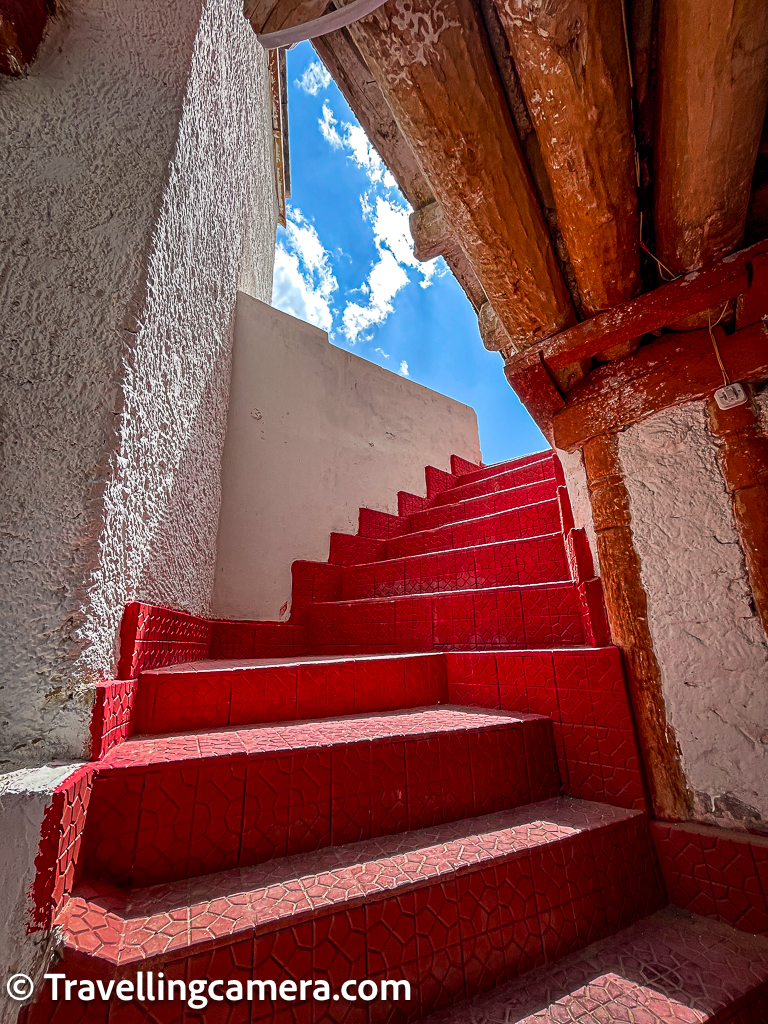
If you attend a monastery festival, resist the temptation to stand in front of everyone with a long lens.
Watch first.

The expressions of spectators, monks preparing backstage, old people sitting quietly and children observing the spectacle can sometimes make better photographs than the main performance.

Nubra Valley: More Than Hunder's Sand Dunes
Nubra is often reduced to one photograph: Bactrian camels walking across sand dunes.
Stay longer and the valley becomes much more interesting.

The landscape changes dramatically as you cross the high passes and descend towards villages. Suddenly there are green fields, poplar trees, streams and apricot orchards against enormous barren mountains.
Hunder is visually spectacular, but villages such as Sumur and Panamik offer a quieter experience.

Further north, Turtuk introduces another cultural dimension.
Turtuk is associated with Balti culture and is known for its village landscapes, traditional homes and apricot orchards. The official Ladakh tourism portal identifies it as one of the region's signature destinations.

The best photography here is often not a sweeping panorama.
Walk through the village.

Photograph doors, wooden beams, irrigation channels, apricot trees and textures in old walls.
Ask before photographing people.
That simple gesture can turn a photograph from an intrusion into a human interaction.

Pangong Tso: Wait for the Light
Pangong Tso is famous because photographs barely exaggerate it.
The lake sits at roughly 4,350 metres and its colours change dramatically depending on light, weather and viewing angle. It can appear deep blue, turquoise, steel grey or almost silver.
The mistake is arriving at noon, taking a few photographs and leaving.

Stay overnight if conditions and logistics permit.
At dawn, the mountains around the lake can catch warm light while the water remains comparatively dark. This gives photographs considerably more tonal depth.
Use a polarizing filter carefully. With wide-angle lenses, an aggressive polarizer can create uneven skies.

And never sacrifice composition simply because the lake is blue.
Blue water plus blue sky is often visually weaker than a composition containing a foreground rock, person, road, tent or shoreline.
....
Tso Moriri: When Silence Becomes the Subject
Tso Moriri sits high on the Changthang plateau at roughly 4,522 metres.
It is quieter than Pangong and, for many travellers, more emotionally rewarding.

The surrounding landscape feels enormous. Korzok village sits beside the lake, while the mountains form a vast natural amphitheatre.
The photography here is less about iconic objects and more about atmosphere.

Give the image breathing space.
Use a person as a scale reference.
Leave plenty of sky.
Wait for clouds.
Sometimes the strongest frame is the one that looks almost empty.

Tso Kar: Ladakh's Understated Lake
Tso Kar is another excellent alternative for travellers who want to see beyond the conventional Ladakh itinerary.
The lake lies in Changthang and is recognised as a Ramsar site. Its salt flats, surrounding mountains and wetlands create a landscape quite different from Pangong. It is also important for birdlife and offers opportunities to encounter the Changpa pastoral community.
For wildlife photographers, this is particularly interesting.

Carry a telephoto lens and keep binoculars handy.
Do not approach wildlife simply to obtain a closer photograph.

Hidden Gems and Lesser-Known Ladakh
Some of Ladakh's best experiences happen when you stop chasing the famous names.

Hanle
Hanle is especially interesting for photographers and astronomy enthusiasts because of its exceptionally dark skies and astronomical facilities.
On a clear night, the sky can feel almost overwhelming.
A tripod, wide fast lens and patience are more useful here than an expensive telephoto lens.

Lamayuru
The landscape around Lamayuru is striking, particularly its eroded formations and monastery.
Late afternoon is excellent for textures because side lighting emphasises the ridges and geological forms.

Suru Valley
Suru offers a very different visual experience from the dry landscapes around Leh and Pangong.
The valley can be surprisingly green, with towering Himalayan peaks creating an extraordinary backdrop.
The official Ladakh tourism portal highlights the Suru Valley and the Nun-Kun massif among the region's signature landscapes.

Petroglyph Sites
One of Ladakh's less discussed stories is prehistoric rock art.
Ancient carvings provide evidence that human activity in the region predates the monasteries and kingdoms that dominate contemporary tourism narratives.
The official tourism programme now recognises petroglyphs and rock art as an important part of Ladakh's heritage.
Look carefully.
Ladakh's story did not begin with Buddhism.

Best Photography Spots in Ladakh
| Location | Best Time | What to Photograph |
|---|---|---|
| Thiksey | Early morning | Monastery, valley layers |
| Leh Palace | Late afternoon | Leh town and mountains |
| Shey | Morning/evening | Palace, landscape and Indus Valley |
| Alchi | Controlled indoor light | Murals and architecture where permitted |
| Lamayuru | Late afternoon | Moonland formations |
| Nubra | Morning/evening | Villages, dunes, mountains |
| Turtuk | Morning | Village life and apricot orchards |
| Pangong Tso | Dawn/sunset | Lake, reflections and mountain silhouettes |
| Tso Moriri | Sunrise/sunset | Lake and expansive landscapes |
| Tso Kar | Morning/evening | Salt flats and wildlife |
| Hanle | Night | Milky Way and dark-sky landscapes |
| Suru Valley | Morning/evening | Green valley and high peaks |

Photography Tips for Ladakh
Ladakh can be visually overwhelming.
That is precisely why restraint matters.

Shoot during the golden hours
The midday sun can produce harsh shadows and washed-out colours.
Early morning and late afternoon reveal texture in the mountains.

Carry more than a wide-angle lens
A 16–35mm lens is excellent for landscapes, but a 70–200mm can be even more valuable.
Use it to isolate monasteries, compress mountain layers and photograph distant ridges.
....
Look for foregrounds
A barren landscape needs visual anchors.
Try:
Prayer flags
Rocks
Roads
Shepherds
Monks
Traditional houses
Vehicles
Trees
Shadows

Use people carefully
A tiny human figure in a huge landscape can communicate scale better than an empty panorama.
But do not turn local residents into props.
Ask before making portraits.

Protect your camera
Dust is a constant companion.
Carry a blower, microfiber cloth and basic sensor-cleaning supplies.
Avoid changing lenses unnecessarily in dusty roadside environments.

Watch batteries
Cold conditions reduce battery performance.
Keep spare batteries close to your body rather than leaving them exposed in a cold camera bag.

Photograph the sky
Ladakh is one of those places where looking upward can be as rewarding as looking across the mountains.
The region's dark skies are increasingly recognised as a tourism experience in their own right.

Food in Ladakh: Eat for the Climate
Ladakhi food makes sense when you understand the environment.

This is food designed to provide warmth and energy in a cold, high-altitude environment.
Try:
Thukpa
Momos
Skyu
Tingmo
Chutagi
Butter tea
Apricot-based products
Local breads
Traditional barley-based foods

The official tourism portal specifically highlights thukpa, hand-rolled momos and apricot delicacies among Ladakh's culinary experiences.

Do not judge local food solely by restaurant versions in Leh.
A homestay meal can tell you much more about everyday Ladakhi food culture.
If someone offers you butter tea, try it.

You do not have to love it.
But refusing unfamiliar food simply because it tastes different defeats the purpose of travelling.

The Human Side of Ladakh
One of the most memorable parts of a trip to Ladakh is often an interaction that never appears on an itinerary.
A shopkeeper explaining where his family gets apricots.
A driver stopping to point out a Himalayan bird.
A monk quietly turning a prayer wheel.
A farmer working a small green field surrounded by mountains.
A family sitting together over tea.
These moments reveal something that landscapes cannot.
Ladakh is a demanding place to live.
Water, agriculture, transport and weather are not abstract subjects here. They shape everyday decisions.
That is why travellers should avoid treating the region as an empty wilderness.
It isn't empty.
It is someone's home.
....
Best Time to Visit Ladakh in India
The best time depends on what you want to photograph.
| Season | Experience | Photography |
|---|---|---|
| March–April | Snowmelt, early spring, apricot blossoms | Excellent for villages and blossoms |
| May–June | Roads open progressively, dramatic landscapes | Excellent |
| July–August | Green valleys, lakes, festivals | Excellent but busier |
| September–October | Clear skies, autumn colours | Outstanding |
| November–February | Snow, frozen landscapes, winter culture | Challenging but unique |
Ladakh Tourism currently categorises March-April around spring landscapes and apricot blossoms, May-September around lakes, trekking and festivals, September-October around golden landscapes and clear skies, and winter around snow and the Chadar Trek.
 For photographers

September and early October can be particularly rewarding.
The harshness of summer begins to soften. The air can be exceptionally clear, agricultural areas take on autumn tones and the crowds generally become less intense than peak season.
However, weather and road conditions can change quickly.
Always check current advisories before travelling.

How to Reach Ladakh
By Air
Leh's Kushok Bakula Rimpochee Airport is the fastest way to reach Ladakh from major Indian cities.
Flying saves considerable time, but it creates one important problem: rapid altitude gain.
That makes acclimatization critical.
 By Road

The two classic road approaches are:
Srinagar–Kargil–Leh
Manali–Leh
The Srinagar route offers a fascinating gradual transition through Kashmir and Kargil.
The Manali route is more dramatically high-altitude and includes spectacular mountain terrain.
Road conditions are seasonal and can change because of weather, landslides, snow and maintenance. In July 2026, the Ladakh administration was still issuing weather advisories related to heavy rainfall, flash floods and landslides, demonstrating why current road information matters more than a static itinerary.

Acclimatization: The Most Important Ladakh Travel Tip
This deserves its own section because ignoring it can ruin a trip.
Leh sits at approximately 3,500 metres above sea level.
The current Ladakh Tourism advisory requires tourists arriving in Leh to undergo at least 48 hours of complete rest for acclimatization before travelling to higher-altitude areas.
That means your first day should not be a sightseeing marathon.
Do not land in Leh at 8 a.m. and plan to visit Pangong the following morning.
Instead:
Day 1: Rest.
Day 2: Gentle walking around Leh if you feel well.
Day 3: Nearby sightseeing.
Then gradually increase altitude.
Headache, nausea, dizziness, unusual fatigue or breathlessness should not be treated as inconveniences to overcome.
Altitude sickness can become serious.
If symptoms worsen, descend and seek medical help.
For medication such as acetazolamide, consult a qualified doctor rather than self-prescribing.

Where to Stay in Ladakh
Leh is the easiest base for a first trip because it offers the widest range of accommodation, restaurants, transport and services.
For a more immersive experience, consider staying in village homestays during parts of the journey.
Good bases can include:
Leh
Nubra Valley
Pangong region
Tso Moriri/Korzok
Alchi
Lamayuru
Turtuk
Hanle
Homestays are particularly valuable if your interest goes beyond scenery.
You see how homes are designed for the climate. You eat local food. You meet families. And sometimes the best photograph of the trip emerges not from a mountain viewpoint but from a kitchen window at breakfast.
Ladakh Tourism also promotes family-run guesthouses, homestays and a range of accommodation types across the region.

Budget Tips for a Trip to Ladakh
Ladakh does not have to be an ultra-luxury destination.
You can reduce costs by:
Staying in guesthouses or homestays
Sharing taxis for longer journeys
Spending more nights in fewer places
Eating local food
Avoiding unnecessary luxury camps
Booking transport as a group
Travelling outside peak demand periods
Hiring local drivers rather than attempting unrealistic self-drive schedules
The biggest mistake is trying to cover too much territory in too little time.
In Ladakh, time is often more valuable than money.
A slower trip can actually be cheaper.
A Practical 8-Day Ladakh Itinerary

Day 1: Arrive in Leh
Rest.
No sightseeing marathon.
Drink water, eat lightly and let your body adjust.

Day 2: Leh
Explore gently.
Walk through the old town, visit local markets and photograph Leh Palace or nearby viewpoints if you feel comfortable.

Day 3: Thiksey, Shey and Hemis
Begin exploring the Indus Valley.
Keep the day relaxed.

Day 4: Leh to Nubra
Cross the high pass and descend into Nubra Valley.
Stay overnight.

Day 5: Nubra and Turtuk
Spend time in villages rather than rushing between viewpoints.
Stay in Nubra.

Day 6: Nubra to Pangong
Travel towards Pangong via the permitted route available at the time of your visit.
Stay overnight if conditions permit.

Day 7: Pangong to Leh
Photograph the lake at sunrise before returning.

Day 8: Leh
Keep this as a buffer day.
Weather delays are part of high-altitude travel.
If everything goes smoothly, explore more of Leh or nearby areas.
For a longer trip, add Alchi, Lamayuru, Tso Moriri, Tso Kar, Hanle or Suru Valley rather than squeezing everything into eight days.

Responsible Travel in Ladakh
Ladakh's landscapes are fragile.
That isn't an abstract environmental statement.
The administration has recently taken action against tourists driving off-road in protected areas around Pangong, Nubra and Hanle, with vehicles seized and penalties imposed.
So:
Stay on designated roads and tracks.
Never drive into lakes.
Do not chase wildlife.
Carry your waste back.
Avoid single-use plastic where possible.
Use water carefully.
Ask before photographing people.
Do not touch religious objects without permission.
Dress respectfully inside monasteries.
Keep your voice low in prayer spaces.
Support local homestays and businesses.
Follow restrictions around border areas.
The most important rule is simple:
Leave the landscape looking as though you were never there.

Common Mistakes to Avoid in Ladakh
Trying to do Pangong immediately after landing
Altitude does not care about your itinerary.
Treating every mountain pass as a trophy
The altitude matters more than the selfie.
Photographing monks during prayers without consideration
A religious ceremony is not a photo shoot.
Driving off-road for a better photograph
This can damage fragile habitats and result in penalties.
Carrying only a wide-angle lens
Ladakh is full of compressed mountain layers that telephoto lenses capture beautifully.
Visiting only famous places
The villages between destinations can be more memorable than the destinations themselves.
Underestimating the cold
Even summer evenings can feel surprisingly cold at altitude.
Ignoring weather warnings
High-altitude weather can change rapidly, and current official advisories should take priority over an old travel blog itinerary.

Frequently Asked Questions About Ladakh in India
What is the best time to visit Ladakh in India?
For most travellers, May to September offers the broadest access to major destinations. September and early October can be particularly rewarding for photographers because of clear skies, autumn tones and generally calmer conditions.

How many days are enough for Ladakh?
A minimum of 7–8 days works for a first trip focused on Leh, Nubra and Pangong. Ten to fourteen days is much better if you want to include places such as Tso Moriri, Tso Kar, Alchi, Lamayuru or Hanle.
 Is Ladakh safe for first-time travellers?

Yes, but altitude should be taken seriously. The current official tourism advisory requires 48 hours of acclimatization in Leh before travelling to higher-altitude areas.

Is Ladakh suitable for photography?
Absolutely. Ladakh offers landscapes, architecture, portraits, wildlife, night skies, cultural events and documentary photography opportunities in one region.

What should photographers carry to Ladakh?
A versatile wide-angle lens, telephoto lens, tripod, spare batteries, power bank, lens cloth, blower, polarizing filter and weather-appropriate camera protection make a useful kit.

Is Pangong Lake worth visiting?
Yes, but it is better experienced with time rather than as a rushed day trip. Dawn and evening provide much better photographic conditions than harsh midday light.

What are the best lesser-known places in Ladakh?
Hanle, Tso Kar, Turtuk, Suru Valley, Alchi, Lamayuru and remote villages around Nubra offer experiences beyond the standard Leh-Pangong circuit.

Can I visit Ladakh in winter?
Yes. Winter is a completely different Ladakh, with snow, frozen landscapes and specialised experiences such as the Chadar Trek. However, conditions are significantly more demanding and travel requires careful planning. Ladakh Tourism identifies November-February as the winter season.

What food should I try in Ladakh?
Start with thukpa, momos, skyu, tingmo, chutagi, butter tea and local apricot products. Eating at a homestay can provide a more authentic introduction to local food culture.

How should I acclimatize in Leh?
Spend the first 48 hours resting and avoiding strenuous activity and rapid travel to higher elevations. Follow current medical and tourism advisories, and seek professional medical advice if symptoms develop.

Final Thoughts: Photograph the Silence, Not Just the Mountains
Ladakh stays with you for reasons that are difficult to put into a checklist.
Perhaps it is the first morning when sunlight reaches the monastery walls.
Perhaps it is the sound of a prayer wheel turning in the wind.
Perhaps it is a bowl of steaming thukpa after a long drive.
Perhaps it is an elderly villager smiling when you ask permission to make a portrait.
Or perhaps it is simply standing beside a high-altitude lake with no sound except wind.
For a photographer, Ladakh offers almost too many pictures.
But the challenge is not finding something beautiful to photograph.
The challenge is learning when not to press the shutter.
Wait for the light.
Wait for the person to become comfortable.
Wait for the clouds.
Wait for the road to empty.
Wait until the landscape stops looking like a postcard and starts revealing itself as a place where people actually live.
That is when a trip to Ladakh becomes more than a collection of photographs.
It becomes a story.
And perhaps that is the real magic of Ladakh in India: the mountains may be what bring you here, but it is the people, culture, silence and small moments between destinations that make you want to return.

Exploring India: The Ultimate Travel Guide to Experiencing the Soul of a Timeless Civilization
What Advice Would You Give to Someone Travelling to India for the First Time?

Rajasthan State of India: A Complete Travel Guide for First-Time Visitors
Trip to Gujarat State of India: A Complete Travel Guide for First-Time Visitors
 |
| A Theyyam blessing the priests. These performers are considered as God themselves once they don the Theyyam costume |


.jpg)
Comments