Kochi Mangoes: A Journey Through Kerala's Sweetest Summer Tradition

There are cities that are remembered by their monuments. Some linger in memory because of the food served on old wooden tables overlooking quiet streets. And then there is Kochi, a city where even the changing seasons seem to have their own fragrance.

There are cities that are remembered by their monuments. Some linger in memory because of the food served on old wooden tables overlooking quiet streets. And then there is Kochi, a city where even the changing seasons seem to have their own fragrance.

Visit Kochi between March and June, and the city slowly transforms into a celebration of mangoes. The aroma arrives before the fruit does. It drifts through bustling vegetable markets, roadside stalls shaded by coconut palms, neighbourhood grocery stores, ferry terminals, and family courtyards where trees bow under the weight of ripening fruit.

Unlike many destinations where mangoes are merely another seasonal produce, Kochi offers an experience that connects agriculture, history, cuisine, photography and everyday life. Here, mangoes aren't displayed with extravagant branding or luxurious packaging. They sit casually in bamboo baskets, on wooden carts, and beneath colourful umbrellas, waiting for locals who already know which variety will make the best pickle, which one is perfect for curry, and which deserves to be eaten fresh under the afternoon shade.

For a traveller, these everyday scenes reveal a side of Kerala that guidebooks often overlook.

Instead of chasing only the famous landmarks of Fort Kochi or the iconic Chinese fishing nets, spending time around mango markets introduces you to neighbourhood conversations, local eating habits, and a rhythm of life that changes with the harvest.


Why Visit Kochi During Mango Season? Most visitors associate Kochi with colonial architecture, spice trading history, backwaters, seafood and heritage walks. Yet summer quietly introduces another layer to the city.  Mango season isn't promoted as a tourist attraction, which is exactly why it feels authentic.

Why Visit Kochi During Mango Season?

Most visitors associate Kochi with colonial architecture, spice trading history, backwaters, seafood and heritage walks. Yet summer quietly introduces another layer to the city.

Mango season isn't promoted as a tourist attraction, which is exactly why it feels authentic.

Walk through neighbourhood markets early in the morning and you'll notice buyers gently pressing fruits, discussing sweetness with vendors in Malayalam, comparing prices between different cultivars, and sharing recipes that have been passed through generations.

Children carry home bags almost larger than themselves.

Street vendors carefully sprinkle water over fresh leaves to keep their displays attractive.

Fruit sellers proudly tell you which village produced today's harvest.

These ordinary interactions become extraordinary when viewed with the curiosity of a traveller.

Unlike commercial fruit markets found in larger metropolitan cities, Kochi's mango trade still feels deeply connected to nearby farms across Ernakulam district and neighbouring regions like Palakkad, Thrissur and Malappuram.

Every basket tells the story of a different orchard.


Mangoes in Kerala: More Than Just a Summer Fruit Kerala's relationship with mangoes stretches back centuries.  Long before European traders arrived on the Malabar Coast, mango trees flourished across homesteads, temple compounds and agricultural landscapes. Many traditional Kerala homes were designed with fruit trees growing naturally around the house, creating shade while providing seasonal harvests.  Unlike northern India, where commercial varieties such as Alphonso or Dasheri often dominate conversations, Kerala celebrates an astonishing diversity of indigenous mangoes.  Some are incredibly sweet.  Others remain delightfully sour.  Several varieties are grown almost exclusively for pickling.  Many never leave the state because local demand is already high.

Mangoes in Kerala: More Than Just a Summer Fruit

Kerala's relationship with mangoes stretches back centuries.

Long before European traders arrived on the Malabar Coast, mango trees flourished across homesteads, temple compounds and agricultural landscapes. Many traditional Kerala homes were designed with fruit trees growing naturally around the house, creating shade while providing seasonal harvests.

Unlike northern India, where commercial varieties such as Alphonso or Dasheri often dominate conversations, Kerala celebrates an astonishing diversity of indigenous mangoes.

Some are incredibly sweet.

Others remain delightfully sour.

Several varieties are grown almost exclusively for pickling.

Many never leave the state because local demand is already high.

The result is a culinary landscape where every household has favourite varieties depending on recipes rather than popularity.

For locals, mangoes aren't simply desserts.

They become ingredients in fish curry, coconut-based gravies, spicy chutneys, dried preserves, pickles and refreshing drinks that help survive Kerala's humid summers.

This culinary diversity explains why walking through Kochi's markets feels so different from browsing fruit stalls elsewhere in India.


A Morning Walk Through Kochi's Mango Markets

The city wakes early.

Long before cafés begin serving breakfast, vegetable markets are already alive.

One summer morning, I wandered into a neighbourhood market expecting to photograph colourful vegetables. Instead, my camera found itself drawn repeatedly toward stacks of golden mangoes arranged like miniature hills.

Some fruits still carried tiny leaves.

Others showed patches of green, promising they needed another day or two before reaching perfection.

Vendors moved quickly but smiled whenever someone paused to admire the display.

One elderly seller noticed my camera and laughed.

"You'll take photos first," he said in broken English, "then you'll buy."

He was right.

Photography inevitably gave way to curiosity.

Soon we were discussing how local families identify sweetness not by colour but by aroma near the stem.

Another vendor demonstrated how experienced buyers avoid squeezing the fruit too hard.

Good mangoes, he explained, deserve patience.

Those few minutes revealed more about Kerala's food culture than many museums ever could.


The Mango Varieties You'll Encounter Around Kochi

One of the greatest joys of exploring Kochi during mango season is discovering varieties that rarely appear in supermarkets outside Kerala.

VarietyBest Known ForCommon Use
MuvandanSweet, juicy fleshFresh eating
KilichundanSlightly pointed shapeHousehold favourite
ChandrakkaranBalanced sweetnessDesserts
BanganapalliLarge fruitsTable fruit
NeelamLate-season harvestFresh eating
Small local sour mangoesTangy flavourFish curry and pickles

Many roadside vendors happily explain differences if you show genuine interest.

You may even receive slices for tasting before making a purchase.

Unlike commercial fruit markets where transactions feel hurried, these conversations often become memorable travel experiences.


Hidden Stories Behind Kerala's Mango Trees

In many parts of Kerala, old mango trees become family landmarks.

Instead of saying "turn left after the grocery store," directions might still include references like "the large mango tree near the temple."

Some trees are believed to be over a hundred years old.

Others have witnessed generations growing beneath their shade.

Many families still remember which ancestor planted a particular tree decades ago.

These living landmarks quietly preserve memories that maps never record.

For photographers, such trees also provide compelling storytelling subjects.

A wide-angle composition capturing an ancient mango tree beside a tiled Kerala home often communicates more about local life than a carefully staged portrait.


Photography: Capturing Kochi's Mango Season

Photographing mangoes may sound simple until you begin noticing how beautifully Kerala's light interacts with them.

Early morning offers soft illumination that gently highlights yellow and green textures without harsh reflections.

During the golden hour, roadside fruit stalls glow warmly against weathered shopfronts.

Markets provide endless opportunities for documentary photography.

Instead of focusing only on fruit, look for interactions.

A grandmother inspecting mangoes.

Children reaching toward colourful baskets.

Vendors arranging fresh arrivals.

Hands exchanging fruit rather than money.

These small moments tell richer stories than perfectly symmetrical displays.

If you're visiting Fort Kochi afterwards, carry a few mangoes with you—not just to eat, but as an interesting foreground element for creative compositions featuring colonial architecture or seaside promenades. The contrast between Kerala's seasonal bounty and historic surroundings can produce distinctive travel photographs.


Lesser-Known Places to Experience Kochi's Mango Culture

While tourists often head straight to Fort Kochi or Marine Drive, mango season is best appreciated in everyday neighbourhoods.

Local markets in Ernakulam, residential streets lined with traditional homes, and village roads on the outskirts of the city often reveal trees heavy with fruit hanging over compound walls. In quieter areas, it's not unusual to spot children collecting windfallen mangoes after an afternoon breeze or families spreading newspapers under a tree to sort the day's harvest.

Another rewarding experience is taking an early morning ferry across the backwaters. From the water, you'll notice clusters of mango trees rising above coconut groves, offering a reminder that Kochi's landscape is as much agricultural as it is maritime. These fleeting views are easy to miss if you're focused only on the city's better-known attractions.


Local Food Experiences: When Mangoes Meet Kerala's Kitchen

If you've only eaten mangoes sliced into neat cubes or blended into smoothies, Kochi is likely to surprise you. Here, the fruit appears in dishes that range from comforting home-style curries to festive desserts, reflecting Kerala's remarkable ability to balance sweet, sour, spicy, and coconut-rich flavours.

One of the most memorable dishes is Mambazha Pulissery, a yoghurt-based curry made with ripe mangoes, grated coconut, green chillies, cumin, and finished with a fragrant tempering of mustard seeds and curry leaves. The sweetness of the mango doesn't overpower the dish; instead, it complements the tanginess of the yoghurt, creating a flavour that's uniquely Kerala.

Raw mangoes, meanwhile, are indispensable in many households. They lend a pleasant sharpness to fish curries, especially those cooked in earthen pots. Their acidity enhances the spices without masking the freshness of the seafood.

During mango season, you'll also find:

  • Fresh mango juice prepared without artificial syrups.
  • Homemade mango pickles with varying spice levels from family to family.
  • Mango pachadi served during festive meals.
  • Mango jams and preserves sold by small local producers.
  • Sun-dried mango slices prepared for later use.

The best meals often aren't found in restaurants advertising "traditional cuisine" but in modest eateries where seasonal ingredients naturally become part of the day's menu.

Conversations That Stay Longer Than the Taste

One of the joys of travelling slowly is discovering that conversations often become the most memorable souvenir.

While photographing a fruit stall in Kochi, I asked a vendor whether business had been good that year.

He smiled before answering.

"People always come for mangoes," he said. "Some buy because they're sweet. Others buy because they remind them of home."

That single sentence revealed something important.

For many Malayali families living elsewhere in India or abroad, summer mangoes are deeply nostalgic. A box of locally grown mangoes carried to relatives often means more than an expensive gift.

Later, an elderly customer joined the conversation and pointed towards a basket of smaller mangoes.

"Those," he said proudly, "make the best pickle. My mother never used anything else."

These exchanges transformed an ordinary fruit market into a place where memories, traditions, and recipes were traded alongside produce.

Photography Guide: Capturing Kochi's Mango Season

For photographers, mango season offers far more than colourful fruit displays.

Early Morning (6:30–8:30 AM)

This is the ideal time for market photography.

The soft light preserves natural colours, vendors are arranging fresh produce, and the crowds remain manageable. Look for wide compositions that include stalls, customers, and the surrounding streets to tell a complete story.

Mid-Morning

Move away from the markets and explore residential neighbourhoods.

Trees laden with mangoes, old tiled houses, bicycles resting under their shade, and quiet lanes all create timeless photographs that capture Kerala's everyday charm.

Golden Hour

As the sun begins to set, fruit stalls glow with warm light filtering through awnings and surrounding buildings. This is an excellent time for close-up portraits of vendors or detailed images of mangoes with dramatic side lighting.

Composition Ideas

  • A basket overflowing with different mango varieties.
  • Hands exchanging fruit rather than posed portraits.
  • Mangoes framed through bicycle handlebars or market windows.
  • Fallen mangoes beneath an old tree.
  • Reflections in rain puddles if an early monsoon shower arrives.
  • Street scenes where mangoes become just one element of daily life.

Rather than photographing only the fruit, try documenting the ecosystem around it. The interactions, gestures, and routines often make stronger travel photographs than perfectly arranged still lifes.

Hidden Gems Beyond the Famous Attractions

If your itinerary already includes Fort Kochi, Jew Town, and Marine Drive, consider spending half a day exploring residential Ernakulam.

Small neighbourhood markets often have better seasonal produce than tourist-focused areas.

Some traditional homes still have mature mango trees growing inside their compounds, their branches extending over quiet lanes. During windy afternoons, it's common to hear the gentle thud of ripe mangoes falling—a sound that locals instantly recognise as part of summer.

Another overlooked experience is visiting a local vegetable market after a brief rain. The colours become richer, the air carries the scent of wet earth, and the freshly washed mangoes seem even more vibrant.

These are not attractions listed in guidebooks.

They're moments that reward travellers willing to slow down.

Best Time to Experience Kochi Mangoes

MonthExperience
MarchEarly arrivals of seasonal varieties.
AprilMarkets become increasingly vibrant with local harvests.
MayPeak mango season with the widest variety available.
JuneLate-season varieties appear as the southwest monsoon approaches.

If your primary goal is experiencing mango culture, late April through May offers the richest selection.

Visiting early in the morning also means cooler temperatures and better photography conditions.

How to Reach Kochi

Kochi is among Kerala's best-connected cities.

ModeDetails
AirCochin International Airport is about 30 km from the city centre.
RailErnakulam Junction and Ernakulam Town connect Kochi with major Indian cities.
RoadNational highways link Kochi with Bengaluru, Chennai, Mangalore, and Thiruvananthapuram.
WaterFerries remain a practical and scenic way to move between several parts of the city.

Once in Kochi, auto-rickshaws, taxis, buses, metro services, and ferries make it easy to explore both popular attractions and neighbourhood markets.

Where to Stay

Your accommodation should depend on the experience you're seeking.

AreaIdeal For
Fort KochiHeritage hotels, walking tours, photography.
ErnakulamShopping, transport, local markets, food.
MattancherryCultural exploration and historic neighbourhoods.

If mango markets are one of your priorities, staying around Ernakulam provides convenient access to everyday local life while remaining well connected to Fort Kochi.

Budget Tips

  • Visit neighbourhood markets instead of tourist shops for seasonal fruit.
  • Use ferries whenever possible—they're economical and offer wonderful views.
  • Carry cash for small vendors.
  • Purchase mangoes early in the day for the freshest selection.
  • Sample different local varieties instead of buying only familiar names.

Suggested One-Day Itinerary

TimeActivity
7:00 AMVisit a local fruit and vegetable market.
8:30 AMTraditional Kerala breakfast.
10:00 AMExplore residential neighbourhoods with old mango trees.
12:30 PMLunch featuring seasonal Kerala dishes.
3:00 PMFerry ride across the backwaters.
5:00 PMGolden hour photography in Fort Kochi.
EveningEnjoy fresh mango juice or dessert before dinner.

Responsible Travel Tips

  • Ask before photographing vendors or local residents.
  • Avoid plucking fruit from private trees without permission.
  • Carry a reusable shopping bag if purchasing produce.
  • Support family-run stalls and neighbourhood businesses.
  • Dispose of fruit waste responsibly.
  • Respect local customs, especially when visiting residential areas.

Common Mistakes to Avoid

  • Assuming Alphonso is the only mango worth trying.
  • Visiting markets late in the afternoon after the best produce has sold.
  • Ignoring neighbourhood markets in favour of supermarkets.
  • Photographing people without consent.
  • Planning only around monuments and overlooking seasonal experiences.

Frequently Asked Questions

Is Kochi a good place to experience mango season?

Yes. While Kochi is better known for its heritage and backwaters, its neighbourhood markets provide an authentic glimpse into Kerala's rich mango culture.

Which are the best months to buy mangoes in Kochi?

Late April and May generally offer the widest variety, though the season often begins in March and extends into June depending on weather conditions.

Are Kerala mangoes different from Alphonso?

Yes. Kerala grows numerous indigenous varieties with distinct flavours, textures, and culinary uses. Many are rarely available outside the state.

Where can travellers buy fresh mangoes in Kochi?

Neighbourhood fruit markets, local vegetable markets, roadside stalls, and small grocery shops across Ernakulam often offer the freshest seasonal selection.

Can photographers find interesting subjects during mango season?

Absolutely. Markets, old trees, local vendors, traditional homes, and everyday street life create rich documentary photography opportunities beyond the fruit itself.

Final Thoughts

There is something quietly beautiful about discovering a destination through its seasons rather than its monuments.

For many travellers, Kochi is a city of colonial streets, spice warehouses, ferries, and Chinese fishing nets. Yet summer reveals another side—one that is less photographed but equally memorable. The scent of ripe mangoes drifting through neighbourhood markets, the conversations between vendors and regular customers, the recipes passed from one generation to the next, and the old trees that still shade family homes all speak of a Kerala that is deeply rooted in everyday life.

Exploring Kochi through its mangoes is not about ticking off another attraction. It's about slowing your pace, wandering into places where tourists rarely linger, and noticing the small rituals that define a season. It is in these ordinary moments—a vendor offering a taste of a newly arrived variety, a child carrying home a bag of mangoes, or an elderly tree standing quietly beside a tiled house—that the city reveals its most authentic character.

For photographers, food lovers, and curious travellers alike, mango season offers a different lens through which to understand Kochi. It reminds us that travel is often richest not when we chase famous landmarks, but when we pause long enough to appreciate the rhythms that locals have cherished for generations. And sometimes, the sweetest memories of a journey begin not with a monument, but with the unmistakable aroma of a perfectly ripe mango on a warm Kerala morning.

Related Blogposts:

Soochipara waterfalls - Just another touristic place in Wayanad || Kerala Diaries


On the very first day of our stay in Wayanad, our host suggested us to trek to Edakkal Caves. 'Trekking' word did the magic and we decided to go there next day only. This Photo Journey shares some of the photographs and information around the trek & caves.We requested Sunil (our host at Treasure Trove to arrange an auto for the day. We left in the morning after breakfast and Edakkal is 15 kilometers from Meenangadi, the place where we were staying.We drove through some beautiful landscapes and beautiful sights. The mountain in above photograph looked beautiful and was shot from moving auto only. Later we realized that Edakkal caves offer another great view of the mountain from the hill top.We took some breaks on the way and soon we came a cross a diversion which lead us to 4 kilometers climb in auto, till the parking of Edakkal Caves. There is a small market at the base, where all vehicles need to be parked and then the trek starts for Edakkal Caves.The trek is concrete, but quite steep. Initially we were in hurry but realized that we should go slow. We enjoyed trekking to Edakkal caves and took some breaks on the way.After walking for 30 minutes we reached a counter where we had to buy entry tickets for the caves. Ticket costed 20 Rs per person and 30 Rs for camera. Please do read message in above photograph. One needs to deposit 20 rs if you want to take water bottle beyond this point. They paste a sticker on the bottle and you can get back the money when you come back. This model really works in Kerala and they have implemented it in most of the tourist destinations in Kerala.These stickers are pasted on the bottles. People bring back their empty bottles to the counter and get back the deposited money.These stairs start from the ticket counter till main caves of Edakkal.There are various shops on the way to have some snacks or buy stuff for home. Lot of Kerala products are sold in these shops - tea, coffee, spices, coconut products, herbal soaps etc.There are good number of stairs from ticket counter till caves. The main cave is on the top of this hill and one needs to trek through other smaller caves. There are folks around this hill who ensure smooth movement of crowd. This is quite a crowded place and discipline is important. Mostly people walk in queue and ensure that things happen smoothly.This is the entry to first cave at Edakkal. Above photograph is clicked from the cave. It was good to see a disciplined movement of folks and of-course credit goes to the local administration for appropriate arrangements in terms of marking & people to help.Now the trek continued through caves and few more steep climbs till we hit the final cave. Steel stairs are installed inside these caves. Edakkal caves lie at around 1200 metres above sea level on Ambukutty Mala, beside an ancient trade route connecting the high mountains of Mysore to the ports of the Malabar coast .Kids expressions in above photograph shows the level of next climb :). Yes, it was getting steeper. Next few climbs exposed everyone to some of the beautiful sights of Wayanad.Finally we hit the main cave which has varied designs carved on all the rocks.  Edakkal Caves are two natural caves which are approximately 24 kilometers from Kalpetta in the Wayanad district of Kerala. This lies around India Western Ghats.Inside the caves are pictorial writings. These signs are believed to date to at least 6000 BC,  from theNeolithic man, indicating the presence of a prehistoric civilization or settlement in this region. The Stone Age  carvings of Edakkal are rare and are the only known examples from south India.Check out wikipedia to know more about Edakkal caves.These are the stairs to come down on the back journey from Edakkal caves to the base. It was a nice experience to be there at Edakkal caves and enjoyed some of the amazing views from the top of this hill. It's a proper tourist spot so it's always crowded.


A Daunting Trek to Edakkal Caves in Wayanad || Kerala Diaries


After trekking to Edakkal caves in Wayanad, we headed towards Curuva Island in an auto. The word ‘Island’ made us visit there. After inquiring more, we got to know that it’s maintained by Forest department and good place to find different kinds of birds. One needs to use bamboo rafts to reach the Island and same rafts are used to come back.It took approximately 1 hr to reach Curuva Island from Edakkal Caves. It shouldn’t take more than 45 minutes in a car.The drive was beautiful through dense forests and coffee plantations.Our Auto-Rickshaw driver are quite fast as he wanted to ensure that we have enough time to explore the Island. It gets closed at 5pm, so you need to be back from the Island by then.We reached the entry counter of Curuva Island and bought our tickets from the counter of Kerala Forest and Wildlife conservation department. Single ticket costs 80 Rs which included to and fro in bamboo rafts. Camera ticket costs 40 Rs and you are also supposed to pay vehicle parking at same counter, so it was just 30 rs for the Auto-Rickshaw we were using.There is some walk from this counter to the water-body from where we needed to take Bamboo raft. It was around 200 meters away from the ticket counter. There are long queue at the port and we waited for approximately 20 minutes to board on the raft and reach the island. In this queue, a guard comes to check your bags and ensures that you don’t have any plastic item to carry to the island. If you want to carry a water bottle, get a sticker pasted on it for 20 rs and money is refundable by the showing the bottle on you back journey. I liked this model implemented by Kerala Tourism and it works. A good thing for other state tourism departments to learn. A ride on bamboo raft was something special, although our expectations were very high :). One raft was carrying approximtaley 50 folks at a time and I had always seen bamboo rafts carrying 4-6 folks. We wanted to do a ride on such raft, but time didn’t allow and such sights were located far from our homestays. I have used safety jackets at various places so far, but these were one of the best ones. Similar experience was there at Banasura dam as well.Bamboo raft hardly  took 10 minutes to hit the other side. We got off the boat and put our safety jackets in designated basket. There was a huge bamboo bridge on the other side. After walking for a while, you see two small pathways – one takes you inside island and other leads you to the other port. We headed towards the core of the island where everyone was going. Btw, Curuva Island is again a typical touristic place and hence crowded. There was lot of noise on the island and we realized that we should forget about finding any birds around. And we were right. We didn’t see a single bird, although various sounds were coming from the other part which was restricted.After a while we hit a region of this island which had various water streams. And whole of this region of the island was full of people having fun in water. We were little disappointed, because we were expecting it to be a peaceful place which is close to the nature. Unfortunately it was opposite. But most of the folks were having fun, so it's definitely a good place for folks who want to enjoy in water splashes. Idea is to go there with right expectations :). Hope that readers of Photo Journey would benefit from this information.We had a round of the island and then headed back towards the rafts to head back to Meenagadi (our homestay). It was not so experience for us, probably because of very high expectations. This was a learning for us to be more informative about such places. During this trip, we had hardly any pre-planning except our travel and stay. Many times we intensionally keep things open but they may end up with such experiences. It was another experience, I would say :)Time to go other side of the water body and head towards our homestay…Curuva(Kuruva) Island - A potential paradise for nature lovers


During december we were in Wayanad region of Kerala and planned a day visit to Suchipara Waterfalls. When we drive towards the waterfalls, one need to cross through these beautiful tea gardens. We had various breaks on our way and this Photo Journey shares more about this region of Wayanad.Although Wayanad is full of Tea gardens and coffee plantations, but this part around Suchipara waterfalls is very special. The landscapes are very beautiful and can't be compared with other gardens. This part is relatively hilly.Usually we don't click our own photographs but these lush gardens made us click some of our shots. Our auto-rickshaw driver also requested me to click him photograph :), although he requested us not to post on facebook because he doesn't post any photograph with his auto-dress. This Photograph is only for his family to show that how Suchipara looks like these days.Yes, we were travelling in Auto-rickshaw. 4 days spent in Wayanad and throughout we used Auto-rickshaw for tarvelling. They are cost effective and you enjoy the pleasant weather of Wayanad region.Wayanad is one of the highest producers in India and there are various regions which produce Coffee as well. The place where we were staying was a coffee farm.Lush green tea gardens around Suchipara Waterfalls, Wayanad || Kerala Diaries


The first thing that strikes you during a Kathakali Dance performance is not the music. Not the elaborate costumes either. It is the eyes.  Under warm stage lights in Kochi, a performer slowly turns his face toward the audience. His eyes widen dramatically, then narrow with impossible precision. Every movement feels amplified. Every glance carries meaning. Even before the drums begin, the story has already started.Kathakali Dance in Kochi: Behind the Makeup, Music, and Mythology


There are some places in India that stay with you long after the journey ends. In the historic coastal city of Kochi, the iconic Chinese Fishing Nets are one such experience. Standing silently against the backdrop of the Arabian Sea, these massive cantilevered fishing structures are more than just fishing equipment — they are living symbols of history, trade, culture, and the rhythm of coastal life in Kerala.Chinese Fishing Nets in Kochi – The Timeless Symbol of Kerala’s Coastal Heritage


The first thing that catches your attention in Kochi is not the sea.  It is the doors.  Old wooden doors with fading turquoise paint. Tall colonial arches with brass knockers shaped like lions. Tiny tiled entrances hiding cafés. Portuguese-style windows opening into courtyards scented with cardamom and fish curry. Some are cracked by monsoon moisture. Some are freshly painted in impossible shades of yellow and blue. Some stand abandoned, yet still dignified.Doors of Kochi: Stories Hidden Behind Weathered Wooden Frames


Artist we met in Kerala - Tanish Daniels || Kerala Diaries


If you land in Bangalore, you can catch a KRSTC bus running regularly to Kozikhode or directly to Wayanad. Some kerala transportation buses are also available. It is highly recommended to plan it well and know about bus timings before hand, to plan your trip well.    Let's also talk about travel by Rail/train. Nearest railway station is Kozikode and beyond that you need to either take a taxi or bus.     Related Post : Journey from Delhi to Wayanad via Bengaluru, Mysore, and Sultan Battery || Kerala DiariesHow to reach Wayanad and main places to explore, along with interesting things to do


I had always heard about Wayanad as one of the biggest tea producers in India, but when I actually visited this beautiful place I realized that coffee is also produced in abundance. Wherever we went in Wayanad, we found acres of lands covered by coffee plantations. This Photo Journey shares some information about coffee plantations in Wayanad region of Kerala. Coffee production in India is dominated in the hilly terrains of South Indian states. Karnataka produces the max followed by Kerala. Indian coffee is said to be the finest coffee grown in the shade rather than direct sunlight anywhere in the world. Our host at Meenangadi had huge coffee farm around his homestay and he shared the fact about coffee in shadow. Most of the the plants were in shades of various trees including black pepper, jackfruit, coconut & rubber trees.Above is the view from out cottage at Treasure Trove which was surrounded by coffee plantations all around. After coming back from Wayanad, I read more about Coffee plantations in India and got to know that we have approximately 2.5 lac coffee growers and majority of them are small growers. Major part of the coffee grown in India exported to Germany, Russian, Spain, Belgium, Slovenia, United States, Japan, Greece, Netherlands, France and Italy.There are two methods to process Coffee - dry processing and wet processing. Dry processing is the traditional method of drying in the sun which is favoured for its flavour producing characteristics. This what we witnessed during our stay in Wayanad. Indian coffee, grown mostly in southern India under monsoon rainfall conditions, is also termed as “Indian monsooned coffee. Two well known species of coffee grown are the Arabica  and Robusta.Drawn by the aroma into the Coffee Plantations of Wayanad || Kerala Diaries


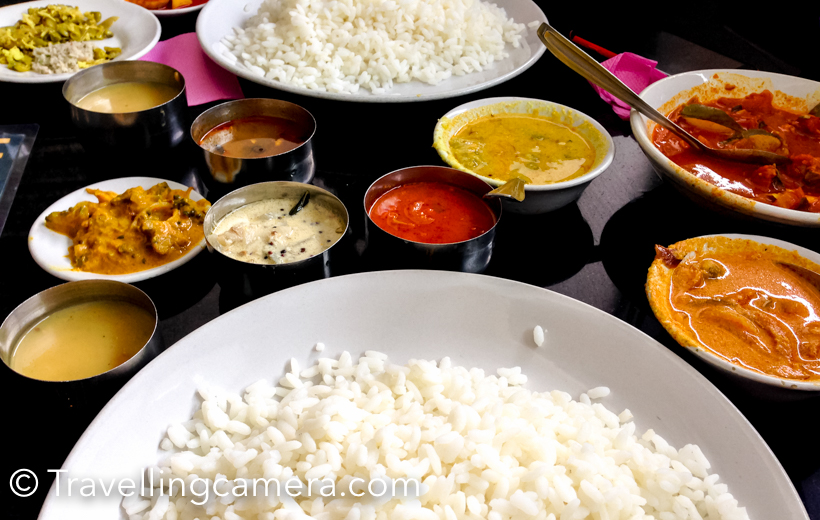
I did a post on main places to explore and things to do in God's Own Country - Kerala and one of the followers mentioned on Facebook that it's unfair not to mention food of Kerala. And I agree, so thought of compiling this post about Food of Kerala. I am sure that some of the following names would sound familiar - Puttu and Kadala Curry, Thalassery biryani , Appam with Stew, Dosa Ghee Roast with Kerala styled Sambar , Idiyappam with Egg Curry, Spicy Chicken Fry (locally known as Nadan Kozhi Varuthathu), Kerala Prawn Curry, Mussel Stir Fry (popularly known as Kallumakkaya Ularthiyath ) , Pumpkin (Erissery) and Lentil Stew, Naadan Beef fry or Kerala Style Beef Fry and Malabar Parota, Kerala style Fish Molee  and Kerala rice(boiled rice) along with sambar, parippukari with ghee, pachadi, kichadi, aviyal, puliyan, kuttukari, Kalan, Olan, Injikkari, rasam, pappadam, pickle, raita, sweetners(two or three different types), payasam.I clearly remember the Theayyam feast we enjoyed at Kannur. After spending whole day at Theyyam temple, one of the priest invited us to join for the feast. Everyone is invited to have lunch at temple and some of the popular food items are served on banana leaf. The same day we were wondering about the banana trees which would have lost those leaves. Hundreds of folks had lunch at the temple during Theyyam festival. Whenever anyone talk about Kerala food, that feast come to my mind. So my recommendation is to find a community event where you can enjoy authentic Kerala food.If you have visited Kerala you would know how Kerala rice look like and if not, just have a look at above photograph. These are very light as compared to rice we get in North India.If you are visiting Kerala, it's recommended to buy some spices to bring back home for family and friends. Patimugam is something which we liked and bought in abundance. The pink colored water served with food is basically boiled water by putting Patimugam in it.  Travellers very well know that food of any place is very much inspired by it's weather and local ingredients. You can very much guess the major ingredients of Kerala food. Coconuts grow in abundance in Kerala and hence coconut cream & coconut milk  are widely used in dishes for thickening and flavouring. Owing to the weather of Kerala and the availability of spices, the Kerala cuisine is richly spicy especially the hot ones - chilli , black pepper , cardamom , cloves , ginger  and cinnamon.Kerala's long coastline, various rivers, backwaters and strong fishing industry have contributed to many sea & river food based dishes. Rice and cassava (Tapioca) form the staple food of Kerala. All main dishes are made with them and served along with Kootan; the side dishes which may be made from vegetables, meat, fish or a mix of all of them. The main dish for lunch and dinner is boiled rice.If you love cooking and prefer healthy food for your family, you may want to check this brilliant blog by Sangeeta . And here is a recipe for Chicken stew Mughlai Style.Let me give another tip to fellow travellers for exploring authentic food of Kerala. Prefer staying in Home Stays and do proper research. We were lucky to have great experience of home stays in Kerala. If you plan to explore Wayanad, here are 2 recommendations - Treasure Trove and Bamboo Village.As you can see, banana leaves are used in different forms. Apart from serving food on banana leaf, it's also used for cooking. At our homestay, we used to get home cooked snacks with evening tea. What an awesome stay it was. I wish to go there right now.  Non-veg was main part of all our meals at Kerala. I found it interesting when fish and chicken vendors sell various types of fish on bicycle. While staying at Bamboo village, we met some vendors who were selling 4-5 types of small fish and almost every villager was buying fish. Banana is other main ingredient of Kerala food. In fact, unripe  banana are also used in various ways. Banana pakoras, boiled banana, banana chips etc. I am sure that banana must be used in 10 other forms in Kerala. I didn't like boiled banana which was served to us in breakfast. Either I ate it in wrong way or I could relate to it's taste.Food Trail in God's own country, Kerala (India)


India is also referred to as 'God's Own Country'. Kerala is a coastal state in India and has rich traditions, culture and lush unspoiled tropical beauty with unmatchable landscapes. Kerala is popularly known for its landscapes, backwaters, food, elephants, Theyyam  & various types of spices. Kerala is perfect destination for folks visiting India and even for Indians who want to spend some time at peace & slow pace of life. Kerala has options for different types for tourists and travellers. This post lists some of the popular places to explore and things to do in Kerala state of India. Munnar  - Usually I hate to do comparisons of places because it's usually unfair, as every place is unique. But I would like to call out that Munnar is popularly known as Kashmir of South India. Munnar is one of the key destination in Kerala which attracts lot of domestic and foreigner tourists to Kerala. It's a beautiful hill station which has lush green tea estates apart from spice plantations.Some of the popular places to explore in Munnar  are Eravikulam National Park, Indo Swiss Dairy Farm, Chinnar Wild Life Sanctuary, Anamudi, Tata Tea Museum, Idukki Arch Dam.Thekkady  - Thekkady is one of the most important tourist destinations in Kerala state of South India.  Thekkady is located in the famous Periyar National Park. The Periyar National Park is home to a large number of Indian elephants, lion-tailed Macaques, Nilgiri Langurs, Indian bison and Bengal Tigers. Mullaperiyar Dam around the area on the Periyar River and formed an artificial lake for Periyar Wildlife Sanctuary.Kovalam Light house beach in Kovalam is must visit place. And I am sure that you must have seen some exceptional photographs of lighthouse beach. Just notice the lighthouse in above photograph and you would be able to recall other photographs from same place and beach. Kovalam is also known as beach town of Kerala. It is also known as the paradise of the south and beaches of KOvalam are considered some of the best beaches in India. Kovalam means a grove of coconut trees and true to its name the village offers an endless sight of coconut trees. Alleppey - Alappuzha is an important backwater tourist destination in Kerala. Alleppey is one of the most preferred place for tourists, which attracts several thousands of foreign tourists each year. If you have ever watched boat races, Alleppy is the place to host these events. Apart from boat races Alleppy is also popularly known for beaches, marine products and coir industry. Allapuza Backwaters is a must experience thing in Kerala.Some of the other interesting other places around Alleppy include Statue Of Karumadikuttan, Mannarasala Sri Nagaraja Temple and Revi Karuna Karan (RKK) Memorial Museum.Wayanad  - Wayanad is north Kerala and popular for it's tea & coffee plantations. Hilly region of Kerala which has plenty of natural things to explores. Lakes, Waterfalls, caves, tea estates, adventure activities, home stays, wildlife and lot more. Kalpetta, Pookot Lake , Edakkal Caves , Pakshipathalam, Lakkidi, Sulthan Bathery, Banasura Sagar , Wayanad Wildlife Sanctuary, Neelimala view point , Meenmutty falls and Curuva Island are some of the popular places to explore in Wayanad. On our blog, we have shared about some of the best home-stays in Wayanad and incredible experience of Bamboo village.  Check out more on the blog and I am sure that you would definitely plan for this region of Kerala.Vagamon hill station is located on Idukki - Kottayam border area. A best place to spend time during summers of Kerala. Vagamon is immensely beautiful with many points of tourist interest, which offer great landscapes. The meadows, forests and hills surrounded by fog/clouds make this place more interesting. ( Cochin ) / Ernakulam  - If you are taking flight to south Kerala, most likely you would be hitting Kochi first. Kochi  is located in Ernakulam district of Kerela, which was earlier known as Cochin. Kochi is also an important seaport in India. Ernakulam is popular for shopping options in Kerala. I haven't really done shopping in Kerala but this is well known fact about Ernakulam. Some of the popular places to explore around Cochin include Jewish Synagogue, Cherai Beach, Marine Drive, Santa Cruz Cathedral Basilica, Fort kochi & Chinese Fishing Nets, Mattancherry Palace, Kodanad Elephant Sanctuary, Ezhattumugham Nature Village and Athirappally Falls. Thiruvananthapuram - Poovar is a small village in the Southern tip of Trivendrum. Around Poovar beach you can explore mangroves, floating restaurants, varieties of birds and biodiversity. The beach is pristine with golden sand with no or less people. Solitude’s comfort, you see! Fisherman waiting to trap the fishes in their giant nets at one corner and eagles and crows waiting for the fishes to be their fodder. Nature, oh nature, vicious circle, it is Some of the interesting places to explore around Thiruvanantpuram are Priyadarshini Planetarium, Vizhinjam Rock Cut Temple, Kuthiramalika, Kanakakunnu Palace. A photograph of Coffee plants from Kerala state of India. some of the old temples. Some of the temples around Kannur celebrate Theyyam festival and lot of foreigner tourists visit Kannur for Theyyam. Thottada beach is one of the popular and isolated beach in Kannur. Riding around these beaches and backwaters can be interesting.Kumarakom Houseboats  Kumarakom is most popular tourist spot located near the Kottayam city and famous for its houseboats in backwaters of Vembanad Lake. Vembanad Lake is the largest freshwater lake of Kerala and longest lake in India. Kumarakom is a famous Bird Sanctuary and home to a wide variety of local and migratory birds.One of the most important recommendation is to try Kerala food when you are in Kerala, but be careful about the quantity you order. Usually lot of curries are served, so it's recommended to order the minimum portion from menu and then decide, if you need more.Main places to visit and things to do in Kerala, India


Comments

Trending Post Today !

How to reach Kasol/Malana and top things to do around this stunning hill-station of Himalayan State of India

Main places to see & Top things to do around Dalhousie : Stunning Hill Station in Himalayan State of India