
Things to Do in Badami: Exploring Karnataka’s Ancient Red Sandstone Wonderland

Badami cave temples are mentioned whenever we talk about Indian heritage, art forms, old temples and some unimaginable work which is worth sharing with the world. Many people who want to explore the heritage of India and it's history certainly visit Badami cave temples which was very unique and well preserved so far. Apart from these cave temples, Badami and surrounding areas have a lot to offer. Here we are trying to share more about Badami Cave Temples and other important places to explore around Badami region of Karnataka in India.

There are places that impress you immediately, and then there are places that slowly reveal themselves layer by layer. Badami belongs to the second category.

At first glance, this small town in northern Karnataka feels quiet, almost understated. Narrow streets curve around rocky cliffs. Temple bells drift through the air. Monkeys leap across ancient stone walls while women in bright sarees walk toward water tanks carrying flowers for morning prayers. The red sandstone cliffs surrounding the town glow differently every hour — rusty orange at sunrise, deep crimson by afternoon, and soft amber after sunset.

In above photograph, Vishu is sitting on Adisheesha. This is clicked at Cave temples of Badami.    Bhanshankari Temple is also located in Bagalkot district of Karnataka. This is considered as one of the important shrines in Karnataka state of India.

The moment you stand near Agastya Lake and watch the reflection of the cave temples shimmering in still water, you realize Badami is not just another heritage destination. It is a living landscape where geology, mythology, architecture, spirituality, and everyday life continue to coexist.

Most travelers visit Badami for a quick stopover while covering the famous heritage circuit of Badami, Pattadakal, and Aihole. But slowing down here changes everything. The town rewards patience. Spend enough time wandering its back lanes, observing local life, and climbing forgotten staircases, and you begin to notice details many tourists miss entirely.

This guide to the best things to do in Badami is written for travelers who enjoy immersive experiences, photography, heritage exploration, cultural storytelling, and meaningful travel rather than checklist tourism.
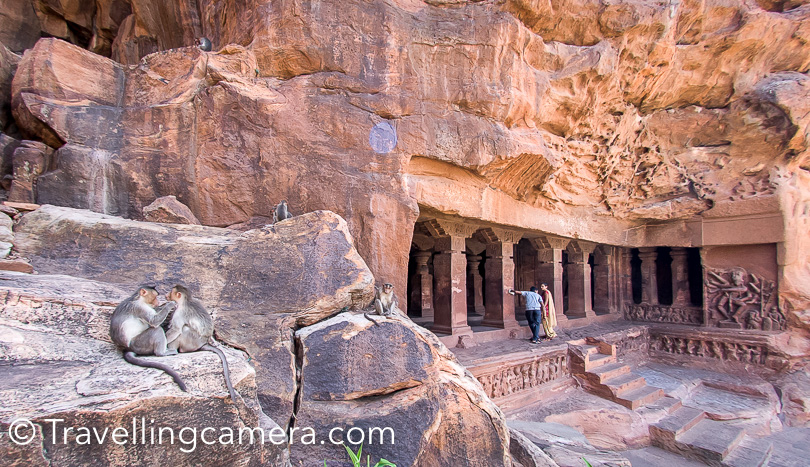

Badami is in Bagalkot District of Karnataka State.  Badamai Cave Temples are most popular places to explore in this region. They are special because all these 4 temples are carved out of huge red Stone Mountain in Badami. Out of these 4 cave temples in Badami, 3 are dedicated to Shiva and Vishnu, while the 4th one is dedicated to Jainism. Each cave temple of Badami has brilliant carvings and intricate art-forms on walls, pillars & ceilings  It's hard to imagine how people would have carved temples & god forms to depict stories.   Wondering if there are artists in India who can create such things today and if government or other organisations are supporting these initiatives. While sitting at home and seeing these things on TV may not create much excitement, but when you are there lot of such thoughts cross your mind and you feel like there must be some ways in modern times to leverage such brilliant skills of artists/specialists.

Why Visit Badami

Badami Feels Like an Open-Air Museum Without the Crowds

Unlike Rajasthan’s heavily commercialized forts or the overwhelming tourist density of Hampi, Badami still feels intimate. You can sit alone inside a 1400-year-old cave temple and hear only the sound of wind moving through stone corridors.

For luxury travelers seeking authenticity rather than excessive opulence, Badami offers something increasingly rare in India: silence around heritage.

Cave 3 also shows fresco paintings on the ceiling, some of which are faded and broken. These are among the earliest known surviving evidence of fresco painting in Indian art. The Hindu god Brahma is seen on Hamsa vahana in one of the murals. The wedding of Shiva and Parvati, attended by various Hindu deities is the theme of another.    Vellamma temple in Badami is another place to visit in this area.      After exploring Badami, I am most impressed by Cave Temples.     You can notice a mosque between these 2 rocky mountains. It's called Mosque of Badami in Karnataka state of India.  This is close to the entry gate of Cave temples and the bus stand.

The Landscape Is Unforgettable

The dramatic sandstone cliffs are among the biggest reasons to visit. The entire town appears carved into a giant geological sculpture. The textures, colors, shadows, and natural rock formations make Badami visually extraordinary for photographers.

It’s One of India’s Most Important Ancient Capitals

Badami was once the capital of the Early Chalukya dynasty between the 6th and 8th centuries. The architecture here shaped temple design across southern India for centuries afterward.

Perfect for Slow Cultural Travel

Badami encourages observation:

  • Watching priests prepare temples at dawn
  • Listening to local legends
  • Photographing changing light on stone surfaces
  • Exploring village life around the monuments
  • Savoring simple Karnataka meals

This is not a destination you rush through.


Badami Fort was built by Tipu Sultan in 18th century and it has few watchtowers and 2 shiavalayas. Few other essential things include Durga Temple, Lad Khan Temple, Ravanaphadi Cave Temples, Huchimalli Temple, Meganagudi group of temples, Gowda Temple & lot others.  Badami was earlier known as Vatapi and is a historically significant place with a lot of heritage structures.   Badami was the capital of the Chalukyas. The Badami Fort was the residence of the Chalukyan rulers. The fort was acquired and destroyed by the Pallavas later on. Much later, when Badami came under the rule of Tipu Sultan, the walls of the fort were rebuilt and several structures were added to the ancient fort complex. When you are in this part of India, you will find various structures built, rebuilt or changed by Tipu Sultan. During the trip to Badami, our guides shared a lot about how various kingdoms played role in Karnataka state, but I feel like doing a revision either through another visit or finding a good documentary on this.

Historical and Cultural Significance of Badami

Badami was originally called Vatapi, a name deeply rooted in mythology and regional history.

The Chalukyas chose this location strategically. The surrounding cliffs created natural protection, while the lake ensured water supply. Over time, Badami became a thriving center of art, architecture, religion, and trade.

One of the most fascinating aspects of Badami is the coexistence of multiple faiths:

  • Hindu cave temples
  • Jain cave temples
  • Shaivite and Vaishnavite influences
  • Ancient inscriptions in Sanskrit and Kannada

The cave temples here represent some of the earliest surviving examples of rock-cut temple architecture in southern India.
Agstya Lake is considered as a holy lake of Badami which faces famous cave temples of Badami. Apart from caves, this lake is surrounded by redstone temples & the mosque of Badami. While we were walking around the caves, this lake was clearly visible from cave-2 and beyond. It was certainly a good place for many of the co-travellers to get a photograph clicked.

The Legend of Vatapi

Local mythology connects Badami to the demon brothers Vatapi and Ilvala mentioned in Hindu texts. According to legend, Sage Agastya defeated Vatapi here, which is why the central lake became known as Agastya Teertha.

Even today, locals narrate these stories casually, blending mythology into daily life.


My First Evening in Badami

I reached Badami just before sunset after a long drive through dusty roads and scattered villages of northern Karnataka.

The first thing that struck me was the color.

Everything carried shades of red:

  • The cliffs
  • The temple walls
  • The dust on the streets
  • Even the evening light itself

Children were flying kites near Agastya Lake while pilgrims climbed the steep stone steps toward the cave temples. Somewhere nearby, devotional songs echoed through loudspeakers. A group of elderly men sat near a tea stall discussing politics in Kannada.

I remember stopping midway on the steps leading to Cave Temple 2 and simply turning around.

The town below looked cinematic.

Temple spires rose beside the lake. Smoke curled from small homes. The cliffs formed enormous natural frames around the landscape. It felt less like a tourist destination and more like stepping into an ancient painting.

That evening alone justified spending extra days in Badami.


Bhuthanatha Temples is located around the beautiful Agstya lake in Badami and it's mainly dedicated to lord Shiva. This temple is made up of sandstone, which is locally available in Badami area of Karnataka state in India.   There are two major temples here in this complex of Bhuthanatha Temples. First temple on the east side of the lake is called the Bhutanatha temple which has a superstructure that resembles early South Indian style or North Indian style with its open mantapa extending into the lake.    Second temple in this complex is on the north-east side of the lake which is called the Mallikarjuna group of temples. Mallikarjuna temples have a stepped superstructure which is commonly found in Kalyani Chalukya constructions.   Bhutanatha temple contain architectural forms from different periods as it's built over the years and changed by different dynasties who ruled Badami in the past.

Best Things to Do in Badami

Explore the Famous Badami Cave Temples

Cave Temple 1

Dedicated primarily to Lord Shiva, Cave 1 is known for its iconic Nataraja sculpture featuring 18 dancing poses.

The carvings remain astonishingly expressive despite centuries of erosion.

Photography Tip

Visit early morning when sunlight enters the cave softly from the east-facing entrance. The shadows create dramatic depth around the pillars.


Cave Temple 2

This cave focuses largely on Vishnu avatars and celestial imagery.

Compared to Cave 1, the atmosphere here feels quieter and less crowded. The elevated viewpoint overlooking Agastya Lake is one of the finest compositions in Badami.

Ideal Lens

A wide-angle lens works beautifully here for capturing layered compositions of pillars, lake reflections, and sandstone cliffs.


Cave Temple 3

This is the masterpiece of Badami.

Built in 578 CE, Cave 3 contains some of the finest Chalukyan carvings in India. The scale, detailing, and preservation levels are remarkable.

You’ll notice:

  • Intricate ceiling artwork
  • Massive Vishnu sculptures
  • Elegant stone columns
  • Ancient inscriptions

Spend time observing the ceiling patterns carefully. Many travelers ignore them completely.


Cave Temple 4

The final cave is Jain in influence and significantly calmer.

There is a meditative stillness here, especially during late afternoons. The minimalist carvings contrast beautifully with the more elaborate Hindu caves.

This cave also offers excellent panoramic views.


Open Air Museum is another interesting place in Badami which has 4 separate section and 2 of them are open air. This museum has plenty of things from mythological & pre-historic era. This part of South India has certainly lot to explore & impress.

Walk Around Agastya Lake

One of the simplest yet most rewarding things to do in Badami is simply walking around Agastya Lake.

The lake reflects changing colors throughout the day:

  • Blue during early mornings
  • Golden at sunrise
  • Fiery orange during sunset

The Bhoothanatha Temple complex beside the lake becomes especially photogenic during twilight.

Hidden Observation

Most tourists leave after visiting the caves. Stay back near the lake until dusk. The atmosphere transforms completely once crowds disappear.


Visit Bhoothanatha Temple

Set partially beside the water, Bhoothanatha Temple feels deeply atmospheric.

Unlike heavily decorated temples elsewhere, its beauty comes from placement and mood.

During monsoon months, the temple reflection in the lake creates stunning mirror images.

Photography Perspective

Use the temple as a foreground element while capturing the cliffs behind it during golden hour.


Climb to the Upper Shivalaya

Many visitors skip this climb, which is unfortunate because it offers one of the best panoramic views in Badami.

The route itself is memorable:

  • Ancient stone staircases
  • Wind-carved cliffs
  • Hidden rock formations
  • Scattered shrines

At the top, the town unfolds dramatically below.

Best Time

Sunrise.

The first light hitting the red sandstone cliffs creates extraordinary contrast.


Explore the Lower Shivalaya

Smaller and less visited than the upper temple, this structure offers quiet corners perfect for slow observation.

You’ll often encounter local devotees rather than tourists here.


Discover the Archaeological Museum

Though compact, the museum provides important context for understanding Chalukyan art and iconography.

You’ll find:

  • Sculptures
  • Inscriptions
  • Temple fragments
  • Historical artifacts

Visiting the museum before exploring the caves helps decode many carvings later.


Wander Through Old Badami Streets

Some of the most meaningful travel moments happen away from monuments.

Walk through residential lanes early morning:

  • Women drawing rangoli outside homes
  • Vendors selling jasmine flowers
  • Small tea stalls steaming in cool air
  • Elderly locals chatting beside temples

Badami’s everyday life is as fascinating as its heritage structures.
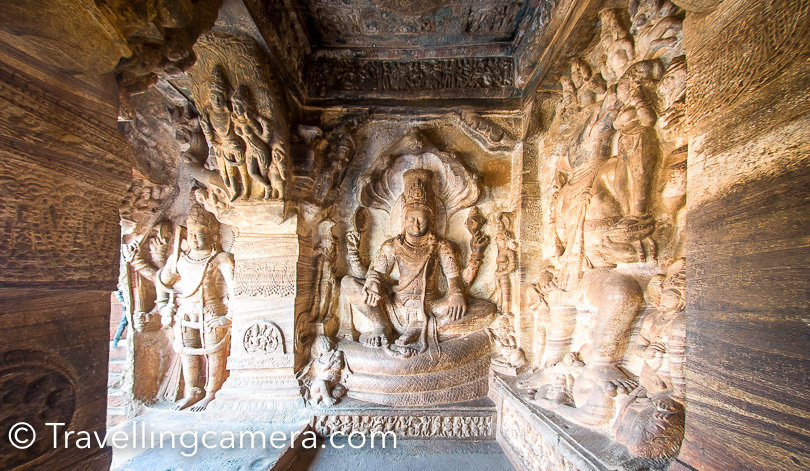

In above photograph, Vishu is sitting on Adisheesha. This is clicked at Cave temples of Badami.  Bhanshankari Temple is also located in Bagalkot district of Karnataka. This is considered as one of the important shrines in Karnataka state of India.

Hidden Gems and Lesser-Known Experiences in Badami

Sunset from the North Fort Area

Most travelers crowd near Agastya Lake during sunset. Instead, climb toward the old fortification walls.

The elevated perspective offers:

  • Wide valley views
  • Fewer people
  • Better sunset compositions

The landscape glows intensely during the final 20 minutes before sunset.


The Ancient Granaries

Scattered around Badami are remnants of old granary structures carved into rock formations.

These often go unnoticed but reveal how strategically planned the ancient capital once was.


Village Interactions Outside Town

Drive slightly outside Badami toward nearby villages and you’ll encounter:

  • Traditional farming communities
  • Ox-driven carts
  • Handmade jaggery production
  • Rural temple festivals

This rural cultural layer adds depth to the Badami experience.


Cave Acoustics

One fascinating detail rarely discussed is the acoustic engineering inside some cave sections.

Try speaking softly inside the inner chambers and notice how sound behaves differently across carved surfaces.


Vellamma temple in Badami is another place to visit in this area.    After exploring Badami, I am most impressed by Cave Temples.

Best Photography Spots in Badami

1. Cave Temple Staircases

Excellent for:

  • Leading lines
  • Human subjects
  • Framed compositions

Morning shadows work particularly well.


2. Agastya Lake Reflection Point

Best during:

  • Early morning
  • Post-monsoon evenings

Carry a tripod for low-light reflections.


3. Bhoothanatha Temple at Blue Hour

This is perhaps Badami’s most photogenic moment.

After sunset, the sandstone cliffs retain warm tones while the sky turns deep blue.


4. Upper Shivalaya Viewpoint

Perfect for:

  • Drone photography
  • Wide landscape shots
  • Sunrise panoramas

5. Street Photography in Local Markets

Badami’s markets remain wonderfully unpolished and authentic.

Seek permission respectfully before photographing locals closely.


Photography Tips for Badami

SituationBest TimingRecommended Lens
Cave interiorsEarly morningWide-angle
Landscape shotsSunrise/Sunset24-70mm
Street photographyMorning markets50mm prime
Temple reflectionsBlue hourTripod + wide lens
Cliff texturesLate afternoonTelephoto

Additional Photography Advice

  • Avoid harsh midday sunlight inside caves
  • Carry lens cleaning cloths because sandstone dust settles quickly
  • Monsoon season enhances colors dramatically
  • Include human subjects for scale against massive rock formations

You can notice a mosque between these 2 rocky mountains. It's called Mosque of Badami in Karnataka state of India.  This is close to the entry gate of Cave temples and the bus stand.

Local Food Experiences in Badami

Badami’s food scene is simple rather than luxurious, but deeply satisfying.

Try Traditional North Karnataka Meals

Expect:

  • Jolada rotti
  • Ennegayi
  • Shenga chutney
  • Yennegai curry
  • Local lentil preparations

The flavors are earthy, spicy, and robust.


Small Local Eateries Are Often Better Than Fancy Restaurants

Some of the best meals in Badami come from tiny family-run establishments with limited menus.

Observe where locals eat during lunchtime.


Morning Tea Culture

One of my favorite experiences was drinking strong sweet tea beside the market while watching the town slowly wake up.

Travel memories are often built around ordinary moments like these.


Human Stories and Local Conversations

A local guide once pointed toward the cliffs and said:

“Stone remembers everything.”

That sentence stayed with me throughout the trip.

In Badami, history does not feel trapped inside museums. It lives in conversations, rituals, and landscapes.

An elderly priest near Bhoothanatha Temple explained how seasonal water levels affect temple reflections differently each year. A tea vendor discussed changing tourism patterns after social media photography trends increased interest in Badami.

These conversations transformed the destination from a historical site into a living cultural space.


Agstya Lake is considered as a holy lake of Badami which faces famous cave temples of Badami. Apart from caves, this lake is surrounded by redstone temples & the mosque of Badami. While we were walking around the caves, this lake was clearly visible from cave-2 and beyond. It was certainly a good place for many of the co-travellers to get a photograph clicked.

Best Time to Visit Badami

October to February (Ideal Season)

This is the best period for:

  • Comfortable weather
  • Heritage walks
  • Photography
  • Temple exploration

Temperatures remain pleasant.


Monsoon Season (July to September)

Badami becomes visually spectacular during monsoon:

  • Richer cliff colors
  • Greener surroundings
  • Dramatic skies

However, steps may become slippery.


Summer (March to June)

Can become extremely hot during afternoons.

If visiting in summer:

  • Explore early mornings
  • Rest during midday
  • Resume sightseeing after 4 PM

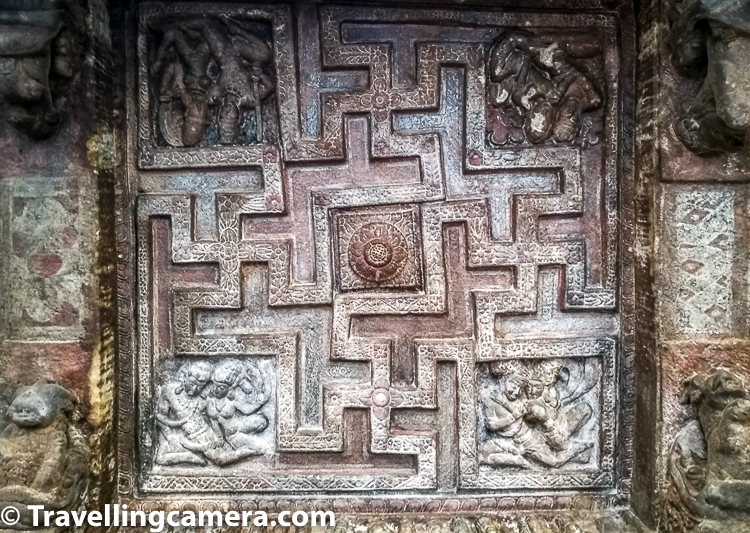
If you notice, there are various things designed on roof-top as well in Badami. I noticed Brahma on Hamsa in cave-3 on the ceiling. We have shared some of the ceiling photographs at the bottom of this blogpost.

How to Reach Badami

By Air

Nearest airports:

  • Hubballi
  • Belagavi

By Train

Badami Railway Station connects with several Karnataka cities.


By Road

Badami is well connected by road from:

  • Bengaluru
  • Hubballi
  • Hampi
  • Bijapur

A road trip through northern Karnataka works beautifully for slow travelers.


Aihole in this region is a store of temples & heritage. Aihole has plenty of temples and ruins spread over the town and that makes it very special. It's also advisable to accompany a guide who can share about Aihole it's history and how it transformed over a period of time.   During this post we also promised about sharing some of the most stunning ceilings we saw in Badami region. So make sure you look up when you are visiting these places in Badami.

Where to Stay in Badami

Luxury and Premium Stays

Luxury in Badami is understated rather than extravagant.

Look for:

  • Heritage-style properties
  • Lake-facing rooms
  • Boutique eco-resorts

Mid-Range Options

Several comfortable hotels exist near the cave complex and bus stand area.

Choose properties with:

  • Early breakfast availability
  • Rooftop views
  • Parking access

Slow Travel Recommendation

Stay at least:

  • 2 nights minimum
  • 3 nights ideal for photographers

Budget Tips for Badami

  • Hire local guides selectively for deeper historical understanding
  • Use auto-rickshaws for short distances
  • Eat local meals instead of hotel buffets
  • Combine Badami with Aihole and Pattadakal for better value

Creative Ceilings are one of the favourites of Travellingcamera and we have been sharing some posts specially dedicated to such creativity. In this blogpost we are sharing about carved Ceilings we saw at Badami Cave temples in Karnataka state of India. Most of these are influenced by religious faith and beliefs.  We loved the Brahma on Hamsa in cave-3 on the ceiling but not just that.

Suggested 3-Day Itinerary for Badami

Day 1

  • Arrive in Badami
  • Sunset at Agastya Lake
  • Explore Bhoothanatha Temple

Day 2

  • Sunrise at Upper Shivalaya
  • Explore cave temples slowly
  • Visit museum
  • Evening street photography

Day 3

  • Day trip to Pattadakal and Aihole
  • Rural village exploration
  • Sunset from fort walls

Responsible Travel Tips

  • Avoid touching carvings inside caves
  • Dress modestly near temples
  • Do not litter around Agastya Lake
  • Respect local worship practices
  • Hire local guides to support community livelihoods

Badamai Cave Temples are most popular places to explore in this region. There are 4 cave temples here and 3 are dedicated to Shiva and Vishnu, while the 4th one is dedicated to Jainism. Each temple has brilliant carvings and intricate art-forms. It's hard to imagine how people would have carved temples & god forms to depict stories. Wondering if there are artists in India who can create such things today and if government or other organizations are supporting these initiatives.     Note the dancing shiva in the first photograph which is clicked near cave-1 in Badami.     Time needed to explore Cave Temples : 2-3 hrs  Entry Ticket Fee : 5 Rs for Indians and 100 Rs for Foriegners ($1.5)

Common Mistakes to Avoid in Badami

Rushing Through in Half a Day

Badami deserves time.


Ignoring Early Mornings

The town feels completely different at sunrise.


Visiting Only the Main Caves

Explore viewpoints, lakeside paths, and quieter temples too.


Underestimating the Heat

Carry water constantly, especially outside winter months.


Badami Fort was built by Tipu Sultan in 18th century and it has few watchtowers and 2 shiavalayas. Few other essential things include Durga Temple, Lad Khan Temple, Ravanaphadi Cave Temples, Huchimalli Temple, Meganagudi group of temples, Gowda Temple & lot others.      Timings - 6am to 6pm    Bhuthanatha Temples is located around the beautiful Agstya lake in Badami and it's mainly dedicated lord Shiva. This temple is made up of sandstone, which is locally available in Badami.

FAQs About Things to Do in Badami

Is Badami worth visiting?

Absolutely. Badami combines ancient architecture, dramatic landscapes, cultural depth, and photography opportunities in a way few Indian destinations do.


How many days are enough for Badami?

Two to three days are ideal for a meaningful experience.


What is famous in Badami?

Badami is famous for:

  • Rock-cut cave temples
  • Chalukyan architecture
  • Red sandstone cliffs
  • Agastya Lake
  • Heritage landscapes

Is Badami good for photography?

Yes. It is one of the most visually rewarding heritage destinations in India.


Can Badami be visited with Hampi?

Yes. Many travelers combine:

  • Hampi
  • Badami
  • Pattadakal
  • Aihole

into a larger Karnataka heritage circuit.


The ceilings show Vedic deities such as Agni and Indra, along with Brahma, Vishnu and Shiva. Other deities displayed include love god and goddess Kama and Rati respectively, as well as Nayikas with various emotional expressions. The carvings show the same vahana for the various gods and goddesses that are found in contemporary Hinduism. Evidence of pigment remains have survived and are visible in the ceiling. It is likely that the ceiling was elaborately painted like those in Ajanta Caves of Maharashtra.    Open Air Museum is another interesting place in Badami which has 4 separate section and 2 of them are open air. This museum has plenty of things from mythological & prehistoric era. This part of South India has certainly lot to explore & impress.     Aihole in this region is a store of temples & heritage. Aihole has plenty of temples and ruins spread over the town and that makes it very special. It's also advisable to accompany a guide who can share about Aihole it's history and how it transformed over a period of time.

Badami is not loud about its beauty.

It does not overwhelm visitors with massive tourism infrastructure or theatrical presentation. Instead, it quietly invites curiosity.

The longer you stay, the more rewarding it becomes.

You begin noticing details:

  • Wind patterns across cliffs
  • Temple reflections changing with light
  • Conversations between pilgrims
  • Textures of ancient stone surfaces
  • Silence inside cave chambers

And perhaps that is Badami’s greatest strength.

It teaches you to slow down.

In an era of rushed itineraries and social-media-driven travel, Badami still rewards patience, observation, and genuine curiosity. For photographers, history lovers, cultural travelers, and anyone seeking depth over spectacle, this ancient Chalukyan capital remains one of Karnataka’s most meaningful journeys.


Related Blogposts - 

During recent trip to Pong Dam in Himachal Pradesh, we also thought of visiting Ellora of Himachal Pradesh - Masroor Rockcut Temple. This was approximately 12 kilometers from Nagrota Suriyan and comes on the way to Dharmshala. Let's have a quick Photo Journey to Masroor Temple in Kangra Region of Himachal Pradesh, India.Here is first view of Masroor Temple we get from the neighboring road.Masrur is 32 kilometers from Kangra on Nagrota Surian link road and is famous for remarkable group of rock cut temples. They form a group of 15 monolithic rock cut temples in the Indo-Aryan style and amazingly carved. These awesomely ornamented cave temples are the only rock shrines in the northern part of India.The main shrine contains three stone images of Ram laxman and Sita but the presence of the figure of Shiva in the center of the lintel affords a strong presumption that the temple was originally dedicated to Mahadeva.Here is the what we exactly see after climbing up few stairs from the road. Masroor Temple is on left side, which is surrounded by gated boundary. After 100 steps, there is an entry gate for this temple.  Archaeological Survey of India maintains this site and a ticket of 5 Rs is applicable for each entry inside the Temple.Masroor Rock Temple being located in a sanctuary area of Pong Dam, it's away from ecological threats, but now the focus is on developing a tourism and conservation mechanism that protects it from increase in tourist inflow. In recent times Himachal Pradesh Tourism Department has been successful in making this place visible on various travel maps of India. Now people know this place and plan in their itinerary during any trip to Mcleodganj, Dharmshala, Palampur or Kangr Few days back Light shows were organized during evenings at Masroor Rockcut Temple and Himchal's Chief Minister Mr. Prem Kumar Dhumal was also preset with other important folks of the state. This shows genuine interest of State Government to conserve this place and  make it accessible for Tourists in Himachal Pradesh. State Government is regularly meeting with Archaeological Survey of India to better plan the growth of this placeBuses are frequent from Kangra/Dharmshala to Nagrota Suriyan and Masroor is just 3 kilometers away from this route. We exactly need to get down at Peer Bindli station. From here Masroor Temple is just 3 kilometers, which is a decent walk in hills. If not interested in walking, taxis are also available around the place. Few buses go till temple but need to wait. In Morning there is a bus around 9:10 am, 10:15 am and 11:30 am etc.. Since gap is of approximately 1 hour, one can easily walk till temple and reach in 30 minutes. If you walk, you will see lot of colorful birds on the way. There is a special mention about Masroor Rockcut temples on Himachal Tourism Website - Unforgettable Himachal !!! As of now, nearest place to stay is Kangra or Nagrota Suriyan. There are lot of lots available in Kangra, as it's a decent town around this place and Nagrota has a HPPWD Guest-House. State Government is trying to work with local folks to think about Home Stay Options. Himvani talks about some plans of government to promote Tourism in Masroor and Pong region - HerMasroor Temple is located on a Hill top from where marvelous view of Dhauladhar Mountain Ranges can be seen. We visited this place twice during two days and will share some sunset photographs from this place. Snow Capped hills of Dhauladhar Himalayas look amazing in Sunset colors. Mountains look pinkish as if all of them are colored for this special moment.Here is a Photograph showing reflection of few of the temples in this campus. There is a water pond in front of Masroor Rockcut Temples. During day time,  clear reflection of Masroor Monolithic temple can be seen in this water pond. Here is a another Photograph with water reflection of Masroor Rockcut Temple in Kangra District of Himachal Pradesh, India. Local panchayat of Masoor viallge is situated on left side of this location and there is Government school on the right. As of now this School is in Temple's campus area and ASI has requested State Government to move this school to another location as any construction within 100 meters of this historical temple is not allowedThere is a temple in the middle of this campus which is dedicated to Ram, Seeta and Lakshman. Above Photograph shows the same temple in Masroor Monolithic structure with one of the employee on the right. Two employees at any point of time are deputed on this location, which means 24 Hrs duty throughout the year. There are approximately 8 employees to take care of this place and all are appointed by Archaeological Survey of India.These temples are mainly double storey and the roof is accessible through add sized staircases. Height of each staircase is more than usual stairs. Some of the portions on top are bound with iron rods. It seems that water is harmful for these rocks as they seem soft and some of the parts have severe cracks and colors around those cracks made us believe that temples need more care in rainy seasoHere is a photograph of students of Government school in Masroor which is located in temple area only. This Photograph is clicked from roof top of the monolithic temples. Calm and peaceful environment around this place makes it a perfect place for school and studiesHere is a Photograph clicked from surrounding hill and shows approximately whole Temple area with Water pond in front of it.  In fact, all these temples seems to be made up of a huge hill in MasrooIn India, the rock-cut style started in the reign of the Pallava king Narsingha varman I Mahamalla (630-668 A.D.) during the first half of the seventh century .   It reached its climax in the Kailasha temples at Ellora which were taken in hand during the reign of the Rashtrakuta King Dantidurga (753- 756 A.D.) and finished during that of Krishna I (758-773 A.D.). Though rock-cut caves are common in South India, yet temples cut out of freestanding rocks, known to archaeologists and art critics, are only four in number-'Rathas of Mammalapuram', 'Kailashas at Ellora', 'temple-complex at Masrur in Kangra' and the 'Dharmnatha temple at Dhamnar', 65 miles to the South-East of Jhalra Patan in Rajasthan. The Rathas and the Kailashas are built in the Dravidian style, whereas the Masrur and Dhamnar ones are in the Nagara style. Masrur beats its Nagara rival in situation, size and execution. The Masrur complex has 15 temples, the Dhamnar has only 8. At Masrur temples not separate from it surround the central shrine, buat Dhamnar the smaller ones are entirely separate from the main one. Carvings and ornamentation at Masrur are of a much superior order than at Dhamnar and the length of the latter is one- third of the former. The Dhamnar group has been built in a pit-like hollow, whereas the Masrur group is on top of a 2500 feet high hill range. One looks below, the other looks up. One depresses, the other elates. In point of situation, Masrur beats the other two also. Ellora Kailasha are built in a pit a hundred  feet. However, Kailasha at Ellora is a supreme creation, one of the wonders of the world. (Courtesy - http://123himachal.com/temple/masroor.htmA view of Masrur Monolithic Temples from a short-cut path which connects temple with Masrur village on a hill below it.Rockcut style is much more difficult than the structural one. In Structural, the artist shapes the materiahttp://www.blogger.com/post-create.g?blogID=1036234607292296397l as s/he likes, whereas in the former the Material determines the way the artist should move, which must be a case of Masrur temples. The limitation makes an artist creation out of a rock a most difficult task and the ability with which the remote artist of seventh and eighth centuries carried out their purpose is superhuman.  Only a few of the original shikharas stand and some of the most beautifully carved panels are now in the state museum, Shimla. The main shrine dominates the center. Although the remote location of these temples protected them from the invading army of Mahmud Ghazni and their stone construction prevented severe damage in the 1905 earthquake.  This earthquake had some severe impact in Kangra region of Himalayan StateA small room is built on the entry of Masrur Temple, probably for ticket distribution. It's not in use and tickets are available on main entry gate of this temple.Ellora of Himachal Pradesh maintained by Archaeological Survey of India - Masroor Rockcut Temple || A Monolithic Temple in Kangra Region of Himalayan State, India


On the very first day of our stay in Wayanad, our host suggested us to trek to Edakkal Caves. 'Trekking' word did the magic and we decided to go there next day only. This Photo Journey shares some of the photographs and information around the trek & caves.We requested Sunil (our host at Treasure Trove to arrange an auto for the day. We left in the morning after breakfast and Edakkal is 15 kilometers from Meenangadi, the place where we were staying.We drove through some beautiful landscapes and beautiful sights. The mountain in above photograph looked beautiful and was shot from moving auto only. Later we realized that Edakkal caves offer another great view of the mountain from the hill top.We took some breaks on the way and soon we came a cross a diversion which lead us to 4 kilometers climb in auto, till the parking of Edakkal Caves. There is a small market at the base, where all vehicles need to be parked and then the trek starts for Edakkal Caves.The trek is concrete, but quite steep. Initially we were in hurry but realized that we should go slow. We enjoyed trekking to Edakkal caves and took some breaks on the way.After walking for 30 minutes we reached a counter where we had to buy entry tickets for the caves. Ticket costed 20 Rs per person and 30 Rs for camera. Please do read message in above photograph. One needs to deposit 20 rs if you want to take water bottle beyond this point. They paste a sticker on the bottle and you can get back the money when you come back. This model really works in Kerala and they have implemented it in most of the tourist destinations in Kerala.These stickers are pasted on the bottles. People bring back their empty bottles to the counter and get back the deposited money.These stairs start from the ticket counter till main caves of Edakkal.There are various shops on the way to have some snacks or buy stuff for home. Lot of Kerala products are sold in these shops - tea, coffee, spices, coconut products, herbal soaps etc.There are good number of stairs from ticket counter till caves. The main cave is on the top of this hill and one needs to trek through other smaller caves. There are folks around this hill who ensure smooth movement of crowd. This is quite a crowded place and discipline is important. Mostly people walk in queue and ensure that things happen smoothly.This is the entry to first cave at Edakkal. Above photograph is clicked from the cave. It was good to see a disciplined movement of folks and of-course credit goes to the local administration for appropriate arrangements in terms of marking & people to help.Now the trek continued through caves and few more steep climbs till we hit the final cave. Steel stairs are installed inside these caves. Edakkal caves lie at around 1200 metres above sea level on Ambukutty Mala, beside an ancient trade route connecting the high mountains of Mysore to the ports of the Malabar coast .Kids expressions in above photograph shows the level of next climb :). Yes, it was getting steeper. Next few climbs exposed everyone to some of the beautiful sights of Wayanad.Finally we hit the main cave which has varied designs carved on all the rocks.  Edakkal Caves are two natural caves which are approximately 24 kilometers from Kalpetta in the Wayanad district of Kerala. This lies around India Western Ghats.Inside the caves are pictorial writings. These signs are believed to date to at least 6000 BC,  from theNeolithic man, indicating the presence of a prehistoric civilization or settlement in this region. The Stone Age  carvings of Edakkal are rare and are the only known examples from south India.Check out wikipedia to know more about Edakkal caves.These are the stairs to come down on the back journey from Edakkal caves to the base. It was a nice experience to be there at Edakkal caves and enjoyed some of the amazing views from the top of this hill. It's a proper tourist spot so it's always crowded.A Daunting Trek to Edakkal Caves in Wayanad || Kerala Diaries


During our road-trip from Noida to Rameshwaram, we took a stop at Belum Caves and it was worth taking the detour through not so good roads like main highways. Unfortunately, rains were happening during that time and hence roads were not in their best shape, but still landscapes on the way were quite interesting. Belum caves are beautiful and worth exploring. Through this blogpost we shall share more about Belum caves, timings, ticket price, guide charges, length of the caves and other details like if it's worth going till the end of the Belum caves. Let's get started.Belum Caves in Andhra Pradesh - The second largest cave system in Indian subcontinent


When we shared our Travel Guide for Borra Caves, we briefly talked about how it's related to the faith of local tribes in this region of Andhra Pradesh state of India. There are various legends related to Borra caves but like many other places in India, there is a common theme about Faith in every legend.  Borra Caves and the Faith - An interesting experience from Andhra Pradesh state of India


Nestled in the heart of Bhubaneswar, the capital city of Odisha, lies a historical treasure waiting to be discovered. Udayagiri, which translates to "Sunrise Hill," is a complex of rock-cut caves that transports visitors to a bygone era of spirituality, artistry, and architectural brilliance. As the sun rises and casts its warm embrace over these ancient structures, one can't help but feel a deep connection to the rich history that dwells within.Unveiling Udayagiri: A Journey into Ancient Marvels in Bhubaneswar, Odisha


During my visit to Cherrapunji, the place I loved the most was Mawsmai Caves. It's not like there are not other beautiful places in Cherrapunji but these caves are certainly out of the world and this blogpost would share why do I say that. Sawsmai caves of Cherrapunji are very popular amongst tourists visiting Meghalaya state of North-East India. Mawsmai Caves - A awesome tourist-spot with unbelievable surprises at each step in Cherrapunji, Meghalaya (India)


Creative Ceilings are one of the favourites of Travellingcamera and we have been sharing some posts specially dedicated to such creativity. In this blogpost we are sharing about carved Ceilings we saw at Badami Cave temples in Karnataka state of India. Most of these are influenced by religious faith and beliefs.  We loved the Brahma on Hamsa in cave-3 on the ceiling but not just that.Amazing Stories of Creative Ceilings of Badami Cave Temples in Karnataka ( One state Many Worlds)


Comments

Trending Post Today !

How to reach Kasol/Malana and top things to do around this stunning hill-station of Himalayan State of India

Main places to see & Top things to do around Dalhousie : Stunning Hill Station in Himalayan State of India