

Introduction: Andhra Pradesh Is More Than a Pilgrimage Destination
If you are searching for the places to see in Andhra Pradesh, it is easy to begin with Tirupati and stop there. That would be a mistake.
Andhra Pradesh is one of those Indian states where the landscape keeps changing almost without warning. One day you can be walking beneath the elaborate stonework of a Vijayanagara temple; the next, standing above a dramatic gorge carved by the Penna River. Farther east, the Eastern Ghats descend toward beaches and fishing villages, while the Krishna and Godavari river systems create an entirely different landscape of paddy fields, wetlands and waterways.

For a photographer, that variety is the real attraction.
There are temples where the morning light falls across stone pillars like a carefully arranged studio set. There are Buddhist ruins that become atmospheric just after sunrise. There are forested hills around Araku where mist hangs between coffee plantations. And then there is Gandikota, where the Penna River has carved a canyon that feels almost out of place in South India.

A trip to Andhra Pradesh works best when you slow down. Don't treat the state as a checklist of monuments. Give yourself time to watch a temple town wake up, eat breakfast at a small local restaurant, talk to a shopkeeper, photograph farmers returning from the fields, or simply wait for the light to change.
That is when Andhra Pradesh begins to reveal itself.

Why Visit Andhra Pradesh?
Andhra Pradesh is unusually rewarding because it brings together several different kinds of travel without requiring you to choose only one.
You can combine:
Ancient temples and Dravidian architecture
Buddhist archaeological sites
Eastern Ghats landscapes
Beaches and coastal villages
Wildlife and birdwatching
River journeys
Forts and forgotten ruins
Traditional crafts
Kuchipudi dance and Telugu culture
Exceptionally diverse regional food
Road trips through relatively uncrowded landscapes

The state's current tourism strategy itself identifies Visakhapatnam, Tirupati, Araku Valley, Rajahmundry, Amaravati, Srisailam and Gandikota as major tourism hubs, reflecting just how varied the destination is.
But the more interesting experiences often lie between those hubs.
These are the moments that turn a trip into a travel story.

Historical and Cultural Significance of Andhra Pradesh
Andhra Pradesh's history is layered rather than linear.
The region has been shaped by the Satavahanas, Ikshvakus, Pallavas, Eastern Chalukyas, Kakatiyas, Vijayanagara rulers, Qutb Shahi rulers and several later powers. Their influence remains visible in temples, sculptures, forts, inscriptions and archaeological sites.

But one of the state's most fascinating historical stories is its connection with Buddhism.
Government tourism documents identify Andhra Pradesh as an important birthplace and early centre of Mahayana Buddhist traditions, with more than 40 Buddhist monuments and archaeological sites across the state. Amaravati, Nagarjunakonda and the Buddhist sites around Visakhapatnam form particularly important clusters.

Amaravati: Where Buddhism and Hinduism Meet
Amaravati is particularly fascinating because it isn't simply an archaeological destination.
The area is associated with an ancient Buddhist centre and the famous Amaravati Stupa, while the Amareswara temple remains an important Shaivite pilgrimage site. The historical roots of Amaravati stretch back more than two millennia, and the area was associated with the Satavahana period.

Stand here for a while and the interesting thing isn't just what survives.
It is what doesn't.
Much of ancient history exists today as fragments: carved stone, broken railing pieces, archaeological mounds and museum objects. Photography becomes less about recording a monument and more about reconstructing an atmosphere.

Places to See in Andhra Pradesh: The Experiences Worth Building a Trip Around
1. Araku Valley: Mist, Coffee and the Eastern Ghats
Araku Valley is one of the best places to begin if you want a different side of Andhra Pradesh.
The valley sits in the Eastern Ghats and feels completely different from the coastal plains. The journey itself is part of the attraction, particularly if you approach from Visakhapatnam by rail or road.
The landscape changes gradually. Concrete gives way to forest. The air becomes cooler. Hills appear behind hills.
Araku is known for coffee plantations, tribal culture, viewpoints and nearby attractions such as Borra Caves.
For photography, early morning is the obvious choice, especially when mist settles into the valleys. But don't leave your camera away after sunrise. Overcast conditions can actually produce beautiful, low-contrast images of the hills and plantations.

Don't rush Araku
Spend at least two nights if possible.
The temptation is to arrive, photograph a viewpoint, visit a cave and leave. Instead, walk through a plantation. Look for workers sorting coffee beans. Photograph hands rather than posed portraits. Ask before photographing people.
The human stories are often stronger than the landscape.
2. Borra Caves: A Different Kind of Landscape
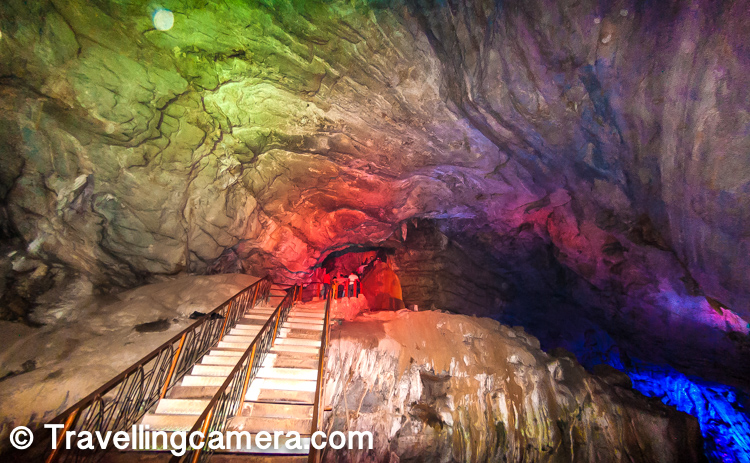
Borra Caves are among the most unusual natural attractions in the Araku region.
Inside the limestone caves, stalactites and stalagmites create strange shapes that have inspired plenty of local interpretations and stories.
The visual challenge here is interesting.
Don't simply photograph the biggest formation.
Look for silhouettes, layers and human scale. A person standing several metres away can suddenly reveal the enormous size of the cavern.
Use a tripod only where permitted and practical, and avoid touching formations. Cave environments are fragile, and even seemingly harmless contact can damage surfaces.
The official Andhra Pradesh Tourism Corporation lists Araku, Borra Caves and Rushikonda among its prominent tourist attractions.
3. Visakhapatnam: Where City and Sea Meet
Visakhapatnam, usually called Vizag, is often treated simply as a coastal city.
For photographers, it deserves more attention.
The city combines beaches, hills, fishing activity, urban life, shipyards and coastal viewpoints.
Rushikonda is the obvious starting point, but don't restrict yourself to postcard views. Visit the coast early and watch fishing boats return. The strongest images often happen before the beach becomes busy.
Photography tip
At sunrise, try shooting toward the water with a wide lens. On hazy mornings, switch to a longer focal length and isolate boats, walkers and layers of coastline.
Late afternoon is better for portraits and street scenes because the light becomes softer.

4. Gandikota: Andhra Pradesh's Canyon Country
Gandikota may be the most visually dramatic destination in the state.
The Penna River has carved a deep gorge through the landscape, while the historic Gandikota fort sits above it.
The name itself comes from Telugu words meaning gorge and fort. The fort's history stretches back to at least the medieval period, and the area passed through the hands of several dynasties and powers.
There is another fascinating detail for history lovers: French traveller and gem merchant Jean-Baptiste Tavernier wrote about Gandikota during his travels in the Deccan. Local historical accounts also associate the region with diamond mining.
This is one of those places where you should arrive before sunset and resist the urge to immediately take photographs.
First, walk.
The gorge changes character as the sun drops. The sandstone and quartzite surfaces pick up warm tones, shadows become longer and the river far below becomes a thin visual line.
The official district tourism site specifically highlights sunrise and sunset from the Penna gorge viewpoint.
Photography composition
Try three approaches:
Ultra-wide landscape: exaggerate the scale of the gorge.
Telephoto compression: isolate bends in the river and rock layers.
Human-scale composition: include a person near the cliff edge, safely away from dangerous drops.
The third approach often communicates scale better than an enormous panoramic frame.

5. Lepakshi: Where Architecture Becomes Sculpture
Lepakshi is one of the most rewarding places in Andhra Pradesh for anyone interested in architecture and photography.
The Veerabhadra Temple is a remarkable example of Vijayanagara architecture. Among its most famous features is the so-called Hanging Pillar, which does not fully touch the ground. The temple also contains extensive sculptural and painted decoration.
Then there is the enormous monolithic Nandi outside.
The scale is difficult to appreciate until you stand beside it.
Lepakshi is also on UNESCO's Tentative List as an example of the Vijayanagara sculpture and painting tradition.
The photographer's advantage
Don't photograph the temple only from the front.
Look upward.
Look along rows of pillars.
Look for repeated geometric patterns.
Look for tiny sections of surviving painting.
Early morning and late afternoon are ideal for exterior architecture. Midday, although harsh outside, can work surprisingly well for the darker interiors because strong shafts of light can create contrast.

6. Tirupati and Tirumala: Go Beyond the Darshan Queue
Tirupati is one of India's most important pilgrimage centres, and the Tirumala temple attracts enormous numbers of devotees.
But there is another Tirupati.
Walk through the city early in the morning. Observe flower sellers preparing garlands, vendors arranging coconuts and pilgrims arriving before the heat intensifies.
The pilgrimage economy is itself a fascinating subject.
Nearby, places such as Kapila Theertham, Govindarajaswamy Temple, Talakona and Pulicat offer very different experiences. The Tirupati district tourism department lists these among its attractions.
A quieter alternative: Talakona
Talakona lies in the Nallamala hills and has a waterfall about 270 feet high.
During and after the monsoon, the forest landscape becomes particularly photogenic.

7. Srisailam: Temple, Forest and River
Srisailam combines spirituality and wilderness unusually well.
The Mallikarjuna temple is one of India's twelve Jyotirlingas, while the surrounding Nallamala landscape gives the destination a strong ecological character.
For photographers, the interesting part is the contrast between devotional activity and forest landscapes.
Visit the temple area early, then spend time exploring the surrounding viewpoints and forested terrain.
Avoid turning religious rituals into photographs without permission. In places of worship, the best photograph is sometimes the one you decide not to take.
8. Amaravati and Undavalli: The Krishna River Heritage Belt
The region around Vijayawada and Amaravati makes an excellent cultural road trip.
Vijayawada provides the urban base, while Amaravati, Undavalli and the surrounding villages offer history, architecture and river landscapes.
The nearby Undavalli Caves are particularly interesting because rock-cut architecture here is experienced differently from a conventional temple.
The broader region is also important for Buddhist history, and Andhra Pradesh's tourism plans identify Amaravati and Nagarjunakonda as key elements of its Buddhist tourism circuit.

Hidden Gems and Lesser-Known Places in Andhra Pradesh
The best places to see in Andhra Pradesh aren't always the ones appearing on the first page of Google.

Kolleru Lake
Kolleru is an important freshwater wetland and bird habitat between the Krishna and Godavari river systems.
The West Godavari district administration notes that migratory birds arrive during the October-to-March period, making this an excellent destination for bird photographers.
Carry a longer lens and a lot of patience.
Bird photography here is about waiting rather than chasing.

Pulicat Lake
Pulicat Lake is India's second-largest brackish-water lagoon and stretches across Andhra Pradesh and Tamil Nadu.
The Pulicat Lake Bird Sanctuary attracts flamingos, pelicans, painted storks, herons, terns and several other species.
The October-to-March period is particularly interesting for birdwatchers.
Thimmamma Marrimanu
Near Kadiri is an enormous banyan tree locally known as Thimmamma Marrimanu.
The tree has become part of local folklore, and its canopy spreads across several acres. The district administration records the local story connecting the tree with a woman named Thimmamma and a historical sati tradition.
This is precisely the kind of place where understanding the local story adds meaning to the photograph.
Chandavaram Buddhist Site
Chandavaram is another fascinating archaeological stop. The Buddhist establishment here flourished for centuries, with the site containing sculptural traditions connected with early Buddhist art.
It is a good reminder that Andhra Pradesh's Buddhist heritage extends well beyond the famous Amaravati name.

Best Photography Spots in Andhra Pradesh
| Destination | Best subject | Ideal time | Photography approach |
|---|---|---|---|
| Araku Valley | Hills, coffee plantations, mist | Early morning | Layers and atmospheric landscapes |
| Borra Caves | Rock formations | During visiting hours | Silhouettes and human scale |
| Gandikota | Penna gorge | Sunset | Wide landscapes and telephoto compression |
| Lepakshi | Temple sculpture | Morning/evening | Details, geometry and textures |
| Tirupati | Pilgrimage life | Early morning | Street and documentary photography |
| Srisailam | Temple and forest | Morning/evening | Architecture plus environmental portraits |
| Kolleru Lake | Migratory birds | Sunrise | Long-lens wildlife photography |
| Pulicat | Flamingos and wetlands | Sunrise/sunset | Minimalist compositions |
| Visakhapatnam | Coast and fishing activity | Sunrise | Layers, silhouettes and boats |
| Amaravati | Buddhist heritage | Morning | Architectural details and textures |

Photography Tips for a Trip to Andhra Pradesh
Andhra Pradesh can be challenging photographically because the light is often strong.
A few simple habits help.
Shoot early
For temples, villages, beaches and streets, the first two hours after sunrise are often your most productive.
Use harsh light deliberately
Don't automatically hide from midday sun.
Strong shadows can work beautifully with temple pillars, carved sculptures and architectural geometry.
Carry a telephoto lens
A 70–200mm or similar lens is useful for birds, distant landscapes, details on temples and candid documentary-style photographs.
Photograph details
Andhra Pradesh is full of visual details:
Temple door handles
Stone carvings
Flower garlands
Coffee beans
Fishing nets
Old signboards
Painted trucks
Food preparation
Jewellery
Hands at work
A travel story becomes richer when you combine wide landscapes with intimate details.
Local Food: Come Hungry
A trip to Andhra Pradesh is incomplete without eating local food.
Andhra cuisine is bold, sour, spicy and often intensely aromatic.
Look for:
Gongura pachadi
Pulihora
Andhra meals
Gutti vankaya
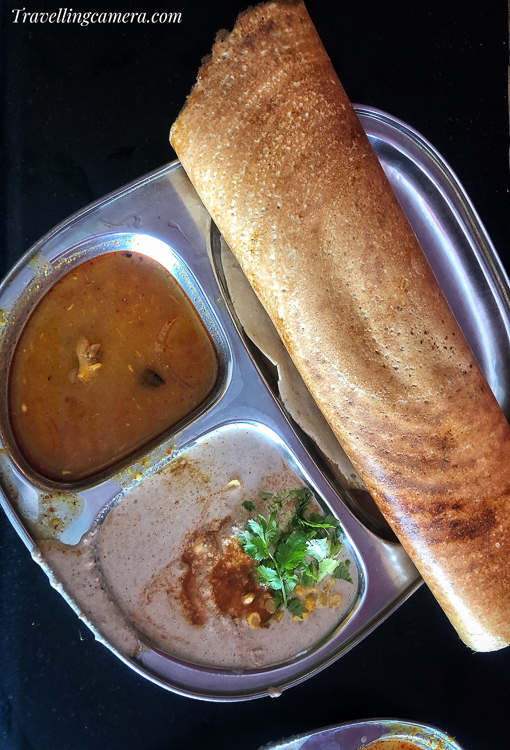
Pesarattu
Punugulu
Mirapakaya bajji
Royyala iguru
Chicken and mutton preparations
Coastal fish curries
Bobbatlu and other regional sweets
Pulihora is particularly easy to find and remains a familiar favourite in Vijayawada. The local district administration describes it as tamarind rice with a tangy flavour and traditional garnishing.

But don't judge Andhra food only by restaurant menus.
Eat where office workers eat.
Eat where bus passengers stop.
Eat a simple thali at lunchtime.
Ask what's cooked that day.
Sometimes the best meal of the trip costs considerably less than the meal recommended by a hotel concierge.

Local Conversations and Human Stories
One of the most rewarding things about travelling through Andhra Pradesh is listening.
A coffee grower in Araku may describe the changing seasons differently from a tourism brochure.
A fisherman on the Visakhapatnam coast can tell you which time of day brings the best catch.
A temple flower seller understands the rhythm of pilgrims better than any guidebook.
A shopkeeper in Lepakshi may have a personal story about the temple that doesn't appear on an information board.

This is where travel photography becomes more meaningful.
Don't approach people only as subjects.
Talk first.
Ask their name.
Ask what they are doing.
Then ask if you can make a photograph.
The resulting portrait will usually be more natural because the camera is no longer the first thing between you.

Best Time to Visit Andhra Pradesh
There isn't one perfect season for the entire state.
October to February
Generally the most comfortable period for a broad Andhra Pradesh itinerary.
This is especially useful for:
Heritage sites
Road trips
Beaches
Birdwatching
Photography
Temple visits
March to May
Hot, particularly in inland areas.
However, early mornings can still be rewarding, and fewer tourists can mean quieter heritage sites.
June to September
The monsoon transforms parts of the landscape.
Araku and forest regions can become greener, while waterfalls and reservoirs become more dramatic.
However, heavy rain can affect road conditions and travel plans.
October to March for birdwatching
Kolleru and Pulicat become particularly attractive during the migratory bird season.

How to Reach Andhra Pradesh
Andhra Pradesh is well connected by air, rail and road.
By air
Major gateways include:
Visakhapatnam
Vijayawada
Tirupati
Rajahmundry
Kadapa
Your best airport depends entirely on the itinerary.
For Araku and the northern coast, Visakhapatnam is convenient.
For central Andhra, Vijayawada works well.
For Tirupati and southern temple circuits, Tirupati is the obvious gateway.
For Gandikota, Kadapa can be useful.
By train
Rail travel can be particularly rewarding for a photographer because it allows you to see the transition from city to agricultural plains and, eventually, the Eastern Ghats.
The Visakhapatnam–Araku route is especially scenic.
By road
A car is the most flexible option if your goal is to explore lesser-known places.
For a photography-focused trip, I would strongly prefer driving over trying to connect every destination through public transport.

Where to Stay in Andhra Pradesh
Accommodation ranges from budget lodges and pilgrim accommodation to comfortable hotels and resorts.
Use larger cities such as Visakhapatnam, Vijayawada and Tirupati as bases when exploring surrounding areas.
For nature-oriented trips, staying closer to Araku, Gandikota or Srisailam gives you a major advantage: you can photograph during the best light rather than travelling two hours before sunrise.
The Andhra Pradesh Tourism Development Corporation operates hotels, resorts and other tourism infrastructure across the state.
For religious destinations, simple accommodation can often be more convenient than luxury hotels because of location.
Budget Tips for Andhra Pradesh
Andhra Pradesh can be travelled comfortably without an enormous budget.
Save money by:
Eating local meals rather than hotel food
Using trains for longer journeys
Sharing taxis for shorter excursions
Staying two nights rather than changing hotels every night
Booking accommodation in advance around major festivals
Travelling early to avoid expensive last-minute transport
Spending more time in one region instead of trying to cover the entire state
The biggest budget mistake is trying to see everything.
Andhra Pradesh is too large for that.
Suggested 10-Day Andhra Pradesh Itinerary
Days 1–2: Visakhapatnam
Explore the coast, local markets and surrounding viewpoints.
Stay near the city and photograph the coastline at sunrise.
Days 3–4: Araku Valley
Travel into the Eastern Ghats.
Visit coffee plantations and Borra Caves.
Spend at least one morning photographing the misty landscape.
Day 5: Vijayawada
Travel toward Vijayawada.
Explore the city and Krishna River landscape.
Day 6: Amaravati and Undavalli
Spend the day exploring Buddhist and Hindu heritage.
Day 7: Lepakshi
Travel toward Lepakshi and spend time with the Vijayanagara architecture.
Day 8: Gandikota
Arrive early enough to explore the fort before sunset.
Stay overnight if possible.
Day 9: Tirupati
Explore Tirupati and, if required, Tirumala.
Day 10: Talakona or Pulicat
Choose Talakona for forests and waterfalls, or Pulicat for birds and wetlands, depending on the season.
This itinerary is deliberately imperfect.
That is a good thing.
It leaves enough room for the unexpected.
Responsible Travel in Andhra Pradesh
Responsible travel here is less about grand gestures and more about small decisions.
Don't photograph people without permission.
Avoid entering restricted temple areas for photographs.
Dress appropriately at religious sites.
Don't touch sculptures or ancient carvings.
Never climb fragile archaeological structures.
Carry reusable water bottles.
Avoid plastic around beaches and forest areas.
Don't disturb birds for photographs.
Keep a safe distance from wildlife.
Support local restaurants and artisans.
Buy genuine local handicrafts rather than mass-produced souvenirs.
Respect tribal communities and don't treat them as photographic props.
The goal should be to leave a place with fewer footprints, not more.

Common Mistakes to Avoid
Trying to cover the entire state in one trip
You can't.
Choose one geographical region.
Visiting only famous temples
Andhra Pradesh has extraordinary temples, but its Buddhist heritage, forests, wetlands, beaches and forts deserve equal attention.
Arriving at Gandikota at noon
The fort is interesting throughout the day, but sunset is when the gorge becomes spectacular.
Treating Araku as a day trip
A rushed visit misses the atmosphere of the valley.
Ignoring food
Some of the most memorable experiences happen at a modest local restaurant rather than a famous attraction.
Photographing people without interaction
A few minutes of conversation can transform a random portrait into a meaningful image.
Underestimating distances
Andhra Pradesh is geographically large. Build realistic driving times into your itinerary.

FAQs: Places to See in Andhra Pradesh
What are the best places to see in Andhra Pradesh?
Some of the best places include Araku Valley, Borra Caves, Visakhapatnam, Gandikota, Lepakshi, Tirupati, Srisailam, Amaravati, Undavalli Caves, Kolleru Lake and Pulicat Lake.
How many days are enough for a trip to Andhra Pradesh?
A 7–10 day trip is enough for a focused regional itinerary, but exploring the state's major destinations comfortably requires considerably longer. For a first visit, choose either a north-coastal, central, southern or Rayalaseema-focused route.

What is the best time to visit Andhra Pradesh?
October to February is generally the most comfortable period for sightseeing, photography and road trips. For migratory birds at wetlands such as Kolleru and Pulicat, October to March is particularly useful.

Is Andhra Pradesh good for photography?
Absolutely. The state offers architecture, temples, Buddhist ruins, mountains, forests, beaches, wetlands, wildlife, food and documentary photography opportunities.
Is Gandikota worth visiting?
Yes. Gandikota combines a historic fort with a dramatic Penna River gorge. Sunrise and sunset are especially good for landscape photography.

Is Lepakshi worth visiting?
Lepakshi is one of the state's strongest destinations for architecture and photography. The Veerabhadra Temple, Hanging Pillar, intricate sculptures and massive monolithic Nandi make it particularly rewarding. The site is also on UNESCO's Tentative List.

What food should I try in Andhra Pradesh?
Try a traditional Andhra meal, gongura, pulihora, pesarattu, gutti vankaya, local seafood and regional snacks. Don't be afraid to ask a local restaurant what is freshest that day.

Is Andhra Pradesh suitable for a road trip?
Yes. A road trip is one of the best ways to explore lesser-known temples, villages, viewpoints, archaeological sites and food stops that are difficult to connect by public transport.

Final Thoughts: Leave Some Space for the Unexpected
The best places to see in Andhra Pradesh are not necessarily the ones you photograph first.
Sometimes it is a temple pillar catching a narrow beam of morning light.
Sometimes it is a coffee farmer in Araku explaining why one patch of plantation is different from another.
Sometimes it is the sudden appearance of the Penna gorge after a long drive through dry country.
Sometimes it is a plate of pulihora eaten standing beside a busy roadside restaurant.
And sometimes it is nothing more than sitting quietly near a wetland while birds cross the sky.
That is what makes a trip to Andhra Pradesh so rewarding.
The state doesn't reveal itself in one grand moment. It unfolds gradually — through architecture, food, landscape, language, faith and ordinary conversations.
For a photographer, that is perhaps the greatest gift.
You arrive looking for monuments.
You leave with stories.
Related Blogposts -

Ladakh in India: A Complete Travel Guide for First-Time Visitors

Exploring India: The Ultimate Travel Guide to Experiencing the Soul of a Timeless Civilization

What Advice Would You Give to Someone Travelling to India for the First Time?

Rajasthan State of India: A Complete Travel Guide for First-Time Visitors
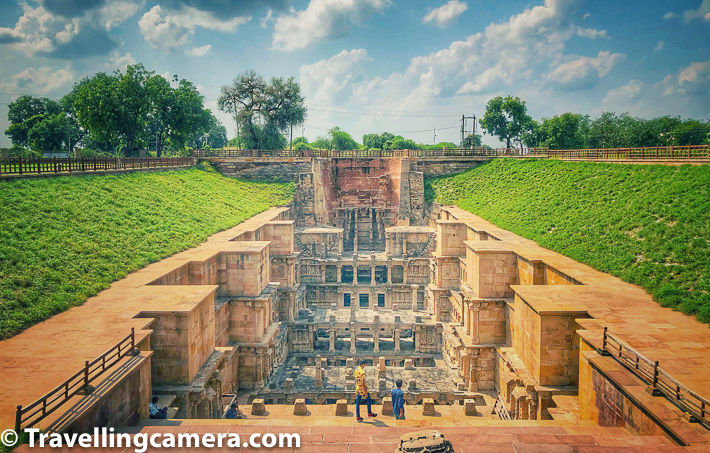
Trip to Gujarat State of India: A Complete Travel Guide for First-Time Visitors
 |
| A Theyyam blessing the priests. These performers are considered as God themselves once they don the Theyyam costume |
Trip to Kerala State of India: A Complete Travel Guide for First-Time Visitors

Jammu & Kashmir State of India: A Complete Travel Guide for First-Time Visitors

Belum Caves in Andhra Pradesh - The second largest cave system in Indian subcontinent




.jpg)
Comments