
Introduction: Bangkok Is Best Experienced Before You Understand It
The main things to do in Bangkok are easy to list: visit the Grand Palace, photograph Wat Arun, eat street food in Chinatown, explore markets, ride a boat along the Chao Phraya and watch the city light up after sunset.
But a list doesn't really explain Bangkok.
The first thing that strikes you is the contrast.
A gleaming skyscraper rises behind a weathered spirit house. A luxury shopping mall sits a few streets away from a tiny noodle stall where plastic stools spill onto the pavement. Monks walk quietly past motorcycles. Long-tail boats cut through the Chao Phraya while traffic crawls across a bridge overhead.
And then there is the smell.
Grilled pork. Jasmine rice. Incense. River water. Lemongrass. Exhaust fumes. Fresh fruit. Hot oil.
Bangkok doesn't reveal itself in one grand moment. It accumulates slowly, street by street.
For a photographer, that makes the city particularly addictive. The obvious landmarks are photogenic, but the memorable photographs often happen elsewhere: a vendor arranging oranges before sunrise, an old wooden house reflected in a canal, a monk waiting patiently at a pedestrian crossing, or afternoon light falling through a market roof.
This Bangkok travel guide is therefore not simply a checklist. It is an attempt to understand how to experience the city — where to go, when to go, what to photograph, what to eat, and what to notice when everyone else is looking in another direction.
Why Visit Bangkok?
Bangkok is one of those cities where ancient and contemporary life exist almost on top of each other.
Thailand's capital combines royal architecture, Buddhist temples, Chinese heritage, canal communities, markets, modern shopping districts, contemporary art, nightlife and one of Southeast Asia's most interesting food cultures.
The city's historical attractions remain essential. The Tourism Authority of Thailand highlights places including Wat Phra Kaew, Wat Pho, Wat Arun, Wat Saket, Wat Ratchanadda, Wat Traimit and Wat Benchamabophit among Bangkok's important cultural sights.
But Bangkok becomes more interesting when you stop treating those places as isolated attractions.
The Grand Palace makes more sense when you understand the old royal city around it.
Wat Arun becomes more beautiful when you photograph it from across the river rather than simply standing beneath it.
Yaowarat becomes much more than a food street when you wander into the surrounding Chinese-Thai neighbourhoods.
And the canals explain something fundamental about Bangkok: before roads and elevated highways reshaped the city, water was one of its principal ways of moving.
That is the Bangkok worth discovering.

Main Things to Do in Bangkok: Start With the Old City
1. Explore the Grand Palace and Wat Phra Kaew
There are places in Bangkok that deserve to be seen even if they are crowded.
The Grand Palace is one of them.
Established when King Rama I founded Bangkok as the capital, the Grand Palace became an important architectural symbol of the Thai royal family. Today it is primarily used for ceremonial purposes rather than as the everyday residence of the royal family.
Inside the complex, Wat Phra Kaew — the Temple of the Emerald Buddha — is particularly significant.
But don't rush.
Look upward.
Look at the rooflines, guardian figures, gilded details and mosaics. Then look down at the people moving through the courtyard.
The architecture is almost overwhelming when viewed as a whole. A photographer can make it more manageable by isolating details.
Try:
Tight architectural compositions
Repeating roof ornaments
Reflections in polished surfaces
Human figures against enormous walls
Symmetrical corridors
Close-ups of mosaic work
Photography tip
Go as early as practical. Morning light is generally kinder than the harsh midday sun, and smaller crowds make architectural compositions easier.
Also remember that this is a sacred and culturally important place, not simply a photography location. Dress appropriately and follow restrictions on photography inside individual religious spaces.
2. Walk Through Wat Pho Slowly
Wat Pho is often associated with its enormous reclining Buddha.
That is understandable — the statue is spectacular.
But spending only a few minutes photographing the reclining Buddha means missing much of what makes Wat Pho interesting.
Wat Pho is an old temple complex with roots predating the modern Bangkok era. It was substantially restored and expanded under King Rama I after Bangkok became the capital. Historical material from Bangkok's municipal authorities notes that the temple is more than 300 years old when considered across its earlier history.
The complex is full of smaller visual stories.
Ceramic details.
Stone figures.
Murals.
Courtyards.
Bell towers.
Monks moving between buildings.
Old inscriptions.
This is where a 50mm or 85mm lens can be more useful than an ultra-wide lens.
Instead of trying to photograph everything, isolate one detail.
Wait for someone to enter the frame.
That's often the photograph.
Main Things to Do in Bangkok: Photograph Wat Arun at the Right Time
3. Photograph Wat Arun From Across the Chao Phraya
Wat Arun is one of Bangkok's most photographed landmarks, but there is a trap here.
Everyone photographs the temple.
Far fewer people photograph the relationship between the temple and the river.
Wat Arun stands on the western bank of the Chao Phraya and has roots going back to the Ayutthaya period. Its distinctive towers are decorated with porcelain and other materials, including pieces associated with Chinese craftsmanship.
For photography, don't immediately cross the river.
Instead, find a position on the opposite bank around late afternoon.
As the sun drops, the temple changes character.
The white surface becomes warmer. Boats begin appearing as silhouettes. The river reflects broken patches of light.
A telephoto lens can compress the temple and river traffic into a layered composition.
A wide-angle lens, meanwhile, works beautifully when you include the river, boats and sky.
The Tourism Authority of Thailand specifically recommends morning or late afternoon for visiting Wat Arun, when the atmosphere is generally quieter and more photogenic.
My preferred photographic approach
Don't make Wat Arun fill the frame.
Let the river occupy a significant part of the image.
Then wait.
A passing boat can transform an ordinary architectural photograph into a Bangkok photograph.
4. Take a Chao Phraya River Boat
The Chao Phraya isn't simply scenery.
It is a moving cross-section of Bangkok.
From the water you see temples, apartment buildings, luxury hotels, riverside restaurants, old wooden houses and industrial-looking waterfronts.
The perspective is completely different from walking.
And importantly, it gives you a break from Bangkok's traffic.
The river has played a major role in the development of Central Thailand, and official tourism information continues to highlight Chao Phraya boat experiences as an important way of exploring the region.
For photographers, sit where you can see through an open side rather than shooting exclusively through glass.
Use a faster shutter speed.
Boats move quickly, and the combination of your movement and their movement can create surprisingly soft photographs.

Main Things to Do in Bangkok: Discover the Neighbourhoods
5. Wander Through Chinatown and Yaowarat
Bangkok's Chinatown is one of the places where the city feels most alive after dark.
Yaowarat Road becomes a theatre of food, light, smoke and movement.
But don't spend the entire evening on the main road.
Turn into side streets.
That is where the character changes.
You may find gold shops, Chinese shrines, old shophouses, tiny restaurants, wholesale businesses and residential lanes existing within a few minutes' walk of one another.
This is one of Bangkok's great photography lessons:
The photograph is often one street away from the landmark.
Try arriving before the evening rush.
Photograph shopkeepers preparing for the night.
Then return after dark for neon, steam and street-food scenes.
6. Explore Talat Noi
Talat Noi is one of my favourite types of Bangkok neighbourhood for photography — not because everything is beautiful, but because everything feels layered.
Old Chinese-Thai houses sit beside workshops.
Car parts become accidental sculptures.
Paint peels from walls.
Shrines appear unexpectedly in narrow lanes.
And then, suddenly, you find a wall covered with street art.
The neighbourhood rewards slow walking.
Don't map every minute.
Give yourself an hour with no destination.
For a photographer, this is where a small camera or even a phone can be advantageous. You can work discreetly and respond quickly when something happens.
Morning is particularly interesting because businesses are beginning to open and the streets aren't yet dominated by visitors.

7. Walk Around Bangkok's Old Canals
Bangkok's nickname and history as a city shaped by waterways are easy to forget when you're travelling through modern districts.
Look for the khlongs — canals that remain embedded in parts of the city.
Some are highly urbanised. Others still reveal a quieter side of Bangkok.
This is one of the places where Bangkok's past becomes visible without a museum label.
Wooden houses.
Small bridges.
Laundry.
Plants growing beside walls.
Children returning home.
Boats moving through narrow waterways.
The scene can feel surprisingly rural even though you are inside a huge metropolis.
Hidden Gems in Bangkok
8. Visit Kudi Chin
If you want a Bangkok experience that feels different from the usual temple circuit, explore Kudi Chin.
This historic riverside community reflects Bangkok's multicultural past and includes Portuguese-influenced heritage.
The Tourism Authority of Thailand recently highlighted Kudi Chin as a cultural experience worth exploring.
The area is especially interesting because it challenges the simplistic idea that Bangkok's history is exclusively Thai-Buddhist.
The city has been shaped by migration, trade and communities from different cultural backgrounds.
Walk slowly.
Look for old houses, religious buildings and food traditions.
And talk to people when appropriate.
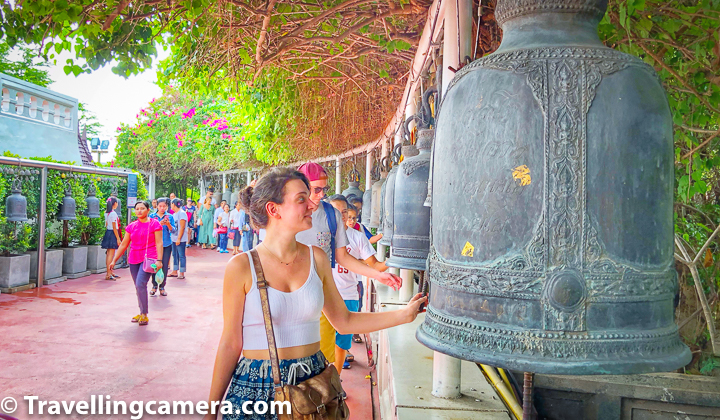
9. Climb Golden Mountain at Wat Saket
Wat Saket's Golden Mount provides something many Bangkok landmarks don't:
a sense of the city's scale.
Climb toward the top and Bangkok gradually unfolds around you.
Skyscrapers.
Temple roofs.
Residential neighbourhoods.
Trees.
Roads.
Old buildings.
From a photography perspective, this is particularly useful around late afternoon.
You can shoot the city with longer focal lengths and compress layers of architecture.
At sunset, however, expect other photographers and visitors.
A quieter alternative is to arrive earlier and photograph the changing light rather than waiting only for sunset.

10. Visit Bangkok's Markets
Markets reveal Bangkok more honestly than shopping malls.
Chatuchak is the famous one, but don't assume every market experience needs to be about buying souvenirs.
Markets are visual environments.
Look at hands.
Look at weighing scales.
Look at the arrangement of fruit.
Look at steam rising from cooking pots.
Look at how vendors use tiny spaces.
The Tourism Authority of Thailand lists markets such as Chatuchak, Sampeng, Yaowarat, Phahurat and Wang Lang among Bangkok's varied shopping and market experiences.
A useful photography trick
Instead of photographing a vendor from across the aisle, buy something.
Then ask politely before making a portrait.
A small purchase can open a conversation.
That conversation can produce a better photograph than a hidden candid shot.

Best Photography Spots in Bangkok
Bangkok is particularly rewarding if you plan your days around light rather than attractions.
| Location | Best Time | Photography Opportunity |
|---|---|---|
| Wat Arun | Late afternoon | Temple, river and boats |
| Grand Palace | Early morning | Architecture and details |
| Wat Pho | Morning | Courtyards, architecture, details |
| Golden Mount | Late afternoon | City views |
| Yaowarat | Blue hour/night | Neon, food and street life |
| Talat Noi | Morning | Old houses and street scenes |
| Chao Phraya River | Morning/evening | Boats and skyline |
| Kudi Chin | Morning | Community and heritage |
| Markets | Morning/evening | Food, people and details |

Photography settings to consider
Bangkok's bright daylight can be deceptively harsh.
For street photography:
Keep shutter speed around 1/250 sec or faster for moving people.
Use aperture priority when light is changing quickly.
Underexpose slightly when photographing bright skies and reflective buildings.
Use a polarizer cautiously around the river.
Carry a lens cloth — humidity and condensation can become annoying.
During monsoon showers, protect your camera but don't immediately pack it away. Reflections after rain can be spectacular.
And don't underestimate bad weather.
A Bangkok thunderstorm can produce some of the most dramatic city photographs.

What to Eat in Bangkok
Food deserves its own itinerary.
Not because Bangkok has famous dishes — everyone knows that — but because the city makes eating feel like part of its street culture.
Start with familiar dishes:
Pad Thai
Look for places where it is cooked to order rather than sitting prepared.
Tom Yum
The balance of sour, spicy, salty and aromatic flavours is best appreciated when served fresh.
Som Tam
Green papaya salad can be intensely spicy.
If you don't regularly eat chilli-heavy food, be careful when ordering.
Moo Ping
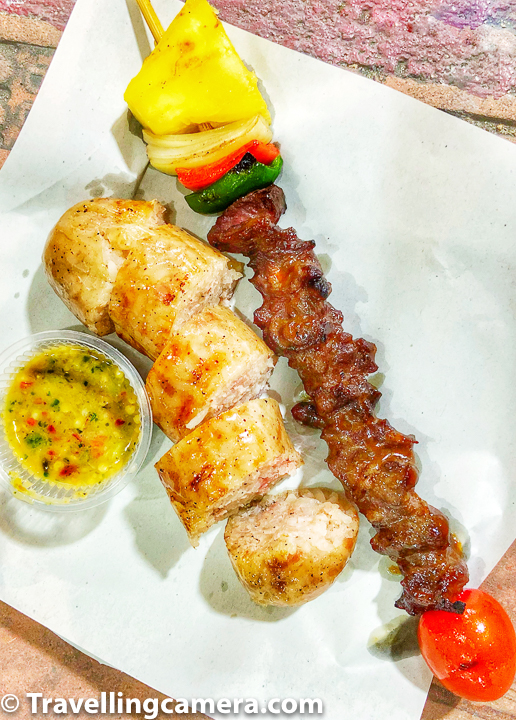
Grilled pork skewers are ideal for breakfast or a quick snack.
Boat Noodles
Small bowls, concentrated flavours and a very Bangkok-style eating experience.
Mango Sticky Rice
Simple, comforting and particularly good when the mango is ripe.
But the deeper food experience is simply watching how Bangkok eats.
People eat quickly.
Workers eat standing up.
Families share dishes.
Vendors cook in tiny spaces.
A plastic stool beside a busy road can produce a better meal — and a more memorable experience — than an expensive restaurant.

Local Conversations and Human Stories
One of the biggest mistakes visitors make in Bangkok is photographing people without engaging with them.
The city can be visually overwhelming, so it is tempting to treat people as elements in a composition.
Try something different.
Ask.
Smile.
Learn a few Thai words.
Even a simple greeting can change the interaction.
A street-food vendor who initially looks serious may become animated when asked about a dish.
A shopkeeper may point you toward another street.
A temple volunteer may explain something you would otherwise have missed.
These small interactions are often what you remember long after the photographs are uploaded.
And they make the photographs better.

Best Time to Visit Bangkok
Thailand experiences broad seasonal differences, with hot, rainy and cooler periods influenced by monsoon systems. The Tourism Authority of Thailand describes a roughly three-month hot season, a longer rainy season and a cooler period.
For most travelers, the cooler months are more comfortable for walking.
But there is an argument for visiting during the rainy season.
Rain transforms Bangkok.
Roads become mirrors.
Neon reflects in puddles.
Food stalls glow beneath plastic awnings.
The sky becomes dramatic.
The city slows for a few minutes — and then starts again.
If photography is your priority, don't automatically choose the driest period.
Choose the weather that gives you the atmosphere you want.

How to Reach Bangkok
Bangkok is one of Southeast Asia's major international aviation hubs, with Suvarnabhumi Airport serving as the principal international gateway and Don Mueang also handling significant air traffic.
From the airport, your best transport option depends heavily on where you are staying.
For central neighbourhoods, rail connections can be extremely useful because Bangkok traffic can become painfully slow.
Once inside the city, combine:
BTS Skytrain
MRT
River boats
Walking
Taxis
Ride-hailing
Occasional tuk-tuks
The BTS system offers single-journey tickets, one-day passes and Rabbit Cards, while current BTS information also provides ticket-machine and operating guidance.
One practical lesson
Don't judge distance by the map.
A two-kilometre journey during heavy traffic can take much longer than expected.
For sightseeing days, group attractions geographically.

Where to Stay in Bangkok
There is no single "best area" to stay.
Choose based on the kind of Bangkok you want.
| Area | Best For |
|---|---|
| Sukhumvit | Transport, restaurants, nightlife |
| Silom | Business district, food, central location |
| Riverside | Views, luxury hotels, quieter evenings |
| Old Town | Temples and historic Bangkok |
| Chinatown | Food, photography, atmosphere |
| Ari | Cafés, local neighbourhood feel |
| Sathorn | Modern hotels and restaurants |
For photographers, I particularly like staying somewhere that makes early-morning exploration easy.
If your hotel is near the Old Town, you can photograph temples before the crowds arrive.
If you stay around Chinatown, you can photograph the neighbourhood both before sunrise and after dark.
Location matters more than a luxurious room when your primary goal is exploration.
Bangkok Budget Tips
Bangkok can be surprisingly affordable, but it is also perfectly capable of becoming expensive.
A luxury hotel, rooftop bar and shopping mall can consume a day's budget quickly.
To save money:
Eat at local restaurants and markets.
Use BTS/MRT where practical.
Walk short distances.
Compare taxi and ride-hailing prices.
Avoid buying every souvenir near major attractions.
Carry small amounts of cash for small vendors.
Stay slightly outside the most expensive tourist zones.
Book accommodation with easy public transport access.
The biggest money-saving trick is also the simplest:
Don't take taxis when the train is moving faster.

A 4-Day Bangkok Itinerary for First-Time Visitors
Day 1 — Bangkok's Historic Core
Morning
Grand Palace
Wat Phra Kaew
Wat Pho
Afternoon
Cross the river
Explore Wat Arun
Walk around riverside neighbourhoods
Evening
Chao Phraya sunset
Dinner near the river
Day 2 — Chinatown and Old Bangkok
Morning
Talat Noi
Old shophouses
Local cafés
Street photography
Afternoon
Chinatown side streets
Sampeng area
Chinese temples
Evening
Yaowarat
Street food
Night photography
This is the day to carry a camera after sunset.
Day 3 — Markets and Modern Bangkok
Morning
Chatuchak Weekend Market if your visit coincides with its operating days
Afternoon
Siam
Contemporary shopping districts
Bangkok's modern architecture
Evening
Rooftop viewpoint or riverside dinner
Day 4 — Slow Bangkok
Don't schedule every minute.
Choose one neighbourhood.
Kudi Chin.
A canal community.
A local market.
Golden Mount.
A museum.
Then walk.
This is the day when Bangkok often becomes most memorable because you're no longer trying to "see everything."

Responsible Travel in Bangkok
Responsible travel here is mostly about behaviour.
Dress respectfully when visiting temples.
Cover shoulders and knees where required.
Remove footwear when instructed.
Don't touch religious objects casually.
Ask before photographing people closely.
Don't block narrow shop entrances while taking photographs.
Don't turn monks into photo props.
Avoid climbing structures simply for a better photograph.
And remember that markets and neighbourhoods are not open-air museums.
People live and work there.
The best travel photograph is rarely worth making someone uncomfortable.

Common Bangkok Travel Mistakes to Avoid
Trying to see everything
Bangkok is enormous.
You won't.
Accept that.
Visiting temples at midday
The heat and crowds can make the experience exhausting.
Staying only in Sukhumvit
Convenient? Yes.
Representative of Bangkok? Not really.
Eating only at restaurants recommended online
Some of the best meals may happen at an ordinary-looking stall.
Taking taxis everywhere
Traffic can destroy your itinerary.
Ignoring neighbourhoods
The most interesting photographs often happen outside the famous attractions.
Overplanning photography
Bangkok rewards spontaneity.
Leave gaps.
Forgetting appropriate temple clothing
It can turn an exciting morning into an inconvenient one.

Frequently Asked Questions About Bangkok
What are the main things to do in Bangkok?
The main things to do in Bangkok include visiting the Grand Palace and Wat Phra Kaew, exploring Wat Pho and Wat Arun, taking a Chao Phraya River boat, exploring Chinatown and Talat Noi, visiting markets, eating street food and discovering Bangkok's historic neighbourhoods.
How many days are enough for a trip to Bangkok?
Four days is a good starting point for a first trip to Bangkok. It allows enough time for the major historic sights while leaving room for Chinatown, markets, food and neighbourhood exploration.
What is the best area to stay in Bangkok?
The best area depends on your priorities. Sukhumvit is convenient for transport and nightlife, the Old Town is excellent for temples, Chinatown is ideal for food and photography, while the riverside is better for atmosphere and views.
What is the best time to visit Bangkok?
The cooler months are generally more comfortable for sightseeing and walking. However, the rainy season can be excellent for photographers because wet streets create reflections and dramatic skies.
Is Bangkok good for photography?
Absolutely. Bangkok offers architectural photography, street photography, food photography, portraits, night photography, river scenes, markets and documentary-style neighbourhood photography.
What should I photograph in Bangkok besides temples?
Photograph markets, canals, old shophouses, street-food vendors, boats, commuters, Chinese-Thai neighbourhoods, traditional signs, workshops, reflections and everyday street life.
Is Bangkok expensive for tourists?
Bangkok can be inexpensive or luxurious depending on how you travel. Local food and public transport can keep costs relatively low, while high-end hotels, restaurants and nightlife can make a trip significantly more expensive.
Is Bangkok safe for first-time visitors?
Bangkok is a major international tourist destination, but normal urban precautions still matter. Take care of belongings in crowded places, use reputable transportation and be cautious with unfamiliar offers involving money or tours.
Can I explore Bangkok without a car?
Yes. In fact, avoiding a car is often an advantage. BTS, MRT, boats, walking, taxis and ride-hailing services give travelers multiple ways to move around the city.
Final Thoughts: Don't Just Visit Bangkok — Notice It
The biggest mistake you can make on a trip to Bangkok is believing that the city can be reduced to a list of attractions.
The Grand Palace is magnificent.
Wat Arun is unforgettable at sunset.
Yaowarat is chaotic and delicious.
The Chao Phraya is endlessly photogenic.
But those are only the obvious layers.
The Bangkok I would encourage photographers and curious travelers to look for is the one between the landmarks.
The woman arranging fruit outside her shop before sunrise.
The monk walking beneath a tangle of electrical wires.
The old wooden house surviving between concrete buildings.
The smell of charcoal drifting through a narrow lane.
The reflection of Wat Arun broken by a passing boat.
A market vendor laughing with a customer.
Rain suddenly falling over a street filled with motorcycles.
Those moments don't appear on every itinerary.
You have to slow down enough to see them.
And perhaps that's the real secret to experiencing the main things to do in Bangkok.
Don't spend the entire trip looking for Bangkok's famous face.
Walk a little farther.
Turn into the next lane.
Wait for the light.
Talk to someone.
Eat where the locals are eating.
And keep your camera ready.
Because Bangkok is rarely still — and that is precisely what makes photographing it so rewarding.





.jpg)
Comments