
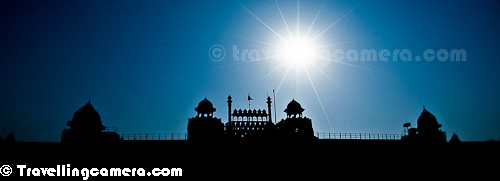
Rising majestically along the banks of the Yamuna River, the Red Fort is more than just a monument—it is a living symbol of India’s layered history, cultural richness, and enduring identity. Known locally as Lal Qila, this UNESCO World Heritage Site stands as a silent witness to centuries of imperial grandeur, colonial upheaval, and the birth of a nation.

The Vision of an Emperor
The story of the Red Fort begins in the 17th century, under the rule of the Mughal emperor Shah Jahan. Famous for commissioning the Taj Mahal, Shah Jahan decided to shift his capital from Agra to a newly planned city—Shahjahanabad, now part of Old Delhi.

Construction of the Red Fort began in 1638 and was completed in 1648. Built using striking red sandstone, the fort was designed as the main residence of the Mughal emperors and a center of political power. It represented not just authority but also refined aesthetics, blending Persian, Timurid, and Indian architectural styles.

Architectural Brilliance
Walking through the Red Fort is like stepping into a carefully curated narrative of Mughal luxury and design.

Lahori Gate: The Grand Entrance
The main gateway, known as the Lahori Gate, opens into a bustling covered bazaar called Chatta Chowk. Even today, the marketplace echoes the vibrancy of Mughal-era commerce.

Diwan-i-Aam: Hall of Public Audience
Here, the emperor addressed the general public and listened to grievances. A marble throne once stood at the center, symbolizing justice and authority.

Diwan-i-Khas: Hall of Private Audience
Reserved for nobility and special guests, this hall once housed the legendary Peacock Throne. It is famously inscribed with the line: “If there is a paradise on earth, it is this, it is this, it is this.”

Rang Mahal: Palace of Colors
This was the residence of the royal women, adorned with intricate decorations, fountains, and a cooling system that reflected Mughal ingenuity.

Mumtaz Mahal and Khas Mahal
These structures highlight the personal spaces of the emperor and his family, showcasing delicate carvings and elegant design.

Nahr-i-Behisht: Stream of Paradise
A water channel flowing through the palaces symbolized the Islamic concept of paradise, adding both beauty and cooling to the interiors.

A Witness to History
The Red Fort has stood at the crossroads of some of India’s most defining moments.
- Mughal Decline: After the reign of Aurangzeb, the Mughal Empire began to weaken, and the fort gradually lost its prominence.
- Colonial Takeover: In 1857, during the Indian Rebellion of 1857, the fort became a focal point of resistance. After suppressing the revolt, the British captured the fort and used it as a military base.
- End of an Era: The last Mughal emperor, Bahadur Shah II, was tried here before being exiled, marking the end of Mughal rule.

Symbol of Independence
Perhaps the most powerful chapter in the Red Fort’s story began in 1947.
On August 15, India gained independence, and Jawaharlal Nehru hoisted the national flag from the Lahori Gate. Since then, every year on Independence Day, the Prime Minister of India addresses the nation from this very fort.
The Red Fort transformed from a symbol of imperial power to one of democratic pride.

Cultural and Modern Relevance
Today, the Red Fort is not just a historical monument but a vibrant cultural hub.
- UNESCO World Heritage Site: Recognized for its architectural and historical significance.
- Light and Sound Show: A popular attraction that narrates Delhi’s history through dramatic storytelling.
- Tourist Magnet: Visitors from across the world explore its corridors, courtyards, and museums.
Its walls continue to echo with stories—of emperors, poets, invaders, and freedom fighters.

Visiting the Red Fort
Located in the heart of Delhi, the Red Fort is easily accessible and best explored during the cooler months.
Tips for visitors:
- Visit early in the morning to avoid crowds
- Allocate at least 2–3 hours to explore
- Combine your visit with nearby attractions like Jama Masjid and Chandni Chowk

A Photographer’s Perspective
For photographers—especially if you’re working on something like Travellingcamera—the Red Fort offers endless inspiration:
- The symmetry of Mughal arches
- The contrast of red sandstone against blue skies
- Golden hour light casting long shadows across courtyards
- Human elements blending history with modern life
Each frame tells a story that transcends time.

The Red Fort is not just a monument carved in stone—it is a narrative etched in the soul of India. From the grandeur of Mughal emperors to the struggles of colonial resistance, and finally to the pride of independence, it embodies the journey of a nation.
Standing before its towering walls, one doesn’t just see history—one feels it.

.jpg)
Comments