Know why Birds are special feature of The Westin Sohna Resorts & Spa

Recently I was at The Westin Sonha Resorts and Spa in National Capital Region of India for an office offsite. One of the main reasons I loved this venue was plenty of birds all around. I knew it and hence I was carrying my camera with me. Birds welcome in small water pond near reception area and there were dozens of Lapwings, Drangos, Babblers, Starlings flying around our breakfast area. During 2 days of stay, I could find out 30-45 mins to walk around the resort to find these winged wonders and hope to visit this part of Delhi-NCR soon and probably some other place apart from The Westin.

Recently I was at The Westin Sonha Resorts and Spa in National Capital Region of India for an office offsite. One of the main reasons I loved this venue was plenty of birds all around. I knew it and hence I was carrying my camera with me. Birds welcome in small water pond near reception area and there were dozens of Lapwings, Drangos, Babblers, Starlings flying around our breakfast area. During 2 days of stay, I could find out 30-45 mins to walk around the resort to find these winged wonders and hope to visit this part of Delhi-NCR soon and probably some other place apart from The Westin. 


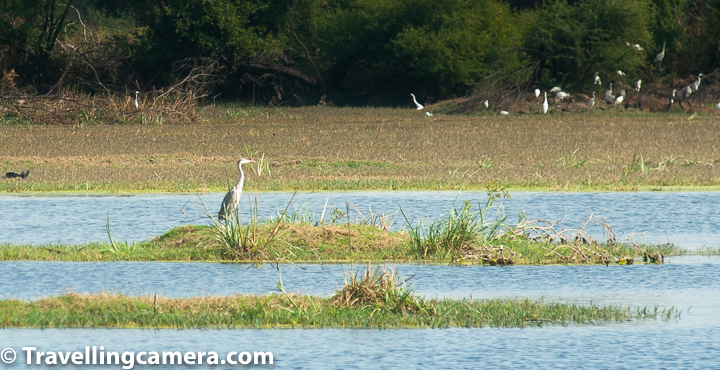
Related Blogpost - Tiny Darts of Color || Vibrant Birds of Darjeeling    There is a lake maintained by The Westin Sohna Resorts and Spa. Above photograph is clicked around Westin Lake where we saw plenty of birds bird but at a distance which couldn't be captured with the lens I was carrying and unfortunately there is no way to walk around the Westin lake.      Related Blogpost - Bird of the Month || Year 2020


There is a lake maintained by The Westin Sohna Resorts and Spa. Above photograph is clicked around Westin Lake where we saw plenty of birds bird but at a distance which couldn't be captured with the lens I was carrying and unfortunately there is no way to walk around the Westin lake.  


Kite is the common name for certain birds of prey in the family. We saw quite a few kites around The Westin Sohna but it was hard to capture them given the height at which they were sitting or flying.     Related Blogpost - Yellow Colored Oriental White-eye Birds around my Home in Himachal Pradesh (INDIA)

Kite is the common name for certain birds of prey in the family. We saw quite a few kites around The Westin Sohna but it was hard to capture them given the height at which they were sitting or flying. 


The black kite is a medium-sized bird of prey. Current global population estimates run up to 6 million individuals. Black kites are opportunistic hunters and are more likely to scavenge. They spend a lot of time soaring and gliding in thermals in search of food. Their angled wing and distinctive forked tail make them easy to identify. They are also vociferous with a shrill whinnying call. This kite is widely distributed through the temperate and tropical parts of Eurasia and parts of Australasia and Oceania, with the temperate region populations tending to be migratory.    Related Blogpost - Two Ruddy Shelducks Flying around a Water-boat parked on shoreline of Pong Dam Lake at Nagrota Suriyan, Kangra, Himachal Pradesh, India

The black kite is a medium-sized bird of prey. Current global population estimates run up to 6 million individuals. Black kites are opportunistic hunters and are more likely to scavenge. They spend a lot of time soaring and gliding in thermals in search of food. Their angled wing and distinctive forked tail make them easy to identify. They are also vociferous with a shrill whinnying call. This kite is widely distributed through the temperate and tropical parts of Eurasia and parts of Australasia and Oceania, with the temperate region populations tending to be migratory.


The pied myna or Asian pied starling is a species of starling found in the Indian subcontinent and Southeast Asia. They are usually found in small groups mainly on the plains and low foothills. The one you see in above photograph is located around lower Arawali hills in India. They are often seen within cities and villages although they are not as bold as the common myna. Several slight plumage variations exist in the populations and about five subspecies are named.     Related Blogpost - The Winged Wonders of Pong Wetlands - by Vibha Malhotra, TOI

The pied myna or Asian pied starling is a species of starling found in the Indian subcontinent and Southeast Asia. They are usually found in small groups mainly on the plains and low foothills. The one you see in above photograph is located around lower Arawali hills in India. They are often seen within cities and villages although they are not as bold as the common myna. Several slight plumage variations exist in the populations and about five subspecies are named. 


Usually red-wattled lapwings are seen in pairs or small groups (please see first photograph of this blogpost again to appreciate this aspect) and usually not far from water they sometimes form large aggregations in the non-breeding season. They nest in a ground scrape laying three to four camouflaged eggs. Adults near the nest fly around, diving at potential predators while calling noisily.     Related Blogpost - A visit to Surajpur Birds Sanctuary - A Bird Sanctuary at Risk     At Westin they were easily found around breakfast area and swimming pool at The Westin Sohna Resorts & Spa.

These Asian pied Starlings are usual found in small groups, foraging mainly on the ground but perching on trees and buildings. Birds in a group call frequently with whistles, trills, buzzes, clicks, and warbling calls. Young birds taken into captivity have been trained to imitate tunes of other birds. 


Usually red-wattled lapwings are seen in pairs or small groups (please see first photograph of this blogpost again to appreciate this aspect) and usually not far from water they sometimes form large aggregations in the non-breeding season. They nest in a ground scrape laying three to four camouflaged eggs. Adults near the nest fly around, diving at potential predators while calling noisily.     Related Blogpost - A visit to Surajpur Birds Sanctuary - A Bird Sanctuary at Risk     At Westin they were easily found around breakfast area and swimming pool at The Westin Sohna Resorts & Spa.

Above photograph shows red-wattled lapwing, which is an Asian lapwing or large plover. Like other lapwings they are ground birds that are incapable of perching. Their characteristic loud alarm calls are indicators of human or animal movements. 


Usually red-wattled lapwings are seen in pairs or small groups (please see first photograph of this blogpost again to appreciate this aspect) and usually not far from water they sometimes form large aggregations in the non-breeding season. They nest in a ground scrape laying three to four camouflaged eggs. Adults near the nest fly around, diving at potential predators while calling noisily. 


At Westin they were easily found around breakfast area and swimming pool at The Westin Sohna Resorts & Spa. 

There are lot of Dronogos around The Westin Sohna Resorts & Spa. There are 29 species in the Drongo family.     Related Blogpost - Elusive Songmakers of Dalhousie, Himachal || Birds of the Himalayas    Drongos are mostly black or dark grey, short-legged birds, with an upright stance when perched. They have forked tails and some have elaborate tail decorations. Drongos feed on insects which they catch in flight or on the ground. Some species are accomplished mimics and have a variety of alarm calls, to which other birds and animals often respond.     Related Blogpost - The Winged Models || Birds of Badahin, Mandi, Himachal Pradesh

There are lot of Dronogos around The Westin Sohna Resorts & Spa. There are 29 species in the Drongo family. 


Drongos are mostly black or dark grey, short-legged birds, with an upright stance when perched. They have forked tails and some have elaborate tail decorations. Drongos feed on insects which they catch in flight or on the ground. Some species are accomplished mimics and have a variety of alarm calls, to which other birds and animals often respond. 


The oriental magpie-robin is a small bird that was formerly classed as a member of the thrush family Turdidae, but now considered an Old World flycatcher. They are distinctive black and white birds with a long tail that is held upright as they forage on the ground or perch conspicuously.     The oriental magpie-robin is the national bird of Bangladesh.    Related Blogpost - The Winged Models || Birds of Badahin, Mandi, Himachal Pradesh

The oriental magpie-robin is a small bird that was formerly classed as a member of the thrush family Turdidae, but now considered an Old World flycatcher. They are distinctive black and white birds with a long tail that is held upright as they forage on the ground or perch conspicuously. 

The oriental magpie-robin is the national bird of Bangladesh.


Cold and severe, January is a good time to turn inward and reflect. The thought of spending the day wrapped in your warmest quilt, reading and sipping on hot coffee, sometimes cracking peanuts while lounging in the winter sun, brings back memories from our childhood and that is why we chose the Oriental Turtle Dove as the bird of January 2020. Meditative, quiet, and gentle, doves inspire poetry, love, peace and all things good.    Related Blogpost - Birds of Ayuthhaya || 10-Day Vacation in Thailand


Cold and severe, January is a good time to turn inward and reflect. The thought of spending the day wrapped in your warmest quilt, reading and sipping on hot coffee, sometimes cracking peanuts while lounging in the winter sun, brings back memories from our childhood and that is why we chose the Oriental Turtle Dove as the bird of January 2020. Meditative, quiet, and gentle, doves inspire poetry, love, peace and all things good.    Related Blogpost - Birds of Ayuthhaya || 10-Day Vacation in Thailand

Cold and severe, January is a good time to turn inward and reflect. The thought of spending the day wrapped in your warmest quilt, reading and sipping on hot coffee, sometimes cracking peanuts while lounging in the winter sun, brings back memories from our childhood and that is why we chose the Oriental Turtle Dove as the bird of January 2020. Meditative, quiet, and gentle, doves inspire poetry, love, peace and all things good.


After the cold January, the earth beneath our feet starts shifting because of tiny life (grass, saplings, worms, ants) that are waking up from their slumber and being reborn. But these signs of life are still invisible. You can see them only if you are looking out for them. Same is the case with the Coppersmith Barbet. Just like you sense the spring in the air before you see the new saplings, this elusive bird announces its presence with the sounds that it makes searching food on trees, before it actually makes an appearance.     Related Blogpost - Our trip to the Keoladeo National Park || An Overview

After the cold January, the earth beneath our feet starts shifting because of tiny life (grass, saplings, worms, ants) that are waking up from their slumber and being reborn. But these signs of life are still invisible. You can see them only if you are looking out for them. Same is the case with the Coppersmith Barbet. Just like you sense the spring in the air before you see the new saplings, this elusive bird announces its presence with the sounds that it makes searching food on trees, before it actually makes an appearance. 


There is also a small zoo maintained by The Westin Sohna Resorts and Spa. Zoo at The Westin Sohna Resorts and Spa has few Turkeys, Goose, Rabbits, Guinea Pigs, Guinea Fowls, Emus, Goats, Horses, hens etc. These last 2 photographs are clicked inside the zoo and unfortunately these are not the free birds like all others in this blogpost.     Related Blogpost - Okhla Bird Sanctuary - Top place to visit & explore in Noida

There is also a small zoo maintained by The Westin Sohna Resorts and Spa. Zoo at The Westin Sohna Resorts and Spa has few Turkeys, Goose, Rabbits, Guinea Pigs, Guinea Fowls, Emus, Goats, Horses, hens etc. These last 2 photographs are clicked inside the zoo and unfortunately these are not the free birds like all others in this blogpost. 


Overall I loved The Westin Sohna Resorts & Spa because of it's bird friendly ecosystem, which certainly makes it a great place to visit/stay and get rejuvenated.

Overall I loved The Westin Sohna Resorts & Spa because of it's bird friendly ecosystem, which certainly makes it a great place to visit/stay and get rejuvenated. 

Related Blogposts -

As winter approaches North India, various wetlands start seeing thousands of Migratory Birds and Bharatpur's Keoladeo Bird Sanctuary is one of the most popular wetlands around National Capital region of India and hence sees lot of tourists from Delhi/Noida/Gurgaon region. And it's not limited to nearby tourists. Lot of serious birders visit Bharatpur during Winters from various parts of the country as well as foreigner tourists. This blog-post shares tips to plan a successful trip to Bharatpur from Delhi and what kind of things to take care while planning this birding trip. One day Road-Trip to Bharatpur Birds Sanctuary from Delhi : Winters Special


We were definitely fortunate when it comes to the number of Herons and Egrets we were able to sight during our visit to the Keoladeo National Park in November. However, at that time, we did not know which was which. These two birds are so similar when it comes to their behavior that it takes an expert to identify them separately. We referred to our birding companion - A Pictorial Field Guide to Birds of India. However, I am sure we have made some mistakes in case of a few birds. In case you can spot any, please do point them out. We would be eternally grateful. Great Egrets.Both Herons and Egrets, and also the Bitterns, belong to the family Ardeidae. Though some argue that these are actually same birds with the only differences being that Egrets usually have white or buff plumage and develop distinctive white plumes during the breeding season. Otherwise, both these birds seek the same kind of habitat - wetlands. They breed in trees close to the wetlands, and they fly with their necks retracted, unlike storks and cranes who fly with their necks outstretched. Grey Heron in Flight. Experts are still undecided about what makes a heron, a heron and an egret, an egret. So much so that though these birds are classified under separate genera - Ardea and Egretta - the only marked difference in the definition of  these genera is the size. Ardea consists of larger of the Herons whereas Egretta consists of the smaller ones. Though the size difference is often indistinct. Both the birds typically have a large wingspan and look very graceful in flight. Great Egret in Flight. You will often see these birds standing still with one leg raised and their necks outstretched carefully watching out for prey to come close enough so that they can snap it up with a quick movement of their neck and beaks. These birds are carnivorous and feed mainly on fish, frogs, lizards, and molluscs. Some herons, such as the cattle egret, often move away from the wetlands and follow cattle. These egrets feed on the insects that are disturbed by the movement of cattle in bushes. Juvenile Purple Heron(?) in the foreground with Great Egrets in the Distance. Another aspect that is unique about Herons is that they have powder down. These peculiar down feathers that often disintegrate into a powdery substance are thought to be of special significance to these birds because of their wet habitat and damp surroundings. It is also believed that these birds use the powder to preen and coat the feathers that cover the rest of their body. It is supposed to protect these feathers from slime and dirt. Purple Heron. It took us a while to associate these tall, graceful birds with the little cattle egrets we are used to seeing in the city. Initially I thought that these were cranes. However, when upon further research I discovered that though cranes and herons may look alike at a glance, they are indeed two very different birds. While Herons belong to the order Pelecaniformes, Cranes are part of the Gruiformes order. Unlike Herons who hold their necks in an "S" shape and completely retract them during flight, cranes old their necks straight. Herons have longer beaks and necks than cranes, though cranes typically are bigger in size. Indian Pond Heron. We were unfortunately not able to spot any cranes during our visit to Keoladeo. Cranes that are supposed to flock in Keoladeo during winters are Siberian Crane, Sarus Crane, Demoiselle Crane, and Common Crane. Of these, Siberian Crane does not visit India any more. A single pair of these critically endangered birds was last seen in Keoladeo National Park in 2002. Since then there is no recorded sighting of these birds in India. This is sad. If you think you have seen a Siberian crane during your visit to Keoladeo National Park, you are either mistaken or unbelievably fortunate and on the verge of being famous. Grey Heron keeping company with Black-Headed and Glossy Ibises. Herons and Egrets keep company with other water birds such as ducks, coots, waterhens etc. You will often spot one or two individuals standing tall among a flock of other smaller birds. In the above photograph, a grey heron is seen peacefully existing with the much smaller ibises. The ibises in this picture are the black-necked Ibis and the Glossy Ibis, which are often mistaken as white Ibis and Black Ibis, respectively. Though the black-necked Ibis is nearly threatened, they were a common sight in Keoladeo National Park. Grey Heron up close. The dotted line running down then neck of a grey heron creates an illusion of stitch marks and you may be forgiven if you confuse the bird with a stuff toy. From a distance and also at various stages of this heron's life, it may resemble the Great Egret quite a bit. However, two of the most distinctive identifying characteristics of the Egret are its dark legs and yellow beaks, which are also almost always easily identifiable from a distance, unless the legs are hidden behind the bushes or under water. Juvenile Cinnamon Bittern. A smaller member of the Ardeidae family, the bittern is classified into a separate subfamily Botaurinae. Typically smaller than the other herons, bitterns also exhibit slightly different behavior patterns. Bitterns are smaller and plumper than a typical Heron. They also have shorter necks, though they too can retract and elongate their necks. Unlike Herons who patiently wait for their prey to wander close enough, bitterns, and also pond herons, at times are known to chase down their prey. This kind of active hunting is not seen in other Herons. The bittern seen above has a similar plumage to the Indian Pond Heron (scroll up to see), but has a cinnamon colored underbelly as opposed to a white one in the pond heron.  Grey Heron with Cattle Egret (?). In the photograph above, you can see a Grey Heron in close vicinity of a cattle egret. While structurally, both the birds seem similar, there are clear differences that can help you distinguish one from the other. While the Heron (on the left) has light-colored legs, the egret has darker, almost black, legs. Also, the beak in case of a Heron is pinkish, whereas an egret has a yellow beak. Both these birds, in the photograph above, are quite interested in something that is happening on their left. Intermediate Egret (?). This looks like a cattle egret though I cannot be sure. It's neck is too short for a great egret, though admittedly the bird looks a bit bigger than the egrets we see in the city. So may be it is an intermediate Egret. I will leave it to the experts to judge. However, such a picture of an egret standing still at the edge of water looks deceptively peaceful. I also found out what is known as the bagula in India (bagula bhagat for its unique habit of standing with one leg folded) is the same bird as the Great Egret. Purple Heron with Great Egret in the distance. Here are two of the larger birds in the same frame. The bird in the foreground is the purple heron and the one in the far distance is the great egret. You can see the thick "S" shaped neck of the Great Egret, while the purple heron up close has a slender neck, though this bird too can retract its neck when it so feels like. We were really grateful to spot these graceful birds in their natural habitat. The Keoladeo National Park is one of the very few walled wetlands where migratory and resident birds are safe from human interference. Cattle Egret. The sheer variety of birds at Keoladeo National Park is overwhelming. More than 400 different species have been observed here. Of those, we were only able to see a handful. At the time, we thought some of these herons and egrets and storks were migratory, but it turns out that they are all resident. The only migratory birds we saw were the smaller ones. The park is already lively, and I wonder how much more lively it would be once the migratory birds arrive. Anyhow, I think February would be a good time for another visit.
Juvenile Purple Heron(?) in the foreground with Great Egrets in the Distance

Herons and Egrets at Keoladeo National Park || Waterbirds and Waders at Bharatpur


Comments

Trending Post Today !

How to reach Kasol/Malana and top things to do around this stunning hill-station of Himalayan State of India

Main places to see & Top things to do around Dalhousie : Stunning Hill Station in Himalayan State of India