

When most people think of Himachal Pradesh, a familiar set of images comes to mind—snow-covered peaks, bustling hill stations, cafés serving pancakes, and roads filled with travelers chasing sunsets.
But there is another Himachal. Quietly existing. Almost hidden in plain sight.
It doesn’t appear on most itineraries. It doesn’t try to impress. It doesn’t even try to be seen.
And perhaps that’s exactly why it feels so real.
The Himalayas, Without a Filter
Step away from the popular towns, and the landscape changes—not just visually, but emotionally.
The roads narrow. The noise fades. The mountains don’t just stand in the background anymore; they begin to surround you, almost as if they’re watching.
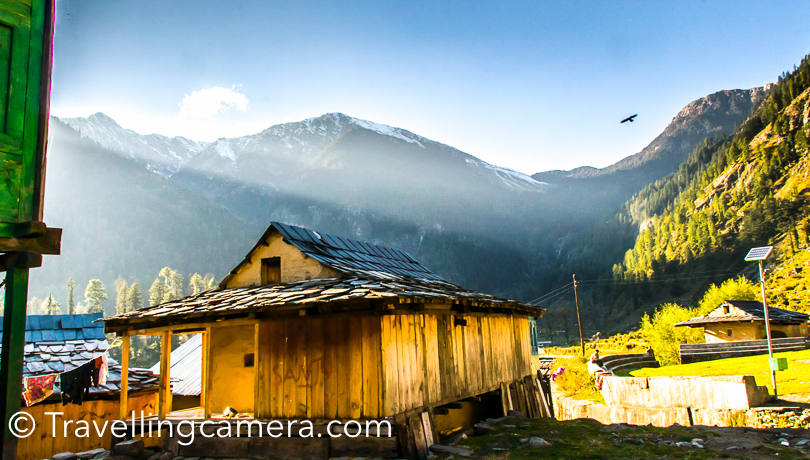
Villages begin to appear—scattered across slopes, tucked between forests, or sitting quietly beside terraced fields that have been cultivated for generations.
Here, life doesn’t rush. It unfolds.
You don’t “visit” these places. You arrive… and then slowly, you begin to belong—at least for a while.
Mornings That Don’t Need Alarms
In these villages, mornings don’t begin with notifications or traffic.
They begin with distant temple bells, the soft rhythm of someone sweeping their courtyard, or the sound of cows being led out to graze.
There’s a certain honesty to these mornings. No urgency. No performance.
You wake up because the world around you is already awake.
And somehow, that feels enough.

Food That Tells Stories
The food here isn’t curated for travelers. It isn’t plated for Instagram.
It is simple. Seasonal. Honest.
A meal might include freshly made rotis, lentils cooked over a wood fire, vegetables grown just a few steps away, and maybe a chutney whose recipe has been passed down quietly over decades.
But what truly makes it special isn’t just the taste.
It’s the way it is served—with warmth that doesn’t feel rehearsed, with conversations that don’t feel transactional.
You’re not a customer here.
You’re a guest.
 |
| Blue-throated Barbet |
Conversations Without an Agenda
Spend a little time in these villages, and something interesting happens—you start having conversations that aren’t driven by purpose.
No networking. No small talk for the sake of politeness.
Just stories.
Stories of changing seasons. Of harsh winters. Of festivals that bring entire communities together. Of children walking miles to school. Of elders who have seen the world change, but still choose to live rooted in their land.
And somewhere in these conversations, you begin to notice something rare—
A sense of contentment that doesn’t depend on constant movement.

The Beauty of Being Unnoticed
In popular destinations, everything feels designed to be seen.
In these villages, nothing is trying to stand out.
And yet, everything does.
A wooden house with intricate carvings. Prayer flags fluttering quietly. A shepherd walking along a ridge. Children playing with effortless joy.
There’s no rush to capture it all.
In fact, the more time you spend here, the less you feel like reaching for your camera.
Because some experiences don’t ask to be documented.
They ask to be felt.
Why This Matters More Than Ever
In a world where travel is increasingly becoming about checklists, speed, and visibility, places like these offer something different.
They remind you that travel doesn’t always have to be about going further.
Sometimes, it’s about going deeper.
Deeper into places. Deeper into cultures. And sometimes, deeper into yourself.

Maybe It’s Time to Rethink Travel
What if the most meaningful journeys aren’t the ones that take you to famous landmarks…
…but the ones that quietly change the way you see life?
What if the most memorable experiences aren’t planned…
…but discovered?
And what if there’s a version of Himachal that very few people truly experience—
not because it’s inaccessible, but because it doesn’t shout for attention?
There’s a certain kind of travel that doesn’t leave you with just photographs…
…but with a feeling you can’t quite explain.
A feeling that stays.
A feeling that gently calls you back.
And perhaps, somewhere in the mountains of Himachal, that feeling is waiting.

.jpg)
Comments