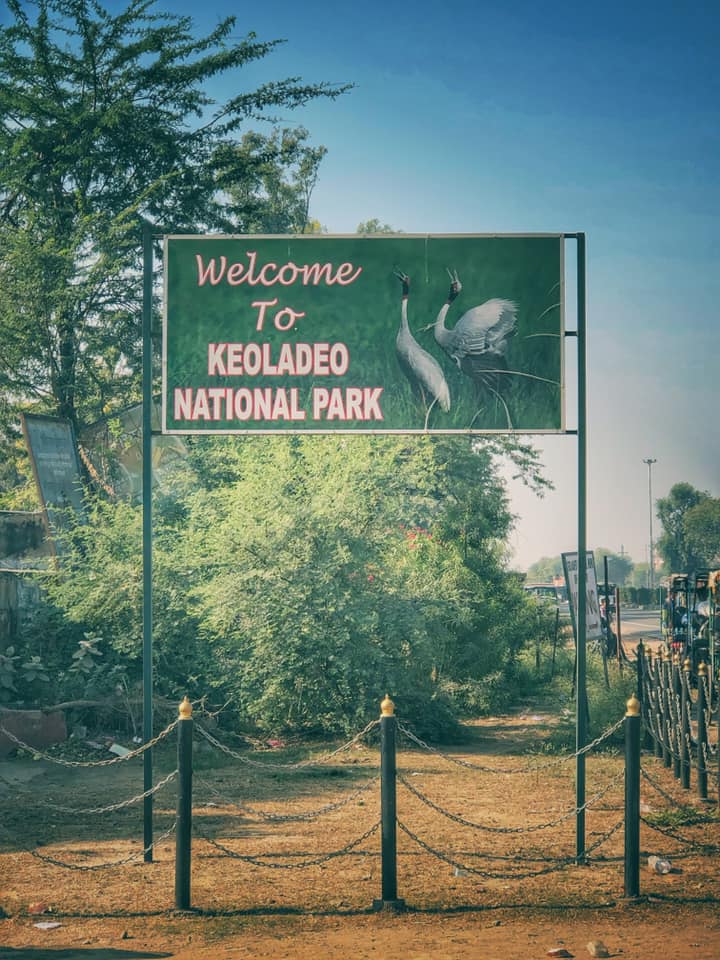
Our trip to the Keoladeo National Park || An Overview


We had always planned of visiting Keoladeo National Park at Bharatpur, Rajasthan, but it never materialized. Until November 2018. Nights were getting colder and the afternoon Sun had started losing its edge. News of migratory birds arriving in India had started floating. The plan to visit the Bird Sanctuary was on spur of the moment, as most good plans are. Once we had decided, we had two days to prepare for our trip, which included booking the hotel, researching, planning the itinerary etc. The first thing we did was book a hotel at walking distance from the gate of the National Park. We found The Sunbird quite interesting. It was about 500 metres from the National Park and was also recommended by other bloggers. Then we packed the essentials, which included the following: 1) Comfortable Summer Clothes - long-sleeved, cotton, comfortable 2) Comfortable walking shoes 3) Sunglasses 4) Sunscreen 5) Binoculars 6) Camera and lenses 7) The last thing we put in the bag was our copy of A Pictorial Field Guide to the Birds of India, and I will tell you why we needed more time to pack the book in a while. The next thing we did was make sure our car was equipped for the longish drive (~180km) across the state border. We checked that the insurance was valid and the pollution check was up to date. We also made sure that that the petrol was topped up and the tires were fine. Ours is an old car (>10 years) but has never given us trouble. We have clocked more than 1.3 lakhs kilometers on it and have also taken it on long drives. But we aren't seasoned highway drivers so extra precautions are needed. The last thing we did before heading out was that we went through the website Avibase, and marked out all the birds we may come across at the national park. At that time, we did this more out of excitement, but later found out that this was a really helpful activity. When we saw new birds at the sanctuary, we found it easier to identify them immediately. Almost all the time we were aware of what we were seeing, and what we should look forward to. Once we had marked the birds, we put the book back into our sack. We started the trip before dawn at around 5am. We took the expressway and then took the exit to the Hathras-Mathura Road. Then we took the Bharatpur-Mathura Road to reach the Keoladeo National Park in about 3 hours 30 minutes. Following is the route we followed. We reached Bharatpur at about 9 am. The hotel wasn't ready for us by then so we decided to have breakfast and head to the park. We only had one light backpack so luggage wasn't a problem. We discovered that breakfast at Hotel Sunbird was very expensive, so we headed to the nearby Hotel Om Sai and had some really nice parathas with Dahi there and then a cup of tea each. The food here was tasty, but the service was slow, so be prepared for that if you choose this option. From Hotel Om Sai, the entrance to the park was only about 300 metres. We reached there at about 10:30am and bought our tickets and then started our walk immediately. Most of our itinerary till now was not really final. For example, till the last moment, we were not sure whether we would be covering Fatehpur Sikri during this trip. We decided that we will go with the flow. And this was the best decision we made.The only thing we knew for sure was that we both had had a stressful time at work and wanted to walk it off. We knew that we would not be taking any ride to go into the park and would walk all the way - to and fro. While it worked for us, we should share that it is 5km one way to the Shiv Temple and it can get really tiring especially if the sun is out. So carry lots of water and energy bars to keep yourself well-nourished. If you do not wish to walk the entire way, you can hire a rickshaw. The rickshaw costs about 100 rs per hour + 100 hours for the binoculars. It you are not much of a walker, this is a good option. The Rickshaw pullers are very knowledgeable about the birds too. And almost always give you the right details. We heard one rickshaw puller share minute details such as why the Ibis we were seeing wasn't a black Ibis, but instead a Glossy Ibis, and how the parrot we were seeing wasn't a parrot, but a parakeet. It was really impressive. So you can just hire a rickshaw and not go in for an additional guide. The first few kilometres inside the park is normal jungle. You see some really pretty songbirds and impressive birds of prey on this stretch. There are some trails in this stretch that lead one off the beaten track. If you decide to take these, make sure you are wearing full length trousers because the bushes can be thorny and there's always a possibility of snakes etc. Also, don't head too deep into the forest, because it is easy to lose your way. We had a little adventure of our own, which I will share in a separate post. At about half-way, you reach the canteen and the checkpost. After this, towards the right is the starting point for the boat ride. We could not experience this, but have heard good things about it. You can try it if you so wish. Also, after this, the wetlands start on both the sides of the track and you start seeing the waterbirds - both migratory and resident. Most of the birds we saw were resident, but if you head there in January or February, you will surely see many more migratory birds. To know more about the birds and other fauna we saw here, please go through the following posts: Birds of Prey Herons and Egrets Storks and Cranes Songbirds Smaller Waterbirds Non-Passerine Birds Non-Avian Creatures Birds we need help in identifying We managed to cover the entire length of the walk and back before the closing time of the park (5pm). One mistake that we had made was that we didn't pack any lunch with us and as a result were dead tired and hungry by the time we got back. We went straight to the hotel, checked in, and then crashed. we slept for a couple of hours and then took a bath and headed out for dinner. Our tiredness was gone and with it our work stress too. For dinner we opted for Chacha Chicken Chacha Franky. The food was just okay and we wished we had gone over to Hotel Om Sai again. It was only late in the night that we decided that we had had enough of the national park and the thought of going back again at sunrise did not seem as enticing anymore. So we decided to pack up and head to Fatehpur Sikri in the morning. That turned out to be a really "interesting" experience, and we will talk about it in another post. The entire trip lasted about 36 hours, but it refreshed us and has motivated us to try more such adventures. We highly recommend a trip to the Keoladeo National Park, and not only for the vast variety of birds you will see here, but also for the experience. This is a well-managed national park and will help you reconnect with nature and rejuvenate. If you need any other information, you can write to us at VJ@travellingcamera.com or leave a comment on this post and we will be happy to answer.

We had always planned of visiting Keoladeo National Park at Bharatpur, Rajasthan, but it never materialized. Until November 2018. Nights were getting colder and the afternoon Sun had started losing its edge. News of migratory birds arriving in India had started floating. The plan to visit the Bird Sanctuary was on spur of the moment, as most good plans are. Once we had decided, we had two days to prepare for our trip, which included booking the hotel, researching, planning the itinerary etc. 


We had always planned of visiting Keoladeo National Park at Bharatpur, Rajasthan, but it never materialized. Until November 2018. Nights were getting colder and the afternoon Sun had started losing its edge. News of migratory birds arriving in India had started floating. The plan to visit the Bird Sanctuary was on spur of the moment, as most good plans are. Once we had decided, we had two days to prepare for our trip, which included booking the hotel, researching, planning the itinerary etc. The first thing we did was book a hotel at walking distance from the gate of the National Park. We found The Sunbird quite interesting. It was about 500 metres from the National Park and was also recommended by other bloggers. Then we packed the essentials, which included the following: 1) Comfortable Summer Clothes - long-sleeved, cotton, comfortable 2) Comfortable walking shoes 3) Sunglasses 4) Sunscreen 5) Binoculars 6) Camera and lenses 7) The last thing we put in the bag was our copy of A Pictorial Field Guide to the Birds of India, and I will tell you why we needed more time to pack the book in a while. The next thing we did was make sure our car was equipped for the longish drive (~180km) across the state border. We checked that the insurance was valid and the pollution check was up to date. We also made sure that that the petrol was topped up and the tires were fine. Ours is an old car (>10 years) but has never given us trouble. We have clocked more than 1.3 lakhs kilometers on it and have also taken it on long drives. But we aren't seasoned highway drivers so extra precautions are needed. The last thing we did before heading out was that we went through the website Avibase, and marked out all the birds we may come across at the national park. At that time, we did this more out of excitement, but later found out that this was a really helpful activity. When we saw new birds at the sanctuary, we found it easier to identify them immediately. Almost all the time we were aware of what we were seeing, and what we should look forward to. Once we had marked the birds, we put the book back into our sack. We started the trip before dawn at around 5am. We took the expressway and then took the exit to the Hathras-Mathura Road. Then we took the Bharatpur-Mathura Road to reach the Keoladeo National Park in about 3 hours 30 minutes. Following is the route we followed. We reached Bharatpur at about 9 am. The hotel wasn't ready for us by then so we decided to have breakfast and head to the park. We only had one light backpack so luggage wasn't a problem. We discovered that breakfast at Hotel Sunbird was very expensive, so we headed to the nearby Hotel Om Sai and had some really nice parathas with Dahi there and then a cup of tea each. The food here was tasty, but the service was slow, so be prepared for that if you choose this option. From Hotel Om Sai, the entrance to the park was only about 300 metres. We reached there at about 10:30am and bought our tickets and then started our walk immediately. Most of our itinerary till now was not really final. For example, till the last moment, we were not sure whether we would be covering Fatehpur Sikri during this trip. We decided that we will go with the flow. And this was the best decision we made.The only thing we knew for sure was that we both had had a stressful time at work and wanted to walk it off. We knew that we would not be taking any ride to go into the park and would walk all the way - to and fro. While it worked for us, we should share that it is 5km one way to the Shiv Temple and it can get really tiring especially if the sun is out. So carry lots of water and energy bars to keep yourself well-nourished. If you do not wish to walk the entire way, you can hire a rickshaw. The rickshaw costs about 100 rs per hour + 100 hours for the binoculars. It you are not much of a walker, this is a good option. The Rickshaw pullers are very knowledgeable about the birds too. And almost always give you the right details. We heard one rickshaw puller share minute details such as why the Ibis we were seeing wasn't a black Ibis, but instead a Glossy Ibis, and how the parrot we were seeing wasn't a parrot, but a parakeet. It was really impressive. So you can just hire a rickshaw and not go in for an additional guide. The first few kilometres inside the park is normal jungle. You see some really pretty songbirds and impressive birds of prey on this stretch. There are some trails in this stretch that lead one off the beaten track. If you decide to take these, make sure you are wearing full length trousers because the bushes can be thorny and there's always a possibility of snakes etc. Also, don't head too deep into the forest, because it is easy to lose your way. We had a little adventure of our own, which I will share in a separate post. At about half-way, you reach the canteen and the checkpost. After this, towards the right is the starting point for the boat ride. We could not experience this, but have heard good things about it. You can try it if you so wish. Also, after this, the wetlands start on both the sides of the track and you start seeing the waterbirds - both migratory and resident. Most of the birds we saw were resident, but if you head there in January or February, you will surely see many more migratory birds. To know more about the birds and other fauna we saw here, please go through the following posts: Birds of Prey Herons and Egrets Storks and Cranes Songbirds Smaller Waterbirds Non-Passerine Birds Non-Avian Creatures Birds we need help in identifying We managed to cover the entire length of the walk and back before the closing time of the park (5pm). One mistake that we had made was that we didn't pack any lunch with us and as a result were dead tired and hungry by the time we got back. We went straight to the hotel, checked in, and then crashed. we slept for a couple of hours and then took a bath and headed out for dinner. Our tiredness was gone and with it our work stress too. For dinner we opted for Chacha Chicken Chacha Franky. The food was just okay and we wished we had gone over to Hotel Om Sai again. It was only late in the night that we decided that we had had enough of the national park and the thought of going back again at sunrise did not seem as enticing anymore. So we decided to pack up and head to Fatehpur Sikri in the morning. That turned out to be a really "interesting" experience, and we will talk about it in another post. The entire trip lasted about 36 hours, but it refreshed us and has motivated us to try more such adventures. We highly recommend a trip to the Keoladeo National Park, and not only for the vast variety of birds you will see here, but also for the experience. This is a well-managed national park and will help you reconnect with nature and rejuvenate. If you need any other information, you can write to us at VJ@travellingcamera.com or leave a comment on this post and we will be happy to answer.


The first thing we did was book a hotel at walking distance from the gate of the National Park. We found The Sunbird quite interesting. It was about 500 metres from the National Park and was also recommended by other bloggers. Then we packed the essentials, which included the following:
1) Comfortable Summer Clothes - long-sleeved, cotton, comfortable
2) Comfortable walking shoes
3) Sunglasses 
4) Sunscreen
5) Binoculars
6) Camera and lenses
7) The last thing we put in the bag was our copy of A Pictorial Field Guide to the Birds of India, and I will tell you why we needed more time to pack the book in a while. 


We had always planned of visiting Keoladeo National Park at Bharatpur, Rajasthan, but it never materialized. Until November 2018. Nights were getting colder and the afternoon Sun had started losing its edge. News of migratory birds arriving in India had started floating. The plan to visit the Bird Sanctuary was on spur of the moment, as most good plans are. Once we had decided, we had two days to prepare for our trip, which included booking the hotel, researching, planning the itinerary etc. The first thing we did was book a hotel at walking distance from the gate of the National Park. We found The Sunbird quite interesting. It was about 500 metres from the National Park and was also recommended by other bloggers. Then we packed the essentials, which included the following: 1) Comfortable Summer Clothes - long-sleeved, cotton, comfortable 2) Comfortable walking shoes 3) Sunglasses 4) Sunscreen 5) Binoculars 6) Camera and lenses 7) The last thing we put in the bag was our copy of A Pictorial Field Guide to the Birds of India, and I will tell you why we needed more time to pack the book in a while. The next thing we did was make sure our car was equipped for the longish drive (~180km) across the state border. We checked that the insurance was valid and the pollution check was up to date. We also made sure that that the petrol was topped up and the tires were fine. Ours is an old car (>10 years) but has never given us trouble. We have clocked more than 1.3 lakhs kilometers on it and have also taken it on long drives. But we aren't seasoned highway drivers so extra precautions are needed. The last thing we did before heading out was that we went through the website Avibase, and marked out all the birds we may come across at the national park. At that time, we did this more out of excitement, but later found out that this was a really helpful activity. When we saw new birds at the sanctuary, we found it easier to identify them immediately. Almost all the time we were aware of what we were seeing, and what we should look forward to. Once we had marked the birds, we put the book back into our sack. We started the trip before dawn at around 5am. We took the expressway and then took the exit to the Hathras-Mathura Road. Then we took the Bharatpur-Mathura Road to reach the Keoladeo National Park in about 3 hours 30 minutes. Following is the route we followed. We reached Bharatpur at about 9 am. The hotel wasn't ready for us by then so we decided to have breakfast and head to the park. We only had one light backpack so luggage wasn't a problem. We discovered that breakfast at Hotel Sunbird was very expensive, so we headed to the nearby Hotel Om Sai and had some really nice parathas with Dahi there and then a cup of tea each. The food here was tasty, but the service was slow, so be prepared for that if you choose this option. From Hotel Om Sai, the entrance to the park was only about 300 metres. We reached there at about 10:30am and bought our tickets and then started our walk immediately. Most of our itinerary till now was not really final. For example, till the last moment, we were not sure whether we would be covering Fatehpur Sikri during this trip. We decided that we will go with the flow. And this was the best decision we made.The only thing we knew for sure was that we both had had a stressful time at work and wanted to walk it off. We knew that we would not be taking any ride to go into the park and would walk all the way - to and fro. While it worked for us, we should share that it is 5km one way to the Shiv Temple and it can get really tiring especially if the sun is out. So carry lots of water and energy bars to keep yourself well-nourished. If you do not wish to walk the entire way, you can hire a rickshaw. The rickshaw costs about 100 rs per hour + 100 hours for the binoculars. It you are not much of a walker, this is a good option. The Rickshaw pullers are very knowledgeable about the birds too. And almost always give you the right details. We heard one rickshaw puller share minute details such as why the Ibis we were seeing wasn't a black Ibis, but instead a Glossy Ibis, and how the parrot we were seeing wasn't a parrot, but a parakeet. It was really impressive. So you can just hire a rickshaw and not go in for an additional guide. The first few kilometres inside the park is normal jungle. You see some really pretty songbirds and impressive birds of prey on this stretch. There are some trails in this stretch that lead one off the beaten track. If you decide to take these, make sure you are wearing full length trousers because the bushes can be thorny and there's always a possibility of snakes etc. Also, don't head too deep into the forest, because it is easy to lose your way. We had a little adventure of our own, which I will share in a separate post. At about half-way, you reach the canteen and the checkpost. After this, towards the right is the starting point for the boat ride. We could not experience this, but have heard good things about it. You can try it if you so wish. Also, after this, the wetlands start on both the sides of the track and you start seeing the waterbirds - both migratory and resident. Most of the birds we saw were resident, but if you head there in January or February, you will surely see many more migratory birds. To know more about the birds and other fauna we saw here, please go through the following posts: Birds of Prey Herons and Egrets Storks and Cranes Songbirds Smaller Waterbirds Non-Passerine Birds Non-Avian Creatures Birds we need help in identifying We managed to cover the entire length of the walk and back before the closing time of the park (5pm). One mistake that we had made was that we didn't pack any lunch with us and as a result were dead tired and hungry by the time we got back. We went straight to the hotel, checked in, and then crashed. we slept for a couple of hours and then took a bath and headed out for dinner. Our tiredness was gone and with it our work stress too. For dinner we opted for Chacha Chicken Chacha Franky. The food was just okay and we wished we had gone over to Hotel Om Sai again. It was only late in the night that we decided that we had had enough of the national park and the thought of going back again at sunrise did not seem as enticing anymore. So we decided to pack up and head to Fatehpur Sikri in the morning. That turned out to be a really "interesting" experience, and we will talk about it in another post. The entire trip lasted about 36 hours, but it refreshed us and has motivated us to try more such adventures. We highly recommend a trip to the Keoladeo National Park, and not only for the vast variety of birds you will see here, but also for the experience. This is a well-managed national park and will help you reconnect with nature and rejuvenate. If you need any other information, you can write to us at VJ@travellingcamera.com or leave a comment on this post and we will be happy to answer.


The next thing we did was make sure our car was equipped for the longish drive (~180km) across the state border. We checked that the insurance was valid and the pollution check was up to date. We also made sure that that the petrol was topped up and the tires were fine. Ours is an old car (>10 years) but has never given us trouble. We have clocked more than 1.3 lakhs kilometers on it and have also taken it on long drives. But we aren't seasoned highway drivers so extra precautions are needed. 


We had always planned of visiting Keoladeo National Park at Bharatpur, Rajasthan, but it never materialized. Until November 2018. Nights were getting colder and the afternoon Sun had started losing its edge. News of migratory birds arriving in India had started floating. The plan to visit the Bird Sanctuary was on spur of the moment, as most good plans are. Once we had decided, we had two days to prepare for our trip, which included booking the hotel, researching, planning the itinerary etc. The first thing we did was book a hotel at walking distance from the gate of the National Park. We found The Sunbird quite interesting. It was about 500 metres from the National Park and was also recommended by other bloggers. Then we packed the essentials, which included the following: 1) Comfortable Summer Clothes - long-sleeved, cotton, comfortable 2) Comfortable walking shoes 3) Sunglasses 4) Sunscreen 5) Binoculars 6) Camera and lenses 7) The last thing we put in the bag was our copy of A Pictorial Field Guide to the Birds of India, and I will tell you why we needed more time to pack the book in a while. The next thing we did was make sure our car was equipped for the longish drive (~180km) across the state border. We checked that the insurance was valid and the pollution check was up to date. We also made sure that that the petrol was topped up and the tires were fine. Ours is an old car (>10 years) but has never given us trouble. We have clocked more than 1.3 lakhs kilometers on it and have also taken it on long drives. But we aren't seasoned highway drivers so extra precautions are needed. The last thing we did before heading out was that we went through the website Avibase, and marked out all the birds we may come across at the national park. At that time, we did this more out of excitement, but later found out that this was a really helpful activity. When we saw new birds at the sanctuary, we found it easier to identify them immediately. Almost all the time we were aware of what we were seeing, and what we should look forward to. Once we had marked the birds, we put the book back into our sack. We started the trip before dawn at around 5am. We took the expressway and then took the exit to the Hathras-Mathura Road. Then we took the Bharatpur-Mathura Road to reach the Keoladeo National Park in about 3 hours 30 minutes. Following is the route we followed. We reached Bharatpur at about 9 am. The hotel wasn't ready for us by then so we decided to have breakfast and head to the park. We only had one light backpack so luggage wasn't a problem. We discovered that breakfast at Hotel Sunbird was very expensive, so we headed to the nearby Hotel Om Sai and had some really nice parathas with Dahi there and then a cup of tea each. The food here was tasty, but the service was slow, so be prepared for that if you choose this option. From Hotel Om Sai, the entrance to the park was only about 300 metres. We reached there at about 10:30am and bought our tickets and then started our walk immediately. Most of our itinerary till now was not really final. For example, till the last moment, we were not sure whether we would be covering Fatehpur Sikri during this trip. We decided that we will go with the flow. And this was the best decision we made.The only thing we knew for sure was that we both had had a stressful time at work and wanted to walk it off. We knew that we would not be taking any ride to go into the park and would walk all the way - to and fro. While it worked for us, we should share that it is 5km one way to the Shiv Temple and it can get really tiring especially if the sun is out. So carry lots of water and energy bars to keep yourself well-nourished. If you do not wish to walk the entire way, you can hire a rickshaw. The rickshaw costs about 100 rs per hour + 100 hours for the binoculars. It you are not much of a walker, this is a good option. The Rickshaw pullers are very knowledgeable about the birds too. And almost always give you the right details. We heard one rickshaw puller share minute details such as why the Ibis we were seeing wasn't a black Ibis, but instead a Glossy Ibis, and how the parrot we were seeing wasn't a parrot, but a parakeet. It was really impressive. So you can just hire a rickshaw and not go in for an additional guide. The first few kilometres inside the park is normal jungle. You see some really pretty songbirds and impressive birds of prey on this stretch. There are some trails in this stretch that lead one off the beaten track. If you decide to take these, make sure you are wearing full length trousers because the bushes can be thorny and there's always a possibility of snakes etc. Also, don't head too deep into the forest, because it is easy to lose your way. We had a little adventure of our own, which I will share in a separate post. At about half-way, you reach the canteen and the checkpost. After this, towards the right is the starting point for the boat ride. We could not experience this, but have heard good things about it. You can try it if you so wish. Also, after this, the wetlands start on both the sides of the track and you start seeing the waterbirds - both migratory and resident. Most of the birds we saw were resident, but if you head there in January or February, you will surely see many more migratory birds. To know more about the birds and other fauna we saw here, please go through the following posts: Birds of Prey Herons and Egrets Storks and Cranes Songbirds Smaller Waterbirds Non-Passerine Birds Non-Avian Creatures Birds we need help in identifying We managed to cover the entire length of the walk and back before the closing time of the park (5pm). One mistake that we had made was that we didn't pack any lunch with us and as a result were dead tired and hungry by the time we got back. We went straight to the hotel, checked in, and then crashed. we slept for a couple of hours and then took a bath and headed out for dinner. Our tiredness was gone and with it our work stress too. For dinner we opted for Chacha Chicken Chacha Franky. The food was just okay and we wished we had gone over to Hotel Om Sai again. It was only late in the night that we decided that we had had enough of the national park and the thought of going back again at sunrise did not seem as enticing anymore. So we decided to pack up and head to Fatehpur Sikri in the morning. That turned out to be a really "interesting" experience, and we will talk about it in another post. The entire trip lasted about 36 hours, but it refreshed us and has motivated us to try more such adventures. We highly recommend a trip to the Keoladeo National Park, and not only for the vast variety of birds you will see here, but also for the experience. This is a well-managed national park and will help you reconnect with nature and rejuvenate. If you need any other information, you can write to us at VJ@travellingcamera.com or leave a comment on this post and we will be happy to answer.

The last thing we did before heading out was that we went through the website Avibase, and marked out all the birds we may come across at the national park. At that time, we did this more out of excitement, but later found out that this was a really helpful activity. When we saw new birds at the sanctuary, we found it easier to identify them immediately. Almost all the time we were aware of what we were seeing, and what we should look forward to. Once we had marked the birds, we put the book back into our sack. 


We had always planned of visiting Keoladeo National Park at Bharatpur, Rajasthan, but it never materialized. Until November 2018. Nights were getting colder and the afternoon Sun had started losing its edge. News of migratory birds arriving in India had started floating. The plan to visit the Bird Sanctuary was on spur of the moment, as most good plans are. Once we had decided, we had two days to prepare for our trip, which included booking the hotel, researching, planning the itinerary etc. The first thing we did was book a hotel at walking distance from the gate of the National Park. We found The Sunbird quite interesting. It was about 500 metres from the National Park and was also recommended by other bloggers. Then we packed the essentials, which included the following: 1) Comfortable Summer Clothes - long-sleeved, cotton, comfortable 2) Comfortable walking shoes 3) Sunglasses 4) Sunscreen 5) Binoculars 6) Camera and lenses 7) The last thing we put in the bag was our copy of A Pictorial Field Guide to the Birds of India, and I will tell you why we needed more time to pack the book in a while. The next thing we did was make sure our car was equipped for the longish drive (~180km) across the state border. We checked that the insurance was valid and the pollution check was up to date. We also made sure that that the petrol was topped up and the tires were fine. Ours is an old car (>10 years) but has never given us trouble. We have clocked more than 1.3 lakhs kilometers on it and have also taken it on long drives. But we aren't seasoned highway drivers so extra precautions are needed. The last thing we did before heading out was that we went through the website Avibase, and marked out all the birds we may come across at the national park. At that time, we did this more out of excitement, but later found out that this was a really helpful activity. When we saw new birds at the sanctuary, we found it easier to identify them immediately. Almost all the time we were aware of what we were seeing, and what we should look forward to. Once we had marked the birds, we put the book back into our sack. We started the trip before dawn at around 5am. We took the expressway and then took the exit to the Hathras-Mathura Road. Then we took the Bharatpur-Mathura Road to reach the Keoladeo National Park in about 3 hours 30 minutes. Following is the route we followed. We reached Bharatpur at about 9 am. The hotel wasn't ready for us by then so we decided to have breakfast and head to the park. We only had one light backpack so luggage wasn't a problem. We discovered that breakfast at Hotel Sunbird was very expensive, so we headed to the nearby Hotel Om Sai and had some really nice parathas with Dahi there and then a cup of tea each. The food here was tasty, but the service was slow, so be prepared for that if you choose this option. From Hotel Om Sai, the entrance to the park was only about 300 metres. We reached there at about 10:30am and bought our tickets and then started our walk immediately. Most of our itinerary till now was not really final. For example, till the last moment, we were not sure whether we would be covering Fatehpur Sikri during this trip. We decided that we will go with the flow. And this was the best decision we made.The only thing we knew for sure was that we both had had a stressful time at work and wanted to walk it off. We knew that we would not be taking any ride to go into the park and would walk all the way - to and fro. While it worked for us, we should share that it is 5km one way to the Shiv Temple and it can get really tiring especially if the sun is out. So carry lots of water and energy bars to keep yourself well-nourished. If you do not wish to walk the entire way, you can hire a rickshaw. The rickshaw costs about 100 rs per hour + 100 hours for the binoculars. It you are not much of a walker, this is a good option. The Rickshaw pullers are very knowledgeable about the birds too. And almost always give you the right details. We heard one rickshaw puller share minute details such as why the Ibis we were seeing wasn't a black Ibis, but instead a Glossy Ibis, and how the parrot we were seeing wasn't a parrot, but a parakeet. It was really impressive. So you can just hire a rickshaw and not go in for an additional guide. The first few kilometres inside the park is normal jungle. You see some really pretty songbirds and impressive birds of prey on this stretch. There are some trails in this stretch that lead one off the beaten track. If you decide to take these, make sure you are wearing full length trousers because the bushes can be thorny and there's always a possibility of snakes etc. Also, don't head too deep into the forest, because it is easy to lose your way. We had a little adventure of our own, which I will share in a separate post. At about half-way, you reach the canteen and the checkpost. After this, towards the right is the starting point for the boat ride. We could not experience this, but have heard good things about it. You can try it if you so wish. Also, after this, the wetlands start on both the sides of the track and you start seeing the waterbirds - both migratory and resident. Most of the birds we saw were resident, but if you head there in January or February, you will surely see many more migratory birds. To know more about the birds and other fauna we saw here, please go through the following posts: Birds of Prey Herons and Egrets Storks and Cranes Songbirds Smaller Waterbirds Non-Passerine Birds Non-Avian Creatures Birds we need help in identifying We managed to cover the entire length of the walk and back before the closing time of the park (5pm). One mistake that we had made was that we didn't pack any lunch with us and as a result were dead tired and hungry by the time we got back. We went straight to the hotel, checked in, and then crashed. we slept for a couple of hours and then took a bath and headed out for dinner. Our tiredness was gone and with it our work stress too. For dinner we opted for Chacha Chicken Chacha Franky. The food was just okay and we wished we had gone over to Hotel Om Sai again. It was only late in the night that we decided that we had had enough of the national park and the thought of going back again at sunrise did not seem as enticing anymore. So we decided to pack up and head to Fatehpur Sikri in the morning. That turned out to be a really "interesting" experience, and we will talk about it in another post. The entire trip lasted about 36 hours, but it refreshed us and has motivated us to try more such adventures. We highly recommend a trip to the Keoladeo National Park, and not only for the vast variety of birds you will see here, but also for the experience. This is a well-managed national park and will help you reconnect with nature and rejuvenate. If you need any other information, you can write to us at VJ@travellingcamera.com or leave a comment on this post and we will be happy to answer.


We started the trip before dawn at around 5am. We took the expressway and then took the exit to the Hathras-Mathura Road. Then we took the Bharatpur-Mathura Road to reach the Keoladeo National Park in about 3 hours 30 minutes. Following is the route we followed. 


We reached Bharatpur at about 9 am. The hotel wasn't ready for us by then so we decided to have breakfast and head to the park. We only had one light backpack so luggage wasn't a problem. We discovered that breakfast at Hotel Sunbird was very expensive, so we headed to the nearby Hotel Om Sai and had some really nice parathas with Dahi there and then a cup of tea each. The food here was tasty, but the service was slow, so be prepared for that if you choose this option. 


We had always planned of visiting Keoladeo National Park at Bharatpur, Rajasthan, but it never materialized. Until November 2018. Nights were getting colder and the afternoon Sun had started losing its edge. News of migratory birds arriving in India had started floating. The plan to visit the Bird Sanctuary was on spur of the moment, as most good plans are. Once we had decided, we had two days to prepare for our trip, which included booking the hotel, researching, planning the itinerary etc. The first thing we did was book a hotel at walking distance from the gate of the National Park. We found The Sunbird quite interesting. It was about 500 metres from the National Park and was also recommended by other bloggers. Then we packed the essentials, which included the following: 1) Comfortable Summer Clothes - long-sleeved, cotton, comfortable 2) Comfortable walking shoes 3) Sunglasses 4) Sunscreen 5) Binoculars 6) Camera and lenses 7) The last thing we put in the bag was our copy of A Pictorial Field Guide to the Birds of India, and I will tell you why we needed more time to pack the book in a while. The next thing we did was make sure our car was equipped for the longish drive (~180km) across the state border. We checked that the insurance was valid and the pollution check was up to date. We also made sure that that the petrol was topped up and the tires were fine. Ours is an old car (>10 years) but has never given us trouble. We have clocked more than 1.3 lakhs kilometers on it and have also taken it on long drives. But we aren't seasoned highway drivers so extra precautions are needed. The last thing we did before heading out was that we went through the website Avibase, and marked out all the birds we may come across at the national park. At that time, we did this more out of excitement, but later found out that this was a really helpful activity. When we saw new birds at the sanctuary, we found it easier to identify them immediately. Almost all the time we were aware of what we were seeing, and what we should look forward to. Once we had marked the birds, we put the book back into our sack. We started the trip before dawn at around 5am. We took the expressway and then took the exit to the Hathras-Mathura Road. Then we took the Bharatpur-Mathura Road to reach the Keoladeo National Park in about 3 hours 30 minutes. Following is the route we followed. We reached Bharatpur at about 9 am. The hotel wasn't ready for us by then so we decided to have breakfast and head to the park. We only had one light backpack so luggage wasn't a problem. We discovered that breakfast at Hotel Sunbird was very expensive, so we headed to the nearby Hotel Om Sai and had some really nice parathas with Dahi there and then a cup of tea each. The food here was tasty, but the service was slow, so be prepared for that if you choose this option. From Hotel Om Sai, the entrance to the park was only about 300 metres. We reached there at about 10:30am and bought our tickets and then started our walk immediately. Most of our itinerary till now was not really final. For example, till the last moment, we were not sure whether we would be covering Fatehpur Sikri during this trip. We decided that we will go with the flow. And this was the best decision we made.The only thing we knew for sure was that we both had had a stressful time at work and wanted to walk it off. We knew that we would not be taking any ride to go into the park and would walk all the way - to and fro. While it worked for us, we should share that it is 5km one way to the Shiv Temple and it can get really tiring especially if the sun is out. So carry lots of water and energy bars to keep yourself well-nourished. If you do not wish to walk the entire way, you can hire a rickshaw. The rickshaw costs about 100 rs per hour + 100 hours for the binoculars. It you are not much of a walker, this is a good option. The Rickshaw pullers are very knowledgeable about the birds too. And almost always give you the right details. We heard one rickshaw puller share minute details such as why the Ibis we were seeing wasn't a black Ibis, but instead a Glossy Ibis, and how the parrot we were seeing wasn't a parrot, but a parakeet. It was really impressive. So you can just hire a rickshaw and not go in for an additional guide. The first few kilometres inside the park is normal jungle. You see some really pretty songbirds and impressive birds of prey on this stretch. There are some trails in this stretch that lead one off the beaten track. If you decide to take these, make sure you are wearing full length trousers because the bushes can be thorny and there's always a possibility of snakes etc. Also, don't head too deep into the forest, because it is easy to lose your way. We had a little adventure of our own, which I will share in a separate post. At about half-way, you reach the canteen and the checkpost. After this, towards the right is the starting point for the boat ride. We could not experience this, but have heard good things about it. You can try it if you so wish. Also, after this, the wetlands start on both the sides of the track and you start seeing the waterbirds - both migratory and resident. Most of the birds we saw were resident, but if you head there in January or February, you will surely see many more migratory birds. To know more about the birds and other fauna we saw here, please go through the following posts: Birds of Prey Herons and Egrets Storks and Cranes Songbirds Smaller Waterbirds Non-Passerine Birds Non-Avian Creatures Birds we need help in identifying We managed to cover the entire length of the walk and back before the closing time of the park (5pm). One mistake that we had made was that we didn't pack any lunch with us and as a result were dead tired and hungry by the time we got back. We went straight to the hotel, checked in, and then crashed. we slept for a couple of hours and then took a bath and headed out for dinner. Our tiredness was gone and with it our work stress too. For dinner we opted for Chacha Chicken Chacha Franky. The food was just okay and we wished we had gone over to Hotel Om Sai again. It was only late in the night that we decided that we had had enough of the national park and the thought of going back again at sunrise did not seem as enticing anymore. So we decided to pack up and head to Fatehpur Sikri in the morning. That turned out to be a really "interesting" experience, and we will talk about it in another post. The entire trip lasted about 36 hours, but it refreshed us and has motivated us to try more such adventures. We highly recommend a trip to the Keoladeo National Park, and not only for the vast variety of birds you will see here, but also for the experience. This is a well-managed national park and will help you reconnect with nature and rejuvenate. If you need any other information, you can write to us at VJ@travellingcamera.com or leave a comment on this post and we will be happy to answer.


From Hotel Om Sai, the entrance to the park was only about 300 metres. We reached there at about 10:30am and bought our tickets and then started our walk immediately. 


We had always planned of visiting Keoladeo National Park at Bharatpur, Rajasthan, but it never materialized. Until November 2018. Nights were getting colder and the afternoon Sun had started losing its edge. News of migratory birds arriving in India had started floating. The plan to visit the Bird Sanctuary was on spur of the moment, as most good plans are. Once we had decided, we had two days to prepare for our trip, which included booking the hotel, researching, planning the itinerary etc. The first thing we did was book a hotel at walking distance from the gate of the National Park. We found The Sunbird quite interesting. It was about 500 metres from the National Park and was also recommended by other bloggers. Then we packed the essentials, which included the following: 1) Comfortable Summer Clothes - long-sleeved, cotton, comfortable 2) Comfortable walking shoes 3) Sunglasses 4) Sunscreen 5) Binoculars 6) Camera and lenses 7) The last thing we put in the bag was our copy of A Pictorial Field Guide to the Birds of India, and I will tell you why we needed more time to pack the book in a while. The next thing we did was make sure our car was equipped for the longish drive (~180km) across the state border. We checked that the insurance was valid and the pollution check was up to date. We also made sure that that the petrol was topped up and the tires were fine. Ours is an old car (>10 years) but has never given us trouble. We have clocked more than 1.3 lakhs kilometers on it and have also taken it on long drives. But we aren't seasoned highway drivers so extra precautions are needed. The last thing we did before heading out was that we went through the website Avibase, and marked out all the birds we may come across at the national park. At that time, we did this more out of excitement, but later found out that this was a really helpful activity. When we saw new birds at the sanctuary, we found it easier to identify them immediately. Almost all the time we were aware of what we were seeing, and what we should look forward to. Once we had marked the birds, we put the book back into our sack. We started the trip before dawn at around 5am. We took the expressway and then took the exit to the Hathras-Mathura Road. Then we took the Bharatpur-Mathura Road to reach the Keoladeo National Park in about 3 hours 30 minutes. Following is the route we followed. We reached Bharatpur at about 9 am. The hotel wasn't ready for us by then so we decided to have breakfast and head to the park. We only had one light backpack so luggage wasn't a problem. We discovered that breakfast at Hotel Sunbird was very expensive, so we headed to the nearby Hotel Om Sai and had some really nice parathas with Dahi there and then a cup of tea each. The food here was tasty, but the service was slow, so be prepared for that if you choose this option. From Hotel Om Sai, the entrance to the park was only about 300 metres. We reached there at about 10:30am and bought our tickets and then started our walk immediately. Most of our itinerary till now was not really final. For example, till the last moment, we were not sure whether we would be covering Fatehpur Sikri during this trip. We decided that we will go with the flow. And this was the best decision we made.The only thing we knew for sure was that we both had had a stressful time at work and wanted to walk it off. We knew that we would not be taking any ride to go into the park and would walk all the way - to and fro. While it worked for us, we should share that it is 5km one way to the Shiv Temple and it can get really tiring especially if the sun is out. So carry lots of water and energy bars to keep yourself well-nourished. If you do not wish to walk the entire way, you can hire a rickshaw. The rickshaw costs about 100 rs per hour + 100 hours for the binoculars. It you are not much of a walker, this is a good option. The Rickshaw pullers are very knowledgeable about the birds too. And almost always give you the right details. We heard one rickshaw puller share minute details such as why the Ibis we were seeing wasn't a black Ibis, but instead a Glossy Ibis, and how the parrot we were seeing wasn't a parrot, but a parakeet. It was really impressive. So you can just hire a rickshaw and not go in for an additional guide. The first few kilometres inside the park is normal jungle. You see some really pretty songbirds and impressive birds of prey on this stretch. There are some trails in this stretch that lead one off the beaten track. If you decide to take these, make sure you are wearing full length trousers because the bushes can be thorny and there's always a possibility of snakes etc. Also, don't head too deep into the forest, because it is easy to lose your way. We had a little adventure of our own, which I will share in a separate post. At about half-way, you reach the canteen and the checkpost. After this, towards the right is the starting point for the boat ride. We could not experience this, but have heard good things about it. You can try it if you so wish. Also, after this, the wetlands start on both the sides of the track and you start seeing the waterbirds - both migratory and resident. Most of the birds we saw were resident, but if you head there in January or February, you will surely see many more migratory birds. To know more about the birds and other fauna we saw here, please go through the following posts: Birds of Prey Herons and Egrets Storks and Cranes Songbirds Smaller Waterbirds Non-Passerine Birds Non-Avian Creatures Birds we need help in identifying We managed to cover the entire length of the walk and back before the closing time of the park (5pm). One mistake that we had made was that we didn't pack any lunch with us and as a result were dead tired and hungry by the time we got back. We went straight to the hotel, checked in, and then crashed. we slept for a couple of hours and then took a bath and headed out for dinner. Our tiredness was gone and with it our work stress too. For dinner we opted for Chacha Chicken Chacha Franky. The food was just okay and we wished we had gone over to Hotel Om Sai again. It was only late in the night that we decided that we had had enough of the national park and the thought of going back again at sunrise did not seem as enticing anymore. So we decided to pack up and head to Fatehpur Sikri in the morning. That turned out to be a really "interesting" experience, and we will talk about it in another post. The entire trip lasted about 36 hours, but it refreshed us and has motivated us to try more such adventures. We highly recommend a trip to the Keoladeo National Park, and not only for the vast variety of birds you will see here, but also for the experience. This is a well-managed national park and will help you reconnect with nature and rejuvenate. If you need any other information, you can write to us at VJ@travellingcamera.com or leave a comment on this post and we will be happy to answer.


Most of our itinerary till now was not really final. For example, till the last moment, we were not sure whether we would be covering Fatehpur Sikri during this trip. We decided that we will go with the flow. And this was the best decision we made.The only thing we knew for sure was that we both had had a stressful time at work and wanted to walk it off. We knew that we would not be taking any ride to go into the park and would walk all the way - to and fro. While it worked for us, we should share that it is 5km one way to the Shiv Temple and it can get really tiring especially if the sun is out. So carry lots of water and energy bars to keep yourself well-nourished.   


We had always planned of visiting Keoladeo National Park at Bharatpur, Rajasthan, but it never materialized. Until November 2018. Nights were getting colder and the afternoon Sun had started losing its edge. News of migratory birds arriving in India had started floating. The plan to visit the Bird Sanctuary was on spur of the moment, as most good plans are. Once we had decided, we had two days to prepare for our trip, which included booking the hotel, researching, planning the itinerary etc. The first thing we did was book a hotel at walking distance from the gate of the National Park. We found The Sunbird quite interesting. It was about 500 metres from the National Park and was also recommended by other bloggers. Then we packed the essentials, which included the following: 1) Comfortable Summer Clothes - long-sleeved, cotton, comfortable 2) Comfortable walking shoes 3) Sunglasses 4) Sunscreen 5) Binoculars 6) Camera and lenses 7) The last thing we put in the bag was our copy of A Pictorial Field Guide to the Birds of India, and I will tell you why we needed more time to pack the book in a while. The next thing we did was make sure our car was equipped for the longish drive (~180km) across the state border. We checked that the insurance was valid and the pollution check was up to date. We also made sure that that the petrol was topped up and the tires were fine. Ours is an old car (>10 years) but has never given us trouble. We have clocked more than 1.3 lakhs kilometers on it and have also taken it on long drives. But we aren't seasoned highway drivers so extra precautions are needed. The last thing we did before heading out was that we went through the website Avibase, and marked out all the birds we may come across at the national park. At that time, we did this more out of excitement, but later found out that this was a really helpful activity. When we saw new birds at the sanctuary, we found it easier to identify them immediately. Almost all the time we were aware of what we were seeing, and what we should look forward to. Once we had marked the birds, we put the book back into our sack. We started the trip before dawn at around 5am. We took the expressway and then took the exit to the Hathras-Mathura Road. Then we took the Bharatpur-Mathura Road to reach the Keoladeo National Park in about 3 hours 30 minutes. Following is the route we followed. We reached Bharatpur at about 9 am. The hotel wasn't ready for us by then so we decided to have breakfast and head to the park. We only had one light backpack so luggage wasn't a problem. We discovered that breakfast at Hotel Sunbird was very expensive, so we headed to the nearby Hotel Om Sai and had some really nice parathas with Dahi there and then a cup of tea each. The food here was tasty, but the service was slow, so be prepared for that if you choose this option. From Hotel Om Sai, the entrance to the park was only about 300 metres. We reached there at about 10:30am and bought our tickets and then started our walk immediately. Most of our itinerary till now was not really final. For example, till the last moment, we were not sure whether we would be covering Fatehpur Sikri during this trip. We decided that we will go with the flow. And this was the best decision we made.The only thing we knew for sure was that we both had had a stressful time at work and wanted to walk it off. We knew that we would not be taking any ride to go into the park and would walk all the way - to and fro. While it worked for us, we should share that it is 5km one way to the Shiv Temple and it can get really tiring especially if the sun is out. So carry lots of water and energy bars to keep yourself well-nourished. If you do not wish to walk the entire way, you can hire a rickshaw. The rickshaw costs about 100 rs per hour + 100 hours for the binoculars. It you are not much of a walker, this is a good option. The Rickshaw pullers are very knowledgeable about the birds too. And almost always give you the right details. We heard one rickshaw puller share minute details such as why the Ibis we were seeing wasn't a black Ibis, but instead a Glossy Ibis, and how the parrot we were seeing wasn't a parrot, but a parakeet. It was really impressive. So you can just hire a rickshaw and not go in for an additional guide. The first few kilometres inside the park is normal jungle. You see some really pretty songbirds and impressive birds of prey on this stretch. There are some trails in this stretch that lead one off the beaten track. If you decide to take these, make sure you are wearing full length trousers because the bushes can be thorny and there's always a possibility of snakes etc. Also, don't head too deep into the forest, because it is easy to lose your way. We had a little adventure of our own, which I will share in a separate post. At about half-way, you reach the canteen and the checkpost. After this, towards the right is the starting point for the boat ride. We could not experience this, but have heard good things about it. You can try it if you so wish. Also, after this, the wetlands start on both the sides of the track and you start seeing the waterbirds - both migratory and resident. Most of the birds we saw were resident, but if you head there in January or February, you will surely see many more migratory birds. To know more about the birds and other fauna we saw here, please go through the following posts: Birds of Prey Herons and Egrets Storks and Cranes Songbirds Smaller Waterbirds Non-Passerine Birds Non-Avian Creatures Birds we need help in identifying We managed to cover the entire length of the walk and back before the closing time of the park (5pm). One mistake that we had made was that we didn't pack any lunch with us and as a result were dead tired and hungry by the time we got back. We went straight to the hotel, checked in, and then crashed. we slept for a couple of hours and then took a bath and headed out for dinner. Our tiredness was gone and with it our work stress too. For dinner we opted for Chacha Chicken Chacha Franky. The food was just okay and we wished we had gone over to Hotel Om Sai again. It was only late in the night that we decided that we had had enough of the national park and the thought of going back again at sunrise did not seem as enticing anymore. So we decided to pack up and head to Fatehpur Sikri in the morning. That turned out to be a really "interesting" experience, and we will talk about it in another post. The entire trip lasted about 36 hours, but it refreshed us and has motivated us to try more such adventures. We highly recommend a trip to the Keoladeo National Park, and not only for the vast variety of birds you will see here, but also for the experience. This is a well-managed national park and will help you reconnect with nature and rejuvenate. If you need any other information, you can write to us at VJ@travellingcamera.com or leave a comment on this post and we will be happy to answer.


If you do not wish to walk the entire way, you can hire a rickshaw. The rickshaw costs about 100 rs per hour + 100 hours for the binoculars. It you are not much of a walker, this is a good option. The Rickshaw pullers are very knowledgeable about the birds too. And almost always give you the right details. We heard one rickshaw puller share minute details such as why the Ibis we were seeing wasn't a black Ibis, but instead a Glossy Ibis, and how the parrot we were seeing wasn't a parrot, but a parakeet. It was really impressive. So you can just hire a rickshaw and not go in for an additional guide.


We had always planned of visiting Keoladeo National Park at Bharatpur, Rajasthan, but it never materialized. Until November 2018. Nights were getting colder and the afternoon Sun had started losing its edge. News of migratory birds arriving in India had started floating. The plan to visit the Bird Sanctuary was on spur of the moment, as most good plans are. Once we had decided, we had two days to prepare for our trip, which included booking the hotel, researching, planning the itinerary etc. The first thing we did was book a hotel at walking distance from the gate of the National Park. We found The Sunbird quite interesting. It was about 500 metres from the National Park and was also recommended by other bloggers. Then we packed the essentials, which included the following: 1) Comfortable Summer Clothes - long-sleeved, cotton, comfortable 2) Comfortable walking shoes 3) Sunglasses 4) Sunscreen 5) Binoculars 6) Camera and lenses 7) The last thing we put in the bag was our copy of A Pictorial Field Guide to the Birds of India, and I will tell you why we needed more time to pack the book in a while. The next thing we did was make sure our car was equipped for the longish drive (~180km) across the state border. We checked that the insurance was valid and the pollution check was up to date. We also made sure that that the petrol was topped up and the tires were fine. Ours is an old car (>10 years) but has never given us trouble. We have clocked more than 1.3 lakhs kilometers on it and have also taken it on long drives. But we aren't seasoned highway drivers so extra precautions are needed. The last thing we did before heading out was that we went through the website Avibase, and marked out all the birds we may come across at the national park. At that time, we did this more out of excitement, but later found out that this was a really helpful activity. When we saw new birds at the sanctuary, we found it easier to identify them immediately. Almost all the time we were aware of what we were seeing, and what we should look forward to. Once we had marked the birds, we put the book back into our sack. We started the trip before dawn at around 5am. We took the expressway and then took the exit to the Hathras-Mathura Road. Then we took the Bharatpur-Mathura Road to reach the Keoladeo National Park in about 3 hours 30 minutes. Following is the route we followed. We reached Bharatpur at about 9 am. The hotel wasn't ready for us by then so we decided to have breakfast and head to the park. We only had one light backpack so luggage wasn't a problem. We discovered that breakfast at Hotel Sunbird was very expensive, so we headed to the nearby Hotel Om Sai and had some really nice parathas with Dahi there and then a cup of tea each. The food here was tasty, but the service was slow, so be prepared for that if you choose this option. From Hotel Om Sai, the entrance to the park was only about 300 metres. We reached there at about 10:30am and bought our tickets and then started our walk immediately. Most of our itinerary till now was not really final. For example, till the last moment, we were not sure whether we would be covering Fatehpur Sikri during this trip. We decided that we will go with the flow. And this was the best decision we made.The only thing we knew for sure was that we both had had a stressful time at work and wanted to walk it off. We knew that we would not be taking any ride to go into the park and would walk all the way - to and fro. While it worked for us, we should share that it is 5km one way to the Shiv Temple and it can get really tiring especially if the sun is out. So carry lots of water and energy bars to keep yourself well-nourished. If you do not wish to walk the entire way, you can hire a rickshaw. The rickshaw costs about 100 rs per hour + 100 hours for the binoculars. It you are not much of a walker, this is a good option. The Rickshaw pullers are very knowledgeable about the birds too. And almost always give you the right details. We heard one rickshaw puller share minute details such as why the Ibis we were seeing wasn't a black Ibis, but instead a Glossy Ibis, and how the parrot we were seeing wasn't a parrot, but a parakeet. It was really impressive. So you can just hire a rickshaw and not go in for an additional guide. The first few kilometres inside the park is normal jungle. You see some really pretty songbirds and impressive birds of prey on this stretch. There are some trails in this stretch that lead one off the beaten track. If you decide to take these, make sure you are wearing full length trousers because the bushes can be thorny and there's always a possibility of snakes etc. Also, don't head too deep into the forest, because it is easy to lose your way. We had a little adventure of our own, which I will share in a separate post. At about half-way, you reach the canteen and the checkpost. After this, towards the right is the starting point for the boat ride. We could not experience this, but have heard good things about it. You can try it if you so wish. Also, after this, the wetlands start on both the sides of the track and you start seeing the waterbirds - both migratory and resident. Most of the birds we saw were resident, but if you head there in January or February, you will surely see many more migratory birds. To know more about the birds and other fauna we saw here, please go through the following posts: Birds of Prey Herons and Egrets Storks and Cranes Songbirds Smaller Waterbirds Non-Passerine Birds Non-Avian Creatures Birds we need help in identifying We managed to cover the entire length of the walk and back before the closing time of the park (5pm). One mistake that we had made was that we didn't pack any lunch with us and as a result were dead tired and hungry by the time we got back. We went straight to the hotel, checked in, and then crashed. we slept for a couple of hours and then took a bath and headed out for dinner. Our tiredness was gone and with it our work stress too. For dinner we opted for Chacha Chicken Chacha Franky. The food was just okay and we wished we had gone over to Hotel Om Sai again. It was only late in the night that we decided that we had had enough of the national park and the thought of going back again at sunrise did not seem as enticing anymore. So we decided to pack up and head to Fatehpur Sikri in the morning. That turned out to be a really "interesting" experience, and we will talk about it in another post. The entire trip lasted about 36 hours, but it refreshed us and has motivated us to try more such adventures. We highly recommend a trip to the Keoladeo National Park, and not only for the vast variety of birds you will see here, but also for the experience. This is a well-managed national park and will help you reconnect with nature and rejuvenate. If you need any other information, you can write to us at VJ@travellingcamera.com or leave a comment on this post and we will be happy to answer.


The first few kilometres inside the park is normal jungle. You see some really pretty songbirds and impressive birds of prey on this stretch. There are some trails in this stretch that lead one off the beaten track. If you decide to take these, make sure you are wearing full length trousers because the bushes can be thorny and there's always a possibility of snakes etc. Also, don't head too deep into the forest, because it is easy to lose your way. We had a little adventure of our own, which I will share in a separate post. 


We had always planned of visiting Keoladeo National Park at Bharatpur, Rajasthan, but it never materialized. Until November 2018. Nights were getting colder and the afternoon Sun had started losing its edge. News of migratory birds arriving in India had started floating. The plan to visit the Bird Sanctuary was on spur of the moment, as most good plans are. Once we had decided, we had two days to prepare for our trip, which included booking the hotel, researching, planning the itinerary etc. The first thing we did was book a hotel at walking distance from the gate of the National Park. We found The Sunbird quite interesting. It was about 500 metres from the National Park and was also recommended by other bloggers. Then we packed the essentials, which included the following: 1) Comfortable Summer Clothes - long-sleeved, cotton, comfortable 2) Comfortable walking shoes 3) Sunglasses 4) Sunscreen 5) Binoculars 6) Camera and lenses 7) The last thing we put in the bag was our copy of A Pictorial Field Guide to the Birds of India, and I will tell you why we needed more time to pack the book in a while. The next thing we did was make sure our car was equipped for the longish drive (~180km) across the state border. We checked that the insurance was valid and the pollution check was up to date. We also made sure that that the petrol was topped up and the tires were fine. Ours is an old car (>10 years) but has never given us trouble. We have clocked more than 1.3 lakhs kilometers on it and have also taken it on long drives. But we aren't seasoned highway drivers so extra precautions are needed. The last thing we did before heading out was that we went through the website Avibase, and marked out all the birds we may come across at the national park. At that time, we did this more out of excitement, but later found out that this was a really helpful activity. When we saw new birds at the sanctuary, we found it easier to identify them immediately. Almost all the time we were aware of what we were seeing, and what we should look forward to. Once we had marked the birds, we put the book back into our sack. We started the trip before dawn at around 5am. We took the expressway and then took the exit to the Hathras-Mathura Road. Then we took the Bharatpur-Mathura Road to reach the Keoladeo National Park in about 3 hours 30 minutes. Following is the route we followed. We reached Bharatpur at about 9 am. The hotel wasn't ready for us by then so we decided to have breakfast and head to the park. We only had one light backpack so luggage wasn't a problem. We discovered that breakfast at Hotel Sunbird was very expensive, so we headed to the nearby Hotel Om Sai and had some really nice parathas with Dahi there and then a cup of tea each. The food here was tasty, but the service was slow, so be prepared for that if you choose this option. From Hotel Om Sai, the entrance to the park was only about 300 metres. We reached there at about 10:30am and bought our tickets and then started our walk immediately. Most of our itinerary till now was not really final. For example, till the last moment, we were not sure whether we would be covering Fatehpur Sikri during this trip. We decided that we will go with the flow. And this was the best decision we made.The only thing we knew for sure was that we both had had a stressful time at work and wanted to walk it off. We knew that we would not be taking any ride to go into the park and would walk all the way - to and fro. While it worked for us, we should share that it is 5km one way to the Shiv Temple and it can get really tiring especially if the sun is out. So carry lots of water and energy bars to keep yourself well-nourished. If you do not wish to walk the entire way, you can hire a rickshaw. The rickshaw costs about 100 rs per hour + 100 hours for the binoculars. It you are not much of a walker, this is a good option. The Rickshaw pullers are very knowledgeable about the birds too. And almost always give you the right details. We heard one rickshaw puller share minute details such as why the Ibis we were seeing wasn't a black Ibis, but instead a Glossy Ibis, and how the parrot we were seeing wasn't a parrot, but a parakeet. It was really impressive. So you can just hire a rickshaw and not go in for an additional guide. The first few kilometres inside the park is normal jungle. You see some really pretty songbirds and impressive birds of prey on this stretch. There are some trails in this stretch that lead one off the beaten track. If you decide to take these, make sure you are wearing full length trousers because the bushes can be thorny and there's always a possibility of snakes etc. Also, don't head too deep into the forest, because it is easy to lose your way. We had a little adventure of our own, which I will share in a separate post. At about half-way, you reach the canteen and the checkpost. After this, towards the right is the starting point for the boat ride. We could not experience this, but have heard good things about it. You can try it if you so wish. Also, after this, the wetlands start on both the sides of the track and you start seeing the waterbirds - both migratory and resident. Most of the birds we saw were resident, but if you head there in January or February, you will surely see many more migratory birds. To know more about the birds and other fauna we saw here, please go through the following posts: Birds of Prey Herons and Egrets Storks and Cranes Songbirds Smaller Waterbirds Non-Passerine Birds Non-Avian Creatures Birds we need help in identifying We managed to cover the entire length of the walk and back before the closing time of the park (5pm). One mistake that we had made was that we didn't pack any lunch with us and as a result were dead tired and hungry by the time we got back. We went straight to the hotel, checked in, and then crashed. we slept for a couple of hours and then took a bath and headed out for dinner. Our tiredness was gone and with it our work stress too. For dinner we opted for Chacha Chicken Chacha Franky. The food was just okay and we wished we had gone over to Hotel Om Sai again. It was only late in the night that we decided that we had had enough of the national park and the thought of going back again at sunrise did not seem as enticing anymore. So we decided to pack up and head to Fatehpur Sikri in the morning. That turned out to be a really "interesting" experience, and we will talk about it in another post. The entire trip lasted about 36 hours, but it refreshed us and has motivated us to try more such adventures. We highly recommend a trip to the Keoladeo National Park, and not only for the vast variety of birds you will see here, but also for the experience. This is a well-managed national park and will help you reconnect with nature and rejuvenate. If you need any other information, you can write to us at VJ@travellingcamera.com or leave a comment on this post and we will be happy to answer.


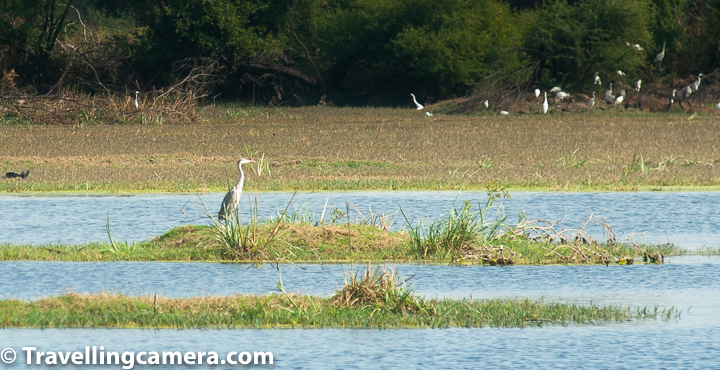
At about half-way, you reach the canteen and the checkpost. After this, towards the right is the starting point for the boat ride. We could not experience this, but have heard good things about it. You can try it if you so wish. Also, after this, the wetlands start on both the sides of the track and you start seeing the waterbirds - both migratory and resident. Most of the birds we saw were resident, but if you head there in January or February, you will surely see many more migratory birds. 


We had always planned of visiting Keoladeo National Park at Bharatpur, Rajasthan, but it never materialized. Until November 2018. Nights were getting colder and the afternoon Sun had started losing its edge. News of migratory birds arriving in India had started floating. The plan to visit the Bird Sanctuary was on spur of the moment, as most good plans are. Once we had decided, we had two days to prepare for our trip, which included booking the hotel, researching, planning the itinerary etc. The first thing we did was book a hotel at walking distance from the gate of the National Park. We found The Sunbird quite interesting. It was about 500 metres from the National Park and was also recommended by other bloggers. Then we packed the essentials, which included the following: 1) Comfortable Summer Clothes - long-sleeved, cotton, comfortable 2) Comfortable walking shoes 3) Sunglasses 4) Sunscreen 5) Binoculars 6) Camera and lenses 7) The last thing we put in the bag was our copy of A Pictorial Field Guide to the Birds of India, and I will tell you why we needed more time to pack the book in a while. The next thing we did was make sure our car was equipped for the longish drive (~180km) across the state border. We checked that the insurance was valid and the pollution check was up to date. We also made sure that that the petrol was topped up and the tires were fine. Ours is an old car (>10 years) but has never given us trouble. We have clocked more than 1.3 lakhs kilometers on it and have also taken it on long drives. But we aren't seasoned highway drivers so extra precautions are needed. The last thing we did before heading out was that we went through the website Avibase, and marked out all the birds we may come across at the national park. At that time, we did this more out of excitement, but later found out that this was a really helpful activity. When we saw new birds at the sanctuary, we found it easier to identify them immediately. Almost all the time we were aware of what we were seeing, and what we should look forward to. Once we had marked the birds, we put the book back into our sack. We started the trip before dawn at around 5am. We took the expressway and then took the exit to the Hathras-Mathura Road. Then we took the Bharatpur-Mathura Road to reach the Keoladeo National Park in about 3 hours 30 minutes. Following is the route we followed. We reached Bharatpur at about 9 am. The hotel wasn't ready for us by then so we decided to have breakfast and head to the park. We only had one light backpack so luggage wasn't a problem. We discovered that breakfast at Hotel Sunbird was very expensive, so we headed to the nearby Hotel Om Sai and had some really nice parathas with Dahi there and then a cup of tea each. The food here was tasty, but the service was slow, so be prepared for that if you choose this option. From Hotel Om Sai, the entrance to the park was only about 300 metres. We reached there at about 10:30am and bought our tickets and then started our walk immediately. Most of our itinerary till now was not really final. For example, till the last moment, we were not sure whether we would be covering Fatehpur Sikri during this trip. We decided that we will go with the flow. And this was the best decision we made.The only thing we knew for sure was that we both had had a stressful time at work and wanted to walk it off. We knew that we would not be taking any ride to go into the park and would walk all the way - to and fro. While it worked for us, we should share that it is 5km one way to the Shiv Temple and it can get really tiring especially if the sun is out. So carry lots of water and energy bars to keep yourself well-nourished. If you do not wish to walk the entire way, you can hire a rickshaw. The rickshaw costs about 100 rs per hour + 100 hours for the binoculars. It you are not much of a walker, this is a good option. The Rickshaw pullers are very knowledgeable about the birds too. And almost always give you the right details. We heard one rickshaw puller share minute details such as why the Ibis we were seeing wasn't a black Ibis, but instead a Glossy Ibis, and how the parrot we were seeing wasn't a parrot, but a parakeet. It was really impressive. So you can just hire a rickshaw and not go in for an additional guide. The first few kilometres inside the park is normal jungle. You see some really pretty songbirds and impressive birds of prey on this stretch. There are some trails in this stretch that lead one off the beaten track. If you decide to take these, make sure you are wearing full length trousers because the bushes can be thorny and there's always a possibility of snakes etc. Also, don't head too deep into the forest, because it is easy to lose your way. We had a little adventure of our own, which I will share in a separate post. At about half-way, you reach the canteen and the checkpost. After this, towards the right is the starting point for the boat ride. We could not experience this, but have heard good things about it. You can try it if you so wish. Also, after this, the wetlands start on both the sides of the track and you start seeing the waterbirds - both migratory and resident. Most of the birds we saw were resident, but if you head there in January or February, you will surely see many more migratory birds. To know more about the birds and other fauna we saw here, please go through the following posts: Birds of Prey Herons and Egrets Storks and Cranes Songbirds Smaller Waterbirds Non-Passerine Birds Non-Avian Creatures Birds we need help in identifying We managed to cover the entire length of the walk and back before the closing time of the park (5pm). One mistake that we had made was that we didn't pack any lunch with us and as a result were dead tired and hungry by the time we got back. We went straight to the hotel, checked in, and then crashed. we slept for a couple of hours and then took a bath and headed out for dinner. Our tiredness was gone and with it our work stress too. For dinner we opted for Chacha Chicken Chacha Franky. The food was just okay and we wished we had gone over to Hotel Om Sai again. It was only late in the night that we decided that we had had enough of the national park and the thought of going back again at sunrise did not seem as enticing anymore. So we decided to pack up and head to Fatehpur Sikri in the morning. That turned out to be a really "interesting" experience, and we will talk about it in another post. The entire trip lasted about 36 hours, but it refreshed us and has motivated us to try more such adventures. We highly recommend a trip to the Keoladeo National Park, and not only for the vast variety of birds you will see here, but also for the experience. This is a well-managed national park and will help you reconnect with nature and rejuvenate. If you need any other information, you can write to us at VJ@travellingcamera.com or leave a comment on this post and we will be happy to answer.


To know more about the birds and other fauna we saw here, please go through the following posts:
Birds we need help in identifying


We had always planned of visiting Keoladeo National Park at Bharatpur, Rajasthan, but it never materialized. Until November 2018. Nights were getting colder and the afternoon Sun had started losing its edge. News of migratory birds arriving in India had started floating. The plan to visit the Bird Sanctuary was on spur of the moment, as most good plans are. Once we had decided, we had two days to prepare for our trip, which included booking the hotel, researching, planning the itinerary etc. The first thing we did was book a hotel at walking distance from the gate of the National Park. We found The Sunbird quite interesting. It was about 500 metres from the National Park and was also recommended by other bloggers. Then we packed the essentials, which included the following: 1) Comfortable Summer Clothes - long-sleeved, cotton, comfortable 2) Comfortable walking shoes 3) Sunglasses 4) Sunscreen 5) Binoculars 6) Camera and lenses 7) The last thing we put in the bag was our copy of A Pictorial Field Guide to the Birds of India, and I will tell you why we needed more time to pack the book in a while. The next thing we did was make sure our car was equipped for the longish drive (~180km) across the state border. We checked that the insurance was valid and the pollution check was up to date. We also made sure that that the petrol was topped up and the tires were fine. Ours is an old car (>10 years) but has never given us trouble. We have clocked more than 1.3 lakhs kilometers on it and have also taken it on long drives. But we aren't seasoned highway drivers so extra precautions are needed. The last thing we did before heading out was that we went through the website Avibase, and marked out all the birds we may come across at the national park. At that time, we did this more out of excitement, but later found out that this was a really helpful activity. When we saw new birds at the sanctuary, we found it easier to identify them immediately. Almost all the time we were aware of what we were seeing, and what we should look forward to. Once we had marked the birds, we put the book back into our sack. We started the trip before dawn at around 5am. We took the expressway and then took the exit to the Hathras-Mathura Road. Then we took the Bharatpur-Mathura Road to reach the Keoladeo National Park in about 3 hours 30 minutes. Following is the route we followed. We reached Bharatpur at about 9 am. The hotel wasn't ready for us by then so we decided to have breakfast and head to the park. We only had one light backpack so luggage wasn't a problem. We discovered that breakfast at Hotel Sunbird was very expensive, so we headed to the nearby Hotel Om Sai and had some really nice parathas with Dahi there and then a cup of tea each. The food here was tasty, but the service was slow, so be prepared for that if you choose this option. From Hotel Om Sai, the entrance to the park was only about 300 metres. We reached there at about 10:30am and bought our tickets and then started our walk immediately. Most of our itinerary till now was not really final. For example, till the last moment, we were not sure whether we would be covering Fatehpur Sikri during this trip. We decided that we will go with the flow. And this was the best decision we made.The only thing we knew for sure was that we both had had a stressful time at work and wanted to walk it off. We knew that we would not be taking any ride to go into the park and would walk all the way - to and fro. While it worked for us, we should share that it is 5km one way to the Shiv Temple and it can get really tiring especially if the sun is out. So carry lots of water and energy bars to keep yourself well-nourished. If you do not wish to walk the entire way, you can hire a rickshaw. The rickshaw costs about 100 rs per hour + 100 hours for the binoculars. It you are not much of a walker, this is a good option. The Rickshaw pullers are very knowledgeable about the birds too. And almost always give you the right details. We heard one rickshaw puller share minute details such as why the Ibis we were seeing wasn't a black Ibis, but instead a Glossy Ibis, and how the parrot we were seeing wasn't a parrot, but a parakeet. It was really impressive. So you can just hire a rickshaw and not go in for an additional guide. The first few kilometres inside the park is normal jungle. You see some really pretty songbirds and impressive birds of prey on this stretch. There are some trails in this stretch that lead one off the beaten track. If you decide to take these, make sure you are wearing full length trousers because the bushes can be thorny and there's always a possibility of snakes etc. Also, don't head too deep into the forest, because it is easy to lose your way. We had a little adventure of our own, which I will share in a separate post. At about half-way, you reach the canteen and the checkpost. After this, towards the right is the starting point for the boat ride. We could not experience this, but have heard good things about it. You can try it if you so wish. Also, after this, the wetlands start on both the sides of the track and you start seeing the waterbirds - both migratory and resident. Most of the birds we saw were resident, but if you head there in January or February, you will surely see many more migratory birds. To know more about the birds and other fauna we saw here, please go through the following posts: Birds of Prey Herons and Egrets Storks and Cranes Songbirds Smaller Waterbirds Non-Passerine Birds Non-Avian Creatures Birds we need help in identifying We managed to cover the entire length of the walk and back before the closing time of the park (5pm). One mistake that we had made was that we didn't pack any lunch with us and as a result were dead tired and hungry by the time we got back. We went straight to the hotel, checked in, and then crashed. we slept for a couple of hours and then took a bath and headed out for dinner. Our tiredness was gone and with it our work stress too. For dinner we opted for Chacha Chicken Chacha Franky. The food was just okay and we wished we had gone over to Hotel Om Sai again. It was only late in the night that we decided that we had had enough of the national park and the thought of going back again at sunrise did not seem as enticing anymore. So we decided to pack up and head to Fatehpur Sikri in the morning. That turned out to be a really "interesting" experience, and we will talk about it in another post. The entire trip lasted about 36 hours, but it refreshed us and has motivated us to try more such adventures. We highly recommend a trip to the Keoladeo National Park, and not only for the vast variety of birds you will see here, but also for the experience. This is a well-managed national park and will help you reconnect with nature and rejuvenate. If you need any other information, you can write to us at VJ@travellingcamera.com or leave a comment on this post and we will be happy to answer.

We managed to cover the entire length of the walk and back before the closing time of the park (5pm). One mistake that we had made was that we didn't pack any lunch with us and as a result were dead tired and hungry by the time we got back. We went straight to the hotel, checked in, and then crashed. we slept for a couple of hours and then took a bath and headed out for dinner. Our tiredness was gone and with it our work stress too. For dinner we opted for Chacha Chicken Chacha Franky. The food was just okay and we wished we had gone over to Hotel Om Sai again. 


We had always planned of visiting Keoladeo National Park at Bharatpur, Rajasthan, but it never materialized. Until November 2018. Nights were getting colder and the afternoon Sun had started losing its edge. News of migratory birds arriving in India had started floating. The plan to visit the Bird Sanctuary was on spur of the moment, as most good plans are. Once we had decided, we had two days to prepare for our trip, which included booking the hotel, researching, planning the itinerary etc. The first thing we did was book a hotel at walking distance from the gate of the National Park. We found The Sunbird quite interesting. It was about 500 metres from the National Park and was also recommended by other bloggers. Then we packed the essentials, which included the following: 1) Comfortable Summer Clothes - long-sleeved, cotton, comfortable 2) Comfortable walking shoes 3) Sunglasses 4) Sunscreen 5) Binoculars 6) Camera and lenses 7) The last thing we put in the bag was our copy of A Pictorial Field Guide to the Birds of India, and I will tell you why we needed more time to pack the book in a while. The next thing we did was make sure our car was equipped for the longish drive (~180km) across the state border. We checked that the insurance was valid and the pollution check was up to date. We also made sure that that the petrol was topped up and the tires were fine. Ours is an old car (>10 years) but has never given us trouble. We have clocked more than 1.3 lakhs kilometers on it and have also taken it on long drives. But we aren't seasoned highway drivers so extra precautions are needed. The last thing we did before heading out was that we went through the website Avibase, and marked out all the birds we may come across at the national park. At that time, we did this more out of excitement, but later found out that this was a really helpful activity. When we saw new birds at the sanctuary, we found it easier to identify them immediately. Almost all the time we were aware of what we were seeing, and what we should look forward to. Once we had marked the birds, we put the book back into our sack. We started the trip before dawn at around 5am. We took the expressway and then took the exit to the Hathras-Mathura Road. Then we took the Bharatpur-Mathura Road to reach the Keoladeo National Park in about 3 hours 30 minutes. Following is the route we followed. We reached Bharatpur at about 9 am. The hotel wasn't ready for us by then so we decided to have breakfast and head to the park. We only had one light backpack so luggage wasn't a problem. We discovered that breakfast at Hotel Sunbird was very expensive, so we headed to the nearby Hotel Om Sai and had some really nice parathas with Dahi there and then a cup of tea each. The food here was tasty, but the service was slow, so be prepared for that if you choose this option. From Hotel Om Sai, the entrance to the park was only about 300 metres. We reached there at about 10:30am and bought our tickets and then started our walk immediately. Most of our itinerary till now was not really final. For example, till the last moment, we were not sure whether we would be covering Fatehpur Sikri during this trip. We decided that we will go with the flow. And this was the best decision we made.The only thing we knew for sure was that we both had had a stressful time at work and wanted to walk it off. We knew that we would not be taking any ride to go into the park and would walk all the way - to and fro. While it worked for us, we should share that it is 5km one way to the Shiv Temple and it can get really tiring especially if the sun is out. So carry lots of water and energy bars to keep yourself well-nourished. If you do not wish to walk the entire way, you can hire a rickshaw. The rickshaw costs about 100 rs per hour + 100 hours for the binoculars. It you are not much of a walker, this is a good option. The Rickshaw pullers are very knowledgeable about the birds too. And almost always give you the right details. We heard one rickshaw puller share minute details such as why the Ibis we were seeing wasn't a black Ibis, but instead a Glossy Ibis, and how the parrot we were seeing wasn't a parrot, but a parakeet. It was really impressive. So you can just hire a rickshaw and not go in for an additional guide. The first few kilometres inside the park is normal jungle. You see some really pretty songbirds and impressive birds of prey on this stretch. There are some trails in this stretch that lead one off the beaten track. If you decide to take these, make sure you are wearing full length trousers because the bushes can be thorny and there's always a possibility of snakes etc. Also, don't head too deep into the forest, because it is easy to lose your way. We had a little adventure of our own, which I will share in a separate post. At about half-way, you reach the canteen and the checkpost. After this, towards the right is the starting point for the boat ride. We could not experience this, but have heard good things about it. You can try it if you so wish. Also, after this, the wetlands start on both the sides of the track and you start seeing the waterbirds - both migratory and resident. Most of the birds we saw were resident, but if you head there in January or February, you will surely see many more migratory birds. To know more about the birds and other fauna we saw here, please go through the following posts: Birds of Prey Herons and Egrets Storks and Cranes Songbirds Smaller Waterbirds Non-Passerine Birds Non-Avian Creatures Birds we need help in identifying We managed to cover the entire length of the walk and back before the closing time of the park (5pm). One mistake that we had made was that we didn't pack any lunch with us and as a result were dead tired and hungry by the time we got back. We went straight to the hotel, checked in, and then crashed. we slept for a couple of hours and then took a bath and headed out for dinner. Our tiredness was gone and with it our work stress too. For dinner we opted for Chacha Chicken Chacha Franky. The food was just okay and we wished we had gone over to Hotel Om Sai again. It was only late in the night that we decided that we had had enough of the national park and the thought of going back again at sunrise did not seem as enticing anymore. So we decided to pack up and head to Fatehpur Sikri in the morning. That turned out to be a really "interesting" experience, and we will talk about it in another post. The entire trip lasted about 36 hours, but it refreshed us and has motivated us to try more such adventures. We highly recommend a trip to the Keoladeo National Park, and not only for the vast variety of birds you will see here, but also for the experience. This is a well-managed national park and will help you reconnect with nature and rejuvenate. If you need any other information, you can write to us at VJ@travellingcamera.com or leave a comment on this post and we will be happy to answer.

It was only late in the night that we decided that we had had enough of the national park and the thought of going back again at sunrise did not seem as enticing anymore. So we decided to pack up and head to Fatehpur Sikri in the morning. That turned out to be a really "interesting" experience, and we will talk about it in another post. 


We had always planned of visiting Keoladeo National Park at Bharatpur, Rajasthan, but it never materialized. Until November 2018. Nights were getting colder and the afternoon Sun had started losing its edge. News of migratory birds arriving in India had started floating. The plan to visit the Bird Sanctuary was on spur of the moment, as most good plans are. Once we had decided, we had two days to prepare for our trip, which included booking the hotel, researching, planning the itinerary etc. The first thing we did was book a hotel at walking distance from the gate of the National Park. We found The Sunbird quite interesting. It was about 500 metres from the National Park and was also recommended by other bloggers. Then we packed the essentials, which included the following: 1) Comfortable Summer Clothes - long-sleeved, cotton, comfortable 2) Comfortable walking shoes 3) Sunglasses 4) Sunscreen 5) Binoculars 6) Camera and lenses 7) The last thing we put in the bag was our copy of A Pictorial Field Guide to the Birds of India, and I will tell you why we needed more time to pack the book in a while. The next thing we did was make sure our car was equipped for the longish drive (~180km) across the state border. We checked that the insurance was valid and the pollution check was up to date. We also made sure that that the petrol was topped up and the tires were fine. Ours is an old car (>10 years) but has never given us trouble. We have clocked more than 1.3 lakhs kilometers on it and have also taken it on long drives. But we aren't seasoned highway drivers so extra precautions are needed. The last thing we did before heading out was that we went through the website Avibase, and marked out all the birds we may come across at the national park. At that time, we did this more out of excitement, but later found out that this was a really helpful activity. When we saw new birds at the sanctuary, we found it easier to identify them immediately. Almost all the time we were aware of what we were seeing, and what we should look forward to. Once we had marked the birds, we put the book back into our sack. We started the trip before dawn at around 5am. We took the expressway and then took the exit to the Hathras-Mathura Road. Then we took the Bharatpur-Mathura Road to reach the Keoladeo National Park in about 3 hours 30 minutes. Following is the route we followed. We reached Bharatpur at about 9 am. The hotel wasn't ready for us by then so we decided to have breakfast and head to the park. We only had one light backpack so luggage wasn't a problem. We discovered that breakfast at Hotel Sunbird was very expensive, so we headed to the nearby Hotel Om Sai and had some really nice parathas with Dahi there and then a cup of tea each. The food here was tasty, but the service was slow, so be prepared for that if you choose this option. From Hotel Om Sai, the entrance to the park was only about 300 metres. We reached there at about 10:30am and bought our tickets and then started our walk immediately. Most of our itinerary till now was not really final. For example, till the last moment, we were not sure whether we would be covering Fatehpur Sikri during this trip. We decided that we will go with the flow. And this was the best decision we made.The only thing we knew for sure was that we both had had a stressful time at work and wanted to walk it off. We knew that we would not be taking any ride to go into the park and would walk all the way - to and fro. While it worked for us, we should share that it is 5km one way to the Shiv Temple and it can get really tiring especially if the sun is out. So carry lots of water and energy bars to keep yourself well-nourished. If you do not wish to walk the entire way, you can hire a rickshaw. The rickshaw costs about 100 rs per hour + 100 hours for the binoculars. It you are not much of a walker, this is a good option. The Rickshaw pullers are very knowledgeable about the birds too. And almost always give you the right details. We heard one rickshaw puller share minute details such as why the Ibis we were seeing wasn't a black Ibis, but instead a Glossy Ibis, and how the parrot we were seeing wasn't a parrot, but a parakeet. It was really impressive. So you can just hire a rickshaw and not go in for an additional guide. The first few kilometres inside the park is normal jungle. You see some really pretty songbirds and impressive birds of prey on this stretch. There are some trails in this stretch that lead one off the beaten track. If you decide to take these, make sure you are wearing full length trousers because the bushes can be thorny and there's always a possibility of snakes etc. Also, don't head too deep into the forest, because it is easy to lose your way. We had a little adventure of our own, which I will share in a separate post. At about half-way, you reach the canteen and the checkpost. After this, towards the right is the starting point for the boat ride. We could not experience this, but have heard good things about it. You can try it if you so wish. Also, after this, the wetlands start on both the sides of the track and you start seeing the waterbirds - both migratory and resident. Most of the birds we saw were resident, but if you head there in January or February, you will surely see many more migratory birds. To know more about the birds and other fauna we saw here, please go through the following posts: Birds of Prey Herons and Egrets Storks and Cranes Songbirds Smaller Waterbirds Non-Passerine Birds Non-Avian Creatures Birds we need help in identifying We managed to cover the entire length of the walk and back before the closing time of the park (5pm). One mistake that we had made was that we didn't pack any lunch with us and as a result were dead tired and hungry by the time we got back. We went straight to the hotel, checked in, and then crashed. we slept for a couple of hours and then took a bath and headed out for dinner. Our tiredness was gone and with it our work stress too. For dinner we opted for Chacha Chicken Chacha Franky. The food was just okay and we wished we had gone over to Hotel Om Sai again. It was only late in the night that we decided that we had had enough of the national park and the thought of going back again at sunrise did not seem as enticing anymore. So we decided to pack up and head to Fatehpur Sikri in the morning. That turned out to be a really "interesting" experience, and we will talk about it in another post. The entire trip lasted about 36 hours, but it refreshed us and has motivated us to try more such adventures. We highly recommend a trip to the Keoladeo National Park, and not only for the vast variety of birds you will see here, but also for the experience. This is a well-managed national park and will help you reconnect with nature and rejuvenate. If you need any other information, you can write to us at VJ@travellingcamera.com or leave a comment on this post and we will be happy to answer.

The entire trip lasted about 36 hours, but it refreshed us and has motivated us to try more such adventures. We highly recommend a trip to the Keoladeo National Park, and not only for the vast variety of birds you will see here, but also for the experience. This is a well-managed national park and will help you reconnect with nature and rejuvenate. If you need any other information, you can write to us at VJ@travellingcamera.com or leave a comment on this post and we will be happy to answer. 

Related Blogposts -

As winter approaches North India, various wetlands start seeing thousands of Migratory Birds and Bharatpur's Keoladeo Bird Sanctuary is one of the most popular wetlands around National Capital region of India and hence sees lot of tourists from Delhi/Noida/Gurgaon region. And it's not limited to nearby tourists. Lot of serious birders visit Bharatpur during Winters from various parts of the country as well as foreigner tourists. This blog-post shares tips to plan a successful trip to Bharatpur from Delhi and what kind of things to take care while planning this birding trip. One day Road-Trip to Bharatpur Birds Sanctuary from Delhi : Winters Special


We were definitely fortunate when it comes to the number of Herons and Egrets we were able to sight during our visit to the Keoladeo National Park in November. However, at that time, we did not know which was which. These two birds are so similar when it comes to their behavior that it takes an expert to identify them separately. We referred to our birding companion - A Pictorial Field Guide to Birds of India. However, I am sure we have made some mistakes in case of a few birds. In case you can spot any, please do point them out. We would be eternally grateful. Great Egrets.Both Herons and Egrets, and also the Bitterns, belong to the family Ardeidae. Though some argue that these are actually same birds with the only differences being that Egrets usually have white or buff plumage and develop distinctive white plumes during the breeding season. Otherwise, both these birds seek the same kind of habitat - wetlands. They breed in trees close to the wetlands, and they fly with their necks retracted, unlike storks and cranes who fly with their necks outstretched. Grey Heron in Flight. Experts are still undecided about what makes a heron, a heron and an egret, an egret. So much so that though these birds are classified under separate genera - Ardea and Egretta - the only marked difference in the definition of  these genera is the size. Ardea consists of larger of the Herons whereas Egretta consists of the smaller ones. Though the size difference is often indistinct. Both the birds typically have a large wingspan and look very graceful in flight. Great Egret in Flight. You will often see these birds standing still with one leg raised and their necks outstretched carefully watching out for prey to come close enough so that they can snap it up with a quick movement of their neck and beaks. These birds are carnivorous and feed mainly on fish, frogs, lizards, and molluscs. Some herons, such as the cattle egret, often move away from the wetlands and follow cattle. These egrets feed on the insects that are disturbed by the movement of cattle in bushes. Juvenile Purple Heron(?) in the foreground with Great Egrets in the Distance. Another aspect that is unique about Herons is that they have powder down. These peculiar down feathers that often disintegrate into a powdery substance are thought to be of special significance to these birds because of their wet habitat and damp surroundings. It is also believed that these birds use the powder to preen and coat the feathers that cover the rest of their body. It is supposed to protect these feathers from slime and dirt. Purple Heron. It took us a while to associate these tall, graceful birds with the little cattle egrets we are used to seeing in the city. Initially I thought that these were cranes. However, when upon further research I discovered that though cranes and herons may look alike at a glance, they are indeed two very different birds. While Herons belong to the order Pelecaniformes, Cranes are part of the Gruiformes order. Unlike Herons who hold their necks in an "S" shape and completely retract them during flight, cranes old their necks straight. Herons have longer beaks and necks than cranes, though cranes typically are bigger in size. Indian Pond Heron. We were unfortunately not able to spot any cranes during our visit to Keoladeo. Cranes that are supposed to flock in Keoladeo during winters are Siberian Crane, Sarus Crane, Demoiselle Crane, and Common Crane. Of these, Siberian Crane does not visit India any more. A single pair of these critically endangered birds was last seen in Keoladeo National Park in 2002. Since then there is no recorded sighting of these birds in India. This is sad. If you think you have seen a Siberian crane during your visit to Keoladeo National Park, you are either mistaken or unbelievably fortunate and on the verge of being famous. Grey Heron keeping company with Black-Headed and Glossy Ibises. Herons and Egrets keep company with other water birds such as ducks, coots, waterhens etc. You will often spot one or two individuals standing tall among a flock of other smaller birds. In the above photograph, a grey heron is seen peacefully existing with the much smaller ibises. The ibises in this picture are the black-necked Ibis and the Glossy Ibis, which are often mistaken as white Ibis and Black Ibis, respectively. Though the black-necked Ibis is nearly threatened, they were a common sight in Keoladeo National Park. Grey Heron up close. The dotted line running down then neck of a grey heron creates an illusion of stitch marks and you may be forgiven if you confuse the bird with a stuff toy. From a distance and also at various stages of this heron's life, it may resemble the Great Egret quite a bit. However, two of the most distinctive identifying characteristics of the Egret are its dark legs and yellow beaks, which are also almost always easily identifiable from a distance, unless the legs are hidden behind the bushes or under water. Juvenile Cinnamon Bittern. A smaller member of the Ardeidae family, the bittern is classified into a separate subfamily Botaurinae. Typically smaller than the other herons, bitterns also exhibit slightly different behavior patterns. Bitterns are smaller and plumper than a typical Heron. They also have shorter necks, though they too can retract and elongate their necks. Unlike Herons who patiently wait for their prey to wander close enough, bitterns, and also pond herons, at times are known to chase down their prey. This kind of active hunting is not seen in other Herons. The bittern seen above has a similar plumage to the Indian Pond Heron (scroll up to see), but has a cinnamon colored underbelly as opposed to a white one in the pond heron.  Grey Heron with Cattle Egret (?). In the photograph above, you can see a Grey Heron in close vicinity of a cattle egret. While structurally, both the birds seem similar, there are clear differences that can help you distinguish one from the other. While the Heron (on the left) has light-colored legs, the egret has darker, almost black, legs. Also, the beak in case of a Heron is pinkish, whereas an egret has a yellow beak. Both these birds, in the photograph above, are quite interested in something that is happening on their left. Intermediate Egret (?). This looks like a cattle egret though I cannot be sure. It's neck is too short for a great egret, though admittedly the bird looks a bit bigger than the egrets we see in the city. So may be it is an intermediate Egret. I will leave it to the experts to judge. However, such a picture of an egret standing still at the edge of water looks deceptively peaceful. I also found out what is known as the bagula in India (bagula bhagat for its unique habit of standing with one leg folded) is the same bird as the Great Egret. Purple Heron with Great Egret in the distance. Here are two of the larger birds in the same frame. The bird in the foreground is the purple heron and the one in the far distance is the great egret. You can see the thick "S" shaped neck of the Great Egret, while the purple heron up close has a slender neck, though this bird too can retract its neck when it so feels like. We were really grateful to spot these graceful birds in their natural habitat. The Keoladeo National Park is one of the very few walled wetlands where migratory and resident birds are safe from human interference. Cattle Egret. The sheer variety of birds at Keoladeo National Park is overwhelming. More than 400 different species have been observed here. Of those, we were only able to see a handful. At the time, we thought some of these herons and egrets and storks were migratory, but it turns out that they are all resident. The only migratory birds we saw were the smaller ones. The park is already lively, and I wonder how much more lively it would be once the migratory birds arrive. Anyhow, I think February would be a good time for another visit.
Juvenile Purple Heron(?) in the foreground with Great Egrets in the Distance

Herons and Egrets at Keoladeo National Park || Waterbirds and Waders at Bharatpur


Comments

Trending Post Today !

How to reach Kasol/Malana and top things to do around this stunning hill-station of Himalayan State of India

Main places to see & Top things to do around Dalhousie : Stunning Hill Station in Himalayan State of India