One Day Tour of Delhi for Heritage Lovers: Exploring the Best Heritage Sites in Delhi

Delhi is a city where history does not stay behind museum glass. It appears in the middle of busy roads, behind unassuming gateways, along the walls of old mosques, and beneath the shade of trees that have watched generations come and go. A few kilometres can take you from the grandeur of Mughal emperors to the architectural ambitions of the Delhi Sultanate, with modern India unfolding around both.

Introduction: One Day, Centuries of History

Delhi is a city where history does not stay behind museum glass. It appears in the middle of busy roads, behind unassuming gateways, along the walls of old mosques, and beneath the shade of trees that have watched generations come and go. A few kilometres can take you from the grandeur of Mughal emperors to the architectural ambitions of the Delhi Sultanate, with modern India unfolding around both.

For anyone interested in the heritage sites in Delhi, a single day offers a fascinating introduction to the city's layered past. You can stand before the imposing Red Fort, wander through the historic lanes around Jama Masjid, admire the elegant proportions of Humayun’s Tomb, and finish among the soaring ruins of Qutub Minar. Each place reveals a different chapter in the story of Delhi, and together they offer a remarkable journey through centuries of Indian history.

However, a one-day heritage tour requires a little strategy. Delhi is enormous, traffic can be unpredictable, and its historic monuments deserve more than a hurried photograph from the entrance. The secret is to choose a route that balances major landmarks with time to notice smaller details: the geometry of an arch, the weathered inscription on a wall, the sound of a call to prayer, or the everyday life unfolding just outside a protected monument.

As a travel photographer, I would approach this day as a visual journey rather than a checklist. The morning belongs to Old Delhi, when the streets are beginning to stir. The afternoon is better suited to the gardens and architectural symmetry of Humayun’s Tomb. By late afternoon, the sandstone towers and ruins around Qutub Minar provide a memorable setting in which to end the day.

This guide explains how to plan a one-day tour of Delhi for heritage lovers, which monuments to prioritise, where to find quieter corners, how to photograph the architecture, and how to experience the city beyond its famous landmarks.

Why Visit Delhi for Its Heritage?

Delhi is one of India's most rewarding destinations for travellers interested in history and architecture because its heritage is not confined to a single period or neighbourhood.

The city has served as a centre of political power under different dynasties, including the Delhi Sultanate, the Mughals and the British. Each left behind buildings, urban layouts and cultural traditions that continue to influence the capital.

Here is what makes Delhi particularly interesting for heritage enthusiasts:

  • Architectural diversity: Explore Indo-Islamic arches, Mughal domes, red sandstone fortifications, intricate stone screens and colonial-era buildings.

  • Layers of history: Several historic settlements grew in and around what is now Delhi, creating a landscape of old capitals, ruins, tombs and fortified cities.

  • Living heritage: Historic markets, traditional food shops, religious practices and neighbourhood crafts remain part of everyday life.

  • Photography opportunities: Delhi offers everything from symmetrical monuments and dramatic silhouettes to street photography and intimate architectural details.

  • Accessibility: Many major monuments can be connected through a carefully planned road itinerary, with the Delhi Metro useful for selected journeys.

Delhi is also a useful starting point for understanding the wider range of heritage sites in India. The architectural ideas visible here connect with monuments in Agra, Fatehpur Sikri, Rajasthan and other historic regions, while also revealing Delhi's distinctive role as a political and cultural crossroads.

The most rewarding part is the contrast. A magnificent tomb may stand behind a relatively ordinary street. A medieval water structure can survive beside a modern neighbourhood. A monument that once represented imperial authority may now be a place where families walk, students sketch and photographers wait for the light to change.

That coexistence is central to Delhi's character.

Historical and Cultural Significance of Delhi's Heritage Sites

Delhi's history is often described through the succession of dynasties that ruled it. Yet the city's heritage is easier to understand when viewed as a collection of overlapping urban landscapes rather than one continuous capital.

The archaeological remains associated with ancient settlements, the fortified cities of medieval rulers, the Mughal imperial centre and the planned British capital all form part of this larger story.

From the Delhi Sultanate to the Mughals

The Delhi Sultanate left a lasting architectural legacy, particularly around Mehrauli and the Qutub complex. Its buildings show the development of Indo-Islamic architecture, including the adaptation of local building traditions to new structural forms and decorative styles.

The Qutub Minar is among the most recognisable monuments from this period. Its construction began under Qutb al-Din Aibak in the late twelfth century and continued under later rulers. The complex is not simply a tower; it contains a mosque, architectural fragments, inscriptions and other remains that help explain the changing character of the early Sultanate.

The Mughals transformed Delhi again. Shah Jahan established Shahjahanabad in the seventeenth century, with the Red Fort at its centre. The nearby Jama Masjid and the surrounding market streets formed part of a larger urban environment where royal life, religious activity, commerce and craftsmanship intersected.

Humayun’s Tomb, built in the sixteenth century, represents an important stage in the evolution of Mughal garden-tomb architecture. Its formal garden layout, monumental dome and carefully arranged spaces helped establish architectural ideas that reached even greater refinement in later Mughal buildings.

The British Capital and Modern Delhi

The establishment of New Delhi as the British imperial capital in the early twentieth century added another layer. The broad avenues, monumental government buildings and formal planning associated with the new capital differed sharply from the compact streets of Old Delhi.

This contrast is one reason a heritage tour can feel like travelling between different cities. The difference is not only architectural; it is also visible in street patterns, public spaces and the relationship between buildings and everyday life.

Why the Monuments Matter Today

Delhi's monuments are more than reminders of powerful rulers. They tell stories about urban planning, religious life, craftsmanship, engineering and the movement of ideas across regions.

Look closely at a monument and the grand historical narrative becomes more human. A carved floral pattern reveals the skill of an artisan. An inscription connects the building to a particular political moment. A water channel suggests how gardens were designed for comfort and symbolism. Even the wear on a stone staircase shows how many generations have passed through the same space.

That is the perspective worth carrying into a one-day visit.

A One-Day Tour of the Best Heritage Sites in Delhi

The itinerary below combines four major heritage stops with an optional fifth, depending on your pace and the time available. It prioritises Old Delhi in the morning, when walking through its historic streets is most rewarding, and moves south towards the Mughal gardens and the Qutub complex.
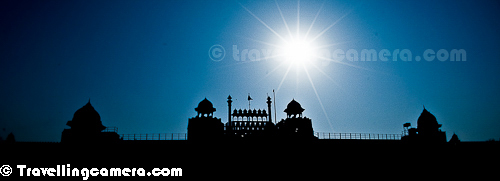
Rising majestically along the banks of the Yamuna River, the Red Fort is more than just a monument—it is a living symbol of India’s layered history, cultural richness, and enduring identity. Known locally as Lal Qila, this UNESCO World Heritage Site stands as a silent witness to centuries of imperial grandeur, colonial upheaval, and the birth of a nation.

1. Red Fort: Begin at the Heart of Mughal Delhi

Suggested time: 8:30–10:00 AM, subject to opening hours

The Red Fort, or Lal Qila, is one of the most important heritage sites in Delhi. Built by Mughal emperor Shah Jahan in the seventeenth century, it became the centre of imperial administration when he moved his capital from Agra to Shahjahanabad.

Its massive red sandstone walls are impressive from a distance, but the fort becomes more interesting once you start exploring the spaces within them.

The Lahori Gate, the fort's principal entrance, is particularly significant. Every Independence Day, the Prime Minister of India addresses the nation from this historic site. The ceremonial significance of the fort has therefore evolved considerably since the days of the Mughal court.

Inside, the Chatta Chowk reflects the tradition of markets associated with royal establishments. The Diwan-i-Aam, where the emperor received members of the public, and the Diwan-i-Khas, associated with private audiences, reveal how architecture helped organise power and access.

The surviving structures are only part of the original complex. Many buildings were damaged or altered during the British occupation, particularly after the uprising of 1857. Understanding this history helps explain why the Red Fort you see today differs from the elaborate palace complex described in historical accounts.

A photographer's perspective

The Red Fort is a lesson in scale. Photographing only the main gate can make the structure look impressive but familiar. Instead, look for the repetition of arches, the contrast between sandstone and pale stone, and the changing patterns of light across the walls.

Early morning is usually preferable for softer light, although access depends on the monument's opening schedule. If you are visiting later, look for shaded architectural details rather than forcing every photograph into direct sunlight.

Allow time for security checks and walking between the structures.

Practical tip: Check the current opening days, ticket prices and access restrictions before your visit. The Red Fort is generally closed on Mondays, so a Monday itinerary needs adjustment.
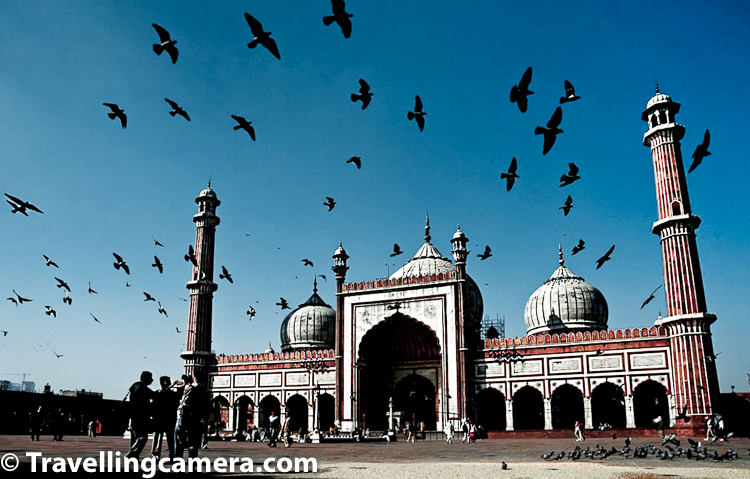
Many of you may know that Jama Masjid is largest mosque of India (which is controversial and you will few details below) and situated in hustle bustle of Old Delhi.  You may have seen those large Eid gathering photographs of Jama Masjid and those delicious street food shops of Chandi-Chowk or Chawri Bazar but may not really know some of the lesser known facts about this mosque which is very important for religious standpoint as well as heritage & architecture. On internet, there are also claims that Jama Masjid in Delhi is largest mosque in India, and at some places the largest mosque in India is Taj-ul-Masjid in Bhopal.

2. Jama Masjid: Experience the Spiritual Side of Old Delhi

Suggested time: 10:00–10:45 AM

From the Red Fort, travel towards Jama Masjid, another major monument commissioned by Shah Jahan. The mosque was completed in 1656 and remains an important place of worship.

Its scale is immediately apparent. Broad stairways lead towards the entrance, while the mosque's domes and minarets rise above the densely packed neighbourhood. The surrounding streets feel much more intimate than the expansive imperial complex you have just left.

This contrast is part of what makes Old Delhi so compelling. The historic city was never merely a collection of monuments. It was also a place of commerce, religious activity, food, crafts and neighbourhood life.

Inside the mosque courtyard, take a moment to appreciate the relationship between the red sandstone, white marble and the open sky. The architecture is monumental, but the courtyard also offers a sense of openness that is difficult to appreciate from outside.

A photographer's perspective

If photography is permitted, the courtyard provides opportunities for symmetrical compositions, especially when the main entrance and domes are framed carefully. A wide-angle lens can help convey the scale, while a normal or short telephoto lens is useful for architectural details.

Always respect worshippers and the mosque's rules. Avoid photographing people at prayer without permission, and ask before making portraits.

Important visitor etiquette: Jama Masjid is an active religious site. Dress modestly, follow instructions about footwear and appropriate clothing, and confirm any visitor restrictions before entering. Access arrangements can vary, and tourist photography may be restricted or subject to charges.

3. Chandni Chowk: Walk Through the City That Grew Around the Monuments

Suggested time: 10:45–11:30 AM

Chandni Chowk is not a single monument, but it deserves a place on any heritage itinerary.

The market dates to the Mughal period and was part of Shahjahanabad's original urban design. Its historic importance is easier to appreciate when you look beyond the traffic and shop signs.

Old havelis, religious buildings, traditional businesses and narrow lanes survive in pockets throughout the neighbourhood. Some façades are well maintained; others reveal layers of paint, cables, repairs and additions accumulated over decades.

This is where I would slow down rather than try to cover every lane. Walk a short section, observe how shopkeepers arrange their goods, and notice how different communities have shaped the area's commercial and religious life.

The famous Paranthe Wali Gali is one possible detour, although its popularity means that it can feel more like a food attraction than a quiet glimpse of everyday life. Nearby lanes may offer equally interesting architectural details with fewer visitors.

Depending on your interests, you might also explore the area around Gauri Shankar Temple or the historic Sikh religious sites in Old Delhi. Keep the route manageable; the aim is to experience the neighbourhood rather than complete an exhaustive walking tour.

A photographer's perspective

Chandni Chowk is best photographed as a living streetscape. Look for layered compositions with shopfronts in the foreground and old buildings behind them. Reflections, passing cycle-rickshaws, handwritten signs and shafts of light can give photographs a stronger sense of place than a conventional street view.

Ask before photographing shopkeepers or customers. In narrow lanes, avoid blocking entrances or creating congestion.

Practical tip: The streets can be crowded, and vehicle movement is unpredictable. Wear comfortable shoes and keep valuables secure. If the heat or traffic becomes tiring, shorten this stop and continue towards the southern monuments.

Recently some of my friends had permissions to visit various monuments in Delhi to shoot Lunar Eclipse on 10th Dec, 2011. I also joined them, although all the hard-work for planning these photo-shoots, getting permissions and arranging appropriate equipments was done by other folks. All photographs shared here are not related to the project. These are some of the casual shots taken during eclipse hours on that evening...Here is one of the simple shot when eclipse just started This shot was taken around 6:35 pm on 10th Dec, 2011 !!! Usually Lunar Eclipse used to take place in January, when sky is mainly covered with clouds or fog. Since this time, it happened early, people got to see it clearly and there was huge buzz among various Photography communities.Here is one of the photograph of Humayun's tomb. It's taken with Zoon-in/Zoom-out during long-exposure. Since most of folks were busy on eclipse project and they had to spent 4 hrs at Humayun's tomb, I thought of roaming around and having some clicks of the place in this wonderful lighting, which is rare to capture. Above photograph is also a result of some of the experiments done at Humayun's Tomb, Delhi.Here are some water ponds in all four directions of Humayn's Tomb, but the one in front of entry gate is maintained well. Reflection of the main tomb was looking awesome in Eclipse hours, although above photograph failed to show the real magic... You can see the shining moon in the sky and lovely hues of sunset, when exposed this view for a long time.A similar photograph of Humayn Tomb, with some part of it being reflecting on adjoining water stream... Usually Humayun Tomb closes before Sunset, but if someone wants to have access for some specific purpose, permissions are required in advance.Relatively closer look at Lunar Eclipse through Humayun Tomb. Lunar Eclipse of 10th Dec 2011 can be seen in Photographs at http://www.examiner.com/photography-in-national/yesterday-s-total-lunar-eclipse-photos-1 as well !!!Light and colors were changing with every minute. In fact the change was very prominent for folks who were shooting moon close-ups with tele-photo lenses. After one stage, color of moon starts changing to red and again come back natural shade after few hours...Opposite side of Humayun Tomb, Delhi, INDIAThere are various photography techniques are explained on web and some of them are really technical. At the same time, some of them are really easy to get an idea about the concept and light variation trend during the eclipse hours. In my opinion, understanding the concept and applying your ideas is more important otherwise we always see similar shots on every lunar eclipse. Now many softwares even come with standard ways of capturing lunar eclipse and create single HDR or multi-exposure shots.Carrying Gorilla-pod helps in placing camera at low height, so that some of the other compositions can be tried... No doubt that sturdy and big tripods are important for such shoots but some desi fundas also work well :)Humayun Tomb is very well maintained by Archaeological Survey of India !!! ASI is is the organization to get special permissions to get entry into Humayun Tomb in odd hours. There is lot of green area around main tomb in this campus. And there is very special thing about Mughal Architecture that all four areas around a building are maintained in similar fashion. Alignments of landscapes, gardens and trees would be exactly same.During day time, entry fees for SAARC citizens is 10 Rs. SAARC includes Bangladesh, Nepal, Bhutan, Sri Lanka, Pakistan, Maldives and Afghanistan... BIMSTEC Countries  like Bangladesh, Nepal, Bhutan, Sri Lanka, Thailand and Myanmar also need to pay 10 Rs only. For others it's $5.This photograph would be give you a sense about it's shape and architecture. It has a square base and all four faces of Humayun Tomb look same. Theoretically it's a two storey building but height of one storey is unmatchable :) ... Whole building is made of red stone and Taj Mahal is exactly replica of this building, but in white marble...Light streaks touching ground after filtering through tree leaves around Humayun Tomb... Such photographs from early morning look stunning, as light is most favorable at that point of time of the day...Check following link on wiipedia to know more about Humayun Tomb - http://en.wikipedia.org/wiki/Tomb_of_Humayun . This page has rich information about architecture of Humayun Tomb and history related to it.Humayun Tomb is also in the list of World Heritage sites maintained by UNESCO. Check out http://whc.unesco.org/en/list/232 for more details.Every other site about Delhi has special mention of Humayun Tomb, so I would not repeat all those well known facts about the place. Delhicapital.com has also written about Humayun Tomb in a well structured way... Check it out......A photographer sitting in front of main Tomb in the campus to shoot Lunar Eclipse 2011 with Humayun Tomb in foreground. These folks were sitting at same place, fiddling with camera setting to get best possible multi-exposure shots. Some of them also work on HDRs and hope to see the results soon.Some of the standard techniques of shooting Lunar Eclipses are available here - it was lovely evening with enthusiastic Photographers at Humayun Tomb !!!

4. Humayun's Tomb: Discover the Elegance of Mughal Garden Architecture

Suggested time: 12:30–2:00 PM

After exploring Old Delhi, travel south to Humayun's Tomb. The journey may take longer than expected, so allow a generous buffer rather than assuming that the drive will be quick.

Commissioned by Humayun's widow, Hamida Banu Begum, and completed in the sixteenth century, the tomb is one of Delhi's most significant Mughal monuments. It is also recognised as a UNESCO World Heritage Site.

The first impression is one of balance. The monumental tomb stands above a formal garden, with paths and water channels organising the landscape into geometric sections. The architecture combines red sandstone, white marble and a large central dome, producing a visual harmony that feels different from the imposing fortifications of Old Delhi.

Humayun's Tomb is often discussed as an important precursor to later Mughal garden-tombs, including the Taj Mahal. The comparison is useful, but the monument deserves attention in its own right. Its proportions, double-storeyed façade, arched recesses and relationship with the garden give it a distinct character.

The garden is equally important. The charbagh layout divides the landscape into four principal sections, reflecting a Persianate garden tradition that was adapted in Mughal India. Water, shade and symmetry were not merely decorative features; they helped shape the experience of the space.

A photographer's perspective

This is one of the best heritage sites in Delhi for architectural photography.

Start with the classic frontal view, then move away from the central axis. The side perspectives reveal the building's depth, while the pathways can create leading lines towards the tomb.

At midday, the light may be harsh and the shadows deep. Use the time to study compositions, photograph details in shaded areas and look for contrasts between the building and its surroundings. If your schedule allows flexibility, later afternoon usually offers more attractive directional light.

A few details worth looking for include:

  • The contrast between red sandstone and white marble.

  • The geometry of the arched recesses.

  • The changing shape of shadows beneath the arches.

  • The relationship between the tomb and the surrounding garden.

  • The small human figures that communicate the scale of the architecture.

Do not spend the entire visit trying to capture the perfect symmetrical photograph. Some of the strongest images emerge when you step away from the main path and notice how people interact with the space.

Qutub Minar is one of the most popular heritage compounds in Delhi and quite popular destination amongst tourists visiting Delhi. It's also a good places for local folks to spend quality time with their family & friends. Many times photographers and heritage explorers can be seen around Qutub Minar campus. This Photo Journey shares some of the special photographs from Qutub Minar campus. Reaching Qutub Minar has become pretty easy now. One can take Metro to Qutub Minar. The Qutub Minar Metro station is not close to the compound, but there are autos which drop folks from Metro to Qutub Minar and charge 10 rs each. If you don’t want to share the auto, most of the folks use meters and that’s reliable. It will not cost more than 30 Rs.Other good to way explore these beautiful monuments in Delhi are HOHO buses run by Delhi Tourism department. You can buy a daily pass and hop on/off to/from these buses at defined stations, which are usually very well located around the most popular tourist destinations in Delhi.Booking a Taxi to go to Qutub Minar from Central Delhi, East Delhi or Noida might be a bad idea because of slow traffic movement. I had gone through such experience twice and now try to use Metro, if possible.After Red Fort, Qutub Minar is most visited monuments in Delhi and one should expect lot of people inside Qutub Minar compound, even on weekdays. Apart from the main minaret, there are various architectural structures in this compound  having different stories associated. There are no guides around Qutub Minar now, but you can get an audio device on rent which will keep telling you about the place. Easy to use device and have good details about various spots in Qutub Minar campus.As you walk around this huge compound, you get to see spectacular beauty of the Qutub Minar from different angles. Above photograph shows one of the views of Qutub Minar through the other structures around.It's a wonderful place for photographers because of diversified opportunities to click architecture, people, landscapes and lot more. I have been part of various photo-walks here and every time it was different experience.Tourists from different parts of the world come to Qutub Minar to witness it's grandness and know about it's history. It's really strange that we don't care much to know our own history, but things have been changing for good. There are lot of social circles which inspire folks to visit such places and know more about our heritage. Mehrauli Archeological park  is another interesting place around Qutub Minar.  It's awesome to see these airplanes crossing through Qutub Minar. Although there is a huge different between the top most peak of Qutub and the flight, but such views look dramatic.Qutub is the 2nd tallest minar (73 metres) in India after Fateh Burj. Qutb Minar originally is a UNESCO World Heritage Site which is made of red sandstone and marble. The stairs of the tower has 379 steps, is 72.5 metres high, and has a base diameter of 14.3 metres, which narrows to 2.7 metres at the top. Construction was started in 1192 by Qutb-ud-din Aibakand was carried on by his successor, Iltutmish. Check out more about Qutub on Wikipedia  His expressions explain it all about the height and grandness of Qutub Minar.

5. Qutub Minar and the Surrounding Archaeological Complex

Suggested time: 3:00–5:00 PM, adjusted to current closing time

End the day at the Qutub Minar complex in Mehrauli. This is one of the most rewarding heritage sites in Delhi because the towering minaret stands alongside the remains of several other structures.

The Qutub Minar rises approximately 73 metres and is built primarily from red and buff sandstone, with marble used in parts of its upper structure. Construction began under Qutb al-Din Aibak and continued under subsequent rulers. The tower's inscriptions, fluted surfaces and projecting balconies make it an extraordinary example of early Indo-Islamic architecture.

However, do not treat the minaret as the entire attraction.

The complex contains the Quwwat-ul-Islam Mosque, architectural fragments, gateways and the famous Iron Pillar. These structures reveal how the site developed over time and how architectural materials and traditions were reused, adapted and interpreted across different periods.

The Iron Pillar is particularly fascinating. It is widely known for its remarkable resistance to atmospheric corrosion, a subject of continuing scientific interest. Its inscription is associated with a ruler named Chandra, generally identified with a Gupta-period king. The pillar predates the Qutub Minar complex by several centuries.

The site also has a more complicated historical dimension. The mosque and associated structures incorporate architectural elements from earlier buildings, including temple material. Interpretations of the complex should acknowledge this evidence while distinguishing documented history from later political narratives.

A photographer's perspective

Late afternoon can be an excellent time for photography, depending on the season and the sun's direction. The warm tones of the stone become especially appealing when the light arrives at an angle rather than falling directly from overhead.

Try these approaches:

  • Photograph the minaret vertically to emphasise its height.

  • Use the arches and columns to frame the tower.

  • Include people in the foreground to establish scale.

  • Focus on carved inscriptions and stone textures.

  • Experiment with a wider composition that includes several structures rather than isolating the tower.

The archaeological complex rewards patience. If the main viewing area is crowded, move towards another accessible part of the site and look for a different angle.

Practical tip: Confirm the current closing time before planning this as your final stop. If you arrive too close to closing, prioritise the minaret and the structures that interest you most.

Hidden Gems and Lesser-Known Heritage Sites in Delhi

A one-day itinerary cannot include every historic site. Still, a few nearby alternatives can add depth to the experience if you have extra time or decide to return.

Agrasen ki Baoli

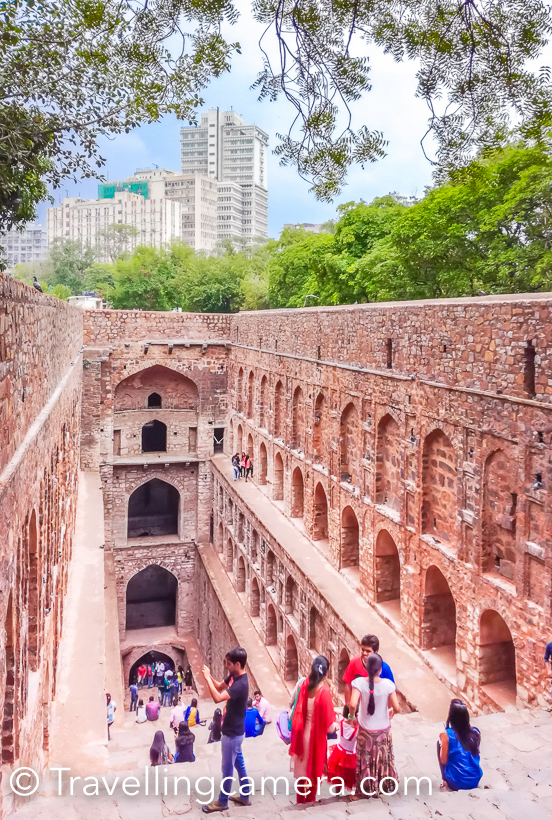
Located near Connaught Place, Agrasen ki Baoli is a historic stepwell that descends through a series of stone levels. Its long, symmetrical staircase creates a dramatic visual effect, especially when viewed from above.

The site's early origins are uncertain, and popular claims linking it directly to the legendary king Agrasen should be treated cautiously. The structure visible today is generally associated with the medieval period.

Its enclosed geometry and strong lines make it particularly attractive to photographers. However, it can be crowded, and access arrangements may change. It is best treated as an alternative stop rather than an additional destination squeezed into an already full day.

Mehrauli Archaeological Park

Near the Qutub complex, Mehrauli Archaeological Park contains a collection of historic structures, including tombs, gateways and remains associated with different periods.

It offers a useful reminder that Delhi's heritage is not confined to a handful of famous monuments. Some historic buildings sit quietly among vegetation and residential surroundings, their significance less immediately apparent than that of the major tourist attractions.

If you have an extra morning, consider exploring the park at a relaxed pace. Carry water, wear comfortable shoes and check which sections are accessible.

Nizamuddin Dargah and the Historic Neighbourhood

The area around Nizamuddin Dargah offers a different perspective on Delhi's cultural history. The shrine is associated with the Sufi saint Hazrat Nizamuddin Auliya and remains an important spiritual destination.

The neighbourhood is known for its religious traditions and qawwali performances, although schedules and access vary. Visiting respectfully is more important than treating the area as a photography backdrop.

This is best explored separately from a tightly scheduled monument tour, particularly if you want time to understand the atmosphere and local customs.

Purana Qila

Purana Qila, or the Old Fort, offers another perspective on Delhi's historic landscape. Its imposing gateways and fortified walls are associated with the sixteenth century, particularly the reigns of Humayun and Sher Shah Suri.

The fort is often linked in popular accounts to ancient Indraprastha, but archaeological evidence and the precise identification of ancient settlements require careful interpretation. The association makes for an interesting historical question rather than a definitive claim.

Purana Qila is a good alternative if you are more interested in fortifications than in adding another garden-tomb to your itinerary.

Best Photography Spots Among the Heritage Sites in Delhi

For travel photographers, Delhi's monuments offer different visual experiences depending on their architecture, surroundings and the time of day.

LocationBest photographic subjectSuggested time
Red FortMonumental gates, sandstone textures and architectural repetitionMorning, subject to opening hours
Jama MasjidDomes, courtyard geometry and views from outsideMorning, respecting prayer and visitor rules
Chandni ChowkStreet life, layered shopfronts and old façadesMorning
Humayun's TombGarden symmetry, arches and architectural portraitsMorning or late afternoon
Qutub MinarTower details, carved stone and architectural scaleLate afternoon, subject to closing time
Agrasen ki BaoliRepeating steps and geometric compositionsMorning or quieter visiting hours
Purana QilaFort walls, gateways and broad architectural viewsMorning or late afternoon

Photography Tips for a One-Day Heritage Tour

Carry a versatile lens. A standard zoom is useful for both architectural details and broader scenes. An ultra-wide lens can help with interiors and tight spaces, but watch for distorted vertical lines.

Photograph details, not only monuments. Carved flowers, weathered stone, inscriptions and the patterns formed by light can tell a more interesting story than another centred photograph of a famous building.

Use people to communicate scale. A visitor walking beneath a huge arch or standing near a towering minaret helps viewers understand the dimensions of the structure. Always respect privacy and local photography rules.

Watch the direction of light. Front lighting records architectural details clearly, while side lighting reveals texture and depth. Harsh midday light can be difficult, but shaded courtyards and interior recesses often provide softer alternatives.

Keep an eye on the background. Modern signs, cables, barriers and crowds are part of contemporary Delhi, but you can choose how much they feature in your composition.

Protect your equipment. Dust, heat and crowded streets are common practical challenges. Carry a lens cloth, keep spare batteries accessible and avoid changing lenses unnecessarily in dusty conditions.

Do not let photography take over the experience. Put the camera away occasionally. Listening to a guide, reading an inscription or watching how people use a historic space can add meaning to the photographs you eventually make.

Local Food Experiences: What to Eat During Your Delhi Heritage Tour

Food is an important part of exploring Delhi, particularly in Old Delhi, where historic neighbourhoods and established food businesses remain closely connected.

The most practical approach is to plan a short breakfast or snack stop in the morning, followed by lunch after leaving Old Delhi. This prevents food queues from taking over the schedule.

Breakfast and Snacks in Old Delhi

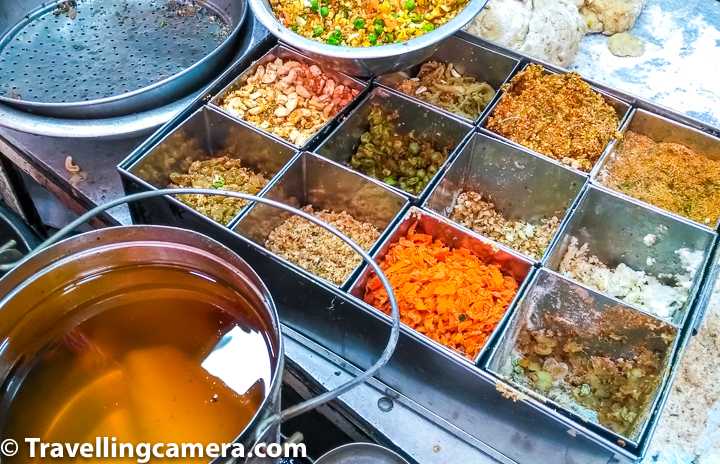
Depending on your preferences and the shops operating that day, you may find traditional kachori, bedmi puri, jalebi, parathas and other local favourites.

Paranthe Wali Gali is famous for its stuffed flatbreads, although its popularity means that it is not necessarily the best place for a quiet meal. If you visit, observe how the lane functions as a commercial space as well as a food destination.

Chandni Chowk is also known for its sweet shops and savoury snacks. Rather than attempting a long food trail, choose one or two places and leave enough time to explore the surrounding streets.

Lunch After Old Delhi

After travelling south, you can have lunch near Humayun's Tomb or choose a restaurant along your route. This is often more efficient than returning to Old Delhi during the middle of the day.

Delhi's food culture reflects influences from many communities and regions. Mughlai dishes, kebabs, breads, vegetarian preparations and contemporary interpretations of traditional recipes are all part of the city's culinary landscape.

If you are interested in food photography, look for the preparation process rather than photographing only the finished dish. The arrangement of ingredients, the movement of hands and the textures of a busy kitchen can provide a stronger sense of place.

Choose food outlets with good hygiene practices, and be cautious with food that has been sitting uncovered for long periods, particularly during hot weather.

Local Conversations and Human Stories

The most interesting encounters during a heritage tour are not always planned.

At a historic market, a shopkeeper may explain that a business has operated in the same family for generations. A guide might point out a small architectural feature that most visitors overlook. A security guard may know which side of a monument offers a better view of the afternoon light.

These conversations can transform the way you understand a place.

Delhi's monuments are often presented through emperors, architects and political events. Yet their continuing presence also depends on conservators, gardeners, guides, vendors, religious communities and local residents.

When speaking to people, ask open questions rather than assuming that everyone has a historical anecdote to share. If someone is busy serving customers or working, respect their time.

For photographers, a simple introduction and a request for permission can make a considerable difference. Explain what you are photographing, avoid interrupting work and offer to show the image if the person is interested.

Sometimes the most memorable part of the day is not the photograph you planned to make. It is the brief conversation that helps you see a familiar monument differently.

Best Time to Visit Heritage Sites in Delhi

October to March is generally the most comfortable period for a heritage tour, although conditions vary from year to year.

SeasonWhat to expectTravel advice
October–NovemberPleasant periods mixed with changing temperatures and possible hazeGood for walking, but check air quality
December–JanuaryCool weather, foggy mornings and potentially poor visibilityStart later if dense fog affects travel or photography
February–MarchGenerally comfortable daytime conditions and improving lightA strong period for combining sightseeing and photography
April–JuneIncreasingly intense heat, often with very hot afternoonsStart early, reduce walking and carry water
July–SeptemberMonsoon humidity, rain and occasional waterloggingCarry rain protection and allow extra travel time

For photography, the ideal time depends on the monument. Morning light can work beautifully for Old Delhi, while the Mughal gardens and Qutub complex can look particularly attractive later in the afternoon.

Fog and haze can reduce distant visibility during winter. Pollution levels also vary considerably, so check the air quality forecast before planning a long outdoor day.

Avoid assuming that every monument is open every day or that the same visiting hours apply throughout the year. Check official information before setting out.

How to Reach Delhi's Heritage Sites

Delhi is well connected by air, rail and road. Once in the city, the most practical transport choice depends on the number of monuments you plan to visit.

By Air

Indira Gandhi International Airport serves domestic and international flights. Depending on traffic, the time needed to reach central Delhi or the southern monument areas can vary substantially.

If you are arriving on the same day as your tour, avoid scheduling the first monument too close to your landing time.

By Train

New Delhi Railway Station, Old Delhi Railway Station and Hazrat Nizamuddin Railway Station serve different parts of the city. Choose accommodation and transport based on your arrival station rather than assuming that every railway station is centrally located.

By Metro

The Delhi Metro is useful for reaching several parts of the city and can help avoid road traffic. However, the most convenient station differs by monument, and some destinations still require a walk, auto-rickshaw or taxi.

By Taxi or Private Car

A taxi or private car can be convenient for a one-day tour because the itinerary involves moving between Old Delhi, central areas and South Delhi.

A driver familiar with monument drop-off points can save time, but traffic conditions remain unpredictable. Agree on the route and waiting arrangements in advance.

For a heritage-focused day, a sensible combination is to walk within each monument area and use a car or taxi between the major stops.

Where to Stay for a Delhi Heritage Tour

If heritage sightseeing is the main purpose of your trip, choose accommodation based on your starting point, transport access and comfort rather than simply selecting the cheapest room.

  • Connaught Place and central Delhi: Convenient for restaurants, metro connections and access to several parts of the city.

  • Old Delhi: Useful if you want to explore historic markets early, although accommodation and road access can be less straightforward in busy lanes.

  • South Delhi: Practical for visitors focusing on Humayun's Tomb, Mehrauli and Qutub Minar, particularly if they are planning more than one day of sightseeing.

  • Near a suitable metro station: A good option for travellers who prefer public transport and want to avoid relying entirely on road traffic.

For a one-day itinerary, I would generally choose central Delhi or a well-connected South Delhi neighbourhood. This offers flexibility if you need to adjust the route because of weather, crowds or monument opening times.

Check recent guest reviews, cancellation policies and the actual distance to the nearest metro station before booking.

Budget Tips for Visiting Heritage Sites in Delhi

Delhi can be explored at different budget levels. The main expenses are monument entry, transport, meals and accommodation.

To keep costs under control:

  • Check official ticket prices and visitor categories before your trip. Rates for Indian and foreign visitors may differ.

  • Verify whether tickets can be purchased online and whether any additional charges apply.

  • Use the Metro where it makes sense, especially for journeys that avoid congested roads.

  • Walk between nearby sites rather than repeatedly booking short taxi rides.

  • Carry drinking water in a reusable bottle where permitted and refill it safely.

  • Choose a local breakfast and a straightforward lunch instead of spending time and money on several restaurant stops.

  • Consider a licensed guide if historical interpretation is a priority, but agree on the fee and duration beforehand.

  • Keep some flexibility in the budget for unexpected transport costs or changes to your itinerary.

Remember that a low-cost trip does not have to be rushed. Spending more time at fewer monuments can be more rewarding than paying to enter every site and barely exploring any of them.

Suggested One-Day Delhi Heritage Itinerary

The following plan is designed for travellers who want to experience the city's major historical landmarks without spending the entire day in transit.

TimeActivityMain focus
8:30–10:00 AMRed FortMughal architecture and imperial history
10:00–10:45 AMJama MasjidReligious architecture and courtyard
10:45–11:30 AMChandni ChowkHistoric markets, street photography and snacks
11:30 AM–12:30 PMTravel and lunch arrangementsAllow for traffic and a short break
12:30–2:00 PMHumayun's TombGarden-tomb architecture and photography
2:00–3:00 PMTravel and refreshmentsFlexible buffer
3:00–5:00 PMQutub Minar complexEarly Sultanate architecture and archaeological remains

These timings are illustrative rather than guaranteed. Travel times, queues, security checks, prayer schedules and seasonal opening hours can change the day significantly.

If you prefer a slower experience, remove one of the Old Delhi stops or spend longer at Humayun's Tomb. Heritage travel is not a competition to see the greatest number of monuments.

What If You Have Only Six Hours?

Prioritise three locations:

  1. Red Fort for Mughal political history.

  2. Humayun's Tomb for garden-tomb architecture.

  3. Qutub Minar for the Delhi Sultanate and early Indo-Islamic architecture.

This shorter route sacrifices the experience of Old Delhi's historic streets, but it provides a useful overview of three major architectural traditions.

What If You Want a More Photography-Focused Tour?

Start early, spend more time around Humayun's Tomb and Qutub Minar, and avoid adding too many destinations. If street photography is your priority, allocate more time to Chandni Chowk and reduce the number of monument interiors you visit.

Responsible Travel Tips for Exploring Delhi's Heritage

Historic monuments are fragile environments, even when their walls appear substantial. Responsible travel helps preserve them for future visitors.

  • Do not climb on walls, monuments or restricted structures to obtain a better photograph.

  • Follow photography restrictions, including rules about tripods, flash, commercial equipment and filming.

  • Never scratch, mark or touch delicate carvings unnecessarily.

  • Avoid littering and use designated bins.

  • Dress respectfully at active religious sites and follow local instructions.

  • Ask permission before photographing people, particularly worshippers and children.

  • Do not block doorways, narrow lanes or pedestrian movement for photographs.

  • Use licensed guides and established local businesses when possible.

  • Avoid buying archaeological objects or items presented as genuine historic artefacts without credible provenance.

  • Check the weather and air quality, and adjust your route if conditions make extended outdoor activity uncomfortable.

Responsible travel also means being careful about the stories you tell. Delhi's history includes achievements, conflicts, cultural exchanges and contested interpretations. Presenting this complexity honestly makes a heritage article more valuable than reducing every monument to a simple legend.

Common Mistakes to Avoid on a One-Day Delhi Heritage Tour

Trying to visit too many monuments. Delhi has enough historic sites for several days. Choose a manageable route and leave time to appreciate each place.

Ignoring traffic. Distances on a map can be misleading. Build in buffers between Old Delhi and the southern monuments.

Arriving without checking opening days. Some monuments close on particular days, while special events can affect access. Confirm the current schedule before travelling.

Visiting only for photographs. A few minutes spent understanding a building's purpose and historical context can make your images more meaningful.

Underestimating the weather. Summer heat, winter fog, pollution and monsoon rain can all affect your experience. Dress and plan accordingly.

Assuming every story is historically established. Popular legends are part of Delhi's cultural life, but distinguish them from documented evidence.

Forgetting religious etiquette. Jama Masjid and Nizamuddin Dargah are living religious spaces, not simply architectural attractions.

Leaving food and rest until the last minute. A busy heritage day can involve extensive walking. Schedule breaks and carry water.

Frequently Asked Questions About Heritage Sites in Delhi

1. What are the best heritage sites in Delhi to visit in one day?

The Red Fort, Jama Masjid, Chandni Chowk, Humayun's Tomb and Qutub Minar are strong choices for a first-time visitor. Together, they introduce Mughal history, medieval architecture, religious traditions and the living culture of Old Delhi.

2. Can I explore Delhi's heritage sites in one day?

Yes. You can visit several major monuments in one day if you start early and plan the route carefully. However, traffic, entry queues and walking distances mean that a one-day visit should focus on selected highlights rather than every historic site.

3. Which heritage site in Delhi is best for photography?

Humayun's Tomb is excellent for symmetrical compositions, garden perspectives and architectural details. Qutub Minar is ideal for vertical compositions and stone textures, while Chandni Chowk offers opportunities for street photography and everyday cultural scenes.

4. What is the best time to visit heritage sites in Delhi?

October to March is generally the most comfortable period for sightseeing. For photography, morning and late afternoon often provide softer light. Check air quality, weather conditions and individual monument opening hours before travelling.

5. Which heritage sites in Delhi are UNESCO World Heritage Sites?

Delhi's UNESCO World Heritage properties include the Red Fort Complex, Humayun's Tomb and the Qutb Minar and its Monuments. Each reflects a different stage in the architectural and political history of the city.

6. Is the Red Fort open every day?

The Red Fort is generally closed on Mondays, but visitors should verify the current schedule before travelling. Public events, security arrangements and special occasions may also affect access.

7. Is Qutub Minar worth visiting if I have already seen the Taj Mahal?

Yes. Although both are important examples of Indian heritage, they belong to different architectural contexts and historical periods. The Qutub complex is particularly valuable for understanding early Indo-Islamic architecture and the development of the Delhi Sultanate.

8. Can I visit Jama Masjid as a tourist?

Visitors can generally enter Jama Masjid subject to the mosque's rules and current access arrangements. Modest clothing, respect for worshippers and compliance with photography restrictions are important. Confirm visiting hours and any applicable charges before your visit.

9. Are there lesser-known heritage sites in Delhi beyond the famous monuments?

Yes. Agrasen ki Baoli, Mehrauli Archaeological Park, Purana Qila and the historic neighbourhood around Nizamuddin Dargah offer different perspectives on Delhi's past. These places are best explored when you have additional time or are planning a second heritage-focused day.

10. What should I wear for a one-day heritage tour of Delhi?

Wear comfortable walking shoes and clothing suited to the weather. During summer, choose breathable fabrics and carry sun protection. At religious sites, dress modestly and follow any specific clothing requirements.

11. Is Delhi suitable for a heritage trip with older travellers?

Yes, with a modified itinerary. Choose fewer monuments, arrange reliable transport between sites, take regular breaks and check accessibility in advance. Uneven surfaces, stairs, long walking distances and crowded areas can make some historic sites challenging for visitors with limited mobility.

12. How is Delhi different from other destinations known for heritage sites in India?

Delhi stands out because it combines the remains of several historic capitals with Mughal monuments, Sultanate architecture, colonial planning and living neighbourhoods. Other destinations may specialise in particular architectural traditions, but Delhi offers an unusually layered introduction to India's political and cultural history.

Final Thoughts: Seeing Delhi Beyond Its Famous Monuments

A one-day tour of Delhi for heritage lovers is inevitably a compromise. There are too many stories, buildings and neighbourhoods to explore everything in a single visit.

Yet a carefully planned day can reveal something meaningful about the city. The Red Fort introduces the scale of Mughal ambition. Jama Masjid offers a glimpse into a living religious tradition. Chandni Chowk brings history into the everyday world of markets, food and local businesses. Humayun's Tomb reveals the elegance of garden-tomb architecture, while Qutub Minar connects the present city to the early centuries of Indo-Islamic rule.

What stays with you may not be the most famous view. It could be the way afternoon light falls across a sandstone arch, the sound of footsteps in a courtyard, the contrast between an ancient wall and a modern street, or a conversation with someone who works in the shadow of a monument.

That is what makes Delhi such a rewarding destination for anyone interested in the heritage sites in India. Its past is not neatly separated from its present. The two exist side by side, sometimes in harmony and sometimes in tension, creating a city that rewards curiosity.

Go with a plan, but leave room for the unexpected. Look beyond the obvious photographs, listen to the stories people are willing to share, and allow each monument enough time to reveal its character.

You may leave Delhi having visited only a handful of historic places. But if you have looked carefully, you will have discovered far more than a list of monuments. You will have experienced a city whose history continues to shape its streets, its communities and the way it sees itself today.

Related Blogposts - 

Looking for the best Delhi tours, hidden gems in Delhi, authentic food experiences, cultural walks, heritage sites, photography tours, and unforgettable local experiences? Welcome to Travellingcamera with Travellingcamera Host.

Delhi Beyond the Guidebooks: Discover the Soul of India's Capital with 'Travellingcamera Host'


I have seen Vegetarians panic when they have to travel to USA for the first time, but things are not as bad as it seems. It varies from state to state in USA, but we will try to share some common tips around what to avoid or what to chose. It's important to know the list of things to avoid, as definition of vegetarian is also different there and you may want to know those definitions as well.


Rising majestically along the banks of the Yamuna River, the Red Fort is more than just a monument—it is a living symbol of India’s layered history, cultural richness, and enduring identity. Known locally as Lal Qila, this UNESCO World Heritage Site stands as a silent witness to centuries of imperial grandeur, colonial upheaval, and the birth of a nation.


Architectural Brilliance of Humayun’s Tomb  1. Persian & Mughal Influence  Humayun’s Tomb is a perfect blend of Persian, Turkish, and Indian architecture. The design was heavily influenced by Persian gardens and domed structures, while incorporating Indian red sandstone and marble.


Delhi, the bustling capital of India, is a vibrant blend of history and modernity, where ancient monuments coexist with bustling markets and contemporary skyscrapers. This sprawling metropolis, divided into Old Delhi and New Delhi, offers a rich tapestry of experiences for residents and visitors alike. Old Delhi, with its narrow lanes and historical landmarks like the Red Fort, Jama Masjid, and Chandni Chowk, exudes a timeless charm, showcasing the city's Mughal past. In contrast, New Delhi, designed by British architect Sir Edwin Lutyens, is characterized by its wide boulevards, grand government buildings, and lush green spaces such as India Gate and Rashtrapati Bhavan. Delhi's cultural diversity is reflected in its myriad festivals, diverse culinary scene, and vibrant arts and music culture. As the political and administrative heart of India, Delhi also hosts significant events and houses important institutions. This dynamic city, with its blend of the old and the new, continues to evolve, making it a captivating destination for anyone looking to explore the essence of India.

Nestled within the grandeur of the Rashtrapati Bhavan in Delhi lies a hidden gem known as Amrit Udyan, a serene and meticulously landscaped garden that offers respite from the bustling capital. This verdant oasis, situated within the sprawling grounds of the Indian President's House, provides a tranquil escape for those fortunate enough to explore its lush expanse.


Nestled in the heart of South Delhi, Hauz Khas Village, Deer Park, and the enchanting Hauz Khas Lake collectively form a haven that seamlessly blends history, nature, and contemporary charm. Join us on a journey through this multifaceted destination, where ancient heritage coexists with vibrant urban life, creating an unparalleled experience for locals and visitors alike.


In case you hear the name "Sunder Nursery" of Delhi and think of a beautiful plant nursery, I don't blame you a bit. But in reality, Sunder Nursery is that and much more. We had been planning to visit the place in a long time and in the current state of things, when the world has only just opened back up a little after a harrowing second wave of the pandemic, visiting a beautiful outdoor location and sitting on the grass with cool breeze blowing, sounds nothing short of a dream. This Sunday, we decided to make this dream a reality.


Most likely you have heard about famous Paranthe Wali Gali in Old Delhi, but you may not know all the realities of this street. Through this post, we will share some realities which may change your perception of the place. Idea is not to discourage or encourage anyone to visit this place for Paranthas but to ensure you make an informed decision on the basis of details shared in this blogpost.


Tea, cold-drinks, chips and some light snacks are offered by small vendors inside the garden. It's good to see dustbins installed at reachable places, which are quite helpful in keeping the place clean.  Many families come to Lodhi Garden to celebrate weekend with their kids & family members. It's always  really nice to see a different type of environment in the lawns of Lodhi Garden.


Delhi is extremely rich in terms of heritage and there are 3 UNESCO sites in the capital city of India. Apart from Red Fort, Qutub Minar and Humayun's tomb there are lot of other monuments to visit & explore in Delhi. Safdarjung is very special amongst them because of various reasons like it's architecture, well maintained gardens around it, it's location and a lot more which we will share through this blogpost. We will also discuss about how to reach Safdarjung Tomb from various parts of Delhi by using various transportation systems and entry ticket fees, timings etc. But more than that, we bring you some interesting secrets about Safdarjung Tomb and places around it.


Recently some of my friends had permissions to visit various monuments in Delhi to shoot Lunar Eclipse on 10th Dec, 2011. I also joined them, although all the hard-work for planning these photo-shoots, getting permissions and arranging appropriate equipments was done by other folks. All photographs shared here are not related to the project. These are some of the casual shots taken during eclipse hours on that evening...Here is one of the simple shot when eclipse just started This shot was taken around 6:35 pm on 10th Dec, 2011 !!! Usually Lunar Eclipse used to take place in January, when sky is mainly covered with clouds or fog. Since this time, it happened early, people got to see it clearly and there was huge buzz among various Photography communities.Here is one of the photograph of Humayun's tomb. It's taken with Zoon-in/Zoom-out during long-exposure. Since most of folks were busy on eclipse project and they had to spent 4 hrs at Humayun's tomb, I thought of roaming around and having some clicks of the place in this wonderful lighting, which is rare to capture. Above photograph is also a result of some of the experiments done at Humayun's Tomb, Delhi.Here are some water ponds in all four directions of Humayn's Tomb, but the one in front of entry gate is maintained well. Reflection of the main tomb was looking awesome in Eclipse hours, although above photograph failed to show the real magic... You can see the shining moon in the sky and lovely hues of sunset, when exposed this view for a long time.A similar photograph of Humayn Tomb, with some part of it being reflecting on adjoining water stream... Usually Humayun Tomb closes before Sunset, but if someone wants to have access for some specific purpose, permissions are required in advance.Relatively closer look at Lunar Eclipse through Humayun Tomb. Lunar Eclipse of 10th Dec 2011 can be seen in Photographs at http://www.examiner.com/photography-in-national/yesterday-s-total-lunar-eclipse-photos-1 as well !!!Light and colors were changing with every minute. In fact the change was very prominent for folks who were shooting moon close-ups with tele-photo lenses. After one stage, color of moon starts changing to red and again come back natural shade after few hours...Opposite side of Humayun Tomb, Delhi, INDIAThere are various photography techniques are explained on web and some of them are really technical. At the same time, some of them are really easy to get an idea about the concept and light variation trend during the eclipse hours. In my opinion, understanding the concept and applying your ideas is more important otherwise we always see similar shots on every lunar eclipse. Now many softwares even come with standard ways of capturing lunar eclipse and create single HDR or multi-exposure shots.Carrying Gorilla-pod helps in placing camera at low height, so that some of the other compositions can be tried... No doubt that sturdy and big tripods are important for such shoots but some desi fundas also work well :)Humayun Tomb is very well maintained by Archaeological Survey of India !!! ASI is is the organization to get special permissions to get entry into Humayun Tomb in odd hours. There is lot of green area around main tomb in this campus. And there is very special thing about Mughal Architecture that all four areas around a building are maintained in similar fashion. Alignments of landscapes, gardens and trees would be exactly same.During day time, entry fees for SAARC citizens is 10 Rs. SAARC includes Bangladesh, Nepal, Bhutan, Sri Lanka, Pakistan, Maldives and Afghanistan... BIMSTEC Countries  like Bangladesh, Nepal, Bhutan, Sri Lanka, Thailand and Myanmar also need to pay 10 Rs only. For others it's $5.This photograph would be give you a sense about it's shape and architecture. It has a square base and all four faces of Humayun Tomb look same. Theoretically it's a two storey building but height of one storey is unmatchable :) ... Whole building is made of red stone and Taj Mahal is exactly replica of this building, but in white marble...Light streaks touching ground after filtering through tree leaves around Humayun Tomb... Such photographs from early morning look stunning, as light is most favorable at that point of time of the day...Check following link on wiipedia to know more about Humayun Tomb - http://en.wikipedia.org/wiki/Tomb_of_Humayun . This page has rich information about architecture of Humayun Tomb and history related to it.Humayun Tomb is also in the list of World Heritage sites maintained by UNESCO. Check out http://whc.unesco.org/en/list/232 for more details.Every other site about Delhi has special mention of Humayun Tomb, so I would not repeat all those well known facts about the place. Delhicapital.com has also written about Humayun Tomb in a well structured way... Check it out......A photographer sitting in front of main Tomb in the campus to shoot Lunar Eclipse 2011 with Humayun Tomb in foreground. These folks were sitting at same place, fiddling with camera setting to get best possible multi-exposure shots. Some of them also work on HDRs and hope to see the results soon.Some of the standard techniques of shooting Lunar Eclipses are available here - it was lovely evening with enthusiastic Photographers at Humayun Tomb !!!


India Gate is a place which I visited the most amongst all other monuments and touristy places in Delhi. and there are millions of Delhi people like me who have spent good amount of time walking around India Gate. There are lot of reasons for India Gate being so popular in many ways. One of the key reasons I think is it's accessibility in Lutyens Delhi and it's beautiful surroundings.


Many of you may know that Jama Masjid is largest mosque of India (which is controversial and you will few details below) and situated in hustle bustle of Old Delhi.  You may have seen those large Eid gathering photographs of Jama Masjid and those delicious street food shops of Chandi-Chowk or Chawri Bazar but may not really know some of the lesser known facts about this mosque which is very important for religious standpoint as well as heritage & architecture. On internet, there are also claims that Jama Masjid in Delhi is largest mosque in India, and at some places the largest mosque in India is Taj-ul-Masjid in Bhopal.


Segway tours are getting quite popular across the world and especially in tourist places. Similarly there is one option in Delhi as well and they have 2 tours - Rajpath Tour and Historical Tour. The second one has been stopped because it was not feasible to conduct the tour safely because of the road conditions and the traffic patterns. Now there is only one tour available which takes you through President's house, Parliament House and the India Gate.


Few days back I wrote about top-3 not to miss places in Delhi if you have a day to explore the city and it’s heritage. After that post, some folks came back and shared some feedback which I wanted to address. Following were some points -  1. Lots of people visit the city during the weekend, so there is a good number of people who would want to explore the city in 2 days. Therefore, a little more comprehensive plan would help.   2. This post only covers heritage and architecture related options, what about people interested in other things like shopping, markets, food, street walks, nature, art & culture etc. There should be a lot more than just heritage sites in the capital city of India.  3. Metro has become one of the most important modes of commute within the city and it’s relatively cheap as well, so why not talk about a plan which can be covered well through the Metro and save 3K+ on taxi for 2 days in Delhi. There is a Metro pass available for a day. Go to Metro ticket counter and inquire.

If you are visiting Delhi first time, then (like many others) don't plan a trip to Agra for seeing Taj Mahal. I strongly believe that if you only have a weekend of so, there is lot to see in Delhi (including mini Taj in red stone) and that's the best use of your time. Now let me come to the nest part - prioritization of places to see. Delhi has lot of heritage sites and beautiful architecture to explore. But if you only have a weekend, you can't explore everything. So in my opinion, the very first thing should be 3 World Heritage Sites in Delhi - Qutub Minar, Humayun's Tomb and Red Fort. Now this post doesn't finish here, because I intend to share you a full day plan to visit these places along with the places where you can have your food. Let's check out this post and I hope that it helps you plan your day trip in the capital city of India - Delhi.


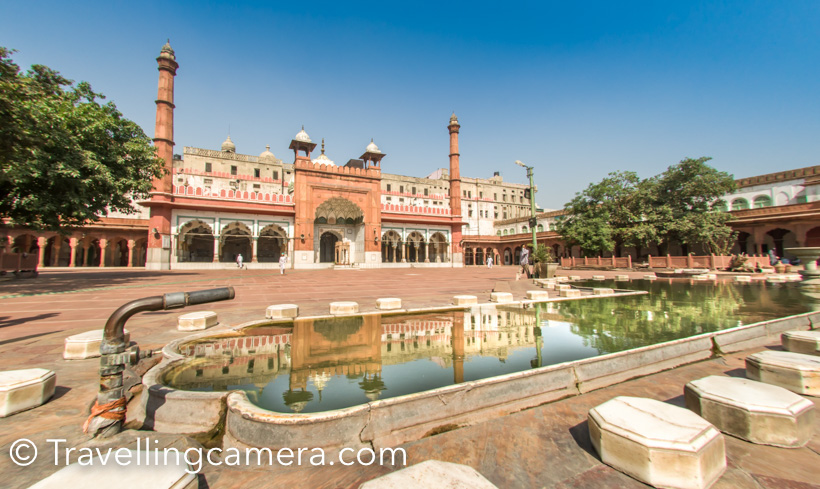
Last week I was out with fellow Photographers, Bloggers and Foodies to explore some of the popular eating places in Old Delhi (Chandni Chowk). During this walk we went to different places around Chandni Chowk & towards the end we also thought of going inside Fatehpuri Masjid. Chandni Chowk is just across the Red Fort. The road going from Red Fort ends at Masjid Fatehpuri. This is such a peaceful place in the middle of lot of hustle bustle of Chandni Chowk. There is a huge campus surrounded by four walls and entry gates from 3 sides.There is a very interesting history behind this mosque of old Delhi. This mosque was built in 1650 by wife of Shah Jahan, her name was Fatehpuri Begum. She belonged to Fatehpur Sikri (a place around Agra). After 1857, Britishers auctioned this mosque to a Hindu businessman Lala Chunnamal. He had bought the mosque for 19 thousand rupees and to me it sounds a lot of money at that time. And people say that Lala Chunnamal used the mosque for social causes. Later on Britishers bought it back in lie of 4 villages. This was the time when Britishers invited back the muslims to Old Delhi and renovated the mosque for the community. Tarun Gaur was with us to share all these interesting events from History of Old Delhi.This walk was planned by Desi Traveller with the help of Deba Rajpal and Tarun Gaur. There was good turnaround and all of us had lot of fun eating some of the interesting things in Old Delhi. I will be sharing another post on food we tried and some history around these food items. These food businesses are run by some specific families who came to Chandi Chowk from different parts of country. And that’s why there is a such nice mix of food from different states of India.As we entered inside Fatehpuri Mosque, we noticed these groups studying. This was first time I was seeing such interesting sessions outside television. These folks were reading something and it seemed that they were trying hard to remember what they were reading. These folks were rocking their bodies back and forth while reading.Fatehpuri Masjid is quite different from Jama Masjid. Somehow this Mosque was not as crowded as we Jama Masjid. There is a water pond in the middle of this whole compound. You can see this water pound in first photograph.In the rectangular compound the main Mosque is on one side and other three sides have beautiful arched corridors. It was a great visit to the mosque. Hopefully I will visit Fatehpuri Mosque again and spend a little more time. This time, I had to accompany the group and adhere to the schedule of the food-walk.


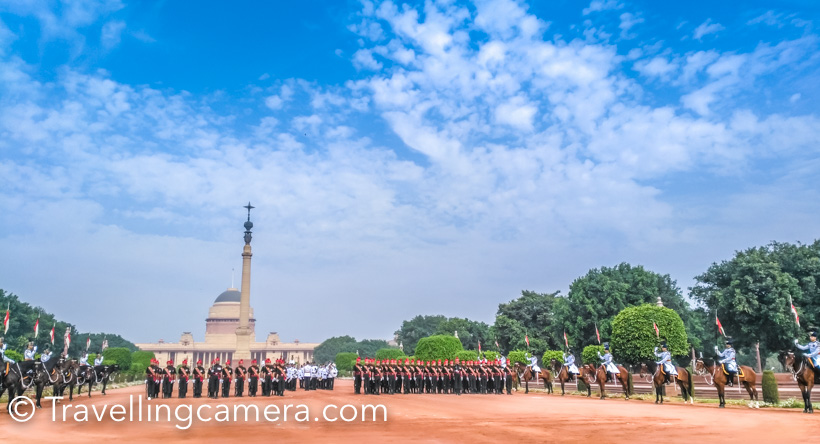
  Long time back when started searching about Change of Guards, goolge was suggesting London or Buckinghom Palce. On searching more I got the confirmation that Change of Guards at Indian President's house is open for public on Sturdays. For a long time, the visit remained in plans till I saw the blog by Ruby Singh. So this saturday we planned to visit President's house to witness Change of Guards in morning.     Since the ceremony starts at 8am sharp one needs to plan the day early. All of us were up by 5:30 and started from Noida at 6:30am. It hardly took 30 minutes to reach Rashtrapati House in morning and that gave us enough time to figure out the entry gate and car parking.    We followed the road which connects India Gate to President's house. And when we reached at the entry, police directed us to Dalhousie Road and asked to enter from Gate number 37. When I talked to them, it seemed that no one at entry was very sure. They were sure of one thing that some shooting is happening so entry through gate number 2 is not possible. Anyways we headed to Gate number 37. The security man at Gate number 37 was not sure if entry would happen through this gate. So we requested to confirm so that we head towards the right entry gate. There were 5 more cars following us :). He had few calls and confirmed that entry would happen through gate number 37 and car parking is also available inside. That was a great news because finding parking in this region would be a task (because of security reasons).     As we parked our car, Vibha and I were thinking about the security. No one checked our car and we were already in President's house premises. While we were discussing this, we saw these jawans going towards the ceremony ground. It was a good indication that we should walk fast as it was 7:50 already.      We reached the ceremony and almost all chairs were empty. I headed to the first row and a jawan asked me to move to second row. He mentioned that first row is reserved, while there is no such thing. This is first time I experienced an Armyman cheating in front of me. Anyways, it was not a big deal so I simply moved to second row. By now, only Army band was available at the ceremony ground. And a man was describing about the whole process on loudspeaker.     And then Change of Guard Ceremony started. The Army band started playing 'Saare Jahan se Achha' and these Jawans entered the ceremony ground on their magnificent horses.     At the beginning of the ceremony who see so much disciplined action and feel energetic. There must be a reason why Army ensures that every Jawan is highly disciplined and energetic. Looking at their each action you feel proud.    These horses are amazingly trained. All of them take position and ensure that each one is in row. While standing they hardly do any movement. A few times, you can see some movement around their neck but their legs remain at same position all the time. When we walk, each of them are in sync. I have also seen Beating the Retreat ceremony and was super impressed with camels trained for that ceremony.     Guards already on duty came to foreground of Rashtrapati Bhawan and took their place. Soon after the new set of guards joined them on ground and the formalities started.       All of them were walking with full energy and enthusiasm. Please note the dirt around their feet. All of them were in sync and accurate.       New guards are inspected. It's hard for me to describe each and every ceremony on ground and that's the reason that you should visit Rashtrapati Bhawan on any Saturday to witness the action yourself.     I was super happy to see a Photographer and Videographer who were covering the ceremony. I have never seen Army Photographer earlier and wondering what's the eligibility to become a Photographer with Indian Army :).    The ceremony concluded with some interesting actions by horses. Do check out the video for full action and I found it very interesting.     Some quick details -   Time of Change of Guards - 8 am sharp  When should one reach - By 7:30am (Reason behind this time is explained above) Nearest Metro Station to Indian President's House - Central Secretariat Car Parking around President's House - If entering from Gate-37, parking is available inside. If entering from main gate (Gate no 2, you need to park near water fountains - As per traffic police, it's allowed in morning although I was not very sure ) . Otherwise you can on the road connecting President's House with India Gate.  Entry Ticket for Change of Guards - No ticket or special permission needed Documents to carry - Any valid identity proof in original form.     Mom and dad moving back towards the car after witnessing Change of Guard.     Selfidow or something else. Some creative suggesstions are welcome.    These carved elephants caught my attention and thought of taking a quick shot. The President House has very beautiful carvings all around.     While we were heading towards the car parking we noticed these folks taking some rest in shade. This was the troop, which gave charge to the new team.     This is how Delhi roads look on weekend morning :)  How here is a quiz for you - Which of these photographs are clicked with DSLR and Mobile Camera? Do answer through comment below (And you have to judge through visuals only). The one who answers correctly would get something interesting from Travellingcamera.com Team !!!

Qutub Minar is one of the most popular heritage compounds in Delhi and quite popular destination amongst tourists visiting Delhi. It's also a good places for local folks to spend quality time with their family & friends. Many times photographers and heritage explorers can be seen around Qutub Minar campus. This Photo Journey shares some of the special photographs from Qutub Minar campus. Reaching Qutub Minar has become pretty easy now. One can take Metro to Qutub Minar. The Qutub Minar Metro station is not close to the compound, but there are autos which drop folks from Metro to Qutub Minar and charge 10 rs each. If you don’t want to share the auto, most of the folks use meters and that’s reliable. It will not cost more than 30 Rs.Other good to way explore these beautiful monuments in Delhi are HOHO buses run by Delhi Tourism department. You can buy a daily pass and hop on/off to/from these buses at defined stations, which are usually very well located around the most popular tourist destinations in Delhi.Booking a Taxi to go to Qutub Minar from Central Delhi, East Delhi or Noida might be a bad idea because of slow traffic movement. I had gone through such experience twice and now try to use Metro, if possible.After Red Fort, Qutub Minar is most visited monuments in Delhi and one should expect lot of people inside Qutub Minar compound, even on weekdays. Apart from the main minaret, there are various architectural structures in this compound  having different stories associated. There are no guides around Qutub Minar now, but you can get an audio device on rent which will keep telling you about the place. Easy to use device and have good details about various spots in Qutub Minar campus.As you walk around this huge compound, you get to see spectacular beauty of the Qutub Minar from different angles. Above photograph shows one of the views of Qutub Minar through the other structures around.It's a wonderful place for photographers because of diversified opportunities to click architecture, people, landscapes and lot more. I have been part of various photo-walks here and every time it was different experience.Tourists from different parts of the world come to Qutub Minar to witness it's grandness and know about it's history. It's really strange that we don't care much to know our own history, but things have been changing for good. There are lot of social circles which inspire folks to visit such places and know more about our heritage. Mehrauli Archeological park  is another interesting place around Qutub Minar.  It's awesome to see these airplanes crossing through Qutub Minar. Although there is a huge different between the top most peak of Qutub and the flight, but such views look dramatic.Qutub is the 2nd tallest minar (73 metres) in India after Fateh Burj. Qutb Minar originally is a UNESCO World Heritage Site which is made of red sandstone and marble. The stairs of the tower has 379 steps, is 72.5 metres high, and has a base diameter of 14.3 metres, which narrows to 2.7 metres at the top. Construction was started in 1192 by Qutb-ud-din Aibakand was carried on by his successor, Iltutmish. Check out more about Qutub on Wikipedia  His expressions explain it all about the height and grandness of Qutub Minar.


At the very heart of Delhi lies the "showpiece of Lutyen's Delhi", the business and commercial centre we know as Connaught Place or CP. The place not only houses some of the biggest names in the financial scene of the country, it is also one of the most happening places as far as restaurants, shopping options, and crowd is concerned. A favorite amongst young couples, foreign tourists, college students, and families, Connaught Place offers immense opportunity to photographers as well. Teeming with hawkers dressed in colourful traditional clothes, young and old beautiful faces, colonial architecture complete with pillars, arches, and buttresses, a photographer cannot resist the charms of CP. Portraits, architecture, candid - you name it and CP offers it. So we, armed with our Honor 5C, descended upon CP for photography on a Saturday. But we decided to add a twist to it. We went there after sunset to capture the CP of the shadows. When the crowds have dwindled, the hawkers are wrapping up their make-shift shops, and the practical jeans and t-shirt of the days are replaced by night dresses and high heels, a new CP emerges. Less "happening", but yet glamourous. Just a reminder - this series is an attempt to see if we need a DSLR camera for day-to-day photography or whether a smartphone suffices. All photographs in this post are shot using Honor 5c in CP under low-light conditions. Be it the panning shot of the auto in motion, or the dog sitting like royalty under the lamps, our phone managed to shine through. Now you can see for yourself and decide whether you need to purchase a DSLR if you don't intend to shoot like a pro, and are happy with regular shots based on a good composition. After spending some time in and around CP, we headed home. However, our explorations with Honor 5c are not over yet. Next we will head out of the city to the mountains with the smartphone that hadn't yet given us a single opportunity to complain. To find out how that goes, stay tuned.

Few weeks back, Nat Geo Moments Awards 2014 team announced an Instawalk in Delhi and Photographers were asked for share their Instagram & Twitter accounts to select 20 Photographers from the City. I also got a chance to join for this Instawalk, which happens in Mehrauli Archelogical Park in Delhi. Let's check out this Photo Journey to know more about the Instawalk and Nat Geo Moments Awards.I had also shared by Instagram account with Nat Geo team and was selected to join this Insta-walk. It sounded very exciting but at the same time I had my doubts about this Photo-walk, because I couldn't find names of photographers who definitely do great photography & my inspiration as well. Because it was about Nat Geo, I wanted to give them a benefit of doubt. One of my office friend was also joining for the walk, which was encouraging.Mehrauli Archeological Park is close to Qutub Minar Metro station, so we planned to take Metro-train from Noida to reach for Instawalk at 9:30am. Opposite to Delhi trends, Instawalk started on time and we were late by 5 minutes. But we hit the place before the first brief. Delhi Heritage Walks team was there to help every Photographer to understand the place, although most of the photographers were more interested in capturing the place well. There was negligible participation from Nat Geo. It seemed more like a promotional event by Nat Geo, wherein they wanted folks to create some buzz about #NGMA2014 through Instagram and Twitter.All of us met around Jamali Kamali Mosque and Tomb complex built in Mehrauli Archaeological Park. Jamali Kamali is one of the oldest structures in the town which is maintained by ASI. It was built around 1528 CE.Breakfast was arranged during the Instawalk. There is a green area around Jamali Kamali, which was chosen for breakfast. Food was good and I think, it was home made.Mehrauli Archaeological Park is spread over an area of around 200 acres in Delhi. This Archeological park is located just on the back side of Qutub Minar World Heritage site and the Qutb complex. This park consists of more than 100 historically significant monuments, although many of them are in ruins now. There are few interesting water bodies in this complex and most part of it is very well maintained with green patchesMehrauli Archeological Park is the only area in Delhi includes the ruins of Lal Kot built by Tomar Rajputs, which makes it the oldest extant fort of Delhi.Mehrauli Archeological park contains sites like Tomb of Balban, wherein a true arch and the true dome were built for the first time in India... and then Jamali Kamali Mosque and Tomb of Maulana Jamali Kamali (Jamali Kamboh),Quli Khan's Tomb, Jahaz Mahal, Zafar Mahal of Bahadur Shah II alias Lal Mahal,  Gandhak ki Baoli, Hauz-i-Shamsi and Tomb of Adham Khan. Rajon Ki Baoli, a stepwell, and Madhi Masjid.A view of Qutub Minar from Kuli Khan Tomb. When we were roaming around this place, a bunch of folks were playing cricket in the back side of Tomb of Kuli Khan. This comparitively a smaller tomb and one needs to climb up few stairs to see it from inside. Tomb of Quli Khan, overlooking the Qutub Minar. All Instagrammers were busy in clicking photographs around the tomb and few were simultaneously posting these photographs to Instagram and Twitter. Rain had happened last night so some of us tried clicking reflections as well :).Above is a photograph of Rajaon ki Baoli, which is comparatively smaller than Gandhak ki Baoli. All this shows about rich Indian Heritage in capital city Delhi.  It's a famous stepwell near Adham Khan's Tomb having multiple levels in it and one of the special places inside Mehrauli Archaeological ParkRajon Ki Baoli is also referred as 'Rajon ki Bain'. This magnificent three-storeyed stepwell is believed to have been built by Daulat Khan during the reign of Sikandar Lodi.Rajaon ki baoli is one of the highlights of Mehrauli Archaeological Park and everyone during Instawalk liked this place the most. This baoli has multiple levels and each level of the baoli exposes to visitors as one walks towards its steps. The baoli-complex has a 12-pillared tomb and a mosque with some pretty plaster decoration on it. This Instawalk was concluded here and we headed back. Now it was time for me to attend a Blogger meet at CP.


Some Experiments with old architecture of Jantar Mantar in Delhi, INDIA : Posted by VJ SHARMA on www.travellingcamera.com : Last month me and one of my friend were waiting for other folks to reach Connaught Place in Delhi and they called us to inform that all of them are arriving after 1:30 Hrs... This was good opportunity for us to explore some place nearby and decided to visit Jantar Mantar... After reaching the place I was not able to decide what should I shoot... Everywhere people were roaming and it was really difficult to find a place without people... and it was not like two or three folks.. It was huge crowd in front of each yantra @ Jantar Mantar.. So finally I decided to have some photographs which can avoid this crowd and it gave a good opportunity to place with various angles/compositions... check out and critics are welcome !!The first photograph where I wanted to have darkest possible shadows to make it look like black tiles in contact with reds and white ones.. Although it doesn't look like that... I would have to wait to click this photograph at right time but we had to move out in few hrs... Never mind, I will try it again...This time I was carrying SONY Alpha-700 and was confused with some of the controls.. Anyway that's not important... These yantras were very narrow is shape and it was difficult to fit myself for clicking these architecture forms nicely... Here is a tilted view of a semi-spherical yantra @ Jantar Mantar...All these photographs from the same yantra and it was was quite interesting... But please don't ask me about how it functions and what it is supposed to do...Stairs hidden behind these structures and everyone needs to follow them to go down and see the real work inside these yantras.. In Jantar Mantar at jaipur, everyone was not allowed to go inside these structures but in Delhi I didn't see such restrictions except one which had highest structure followed by lot of stairs....Jantar Mantar in Delhi is a very popular place among activists, social associations and artists as well... Many of the NGOs choose this place to start a rally or protest... Also many artists have explored this very well and many times Photographers have exhibited this place...A Series of small pillars taking all the weight of small paths connecting outer circle of a structure with a pole in the middle... as you can see the turning path in a circle...One of my friend called it 'Stairs of Success'.. I don't if that is the name of these stairs but like the caption :)Final Photograph showing the close-up view of this architecture which shows the age of this structure and its been repaired multiple times in past which resulted in this roughness... I am again planning to visit Jantar Mantar in Delhi and will ensure that I get full day to spend there...


When loitering around in Cannaught Place or navigating traffic on Barakhamba Road, it is difficult imagine that barely 5-minutes away, hidden amongst trees, lies the magnificient stone structure of Agrasen ki baoli. The 14th-century step well was restored by the Archaeological Survey of India in the year 2002. Now the Baoli is clean and well-maintained. We visited Agrasen ki Baoli on a humid Sunday afternoon and were expecting to find a more or less abandoned structure with may be a couple of people loitering about here and there. But we were in for a surprise. The baoli was buzzing with well-dressed, pouting, selfie-clicking youngsters. They were there in such large numbers that it was difficult to capture even a single shot without people in it. This was heartening. I don't know whether this popularity is because the Baoli was recently featured in the popular Bollywood film PK or because the Baoli is clean, litter-free and situated barely a kilometre away from the heart of the city. It may be all of these, but it is wonderful to see the hard work of the ASI bearing fruit. Usually when we head out to explore the city, we make sure that we carry a DSLR and all the required lenses, but this time we had decided to do something different. The impact of camera phones on the photography ecosystem is the hot topic for debate nowadays, and we decided to settle it with a practical. So this time instead of a DSLR, we were carrying a smartphone - Honor 5c to be precise. All the pictures that you are seeing in this post have been clicked using Honor 5c. Based on the results, we can comfortably say that for everyday non-professional use, a smartphone, if used well, can suffice. One would of course need to study all the capabilities and features of the particular smartphone camera in details to be able to use them in appropriate situations. Coming back to the Baoli, we captured the structure, the pigeons peeping out of the gaps in the walls, the contrast between the modern skyscrapers of CP and the medieval architecture of the Baoli, the people exploring the structure and a lot more. The baoli is situated in one of the lanes branching out of the very pretty Hailey road, and this lane is dotted with some very interesting grafitti. We captured some of that too. If you haven't yet seen Agrasen ki Baoli, we recommend that you should. But make sure that the day is pleasant and you have time on your hands, because there is a lot to take in at the Baoli and in the surroundings.

Comments

Trending Post Today !

Main places to see & Top things to do around Dalhousie : Stunning Hill Station in Himalayan State of India

How to reach Kasol/Malana and top things to do around this stunning hill-station of Himalayan State of India

Travel & Music || Enchanting Himachal and its Charming Songs

Making Diwali Rangoli with colourful lentils, rice, corns and wheat can be much easier and more beautiful in comparison to Rangoli with colours

Bharat Rang Mahotsav: A Spectacle of Indian Theatre Extravaganza by National School of Drama, Delhi