

Introduction: Discovering a Quieter Side of Mandu
Among the many temples in Mandu, Neelkanth Mahadev Temple offers an experience that feels different from exploring the town's famous palaces, massive gateways and medieval monuments. Located amid the wooded landscape of the Malwa region in Madhya Pradesh, this Shiva shrine draws visitors away from the familiar heritage trail and into a setting where spirituality, architecture and the natural surroundings come together.
Mandu is often associated with the romantic story of Baz Bahadur and Rani Roopmati, the remarkable proportions of Jahaz Mahal, and the magnificent stonework of its medieval Islamic architecture. Yet the town's cultural landscape is much more layered than its most photographed monuments suggest. Hindu shrines, old water structures, village settlements and sacred traditions are also part of its identity.
Neelkanth Mahadev Temple is an interesting place to experience this less-discussed side of Mandu. Its association with Lord Shiva, its distinctive architectural setting and its connection with the region's layered past make it a worthwhile stop for travelers interested in history and living religious traditions.
The visit is not only about seeing a temple. It is also about observing how a sacred place fits into its surroundings: how visitors approach the shrine, how the atmosphere changes throughout the day, how the landscape frames the architecture and how Mandu's past continues to exist alongside everyday life.
For photographers, the temple offers opportunities beyond conventional architectural photographs. Stone surfaces, natural textures, filtered sunlight, quiet corners and the contrast between built heritage and greenery can all become part of the story.
If you are planning to explore the temples in Madhya Pradesh, particularly the heritage-rich Malwa region, Neelkanth Mahadev Temple deserves a place on your Mandu itinerary.

Why Visit Neelkanth Mahadev Temple?
Neelkanth Mahadev Temple is worth visiting for several reasons, especially if you want to explore Mandu beyond its most popular monuments.
1. Experience a spiritual side of Mandu
Mandu's grand architecture often commands attention, but a temple visit brings a different rhythm to sightseeing. Instead of moving quickly from one historical structure to another, you can pause, observe the surroundings and experience the continuing religious significance of the place.
The shrine is dedicated to Lord Shiva, one of the principal deities in Hinduism. For devotees, the visit is an opportunity for prayer and worship. For culturally curious travelers, it provides an introduction to the religious traditions that remain woven into the landscape of Madhya Pradesh.
2. Explore an unusual architectural setting
The temple is associated with a historic structure traditionally identified with a pavilion or palace built during the Mughal period. Its setting reflects the architectural and religious layers that make Mandu particularly interesting.
Rather than viewing the shrine in isolation, pay attention to the relationship between the sacred space, the surrounding stonework and the landscape. This interaction between different periods of history gives the place much of its character.
3. Discover more than Mandu's famous monuments
Many visitors concentrate on Jahaz Mahal, Hindola Mahal, Rani Roopmati Pavilion and Baz Bahadur's Palace. Neelkanth Mahadev Temple offers another perspective on the region's heritage.
It is particularly appealing to travelers who enjoy exploring places that do not always receive the same attention as the best-known landmarks.
4. Photograph history in a natural setting
Mandu's changing light is a significant part of its appeal. Depending on the season and weather, the temple's stone surfaces, shaded areas and surrounding vegetation can create varied photographic opportunities.
Unlike a photograph that isolates a monument against the sky, images here can tell a broader story about sacred architecture within the Malwa landscape.
5. Include a meaningful stop on a heritage itinerary
The temple can be combined with other attractions around Mandu to create a day that balances architecture, history, religion and landscape.
For anyone exploring the temples in Mandu, it provides a useful reminder that the region's heritage is not limited to royal residences and fortifications.

Historical and Cultural Significance of Neelkanth Mahadev Temple
Mandu's history spans several political and cultural periods. Its strategic position on the Malwa plateau made it an important fortified settlement, while its architecture reflects the influence of different rulers and building traditions.
Neelkanth Mahadev Temple is especially interesting because of its association with a historic pavilion traditionally linked to the Mughal period and with the later use of that space as a Shiva shrine.
A temple within a historic structure
The site is commonly associated with a pavilion attributed to Mughal-era patronage, often connected in local accounts with the period of Emperor Akbar. The building is traditionally described as having been constructed for a noblewoman associated with the imperial court.
Historical retellings vary in how they identify the woman and explain the circumstances of the building's construction. These details should therefore be treated with care rather than presented as fully established facts.
What makes the site significant is the way its identity has evolved. A structure associated with a historical courtly environment became connected with Hindu worship, giving the place a layered architectural and cultural character.
This transformation is one of the more interesting aspects of Mandu's built heritage. Historic structures do not always retain their original functions. Over time, communities reinterpret spaces, establish new traditions and give old buildings fresh meaning.

Why is the temple dedicated to Lord Shiva?
The name Neelkanth refers to the blue-throated form of Lord Shiva.
According to Hindu mythology, during the Samudra Manthan, or churning of the cosmic ocean, a deadly poison known as Halahala emerged. To protect the universe, Shiva consumed the poison and held it in his throat, which turned blue. The name Neelkanth, meaning blue-throated one, refers to this episode.
This story gives the shrine's name a significance that extends beyond its geographical location. It connects the temple with one of the best-known narratives in Hindu religious tradition.
Devotees may approach the shrine with personal prayers, family traditions and beliefs about Shiva's protective and transformative powers. The meaning of a sacred site is therefore not confined to its architecture or historical background.
The cultural layers of Mandu
Mandu is particularly rewarding for travelers who look beyond simple historical categories. Its monuments reflect different rulers, religious traditions, artistic influences and uses of space.
Neelkanth Mahadev Temple fits into this larger picture. Its historical setting and present religious identity illustrate how architecture can outlast the political circumstances in which it was created.
When visiting, it is useful to distinguish between documented architectural history, traditional local accounts and religious belief. All three contribute to how people understand a place, but they are not the same kind of evidence.
That distinction does not diminish the temple's appeal. Instead, it helps visitors appreciate the complexity of Mandu's heritage without turning uncertain historical anecdotes into unquestioned facts.

My Experience of Exploring Neelkanth Mahadev Temple
A visit to Neelkanth Mahadev Temple makes the most sense when approached at a slower pace. Mandu's major attractions can encourage a checklist-style journey: arrive, photograph the monument, move to the next stop and repeat the process. This shrine invites a more observant approach.
As you explore, begin by looking at the setting rather than immediately concentrating on the central shrine. Notice how the historic structure relates to the surrounding terrain, how the light falls across its surfaces and how the atmosphere differs from the more heavily visited palace complexes.
There is a particular pleasure in examining details that may not be obvious in a quick photograph. A change in stone texture, an opening framing a patch of greenery or a shadow extending across an architectural surface can reveal more about the place than a single wide-angle image.
If devotees are present, their movements become part of the atmosphere. Someone may arrive quietly for darshan, pause for a prayer or visit with family members. These ordinary moments demonstrate that the temple is not simply a historical attraction. It remains part of a living cultural landscape.
The best way to experience the site is to allow a little time for observation. Sit or stand quietly where permitted, notice the sounds around you and avoid rushing through the shrine just to maintain a sightseeing schedule.
For photographers, this slower approach is equally valuable. Once the obvious composition has been captured, look for a different angle, a smaller architectural detail or a frame that includes the landscape. Such images can communicate a more complete impression of the place.
An important note for anyone writing or publishing a first-person travel account: personal experiences should reflect an actual visit. If you have not visited this temple yourself, present these observations as suggested ways to explore it rather than claiming specific encounters or sensory experiences as your own.

Exploring Neelkanth Mahadev Temple in Detail
The shrine and its religious atmosphere
The spiritual focus of the site is the shrine dedicated to Lord Shiva. Visitors coming for worship should give the religious space priority over photography.
Observe the way the temple is approached and used, but do not assume that every visitor will be comfortable being photographed. In places of worship, a respectful distance is often more appropriate than attempting close-up documentary images.
If you are visiting primarily for cultural exploration, take time to understand the temple's significance before moving on to the architectural details. This adds context to the experience and helps you appreciate why the building matters to local devotees.
Architecture and historic surroundings
The historic structure associated with the temple is an important part of its appeal. Look closely at the relationship between its architectural elements and the shrine.
Instead of photographing every feature separately, consider how the entire setting works together. A wide composition may communicate the scale and layout, while a tighter frame can reveal stonework, openings, weathering and the interaction between light and shadow.
Mandu's historic buildings are often best appreciated as structures shaped by both human design and their environment. Their surfaces show the effects of time, weather and changing use. At Neelkanth Mahadev Temple, the combination of historic architecture and continued religious significance makes this especially relevant.
The surrounding landscape
The Malwa plateau contributes significantly to the experience of exploring Mandu. The landscape changes with the seasons, from relatively dry conditions in hotter months to greener surroundings during and after the monsoon.
The vegetation, open views and changing light can influence how the temple appears in photographs. After rain, the surroundings may feel more vibrant, while the drier months can bring out the contrast between stone and earth.
Stay alert to practical conditions when exploring the area. Surfaces can become slippery after rain, and uneven steps or pathways may require care. Wear shoes suitable for walking and follow any instructions about where footwear should be removed.

The difference between visiting a monument and visiting a sacred place
One of the most useful things to remember at Neelkanth Mahadev Temple is that the site serves more than one purpose.
A heritage traveler may be interested in its history, a photographer may be drawn to its composition and a devotee may be visiting for a personal religious reason. These perspectives can coexist, but they do not carry identical priorities.
Allowing worshippers space, keeping noise low and following local customs makes the visit more comfortable for everyone. It also encourages a more thoughtful relationship with the place you have come to explore.
Hidden Gems and Lesser-Known Insights Around Neelkanth Mahadev Temple
Neelkanth Mahadev Temple becomes more interesting when you look beyond the familiar description of a Shiva shrine inside a historic building.

The palace and temple coexist in one setting
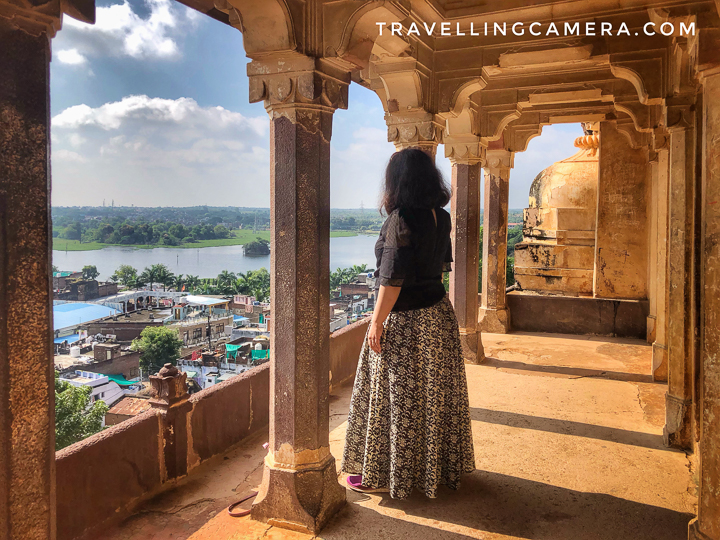
The nearby Neelkanth Mahal is described by the Dhar district administration as a Mughal-period structure built near an existing Shiva temple. The palace stands on a slope, with a series of 61 steps leading down towards the complex. Its open northern side offers views across the valley. These details make the visit as much about the relationship between architecture and terrain as about the shrine itself.
The same official account associates the palace with Emperor Akbar and records a local tradition that he chose to stay there during visits to Mandu. Such traditions add colour to the site's history, although individual anecdotes should be distinguished from independently established historical evidence.

Look for the relationship between water and architecture
Historic Mandu depended heavily on its ability to collect, store and manage water. Tanks, baolis, reservoirs and water channels formed an essential part of the settlement's infrastructure.
At Neelkanth, the historic palace complex is associated with fountains and water features. If these features are visible during your visit, observe how water was incorporated into the building's layout. Water was not merely decorative in a plateau settlement; it could also contribute to the atmosphere and comfort of a building.
The availability and condition of water features may vary, so it is best not to expect every historical mechanism to be operating today.
Notice the contrast between courtly architecture and religious use
A palace suggests residence, authority and ceremony. A temple suggests worship, devotion and continuity. At Neelkanth, these associations overlap.
This is a useful perspective when exploring heritage sites in India. Buildings can acquire new meanings as rulers change, communities evolve and religious traditions continue. Rather than viewing the site as a simple example of one architectural style, consider how different uses have contributed to its identity.
Explore the quieter side of Mandu
If you have time, include lesser-visited structures and the village surroundings in your wider itinerary. The settlement's historic gateways, old water structures and scattered ruins help explain how Mandu functioned beyond its royal centres.
Some of the most rewarding discoveries are not necessarily major monuments. They may be a stretch of old stonework, an unusual tree beside a pathway or a view across the plateau that reveals the relationship between the settlement and its natural defences.
Respect private property and local religious spaces while exploring beyond the main attractions.

Best Photography Spots at Neelkanth Mahadev Temple
For photographers, Neelkanth Mahadev Temple offers a combination of architecture, sacred atmosphere and landscape. The best approach is to make several kinds of photographs rather than relying on a single wide-angle image.
1. The architectural approach
Begin with a photograph that establishes the relationship between the historic structure and its surroundings.
Include some of the approach, steps or surrounding landscape if these elements are visible and accessible. This gives the viewer a sense of arriving at the site rather than seeing an isolated building.
Best time: Morning, when softer light can help reveal surface details without producing excessively harsh shadows.
2. Stonework and architectural details
Look for weathered surfaces, arches, openings, geometric patterns and the contrast between older masonry and the surrounding vegetation.
Use a normal or short telephoto lens to isolate details. A close composition can communicate age and texture more effectively than a photograph that attempts to include everything.
Best time: Early morning or later afternoon, when light arriving at an angle can reveal the texture of stone.
3. The relationship between the shrine and the palace
Where access permits, look for a composition that includes both the sacred and architectural elements of the complex.
Avoid forcing a symmetrical composition if the layout does not support it. An off-centre frame can sometimes communicate the character of a historic structure more naturally.
Best time: Morning or late afternoon, depending on the direction of sunlight.
4. Views across the valley
The palace's open northern side is described as offering views of the surrounding valley. If this area is accessible during your visit, use the opening to frame the landscape.
Try photographing through an architectural opening rather than simply pointing the camera towards the distant hills. The foreground stonework can provide scale and connect the view to the historic setting.
Best time: Morning for clearer landscape detail, or late afternoon for warmer light when conditions are favourable.
5. Environmental photographs
A strong travel photograph does not always need to show a complete monument. Try a composition that includes a pathway, a section of stonework and the landscape beyond.
These images are particularly useful for a travel story because they communicate the experience of moving through the place rather than merely documenting its appearance.
Photography inside the shrine should always follow local rules and the wishes of the people worshipping there.

Photography Tips for Neelkanth Mahadev Temple
A few practical decisions can improve your photographs considerably.
Carry a versatile lens. A standard zoom is useful for both architectural views and details. An ultra-wide lens can help with confined spaces, but watch for distorted vertical lines.
Use the light rather than fighting it. Side lighting brings out texture, while soft overcast light can be excellent for recording stonework.
Watch your highlights. Bright sky outside a shaded doorway can easily become overexposed. Expose carefully for the important architectural detail, or make separate exposures if you plan to blend them later.
Keep vertical lines natural. When photographing a tall structure, step back where possible instead of tilting the camera sharply upwards.
Look for layers. A foreground arch, the main building and distant greenery can create depth in a photograph.
Photograph details with purpose. A close-up should tell the viewer something about craftsmanship, age or the site's use.
Avoid photographing worshippers without permission. If a person becomes part of the frame, consider whether the photograph respects their privacy and religious activity.
Carry a microfibre cloth. Monsoon humidity, mist and occasional drizzle can leave moisture on your lens.
If you are using a smartphone, tap to focus on the architecture and reduce exposure slightly when bright areas begin to lose detail. HDR can help with difficult contrasts, although it should not make the image look unnaturally processed.

Local Food Experiences: What to Eat Around Mandu
A visit to Neelkanth Mahadev Temple can easily become part of a broader culinary exploration of the Malwa region.
Mandu's food is influenced by the wider cuisine of western Madhya Pradesh. Rather than expecting a large choice of restaurants around every monument, plan your meals around the main settlement and check what is available locally on the day.
Try Mandu ka Dal Paniya
One regional speciality worth seeking out is dal paniya, a traditional preparation made with maize-based paniya served alongside dal.
The paniya is traditionally prepared using maize flour and cooked over heat, sometimes wrapped in leaves. This method can produce a distinctive roasted flavour that complements the lentils.
Recipes and serving styles vary, and availability depends on the restaurant and season. Ask locally whether it is being prepared fresh rather than assuming every establishment will offer it.
Explore Malwa's everyday flavours
Depending on the establishment, you may find poha, dal-based dishes, seasonal vegetables, roti, snacks and other familiar regional preparations.
If you are travelling in cooler weather, ask about seasonal dishes rather than choosing only standard restaurant fare. Local recommendations can lead to more interesting meals than simply ordering the first familiar item on a menu.
Eat with a practical plan
Food options near individual monuments may be limited or irregular. Carry drinking water, especially when visiting several sites in one day, and avoid leaving lunch until you are already far from the main settlement.
Choose clean, busy food establishments, and use safe drinking water. If you have dietary restrictions, communicate them clearly before ordering.
Local Conversations and Human Stories
One of the most rewarding ways to explore the temples in Mandu is to speak respectfully with people who know the area.
A shopkeeper may explain the easiest way to reach a nearby monument. A local driver may suggest a different order for visiting the attractions. A temple attendant may be able to explain the timing of worship or the customs visitors should follow.
These conversations are valuable because they reveal the practical side of a destination that guidebooks often overlook.
At Neelkanth Mahadev Temple, you can ask about the shrine's traditions, local festivals and the relationship between the temple and the historic palace. However, it is worth remembering that local stories may differ from one person to another. Treat these differences as part of the region's oral heritage rather than assuming every version is a definitive historical account.
A few simple practices help conversations develop naturally:
Greet people politely and explain why you are interested in the site.
Ask before photographing a person, shop or private space.
Listen without turning every exchange into an interview.
Avoid interrupting prayer or other religious activities.
If someone shares a story, clarify whether it is a family tradition, a local legend or something they learned from a historical source.
The best travel stories are often found in these small interactions. They help transform a visit from a sightseeing exercise into a more thoughtful encounter with a place and its people.
Best Time to Visit Neelkanth Mahadev Temple, Mandu
Mandu can be visited throughout the year, but the season makes a substantial difference to the landscape and walking conditions. Madhya Pradesh Tourism highlights the monsoon as a particularly attractive time to experience Mandu's greenery, while the cooler months are generally more comfortable for heritage sightseeing.
| Season | What to expect | Photography advice |
|---|---|---|
| October to February | Generally pleasant conditions for walking and exploring monuments | Good for architectural details and longer sightseeing days |
| March to June | Hot weather, particularly during the afternoon | Photograph early or late and avoid prolonged midday exposure |
| July to September | Greener surroundings, monsoon clouds and possible mist | Excellent atmospheric potential, but protect equipment and watch slippery surfaces |
Morning or afternoon: Which is better?
For most visitors, morning is a practical choice. Temperatures are often more comfortable, and arriving earlier can help you explore before the busiest period.
Late afternoon can also be rewarding for photography, especially when angled sunlight reveals the texture of the historic structure. However, do not assume that the shrine or its surrounding areas will remain accessible until sunset. Confirm local access and worship timings before planning around a particular light condition.
During the monsoon, allow extra time for driving and walking. Rain can change the character of the landscape quickly, but mist and cloud can also obscure views.
How to Reach Neelkanth Mahadev Temple, Mandu
Neelkanth Mahadev Temple is in the Mandu, or Mandav, heritage area of Dhar district in Madhya Pradesh. The simplest approach for most travellers is to reach Mandu first and then travel to the temple complex by local road.
By air
The nearest major airport is Devi Ahilyabai Holkar Airport in Indore. Madhya Pradesh Tourism places Indore roughly 95 km from Mandu, although the actual distance and travel time depend on your route and starting point.
From the airport, you can hire a taxi or arrange onward transport to Mandu.
By train
Indore is a useful railway gateway for Mandu. Ratlam may also be suitable depending on your train connection and the rest of your itinerary.
Mandu does not have its own railway station, so you will need road transport for the final leg of the journey.
By road
Mandu is connected by road to Indore and other towns in the region. You can travel by private car, taxi or a combination of public transport and local road transport.
If visiting from Indore, allow sufficient time for the drive and for sightseeing once you arrive. The main monuments are spread across the plateau rather than concentrated in one small pedestrian area.
Reaching the temple within Mandu
Once in Mandu, ask your accommodation or driver for directions to Neelkanth Mahadev Temple and Neelkanth Mahal. Confirm the precise drop-off point and the condition of the approach.
The historic palace is built on a slope, and the district administration describes a descent of 61 steps. Visitors with limited mobility, knee problems or difficulty negotiating stairs should consider this before setting out.
Do not rely on an assumption that every part of the complex is step-free or accessible to vehicles.
Where to Stay When Visiting Neelkanth Mahadev Temple
Your accommodation choice depends on whether the temple is part of a short Mandu excursion or a longer heritage journey.
Stay in Mandu
Staying overnight in Mandu is a good option if you want to explore the monuments without rushing. It allows you to visit some attractions early in the day, return to your accommodation during the hotter hours and explore other areas later.
Accommodation options include local guesthouses, hotels and Madhya Pradesh Tourism properties. Availability and facilities vary, so confirm the current arrangements before travelling.
Stay in Indore
Indore is worth considering if you prefer a larger choice of hotels, restaurants and transport connections. You can make a day trip to Mandu, although a full day of driving and sightseeing can become tiring.
For photographers and history enthusiasts, staying in Mandu is usually more rewarding because it leaves more time for the smaller sites and the changing light.
How many nights should you plan?
One night is useful for a short heritage visit. Two nights are preferable if you want to explore the major monuments, visit Neelkanth Mahadev Temple at a relaxed pace and leave room for photography or nearby excursions.
Budget Tips for Visiting Neelkanth Mahadev Temple
The temple can be incorporated into a relatively economical trip if you plan transport and accommodation carefully.
| Expense | Budget-conscious approach |
|---|---|
| Transport | Share a taxi where practical or combine nearby attractions into one route |
| Accommodation | Compare guesthouses with established hotels and tourism properties |
| Food | Choose local restaurants and ask about regional specialities |
| Sightseeing | Group attractions geographically to reduce unnecessary driving |
| Photography | Carry your own equipment rather than arranging specialist services |
| Planning | Check current monument fees, parking arrangements and local access before departure |
The biggest variable is usually transport, particularly if you are visiting several monuments spread across Mandu.
Do not assume that the temple and every nearby attraction have identical opening arrangements or entry charges. Confirm the current details locally, and carry some cash for small purchases where digital payments may not be convenient.
Suggested Itinerary: Neelkanth Mahadev Temple and the Heritage Sites of Mandu
One-day Mandu itinerary
If you have only one day, focus on a manageable selection of attractions rather than trying to visit every monument.
Morning
Begin with Neelkanth Mahadev Temple and its historic surroundings.
Allow time for the shrine, the architectural setting and the walk through the complex.
Continue towards Mandu's central heritage group.
Late morning and afternoon
Explore Jahaz Mahal and the nearby historic structures.
Visit Jami Masjid and Hoshang Shah's Tomb if time permits.
Take a break for lunch and rest during the hotter part of the day.
Late afternoon
Visit Baz Bahadur's Palace and Rani Roopmati Pavilion if your transport schedule allows.
Spend time observing the landscape rather than rushing between viewpoints.
This itinerary is a suggested sequence, not a guarantee of current opening times. Check access and driving distances before setting out.
Two-day itinerary for a more relaxed visit
Day 1: Temples and central Mandu
Visit Neelkanth Mahadev Temple and explore the palace setting.
Discover Jahaz Mahal and nearby architectural attractions.
Visit Jami Masjid and Hoshang Shah's Tomb.
Spend the evening in Mandu and explore the local food scene.
Day 2: Palaces and landscape
Begin at Baz Bahadur's Palace.
Explore Rani Roopmati Pavilion and Rewa Kund.
Visit other heritage sites that interest you, allowing time for photography.
If you have a vehicle and enough time, consider an additional viewpoint or a nearby rural excursion.
The two-day plan gives you more flexibility to respond to the weather, local advice and your own interests.
Responsible Travel Tips
Neelkanth Mahadev Temple is both a heritage site and a place of worship. Responsible travel means respecting these two dimensions.
Dress modestly and follow any clothing or entry guidance displayed at the shrine.
Remove footwear where required.
Ask permission before photographing worshippers or temple activities.
Avoid loud conversations, music and disruptive photography.
Do not touch, climb on or lean against fragile architectural elements.
Never carve names into stone or leave litter behind.
Follow instructions about restricted areas.
Avoid using drones unless you have confirmed that flying is permitted and obtained any necessary permissions.
Carry reusable water bottles where practical, and dispose of waste responsibly.
During the monsoon, remain on safe paths and avoid approaching slippery edges for photographs.
If visiting during a religious occasion, be prepared for a different pace and potentially larger crowds. Give worshippers priority and follow local guidance.

Common Mistakes to Avoid
Treating the temple as just another monument
The site's architectural history is interesting, but it also has religious significance. Allow time for the setting and observe worship practices respectfully.
Visiting without considering the steps
The approach to Neelkanth Mahal involves a descent of steps. Anyone travelling with elderly family members or visitors with mobility concerns should plan accordingly.
Assuming every historical story is verified fact
The association with Akbar and the site's legends are part of its appeal. However, distinguish documented information from traditional accounts when describing its history.
Arriving in the harshest part of the day
Mandu can become hot, particularly in summer. Start early and schedule a break rather than spending the entire day walking in the afternoon heat.
Expecting a large restaurant or shopping area beside the shrine
Facilities may be limited around individual monuments. Carry water, plan meals and confirm your transport arrangements.
Rushing the photography
A single wide-angle photograph will not tell the full story. Photograph the setting, details and relationship between the historic structure and the landscape.
Leaving no time for nearby attractions
Neelkanth Mahadev Temple is most rewarding when understood within Mandu's larger cultural landscape. If your schedule permits, combine it with selected palaces, mosques, water structures and viewpoints.

Frequently Asked Questions About Neelkanth Mahadev Temple
1. Where is Neelkanth Mahadev Temple located?
Neelkanth Mahadev Temple is located in Mandu, also known as Mandav, in Dhar district of Madhya Pradesh, India. It is associated with the historic Neelkanth Mahal complex.
2. Who is worshipped at Neelkanth Mahadev Temple?
The temple is dedicated to Lord Shiva. The name Neelkanth refers to Shiva's blue throat in the Hindu story of the cosmic ocean's churning, during which he consumed poison to protect the universe.
3. Why is Neelkanth Mahadev Temple historically significant?
The temple is significant because it is associated with a historic structure from the Mughal period. The palace and the Shiva shrine coexist in the same setting, reflecting the layered history and changing uses of Mandu's architecture.
4. Was Neelkanth Mahal built during Akbar's reign?
The Dhar district administration identifies Neelkanth Mahal as a structure built under Akbar's direction near an existing Shiva temple. Some details about its original patronage and associated historical figures appear in traditional accounts and should be treated with appropriate caution.
5. How many steps are there at Neelkanth Mahal?
The Dhar district administration describes a descent of 61 steps to reach the palace. Visitors should consider this when planning for elderly travellers or anyone with mobility limitations.
6. What is the best time to visit Neelkanth Mahadev Temple?
October to February is generally suitable for comfortable sightseeing. The monsoon, from approximately July to September, brings greenery and dramatic landscapes, although rain can make walking more difficult.
7. Is Neelkanth Mahadev Temple suitable for photography?
Yes. The historic architecture, stone textures, landscape and changing light provide several photographic opportunities. However, photography inside the shrine should follow local rules and respect worshippers' privacy.
8. How much time should I spend at Neelkanth Mahadev Temple?
Allow approximately 45 minutes to 1.5 hours as a flexible planning estimate, depending on your interest in worship, architecture, photography and the surrounding complex. Add extra time if you walk slowly or visit during a busy religious period.
9. How can I reach Neelkanth Mahadev Temple from Indore?
Travel from Indore to Mandu by road, using a taxi or private vehicle. Indore is approximately 95 km from Mandu according to Madhya Pradesh Tourism, though travel distance and duration depend on the route and traffic. From Mandu, arrange local transport to the temple.
10. Are there other temples in Mandu?
Mandu's heritage includes Hindu and Jain religious sites alongside its well-known palaces, mosques and tombs. Neelkanth Mahadev Temple is a particularly interesting stop for visitors exploring the area's religious and architectural history.
11. What other places can I visit near Neelkanth Mahadev Temple?
Depending on your schedule, you can combine the temple with Jahaz Mahal, Jami Masjid, Hoshang Shah's Tomb, Hindola Mahal, Baz Bahadur's Palace, Rani Roopmati Pavilion and Rewa Kund. Allow enough driving time between the different monument groups.
12. Is Neelkanth Mahadev Temple suitable for a family trip?
Yes, it can be included in a family heritage trip. However, the steps and uneven surfaces may present challenges for some visitors. Plan for breaks, carry drinking water and check access conditions before travelling.
13. What should I wear when visiting Neelkanth Mahadev Temple?
Wear comfortable clothing and walking shoes suitable for Mandu's weather and uneven paths. Dress modestly and follow any instructions about footwear or clothing within the shrine.
14. Can I visit Neelkanth Mahadev Temple during the monsoon?
Yes, the monsoon can make Mandu's landscape particularly attractive. However, rainfall may affect visibility, road conditions and walking safety. Carry rain protection and avoid slippery edges or restricted areas.
Final Thoughts: A Different Way to Experience the Temples in Mandu
Neelkanth Mahadev Temple offers a valuable perspective on Mandu's layered history. The shrine's religious identity, its association with a historic palace and its position within the Malwa landscape make it more than a brief stop between famous monuments.
For devotees, the temple is a place of worship. For history enthusiasts, it raises interesting questions about how buildings survive changing political and cultural circumstances. For photographers, it provides opportunities to explore the relationship between architecture, natural light and landscape.
What makes the site especially rewarding is this coexistence of meanings. The past is visible in the old structure, but the place is not frozen in history. Its continuing religious significance gives it a role in the present as well.
When planning your trip, resist the temptation to measure the experience only by the number of monuments you cover. Arrive with enough time to observe the architecture, understand the site's context and explore the wider heritage of Mandu at a comfortable pace.
Among the many temples in Mandu, Neelkanth Mahadev Temple deserves attention precisely because it brings together history, faith and landscape in an unusual setting. And for anyone discovering the temples in Madhya Pradesh, it offers a reminder that the most interesting heritage experiences often emerge where different stories meet.
Related Blogposts:


Chhatri of Vithoji Rao Holkar in Maheshwar, Madhya Pradesh: History, Architecture and Photography


Jahaz Mahal in Mandu: One of the Main Places to See in Mandu, Madhya Pradesh


Ujala Bawadi: A Hidden Gem Among Mandu Heritage Sites in Madhya Pradesh, India

Aerial Photography around the land of Pan Singh Tomar ( Morena District of Madhya Pradesh, INDIA ) - Mitavali, Padavali, Sabalgarh Fort, Bateshwara, Kankanmath, Rahughat Chambal, Jawahargarh Quila, Shahadpur Garhi, Bagchini, Bareh, Morena

Suhania Kakanmath Temple in Morena region of Madhya Pradesh, India

Spots and Stripes at Panna National Park || Guess what we saw at the Tiger Reserve

Bateshwar Group of Temples in Morena region of Madhya Pradesh, India

Ancient Shiva Temple at Garhi Padhavali in Madhya Pradesh || A hidden architectural marvel in the remote rural landscape of Morena

Chausath Yamini Temple @ MItawali in Morena region of Madhya Pradesh, India

Pachmarhi in Madhya Pradesh – Paradise for the Trekkers

Bhopal Travel Guide: City of Lakes, Culture, and Contrasts - Capital Cities of Indian States [Madhya Pradesh]
The Splendid Datia Palace in Madhya Pradesh || A Secluded, Desolate, yet Beautiful Building that has Stood Strong Against the Tides of Time

Exploring the Grandeur and Rich History of Gwalior Fort in Madhya Pradesh, India






Comments